Welcome to The Data Center Brief, a newsletter from the Data Center Alliance of Maryland. 


The Big Picture

Next generation data centers are reducing local water use by shifting to more efficient cooling technologies and non-potable sources.

Why Do Data Centers Use Water?

Data centers are the backbone of the internet — processing the data that powers streaming, cloud computing, and much more. The servers inside generate heat, and water can play a critical role in keeping them cool and operating efficiently. Highly efficient water-based cooling is one of the most energy-efficient ways to manage heat.

How Data Center Innovations Are Conserving Local Water

Data center operators can use a waterless “closed loop” cooling system that reduces or, in some cases, virtually eliminates the need for ongoing water supply. However, this can lead to increased electricity demand. One water-efficient technology industry uses is direct evaporative cooling, which, in a Maryland climate, requires water for less than 5% of the year to offset energy impact, thereby holistically balancing water and energy use. This technology relies solely on outside air for approximately 95% of the year for cooling.


To further reduce water usage, the industry is leveraging chip design advances that allow servers to operate at higher temperatures, reducing the need for cooling. Operators are also transitioning to reclaimed, treated wastewater for cooling. For instance, AWS utilizes reclaimed water at 24 locations and plans to expand to over 120 sites by 2030. 

Quantifying the Benefits of More Efficient Cooling

With operators shifting to more efficient cooling, Amazon expects to save 530 million gallons of fresh drinking water annually by expanding its use of reclaimed water to 120+ locations. Microsoft estimates it will save 33 million gallons of water per year per data center by using waterless cooling.

What if a Data Center Operator Applies for Water Use?

When connecting to a public water supply, data center operators coordinate with local utilities to verify capacity. If available, operators typically pay fees to offset infrastructure costs and follow a service agreement with volumetric rates. For non-utility sources, operators must secure all necessary state and federal permits.


For wastewater discharge, operators work with utilities to ensure water quality meets acceptance or pretreatment standards. This process may require paying connection fees and sewer rates. If discharging directly into a water body, the operator must secure federal permits and strictly adhere to all water quality requirements.


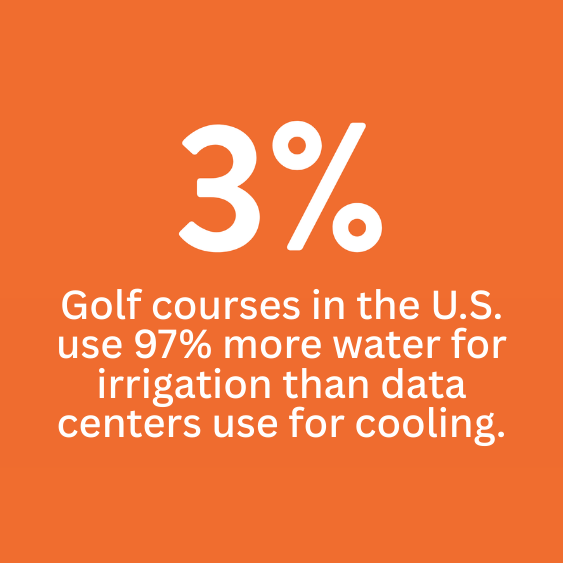
In Virginia, the world’s largest data center hub, a legislative report found that most facilities use water at rates comparable to or lower than large office buildings, and that data centers account for less than 0.5% of statewide water withdrawals. Some large campuses consume no more water annually than a few golf courses.


They Said It

“As someone who has been involved in data center construction, I can confirm that Maryland’s young data center industry is prioritizing sustainability. Many projects aim for low-carbon construction and prioritize renewable energy sources…In a state where preserving natural beauty and environmental integrity is crucial, it’s inspiring to see data center developers working proactively to minimize their environmental impact and engage community stakeholders.” 


– William Yull, Maryland Chapter, National Electrical Contractors Association


Further Reading

What You Can Do

 
X Share This Email
LinkedIn Share This Email