Act for Youth
 

Update from ACT for Youth | October 2026


View as Webpage

ACT for Youth Resources


New on ACT for Youth!

Health Conditions:

Clear, Trusted Information for Families and Youth


When a young person is living with a special care need, the adults around them need information they can understand and use.


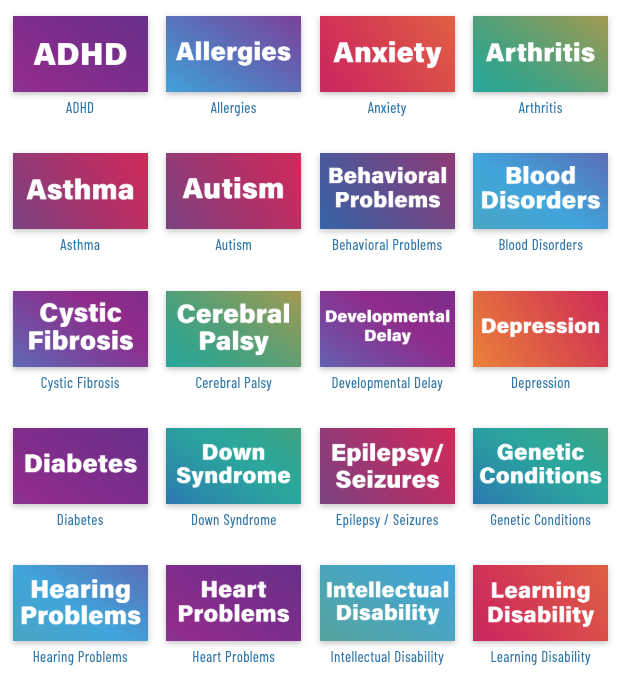
Our new Health Conditions library offers easy-to-read overviews of more than 25 physical, developmental, and behavioral health concerns, written by medical professionals at Weill Cornell Medicine.


These pages are for professionals, caregivers, family members and youth looking for guidance on everything from what to ask a doctor to what to do while waiting for an appointment.


Popular topics include: Anxiety | Depression | ADHD | Autism | Mental Health | Substance Use Disorder | Learning Disability


ACT for Youth

WEBINAR

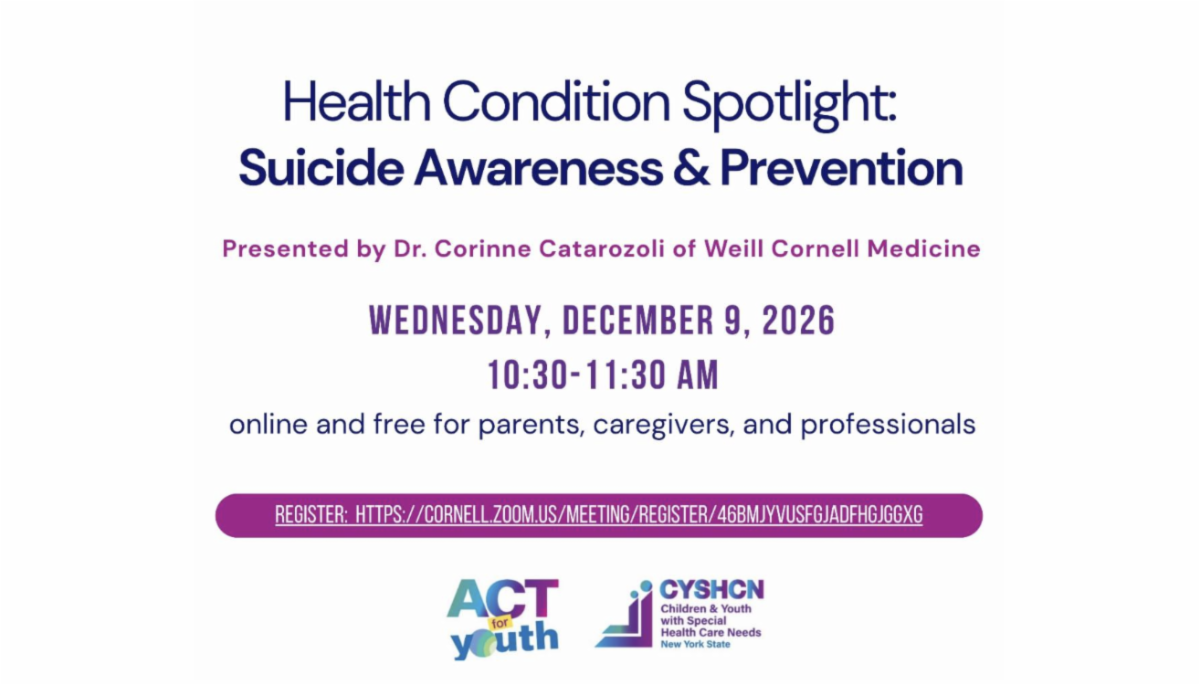
Wednesday, December 9, 2026

10:30-11:30 AM ET

Free - Open - Registration Required


The next interactive offering in our Health Condition Spotlight series focuses on suicide awareness and prevention. Our presenter, Dr. Corinne Catarozoli is the Section Chief of Pediatric Mental Health and Associate Professor of Psychology in Clinical Pediatrics and Psychiatry at Weill Cornell Medicine. She has expertise in treating youth with anxiety and related disorders and in supporting families facing acute and chronic medical illness.


This offering is open to ALL! Translated captions in a variety of languages will be available. The presentation will be recorded.


If you or someone you know needs support now, call or text 988 to reach the 988 Suicide & Crisis Lifeline.

Webinar

Watch: Health Condition Spotlight Series


Missed a session? Recordings and slides are available from this series featuring medical providers from Weill Cornell Medicine and other experts:


  • Anxiety with Corinne Catarozoli, PhD
  • ADHD with Dr. Caroline Gillenson
  • Behavior and Conduct Problems with Dr. Caroline Gillenson
  • Learning Disabilities with Dr. Bernie Chen & Caralee Kurdish (NYS Eduction Dept.)


Research and Resources


For Teens, Purpose Isn't Just About Passion

New research from Cornell University's Bronfenbrenner Center for Translational Research suggests that how steadily teens feel a sense of purpose from day to day may matter more than how intensely they feel it.


Teens whose sense of purpose varied less reported greater well-being and self-esteem.


The Perils of Perfectionism for Young People

A review of more than 300 studies finds that perfectionism among young people has risen steadily for 35 years, and that it consistently predicts more depression and anxiety. Learn why fear of failure is growing fastest, and what it means for the adults who support young people.


Cornell University, Evidence-Based Living Blog


Adult standing behind child on phone


Professional Development


Reducing Conflict, Strengthening Connection: Parent Training for Raising Teens with ADHD

ADDitude Magazine

WEBINAR

Thursday, November 12, 2026

1:00 PM ET

Free - Registration Required


Dave Anderson, PhD, of the Child Mind Institute shares practical, evidence-based strategies for reducing conflict and building stronger relationships with teens who have ADHD, including ways to support emotional regulation, organization, and independence. Registrants also receive a replay link.


Inside the Brain: Resources for Teaching Substance Use and Addiction

University of Minnesota Extension

WEBINAR

Thursday, December 3, 2026

12:00 - 1:00 PM ET (11:00 AM CT)

Free - Registration Required


Society is experiencing rising rates of mental health challenges and addiction — from substances like drugs and alcohol to online gambling and social media use. Understanding how the brain influences behavior and framing addiction as a brain-based disorder can help young people build self-regulation skills, develop empathy and reduce stigma around addiction. 


In this interactive session, participants will explore ways to spark interest in neuroscience and gain strategies and resources for designing engaging, meaningful brain science learning in out-of-school time environments.


This newsletter was developed with funding provided by the New York State Department of Health (NYSDOH) Bureau of Adolescent and Child Health. Its contents are solely the responsibility of ACT for Youth and do not necessarily represent the views of NYSDOH.