Postpartum Psychosis, Maternal Mental Health and Equal Justice
Are Black Mothers Punished More Harshly?
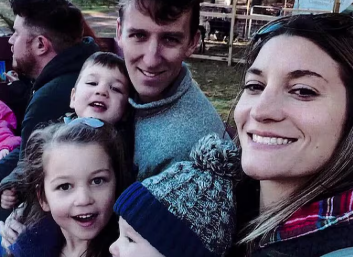
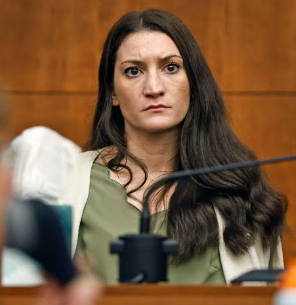
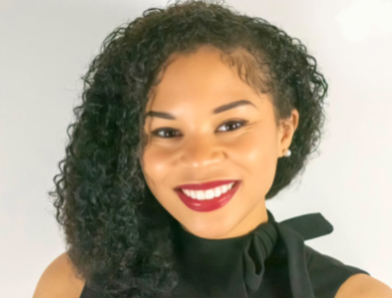
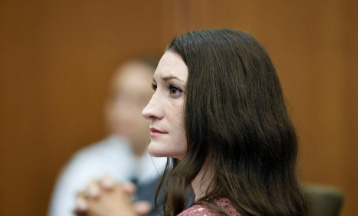
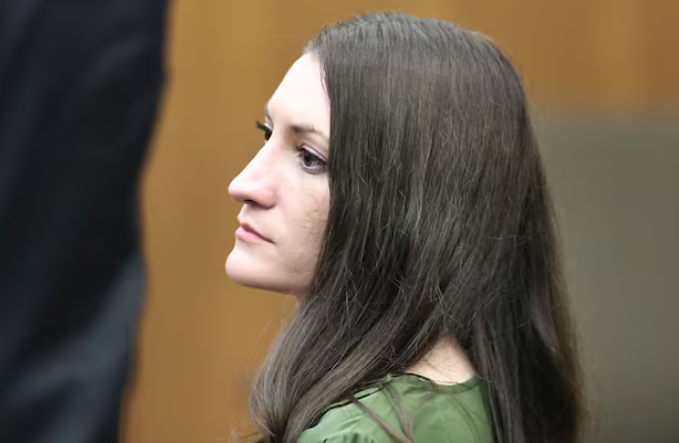
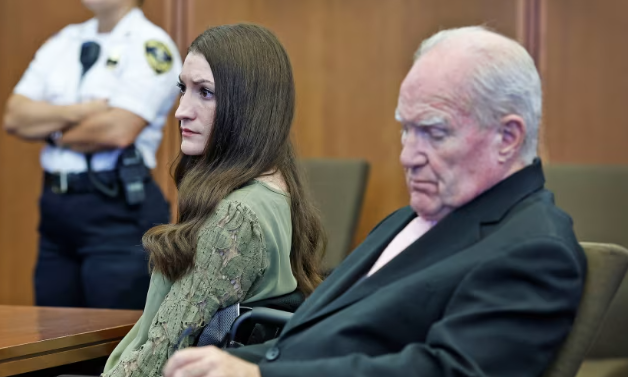
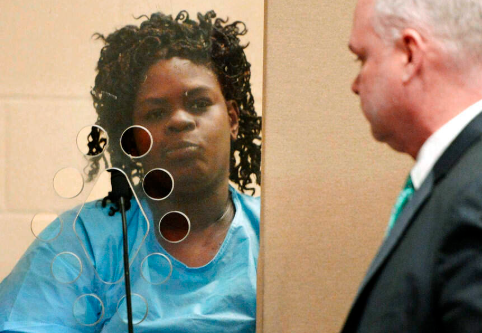
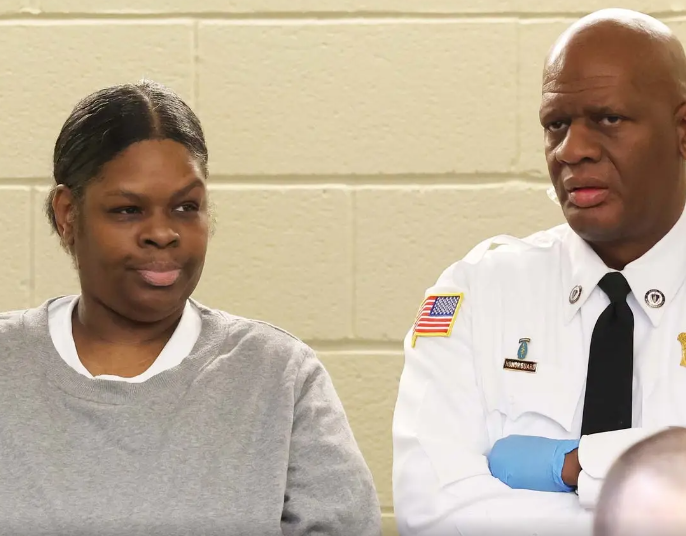
| | The cases of Lindsay Clancy and Latarsha Sanders raise difficult questions about maternal mental health, race and the criminal justice system. As postpartum psychosis receives national attention through the Lindsay Clancy case, it is important to examine whether Black mothers experiencing serious mental illness are afforded the same compassion, consideration and legal opportunities as white mothers. These cases invite a broader conversation about racial disparities in punishment and whether our systems recognize Black mothers as women in crisis who need support and treatment, or primarily as defendants deserving of punishment. | |
|
A Conversation with Dr. Grant
Maternal Mental Health and the Importance of Understanding, Support and Equity
| |
Dear Reader,
The recent Lindsay Clancy case has brought postpartum psychosis and maternal mental health into a difficult but important national conversation. While the circumstances surrounding this tragedy are heartbreaking, they also remind us of the importance of understanding mental illness, recognizing warning signs and making sure mothers have access to support before they reach a crisis.
Maternal mental health is not just a women's issue. It is a family issue, a community issue and a public health issue. When a mother is struggling, the people around her have an important role to play in recognizing changes, offering support and helping her connect with professional care.
We also have to have an honest conversation about equity. The cases of Lindsay Clancy and Latarsha Sanders involve very different circumstances and should not be treated as identical. However, they raise important questions about how severe mental illness is understood and considered when mothers become involved in the criminal justice system.
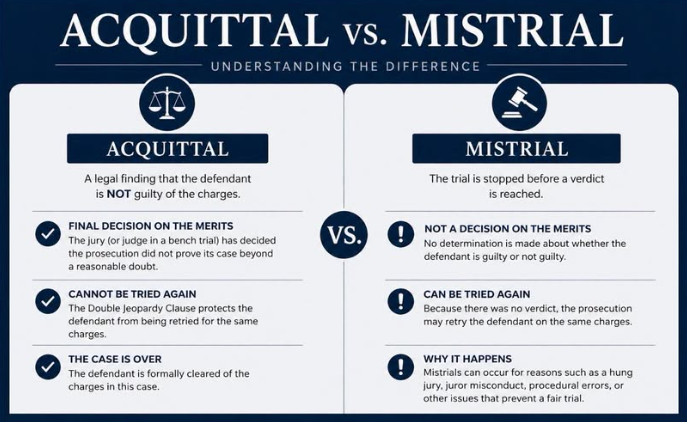
The Clancy case remains unresolved. Her first trial ended in a mistrial on September 4, 2026, after the jury was unable to reach a unanimous verdict. A mistrial is not an acquittal, and it does not mean Clancy was found not guilty. On October 1, Judge William Sullivan rejected the defense's request for a required finding of not guilty, ruling that prosecutors had presented enough physical and circumstantial evidence for a rational jury to determine whether she was criminally responsible. The ruling does not mean Clancy has been found guilty. A retrial remains possible as the legal process continues.
The case has centered heavily on postpartum psychosis and the question of criminal responsibility. It forces us to consider a difficult question: How should the justice system respond when severe mental illness is raised in a case involving an unimaginable tragedy?
Latarsha Sanders' case raises another important issue. Sanders, a Black Massachusetts mother, was convicted in connection with the deaths of her two sons. Her defense involved questions of serious mental illness and criminal responsibility. Her convictions were later overturned after the Massachusetts Supreme Judicial Court determined that critical mental health evidence had been improperly excluded from her original trial, leading to a new trial.
When we place the Sanders and Clancy cases alongside one another, we have to ask whether every mother experiencing a serious mental health crisis is given the same opportunity to have her medical history, circumstances and mental illness fully understood within the justice system.
These cases should make us uncomfortable. They should make us ask difficult questions about how we understand mental illness, motherhood, race and criminal responsibility. They should also remind us that these cases are not identical and that we should not assume that race alone explains the different circumstances or outcomes. Instead, we should examine the broader systems that shape who receives care, who is believed, what medical evidence is available and how mental illness is understood when tragedy occurs.
Most importantly, these conversations should encourage us to focus on prevention rather than waiting until a crisis becomes a tragedy.
There are things all of us can do to support maternal mental health.
Pay attention to changes in the people we love. A new mother who suddenly becomes withdrawn, extremely anxious, hopeless, unusually confused or disconnected may need more support than she is able to ask for herself.
Check in and listen without judgment. Sometimes the most important thing we can do is create a safe space for someone to say, "I'm not okay." We should not dismiss someone's feelings or assume they are simply tired or overwhelmed.
Offer practical support. Help with meals, childcare, transportation, household responsibilities or appointments can make a meaningful difference for a family that is struggling.
Encourage professional help. Friends and family can provide support, but they cannot replace medical or mental health care. Encouraging someone to speak with a healthcare professional can be an important first step.
Know the warning signs of postpartum psychosis. Although rare, postpartum psychosis is a psychiatric emergency. Hallucinations, delusions, severe confusion, paranoia, extreme agitation, mania or losing touch with reality require immediate medical attention. Someone experiencing these symptoms should not be left alone, and emergency help should be sought.
Take mental health seriously. Depression, anxiety and other mental health conditions are not character flaws or failures. They are health conditions that deserve care, just as physical illnesses do.
We also have a responsibility to examine the systems surrounding mothers. Access to mental healthcare, postpartum screening, food security, housing, transportation and culturally responsive healthcare can all affect a family's ability to remain healthy and safe.
As we continue talking about these cases, my hope is that we do more than debate what happened after tragedy occurred. We should ask what could have been done earlier, who had access to help, who was believed and whether every mother was given the same opportunity to receive compassion, treatment and support.
Maternal mental health deserves our attention before a crisis becomes a headline.
We all have a role to play in creating communities where asking for help is not viewed as weakness, where mental illness is treated as a health issue and where every mother, regardless of race or socioeconomic status, is given the opportunity to be seen, heard and supported.
Chezalyn Grant, ND, DACCHM
Health Equity Coordinator
| | |
“To be a good parent, you need to take care of yourself so you can have the physical and emotional energy to take care of your family.”
-Michelle Obama, Attorney and Former First Lady of the United States
| | |
Beyond the Baby Blues
Recognizing Postpartum Depression
and Psychosis
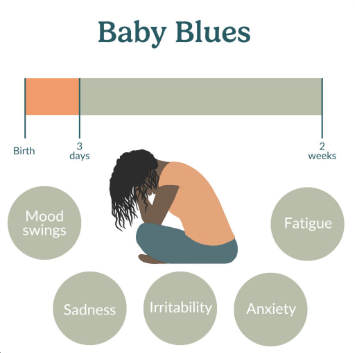
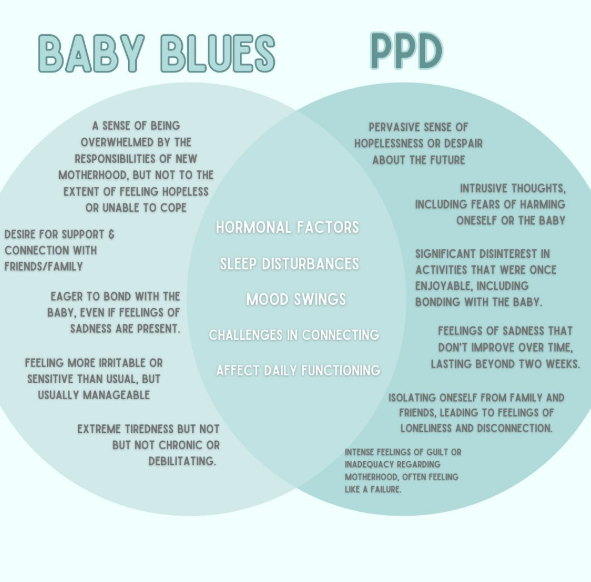
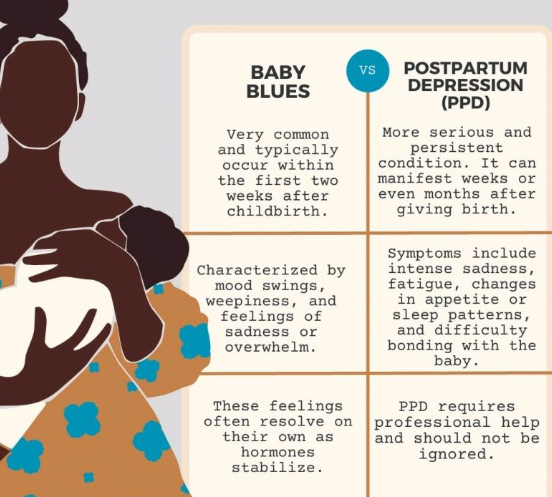
| Postpartum mental health conditions can range from temporary emotional changes to serious psychiatric emergencies. Understanding the difference between the baby blues, postpartum depression, postpartum anxiety and postpartum psychosis can help families recognize when additional support is needed and when immediate medical intervention may be necessary. | | The “baby blues” are a common and usually short lived emotional adjustment that can occur after childbirth. Hormonal changes, physical recovery, sleep deprivation and the major transition of becoming a parent can contribute to mood swings, tearfulness, irritability, anxiety and feeling overwhelmed. These symptoms typically improve within a couple of weeks, but when symptoms are intense, last longer or interfere with daily life, they may be signs of postpartum depression or another postpartum mental health condition. | |
American Pregnancy Association Reports
January 28, 2026
| | |
Mood swings after the birth of a baby are not uncommon. While the “baby blues” are the least severe form of postpartum depression, it is important not to ignore the changes that are happening in your body. Many women feel confused about struggling with sadness after the joyous event of adding a new baby to the family and often don’t talk about it. But talking about these emotions, changes, and challenges is one of the best ways to cope with the “baby blues”.
| | Do You Have the Baby Blues? Find Out Now | | |
How Common Is It?
The Numbers Behind Baby Blues, Depression, Anxiety and Postpartum Psychosis
| Maternal mental health conditions are more common than many people realize, ranging from the temporary baby blues to postpartum depression, anxiety, OCD and the much rarer but serious condition of postpartum psychosis. The statistics help put these experiences into perspective: up to 85% of childbearing individuals may experience the baby blues, while depression affects about 14%, anxiety disorders 6–8%, OCD 4%, and postpartum psychosis approximately 1–2 women per 1,000 births. | |
Maternal Mental Health Reports
May 27, 2026
| Maternal Mental Health Conditions and Statistics: An Overview | |
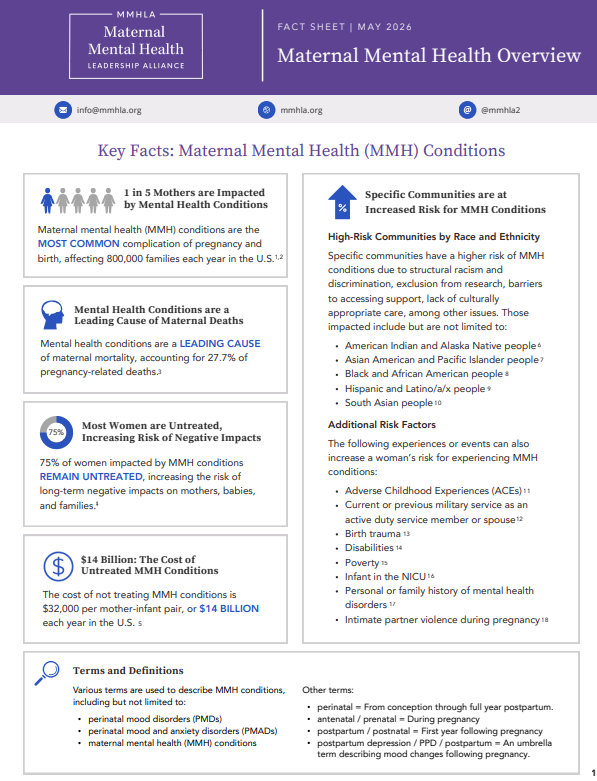
1 in 5 Mothers are Impacted by Mental Health Conditions
Maternal mental health (MMH) conditions are the MOST COMMON complication of pregnancy and birth, affecting 800,000 families each year in the U.S. [1, 2]
Mental Health Conditions are a Leading Cause of Maternal Deaths
Mental health conditions are a LEADING CAUSE of maternal mortality, accounting for 27.7% of pregnancy-related deaths. [3]
Most Women are Untreated, Increasing Risk of Negative Impacts
75% of women impacted by maternal mental health conditions REMAIN UNTREATED, increasing the risk of long-term negative impacts on mothers, babies, and families. [4]
$14 Billion: The Cost of Untreated Maternal Mental Health Conditions
The cost of not treating maternal mental health conditions is $32,000 per mother-infant pair, or $14 BILLION each year in the U.S. [5]
|
Click image below to view the Maternal Mental Health Overview Fact Sheet
| Real Stories of Postpartum Depression: Two Women Share Their Journey | |
Racial and Ethnic Differences
Examining the Unequal Burden of Maternal Mental Health Conditions
| Maternal mental health conditions do not affect every population equally, and racial and ethnic differences in reported symptoms highlight important health equity concerns. CDC data have found higher rates of postpartum depressive symptoms among some racial and ethnic groups, including Black and American Indian/Alaska Native women, compared with non-Hispanic White women in certain datasets. These differences should be considered alongside factors such as discrimination, socioeconomic conditions, access to culturally responsive care and barriers to treatment rather than assuming race itself is the cause. | Postpartum depression among Black mothers | What to know | Postpartum Depression and African American Community | |
Policy Center for Maternal Mental
Health Reports
December 8, 2023
| Black Maternal Mental Health Issue Brief | |
Maternal mental health disorders are the most common complication of childbirth. Up to 20% of women experience maternal mental health disorders such as maternal depression and anxiety during the perinatal or postpartum period.1
| |
JAMA Reports
November 20, 2024
| Trends in Postpartum Depression by Race, Ethnicity, and Prepregnancy Body Mass Index | |
Racial and ethnic disparities are evident in the disease burden of PPD, with Black mothers experiencing the highest prevalence of the disorder.11 Race and ethnicity are key factors influencing maternal health during pregnancy, including the risk of PPD.11 Understanding how PPD rates vary by race and ethnicity is important for identifying high-risk groups and addressing inequities in maternal mental health care. Research has demonstrated that other factors, such as high prepregnancy body mass index (BMI),12 neighborhood disadvantage,11 and long-term exposure to air pollution11 also contribute to the increased risk of PPD.
| Destigmatizing Postpartum Depression Among Black Women | |
Health Affairs Reports
April 1, 2024
| Racial And Ethnic Inequities In Postpartum Depressive Symptoms, Diagnosis, And Care In 7 US Jurisdictions | PMAD diagnosis patterns indicate that people identifying as Asian, Native Hawaiian, Pacific Islander, Southwest Asian, Middle Eastern, or North African; multiple racial and ethnic identities; or Black may be less likely to receive a diagnosis than White people. | CDC: Postpartum depression disproportionately affects women of color | |
American Medical Women's Association Reports
April 22, 2025
| Maternal Mental Health Disparities: The Unseen Struggle of Postpartum Depression | |
Several factors contribute to the disproportionately higher prevalence of PPD among B/AA women, including:
- Cultural Stigma: Many B/AA women experience stigma surrounding mental health, leading to reluctance in seeking professional care or disclosing symptoms (Kozhimannil et al., 2011).
- Socioeconomic Stressors: Increased exposure to financial instability, employment challenges, and inadequate healthcare coverage contributes to the heightened risk of PPD in B/AA women (Kozhimannil et al., 2011).
- Discrimination and Bias in Healthcare: Implicit bias and a lack of culturally competent providers create additional barriers to diagnosis and treatment, leading to lower rates of screening and intervention for B/AA women (Hansotte et al., 2017).
- Lack of Social Support Systems: B/AA women often have limited access to community and familial support, which is a known protective factor against PPD (Pao et al., 2019).
| |
Science Direct Reports
August 2025
| Racial, ethnic, and neighborhood disparities in diagnosis of perinatal psychiatric illness | Compared with non-Hispanic White individuals, Black individuals were 53% as likely to be diagnosed with a PPI (OR 0.53; 95% CI, 0.48–0.58). Hispanic White individuals were 60% as likely to be diagnosed (OR 0.60; 95% CI 0.54–0.67) and Asian women were 32% as likely to be diagnosed (OR 0.32; 95% CI 0.27–0.37). Women in the other category were 55% as likely as White women to be diagnosed with PPI (OR 0.55; 95% CI 0.48–0.64). | Baby Blues Vs. Postpartum Depression | The baby blues and postpartum depression can look similar at first, but they differ in severity, duration and impact on daily life. The baby blues are generally mild and temporary, while postpartum depression can cause persistent sadness, anxiety, hopelessness, irritability, difficulty bonding with the baby and changes in sleep or appetite that interfere with everyday functioning. Recognizing the difference can help ensure that someone experiencing more serious symptoms receives support and professional care. | |
National Library of Medicine Reports
August 13, 2021
| Postpartum depression: How it differs from the “baby blues” | Despite many signs and symptoms of depression get dismissed as normal physiologic changes associated with childbirth, depressive disorders are a common complication of pregnancy and postpartum period. The so-called “baby blues” have a minor functional impact and respond well to social support, whilst postpartum depression causes significant functional compromise, requiring more aggressive therapy. There is an extreme type of postpartum depressive disorder, postpartum psychosis, when patients present psychosis, mania, or thoughts of infanticide. It is imperative to promptly recognize and differentiate these entities, in order to minimize its impact on both mother and child. Antidepressant treatment may be necessary for some women, but risks and benefits should always be considered prior to institute pharmacotherapy. | Differences Between Postpartum Depression and “Baby Blues” | | The key differences between baby blues and postpartum depression | Mom experiencing postpartum depression dies by suicide days after giving birth | GMA | |
Postpartum Anxiety
When Worry Becomes Overwhelming
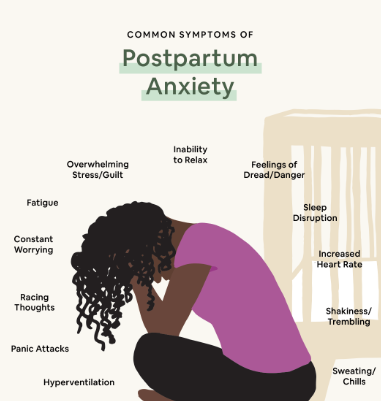
| Postpartum anxiety can cause intense, persistent worry after childbirth that goes beyond typical concerns about caring for a newborn. A person may experience racing thoughts, constant fear that something is wrong, difficulty relaxing, irritability, restlessness or physical symptoms such as a racing heart. When anxiety becomes overwhelming or interferes with sleep, daily activities or the ability to care for oneself, professional support can be important. | | |
Postpartum Support International Reports
February 9, 2026
| Beyond the Worry: 7 Lesser-Known Signs of Postpartum Anxiety | |
When we hear postpartum anxiety, we often think of a specific set of symptoms: uncontrollable worry, racing heart, and full-blown panic attacks. We picture a person who is visibly shaking or vocalizing their upsetting thoughts.
But for many new parents, Postpartum Anxiety (PPA) is more than just worry and fear. It can also look like anger, rigidity, and constantly shifting standards.
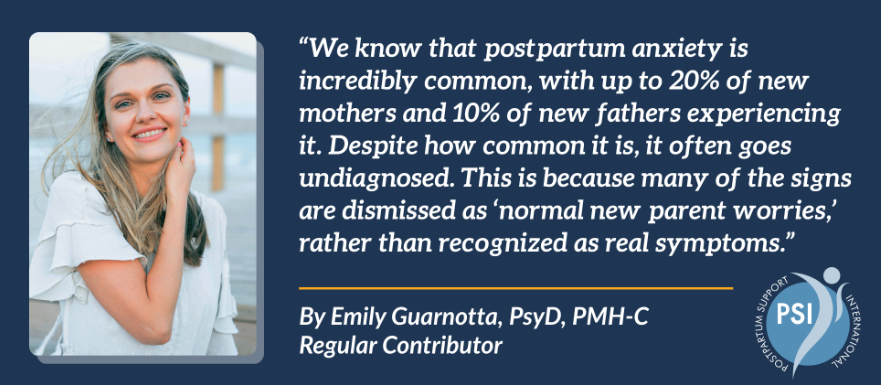
We know that postpartum anxiety is incredibly common, with up to 20% of new mothers and 10% of new fathers experiencing it. Despite how common it is, it often goes undiagnosed. This is because many of the signs are dismissed as “normal new parent worries,” rather than recognized as real symptoms.
| Postpartum anxiety, the little cousin of postpartum depression | |
Postpartum OCD
Understanding Intrusive Thoughts
| Postpartum OCD is a maternal mental health condition characterized by unwanted, intrusive and distressing thoughts, often involving fears that something harmful could happen to the baby or that the parent might cause harm. These thoughts can lead to repetitive behaviors or checking intended to reduce anxiety. It is important to recognize that having intrusive thoughts does not mean someone wants to act on them, and seeking professional support can help manage these symptoms. | |
Postpartum OCD: Signs, Symptoms,
& Treatments
| |
Deconstructing Stigma Reports
June 5, 2026
|
Postpartum OCD: It’s More Than
Intrusive Thoughts
| |
A mother holds her newborn when a sudden, distressing thought hits her: “What if I throw my baby against the wall?”
Her heart races. She is horrified because the last thing she’d ever want to do is harm her infant. She quickly hands the baby to her partner and begins to avoid holding her newborn out of fear that she might lose control.
Such behaviors are often signs of postpartum obsessive compulsive disorder (OCD), a common and often misunderstood condition involving persistent, unwanted thoughts, disturbing mental images, or urges to repeatedly check, clean, or “undo” actions to prevent imagined harm.
| |
Cleveland Clinic Reports
April 8, 2026
| Could You Have Postpartum OCD? Signs and Symptoms Explained | |
Common symptoms include:
- Intrusive thoughts: Difficult thoughts, feelings and images play on a loop in your head. Often, people with postpartum OCD can’t stop thinking about or imagining harm coming to their child — accidentally or on purpose. (More on this in a bit.)
- Checking behavior: It’s normal to monitor your new baby out of anxiety. But with postpartum OCD, you can’t stop. Dr. Viguera gives the example of constantly checking to see if your sleeping infant is still breathing, to the point that you aren’t getting any rest yourself.
- Reassurance seeking: You continually ask others if they think your baby’s OK or if you’re a capable parent, so much so that it may be straining your relationships.
- Other compulsive behaviors: Sometimes, it’s about doing an action, like washing your hands every time you touch your baby. Other times, it’s about avoiding an action. For example, you could become so worried you’ll fall down the stairs with your child that you never go upstairs.
- Difficulty bonding with your baby: If you’re preoccupied with fears of harming your child or doubt you have what it takes to be a good parent, you may avoid your child altogether.
| |
Postpartum Psychosis
Recognizing a Psychiatric Emergency
| | Postpartum psychosis is a rare but serious psychiatric emergency that can develop suddenly, typically within the first two weeks after childbirth. Symptoms may include hallucinations, delusions, paranoia, severe confusion, rapid mood changes and disorganized or reckless behavior. Because postpartum psychosis can increase the risk of suicide or harm to an infant, immediate medical evaluation and emergency care are essential. | | Understanding Postpartum Psychosis | Rachael Watters | What Is Postpartum Psychosis? Dr. Jennifer Payne Explains | | |
The Cleveland Clinic Reports
September 13, 2022
| | |
Postpartum psychosis (PPP) is a mental health emergency. This condition affects a person’s sense of reality, causing hallucinations, delusions, paranoia or other behavior changes. In severe cases, people with PPP may attempt to harm themselves or their newborn. This condition is treatable, and early treatment increases
the odds of a good outcome.
| Postpartum Psychosis - Katy's Story | |
National Library of Medicine Reports
December 29, 2023
| |
Postpartum Psychosis: A Review of Risk Factors, Clinical Picture, Management, Prevention, and
Psychosocial Determinants
| | |
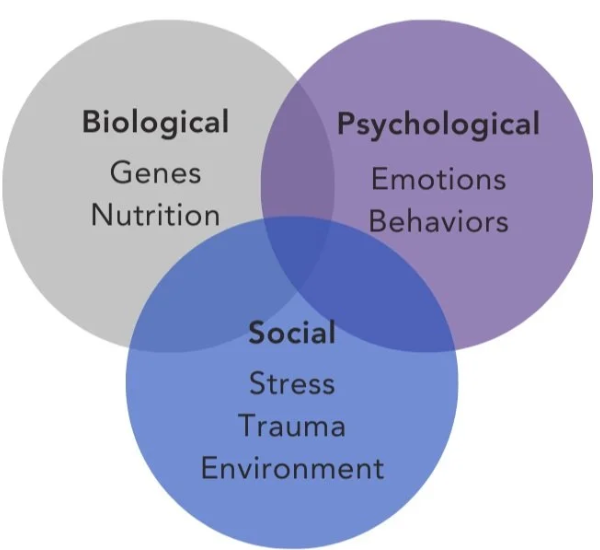
The most common risk factor associated with postpartum psychosis is bipolar affective disorder, with an estimated risk of 20% [4,13,20,24,27,29–35]. In women with bipolar affective disorder (BPAD), additional catalysts for the onset of postpartum psychosis may include abuse, traumatic events in childhood, higher daily cortisol levels during the third trimester of pregnancy, psychosocial stress, and biological stress [31,36].
However, previous findings about the association of PP with personality traits, cognitive styles, or affective temperaments in people with BPAD are limited [20]. Studies suggest that dysregulation of the immune-HPA (pituitary-hypothalamic-adrenal) axis, accompanied by stress, may contribute to PP in patients in this risk group [37,38]. Postpartum psychosis can also be triggered by the use of psychoactive drugs, including amphetamines [39].
| | 'Inside my postpartum psychosis' | The Conversation | Focus on Africa | | ‘I’m not ok:’ Mothers come together to discuss America’s postpartum crisis | |
|
Lindsay Clancy Trial
When Postpartum Psychosis Meets the Criminal Justice System
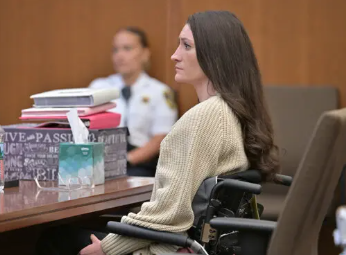
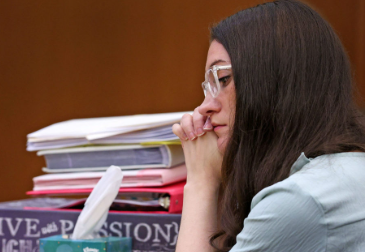
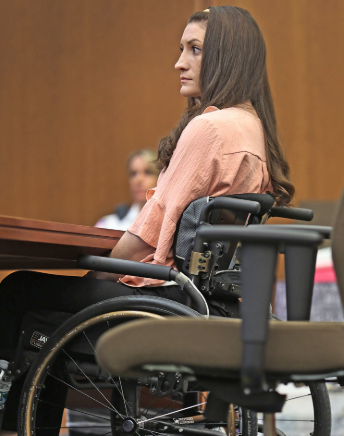
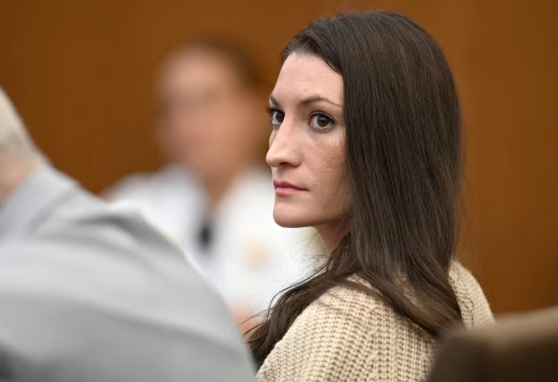
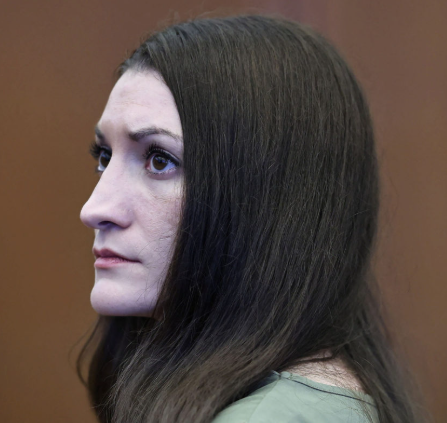
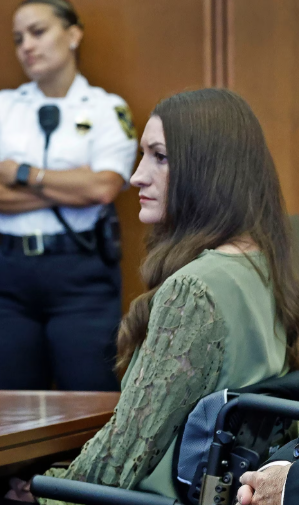
| The Lindsay Clancy case placed postpartum psychosis at the center of a highly publicized criminal trial. In January 2023, Clancy's three children, Cora, Dawson and Callan, were killed at the family's home in Duxbury, Massachusetts. Clancy survived a suicide attempt and was left paralyzed. Her defense argued that postpartum psychosis affected her ability to understand and control her actions, while prosecutors argued that she was criminally responsible. | The Lindsay Clancy Case: Explained For Dummies | |
Associated Press Reports
August 27, 2026
| What to know about the Lindsay Clancy murder trial | Lindsay Clancy’s murder trial is in the hands of a jury after a month of searing testimony about the deaths of her three children in 2023 and the psychiatric problems she experienced before she killed them. Closing arguments concluded Thursday in the case, which has sparked debate online and demonstrations outside the courthouse over maternal well-being and the mental health system. The jury was sent off to deliberate at around 12:30 p.m. Here are some basics about the case. | |
Lindsay & Patrick Clancy: What Was
REALLY Going On?
| |
Criminal Responsibility
How Mental Illness Can Become a Legal Question
| The Clancy trial raised a difficult question about how the justice system should respond when severe mental illness may have affected a person's ability to understand or control their actions. Mental illness does not automatically eliminate criminal responsibility, but psychiatric evidence can become critically important when a defendant's mental state is disputed. | Exploring the Fundamentals of Criminal Responsibility | |
When someone commits a crime, most people assume accountability is automatic. But the legal system doesn’t work that way. Before punishment can be imposed, the courts must first determine whether the individual truly understood what they were doing-and whether they knew it was wrong. This is what criminal responsibility is all about. It sits at the intersection of law, psychology, and ethics, and it raises some of the most challenging questions in the justice system.
| |
ABC News Reports
August 10, 2026
| Lindsay Clancy's psychiatrist testifies she didn't have access to her complete medical record | |
The psychiatrist who treated Lindsay Clancy testified Monday that she did not have access to Clancy's complete medical record when she treated her in the months before Clancy killed her three children.
Dr. Jennifer Tufts told jurors she did not have or seek records from Clancy's recent outpatient psychiatric treatment and trusted that Clancy would be candid and disclose any information relevant to her treatment during their 14 telehealth sessions -- the last of which took place Jan. 23, 2023, one day before prosecutors say Clancy strangled her children and attempted to take her own life.
"Mood was the same -- flat, anxious, no motivation, numb. She has to force herself to get out of bed and out of the house, but is able to do that, and she is sleeping OK," Tufts testified about her notes from that final session.
| |
NBC News Reports
August 20, 2026
|
Psychologist testifies Lindsay Clancy wasn’t criminally responsible in killings
of 3 children
| |
PLYMOUTH, Mass. — Lindsay Clancy didn’t appreciate the “wrongfulness” of killing her three children because of her mental health issues, a psychologist testifying for the defense said at her murder trial Wednesday.
The testimony of Paul Zeizel is the strongest evidence yet to support the defense contentions that Clancy should not be held legally responsible for murder because she has bipolar disorder and was in the grip of a rare mental illness called postpartum psychosis when she killed her three children before trying to kill herself. Zeizel began seeing Clancy as a patient at a hospital after the deaths.
“She was unable to conform her behavior to the rule of law. She had no appreciation for the wrongfulness of her act,” Zeizel said, adding that she had “a mental disease or a defect.”
| |
|
Mistrial Does Not Mean Acquittal
Understanding What Happened
with the Jury
| On September 4, 2026, the jury in the Lindsay Clancy case was unable to reach a unanimous verdict. Reports indicated that the jury ultimately stood at 11–1 in favor of finding Clancy not guilty by reason of lack of criminal responsibility. Because the jury could not reach the required unanimous decision, the judge declared a mistrial. A mistrial does not mean Clancy was acquitted or found not guilty. | |
NBC News Reports
September 4, 2026
| What is a mistrial and what does it mean for Lindsay Clancy? Here's what to know | |
A judge declared a mistrial in the Lindsay Clancy trial Friday after jurors said they could not reach a unanimous verdict on whether she was criminally responsible for killing her three young children.
The mistrial, in the seventh day of deliberations, leaves the case unresolved and allows prosecutors to try Clancy again.
The deliberations took a dramatic turn late in the week when the judge said he was going to declare a mistrial Friday before suddenly changing course and giving her defense attorney a chance to appeal to the state’s highest appeals court.
| Lindsay Clancy's defense attorney speaks out after mistrial | |
CNN News Reports
September 13, 2026
| Lindsay Clancy’s holdout juror shows ongoing skepticism of the ‘insanity defense’ | |
What exactly was the lone holdout juror in Lindsay Clancy’s triple-murder trial thinking?
The juror himself has not spoken, but several other jurors said the holdout acknowledged he had doubts about the prosecution’s case but still declined to find Clancy not guilty by lack of criminal responsibility. At least one juror said the holdout was unable to cite evidence or testimony that helped prove what he was saying.
“He had the hardest time getting off the fact that Lindsay viciously killed her children,” one juror told NBC10 Boston.
| |
Temple University Reports
September 9, 2026
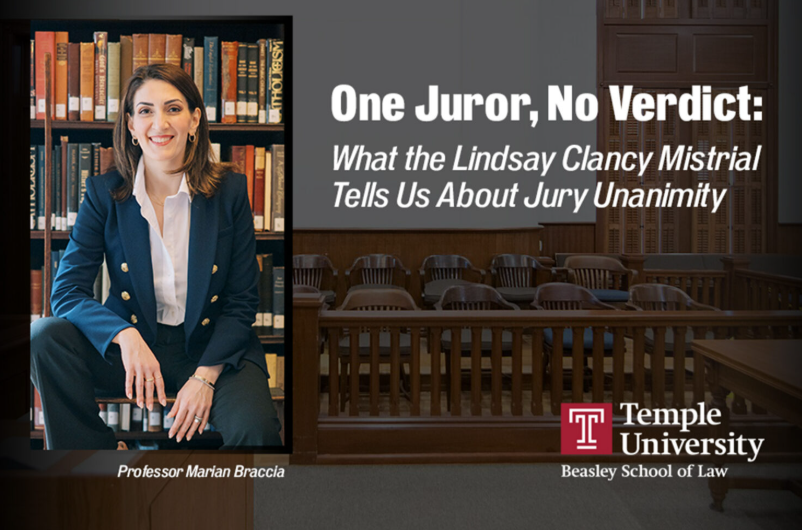
| One Juror, No Verdict: What the Lindsay Clancy Mistrial Tells Us About Jury Unanimity | |
After more than five weeks of testimony and seven days of deliberations, the Massachusetts murder trial of Lindsay Clancy ended Friday without a verdict.
Clancy was charged with three counts of first-degree murder for the January 2023 deaths of her children, Cora, 5, Dawson, 3, and Callan, 8 months. There was no dispute at trial that Clancy killed the children. The central question was instead one of criminal responsibility: Was Clancy legally responsible for her actions, or was she so profoundly mentally ill that Massachusetts law did not permit the jury to hold her criminally accountable?
Twelve jurors could not unanimously answer that question. On September 4, Superior Court Judge William Sullivan declared a mistrial.
| |
PBS News Reports
September 9, 2026
| Jurors speak out about Lindsay Clancy mistrial and the lone holdout | |
A lone juror blocked Lindsay Clancy from being acquitted, insisting he wouldn't find her not guilty by reason of insanity despite saying during deliberations that he had reasonable doubt, the jury's foreperson said in a TV interview Tuesday.
The interview with Boston's NBC10 aired four days after a judge declared a mistrial when jurors failed to reach a unanimous verdict on the question of whether Clancy was criminally responsible for killing her three young children in 2023.
| IDOT Crews In Joliet Make Emergency Pothole Repairs | |
The Guardian Reports
September 10, 2026
| Lindsay Clancy’s lawyer asks judge to find her not guilty after mistrial | |
Lindsay Clancy’s lawyer on Thursday asked the judge who oversaw the Massachusetts woman’s murder trial to declare her not guilty of murder by reason of insanity, saying prosecutors had failed to prove that, despite being mentally ill, she knew killing her three young children would be wrong.
Defense attorney Kevin Reddington made the request to Judge William Sullivan six days after the trial ended in a deadlock, and as a fourth member of the 12-member jury went public to describe how a single juror had prevented the panel from reaching a unanimous verdict.
| |
Judge Rejects Not-Guilty Motion
What the Latest Lindsay Clancy Ruling Means
| |
In an October 1 ruling, Judge William Sullivan rejected Lindsay Clancy’s defense request for a required finding of not guilty, concluding that prosecutors presented enough physical and circumstantial evidence for a reasonable jury to determine whether she was responsible for the deaths of her three children. The ruling does not mean Clancy has been found guilty; it means the judge declined to end the case on the grounds that there was insufficient evidence.
The ruling is significant because it keeps the possibility of a retrial open following the first trial’s mistrial. Prosecutors have not yet announced whether they will retry Clancy on first-degree murder charges, pursue lesser charges, or drop the case. A further hearing is scheduled for November 2, where the next steps in the case may become clearer.
| |
PBS News Reports
October 1, 2026
| Judge denies motion asking for Lindsay Clancy to be found not guilty due to lack of evidence | |
BOSTON (AP) — The judge in the Lindsay Clancy murder case on Thursday refused to declare her not guilty, turning down a defense motion that had argued there wasn't enough evidence to prove she was responsible for killing her three children.
During Clancy's first trial, which ended Sept. 4 with a deadlocked jury, her defense argued that she was not criminally responsible because of a mental disease, specifically a rare condition called postpartum psychosis. As such, the defense didn't dispute that the 36-year-old former labor and delivery nurse carried out the killings at her family's Massachusetts home in 2023.
| |
Reuters Reports
October 1, 2026
| US judge denies request to find Lindsay Clancy not guilty after mistrial | |
BOSTON, Oct 1 (Reuters) - A Massachusetts judge who oversaw Lindsay Clancy's murder trial rejected a request on Thursday by her lawyers to declare her not guilty of murder, saying prosecutors presented sufficient evidence for a jury to find her responsible for killing her three young children in 2023.
Clancy's lawyers had urged Judge William Sullivan in Plymouth to conclude that prosecutors had failed to prove she could be held criminally responsible for her children's deaths despite suffering from what they said was mental illness. Sullivan declared a mistrial on September 4 after the jury deadlocked.
| |
CNN Reports
October 1, 2026
| What’s next for Lindsay Clancy after judge denies motion for not guilty verdict | |
The judge overseeing Lindsay Clancy’s murder case denied one of her motions aimed at avoiding a retrial.
Clancy still has another motion to dismiss the case that’s pending in court, and the district attorney in Plymouth County, Massachusetts, hasn’t committed to pursuing a retrial against her.
Clancy’s post-trial motion – typical in criminal trials – asked the judge to enter a finding of not guilty, arguing prosecutors didn’t present enough evidence to convince a jury beyond a reasonable doubt that she killed her children.
| Judge in Lindsay Clancy Case Denies Motion for Not Guilty Verdict | Should Lindsay Clancy Be Held Criminally Responsible for the Deaths of Her Children? | Please select the option that most accurately reflects your opinion and vote accordingly. | |
Latarsha Sanders Case
A New Trial After Mental Health Records Were Kept From the Jury
| Latarsha Sanders, a Black Massachusetts mother convicted in connection with the deaths of her two sons, was granted a new trial after the Massachusetts Supreme Judicial Court found that critical mental health records had been improperly excluded from the jury’s consideration. The records contained extensive information about her psychiatric history, including evidence of serious mental illness and hallucinations. The court determined that excluding this evidence was prejudicial and ordered a new trial, raising important questions about how mental health evidence is considered when severe psychiatric illness intersects with the criminal justice system. | |
ABC News Reports
February 8, 2018
| Woman allegedly confesses to killing 2 young sons in voodoo ritual gone awry | |
BROCKTON, Massachusetts -- The details surrounding the murders of two young brothers in Massachusetts are difficult to hear.
District Attorney Timothy Cruz alleges Latarsha Sanders had an apparent psychiatric break over the weekend and killed her two sons with a kitchen knife, WCVB-TV reports.
The bodies of 5-year-old Lason Britto and 8-year-old Edson Britto were found covered in their bed sheets, discovered by chance after a neighbor went to check on Sanders, who called an ambulance for herself.
Cruz said in court one of the boys alone was stabbed 50 times.
| Mom sentenced in sons' Voodoo ritual deaths | |
NBC Boston Reports
September 10, 2026
| DA must decide how to proceed in cases of Lindsay Clancy and Latarsha Sanders | |
The clock is ticking for Massachusetts prosecutors on the case of a Brockton mother whose murder conviction in the deaths of her two children was overturned.
Latarsha Sanders was found guilty on Dec. 27, 2022, of two counts of murder and one count of witness intimidation. She received a double life sentence without the possibility of parole.
Last month, the Massachusetts Supreme Judicial Court threw out the conviction, saying that Judge William Sullivan had erred, denying Sanders a fair trial because her entire psychiatric history was not shared with the jury.
| |
CT post Reports
September 10, 2026
| Judge whose error overturned a child-killing conviction now faces key Lindsay Clancy ruling | he state Supreme Judicial Court ruling shows that Sanders had not been diagnosed with a mental illness before killing 8-year-old Edson "Marlon" Brito and 5-year-old La’son Brito in her Brockton home in 2018. However, investigators found evidence that she had become obsessed with “the Illuminati.” | Do You Think Latarsha Sanders Was Treated Fairly in Her Original Trial? | Please select the option that most accurately reflects your opinion and vote accordingly. | |
Would the Same Mental Health Defense Be Viewed the Same Way for a Black Mother?
Examining Race, Perception and Criminalization
| This section should pose a question rather than provide a predetermined answer. The goal is to examine whether racial stereotypes, differences in healthcare access and perceptions of Black women's pain and vulnerability can influence how maternal mental health crises are recognized and treated. | | |
Word in Black Reports
September 15, 2026
| |
Two Moms Killed Their Kids. Did Race Play a Role in Their Cases?
| |
The attorney handling Sanders’ appeal called the trial “a fundamentally unfair legal proceeding” for “a mother who was suffering from profound mental illness and experiencing a psychotic state completely untethered from reality.”
In Clancy’s case, defense attorneys used her mental health records to argue that she should not be held criminally responsible for killing her children, which proved to nearly shield Clancy from being found guilty, except for one holdout juror – a Black man.
The racial makeup of the jury emerged as an issue in traditional and social media.
| |
National Library of Medicine Reports
August 5, 2013
| Racial and Ethnic Disparities in Postpartum Depression Care Among Low-Income Women | We found low levels of postpartum depression treatment among all low-income women in our study, with particularly low treatment initiation rates for black women (4%) and Latinas (5%). Although underlying rates of illness could not be identified in this study, prior research indicates a diagnosed prevalence of approximately 23% among low-income women (with half characterized by postpartum onset of illness) (3) and similar rates of illness across racial-ethnic groups (2). The differences in initiation and continuation of care uncovered in this study imply that a disproportionate number of black women and Latinas who suffer from postpartum depression do not receive needed services. These differences represent stark racial-ethnic disparities potentially related to outreach, detection, service provision, quality, and processes of postpartum mental health care. | |
Auctores Journals Reports
February 28, 2025
| The Weight of Resilience: Navigating the Black Girl Glare, the Strong Black Woman Trope, and Somatic Expressions of Depression | Resilience is often heralded as a vital attribute that empowers individuals to endure and rise above life's adversities. For Black women, however, resilience carries a uniquely heavy burden, deeply influenced by a historical legacy of struggle, unrelenting societal scrutiny, and pervasive stereotypes. This chapter explores the intricate layers of resilience and its impact on the mental health of Black women. It investigates the interplay of cultural, societal, and historical influences that converge with internalized expectations, shaping experiences of depression, anxiety, and overall well-being. By examining constructs such as the "Black Girl Glare," the "Strong Black Woman" trope, and somatic expressions of depression, we uncover how these factors uniquely impact Black women. This exploration sheds light on the societal expectations and historical injustices influencing their mental health and resilience, advocating for supportive environments that allow vulnerability and acknowledgment of mental health challenges without societal expectations. | |
National Library of Medicine Reports
October 8, 2020
| Superwoman Schema, Stigma, Spirituality, and Culturally Sensitive Providers: Factors Influencing African American Women’s Use of Mental Health Services | |
Many African American women are heavily burdened by unmet mental health needs yet underuse mental health services. The superwoman schema (SWS) conceptual framework provides a new culturally sensitive framework to enhance researchers’, providers’, and educators’ understanding of the barriers to mental health service use among this group. The “superwoman” role involves perceived obligations to (1) project strength, (2) suppress emotions, (3) resist feelings of vulnerability and dependence, (4) succeed despite limited resources, and (5) prioritize caregiving over self-care. In this study, the SWS framework guided a secondary qualitative analysis of data from eight focus groups comprised of 48 African American women from the southeastern United States and a broad range of age and educational backgrounds.
| |
Recognizing the Warning Signs
When a Mental Health Crisis Requires Immediate Intervention
| Certain postpartum symptoms require more than routine support and should be treated as an emergency. Family members and loved ones may sometimes recognize serious changes before the person experiencing them realizes how severely their mental health has changed. | |
NAMI Reports
October 8, 2020
| Warning Signs and Symptoms | |
Trying to tell the difference between what expected behaviors are and what might be the signs of a mental illness isn’t always easy. There’s no easy test that can let someone know if there is mental illness or if actions and thoughts might be typical behaviors of a person or the result of a physical illness.
Each illness has its own symptoms, but common signs of mental illness in adults and adolescents can include the following:
| What is a mental health crisis? What are the warning signs? | |
University of Chicago Medicine Reports
September 29, 2025
| Know the warning signs to prevent suicide and how to support loved ones | |
Roughly 13 million American adults seriously consider suicide each year, according to the latest federal data, which is why the University of Chicago Medicine Ingalls Memorial Hospital works to make sure people who need mental healthcare have access to helpful programming.
Here are answers to frequently asked questions about suicide that can help people support loved ones affected by this serious and traumatic public health problem.
| 8 Signs that Someone is Battling Mental Health Problems | |
From Crisis to Prevention
How Families, Communities and Healthcare Systems Can Support Maternal Mental Health
| Recognizing warning signs is only the first step. Maternal mental health support should begin before a crisis develops through early screening, accessible treatment, family and community support, and healthcare systems prepared to respond when symptoms become severe. Families and loved ones can also play an important role by noticing changes, reducing stigma and helping connect someone to appropriate care. | |
National Library of Medicine Reports
June 5, 2015
| Social Support, Postpartum Depression, and Professional Assistance: A Survey of Mothers in the Midwestern United States | |
Transition into motherhood is generally a joyful life event; for some women, however, it is marked by emotional turmoil. Lack of support can be associated with postpartum depression and can compromise both the mother and infant. A descriptive, cross-sectional study (N = 61) was conducted to explore the relationship between social support and postpartum depression and to determine whether mothers overwhelmed with childcare, or overwhelmed with life in general since becoming a mother, sought professional help. The results revealed that screening for depression alone may not be sufficient, that mothers are willing to contact a professional for help in the postpartum period, and that assessments after birth should include a broader assessment of life’s difficulties rather than focusing on childcare responsibilities alone.
| |
UCLA Health Reports
March 4, 2013
| Pregnant mothers with strong family support less likely to have postpartum depression, study finds | |
Women who receive strong social support from their families during pregnancy appear to be protected from sharp increases in a particular stress hormone, making them less likely to experience depression after giving birth, a new study by UCLA life scientists indicates.
"Now we have some clue as to how support might 'get under the skin' in pregnancy, dampening down a mother's stress hormone and thereby helping to reduce her risk for postpartum depression," said Jennifer Hahn-Holbrook, a UCLA National Institute of Mental Health postdoctoral scholar in psychology, a fellow at UCLA's Institute of Society and Genetics, and the lead author of the research.
| What Your Partner Can Do | Postpartum Depression | Parents | Rep. Ford's Daily Job Leads | Click Below to View Job Highlights From Previous Dates | | | | |