|
Responsive Management recently partnered with Sea Grant representatives from the University of Alaska Fairbanks, California Polytechnic State University, the University of Southern California, the University of California San Diego, the University of Hawaii, and Oregon State University on a major survey to assess public understanding and perspectives of aquaculture in Alaska, California, Hawaii, and Oregon.
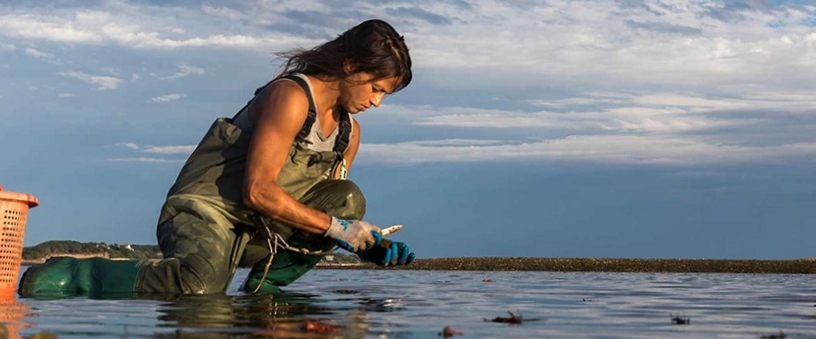
Aquaculture refers to the farming or growing of fish, shellfish, seaweed, algae, or aquatic plants in water, and can include freshwater or saltwater species.
Aquaculture is a vital part of global food production and is the fastest growing food sector in the world. It provides more than half of the world’s seafood, and aquaculture practices are expected to increase by 21% by 2030.1 The United States is the second largest consumer of seafood by nation but imports up to 85% of its seafood.2 United States aquaculture production ranks 17th globally, producing less than 1% of the world’s farmed seafood. One of the purposes of the study was determine whether aquaculture growth in the United States is hindered by a lack of awareness of the practice, resulting in low social license, meaning public approval or acceptance of aquaculture.3
To answer this question, Responsive Management surveyed members of the public in Alaska, California, Hawaii, and Oregon about their knowledge of and attitudes toward aquaculture, consumption of seafood (including willingness to consume farm-raised seafood), factors important to food purchasing decisions, and their trust in various sources of information, among other topics.
Examples of notable findings from the survey include the following:
-
Many people are unfamiliar with aquaculture. Majorities of respondents in Oregon and California and at least a third of people in Alaska and Hawaii had not heard anything about aquaculture prior to the survey. Even among those who had heard of it, understanding of the term was often limited or incomplete: across the states, substantial percentages of respondents were unsure or gave neutral answers to various agree/disagree statements reflecting key facts about aquaculture, its purposes, and its impacts.
-
Willingness to consume farmed seafood depends on the state and species. For example, Hawaii and California residents are the most willing to consume farmed seafood, while Alaska residents are the least willing (Oregon residents are in the middle). Seaweed and shellfish are among the most acceptable farm-raised species to consume.
-
Perceptions of aquaculture vary by state. Hawaii and California residents are the most favorable, with 59% and 57% of respondents expressing very or somewhat positive opinions about aquaculture, respectively. By contrast, 46% of residents in Alaska and Oregon have positive views about the practice.
-
Despite some gaps in understanding, there is strong support for having aquaculture in both states and local areas. More than half of residents in Alaska, two-thirds of residents in Oregon and California, and three-quarters of residents in Hawaii support having aquaculture in their state. There are similar levels of support for having aquaculture in their local area.
-
Awareness of aquaculture helps shape support. The results show that people who have heard about aquaculture are more likely to support it, reinforcing the importance of awareness in determining public sentiment.
-
First impressions about aquaculture matter. Initial exposure to aquaculture—whether positive or negative—can shape long-term perceptions. In the absence of direct experience, residents’ support for aquaculture depends on how the practice is initially framed.
-
Trusted sources of information about aquaculture matter. Scientists, environmental organizations, and local food market vendors ranked among the most trusted sources, while social media—though widely used—was less trusted overall.
The survey instrument was developed with funding from the NOAA Sea Grant program in collaboration with the Pacific Region Sea Grant university partners and representatives from the California Aquaculture Association and Pacific Coast Shellfish Growers Association. Data were gathered from August to October 2025.
Responsive Management’s scientific survey entailed random samples of residents in each of the four states (AK: n=844; CA: n=953; HI: n=843; OR: n=839). The Alaska and Hawaii samples consisted of general population adult residents; the Oregon and California samples consisted of adult residents of coastal counties, with additional regional stratification in California. Interviews were conducted by telephone and online, with supplemental text messages used to further engage mobile respondents. The sampling error by state ranged from plus or minus 3.17 to 3.38 percentage points.
Click the links below to access state-specific presentations of the major findings from the aquaculture study:
|