|
Voter Turnout Inequality
A Statistical Overview of Minority Disparities
| |
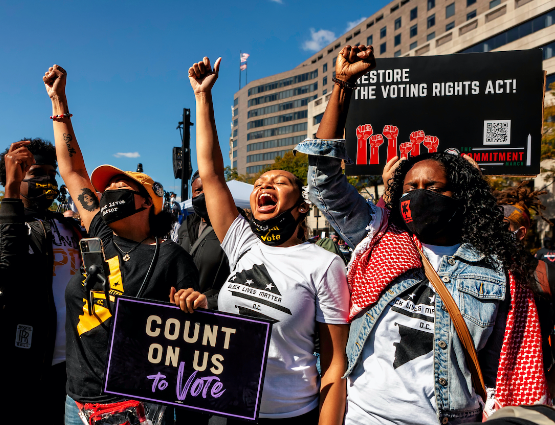
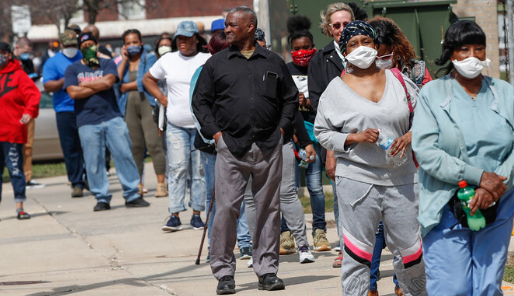
Minority voter turnout disparities reveal significant variations in electoral participation among different demographic groups. Statistical analyses highlight that minority communities often face barriers such as voter suppression tactics, socioeconomic challenges, and reduced access to voting resources, which contribute to lower turnout rates compared to the majority population. Understanding these disparities is crucial for addressing systemic inequities and developing targeted policies to ensure fair and equal access to the voting process for all citizens. By examining these statistics, we can better grasp the extent of the problem and work towards more inclusive and equitable electoral practices.
| |
Brennan Center for Justice
March 2, 2024
| Growing Racial Disparities in Voter Turnout, 2008–2022 | |
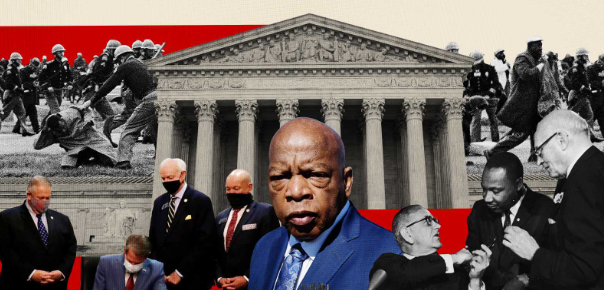
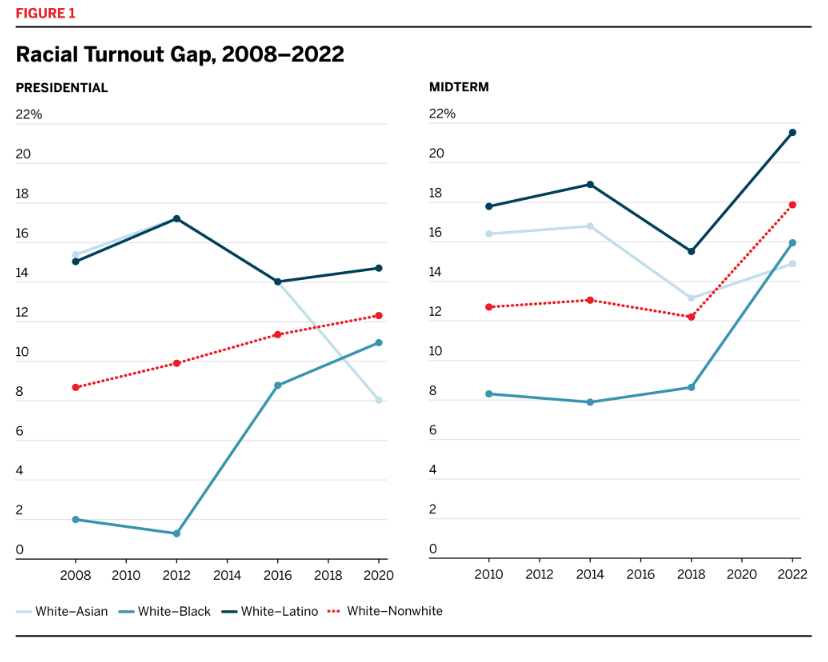
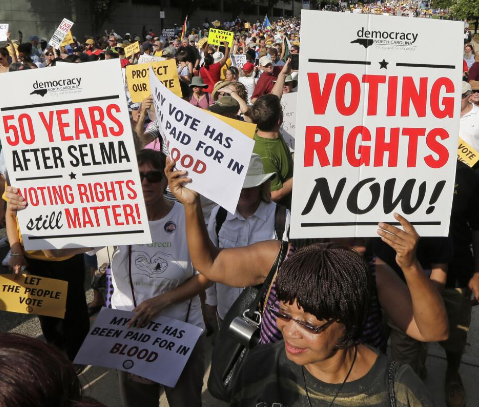
The gap in voter participation between Black and white Americans decreased following the civil rights revolution of the 1960s. Unfortunately, our research shows that for more than a decade, this trend has been reversing. This report uses data to which few previous researchers have had access to document the racial turnout gap in the 21st century.
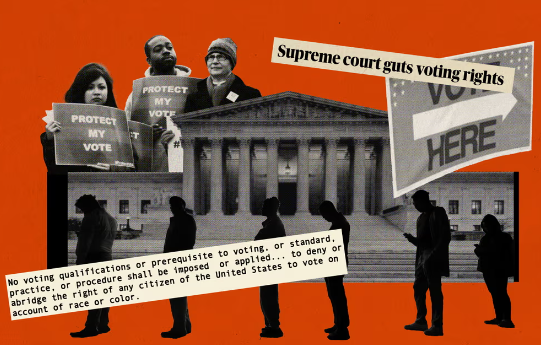
The racial turnout gap — or the difference in the turnout rate between white and nonwhite voters — is a key way of measuring participation equality. We find that the gap has consistently grown since 2012 and is growing most quickly in parts of the country that were previously covered under Section 5 of the 1965 Voting Rights Act, which was suspended by the Supreme Court in its 2013 decision in Shelby County v. Holder.
| |
WBEZ Chicago Reports
April 2, 2024
|
Why there's a long-standing voter registration gap for Latinos and Asian Americans
| |
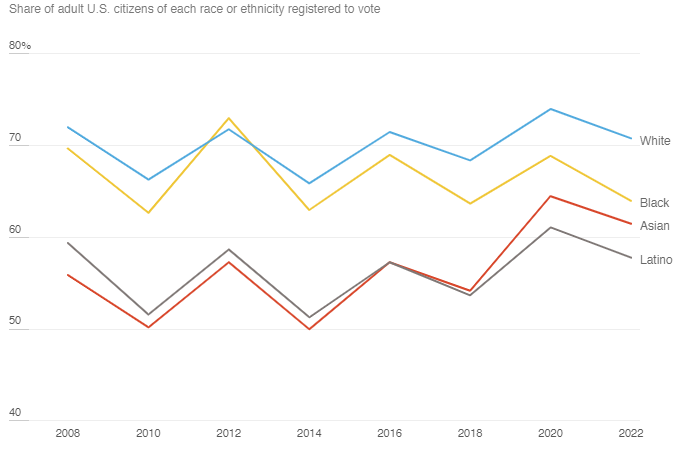
In a pivotal election year, U.S. democracy continues to face a persistent challenge among the country's electorate — gaps in voter registration rates between white eligible voters and eligible voters of color.
For years, the shares of Black, Asian and Latino citizens age 18 or older signed up to cast ballots have trailed behind that of white adult citizens, according to the Census Bureau's Current Population Survey.
And while the estimated registration rate for Black eligible voters has stayed closer to (and, in 2012, even surpassed) the rate for white eligible voters, the rates for Asian Americans and Latinos — who make up the country's top two fast-growing electorates by race or ethnicity — have remained among the lowest of the racial and ethnic groups in the United States.
| |
The Impact of Voter Suppression
How it Effects Minority Voters
| |
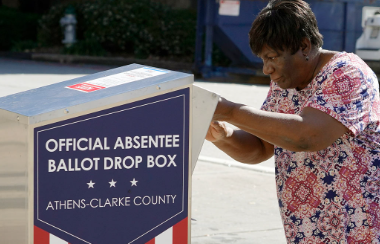
Voter suppression has a profound and detrimental impact on minority voters, systematically undermining their participation in the democratic process. Through various tactics—such as stringent voter ID laws, gerrymandering, and restrictive voting regulations—minority communities often face disproportionate barriers to exercising their right to vote. These obstacles not only diminish voter turnout but also erode the representation and political influence of these communities. Understanding the full extent of these effects is crucial for addressing the inequities and ensuring that all voters, regardless of their background, have equal access to the electoral process.
| How Voter Suppression Impacts Black Voters | Global Citizen Explains | |
Brennan Center for Justice
January 10, 2022
| |
Over the past decade, scholars have studied myriad ways in which certain state voting rules make participation disproportionately difficult for Americans of color — including strict voter ID laws, lines faced on Election Day, and other facets of our election system. This analysis catalogs some of the most prominent research findings on the negative impact of voting restrictions on voters of color.
|
Ballard Brief Reports
May 24, 2021
| Disenfranchisement and Suppression of Black Voters in the United States | 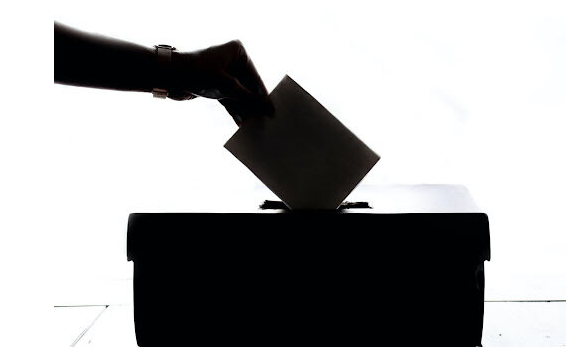 | The disenfranchisement of Black Americans has long outlasted the end of the Civil War, with modern instances of voter suppression in the form of limitations on absentee and early voting, stricter voter ID requirements, restrictions on voter registration, and other systemic barriers that decrease the voting engagement of minority populations. Today, Black voter disenfranchisement primarily takes the form of voting restrictions for incarcerated individuals. Systemic barriers such as gerrymandering, voting regulations for imprisoned persons, voter ID laws, lack of access to polling locations, and other examples contribute to the disenfranchisement of racial and ethnic minorities in the United States. This disenfranchisement has serious implications on election outcomes, representative government policy, and racial tensions. Two potential avenues may alleviate this issue: organizations to target legislative policies that uphold disenfranchisement, and supportive policy (including ranked-choice voting and expanded voting rights for racial minorities). | |
Brennan Center for Justice
January 5, 2022
|
How Voter Suppression Legislation Is Tied
to Race
| Over the past 18 months, there has been a wave of anti-voter bills introduced and passed across the country, many of them designed to undermine the growing political power of Latinos and other communities of color. By early May of this year, nearly 400 restrictive bills had been introduced in legislatures nationwide. While some have argued that this is nothing more than a game of partisan politics, with Republicans seeking electoral majorities for their party, new research from the Brennan Center shows that white racial backlash plays an important role in this wave. | |
American Bar Association Reports
August 8, 2023
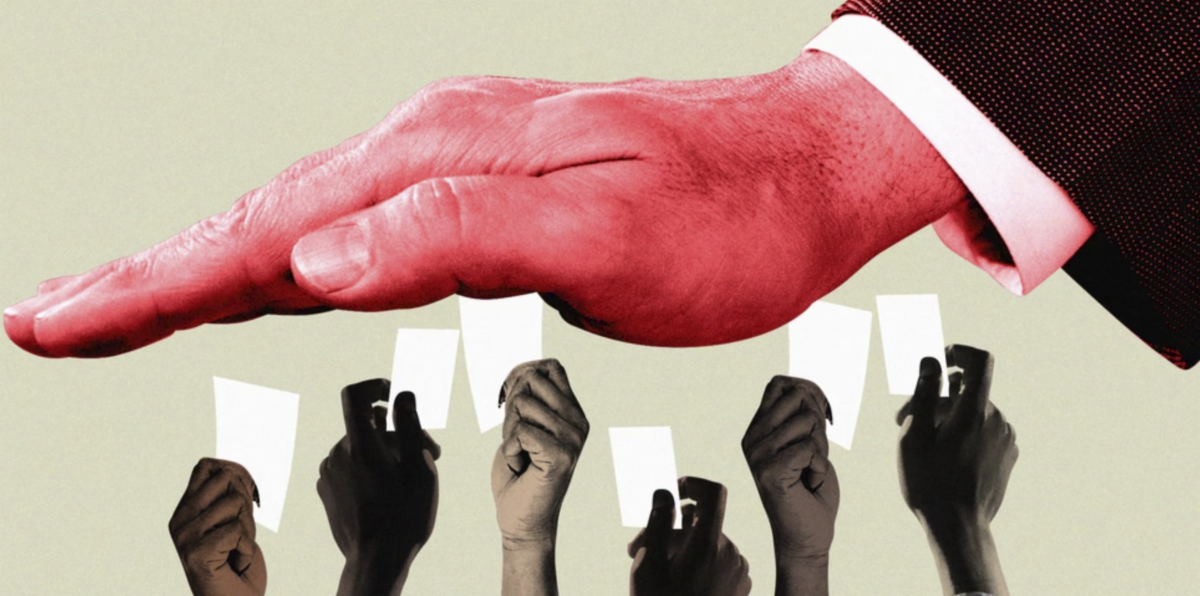
| Why Minority Voters Have a Lower Voter Turnout: An Analysis of Current Restrictions | 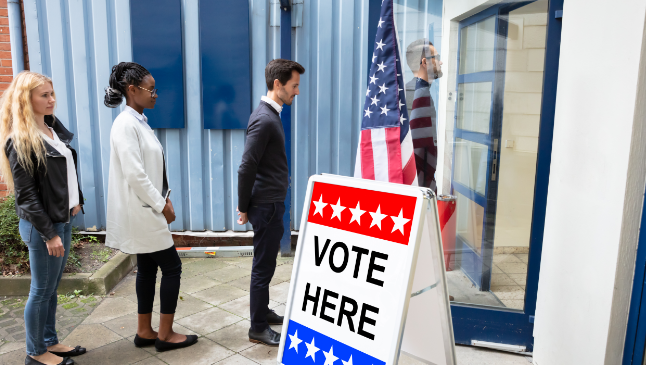 | Voter ID laws have underlying racial biases and prevent minorities from engaging in active democratic participation. These requirements compel an individual to present his or her ID in order to cast a ballot on Election Day. Obtaining an ID can be costly and requires an individual’s birth certificate, which may be burdensome. Proponents advocate for the law under the guise of preventing voter fraud and ensuring that only voter-eligible citizens partake in elections; however, individuals who lack government-issued identification are more likely to be younger, less educated, and impoverished, and—most notably—nonwhite. An example of the inherent discrimination of voter ID laws can be found in the implementation of Georgia’s “exact match” system. This program requires an individual’s voting status to be suspended if the name on their driver’s license or Social Security records does not exactly match the name they inputted on their voter registration form. Of the 51,000 individuals that this law affected in 2018, 80 percent of them were African American. There is evidence that the “exact match” law played a role in the 2018 Georgia gubernatorial election, as African American candidate Stacey Abrams lost by approximately 55,000 votes. | How Voter Suppression Affects Black People | Unpack That | |
The Guardian Reports
June 25, 2023
|
Ten years of a crippled Voting Rights Act: how states make it harder to vote
| |
For the last 10 years, Helen Butler and a coalition of activists have tried to accomplish a near-impossible task: to closely monitor the monthly meetings of the local elections boards in each of Georgia’s 159 counties.
The meetings can be tedious. Officials often discuss the nitty-gritty details of elections that can influence how easy it is to cast a ballot, or a county might announce plans to close a polling place and change early voting locations.
| |
The American Civil Liberties Union
October 6, 2023
| Why Access to Voting is Key to Systemic Equality | |
Voting is a fundamental civil right and it shouldn’t be infringed upon, no matter your race or zip code. Although the Voting Rights Act of 1965 prohibits racially discriminatory voting tactics and policies, including diluting the voting strength of racial minorities, Black people and communities of color in particular continue to face numerous obstacles to voting.
Let’s break down why equal access to voting is critical to the fight for systemic equality.
| |
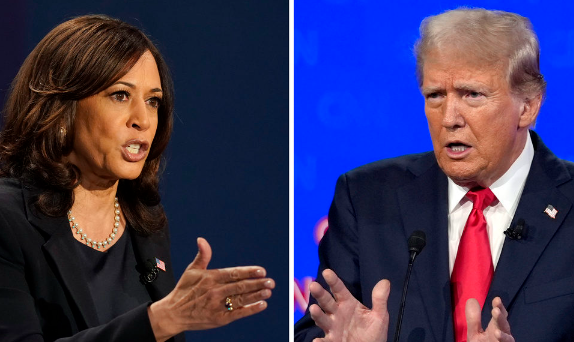
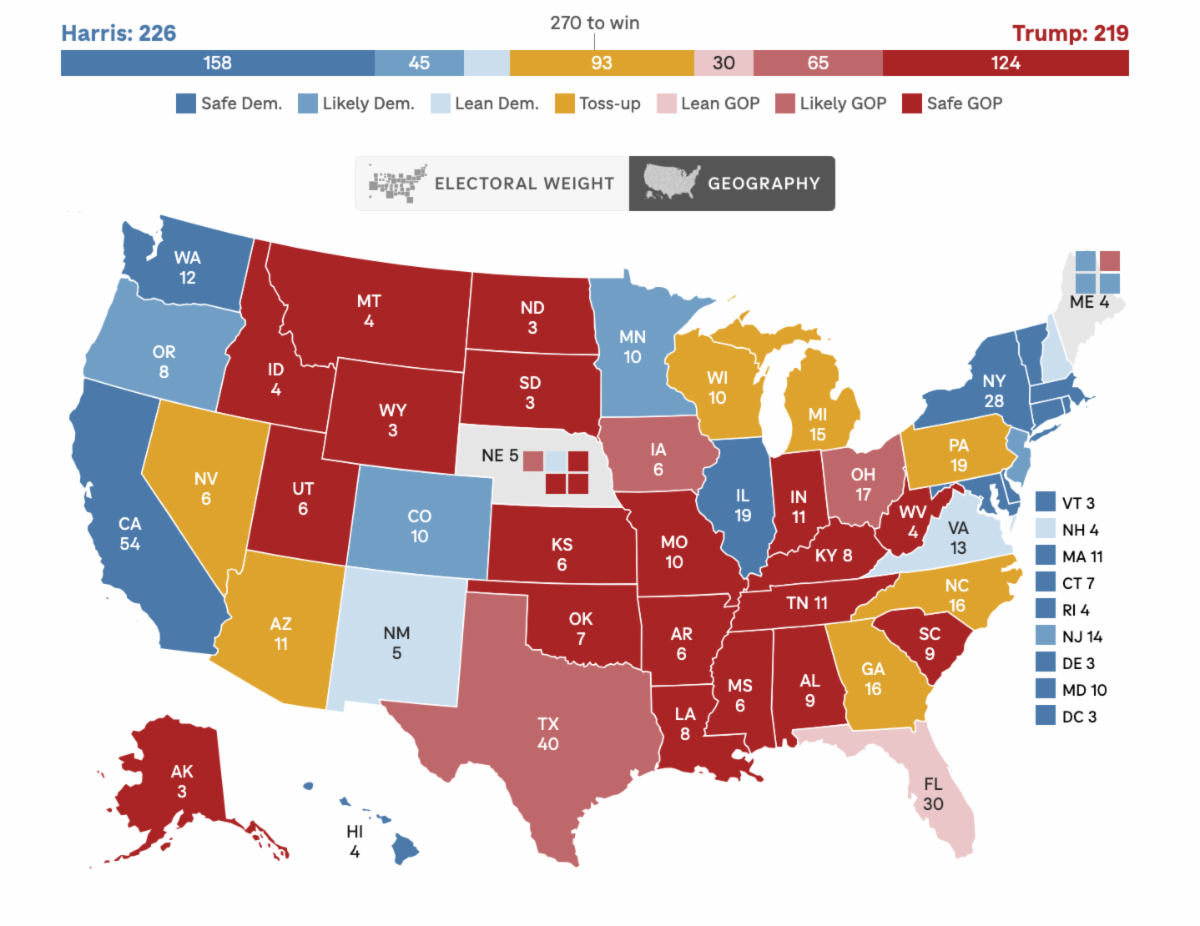
The 2024 Presidential Election
Click Image Below to View Latest Updates and Polling Trends in the 2024 Presidential Race
| |
Click Image Below to View the 2024 Presidential Election Interactive Map
| |
Rep. Ford Asks for Your Input
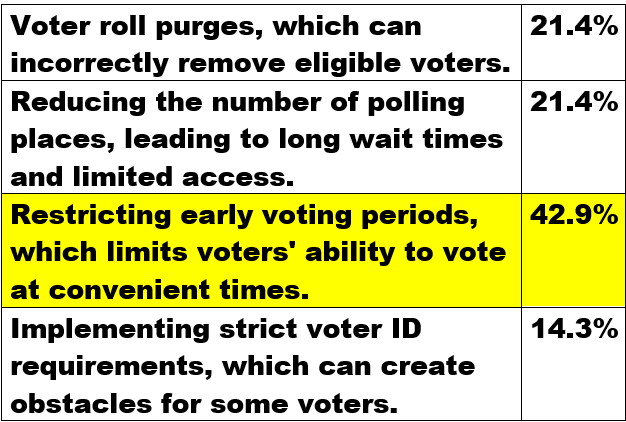
What Are Your Thoughts on Voter Suppression?
| What is the effect of shortening early voting periods on voter turnout in communities with lower socioeconomic status and minority populations? | Please select the option that most accurately reflects your opinion and vote accordingly. | |
How do the closure and relocation of polling places in underserved areas affect voter participation among low-income and
minority voters?
| Please select the option that most accurately reflects your opinion and vote accordingly. |
Click Image Below to Learn How to Register to Vote, Change Your Registration Name, and Change Your Registration Address
| Click the Image Below to Read Rep. Ford's Previous Special Editions in Preparation for Election Day. | |
Click Image Below to Learn More About Federal Safety and Security Grants available to
NonProfit Organizations Statewide
| |
Click Image Below to Learn 10 Things You Should Know About Filing Unemployment Insurance
| Click Image Below to Learn About Cash, SNAP and Medical Assistance | Key Facts Every Illinoisan Should Know | |
Click Image Below to Read a List of Important Words Americans Should Know | |
|
Click Image Below to View Rep. Ford's Hot
Job of the Day!
| |
Which modern tactic of voter suppression do you think is most effective at discouraging voter participation? | |
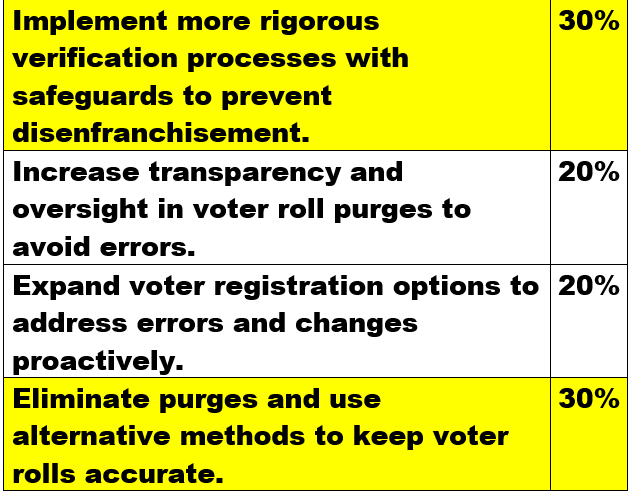
How should policymakers balance maintaining accurate voter rolls with avoiding disenfranchisement? | |
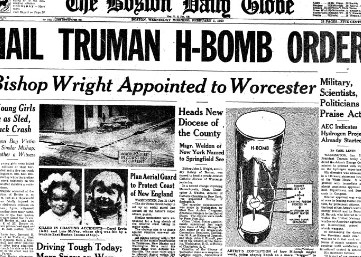
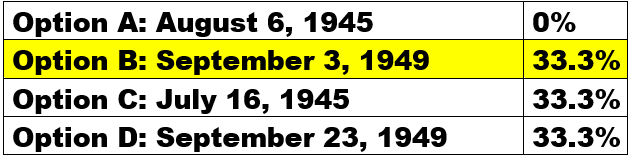
When did U.S. scientists detect seismic activity indicating a Soviet nuclear test? | |
|
Congratulations! If you've selected
option B, you've picked correctly.
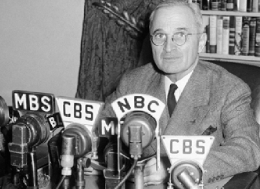
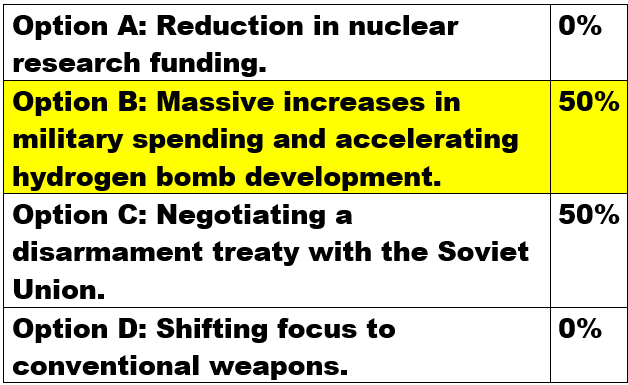
| What critical policy change did the National Security Council recommend after the Soviet nuclear test? | |
|
Congratulations! If you've selected
option B, you've picked correctly.
| |
Click Image Below to Learn More About Homeowners Assistance | |
On This Day in History
September 24, 2016
| |
History Reports
September 24, 2016
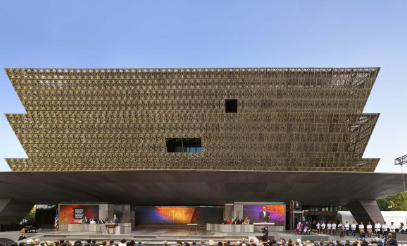
| The National Museum of African American History and Culture opens | |
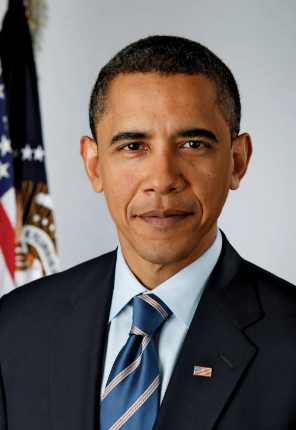
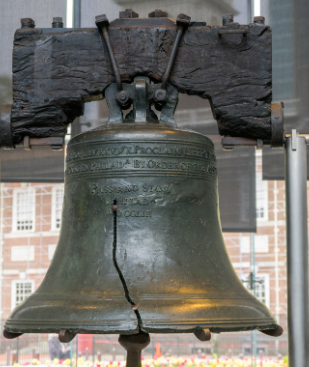
More than 15 years after it was first established, the National Museum of African American History and Culture opens on the National Mall on September 24, 2016. Barack Obama, the nation’s first African American president, leads the ceremony and officially opens the museum by ringing the Freedom Bell, a bell from an African American Baptist church founded in 1776.
| Museum of African-American History Opening | Which U.S. president led the opening ceremony of the NMAAHC? | What significant object was rung to mark the opening of the NMAAHC? | Knowing History Spotlight Moment | |
LEAD STORY
Black History
2016
The National Museum of African American History and Culture opens
World War II
1948
Mildred Gillars—aka “Axis Sally”—pleads not guilty to treason
Art, Literature and Film History
1968
First episode of “60 Minutes” airs
Religion
622
Muhammad completes Hegira
Early 20th Century U.S.
1902
Fannie Farmer opens cooking school
World War II
1941
Japanese gather preliminary data on Pearl Harbor
World War I
1918
Bulgaria seeks ceasefire with Allied powers
Vietnam War
1969
Chicago 8 trial opens in Chicago
Sports
1988
Ben Johnson wins gold, temporarily
U.S. Presidents
1964
Warren Commission report delivered to President Johnson
Religion
1890
The Mormon Church officially renounces polygamy
Crime
1971
A game warden is reported missing
Inventors and Science
1948
Honda Motor Company is incorporated
| |
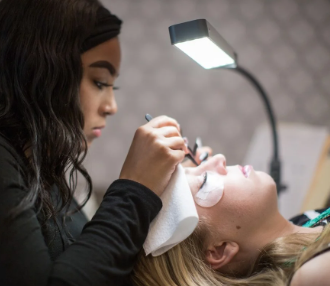
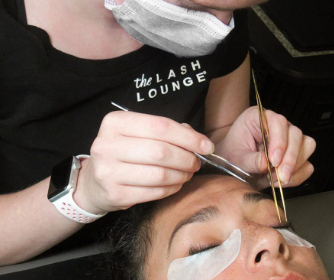
It's National Lash Stylist Day | |
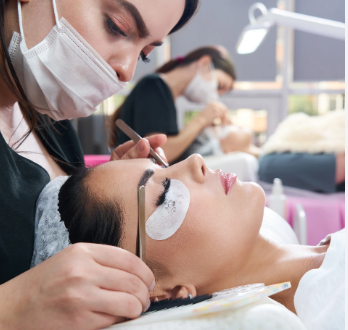
In 1882, Henry Labouchère of “Truth” reported that women in Paris had found a way to cut and make false eyelashes by having hair sewn into the eyelids. A similar report appeared in an 1899 edition of “The Dundee Courier” where a description of the painful method for elongating the lashes was given. The article explained how the procedure achieved longer lashes by having hair from the head sewn into the eyelids. | |
|
Discover the Rewards
Benefits of Becoming a Lash Technician
| |
|
Click Video Below to Learn More
Should I become a lash artist?
| |
|
Help is available; speak with someone today:
Suicide Prevention & Crisis Lifeline - Dial 988
| |
|
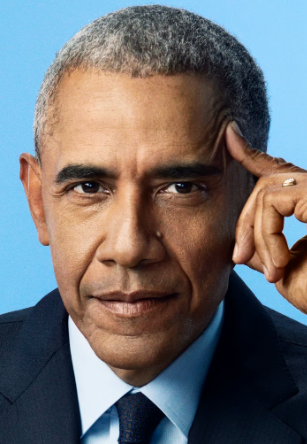
“There's no such thing as a vote that doesn't matter.”
-Barack Obama, 44th U.S. President
| |
Employers
Learn How to Become a Lash Technician
| |
Click Below to View Today's Job Highlights | |
|
Recruitment and Resources Specialist
Date: Sep 14, 2024
Location: Chicago, IL, US, 60621
Job Requisition ID: 40835
Agency : Department of Children and Family Services
Title: Social Service Program Planner IV
Closing Date/Time: 10/15/2024
Salary: Anticipated Starting Salary $7,066/month
Full Salary Range: $7,066 - $10,326/month
Job Type: Salaried
County: Cook
Number of Vacancies: 1
Click Here to Apply
Team Clerical
Date: Sep 13, 2024Location: Deerfield, IL, US, 60015
Job Requisition ID: 41013
Agency : Department of Children and Family Services
Title: Office Associate Opt. 2
Closing Date/Time: 09/27/2024
Salary: Anticipated Starting Salary $ 3,852 month;
Full Range $ 3,852-$ 5,046/Month
Job Type: Salaried
Category: Full Time
County: Cook
Number of Vacancies: 1
Click Here to Apply
Area Administrator
Date: Sep 13, 2024
Location: Chicago, IL, US, 60616
Job Requisition ID: 39914
Agency: Department of Children and Family Services
Closing Date/Time: 09/30/2024
Salary: Anticipated Starting Salary $9,300 - $11,300 Monthly
Job Type: Salaried
County: Cook
Number of Vacancies: 1
Plan/BU: None
PUC: 90686928
Click Here to Apply
Chief Litigation Officer
Date: Aug 28, 2024
Location: Chicago, IL, US, 60605
Job Requisition ID: 39481
(Chicago)
Agency: Department of Children and Family Services
Closing Date/Time: 10/01/2024
Salary: Anticipated Starting Salary: $8,486 - $14,668 monthly
Job Type: Salaried
County: Cook
Number of Vacancies: 1
Plan/BU: None
Click Here to Apply
Violence and Injury Data Technician
Date: Sep 9, 2024
Location: Springfield, IL, US, 62702-5076
Job Requisition ID: 41023
Agency: Department of Public Health
Office: Health Promotion
Division: Emerging Health Issues
Posting ID: 33-25-0042 / 41023
Posted: 9/9/2024-9/23/2024
Salary: Anticipated Starting Salary $5,179 a month;
Full Range $5,179 - $7,341 a month
Job Type: Salaried
County: Sangamon
Number of Vacancies: 1
Click Here to Apply
| |
Click Below to View Job Highlights From Previous Dates | |
Click Image Below to View Jobs Based on Industry | |
Click Image Below to View
Federal, State and City Jobs
| | Eighth District Community | |
Explore Local Small Businesses Through the Eighth District Chamber of Commerce | |
|
Despite losing 9.1 million jobs in the first two quarters of 2020, small businesses job growth rebounded swiftly following the COVID-19 recession. In the four quarters following, small businesses have gained 5.5 million jobs, making up for 60 percent of the decline during the early pandemic.
Small businesses have generated 12.9 million net new jobs over the past 25 years, accounting for two out of every three jobs added to the economy. For more, read Advocacy’s latest fact sheet, “Small Business Job Creation”.
| Click Image to Connect with a local Chamber of Commerce and Explore Job Postings in the Eighth Legislative District | Ford's Upcoming Events and Community Events | |
Rep Ford's Special Edition Newsletters | |
Click Image Below to View yesterday's Email on the History of Voter Suppression | |
Stay connected with Rep. Ford to stay up-to-date with the latest news and upcoming events! | | | | |