Digging into this Issue:
Another successful summer of archaeology is a wrap and we’re savoring our successes. Even when everything doesn’t go as planned, we’ve learned something new and can fine-tune our next steps. We’re so grateful for our fine partnerships and teamwork! Read more about:
- our progress expanding our physical indoor space and degree offerings.
- artifacts uncovered at the San Esteban Rockshelter.
- how we’re going to feel the earth move as we change direction at the GLD site.
- Dr. Meradeth Snow, who will keynote our fall conference: Nov. 7–8. **Lodging is scarce — book now!**
- online interviews with Director Dr. Bryon Schroeder and Archaeologist Erika Blecha.
| | New 'Digs' and Degrees: Have you Heard the Latest? | | |
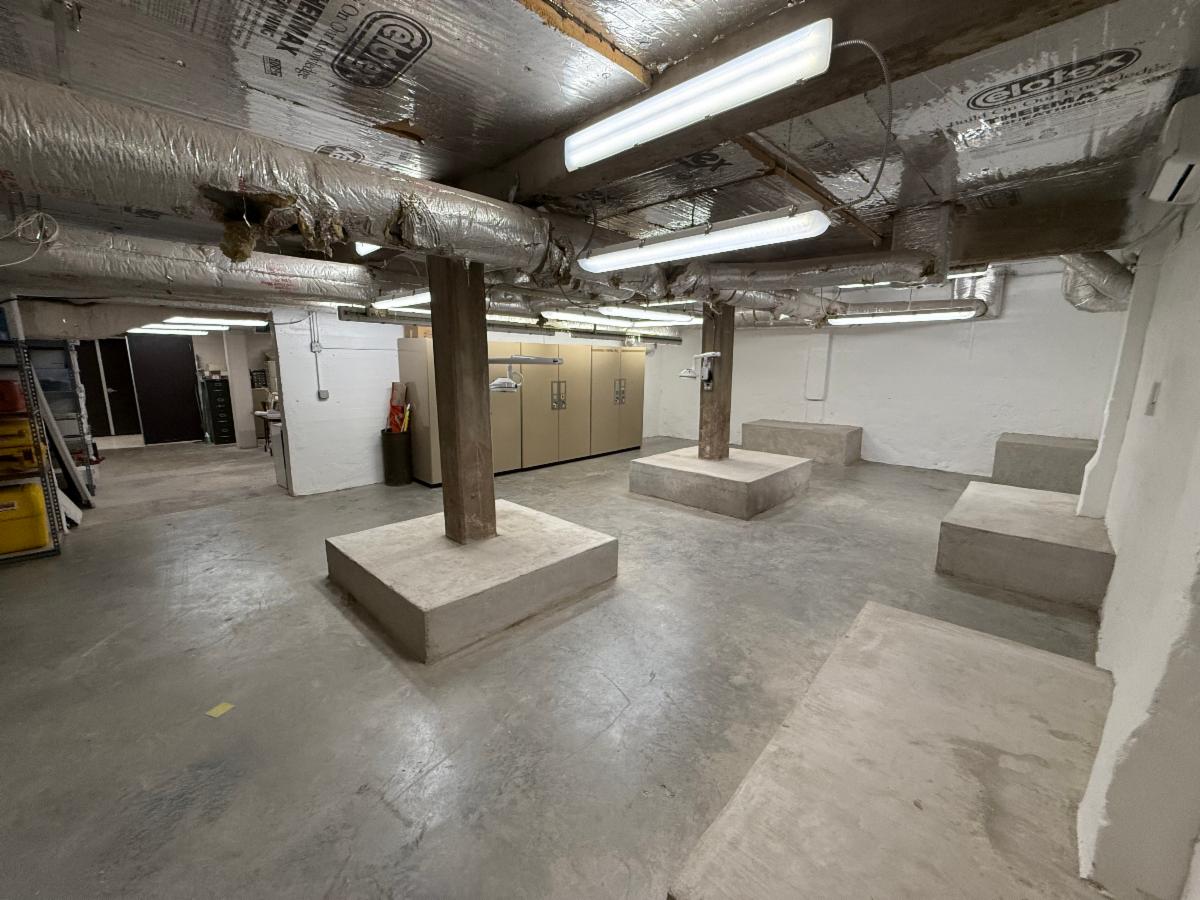
Upper Photo: New lab space. We are just waiting for the new countertops and workstations to be installed.
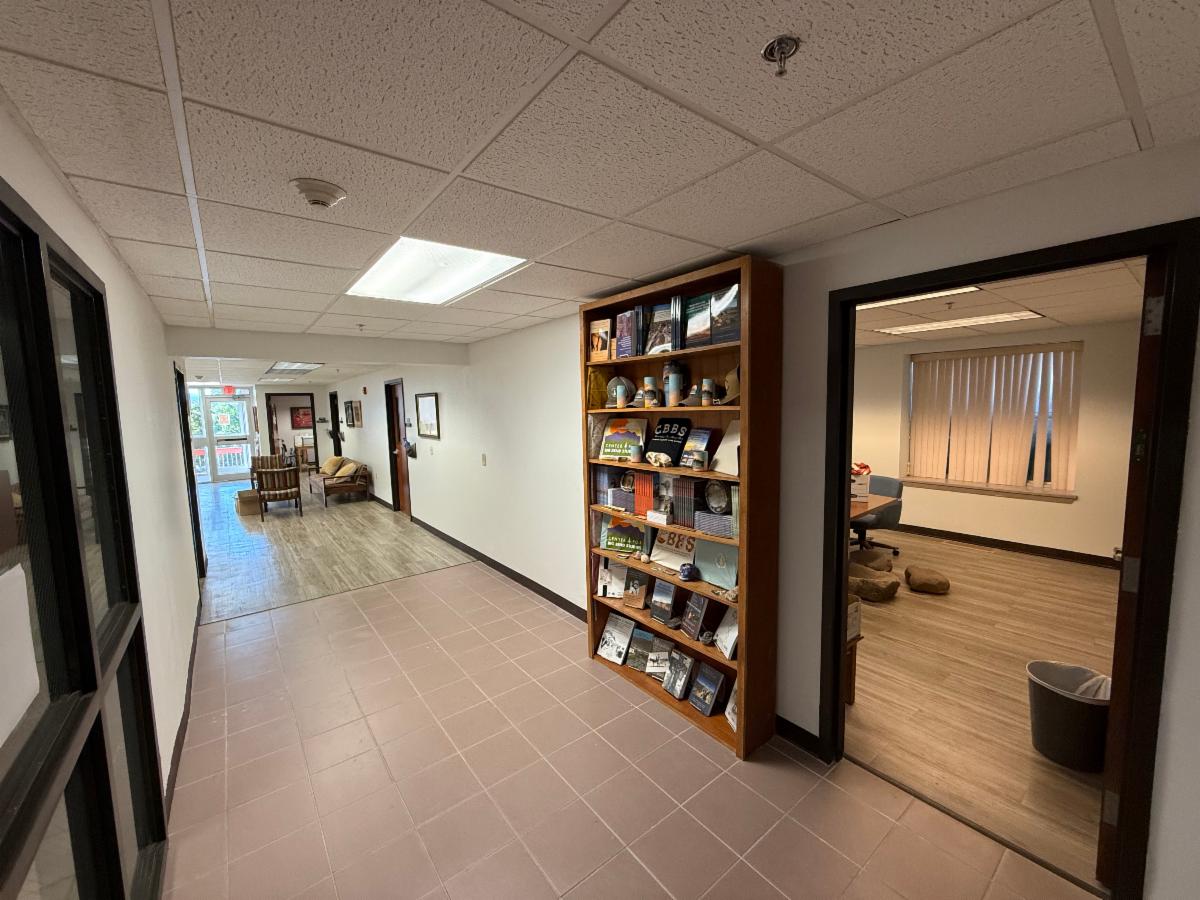
Lower Photo: New classroom to the right, and new laminate floors. Waiting on new display cases and teaching technology to be set up.
| | |
When we say we have “new digs” to report, we’re not just talking about archaeology. We have almost completed extensions and renovations to our area in Ferguson Hall to enhance our work at CBBS in so many ways, tripling our current space.
“We previously lacked the space for students to engage with cultural materials or collections meaningfully,” Director Dr. Bryon Schroeder says. “The renovation allows us to be better educators and scientists.”
The transformation of the basement is finished except for the installation of new countertops and furniture. With four feet of dirt excavated in some spaces, it did seem like a regular “dig” in some ways. Upstairs, our office has been extended to include a new classroom outfitted with the latest technology for remote teaching and learning and cases to display regional artifacts. All spaces (including the library) are getting new furniture to create more spaces for student learning and research.
There’s also hopeful news for the students who will use these new spaces. The ongoing creation of a new bachelor's degree in Anthropology is making good progress: It recently passed formal review at the Texas Coordinating Board of Higher Education., There's only one more major hurdle on the path to the finalization of the degree program: approval by the Southern Association of Colleges and Schools Commission on Colleges.
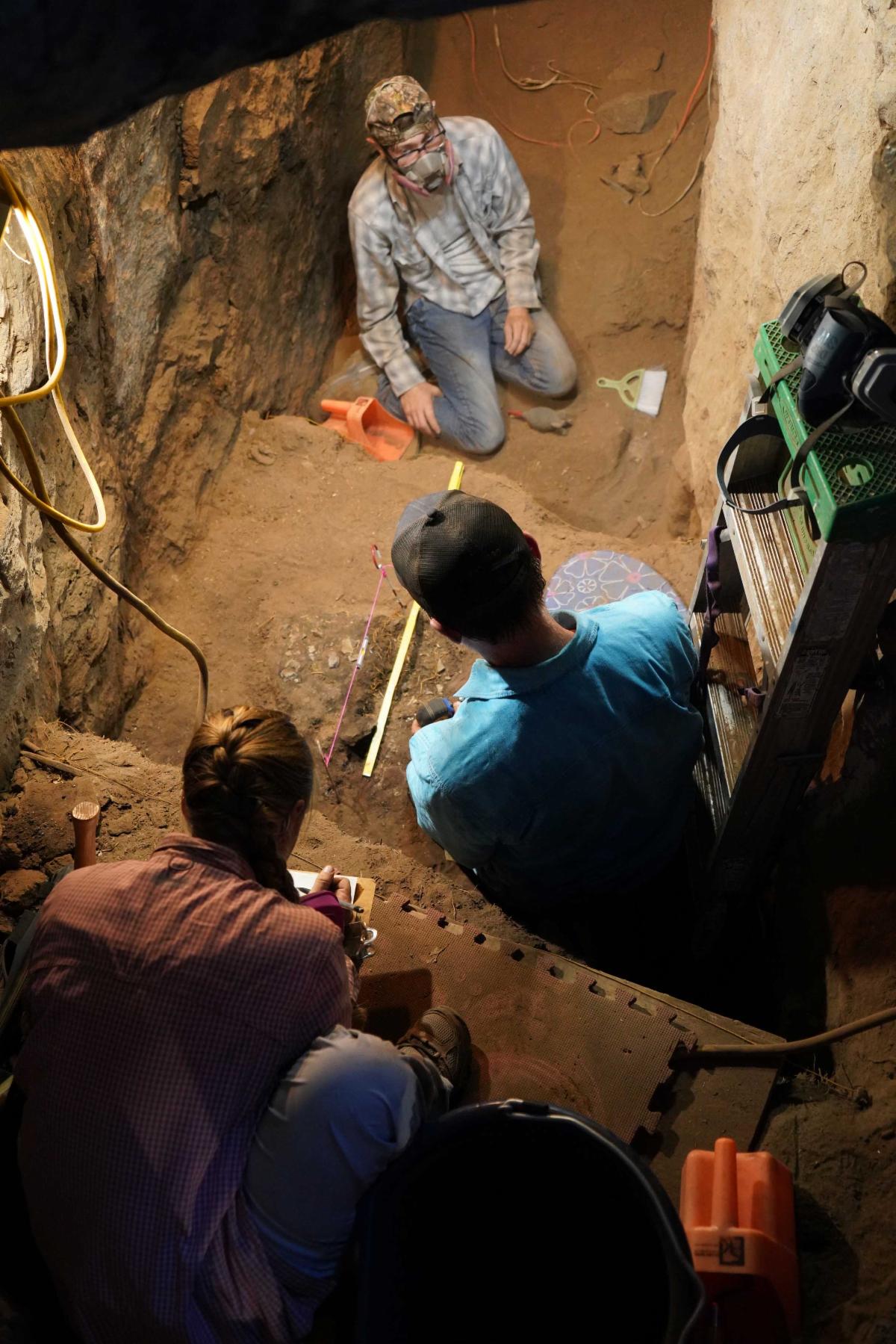
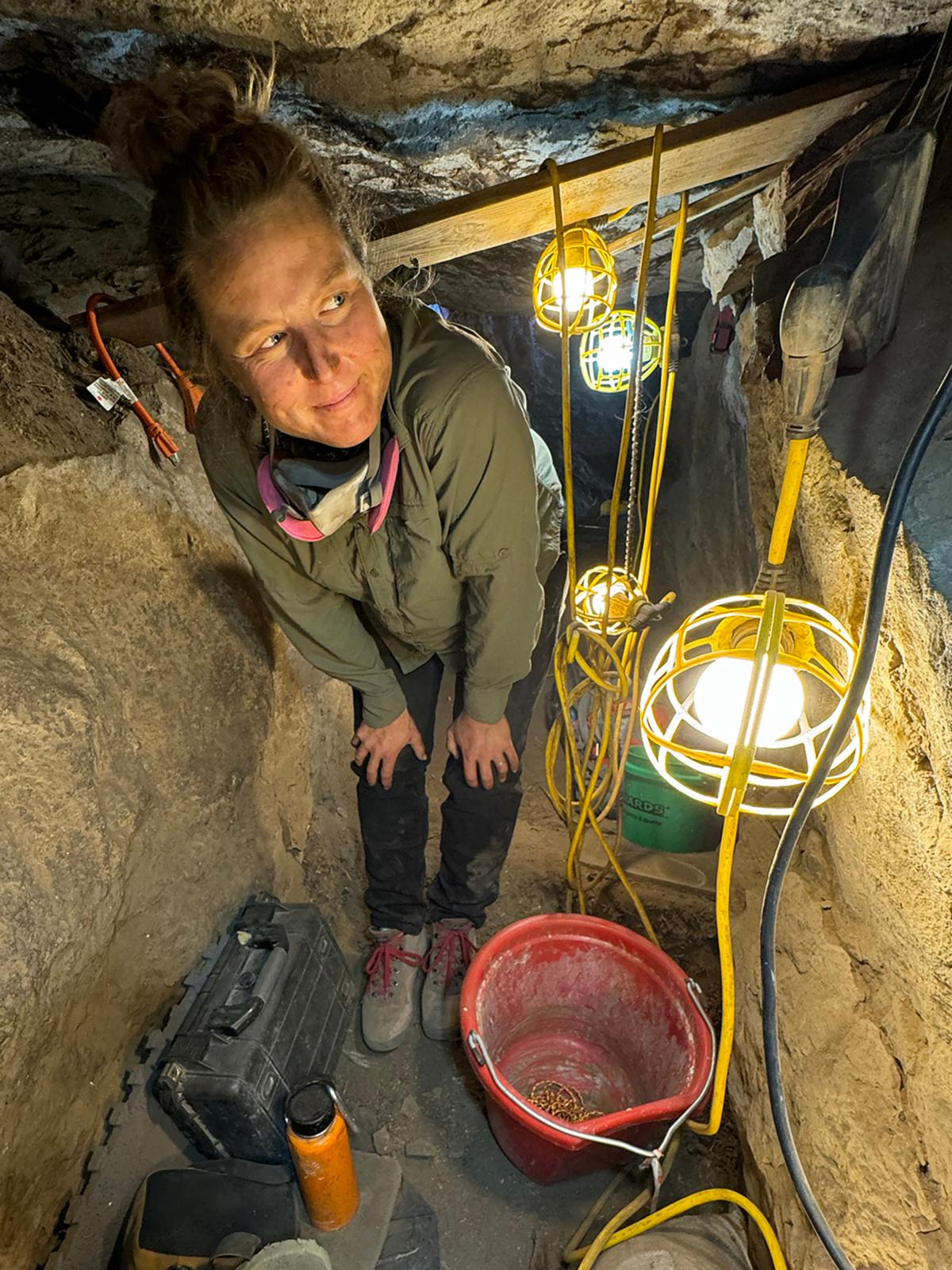
| | More Treasures Unearthed at San Esteban | | Photo: Dr. Devin Pettigrew (center) and KU graduate students, Leah Stirrup and Dylan Allen, excavating a new combustion feature found in the Sandal Shaft. | | |
Our discoveries of cave-preserved artifacts (hunting kit, hide) at the San Esteban Rockshelter last year drew media attention and whetted our eagerness to search further. This summer, we extended our excavation efforts in the Sandal Shaft — an area in the very back, hidden by fallen boulders —and located more perishable weaponry and hearth features.
“We found hunting technologies that are much younger than last year’s hunting kit,” Director Dr. Bryon Schroeder says. “It seems pretty odd that we are only finding hunting-related items at the back of the shelter.”
Results from testing to determine the age of these artifacts and features will be available soon.
| | A Change of Direction Coming to GLD Site | | |
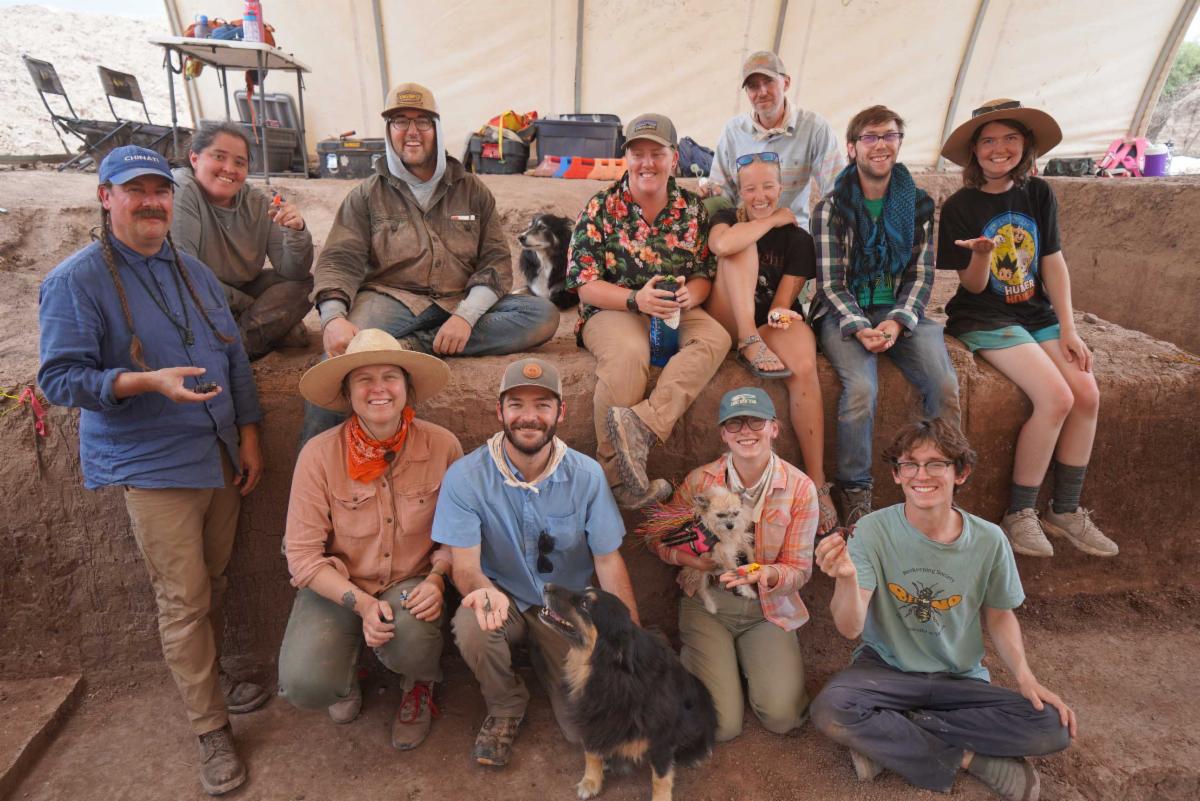
Upper Photo: The wonderful GLD 2025 crew!
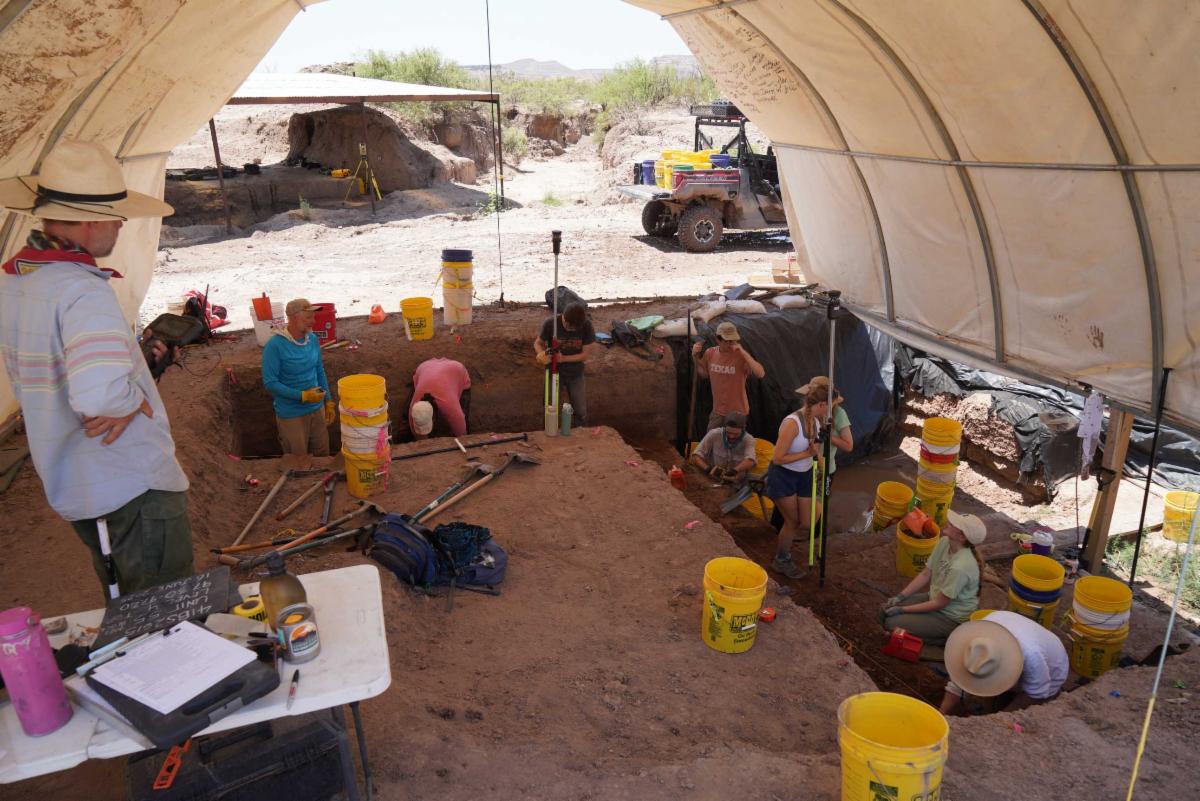
Lower Photo: Crew in the main block excavating to the south and east of where we excavated last year.
| | |
Those successful 2024 summer excavations inspired anticipation about what this year’s work at the Genevieve Lykes Duncan Site might reveal. Archaeology can be a fickle mistress, however, and some years she offers lessons that spark us to adapt our plans.
Last summer we worked for two 10-day sessions with University of Kansas graduate students, Sul Ross field school students and students/volunteers from around the region. We found a nearly 13,000-year-old Clovis occupational layer with defined blades, red ochre smears, charcoal flecking, and hundreds of pieces of stone debitage and bone fragments. Based on those excavations, we believed the site extended to the south and east.
This year, our team excavated 15 one-square-meter units extending off last year’s excavations but found that ancient waterways may have washed away any evidence of Clovis-aged occupation that we had hoped to find. Instead, the site appears to extend to the north.
“Looks like there’s some major earthwork in our future,” says project archaeologist Erika Blecha, who notes there are questions swirling around the site that the team seeks to answer. “How much of the site is preserved? What were they doing in this location? Hunting? Processing game? Camping? A little bit of all of it?”
Next year the team will focus on a site to the south and north of the major block excavation. That “major earthwork” removes the uppermost layers of dirt (with more recent history) with heavy machinery to expedite the search for the rest of this important site below.
| | Dr. Meradeth Snow Will Keynote CBBS Annual Conference: Nov. 8–9 | | |
Whether you’re a regular attendee or a potential first-timer, save the date for our annual fall conference. Days filled with a wide array of presentations, evening socials buzzing with fun, vendors with goods you can’t find elsewhere, colleagues eager to discuss the latest findings, silent auction and a fascinating keynote speaker — all held at our beautiful Sul Ross campus in the Chihuahuan Desert. Lodging is scarce — book now!
Keynote speaker for 2025 is Dr. Meradeth Snow, associate professor of Anthropology at the University of Montana. Dr. Snow studies anthropological genetics with a specialty in ancient DNA, primarily in the southwest U.S. desert and northwest Mexico. This work led her here to analyze the DNA from the two individuals from Spirit Eye Cave. She seeks to use her DNA research to uncover connections between former residents of the Big Bend region and their counterparts at Paquimé (Casas Grandes, Chihuahua, Mexico). Paquimé, a UNESCO World Heritage Site, is the largest archaeological zone representing the ancient people and culture of the Chihuahuan Desert.
According to its UNESCO profile, Paquimé’s development lasted from 700 to 1475, reaching an apogee in the 14th and 15th centuries. Paquimé played a key role in trade and cultural contacts between the Pueblo culture and the more advanced civilizations of Mesoamerica. “The extensive remains, only part of which have been excavated, are clear evidence of the vitality of a culture which was perfectly adapted to its physical and economic environment,” the World Heritage Site description reads.
CBBS members receive a registration form in the mail several weeks before the conference that offers discounts or you can register at the CBBS online store.
| | If you would like to make a 30-minute presentation, please complete the Call for Papers form and send materials to the Center for Big Bend Studies. For detailed instructions for presenters, see the Instructions page. Abstracts for the 2025 conference are due October 17. | | Blecha Featured as Sul Ross Science Seminar Series Opening Speaker | | |
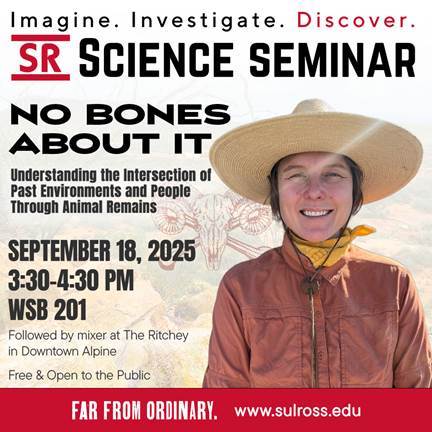
Archaeologists find timeless stories of humanity in every artifact they uncover, even animal remains. Our own Erika Blecha was a featured speaker in the latest installment of the Sul Ross Science Seminar Series in September: "No Bones About It: Understanding the Intersection of Past Environments and People Through Animal Remains." The analysis of animal remains —bones, teeth, shells and other animal-related artifacts — from archeological sites can reveal information about diet, environmental health and human impact on ecosystems.
"San Esteban Rockshelter preserved more than 17,000 years of faunal remains and human history. Through the analysis of these faunal remains we can better understand the environmental history of this site and how human interaction with this site changed through time,” Blecha says.
| | |
Marfa Public Radio’s Nature Notes featured Andrew Stuart’s interview of Director Dr. Bryon Schroeder about the origins of maize, the topic of a recent international collaboration: “In the Prehistoric Story of Corn, Big Bend’s Indigenous People Played a Role.”
Here’s an excerpt:
“That our region would figure in those origins might seem unlikely. It was long assumed the Big Bend’s Archaic people were strictly hunter-gatherers. Yet recent finds have upended that assumption. Archeologists have learned that corn was being grown in northern Chihuahua more than 3,000 years ago. And corn cobs recovered from Spirit Eye Cave, south of Marfa, have been dated to 2,100 years old.
To understand the origins of eastern U.S. maize, the forebear of much modern corn, English scientists conducted genetic analysis on prehistoric maize from Arkansas, from Arizona, New Mexico and Utah, and from Mexico. And Schroeder shared samples from three Big Bend sites: Spirit Eye Cave, Bee Cave and Tranquil Rockshelter. The results hint at complex networks of trade in the prehistoric world.”
Hear/read the rest of the interview here:
| | Sharing the Wonders/Mysteries of San Esteban at Agave Fest | | |
Archeologist Erika Blecha gave a fascinating talk on the history of life — including animals — at the San Esteban Rockshelter at the 8th annual Marfa Agave Festival in June. Last summer, the CBBS team uncovered an amazing hunting kit and pronghorn hide, preserved by the cave’s protection. Luckily, Marfa Public Radio recorded it for those who couldn’t attend.
Here’s an excerpt about Blecha’s research into the species that were part of the San Esteban landscape through the years:
“I've analyzed about 4,600 pieces of bone that came from the Sandal Shaft, and they represent over 100 species of animals. This is about two-thirds of the animals that I have been able to identify. Some of those are extinct, so we have some really exciting extinct animals.
We have three different types of extinct pronghorn represented at San Esteban. We have so much of the dwarf pronghorn. A lot of carnivores were probably munching on that thing.
We have horse pieces as well… We have a few mandibles of the saber-toothed cat, so there's more than one individual that habituated in that rockshelter. We have a dire wolf. We know it was a male because we have its penis bone, so that's pretty exciting.”
Hear Blecha’s talk in its entirety here:
| | Hello, and thank you for reading our E-Newsletter! Please share with friends and family who may be interested in the Center for Big Bend Studies' work. If you would like to receive emails like this, SUBSCRIBE HERE. | |
Ferguson Hall, Suite 114 • SRSU • P.O. Box C-71
Alpine, TX 79832
| | | | |