“The meaning of clothes is changing as we witness a strong shift away from clothes worn to beautify or emphasize the wearer’s social status to clothes designed to last and enhance comfortable everyday living. We continue to evolve clothes based on our LifeWear concept for simple, quality clothing carved from a quest to fully satisfy daily life needs and to enrich all people’s lives everywhere,” says Tadashi Yanai, Uniqlo.
Uniqlo Is Distancing From H&M and Zara to Become the World’s Top Fashion Retailer
|
|
Fast-fashion retailers are considered the bottom-feeders in the fashion world. They are widely credited – or discredited depending on which side of the cash register you are on – with copying designer-inspired trends, producing them in copious quantities and selling them for pennies on the dollar of the namesake brands.
Sweden’s H&M operating 5,000 stores worldwide, Zara with 2,200 locations, owned by Spain’s Inditex and Uniqlo with 2,300 stores, owned by Japan’s Fast Retailing, are the undisputed leaders in so-called fast fashion.
Fast fashion hit a speed bump in the Covid pandemic. Supply chains came to a stand still as manufacturing plants were closed and consumers under stay-at-home orders had no place to wear new outfits. Shoppers retreated from trendy styles to comfort selections.
All of the leaders had something to offer in the comfort-fashion realm, but Uniqlo had more, being lifestyle-oriented – or as the company calls it “LifeWear” – rather than as fashion driven as H&M and Zara are.
Strict line-by-line comparisons of the three fast-fashion market leaders is hard due to different financial calendars, but it is safe to say that the race is extremely tight between all three titans.
That said, Uniqlo has its sights set on becoming the world’s number one fashion brand and it is well on its way to fashion dominance.
It just claimed the title of the number one fashion brand in China. And it has far more penetration in that market than its competitive peers – 800 stores in Mainland China compared with 500 H&M locations and about 200 Zara stores.
With China projected to overtake the U.S. as the world’s number one apparel market by 2023, Uniqlo has a head start in the race.
Here’s how Uniqlo will take the crown...
|
|
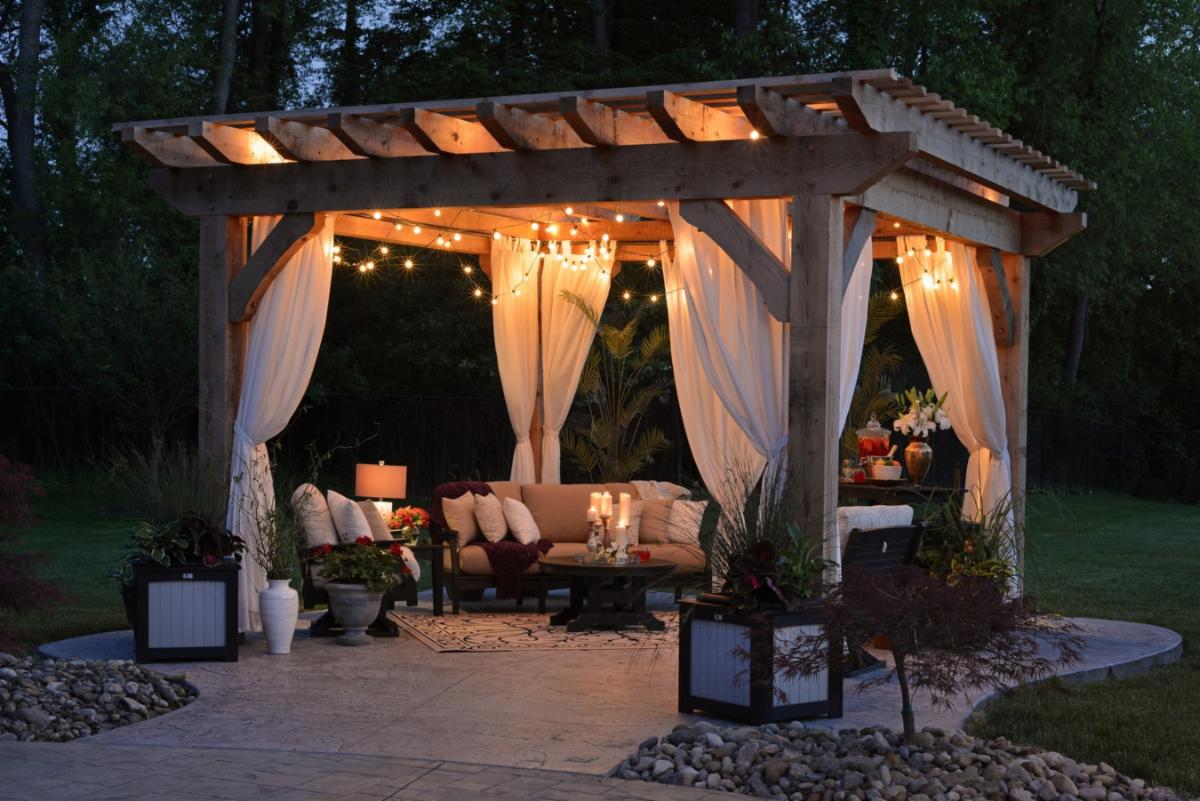
“People want an outdoor space that reflects the same stylistic rigor that is afforded to the interior of their home. They want a styled outdoor space with multiple rooms and separate and distinct areas for different purposes,” says Allison Messner, Yardzen.
2021 Will Be The ‘Year Of The Yard,’ As More Americans Plan To Improve Outdoor Spaces
|
|
Last year was the “Year of Home,” as pandemic lockdowns and stay-at-home orders resulted in a home-related spending boom.
This year will be the “Year of the Yard,” as Americans turn their attention to improve their outdoor spaces, according to a new study by the International Casual Furnishings Association (ICFA).
In reading the latest study results, Jackie Hirschhaut, vice president of the ICFA, sees a fundamental shift in how Americans are relating to their outdoor living areas. The patio is no longer just a place to retreat for an evening cocktail or a Sunday afternoon barbecue. Everything we do inside, we want to do outside and more.
“At the beginning of 2020, we were focused on creating outdoor spaces that complement our homes and lifestyles,” Hirschhaut said. “Today we are creating outdoor spaces that supplement our sense of wellbeing and transform an outdoor area into an outdoor room.”
|
|
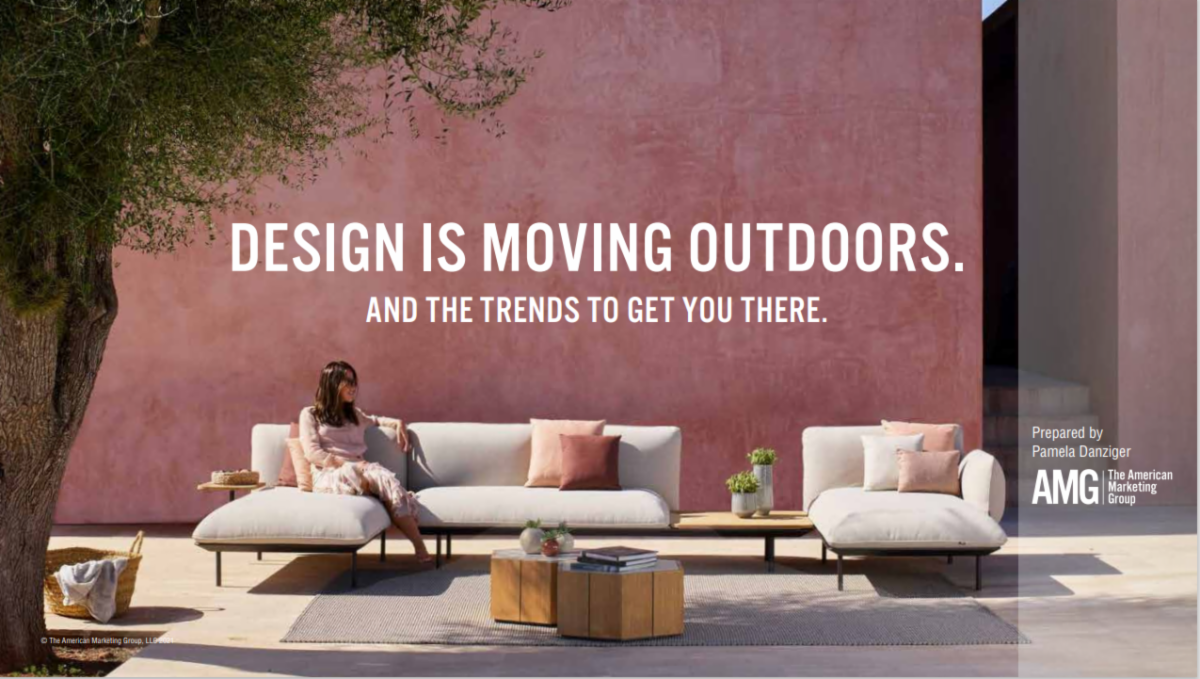
“Outdoors is no longer a separate space, but a continuation of what’s happening on the interior. With Covid-19, nature has become an essential resource to stay healthy and happy and that means outdoor will be increasingly important. The line between what looks indoor vs. outdoor is
becoming ever more blurred,” says a designer.
Design Is Moving Outdoors
|
|
“In the beginning…” people lived in harmony with nature. Nature formed us and gave us all that we as human beings needed to live and prosper. Gradually we learned how to gain power over nature and with that knowledge, cultures advanced and mankind prospered.
But as culture became more technology advanced, we took nature for granted. We abused it and polluted it, taking too much out and not giving enough back. We’ve gotten further and further from our roots and the life-sustaining power nature provides.
The 60s anthem “Woodstock” describes it as “being caught in the devil’s bargain,” and proposes the way out: “We’ve got to get ourselves back to the garden.”
For the last 50 years, people across the globe have awakened to the Faustian bargain we’ve struck living in discord rather than harmony with nature.
In response, people are changing their lifestyles and behavior to get more time in nature as an antidote to people’s stress-filled lives.
The Global Wellness Summit describes us as suffering from a Nature Deficit Disorder. “This 24/7, digitally-dominated, Instagram-able world is depriving humankind of some very basic, very important nourishment that comes from being outdoors.”
Designers have an excellent opportunity, even a responsibility, to help their clients’ mental and health by creating an outdoor oasis for them to refresh and renew their spirit.
Consumers know they need it. In a recent Wakefield survey conducted among 1,300 homeowners on the home improvement projects they plan to undertake in the coming year, outdoor improvements take first place.
For designers, there is no question: design is moving outdoors.
|
|
“The trends towards localism, connections to nature, well-being and the natural resilience and strength of humanity will all resonate at this time. The luxury industry will prosper by finding routes to solving the issues that we all have and offering solutions along with more reasons to purchase. This will engage the customer,” says this luxury insider.
Welcome the Era of Conscientious Luxury
|
|
This year’s fifth annual State of Luxury report takes a look back at the year that was, but more importantly, looks ahead to what 2021 holds for companies competing in the luxury market.
As 2021 dawns, it will be a year of transition for the luxury market after the reset brought on by the Covid-19 pandemic. The luxury market is entering a new era of conscientious luxury, as opposed to conspicuous luxury which has been the driving force in the luxury market for the last 50 years or more. Luxury companies will be forced to adapt or be left behind.
On the flip side of the business challenges 2021 will bring is opportunity, and this year will present plenty of both, which are detailed in the report.
While the luxury industry has talked for years about “New Luxury,” it has continued to cling to old luxury ideas and business practices. So far luxury companies have taken baby steps to adapt, but the Covid-19 pandemic, which brought the global luxury market to its knees, requires them to take giant steps now.
This year’s 100+ page report in easy-to-digest Powerpoint format is filled not only with survey findings and key takeaways, but also comments from respondents and additional research findings from reliable and authoritative secondary sources.
It will be your company’s guidebook to effectively navigating the challenging year ahead.
|
|
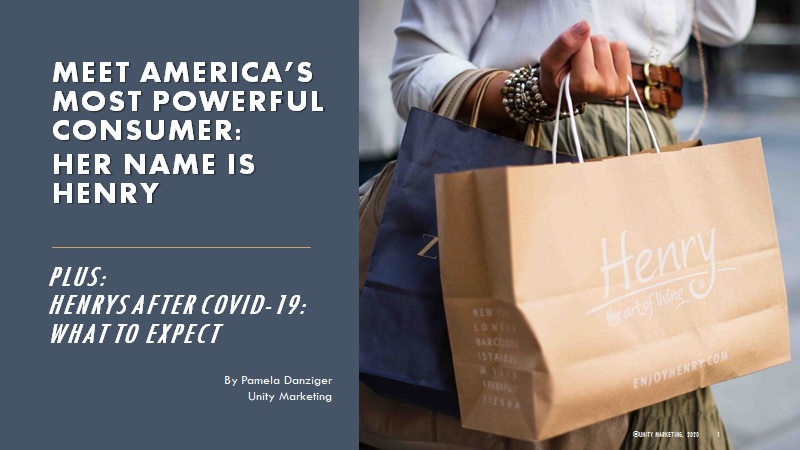
Women control or influence ~80% of all consumer spending. Across the $13.3 trillion U.S. economy, one income segment – the HENRYS ($100k-$250k) – account for the largest share (36%) of consumer spending. That makes HENRY women America's most important and powerful consumer segment.
Meet America's Most Powerful Consumer: Her Name Is HENRY
|
Unity Marketing has just published a new luxury trend report, Meet American's Most Powerful Consumer: Her Name Is HENRY.
This detailed 130+ page report explains the demographics of HENRY women, how she shops, what she buys, and most importantly, her motivations that guide purchases for herself and her family.
This report answers these four critical questions about HENRY women:
- Who she is
- How she shops
- What she wants
- How to attract her to your brand
In particular, it explains the opportunities for luxury brands to connect with young HENRY women, who may not have the individual spending power of her ultra-affluent sisters now but are likely to have it in the future.
In addition with your subscription to this report, you will also receive the latest trend report, The HENRYs After COVID-19, which explores what the new-normal, post-coronavirus world will look like from the perspective of the HENRYs and ways that luxury brands can connect with them.
|
|
Unity Marketing | 717-336-1600 or pam@unitymarketingonline.com |
|
|
|
|
|
|