2026 HHRI Research Symposium: Data-Centered Research | | |
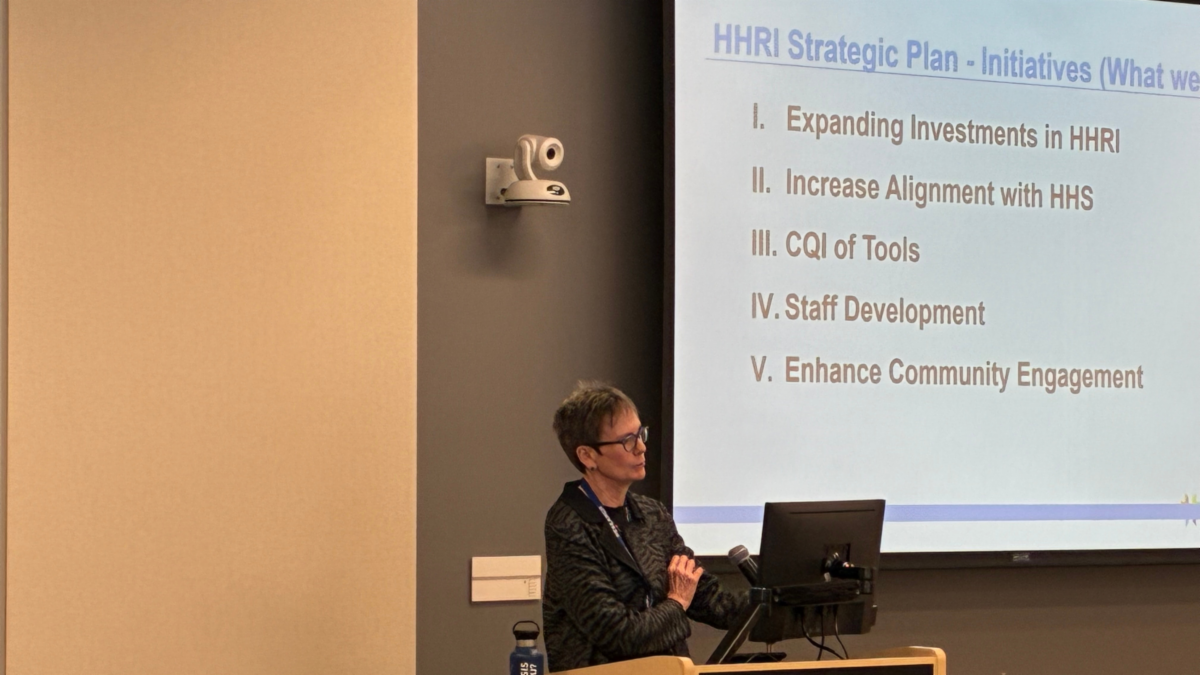
A full house gathered on Friday, April 24, 2026, for the annual Hennepin Healthcare Research Institute’s (HHRI) Research Symposium and Poster Session. This was a hybrid event, held in person at Hennepin Healthcare's Clinic & Specialty Center, Stillman Room, and on Microsoft Teams from 1-3 PM CDT. The symposium kicked off with in-person poster presentations and networking. It included a leadership update from Kirsten Johansen, MD, HHRI President.
The leadership update was followed by presentations from researchers who are focused on data-centered research. Investigators Justine Mrosak, MD; Allyson Hart, MD, MS; and Dr. Kirsten Johansen spoke on their current and ongoing research.
-
Dr. Justine Mrosak shared how the REDAC team is expanding access to data, analytics, and informatics support across Hennepin Healthcare and HHRI.
-
The HHRI Transplant Research team, led by Dr. Allyson Hart, highlighted how data‑driven research is being used to address one of transplant medicine’s most pressing challenges: the gap between organ supply and patient need.
| |
Mpls.StPaul Magazine's 2026 Rising Stars
| Please join us in congratulating Kerry Sheets, MD, who was named one of the 2026 Mpls.St.Paul Magazine Rising Stars. You can see the full list of Hennepin Healthcare's Rising Stars here. | | |
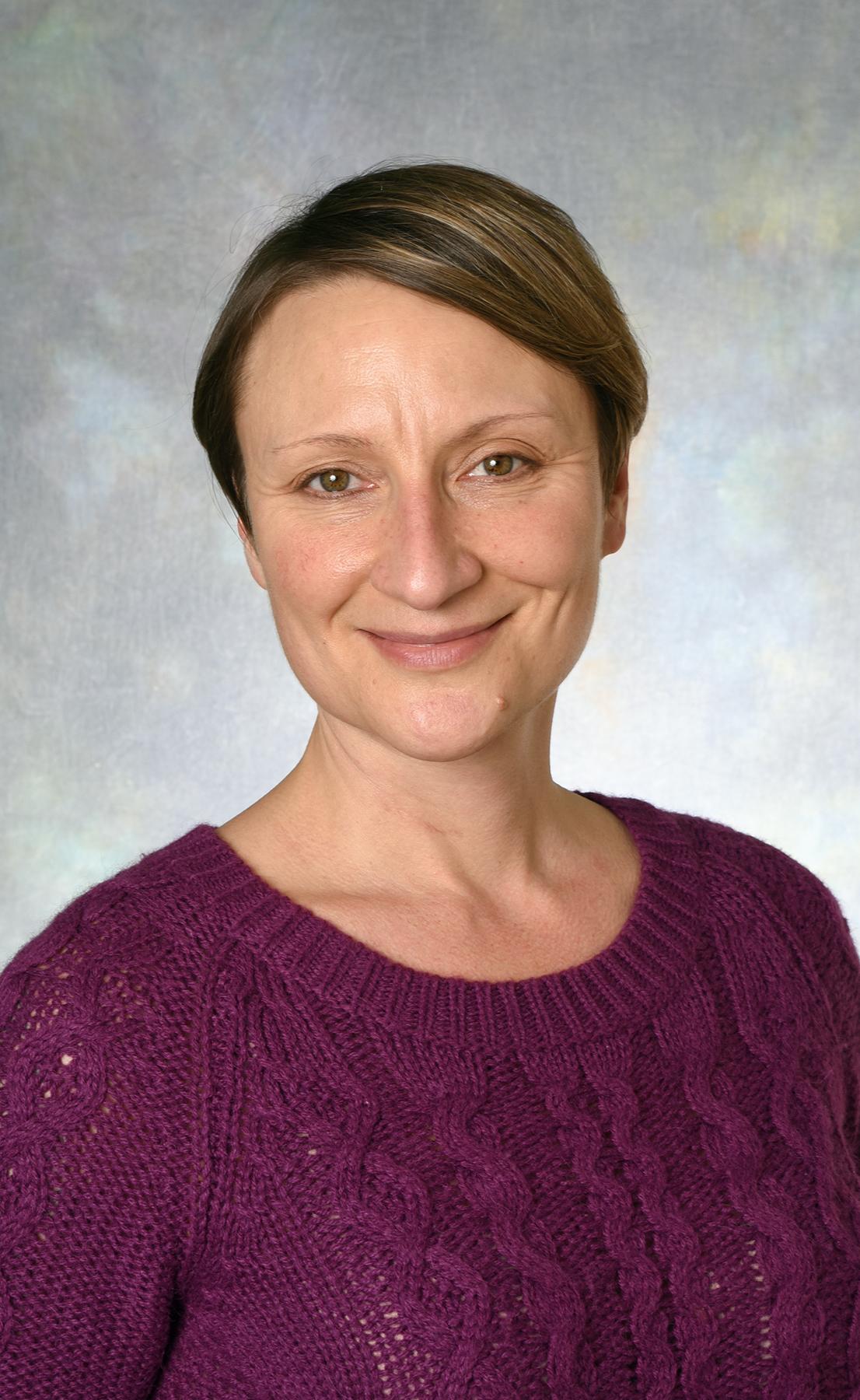
Dr. Sheets is a geriatrician providing care for older adults in the Hennepin Healthcare clinic and in nursing homes. She's also the Co-Principal Investigator for the Healthy Aging in the Senior Years (HATS) study, which focuses on how to prevent and reduce dementia and memory loss in the African American community.
Within geriatrics, Dr. Sheets has a strong focus on complex chronic disease management, dementia, HIV, and functional impairment. Her research interests include dementia and blood-based dementia biomarkers, healthy aging, HIV, and aging.
| | Research Awards - Congratulations! | | Please join us in congratulating the following researcher who received an National Institutes of Health (NIH) Research Project Grant (R01) to support their health-related research and development. | | |
The irritating flying insects that give humans red, itchy bumps are the same flying insects that, when infected with the Plasmodium parasite, lead to the global health concern, malaria. It’s this very parasite that Kristina Burrack, PhD, has been awarded to study through an R01 award of $3,141,538 from the NIH.
In this study, entitled “Enhancing T and B cell responses to Plasmodium via IL-15,” Dr. Burrack will examine the effects of an immune-modulatory therapy on T and B cells and their antibody responses to Plasmodium infection and vaccination.
| | |
Featured: Research & Evaluation Data Analytics Core (REDAC)
REDAC is a dedicated, single-entry point resource providing centralized support with data analytics, program evaluation, and research methodology across the Hennepin Healthcare System (HHS) and HHRI.
Established to address longstanding challenges in aligning research needs with institutional data resources, the team is comprised of data scientists, clinical informaticists, Epic experts, research/evaluation methodologies, and project managers.
REDAC operates independently of the hospital’s IT infrastructure, allowing it to prioritize and manage research-focused data projects without being subject to clinical IT workflows or timelines. This unique structure enables REDAC to offer responsive, specialized support tailored to the unique demands of academic and data-driven inquiry.
| | | SRTR Debuts New Patient-Friendly Website & Dial Icons | | |
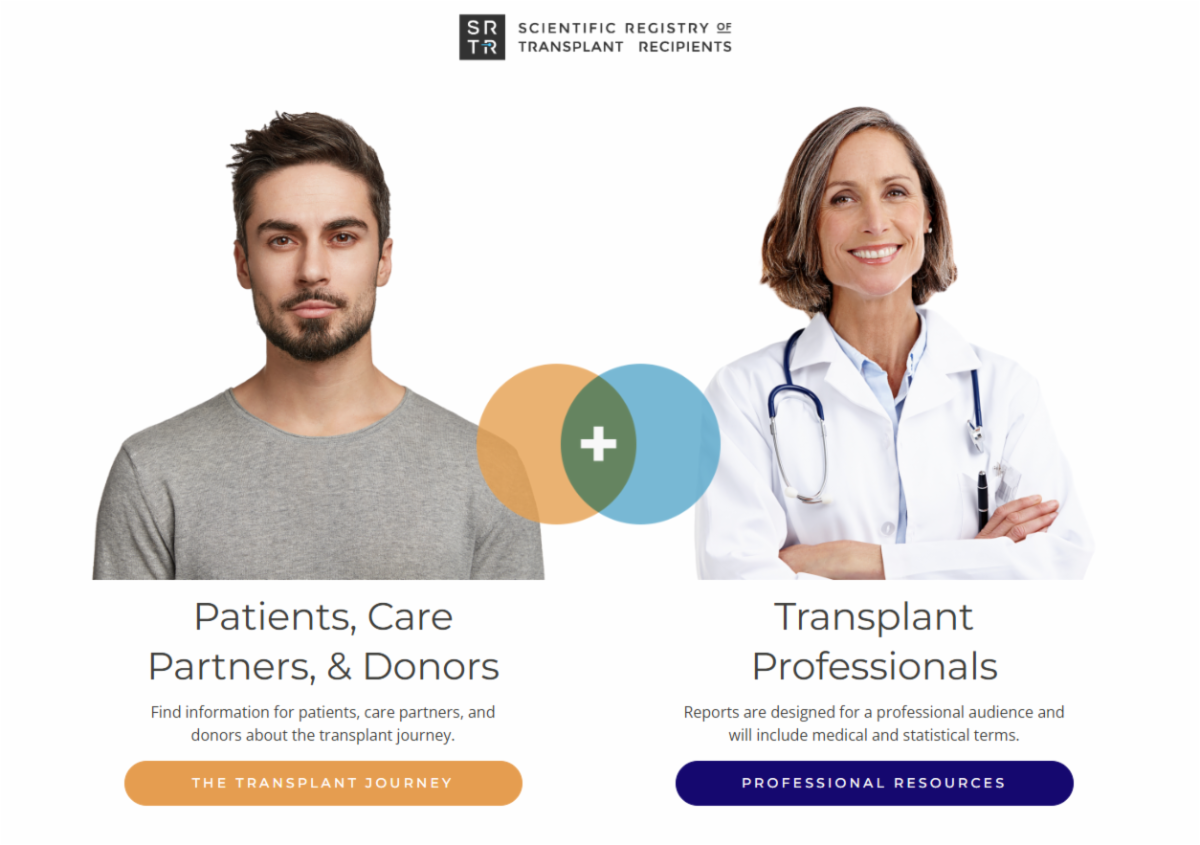
Using feedback from key stakeholders and a patient-centered focus, the Scientific Registry of Transplant Recipients (SRTR) recently launched a more user-friendly and accessible website. The website's new design has been tailored to patients and their caregivers to provide plain language education and resources throughout the organ transplantation lifecycle. It includes an interactive transplant system map,, decision-making tools, provider resources to counsel patients, and all the original transplant professional resources.
SRTR also introduced new dial icons to replace the previous 5-bar icons, which displayed transplant center performance. These new dial icons hope to provide a better visual representation and data comprehension for patients, families, and health care professionals. "Our primary goal is to make complex transplant data as clear and useful as possible for everyone, especially patients making life-changing decisions," said SRTR Director Jon Snyder, PhD.
| | New Breast Cancer Research Shows Tumors Can Be Removed More Successfully, With Fewer Follow-up Surgeries, Using New Technology | | |
Results from a large clinical trial involving the Hennepin Healthcare System (HHS), along with 22 other centers across the U.S., Canada, the U.K., and Austria, demonstrated a promising new approach that may make breast cancer surgery more precise and effective. Abigail Madans, DO, in General Surgery, led the trial at HHS.
Researchers studied the Breast Cancer Locator (BCL) System and compared it to conventional methods used to locate a tumor for lumpectomy surgery, and found that the BCL did a significantly better job in enabling surgeons to remove the complete tumor with no cancer left at the edge of the excision, and reduced the need for second surgeries. It was particularly effective in women with certain characteristics, including ductal carcinoma in situ, invasive lobular carcinoma, and extremely dense breast tissue. Results were presented at the annual meeting of the American Society of Breast Surgeons. Learn more.
| |
Recognizing Excellence
Recent Presentations
Recent Publications
-
David Darrow, MD, MPH, co-authored a new publication in the Journal of Neural Engineering on "Metric validation for detection of delayed and directed coupling." The study evaluates which tools best capture how brain regions communicate. Understanding these connections is the key to studying brain disorders such as epilepsy, depression, Parkinson’s disease, and traumatic brain injury (TBI). The team found that multivariate transfer entropy produced the most reliable results, but it is too resource-intensive for everyday practical use.
-
Anne Murray, MD, MSc; Behnam Sabayan, MD, MSc, PhD, FAHA; Tyler Winkelman, MD, MSc; Katherine Diaz Vickery, MD, MSc; and HHRI staff, Jennifer Michelle McKay, and Mihad Semir, MS, co-authored a recent publication in Neurology Open Access on "Stroke Care and Outcomes Among Patients Experiencing Homelessness: A Systematic Review and Meta-Analysis." The study explores the link between homelessness and an increased risk of stroke due to a lack of access to preventative care. It uses past study results to summarize the currently available evidence.
-
Anne Murray, MD, MSc, co-authored a JAMA Open Network article on "Cognitive Decline Preceding Incident Cardiovascular Events in Older Adults." The study examines whether cognitive decline begins before a cardiovascular disease (CVD) event in older adults. Findings show that individuals who later experienced a CVD event showed faster decline starting three to eight years earlier, suggesting these changes may be a precursor to an increased cardiovascular risk.
In the Media
-
Trauma surgeon Derek Lumbard, MD, was interviewed on MPR News about the violence prevention program, Next Step, and the new study by HCMC and The Violence Prevention Project recently published in the Injury Prevention journal that showed a link between prior violent injury and homicide involvement.
-
David Darrow, MD, MPH, was interviewed on the American Association of Neurological Surgeons/Congress of Neurological Surgeons' YouTube webinar on "Trigeminal Neuralgia, Orofacial Pain & Surgical Guidelines," with fellow scientists Gary Klasser, DMD, and Michael D. Staudt, MD, MSc. They discussed the overlap of neurological pain, dental pain, medication, and patient-centered care.
-
Tyler Winkelman, MD, MSc, was interviewed by America's Essential Hospitals on "Why Public Health Matters: MN EHR Consortium." The MN EHR Consortium is an online database that confidentially aggregates the healthcare data of nearly all Minnesotans across the 11 statewide healthcare systems. The consortium was founded in 2020 to track COVID diagnoses/testing and later repurposed to track substance abuse trends, chronic health conditions, and more.
| | Did a colleague forward you this email? Subscribe to the HHRI Research Highlights email list and get our newsletter sent directly to your inbox. | | You are receiving this message because you have been identified as a key stakeholder of Hennepin Healthcare. |
| | | |