Introducing Unlocking Hampton Roads, your resource for economic development and international business expansion in the region, delivered monthly to your inbox by the Economic Development Task Force at Willcox Savage. | | OCTOBER 2025 | THE ISSUES EDITION | | |
Feature | 2026 Virginia General Assembly: What Will Get the Most Attention & Why It Will Draw Heat
Here & Now | State of the Region 2025: Dragas Report Weighs Promise and Risk in Hampton Roads
Word in the ‘Roads |Digest of significant press releases and investment announcements from over 40 of the region’s economic development authorities, alliances, chambers, incubators, and local governments
Legislative Affairs & Regulatory Compliance | Regulatory Collision: The VCEA, Data Center Load, and Virginia's Grid Reliability Constraint; Trademark Changes: When DIY Costs More—and How an IP Attorney Can Help
Where’s WilSav | Catch up with attorneys on our Economic Development Task Force at the region’s upcoming conferences and conventions
Willcox Savage Business Solutions Series | ICYMI watch the recording from Update from the Tariff Trenches
**NEW** Regional RFPs | Opportunities to buy, build, and service regional municipalities
| | 2026 Virginia General Assembly: What Will Get the Most Attention & Why It Will Draw Heat | | Willcox Savage Consulting LLC is a Virginia-first public affairs and lobbying firm dedicated to providing strategic guidance and advocacy to clients navigating the complex landscape of state and federal government. Based in Richmond, Virginia, the firm leverages deep local expertise to help businesses, organizations, and individuals effectively influence policy and drive meaningful change. | | |
If Democrats hold the Assembly and Abigail Spanberger wins the governorship, 2026 will prioritize reviving 2025 vetoed bills and a few close-call measures. Expect fast-tracked action with the real battles shifting to how new mandates are implemented.
Sectors likely to see new mandates:
- Healthcare & Medicaid
- Workforce, Childcare, and Talent Pipeline
- Energy, Utilities & Data Centers
- Labor, Right-to-Work & Public Contracting
- Transportation Safety & Tech
2026 is less about “if” and more about how fast and with what guardrails.
Attention will concentrate where costs hit budgets, localities must execute, and permits/rates shape growth—namely Medicaid access, workforce/childcare, VCEA + data centers, and labor/PLAs.
| | | |
Healthcare & Medicaid: enrollment “unwinding” + access
-
Medicaid stabilization & outreach: Refiled bills to boost redetermination success, fund outreach/navigation, and support local systems under pressure.
-
Coverage & provider mandates: Prior 2025 vetoes on coverage requirements, provider rate bumps, and school-based Medicaid services (e.g., HB 2471 analogs).
-
Equity & licensing: Implicit bias training requirements for licensed providers likely to pass.
Why it draws heat:
Big fiscal notes, local admin capacity, hospital/provider alignment, and fast rulemaking timelines.
Workforce, Childcare, and Talent Pipeline
-
Statewide data governance: Reboot of the Education & Workforce Data Governing Board (e.g., HB 2465 concept) to measure outcomes and steer funding.
-
Child care affordability: Expanded eligibility and subsidy access (e.g., HB 2451-style) as workforce enabler.
-
K-12 → postsecondary alignment: Meta-majors/dual pathways to speed credentials (e.g., HB 2455-style).
Why it draws heat:
Centralized data authority, ongoing funding obligations, and higher ed/K-12 coordination.
Energy, Utilities & Data Centers: VCEA acceleration vs. load growth
-
Tightening the VCEA: Earlier timelines, stronger efficiency standards, SCC/DEQ oversight, and potential utility decoupling tweaks.
-
Data center guardrails: Siting, noise/water limits, conditional tax incentives, and permit conditions; closer SCC review of grid impacts.
-
Fossil retirements & methane constraints: Pressure on new gas buildout; programmatic efficiency and clean-energy grants resurface.
Why it draws heat:
Northern Virginia data center footprint, reliability concerns, rate impacts, and local permitting politics.
Labor, Right-to-Work & Public Contracting
-
Public-sector collective bargaining: Broader authorization and standard-setting for state/local employees.
-
Classification & wage floors: ABC test-style misclassification rules, stronger enforcement penalties, possible minimum wage ratchets.
-
Project Labor Agreements & prevailing wage: PLA requirements on state projects and expanded prevailing wage coverage.
Why it draws heat:
Direct employer cost impacts, local budget exposure, and procurement changes favoring union shops.
Transportation Safety & Tech
-
Primary seatbelt enforcement and Intelligent Speed Assistance pilots/programs return with executive backing.
Why it draws heat:
Civil liberties, local enforcement practices, and implementation costs.
Flashpoints to Monitor
-
Unfunded mandate risk → expect explicit appropriations or fee mechanisms attached to local requirements.
-
SCC/DEQ rulemaking bandwidth → business impact will hinge on timelines, guidance quality, and stakeholder input windows.
-
Patron shifts → controversial 2025 ideas refiled under moderates signal smoother passage.
Quick Prep for Stakeholders
-
Healthcare: Line up redetermination/outreach partners; model provider rate scenarios; prep for school-based Medicaid billing ramp.
-
Workforce: Map data reporting obligations; inventory childcare benefit design; coordinate with school divisions on pathway pilots.
-
Energy: Audit facility load/generation assumptions; pre-screen sites for new siting/permit criteria; scenario-plan data center incentives.
-
Labor/Contracting: Budget for PLAs/prevailing wage; review contractor classification, scheduling, and recordkeeping controls.
-
Transportation: Assess compliance timelines and policy interactions with local law enforcement practices.
| | | |
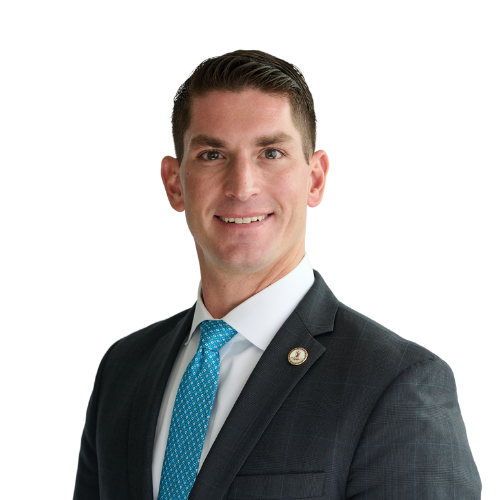
Dylan D. Bishop
Member, Willcox Savage
SVP, Willcox Savage Consulting LLC
Dylan D. Bishop is a corporate lawyer and government relations strategist who helps businesses and trade associations navigate Virginia’s legislative and regulatory landscape. A former chief of staff in the General Assembly and DMV policy lead, he helped design the state’s framework for ride sharing, earning the Commonwealth’s Pinnacle Award.
At Willcox Savage, he serves as a Member in Corporate, Securities & Finance and as Senior Vice President of Government Relations, guiding clients in sectors such as gaming, cannabis, heavy construction, licensing, procurement, and workforce issues.
| | |
Carter T. Whitelow
VP, Willcox Savage Consulting LLC
Carter is a government relations strategist with proven success across the Mid-Atlantic, known for securing landmark agreements and navigating complex regulatory landscapes. Combining deep policy fluency with a results-driven business perspective, he helps clients win major procurements, advance critical legislation, and build durable public-sector partnerships. His work spans Virginia’s most consequential sectors—including infrastructure and transit, energy and utilities, data centers, and healthcare—where he has delivered high-value outcomes for leading institutions and innovators. Carter is a member of the University of Virginia Sorensen Institute 2024-2027 Alumni Council.
| |
Here & Now
Hampton Roads -- A premier destination for international businesses
| |
Word in the ’Roads
Recent press releases from the regional economic development authorities
| |
Legislative Affairs & Regulatory Compliance
Navigate the political and regulatory landscape with confidence and precision.
| | |
Regulatory Collision: The VCEA, Data Center Load, and Virginia's Grid Reliability Constraint
Carter T. Whitelow, VP, Willcox Savage Consulting LLC
Virginia’s energy policy is currently defined by a profound structural conflict between two statutory commitments: the state’s aggressive decarbonization timeline and its fundamental utility obligation to serve unprecedented commercial load growth. As the global epicenter for data center development, the Commonwealth provides a critical case study in regulatory and logistical feasibility.
The Virginia Clean Economy Act (VCEA), enacted in 2020, imposes binding requirements on the state’s two largest utilities, Dominion Energy and Appalachian Power, to transition to a 100% renewable portfolio standard (RPS) by 2045 and 2050, respectively. This legislation mandates the forced retirement of all carbon-emitting generation assets, despite rising demand. This process necessitates the deliberate removal of existing, proven, and high-capacity dispatchable generation from the resource mix on a fixed schedule.
The logistical challenge posed by the VCEA is compounded by the explosive expansion of Northern Virginia’s data center sector. Driven by demand for cloud services and artificial intelligence (AI), this load growth has nullified prior long-term utility forecasts. Unconstrained projections indicate that data center power demand could double the state’s total electricity usage by 2040. This immense load requires power that is not only vast in magnitude (a single data center campus can exceed the output of a major nuclear reactor) but also continuously available and synchronized to the grid to meet contractual uptime requirements. This dynamic creates a dangerous chasm in grid reliability.
The state is legally required to shrink its reliable generation portfolio at the very moment its largest industrial sector demands immediate and massive expansion. The core conflict is that the VCEA’s mandate to decommission vital generation capacity is occurring simultaneously with a demand spike that requires every megawatt of available, dispatchable power.
While the VCEA mandates the development of utility-scale battery storage (3, 100MW by 2035) to backstop intermittent renewables, this required volume is proving insufficient to replace both the retiring baseload assets and the doubling data center load. The sheer scale and speed of this capacity replacement is technologically and financially infeasible within the current regulatory timeframe.
The patchwork regulatory landscape also presents additional burden in Virginia, where local governments control land use and permitting. With no statewide data-center regulations, localities set their own rules, and some are also pushing back on hosting solar farms in their jurisdictions. During the 2025 legislative session, lawmakers passed HB 1601 (Del. J. Thomas) to require data centers to assess impacts on water, forests, agriculture, parks, and historic sites before zoning/special-use approvals. However, Governor Glenn Youngkin vetoed the bill, citing infringement on local autonomy.
In sum, Virginia is navigating a collision between statutory decarbonization deadlines and surging, round-the-clock industrial demand without a coherent implementation pathway across agencies or jurisdictions. The practical question, then, is not whether Virginia can meet load and decarbonize, but which sequence of policy adjustments, timeline calibration, firm low-carbon additions, targeted transmission and storage build-outs, demand-side orchestration with data centers, and harmonized (yet locally respectful) siting frameworks will reconcile these mandates without compromising grid reliability or economic momentum.
|
2025 Trademark Changes: When DIY Costs More—and How an IP Attorney Can Help
INTELLECTUAL PROPERTY
What changed in 2025 with U.S. trademark filings
- There’s now one base filing fee: $350 per class of goods/services you pick for your application. (“Class” just means the category your product or service fits into—e.g., clothing vs. software.)
- The USPTO wants you to choose your wording from its online ID Manual when you describe what you sell. The Manual includes thousands of options across 45 international classes of goods and services. With so many choices, the possibility of selecting correctly is greatly reduced. This is just one way the changes could be costly.
Why it might cost more now
If you don’t follow the new rules, the USPTO adds surcharges per class:
-
Custom wording fee (+$200/class): If you type your own description instead of picking from the ID Manual.
-
Too-long description fee (+$200 per extra 1,000 characters/class): If you use any free-typed wording and it runs past 1,000 characters.
-
Missing info fee (+$100/class): If your application is submitted out required details, like company type or other basics.
A quick example
You file in 2 classes:
- You use custom wording in both classes → +$200 × 2 = +$400
- Your custom text runs 1,500 characters in one class → that’s +$200 more for that class
-
Total: Base $700 ($350 × 2) + $400 (custom) + $200 (length) = $1,300
How an IP attorney can help
-
Pick the right classes: Avoid over- or under-filing so you’re protected where it matters—without paying for extras you don’t need.
-
Use the right wording: Craft descriptions that qualify for the pre-approved list (to avoid the $200 custom fee) or, if custom wording is necessary, keep it tight to avoid length fees.
-
Prevent avoidable surcharges: Make sure all required info is complete on day one (so you don’t get the $100/class “incomplete” fee).
-
Save time later: Clean, standardized filings are examined faster and reduce back-and-forth with the USPTO.
| | | |
Bob is the head of the firm's Intellectual Property Group. Bob has more than 35 years of experience in intellectual property legal matters including trademark clearance, prosecution, counseling and portfolio management and patent, trademark and copyright litigation. Bob has helped clients in a broad range of fields acquire, protect and profit from their important intellectual property rights as well as teaming with clients for licensing and intellectual property acquisition.
| |
Where’s WilSav
Hope to see you at these upcoming events
| | |
VSRA Contracts Committee Fall Seminar Series | November 5 & 19
Catch up with Government Contracts attorney Kevin Cosgrove at the Virginia Ship Repair Association's (VSRA) Contracts Committee seminar series focused on issues confronting small businesses. This series is for both members and non-members, and is held in the VSRA office on the 5th floor of the World Trade Center in Norfolk.
-
November 5th -- Direction of Government Procurement
-
November 19th -- Ethics & Standards of Conduct
VMA's Virginia Manufacturing Gala| Nov 7
Dress up and Catch up with corporate law attorney William Tew and government relations strategist Carter Whitelow at the Science Museum of Virginia. The evening begins with a glamorous cocktail reception, followed by a plated dinner and program that will honor the incredible achievements of manufacturers across the Commonwealth. We’ll proudly unveil the winners of the Virginia Manufacturing Cup, a competition recognizing The Coolest Things Made in Virginia, with the journey culminating in the exciting announcement of this year’s category winners and the overall Best in Show.
Register
CIVIC Leadership Institute 2025 Darden Awards| Nov 19
Catch up with land use attorney and member of CLI Class of 2026, Lisa Murphy, construction contracts and litigation attorney Kelley Holland, international trade attorney Len Fleisig, and meet a full table of WilSav attorneys at this annual luncheon honoring Richard and Carolyn Barry and Children's Hospital of The King's Daughters (CHKD). Held at the Hilton Norfolk The Main.
Register
| | |
Willcox Savage Business Solutions Series
Our lunch and learn speaker series delivering timely and operation-critical information to businesses operating in Hampton Roads
| |
Regional RFPs
Opportunities to buy, build, and service regional municipalities
| | |
The City of Virginia Beach is seeking proposals from qualified respondents to purchase two (2) properties located at 2500 Tournament Drive, totaling approximately 350 acres.
The City desires a qualified team to acquire the Virginia Beach National Golf Club properties and maintain a publicly accessible, 18-hole golf course. The property is zoned Agricultural District 1. Approximately 308 acres of the property are within 65-75 dB Aircraft Noise Level and within the Interfacility Traffic Area, where residential development is limited.
VIEW RFP | Deadline: 3:00 p.m. on November 21, 2025
The City of Virginia Beach Department of Economic Development (VBDED) is seeking proposals from qualified respondents to purchase the property at 1020-1040 Laskin Road, Virginia Beach, VA 23451 for Accident Potential Zone (APZ) 2 compatible development.
The 5.49 acre property was purchased in 2005 for $15,000,000 to prevent residential development after Naval Air Station Oceana was considered by the Defense Base Closure and Realignment Commission (BRAC). The property is zoned A-36 Apartment district; however, it is located in the 70-75db Aircraft Noise Zone and APZ-2 zone, and residential uses will not be considered.
VIEW RFP | Deadline: 3:00 p.m. on November 21, 2025
The City of Virginia Beach (City) is seeking the development and operation of an Action Sports Facility in the Central Beach Area of the City’s Resort Strategic Growth Area.
An Action Sports Facility is desired in the Central Beach Area, as envisioned in the recent Central Beach Small Area Plan, to further augment and complement the burgeoning sports tourism industry of Virginia Beach. Land area is approximately 28.6 acres and 2,513 parking spaces. The proposed sites are zoned Oceanfront Resort District Form-Based Code.
VIEW RFP | Deadline: 3:00 p.m. December 5, 2025
| | Comprehensive Checklist for Setting up an International Business in the U.S. | | |
Structured for Solutions.
Our firm exists with one purpose in mind—offering practical solutions for the most complex challenges. And we specialize in helping international businesses establish a foothold in the United States with confidence and success. Backed by years of experience and a multidisciplinary team, we provide comprehensive guidance tailored to your unique needs.
| | |
Legislative Advocacy that Drives Change.
Willcox Savage Consulting LLC is a Virginia-first public affairs and lobbying firm dedicated to providing strategic guidance and advocacy to clients navigating the complex landscape of state and federal government. Based in Richmond, Virginia, the firm leverages deep local expertise to help businesses, organizations, and individuals effectively influence policy and drive meaningful change.
| | | | |