News and Events for March 9 through March 20, 2026

What to Do When Students Don’t Respond:

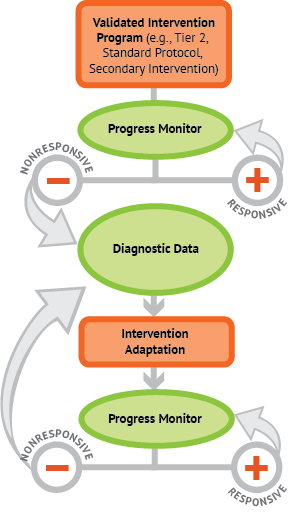
Implementing Data-Based Individualization (DBI) to Intensify Interventions

Do you have students (on or off an IEP) who aren’t making sufficient growth? Are you unsure how to support them and intensify interventions? Attend this workshop and learn about data-based individualization (DBI), a process for identifying and supporting students with intensive and ongoing needs. Dr. Jason Harlacher, a technical assistance provider with the National Center on Intensive Intervention and the director of the MTSS Center at American Institutes for Research, provides an overview of DBI and shares user-friendly tools to develop a hypothesis for what to do when students aren’t responding well. Dr. Harlacher provides tips for gathering and analyzing progress monitoring data and hands-on activities for using diagnostic data tools that are easy and free to use! 


Join us on April 24 at Summit ESC for a great learning opportunity!


Audience: District administrators, building leaders, special education staff, intervention specialists, members of multidisciplinary/IAT/MTSS/IEP teams, related service providers

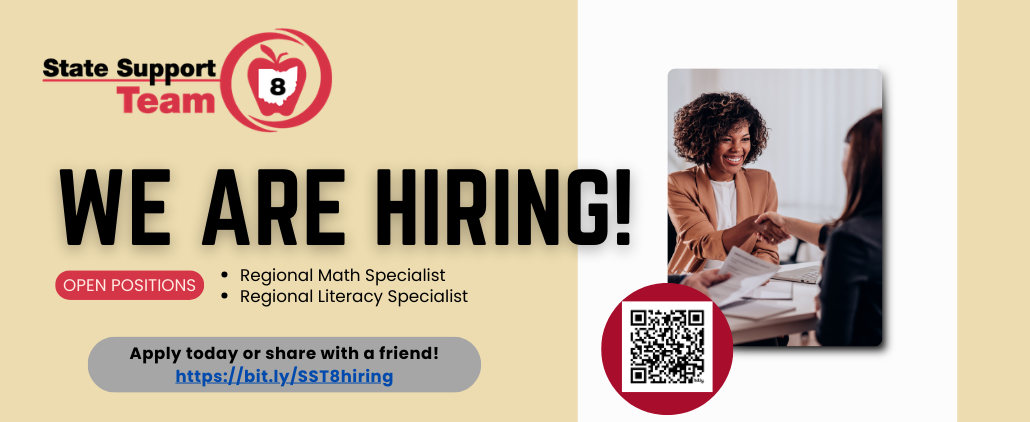
Are you an expert in math or literacy instruction?

Ready to take your coaching and support of educators to the next level?

Join our team of educational leaders!

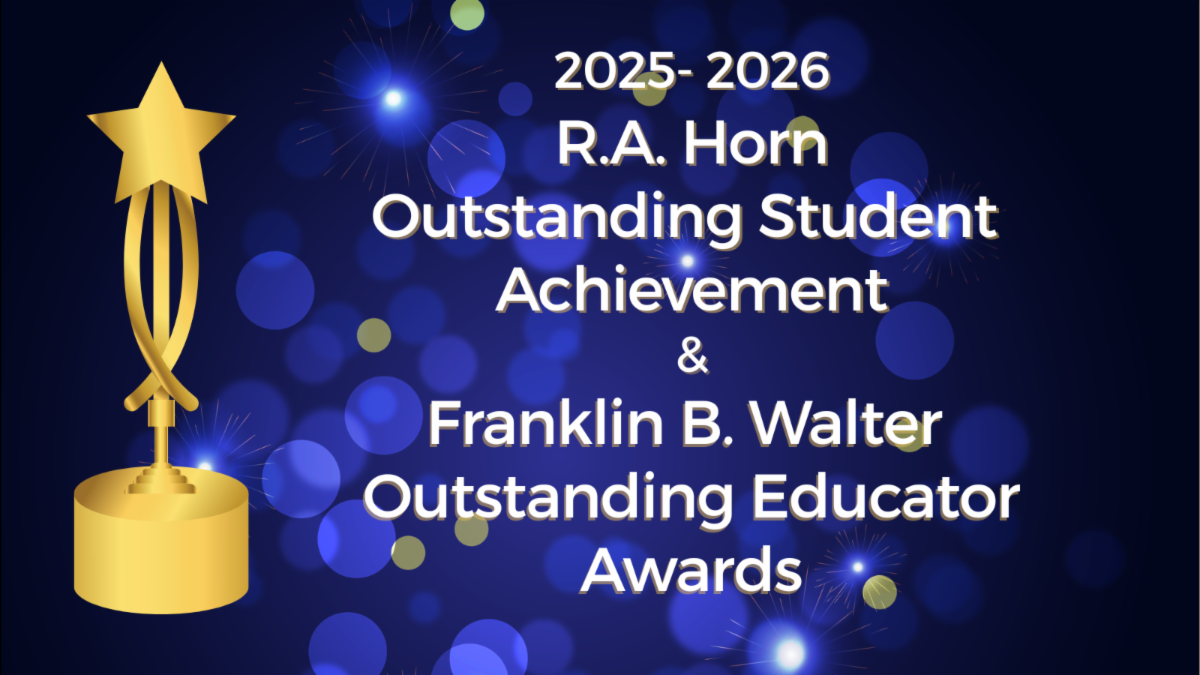
Nominations for 2025 R.A. Horn Outstanding Student Achievement and

Franklin B. Walter Outstanding Educator Awards

State Support Team Region 8 will continue to facilitate the nomination process for the R. A. Horn Outstanding Student Achievement and Franklin B. Walter Outstanding Special Educator Awards. Within each of the 16 State Support Teams in Ohio, the R. A. Horn award is presented to one exemplary special education student, and the Franklin B. Walter award is given to an educator or team who has made extraordinary contributions to the education of students with disabilities.


One finalist from each region in both of these award categories will be honored. Ohio Coalition for the Education of Children with Disabilities (OCECD) will host an in-person award ceremony to honor all regional finalists in June 2026. SST-8 will announce the regional finalist for both awards on the SST-8 website and share any future updates regarding a ceremony. Nominations are due by March 20, 2026 and are submitted via Google. Click below to learn more and access forms.

Tell Us What You Need

As we plan for 2026–2027, we’re gathering input to guide the next phase of our Regional Literacy Network. Our goal is to build on the strong momentum already in place — not start over. This needs assessment ensures our work stays aligned to what districts truly need.


The full network will continue focusing on IMTSS, with communities of practice providing deeper, targeted support. We’ll use your feedback to strengthen and refine our learning, prioritizing continuity and depth.


R8LL Network Needs Assessment

Stuck on Behavior?

It’s Time to Find the "Why"

When targeted interventions don't seem to improve the behaviors you're monitoring, what's the next step? You might want to check the function of that behavior. In this PBISApps Expert Instruction Podcast, Dr. Chris Borgmeier discusses functional behavior assessment (FBA). In this new episode in the Mythbuster series, you'll learn why FBA might seem like a process only meant for special education, but its elements are something you can (and should) apply schoolwide.

New Information about the Department’s

Science of Reading Refresher Course

Under Ohio law, teachers, administrators, school psychologists, and speech language pathologists are required to take the Department’s forthcoming Refresher Course in the Science of Reading. Please see the Department’s Science of Reading Professional Development webpage for completion timelines. 


The Department’s Science of Reading Refresher Course will consist of two modules. Module One will provide a grade-band specific review of the major components of the Science of Reading and Simple View of Reading. Module One will also contain options for either grades K-5 or 6-12. Participants must choose one of these Module One options.  


For more information about Ohio’s Science of Reading Professional Development requirements, please see the Department’s Science of Reading Professional Development webpage. Please direct questions to ReadOhio@education.ohio.gov.

OCALI Resources to Support SST Work

Ohio requires that all learners have access to literacy instruction grounded in scientific research. All students benefit from explicit and systematic instruction in phonemic awareness, phonics, vocabulary, fluency, comprehension, and writing to become effective readers. The “Cued Language and Multisensory Reading” module series is designed to provide practitioners and administrators with the information they need to implement cued speech/language as an evidence-based multisensory tool to connect language and literacy for learners who are deaf or hard of hearing. For more information visit https://deafandblindoutreach.org/m/3227. 


OCALI is pleased to host the Virtual Early Childhood Transition Summit Series. This series of three 90-minute sessions is a collaborative space where educators, service providers, and agency representatives can come together to learn from one another while deepening their understanding of the systems and roles that support young children and their families. Participants will share information and strategies that build connections to ensure smooth, successful transitions in early childhood. For more information visit https://ocali.org/ec-transition-summit. 

Read Ohio Tier 1

Tier 1 instruction is universal instruction designed to meet the needs of all students. All students receive grade-level instruction with scaffolding and differentiation supports using high-quality instructional materials. 


Find out more by accessing this link.

Core-Instruction-Tip-Sheet.pdf


2026 ReadOhio Literacy Academy

The Ohio Department of Education and Workforce’s 2026 Read Ohio Literacy Academy will take place June 3 and 4 at the Greater Columbus Convention Center. This year’s theme, Integrating Systems for Student Success, will feature sessions focused on advancing literacy across Ohio and a dedicated track on teacher leadership.


The event offers professional learning to support the use of evidence-based language and literacy practices. It is intended for Ohio districts, schools, and early care and education programs working toward raising literacy achievement.


Registration for this free event will open in the spring. Updates and more information will be posted on the Department’s Literacy Academy webpage in the coming months.

Direct questions to ReadOhio@education.ohio.gov. 

PBIS Administrative Code (OAC) Update

The Ohio Department of Education and Workforce (ODEW) is focusing on helping schools and districts establish an Integrated Multi-Tiered System of Supports (I-MTSS) framework. This transition aims to create a more cohesive and comprehensive approach to addressing both academic and nonacademic needs. 


PBIS work lives inside Ohio’s I-MTSS framework. State law requires schools and districts to implement a PBIS framework, and the Administrative Code that outlines the requirements of the framework (as well as rules on restraint and seclusion) is currently being revised to specifically include an I-MTSS framework. Although the opportunity for public comment on these changes has passed, you can view the proposed language here to see the details.


OCALI will continue to support PBIS professional development through their free online modules. Current modules include Tiers 1 and 2, as well as classroom practices.