News and Events for April 13 through April 24, 2026

Support that Sticks: Evidence-Based Practices for Every Student

Implementing PBIS in the classroom is critical to achieving fidelity in your framework. Classroom PBIS refers to educators utilizing evidence-based practices to establish predictable, positive, effective, and equitable teaching and learning environments where all students can receive the level of support they need to experience positive SEB (social emotional behavioral) and academic outcomes.


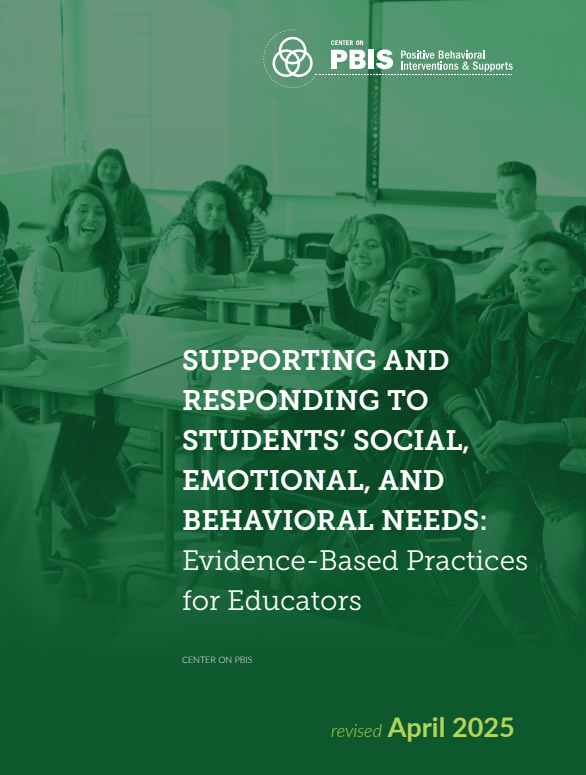
The Supporting and Responding to Students’ Social, Emotional, and Behavioral Needs: Evidence-Based Practices for Educators guide provides four steps of critical evidence-based practices educators can use to support their students' SEB development. Guidance for monitoring implementation is also provided (pbis.org).

Student Group Accountability List Posted: Submit Improvement Plan

DEW has released the list of schools and districts who meet the criteria for student group accountability. All public schools and districts (excluding federally identified schools) that receive state funding specifically designated for serving English learners, students with disabilities, economically disadvantaged students, and/or gifted students.


Schools and districts who receive state funding to serve these student groups and who fail to show satisfactory achievement and progress are required to submit an improvement plan (i.e., the One Plan).

K-3 Mathematics Diagnostics

K-3 Mathematics Diagnostics (Screeners):

The following assessments are approved as K-3 mathematics diagnostics(screeners) beginning in the 2026-2027 school year:


Star Math

Exact Path Mathematics

Aimsweb Plus

mCLASS Math

NWEA MAP Growth Math

Ohio requires that all learners have access to literacy instruction grounded in scientific research. All students benefit from explicit and systematic instruction in phonemic awareness, phonics, vocabulary, fluency, comprehension, and writing to become effective readers. The “Cued Language and Multisensory Reading” module series is designed to provide practitioners and administrators with the information they need to implement cued speech/language as an evidence-based multisensory tool to connect language and literacy for learners who are deaf or hard of hearing. For more information visit https://deafandblindoutreach.org/m/3227. 


OCALI is pleased to host the Virtual Early Childhood Transition Summit Series. This series of three 90-minute sessions is a collaborative space where educators, service providers, and agency representatives can come together to learn from one another while deepening their understanding of the systems and roles that support young children and their families. Participants will share information and strategies that build connections to ensure smooth, successful transitions in early childhood. For more information visit https://ocali.org/ec-transition-summit. 

Tell Us What You Need

As we plan for 2026–2027, we’re gathering input to guide the next phase of our Regional Literacy Network. Our goal is to build on the strong momentum already in place — not start over. This needs assessment ensures our work stays aligned to what districts truly need.


The full network will continue focusing on IMTSS, with communities of practice providing deeper, targeted support. We’ll use your feedback to strengthen and refine our learning, prioritizing continuity and depth.


R8LL Network Needs Assessment

2026 Ohio School Safety Summit Registration is Open

The Ohio School Safety Summit, the premier annual school safety summit hosted by the Ohio School Safety Center, is set to take place at an exciting new location: Kalahari Resorts & Conventions in Sandusky, Ohio. Dive into dynamic sessions led by top voices in school safety, and learn about what actually works in Ohio schools. Earn continuing education credits while exploring timely topics. Connect and collaborate with fellow school safety professionals and vendors from Ohio and beyond.


Register now for the Summit June 2-3, 2026!