Join the NABE Policy Roundtable as it hosts a free webinar next Thursday, June 6 at 1:00 PM Eastern in which William G. Gale of the Brookings Institution will present his plan to make the economy and nation stronger while controlling entitlement spending but preserving and enhancing its anti-poverty and social insurance roles. He explains how to increase public investments in human and physical capital and raise and reform taxes to pay for government spending in a fair and efficient way. What is needed, he argues, is to balance today's needs against tomorrow's obligations. The webinar will also feature Jason Furman of Harvard Kennedy School and Diane Swonk, CBE, of Grant Thornton, who will moderate.
Registration for this webinar is FREE to NABE members and the public.
Speaker:
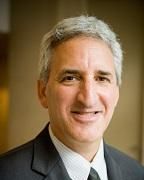
William G. Gale,
Arjay and Frances Miller Chair in Federal Economic Policy and Senior Fellow - Economic Studies, Brookings Institution
Discussant:
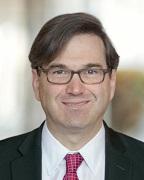
Jason Furman
, Professor of the Practice of Economic Policy, Harvard Kennedy School
Moderator/Discussant:
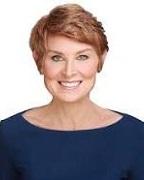
Diane Swonk, CBE, Chief Economist, Grant Thornton
Speaker Bios:
William Gale is the Arjay and Frances Miller Chair in Federal Economic Policy and a senior fellow in the Economic Studies Program at the Brookings Institution. His research focuses on tax policy, fiscal policy, pensions and saving behavior. He is co-director of the Tax Policy Center, a joint venture of the Brookings Institution and the Urban Institute. He is also director of the Retirement Security Project.
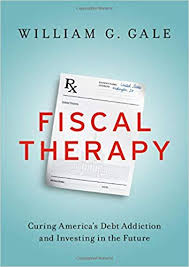
Gale is the author of Fiscal Therapy: Curing America's Debt Addiction and Investing in the Future (Oxford University Press, 2019).
He is the co-editor of several books, including Automatic: Changing the Way America Saves (Brookings 2009); Aging Gracefully: Ideas to Improve Retirement Security in America (Century Foundation, 2006); The Evolving Pension System: Trends, Effects, and Proposals for Reform (Brookings, 2005); Private Pensions and Public Policy (Brookings, 2004); Rethinking Estate and Gift Taxation (Brookings, 2001), and Economic Effects of Fundamental Tax Reform (Brookings, 1996).
His research has been published in several scholarly journals, including the American Economic Review, Journal of Political Economy, and Quarterly Journal of Economics. In 2007, a paper he co-authored was awarded the TIAA-CREF Paul A. Samuelson Award Certificate of Excellence.
He has also written extensively in policy-related publications and newspapers, including op-eds in CNN, the Financial Times, Los Angeles Times, New York Times, Wall Street Journal, and Washington Post.
From 2006 to 2009, he served as Vice President of Brookings and Director of the Economic Studies Program. Prior to joining Brookings in 1992, he was an assistant professor in the Department of Economics at the University of California, Los Angeles, and a senior economist for the Council of Economic Advisers under President George H.W. Bush.
He is a member of the Macroeconomic Advisers Board of Advisors since 2016. Gale has consulted for the MSL Group and in 2017 was a panelist at the Center for Strategic Development's Kingdom of Saudi Arabia Economic Reforms Workshop.
Gale attended Duke University and the London School of Economics and received his Ph.D. from Stanford University in 1987. He lives in Fairfax, Virginia, is an avid tennis player, and is a person who stutters. He is the father of two grown children.
Jason Furman is Professor of the Practice of Economic Policy at Harvard Kennedy School (HKS). He is also nonresident senior fellow at the Peterson Institute for International Economics. This followed eight years as a top economic adviser to President Obama, including serving as the 28th Chairman of the Council of Economic Advisers from August 2013 to January 2017, acting as both President Obama's chief economist and a member of the cabinet. During this time Furman played a major role in most of the major economic policies of the Obama Administration. Previously Furman held a variety of posts in public policy and research. In public policy, Furman worked at both the Council of Economic Advisers and National Economic Council during the Clinton administration and also at the World Bank. In research, Furman was a Director of the Hamilton Project and Senior Fellow at the Brookings Institution and also has served in visiting positions at various universities, including NYU's Wagner Graduate School of Public Policy. Furman has conducted research in a wide range of areas, including fiscal policy, tax policy, health economics, Social Security, technology policy, and domestic and international macroeconomics. In addition to articles in scholarly journals and periodicals, Furman is the editor of two books on economic policy. Furman holds a Ph.D. in economics from Harvard University.
Diane Swonk, CBE is one of the most respected macroeconomists, who maintains a unique perspective on the inner workings of Main Street as well as Wall Street. She is an expert on the economics of the labor market, monetary policy and structural changes that are distinct from economic cycles. Her global network includes economists, industry leaders and geopolitical experts, which amplifies the breadth and reach of her analysis. She advises policy makers at all levels of government, including central bankers. Diane's uniquely accessible approach to macroeconomic shifts has made her a highly sought-after expert quoted by local, national and international newspapers and broadcasters. For her outstanding contributions in the field of economics, Diane has been named a Fellow of the National Association for Business Economics (NABE). She is a member of the Council on Foreign Relations, serves on the Sitting Committee to the Booth School of Business at the University of Chicago and advises the economics department at the University of Michigan. She has testified before Congress to improve the quality of economic data and on the causes and consequences of income inequalities. Diane has won many awards for excellence in forecasting and leadership in economics and the business community. She is deeply involved in nonprofit organizations focused on expanding access to education and increasing the quality and diversity of our country's leadership. She earned her B.A. and M.A. degrees in economics with top honors from the University of Michigan. She received an MBA in finance from the University of Chicago's Booth School of Business, also with top honors.
|
|