|
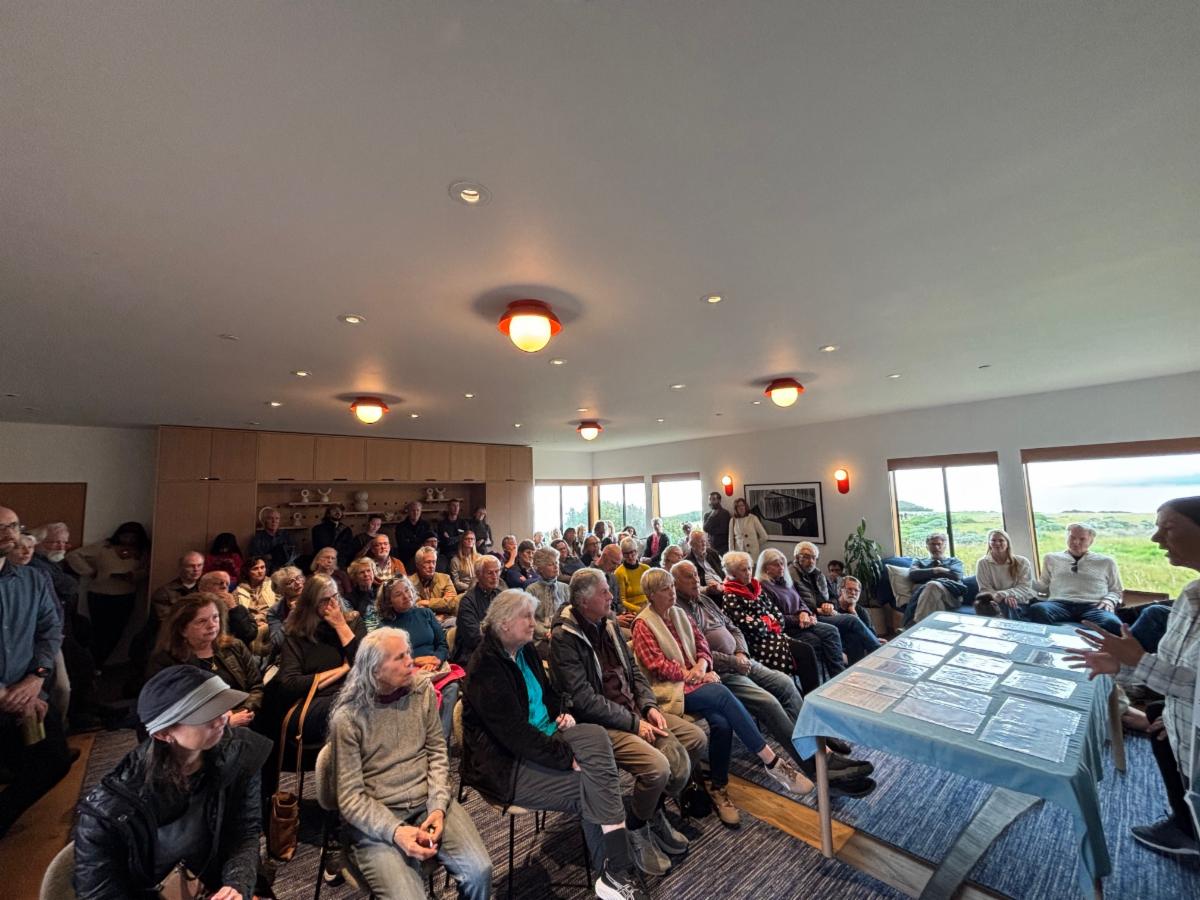
Earlier this month, it was standing room only for a whale talk with Scott and Tree Mercer at The Sea Ranch Lodge. With a striking view of the bluffs and the Pacific Ocean out the windows, Scott and Tree shared their knowledge about the gray whales along our coast — how to spot them, where they travel, what they eat, troubling changes to their numbers, and why their survival matters to the health of our oceans and our own lives.
Pacific gray whales travel around 10,000 miles round-trip between their summer feeding grounds in the Arctic and the warm lagoons of Baja California, where mothers give birth and nurse their calves. They hug the coastline on their journey, which means we can often spot them as they migrate past our stretch of the coast.
One of the evening's most delightful moments was learning about their spouts, which is often the first thing you’ll spot when you’re looking for whales. Gray whales have two blowholes, which can create a distinctive heart-shaped blow visible at the surface in calm conditions. They aren’t expelling water, it’s actually warm, moist air from their lungs that’s condensing into a visible mist as it hits the cooler air. Another way to spot a gray whale is the series of bumps or "knuckles" running along their back.
Scott and Tree have spent over a decade documenting the whale migration along this stretch of coast. In recent years, though, they've watched the numbers decline — a trend scientists attribute to climate change and its impact on Arctic food supplies. This loss ripples not only through the entire marine ecosystem, it also impacts our own well-being. As Scott shared:
"Whales are ecosystem engineers. From eating to defecating, their activities strengthen and make the ocean they live in healthier. Moreover, we now know more about how their lives affect life on this planet. The tiny organisms, phytoplankton, that are the basis of the oceanic food webs react with sunlight to produce oxygen through photosynthesis and provide 50% of Earth’s oxygen. Phytoplankton blooms in tremendous numbers when vital nutrients are available. When whales defecate, their waste product is enormous in quantity and rich in products like nitrogen and iron. Combined with sunlight, individual cells of phytoplankton multiply quickly, creating huge oily mats on the ocean surface. These produce oxygen, creating the ‘every other breath’ we depend upon.”
| | |
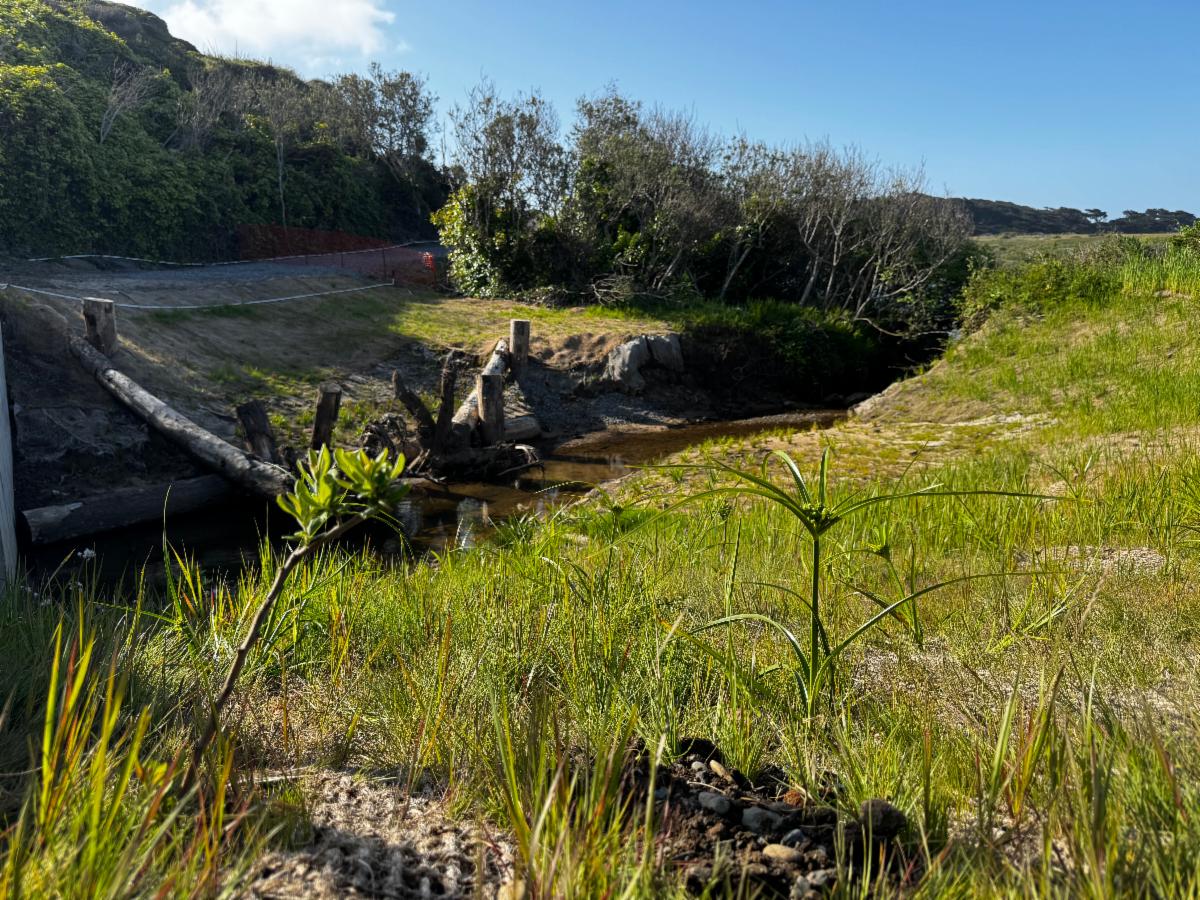
Recent monitoring of China Gulch shows that the native marsh plantings at the culvert outlet are pushing out lush new growth, and the hydroseed native seed mix is establishing. To support the plants’ success, Caltrans’s subcontractor, Samara Restoration, skillfully installed an irrigation system to provide the plants with supplemental water throughout the dry season.
This continued effort to ensure the project’s success reflects the strength of the many partnerships involved. In particular, Prunuske Chatham, Inc. (PCI) demonstrated a strong commitment to habitat restoration in the Gualala River by covering the full cost of geomorphologist Lauren Hammock’s time. Lauren played a critical role in the project, participating in weekly meetings, working within Caltrans’ tight construction schedule, and providing invaluable expertise and guidance. Thank you, PCI and Lauren!
| | Climate resiliency at Cooks Beach | | |
Joel Chaban, a volunteer who stewards Cooks Beach, reflects on the impacts of climate change and measures that help support the beach’s ecosystem:
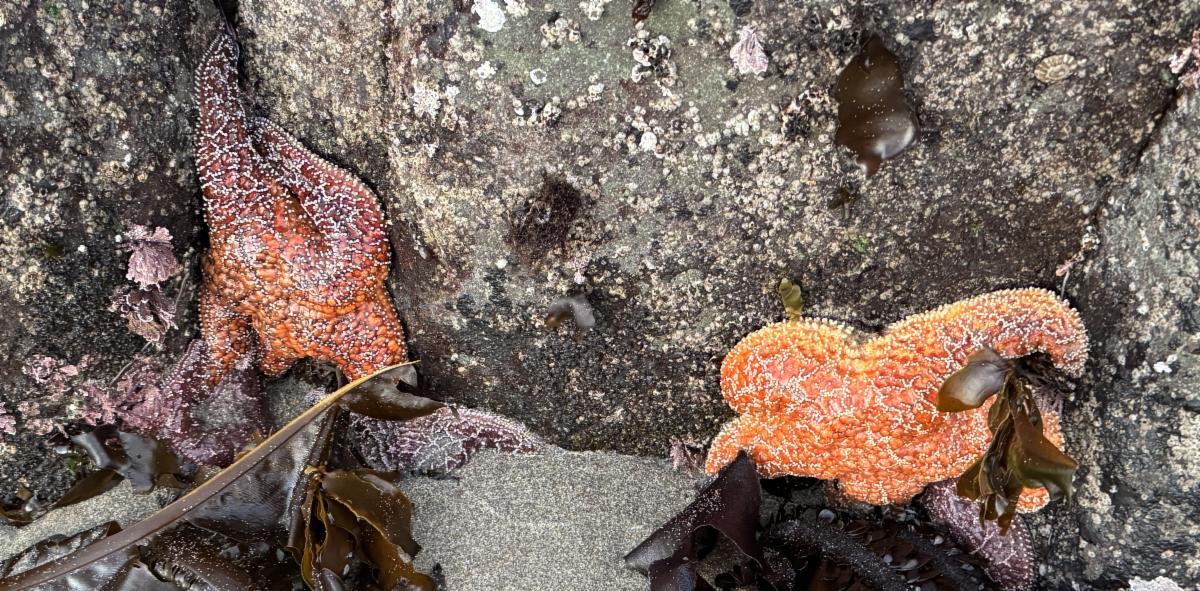
Climate change has not spared Cooks Beach. When sea star wasting disease invaded our waters in 2013 and 2014, sea stars — commonly known as starfish — disappeared entirely from the beach. But there is good news: starfish have returned in abundance.
| | Starfish congregating on rocks at Cooks Beach, December 5, 2025. Photo by Joel Chaban. | | |
Other climate changes have also taken a toll. Over the past decade, we've witnessed the loss of at least ten pine trees along the trail to the beach. The primary culprit has been severe drought — from 2012 to 2016, California experienced its most intense drought in recorded history, severely stressing many tree species, particularly pines.
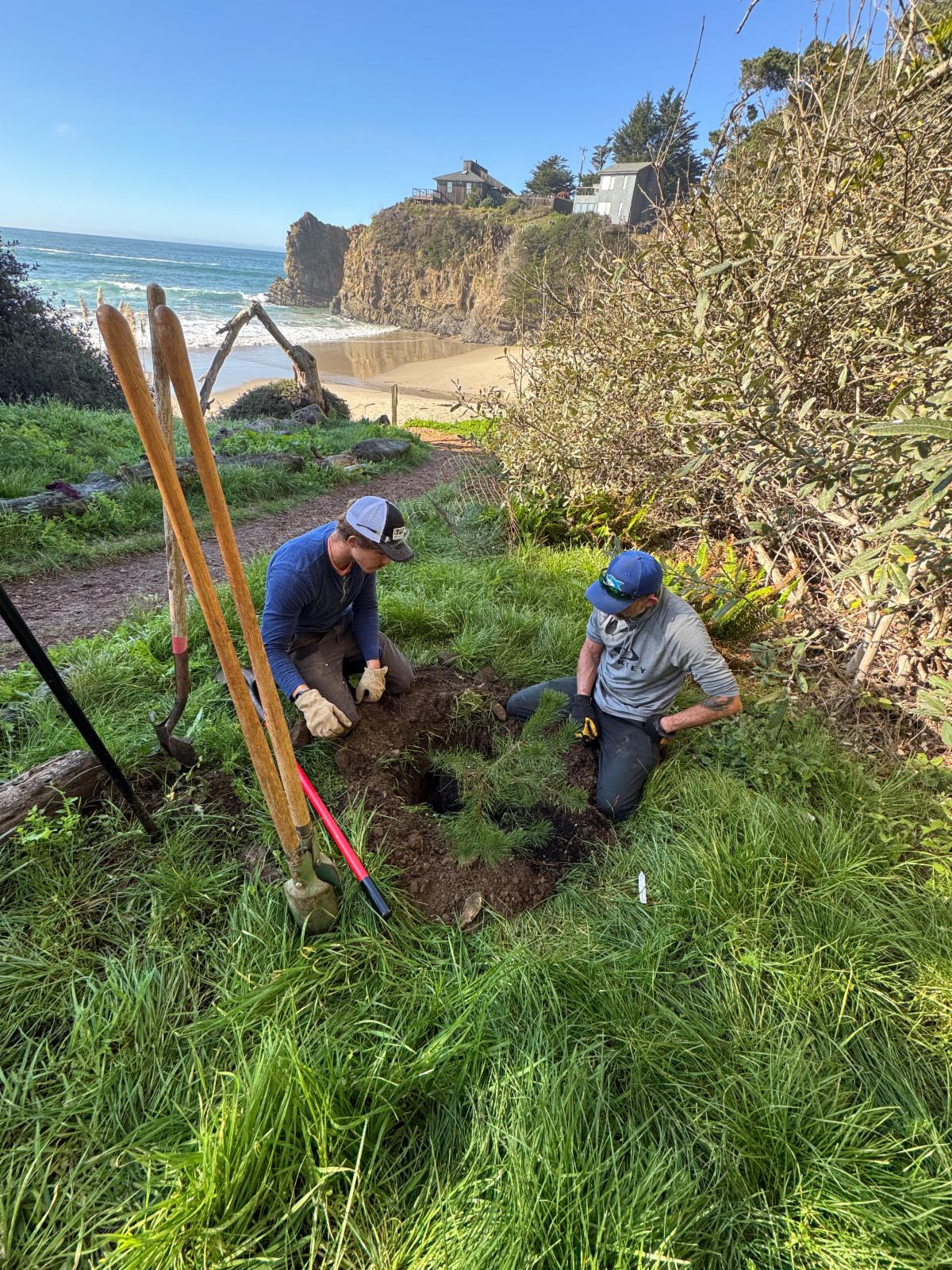
As trees weaken from drought, they become more susceptible to bark beetles. These pests burrow into the bark, disrupting nutrient flow and often leading to tree death. Their populations have surged due to higher temperatures and water stress, allowing them to thrive even in previously healthy trees. To counter the die-off, RCLC has been planting trees over the last seven years along the lower portion of the trail.
| | RCLC Restoration Technicians Ethan Widner and Dylan Freebairn-Smith plant trees along the trail at Cooks Beach, December 9, 2025. Photo by Joel Chaban. | | The increasing frequency of atmospheric rivers—those extremely heavy rainfalls that are becoming more and more frequent—have also caused erosion along the trail from the bluff to the beach. Altered weather patterns due to climate change may intensify atmospheric rivers by increasing ocean temperatures and altering atmospheric dynamics, potentially leading to more intense and frequent precipitation events. | | |
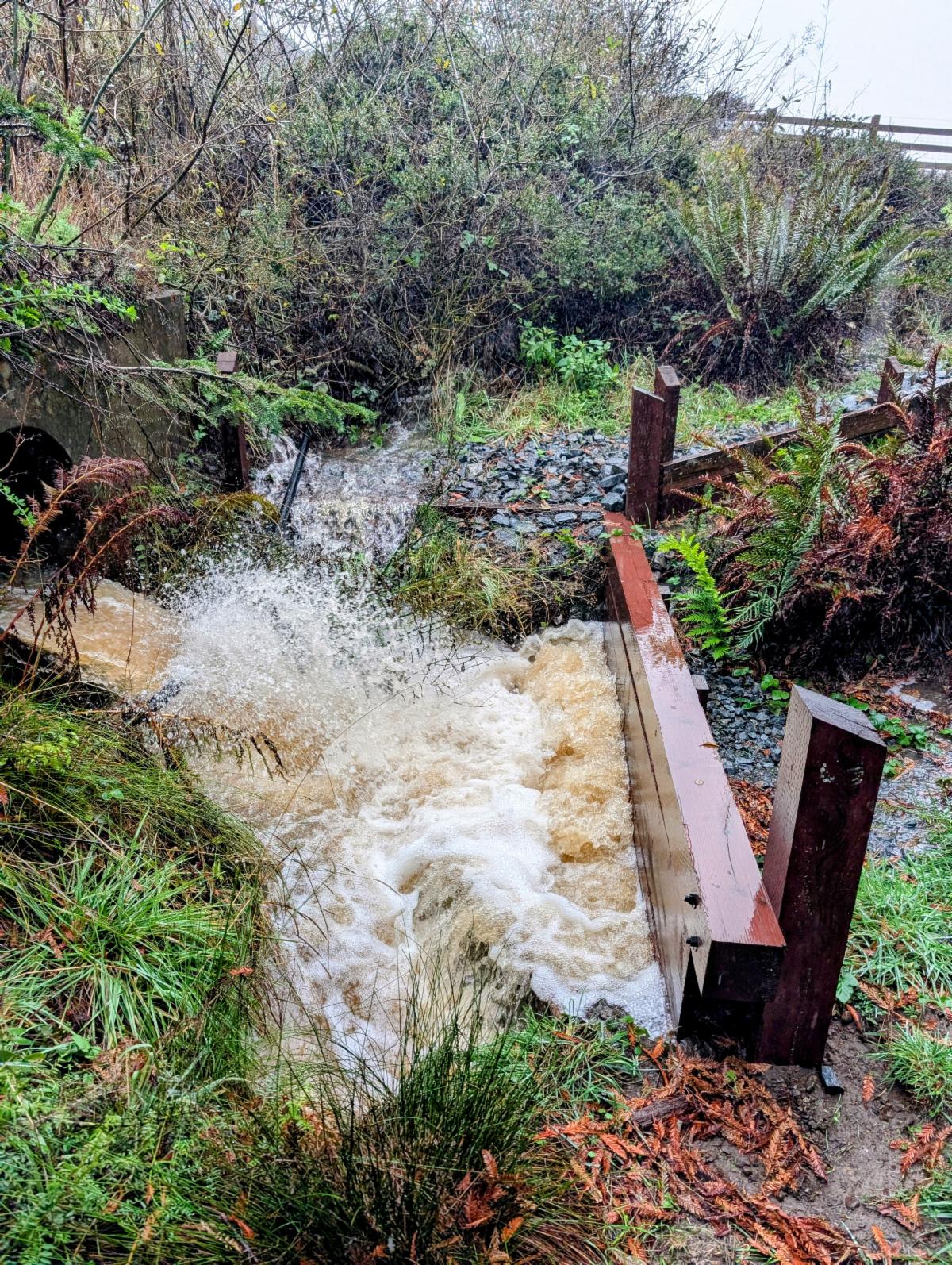
RCLC has been constructing water diversions along the trail to slow the flow of water and direct it towards catchments, such as the creek running to the beach and into the small pond formed by the culvert at the top of the trail. These diversions include water bars in various spots along the trail and a one-foot wall along the top of the trail that diverts water to the culvert pond. In 2026, RCLC plans to build a step-like structure where severe erosion exists on a mid-trail hillside. This step-like structure will slow and redirect water to the creek.
Thanks to our supporters, including the many volunteers who have donated their time, RCLC will continue to maintain Cooks Beach so that we can enjoy this coastal gem now and in perpetuity.
| | Water shoots out of the culvert at the top of Cooks Trail during an atmospheric river event. Photo by Eric Agnew. | | |
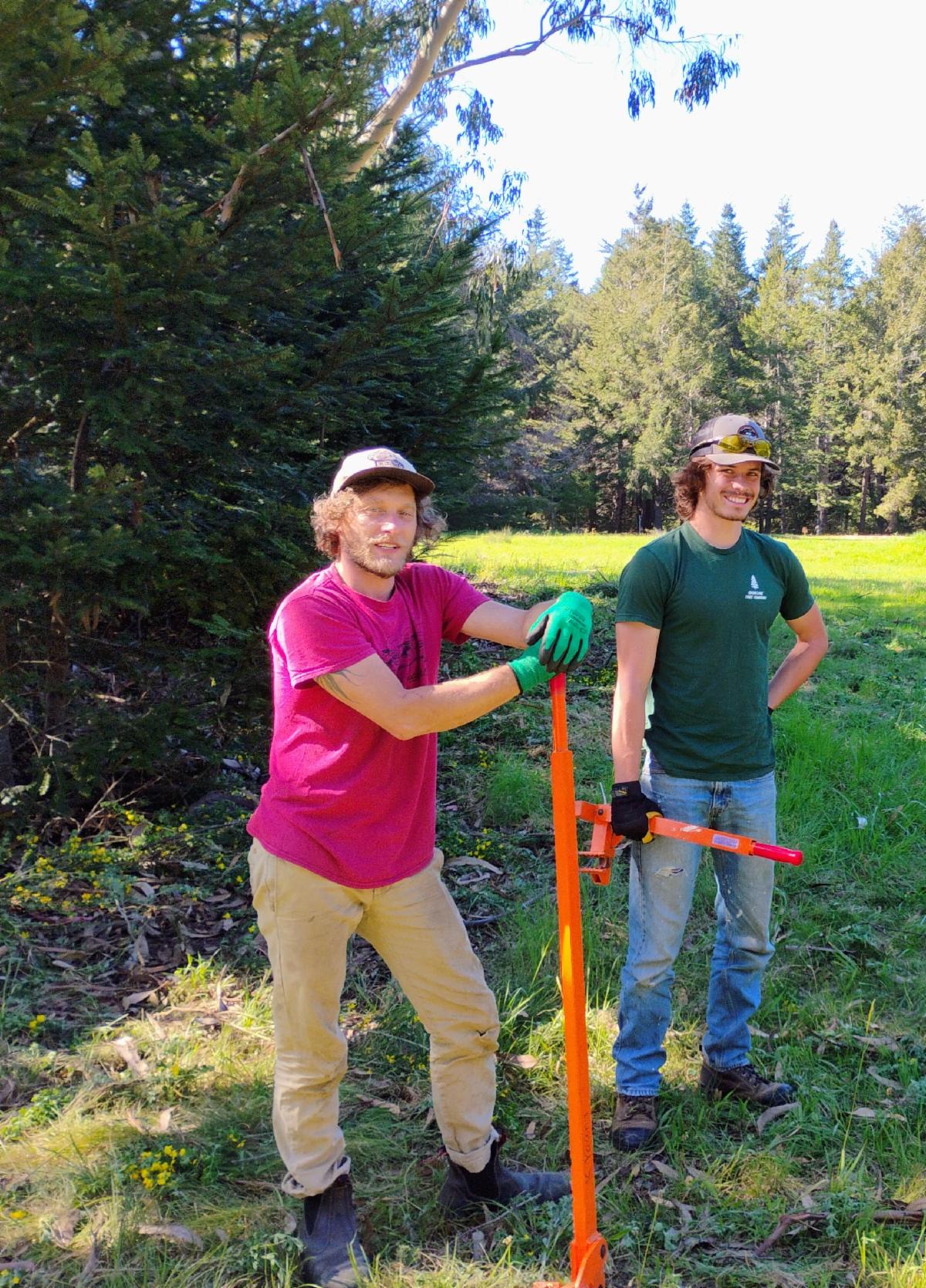
We’ve been joined by two restoration technicians, who will be helping us out for the next few months. Noah Fisher and Austin Josephs will collaborate closely with Sophia Pisciotta, Ethan Widner, and Dylan Freebairn-Smith to implement restoration strategies at Mill Bend Preserve. This includes invasive plant removal, fuel reduction, and wildfire resilience strategies, as well as assisting with maintenance and upkeep of RCLC properties.
Here’s a little bit about them:
From Austin:
“I grew up in Madison, Wisconsin, but at 19 found myself on Orcas Island, Washington, where I spent most of my twenties working as an environmental educator for school groups, and a sea kayak guide and instructor. Those years living in a small, thriving community on an ecologically complex island naturally influenced my understanding of traditions in land stewardship, conservation, sustainable practices, natural building, and outdoor adventure. Since then, I've moved around the West Coast, working and learning with various organizations. I’ve been on the south Mendocino Coast for six years. Most recently, I have been working as a general contractor at Arborist, sharing a communal garden with friends, and raising an infant son.”
From Noah:
“I’m a surfer from Point Arena, California, and spent four years at California State University-Monterey Bay studying marine science. I am now a naturalist and an environmental technician, working to restore our coastlines. I pursued the opportunity with Redwood Coast Land Conservancy in hopes of returning a small part of our coastline to its natural state. So far, my experiences working at Mill Bend Preserve have been nothing short of phenomenal. We work hard and efficiently on restoration projects, and there is never a dull moment. One of my favorite parts has to be the proximity to the beautiful Gualala River, as well as Cooks Beach, as they are some of my favorite surf spots along our coastline.”
Welcome, Austin and Noah–we’re so grateful for your help!
|
| |
Mark your calendars:
May events
| | |
Throughout the month of May, RCLC is thrilled to partner with Gualala Arts Center on a series of programs in connection with the Meadow as Muse exhibition.
May 10: Spring Migration Celebration
Celebrate the spring migration and local wildlife
May 15: Magical Moth Night
Spend an evening exploring the moths of our coastal ecosystem
May 23 - 24: Spring Wildflower Show
A free, two-day celebration of local wildflowers
For more information, visit our website:
| | | | |