Planting a future wetland | | |
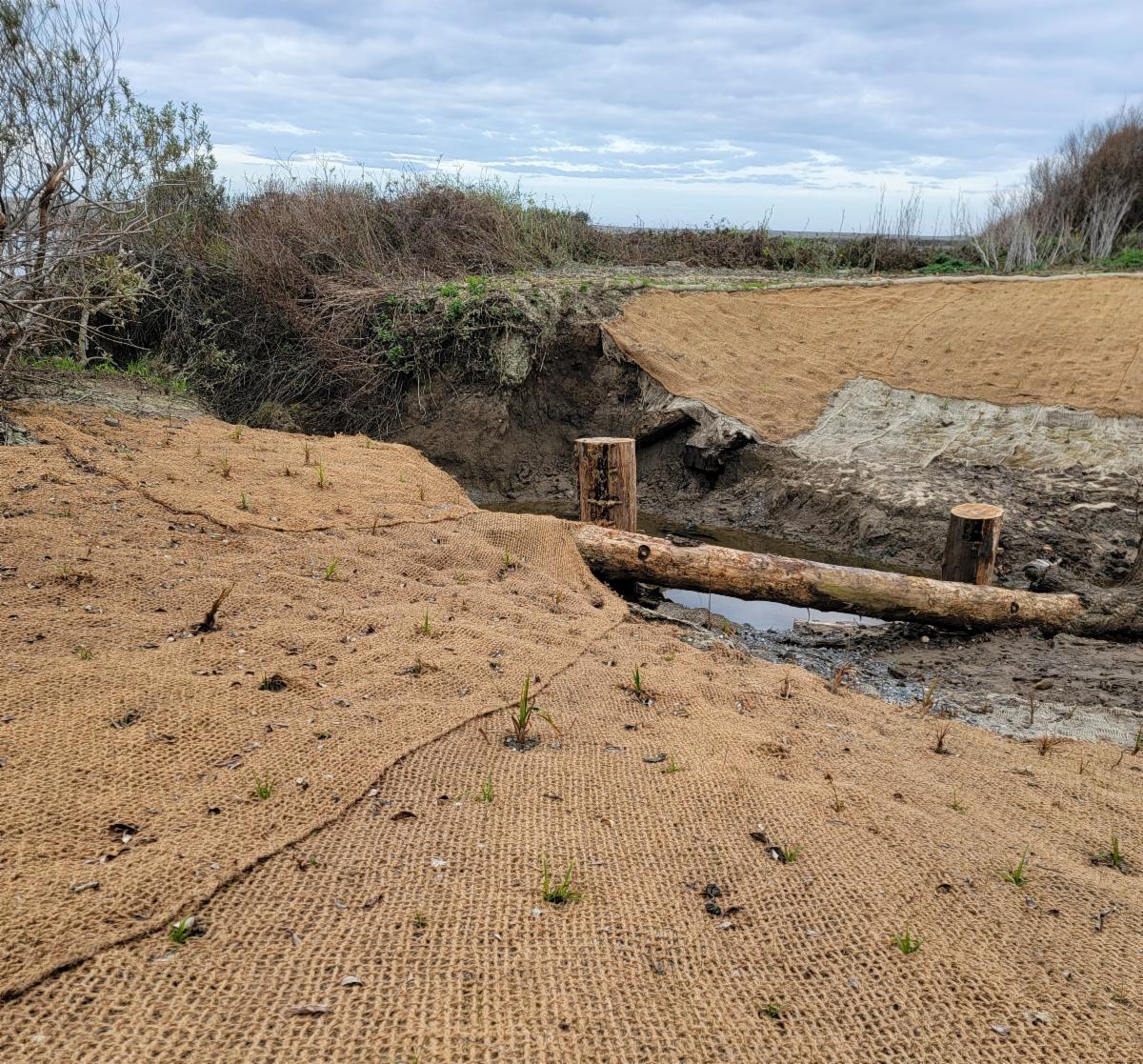
Over much of the last year, RCLC partnered with Caltrans on the culvert replacement on Highway 1 at China Gulch. The final result is a repaired roadway, a culvert that enables fish passage, and improved habitat in the channel below the culvert—recreating much-needed wetlands in the Gualala River estuary.
At the start of the culvert project, RCLC saw a rare opportunity to bring a planned habitat enhancement project to fruition in a matter of months instead of years. Because of our ongoing work under the Gualala River Estuary Habitat Enhancement Planning Project, funded by the California Department of Fish and Wildlife (CDFW), we knew the Gualala River was badly lacking wetland habitat. Thanks to the technical data and hydraulic modeling provided by Prunuske Chatham, Inc. (PCI), China Gulch was earlier identified as an ideal location for wetland restoration and already slated for a future project. With this fortunate convergence of careful planning and newly gained access to heavy equipment, RCLC seized the opportunity and began collaborating with Caltrans and other partner agencies.
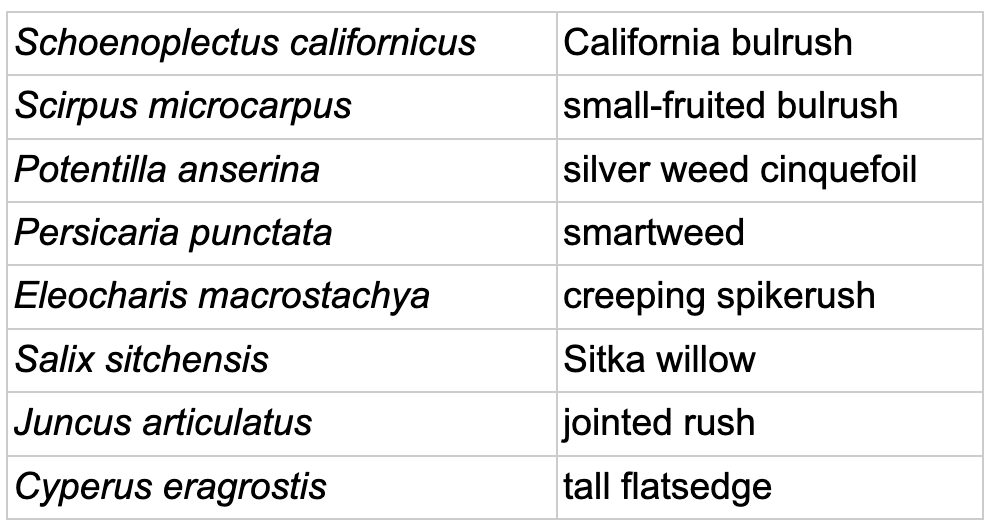
In coordination with biologists from Caltrans and North Coast Resource Management, we assessed the plant species and quantities needed to revegetate the China Gulch outlet once construction was complete. We prioritized site-specific plants—those sourced from the same location where they will be planted—which is considered best practice for restoration. Because plants adapt to their microclimates, and environmental conditions can vary greatly even within a few miles, site-specific plants are most likely to establish and thrive. Working with CDFW, we located plant material at a nearby site at the same elevation as the recontoured channel outlet, including marsh plants such as bulrush, flatsedge, and smartweed that live partially submerged in water.
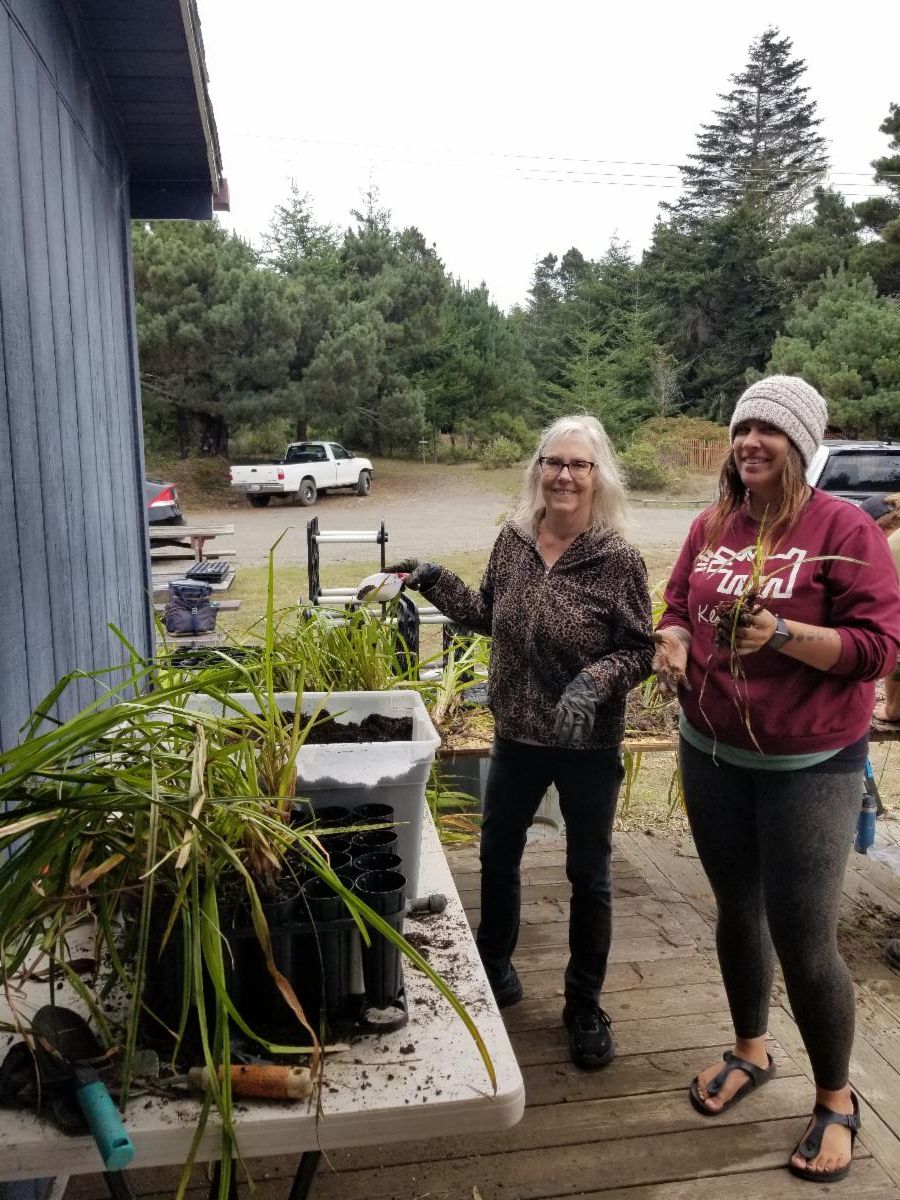
Due to the short timeline, growing plants from seed was not an option. Instead, we dug small clumps containing numerous seedlings and carefully divided them. Volunteers spent a morning potting hundreds of plant divisions into restoration containers generously lent by Mendocino Coast Botanical Gardens. For some species, propagation by cuttings was more appropriate; in these cases, only one cutting was taken per plant to preserve genetic diversity.
| | |
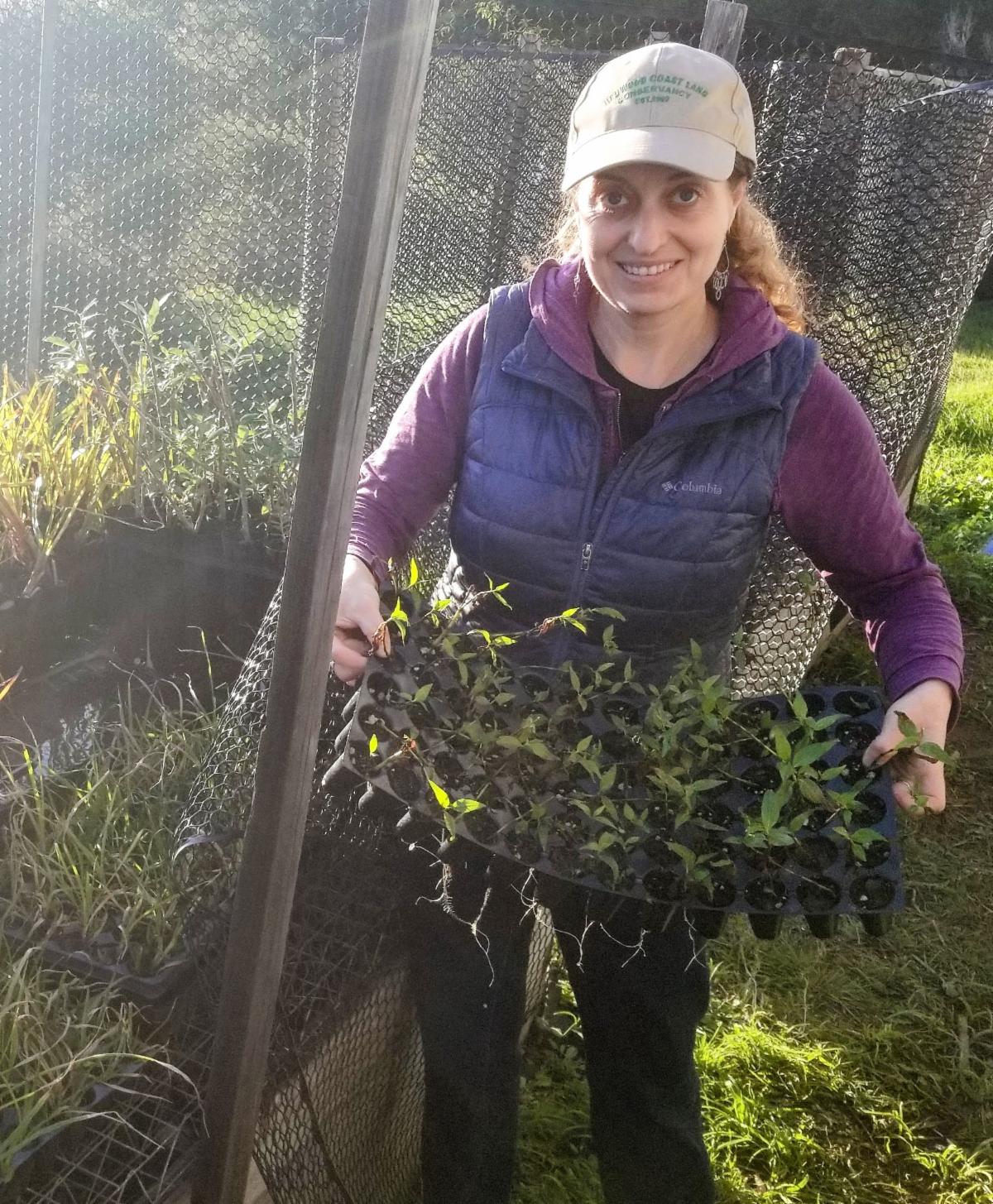
We set up two nursery tables in a sunny location at Mill Bend Preserve, where the plants could grow until planting time. We followed best management practices to prevent Phytophthora, a microscopic water mold whose name means “plant destroyer” in Latin and was the primary cause of the Irish potato famine. Phytophthora thrives in wet conditions, causes devastating root rot, and can be lethal to native plants. Because it spreads through water, soil, and contaminated equipment, prevention during wetland restoration is critical. Our measures included keeping plants off the ground and on tables; sterilizing all containers, racks, tools, and surfaces; and sanitizing hands before handling plants. We also heat-treated soil in batches, keeping it above 122 degrees Fahrenheit for 30 minutes—careful not to overheat it, which could alter mineral content and harm plant growth.
From several hydroseed mixes, Sophia Pisciotta, RCLC's stewardship director, selected one containing only native plants suited to this area. Lauren Hammack from PCI advised the planting team to apply jute netting over the hydroseeded areas and cut holes for the plants. In total, approximately 685 plants were installed in December, with another 400 planned for planting this month. The upper access road was also hydroseeded to support native reestablishment and will receive container-grown native shrubs this month to further boost revegetation. We also expect the coyote brush that was cut back to resprout.
| | We recently checked on the plants, and they are growing! We will continue monitoring China Gulch and look forward to seeing the area transform into valuable riparian and wetland habitat over the coming months and years. We are grateful for this collaboration, which is already yielding improved habitat in the China Gulch waterway. | | Signs of recovery in the Gualala River | | |
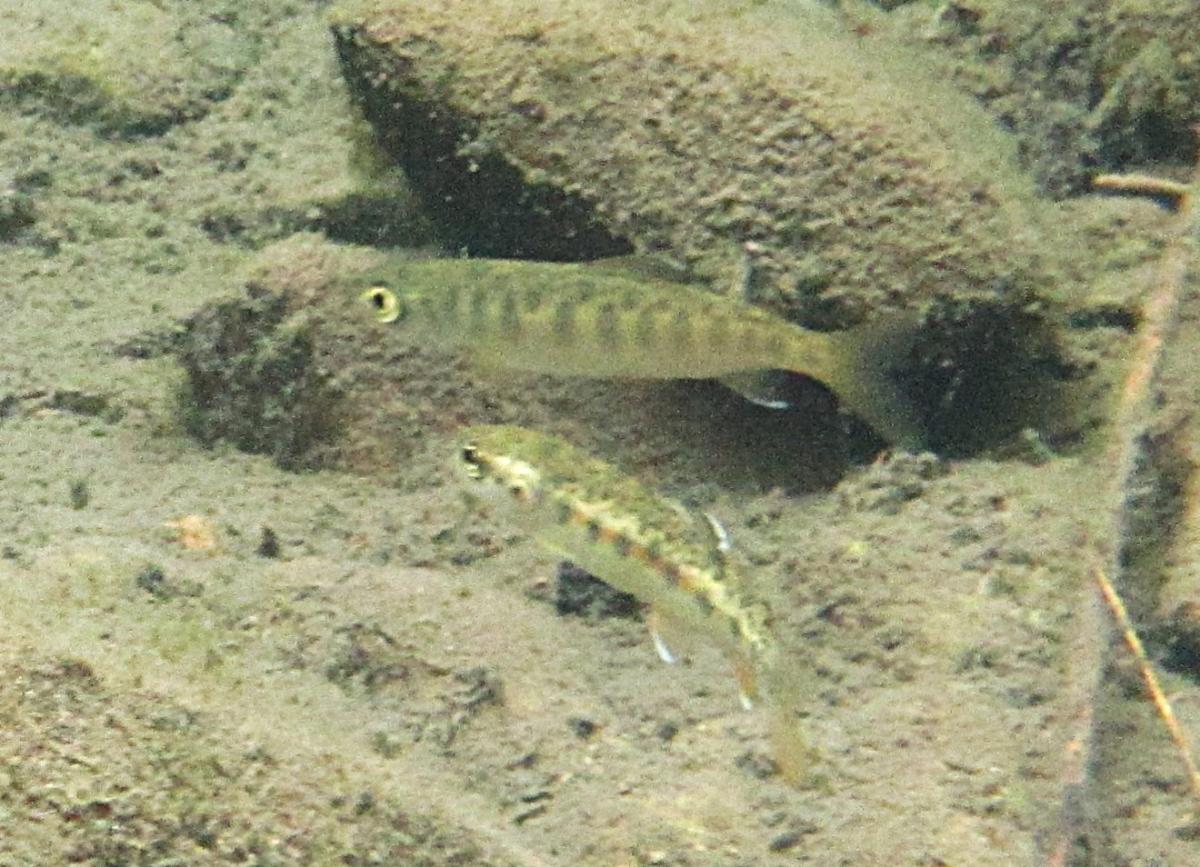
Last fall at the Restoring the River community event, we brought together a room full of organizations focused on the health of the Gualala River watershed. Two of those organizations–the California Department of Fish and Wildlife and the Gualala River Watershed Council–regularly monitor the habitat in the river. Shortly after the event, during the Gualala River Watershed Council's annual habitat monitoring last fall, a juvenile coho salmon was spotted in Dry Creek, a tributary to the North Fork of the Gualala River. A few weeks later, the two organizations returned with snorkel masks and cameras and were able to identify and photograph six to eight juvenile coho salmon in three separate pools on lower Dry Creek.
The adult coho that produced these juveniles were likely from another river on the North Coast, though it is possible that a remnant population has survived undetected in the Gualala watershed. Staff at the California Department of Fish and Wildlife collected genetic samples from three of the fish, which may provide insight into their origins. Plans are underway to conduct additional surveys to determine whether coho are present in other areas of Gualala.
The last documented sighting of juvenile coho salmon in the Gualala River was in 2004, despite extensive snorkel surveys over the last two decades. This sighting marks a positive development in the river's health and further underscores the importance of improving habitat conditions in the estuary. Estuaries provide rich feeding
opportunities for juvenile fish, maximizing their growth and improving their chances for survival in the ocean. The longer fish spend feeding in estuaries and lower-watershed wetlands, the more likely they are to thrive in the ocean and return to begin the cycle again. The Restoring the River initiative will help restore emergent wetlands and large wood along the stream to provide resting and hiding places for salmon from predators.
Through strong partnerships between the organizations invested in this initiative, we're working toward a healthier, more vibrant future for the Gualala River estuary.
| | |
Bird walk at Mill Bend Preserve
Monday, February 23 at 8:30 AM
| | |
Join us for a bird walk at Mill Bend Preserve! We will begin at the edge of the Gualala River, where we typically see a variety of song birds, raptors, and water birds. We will then move to upper Mill Bend Preserve, where we will walk the meadows, chaparral & forest, and are likely to see many other species.
Whether you’re a seasoned birder or just curious about the local wildlife, all are welcome.
Where: Meet at the pullout on the east side of Highway 1 (immediately north of the Gualala River bridge).
RSVP: The event is free. Please no dogs.
| | |
Introducing RCLC’s new treasurer:
Susan Winston
| | |
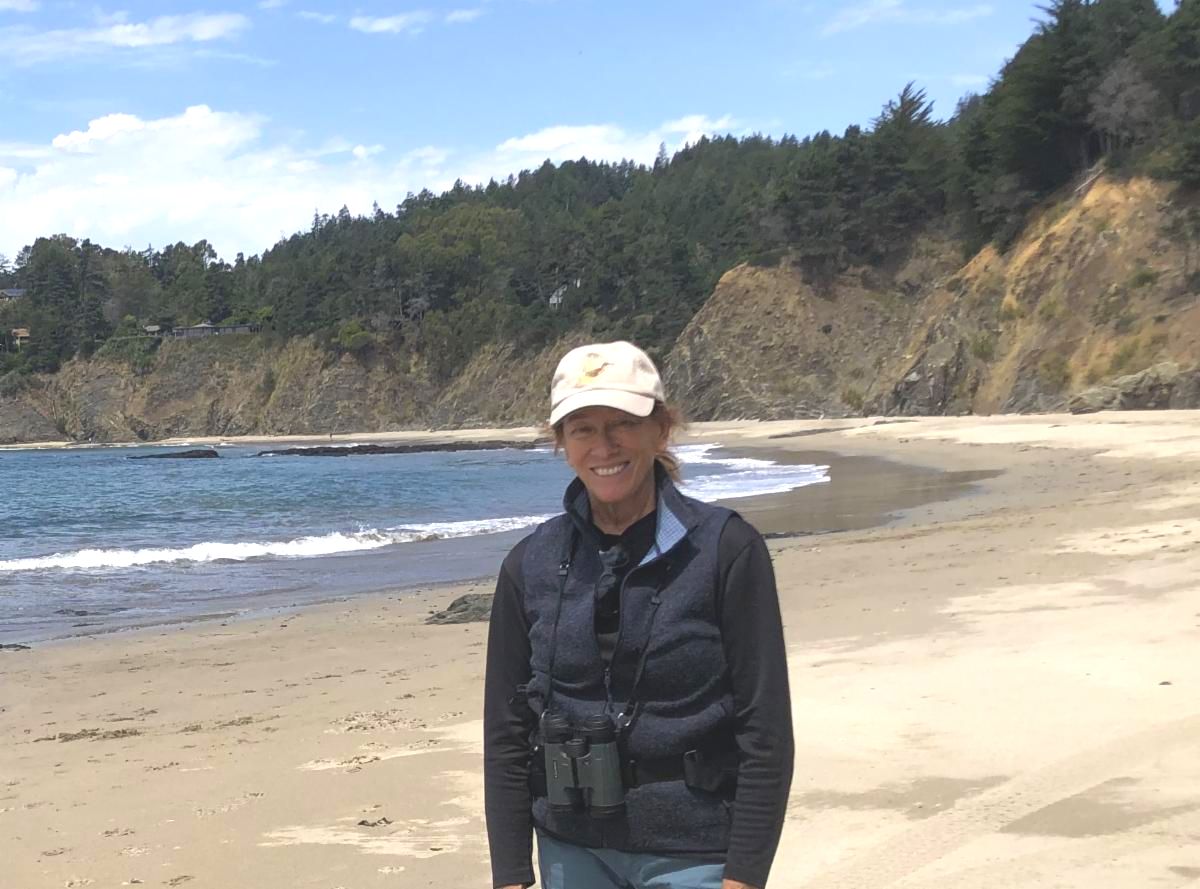
RCLC is thrilled to welcome Susan Winston to the board of directors! Susan will serve in a critical role as our new treasurer.
Susan's career as a Certified Public Accountant began in Southern California at Arthur Andersen & Co., followed by a few years at Price Waterhouse. She subsequently became a partner in a small firm that provided tax, audit, and accounting services to a variety of small businesses, professional services, and individuals. Susan has served as board treasurer for several nonprofit organizations, including Marin Audubon Society.
Susan’s interest in the natural world and love for this stretch of coast are closely aligned with the mission of RCLC. As she shared,
"Growing up in Colorado, I enjoyed regular exposure to the natural beauty in the nearby foothills and mountains, but very much took it for granted. Eventually, I became more curious and realized how much our delicate natural world depends on dedicated professionals and volunteers. Although my professional life has kept me indoors, I’ve had incredible volunteer opportunities, including helping scientists gather snow leopard data in Nepal, assisting with the Island Fox recovery project on Catalina Island, and helping with mountain lion projects in Southern California. Those amazing outdoor adventures were hands-on, doing tasks that needed doing but requiring no specialized skills.
I’m incredibly grateful for the opportunity to join the RCLC family of dedicated professionals and volunteers, primarily using my indoor skills, but looking forward to a few tasks that need doing outdoors.”
|
| RCLC executive director transition | | |
RCLC executive director Jim Elias has announced that he will be retiring in the coming months. Since joining RCLC in 2022, Jim has led the organization through a period of growth and development, enabling next upward steps. Jim reflected, “It’s been gratifying to bring aboard new staff, witness on-the-ground progress, and develop an exciting vision for the future. RCLC’s work is empowered by a tremendous community of supporters, volunteers, and partners.” Jim will continue serving as executive director until the transition is complete.
RCLC is launching an extensive search to welcome the organization’s next executive director. With a committed board and staff, and a strong financial foundation, RCLC is eager to embark on new conservation opportunities. “We look forward to attracting an executive director that can build upon the strong foundation Jim established during his four-year tenure,” RCLC board president Mark Escajeda explained, “That sturdy foundation enables us to continue growing as a land trust.”
You can find the position here.
| | | | |