A Farewell to Jim Elias: Executive Director and Friend | | |
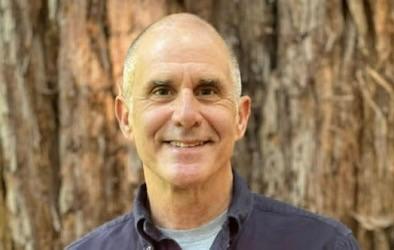
Redwood Coast Land Conservancy exists thanks to the efforts of many people. Since 2022, RCLC’s most valuable asset has been Jim Elias, serving as RCLC’s executive director during an era of tremendous growth within the organization. Jim brought to us decades of land conservation experience and helped shape what RCLC is today and what, under new executive management, we will become.
Jim’s achievements are far too many to list here and I would only poorly represent the most impactful of them with the few words allotted in a newsletter format. As board president I can speak in loftier tones about Jim’s impact on me personally in that role, for without him our board would look and function quite differently and lack much of the optimism we’ve built despite sometimes very difficult times during his tenure.
As an executive, Jim sought and hired staff that have made RCLC more capable as a land trust, priming us for the march toward Land Trust Alliance accreditation, rapidly becoming a necessity when seeking additional public and private funding for conservation projects. As a leader, Jim stretched each of us to offer more than we thought we had to give. And as a person, Jim treated everyone with respect, whether approached with an idea or something less appealing.
To say Jim Elias will be missed brings tears to my eyes just typing the words. We are losing a dedicated, complete human being to a well earned and deeply deserved retirement. We sincerely hope all the best for you, Jim. You will not be forgotten.
| | A Lifelong Connection to the Coast: RCLC’s New Executive Director | | |
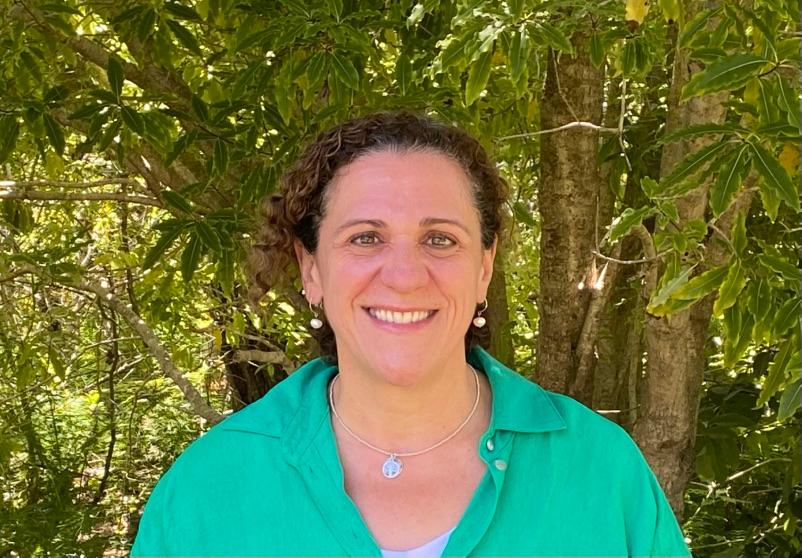
RCLC would like to officially welcome Helen Pataki as our new Executive Director. For Helen, taking on this role is a homecoming. Her relationship with the beautiful Mendonoma coast began in childhood, when her father would take her fishing near Fort Ross and along the coast. She fell in love with the area, eventually buying a place in Gualala in 2010 before making it her full-time home in 2025. "Through my many visits over the years, and now as a resident, I’ve come to deeply appreciate the area’s remarkable beauty and its strong sense of community."
Helen steps into this role with more than 20 years of leadership and public service experience, including a distinguished career with the U.S. Agency for International Development as a member of the Senior Foreign Service. Throughout her career, she has led diverse teams, managed complex programs and budgets, and built critical partnerships among government agencies, nonprofits, and local communities.
As a full-time resident, she is eager to explore even more of the local landscape—"I love to walk, and for years I’ve enjoyed spending time at Gualala Regional Park," she says— and invites community members to chime in, “I'm excited to discover even more of the area's trails—if you have any you want to share, let me know!"
When asked to describe the spirit of the Gualala community in just three words, Helen does not hesitate: Welcoming, resilient, and connected. It is this exact spirit that she hopes to mirror in her leadership at RCLC. “I am honored to join Redwood Coast Land Conservancy at such an exciting time," Helen said. "RCLC has built a strong foundation and earned tremendous community support. I look forward to listening, learning, and working together to protect the special places that make this coast unique while ensuring they can be enjoyed and appreciated by future generations."
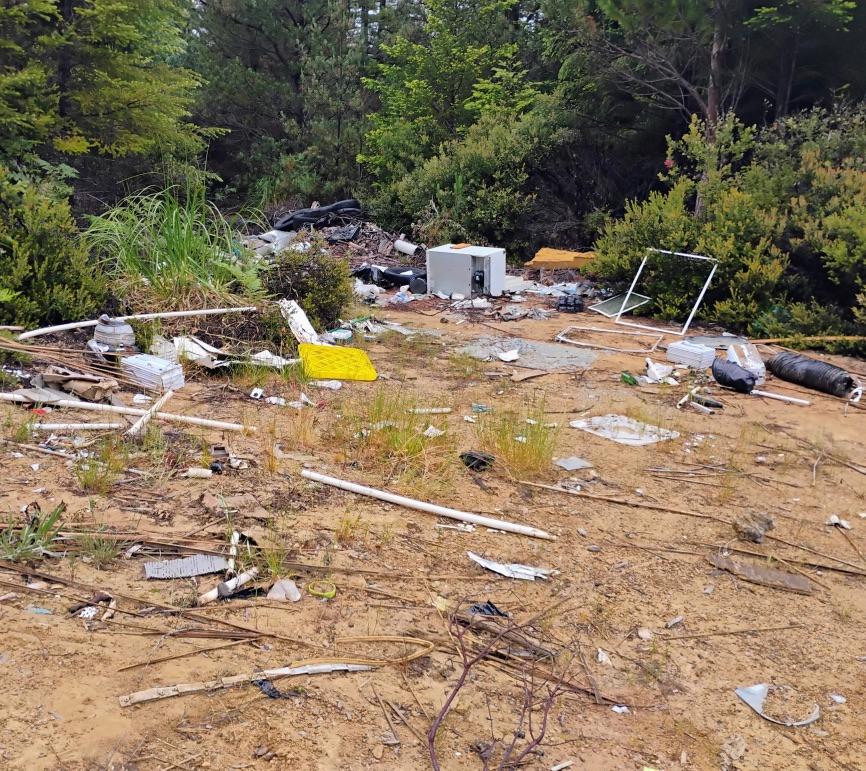
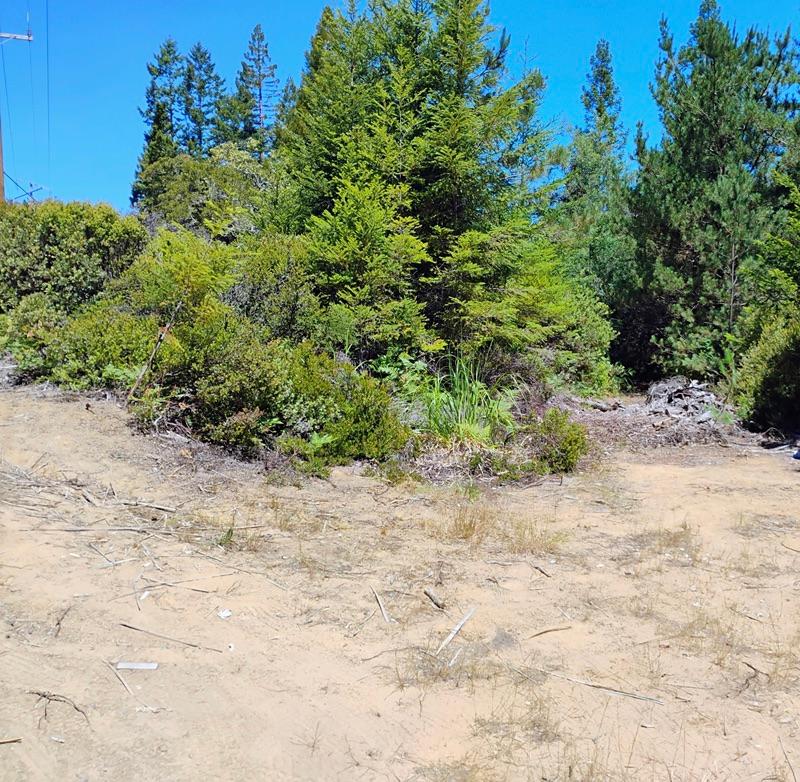
| | When Forces Join: A Collaborative Effort to Tackle Local Illegal Dump Site | | Before and after photos of same section of clean-up area. | | |
On Saturday, June 27th, Riverbend Kayaks in partnership with the RCLC, and in direct collaboration with C&S Waste Solutions, hosted a community trash clean-up of an illegal dump site at the intersection of Fish Rock and Old Stage Road.
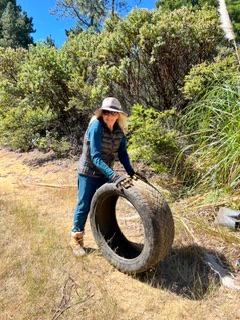
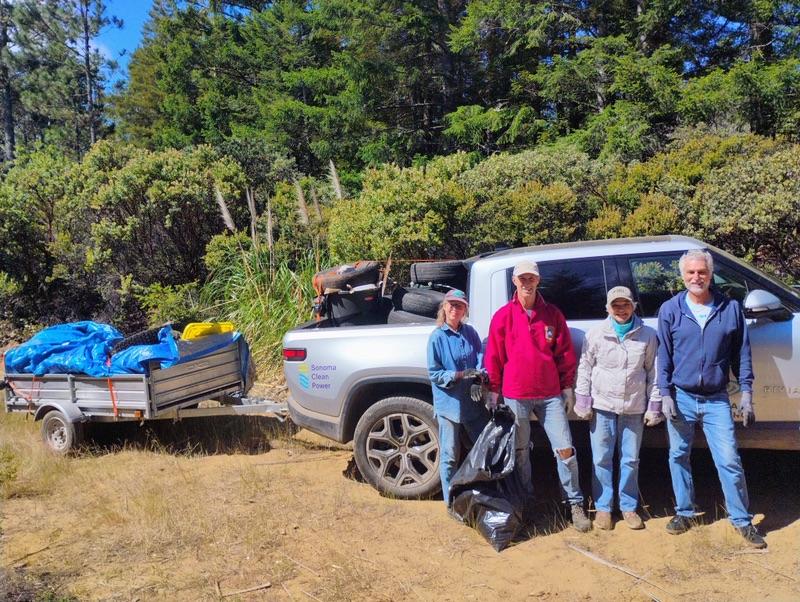
Attendees included community volunteers, local business owners, and RCLC’s team—including both our new and previous executive directors, board members, and staff. Working side by side, this dedicated crew removed an astounding 20 yards of refuse, 41 tires, 3 refrigerators, and 6 mattresses, beautifully demonstrating the power of collective action.
| | | | |
The pullout area of Fish Rock and Old Stage Roads has unfortunately been a target for illicit dumping, the local landscape full of discarded household items, tires, and litter. Because this site sits close to watersheds and sensitive coastal ecosystems, the accumulated refuse poses a direct threat to local wildlife and water quality.
The initiative began when Efi Benjamin of Riverbend Kayaks went foraging in the area with a friend and noticed the massive build-up of trash. Wanting to make a difference, he spearheaded a partnership with RCLC to join forces and organize a targeted clean-up day.
| | |
This project was amplified by crucial support from C&S Waste Solutions in the form of providing complimentary disposal services, absorbing the service charges for this focused effort. When questioned about C&S Waste Management's decision to participate, Bruce McCracken, District Manager, emphasized their local commitment stating, “We are part of the community too.”
Thanks to everyone who contributed in preventing a staggering amount of trash and debris from impacting our local ecosystem and wildlife. It's inspiring to see what our community can accomplish when we row in the same direction!
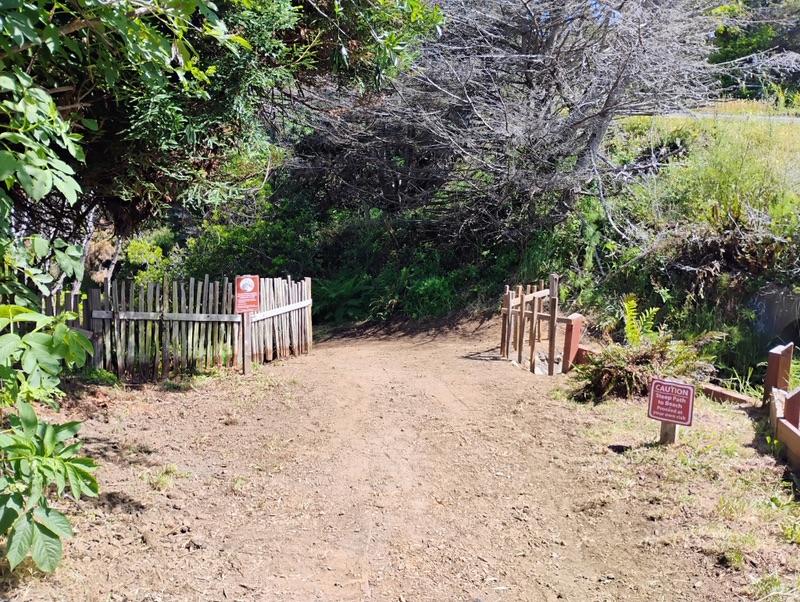
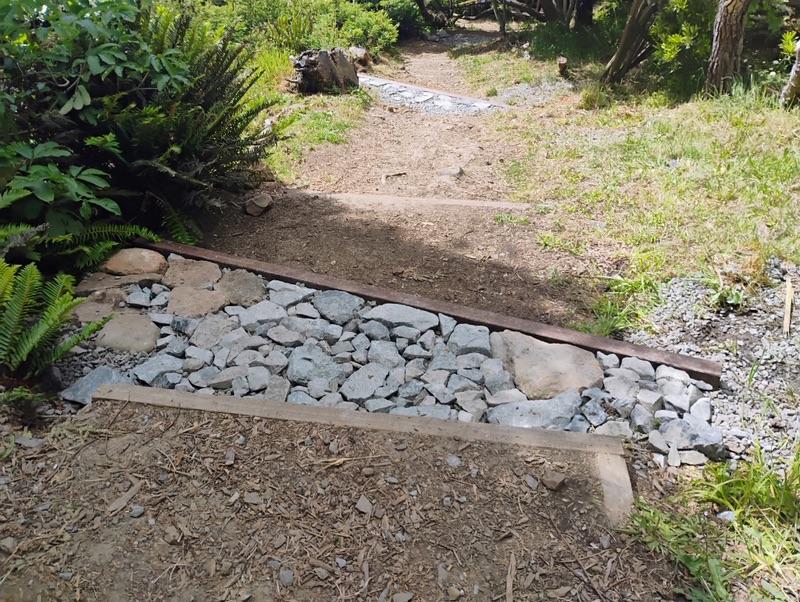
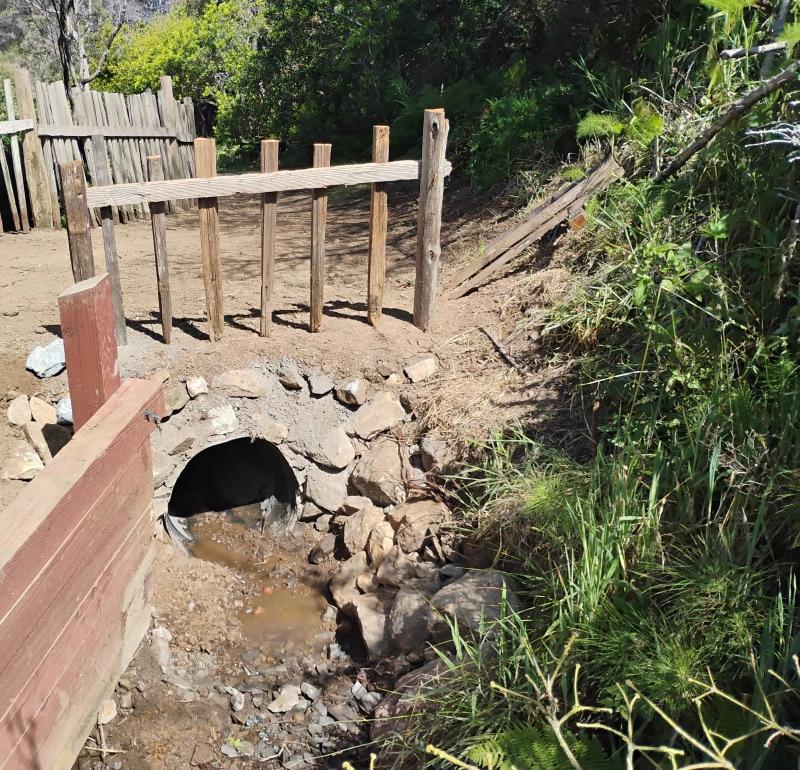
| | Nancy and Rich Trissel, Cyndy Soloman, and Jerry Henry. | | Tending the Trails: Restoring Safe Passage to Cooks Beach | | Pathway to Cooks Beach at replaced culvert. Photo by Ethan Widner | | If you’ve taken a stroll down to Cooks Beach recently, you may have noticed the latest trail repairs and stair improvements. The pathway not only looks and feels better, providing safer footing for visitors, but will also be much more resilient to erosion in the years to come. Thanks to a dedicated team of restoration technicians and local experts, RCLC has successfully wrapped up its critical infrastructure repairs to the pathway’s culvert, drainage system, and general stability. | | Repaired water-bar step at Cooks Beach. Photo by Ethan Widner | | Cooks Beach trail experienced exceptionally heavy seasonal rains and atmospheric rivers this year, which overwhelmed the older trail infrastructure, causing erosion and a hazardous pathway. The restoration project focused on replacing the failing culvert and improving drainage along the trail. Restoration technician Ethan Widner noted, “We repaired the water-bar steps and used rocks in varied sizes to encourage natural filtration to slow water down, catch sediment, and prevent erosion.” | | |
Ira Smith of Smith Property Improvement replaced the failing metal culvert with a plastic one that’s resistant to corrosion. According to restoration technician Dylan Freebairn-Smith, “the new culvert is aligned with the natural streambed grade, and is properly armored at both the inlet and outlet.
RCLC’s Cooks Beach steward, Joel Chaban, assured that these repairs will be monitored over the coming winter to ensure that Cooks Beach trail remains safe, accessible, and protected from coastal erosion for seasons to come.
| | Looking down at culvert work by Ira Smith. Photo by Ethan Widner. | | Three Years of Work Preventing Wildfire and Protecting our Community | |
|
June 30th marks the completion of the grant term for our Mill Bend Preserve Wildfire Management Program. This $308,200 grant was awarded to RCLC in 2023 by the State Coastal Conservancy and funded a major fuel reduction project at Mill Bend Preserve (MBP).
In early 2024, the grant paid for two spikes, or eight day deployments, of the California Conservation Corps (CCC). Through this program, a group of a dozen young people and their supervisors set up camp at MBP, working 10-hour days to remove invasive species such as French broom and Jubata grass that had invaded the Preserve. They also conducted limbing and thinning to remove built-up fuels from the Preserve’s dense forests. Over sixteen days of work, the group jump-started our wildfire management project, transforming crowded, brush-laden forests with thickets of invasive plants into open, fire-resilient forests. The program also provided training and hands-on experience for these young Corps members, opening career pathways and opportunities for them in the field of conservation. RCLC contracted the Mendocino Land Trust (MLT) to assist with coordination of this project, with Nikki Houtz and Anna Bride staying onsite during the spikes. Thank you to Nikki, Anna, and MLT for their help with this project!
Following the CCC spikes, the grant funded additional hired labor to continue fuel reduction and invasive species removal work at MBP, maintaining project momentum while RCLC built its stewardship team. Two restoration technicians, Ethan Widner and Dylan Freebairn-Smith, were hired to conduct fuel reduction and other stewardship duties at MBP and our other property interests.The grant covered most of their wages and also supported two temporary employees who assisted Ethan and Dylan with fuel reduction and restoration projects. In total, this State Coastal Conservancy grant paid for over 4,000 hours of RCLC staff time, not only improving the safety of our forests and community, but also supporting local employees and contributing dollars to the local economy.
| |
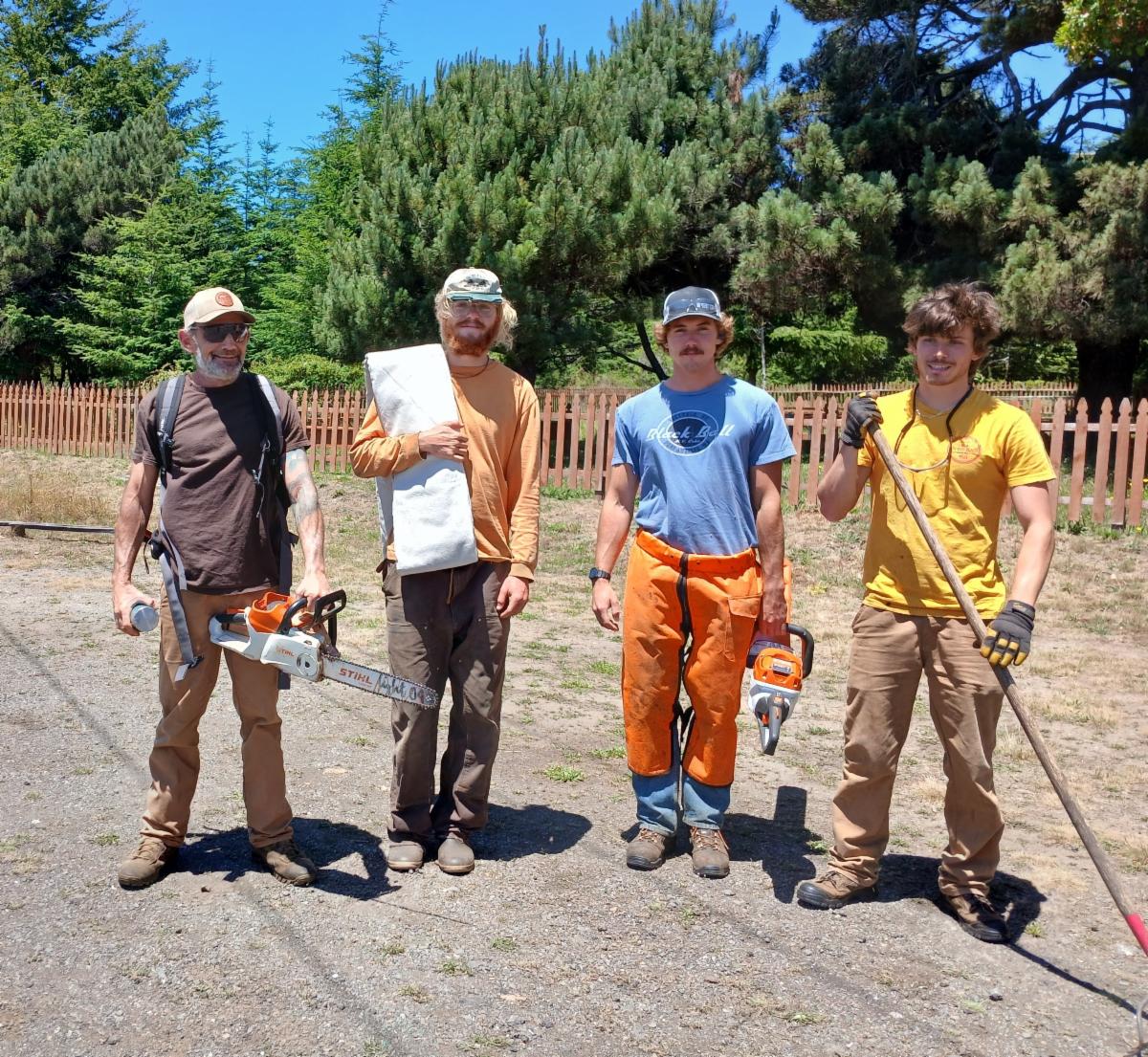
Restoration technicians with volunteer Jackson Curtin who joined RCLC in the spring. From left to right: Ethan Widner, Jackson Curtin, Dylan Freebairn-Smith and Noah Fisher. | |
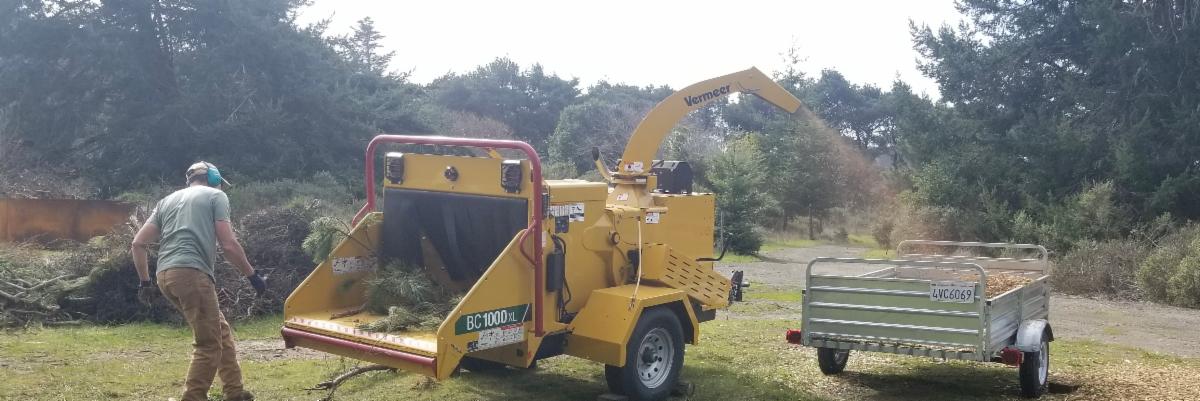
| In addition, the grant enabled equipment purchases to build RCLC’s resource stewardship capacity. The most significant of these purchases is our now-beloved Vermeer wood chipper, affectionately called “Chewy.” This professional-grade piece of equipment enables the chipping of wood debris, returning this material to the forest floor to decompose and enrich the soils. Wood chips have also been used to create a thick mulch, smothering low-growing invasive plants. A utility trailer, chainsaws, mowers, weed eaters, safety equipment, hand tools, and a fuel safe were also purchased under this grant, giving RCLC’s restoration technicians the ability to safely and effectively conduct wildfire resilience work well beyond the life of this grant.
| |
Ethan and “Chewy” the chipper. | |
As we wrap up this grant term, we are grateful to the State Coastal Conservancy for funding the important work of protecting our community and forests from catastrophic wildfires, and providing the tools that enable RCLC to steward healthy forests for years to come. | |
| | | |