July 2025

ECORP Invests in Technology - Sound Level Meters

As ECORP’s Air, Greenhouse Gas, Noise, and Energy (AGNE) group continues to grow its team and service offerings, the firm has made strategic investments in advanced technology to support and expand its noise monitoring capabilities.


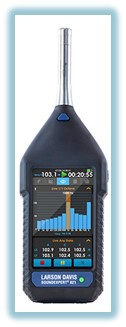
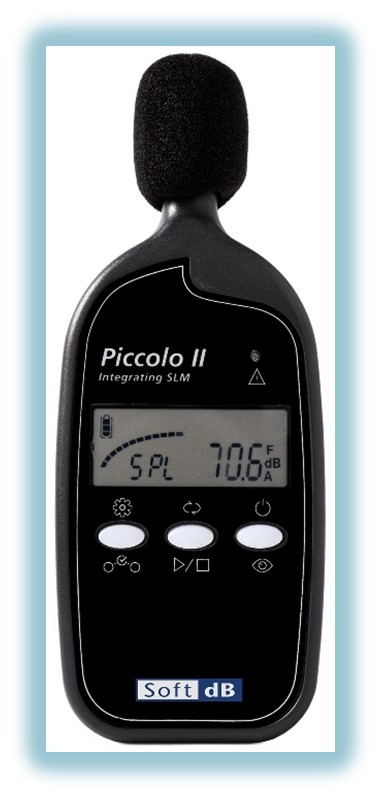
In January of 2024, we expanded our monitoring capacity with the addition of new Class I SoundExpert and Spartan ENV821 Sound Level Meters (SLMs) from Larson Davis—high-precision tools that support a wide range of noise monitoring applications. This year, we have expanded our fleet further with the purchase of two Piccolo II SLMs, manufactured by Soft dB. The new Piccolo II SLMs are Class II, which will complement the existing Class I equipment and broaden monitoring strategies.


What is a Class I Sound Level Meter?

Class I SLMs are designed for high-precision measurements and meet the stricter tolerances defined within the International Electronic Commission (IEC) 61672-1:2013 electroacoustic performance specifications. Class I meters typically maintain ±1 dB across most of the frequency range. They are ideal for applications where accuracy is critical—such as regulatory compliance studies and detailed acoustical analyses.


What is a Class II Sound Level Meter?

Class II SLMs also comply with the IEC 61672-1:2013 specifications, but with slightly wider tolerances—generally ±2 dB across most of the frequency range. This makes them excellent for long-term monitoring, screening-level and general environmental assessments.


Special Note: Class I and II” and “Type I and II” are often used interchangeably, but they reference different frameworks. Type I and II refer to the American National Standards Institute (ANSI) S1.4-2014 standards, while Class I and II refer to IEC 61672-1 specifications, which include more rigorous testing requirements. Most modern SLMs, including those used by ECORP’s AGNE team, are compliant with both.


Why Use Both?

Having both Class I and Class II SLMs provide flexibility and allows AGNE to strategically select the right meter for each monitoring project, whether establishing baseline noise levels for CEQA/NEPA or conducting long-term construction noise monitoring. For instance, the new Piccolo II meters (Class II) will primarily support long-term unattended monitoring due to their 48-hour internal battery life, compact design, and portability.


How Does This Benefits Our Clients?

By diversifying our instrumentation, AGNE can better match monitoring tools to specific project needs, improve efficiency, and reduce costs for our clients, all while continuing to deliver high-quality monitoring and technical reports. 


With staff in our northern and southern California offices, find out how AGNE can assist your project by contacting Seth Myers AGNE Group Manager, in the Chico office at (530) 717-7600.

SoundExpert 821, Larson Davis

Piccolo II SLM, Soft dB

ECORP Biologists Again Assist with Trapping for the Mohave Ground Squirrel Conservation Council’s Long-Term Pilot Study

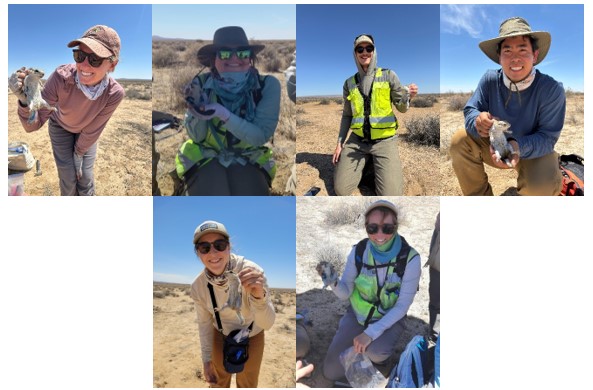
This year, six ECORP biologists assisted with the Mohave Ground Squirrel Conservation Council’s (MGSCC) live trapping study for the Long-Term Pilot Study on Mohave ground squirrels (MGS). The live trapping study began with a training day and trap set up on May 18, 2025, and ran for 10 days, ending on May 29, 2025. The MGSCC is a nonprofit 501(c)(3) www.mgsconservation.org organization that is at the forefront of Mohave Ground Squirrel conservation. For the Long-Term Pilot Study, the MGSCC is working with USGS to collect detailed data on MGS. The study is funded through a grant from the California Department of Fish and Game’s Wildlife Conservation Board.


ECORP biologists, Taylor Dee, Caroline Garcia, Josh Harris, Sam Harrison, Alden Lovaas, and Wendy Turner assisted permitted biologists during the 2025 live-trapping study. ECORP biologists assisted with opening traps in the morning (starting as early as 0345), checking traps throughout the day, marking white-tailed antelope squirrels (AGS), and assisted with data collection and processing for MGS captures. The procedure for processing MGS included pit tagging, ear tagging, tissue sampling, scat sampling, weighing, fur marking neck measurements, and photo documentation.


ECORP biologists gained a lot of experience with MGS during the live trapping study. Collectively ECORP biologists spent approximately 290 hours on the site learning from multiple permitted biologists (Wendy Turner had the opportunity to work with 8 different permitted biologists).


The MGSCC has just posted the early results of the study to date in a Story Board on their website:  https://mgsconservation.org/long-term-monitoring


To find out more about the Mohave Ground Squirrel Conservation Council, please contact Don Mitchell in the Redlands office at (909) 307-0046.

ECORP Attends the 2025 Desert Tortoise Council Symposium

This year marked the 50th Annual Desert Tortoise Council (DTC) Meeting and Symposium held on February 25 through February 28, 2025, at the Palace Station Hotel and Casino in Las Vegas, NV. The DTC is at the forefront promoting conservation of the desert tortoise in the deserts of the southwestern United States and Mexico.


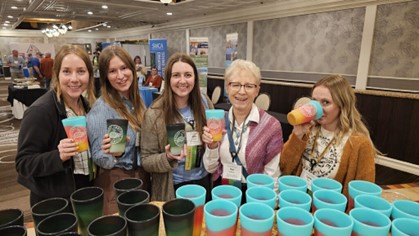
ECORP was an exhibitor and the Registration Desk Sponsor of the symposium and ECORP biologists, Mari Quillman, Alden Lovaas, Shelby Dunn, Taylor Dee, and Verity Richardson were in attendance. Mari is the current Chairperson of the Desert Tortoise Council. Alden, Shelby, Taylor, and Verity participated in the symposium as volunteers and members of the Host and Arrangements Committee.


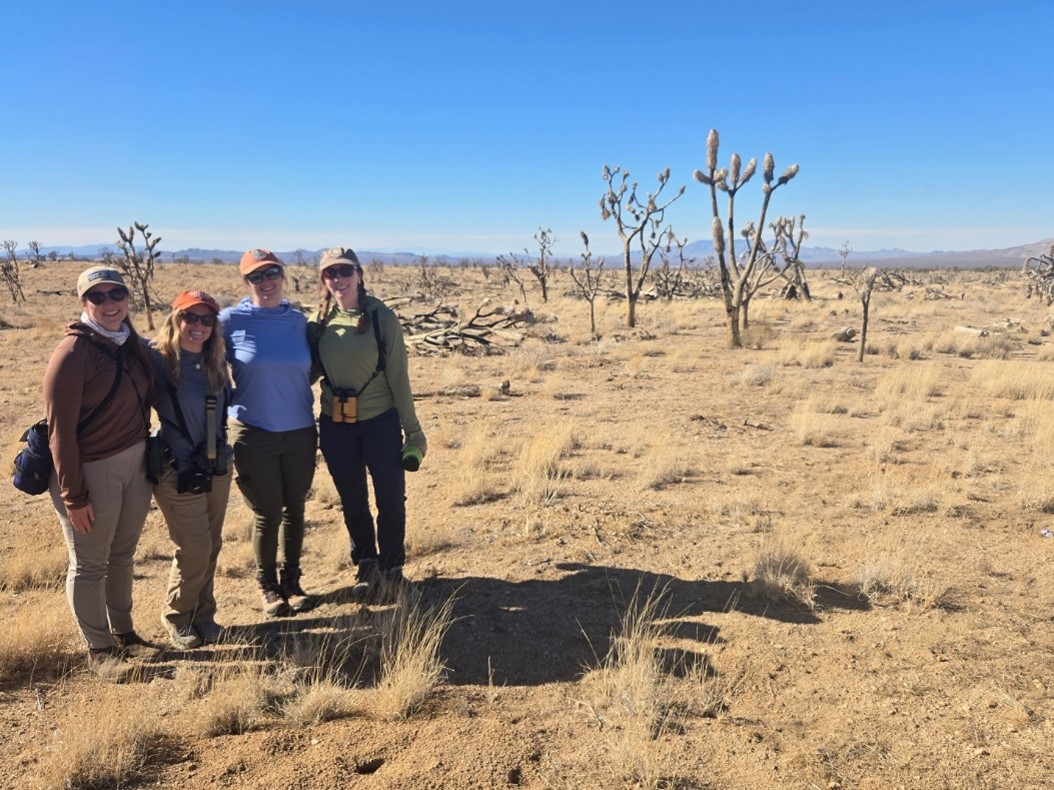
The symposium began with a field trip to two wildfire burn sites at the Mojave National Preserve (MNP): 2020 Dome Fire and 2023 York Fire. Debra Hughson, retired science advisor for the MNP, explained the history of fire at the MNP and challenges with managing wildfire in the remote Mojave Desert. Field trip attendees, including ECORP biologists Alden, Shelby, Taylor, and Verity, were able to see islands of unburned vegetation surrounded by acres of burned Joshua tree woodland.


The symposium session topics were diverse and informed attendees on current research on and relating to desert tortoises. Session topics included translocation and head-starting, updates from United States Fish and Wildlife and Bureau of Land Management, genetics, and perspectives from new Desert Tortoise Council board members.


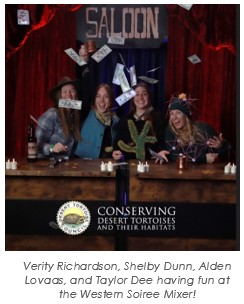
In celebration of the 50th annual symposium, a donor sponsored Western Soiree Mixer was held. The mixer was an immersive experience with intricate western décor and a western costume contest! Two of the ECORP biologists dressed up as cholla and cottontop cacti to everyone’s amusement!


For more information on the desert tortoise, contact Mari Quillman at (949) 561-4020 or Don Mitchell at (909) 307-0046.

Shelby Dunn, Verity Richardson, Alden Lovaas, Mari Quillman, Taylor Dee

Field trip attendees include ECORP biologists


ECORP Attends SAME Camp Pendleton Day

Todd Chapman, Lindsay Buck, and Natalie Newman attended SAME Camp Pendleton Day at the Pacific Views Event Center in Oceanside, CA.


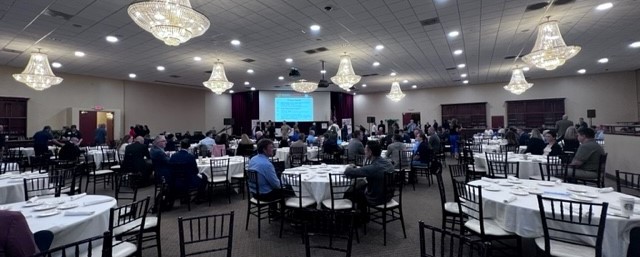
Camp Pendleton Day, first and foremost, is an important fundraiser for the Posts to make a significant impact for selected U.S. Armed Forces and Veteran-based Charities. The five SAME Posts in Southern California (Orange County, San Diego, Los Angeles, Inland Empire & Oxnard Ventura) have been supporting this 19-year long tradition of CAMP PENDLETON DAY where they bring together Industry and Government Engagement for a day of networking, learning, and sharing best practices. 


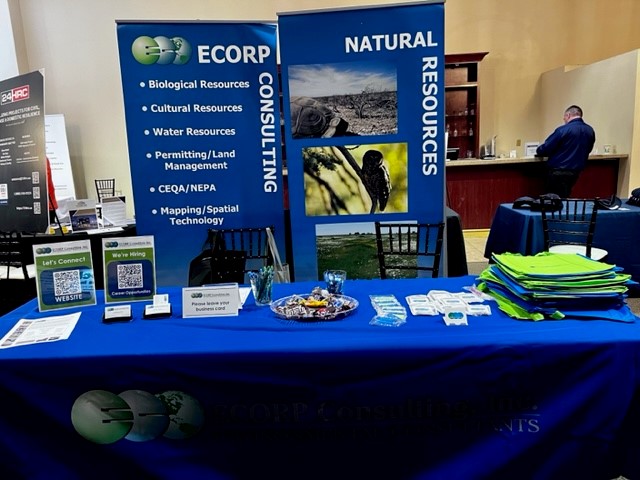
As a Silver Sponsor with an exhibitor booth at this year’s conference, we are proud to support the advancement of defense innovation and collaboration. The exhibitor booth provided an ideal platform to engage directly with military leaders, decision-makers, and industry partners, allowing us to discuss how we can contribute to current and future federal business opportunities.


For more information, please contact Todd Chapman or Lindsay Buck at (714) 648-0630 in the Irvine office


ECORP is hiring in all offices.

Please click here to explore potential employment opportunities.


Statement of Qualifications
For more information contact
(714) 648-0630


SERVICES


Biological Resources

Cultural Resources

Paleontology Services

CEQA/NEPA Documentation

Permitting and Land Management

Water Resources

Mapping and Spatial Information Technology

Air Quality/GHG/Noise


Rocklin Redlands Irvine

San Diego Chico New Mexico

X  LinkedIn