Top Stories

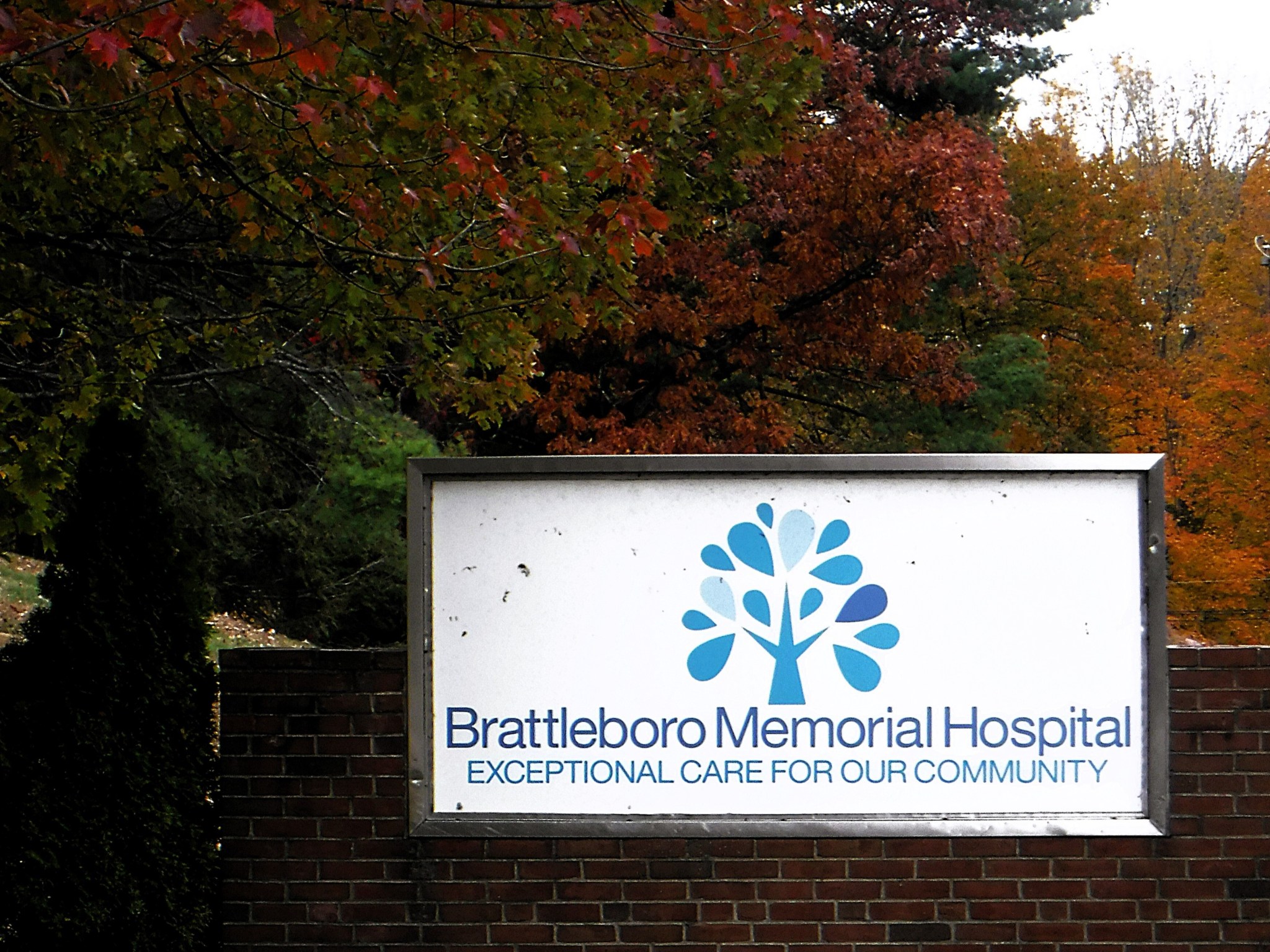
Local businessman donates $4 million to financially ailing Brattleboro Memorial Hospital

VTD-Bratt-hospital-5-2048x1536 image

VTDigger


Brattleboro Memorial Hospital, seeking to recover from a multimillion-dollar budget deficit, announced Monday that a local businessman has offered a $4 million infusion.


Willy Buhlmann, who emigrated from Switzerland in 1970 to found and recently sell his Swiss Precision Turning machine shop, is donating the money to the southeastern Vermont healthcare hub’s depleted investment account, the hospital reported.


“I’m glad I made Brattleboro my home, and I wanted to give something back,” Buhlmann said in a statement. “The hospital is important to this community, and I wanted to do something meaningful to help ensure that people can continue to receive care.”


The Windham County facility, operating on a $130 million annual budget, has forecast a $7.1 million deficit for the 2027 fiscal year that began Oct. 1. That would follow a $33.6 million operating loss for the fiscal years 2017 through 2025, and an estimated $9.5 million shortfall for the 2026 fiscal year that ended Sept. 30, it reported in a state filing.


The hospital has blamed recent deficit spending on past administrative and accounting problems. To cover the losses, it has tapped reserves of cash, investments and unrestricted assets that collectively have dropped from $53.3 million in FY 2021 to a projected $19.7 million for FY 2027, the state filing shows. 

Read more

Budget cuts are hurting patients

VTDigger


Dear Editor, 


We are practicing clinicians, trainees and recently retired doctors who serve on the Vermont Medical Society’s board and are deeply concerned about healthcare affordability and access in the state. Despite sharing these goals with state regulators and lawmakers, we believe many current strategies unwittingly threaten the very access they seek to improve. 


As hospitals are required to quickly and dramatically reduce costs without increasing income, they have limited tools to balance their budgets other than cutting staff and services. At the same time, clinicians across the state are being asked to see more patients, often with fewer supports and in shorter appointments. Access is not improved when services are shuttered and the workforce responsible for delivering care is stretched beyond its limits.


So, what can be done? First, acknowledging that any cost-cutting measures have repercussions, we ask the Legislature and Vermont’s primary hospital regulator, the Green Mountain Care Board, to closely monitor the impact of recent decisions on employee retention, patient outcomes and access to services. 

Read more

How Vermont's $790K LNA Training Hub Opens Doors for Aspiring CNAs 

CNA


Community College of Vermont will use a $790,000 grant from the Vermont Department of Disabilities, Aging and Independent Living to create a coordinated statewide LNA Training Hub. Announced October 5, 2026 under the Rural Health Transformation program, the project was designed with UVM Health and Dartmouth Health.


In Vermont, CNA and LNA describe the same entry-level certified nursing assistant role, but the state credential is the LNA. A searchable directory of state approved CNA training programs, an equipment lending library, and funded slots for new and incumbent aides are the concrete tools. Whether those tools reach rural counties where class access is slow is the open question.


Vermont's CNA training has often worked as a patchwork of scattered local options. Some learners find nearby CNA classes in Vermont quickly, while others spend weeks calling facilities to learn what is available. The new statewide hub is designed to replace that guesswork with one coordinated entry point.

Read more

Other News


Copley Hospital hosts mammography day for breast cancer screenings


NMC's Chris Bouchard recognized with ‘Spirit of the ADA’ award


From Our Hospitals

Health Talk: Breast care and screenings

Rutland Herald


Are you one of the many women who thought that having a screening mammogram every two years is enough? Rutland Regional’s guidelines generally recommend women at average risk should consider starting annual screening mammograms at age 40. Women who are at higher risk may need to start mammograms earlier.


By age 25, women should have a conversation with their doctor about breast cancer risk factors. Risk factors include having a mother, sister, or daughter who had breast cancer, if you started your period before age 12 or started menopause after age 55. But keep in mind, you can still get breast cancer even if you do not have any family history. There is not a recommended age to stop having mammograms as the risk of breast cancer increases with age. Patients should talk to their doctor before stopping annual screening mammograms.


Mammograms are quick and easy; they take about 20 minutes, and our technologists want to make your experience as comfortable as possible.

Read more

Mark Your Calendar


Vermont Public's 2026 general election candidate guide


Visit https://www.vahhs.org/ to stay up to date with the latest from the Vermont Association of Hospitals and Health Systems.

Facebook  LinkedIn  X  Web