|
|
We ask that you consider making a payment to any writer or each writer. Select one or more whose work you are impressed with, and drop some coin into their cup. These pros have things to say about art and more that we think you want to read about. And ponder. And compensate them for. 20% of your contribution will be added to support our staff that produces and administers the Weekly Newsletter and the VAS website.
Anything you chip in MEANS A LOT. Yes, even a buck!
We are in a new world. . .and this is a new solution. We all thank you!
|
|
|
This Week's Contents
(scroll to see the full content of each article; please click the cup and compensate the writer)
|
|
Rafer Johnson and the
Special Olympics
|
Cultural Tensions in the
High Desert
|
The Oakland Art Scene:
In Place
|
|
|
Rafer Johnson and the Special Olympics
by Bill Lasarow
|
|
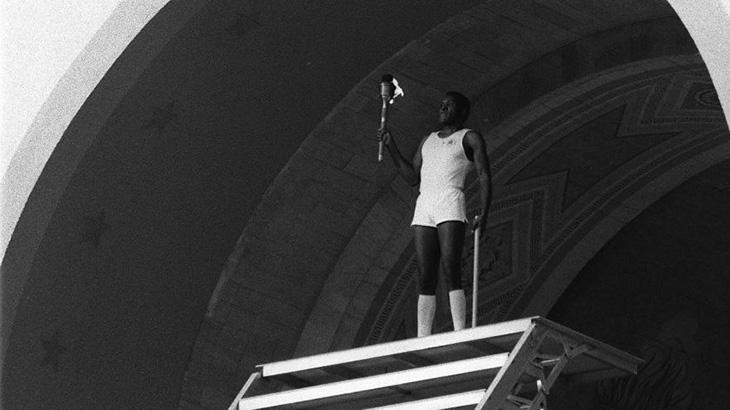
Rafer Johnson about to light the Olympic Torch at the Los Angeles Coliseum, 1984 Olympic Games. |
|
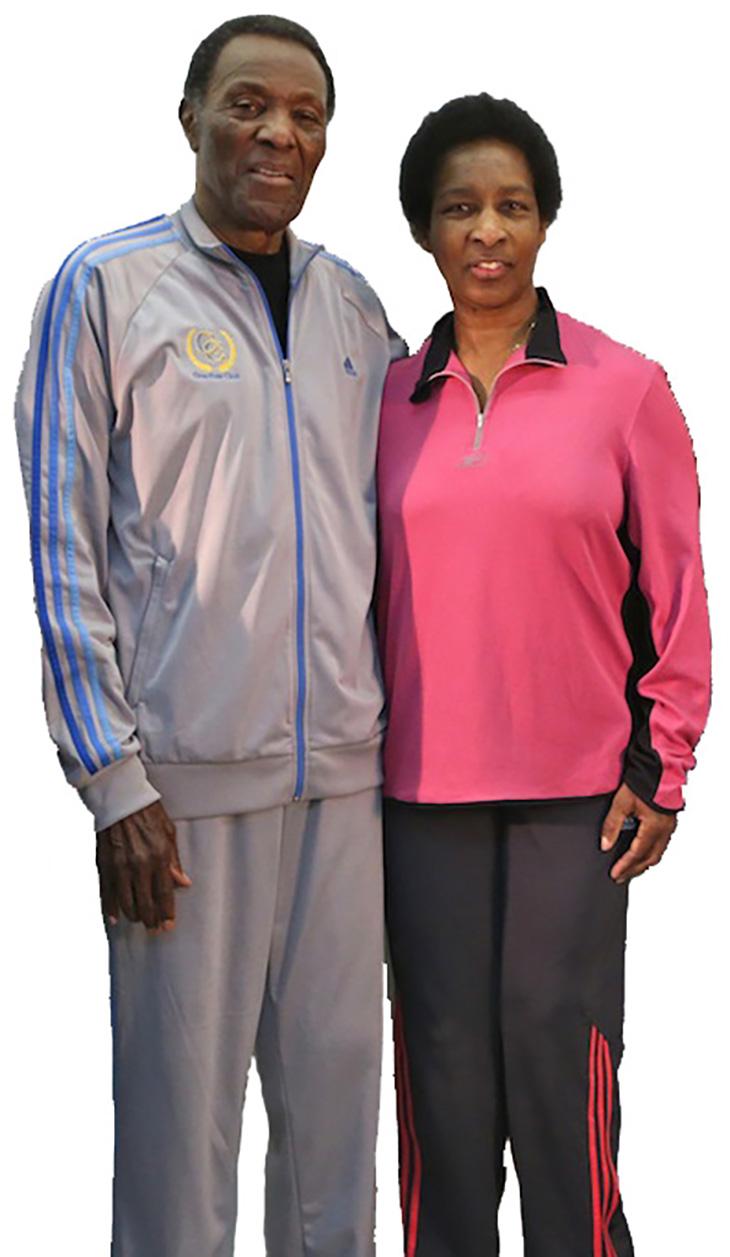
Kent Twitchell, study for "Special Olympics Monument," 2015,
photograph. Rafer Johnson (left) and Loretta Claiborne (right)
|
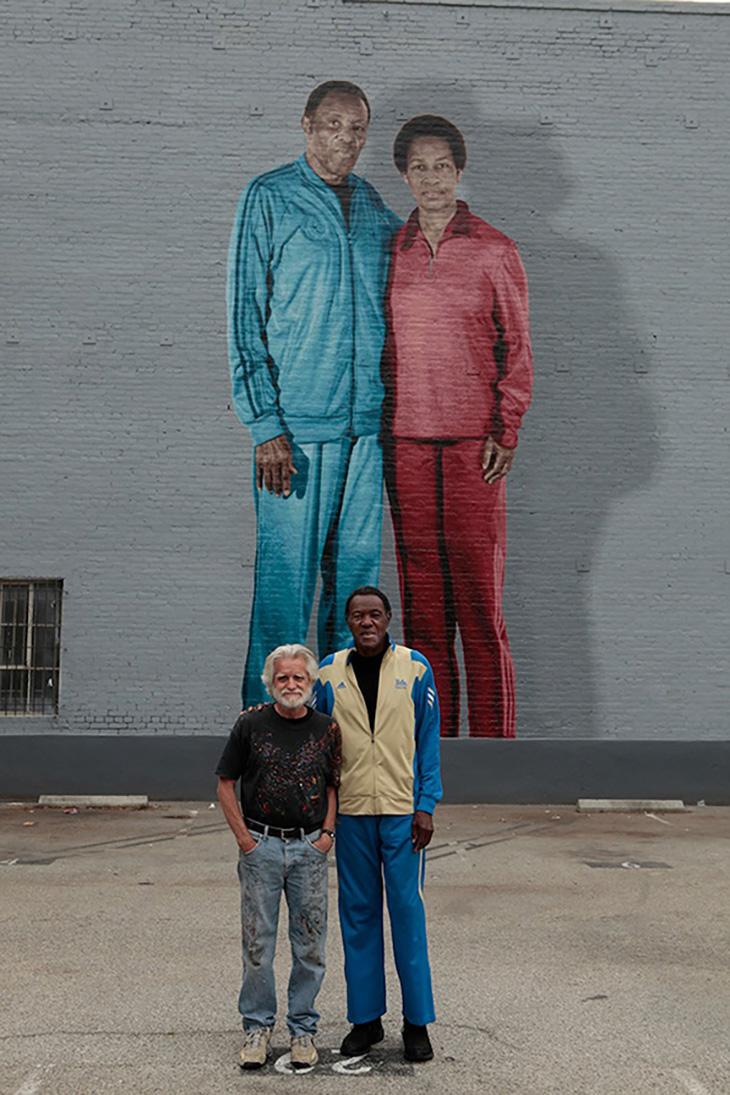
Muralist Kent Twitchell (left) with Rafer Johnson. Behind them, the completed "Special Olympics Monument," 2015
|
|
In February of 2015 I spent the afternoon with Rafer Johnson, the 1960 Decathlon Gold Medalist who passed away at age 86 on December 2nd. I co-produced a series of murals for the Special Olympics, which were to be held in Los Angeles that summer, and we convened at artist Kent Twitchell’s downtown L.A. studio for a photo shoot that would inspire the finished mural. Johnson had a long-time affiliation with the Special Olympics, having co-founded it’s California branch (with Eunice Shriver) in 1969 and served as its president for a number of years. Of course, by 2015 he was 80 years old, retired and shy of much public engagement. A San Fernando Valley resident, he told me that he much preferred the company of his grandchildren.
Our idea was to pair him with Loretta Claiborne, who is regarded as the finest athlete that Special Olympics has ever produced. No, this is not the same thing as the Olympic Games; the Special Olympics features people with physical and intellectual disabilities. Claiborne was born with clubbed feet, could not so much as walk until the age of four, but by age 17 she started earning medals as a runner. Very few among us could compete, athletically, with this woman and, given my tiny slice of Rafer Johnson’s story, if I have something to share about him, it is inextricably bound up with her. So I want you to remember Johnson; but please, also, to get to know Claiborne. They are spiritual twins. Twitchell’s mural is a binary tale of the overcoming of odds to achieve excellence on the field of play, and doing so with grace. Unfortunately, the downtown building was torn down in the course of redevelopment, but the mural was removed and is currently in storage. I plan to help Twitchell find a permanent home for it after I file this article; at least, I have some ideas.
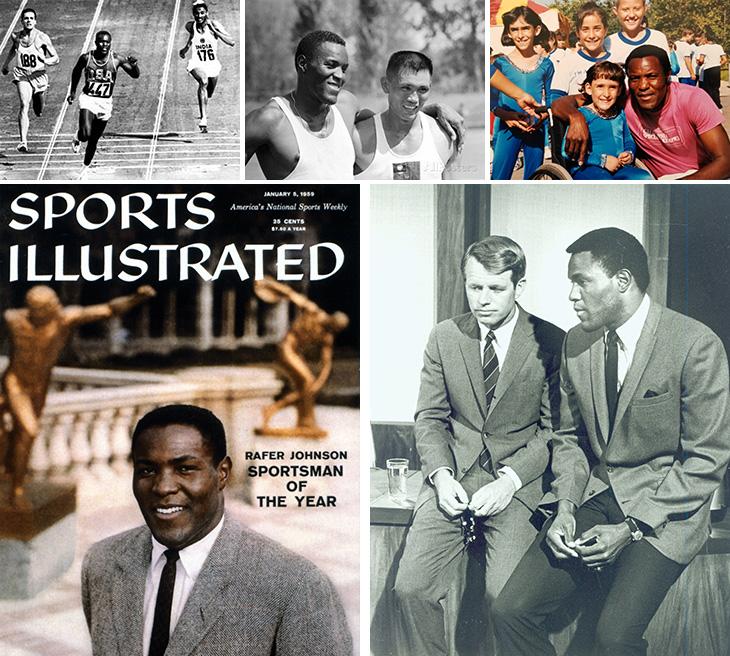
Johnson was born in the segregated South in 1934, his family relocating to California in 1943. By his account he had become aware of the oppression of Black people at age nine, and his family was racially singular in the San Joaquin Valley town of Kingsburg. He grew up picking cotton after school (he hated it). Sports not only saved him, they made him popular and he blossomed. He began winning decathlons in high school (1952) as well as student body elections, where he served as his class at student body president. By 1956, just four years later, he won the Olympic Silver Medal at the Melbourne Games, followed by the legendary Gold Medal in the Rome Games of 1960 by an eyelash against his UCLA teammate CK Yang. Johnson told me that he considered him his closest personal friend until Yang’s death in 2007.
Johnson pursued a successful acting and broadcasting career for many years, but was also a political activist who worked on Robert F. Kennedy’s 1968 Presidential campaign. I listened to his impressions of the assassination at the Ambassador Hotel (today the Robert F. Kennedy School), where he and L.A. Rams player Roosevelt Grier tackled the Senator’s killer. Much later, Johnson was designated as the final bearer of the Olympic Torch opening the 1984 Los Angeles Games at the peristyle end of the Coliseum. He climbed a very long stairway to a platform from which he had to reach high to ignite the Coliseum’s torch. Imagine running, not walking, up several flights of stairs without a handrail, knowing that the eyes of hundreds of millions are upon you. If you look carefully you will see a handrail at the top of that platform. Initially Johnson was asked to complete his task without that handrail because it would look better on TV. He shared with me that looking down from that height after climbing the stairs and then extending himself to light the torch he could imagine plunging to his death to open the Games. Not such a great look. “That top step was wobbly, and I got my handrail,” he told me.
Looking at some of the images of these two remarkable souls, Johnson and Claiborne, I see a balm for our time, the response to a side of our culture that seeks to win at the cost of others, that regards the victory of an opponent as inherently illegitimate or a form of self-negation. Both became winners against all odds, but also suffered defeats and setbacks. In dealing with those they not only sought to improve themselves, but embraced and supported their competitors rather than vilifying them. Sportsmanship: What a concept. Therein lies Johnson’s enduring lesson for all of us.
|
|
A mini-portfolio of images from Rafer Johnson's remarkable career. |
|
|
|
Bill Lasarow is the Publisher of the VAS Weekly Newsletter. Beyond that he makes things and does projects that interest him. Visual Art Source. |
|
Cultural Tensions in the High Desert
by Michael Shaw
|
|
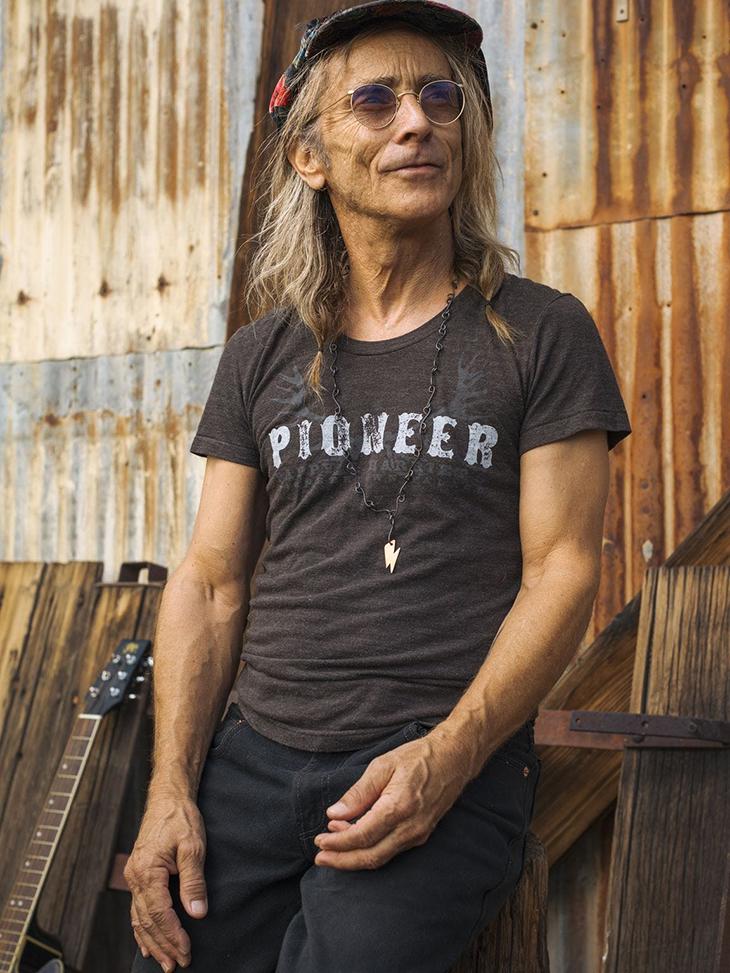
Shortly after the 2020 presidential election was called, I met Joshua Tree-based artist Ben Allanoff at an exhibition here in L.A. (we were both masked). While he was happy to be living and working there — he became a full-time resident in the spring of 2017, after making regular visits for more than 30 years — he was now so concerned about the area’s political divisions that he was speculating that rogue militia types could put up road blockades as a fallout from the resistance to and denial of Biden’s win/Trump’s loss.
There is a substantial contingent of Trump supporters in the High Desert, but the artist/creatives communities are sizable and arguably more visible. It’s as unusual a mix as anywhere in the country. In alluding to our new and most charged ideological signifier, Allanoff told me that “tension over mask wearers and COVID deniers is palpable in any commercial setting,” though he also added that “we are capable of doing business harmoniously anyway.” Still, when I asked him how the last four years of the current Administration has affected the psychological climate of the area, he said that “if it comes down to a civil war, the left will lose because all the auto mechanics, tradesmen, etc., are on the other side. They will have tires, we won't. Game over.” As extreme as that sounds, I don’t begrudge him a certain amount of alarmism. Numerous pundits have alluded to the very real potential for ad-hoc militia to wreak havoc, or at least attempt to, as per the various dog whistles and less subtle calls-to-arms by Orange 45.
|
|
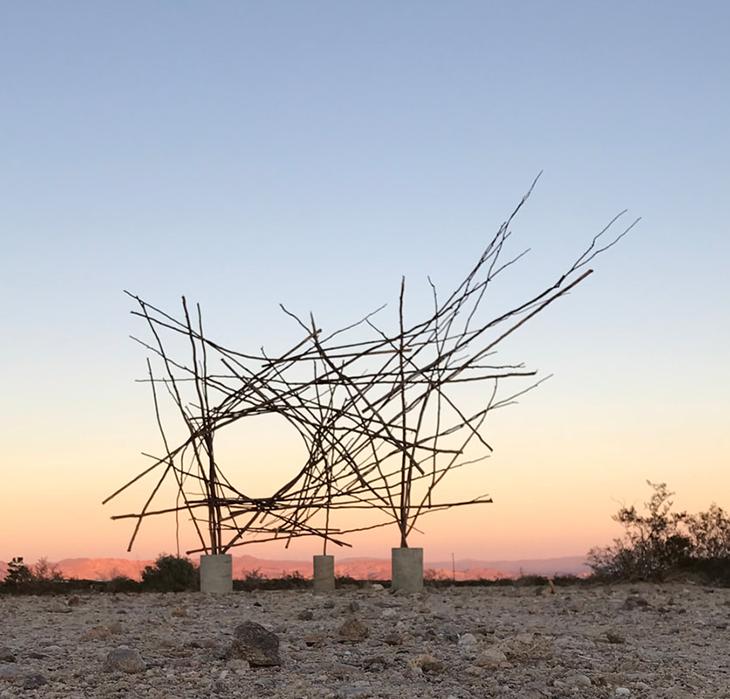
Ben Allanoff, “Sogetsu,” sculpture |
|
Another artist I spoke with, who requested anonymity due to ongoing litigation, has undergone tremendous verbal abuse and harassment by her neighbor, whose property sports ’Don’t Tread on Me’ and Confederate flags. Because the artist I spoke with had hosted artist gatherings, with installation and performance on her property, and she and her partner are a mixed-race couple, the next-door neighbor has stirred up hate in a Facebook group by making up a story about the couple. |
|
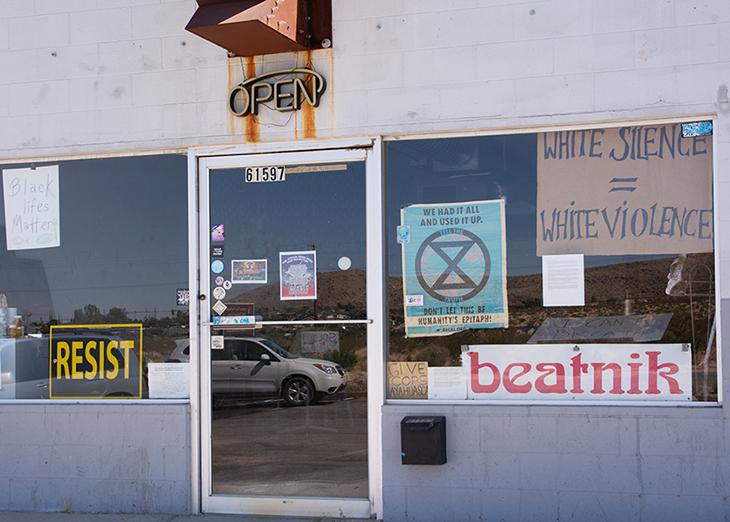
Teddy Quinn, co-proprietor of the Beatnik Café in Joshua Tree |
The Beatnik Café and it’s non-profit organization,
Joshua Tree Cultural Preservation Center
|
|
The neighbor has also cited code violations to the authorities, leading the artist and her partner to spend $30K dismantling the parts of their property they didn’t realize weren’t legal. The harassment has been so bad that they’ve taken to staying elsewhere, returning to their property just once a week to check on things.
In a more public arena, there was the case of the vandalized Black Lives Matter banner (it was spray painted with the word “Hate”). Teddy Quinn, a 22-year resident of Joshua Tree, and co-proprietor of the Beatnik Café, which is part of the Joshua Tree Cultural Preservation Center, adjacent to the banner, said that they cleaned it and it hasn’t been defaced since (the same night, however, Quinn said someone distributed KKK literature to several businesses). Another BLM banner at the other end of town, in Yucca Valley, was destroyed repeatedly, according to Quinn. He helped put up a billboard on the main highway going from 29 Palms into Joshua Tree, featuring the Martin Luther King quote “Hate is too great a burden to bear,” which he said was “too high for the gremlins to reach.”
Quinn noted that there’s definitely a division in the area, which he referred to, despite the art community, as “small town America.” About the influx of artists, he noted that his generation of arrivals, from the late ‘90s, didn’t start it, but it’s grown exponentially over the last 20 years. He pointed out that, “the same people who are now cleaning the Airbnb’s are having a hard time finding affordable rentals … which drives people further away, people who were born and raised there … it’s something I’m sensitive to.” He added that “everything is turned up several notches with Trump and COVID. If anything, it makes it more important to be a little more aware of what our presence means to other people … to make room for all different voices.”
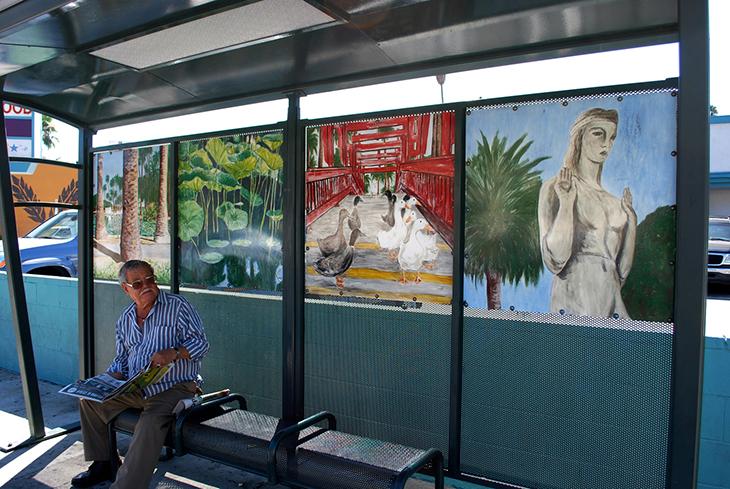
For most artists, the tension is as much in the atmosphere as the actual. As artist Kelly Witmer wrote me: “it seems like all the artists I know out here are pretty paranoid about COVID, and are avoiding public places where there would be the possibility of clashing with Trump supporters. Or it could be less about being paranoid, and more about being so isolated this year. It’s already a pretty reclusive lifestyle, and I think the pandemic has made many people more agoraphobic.”
|
|
For most artists, the tension is as much in the atmosphere as the actual. As artist Kelly Witmer wrote me: “it seems like all the artists I know out here are pretty paranoid about COVID, and are avoiding public places where there would be the possibility of clashing with Trump supporters. Or it could be less about being paranoid, and more about being so isolated this year. It’s already a pretty reclusive lifestyle, and I think the pandemic has made many people more agoraphobic.” |
|
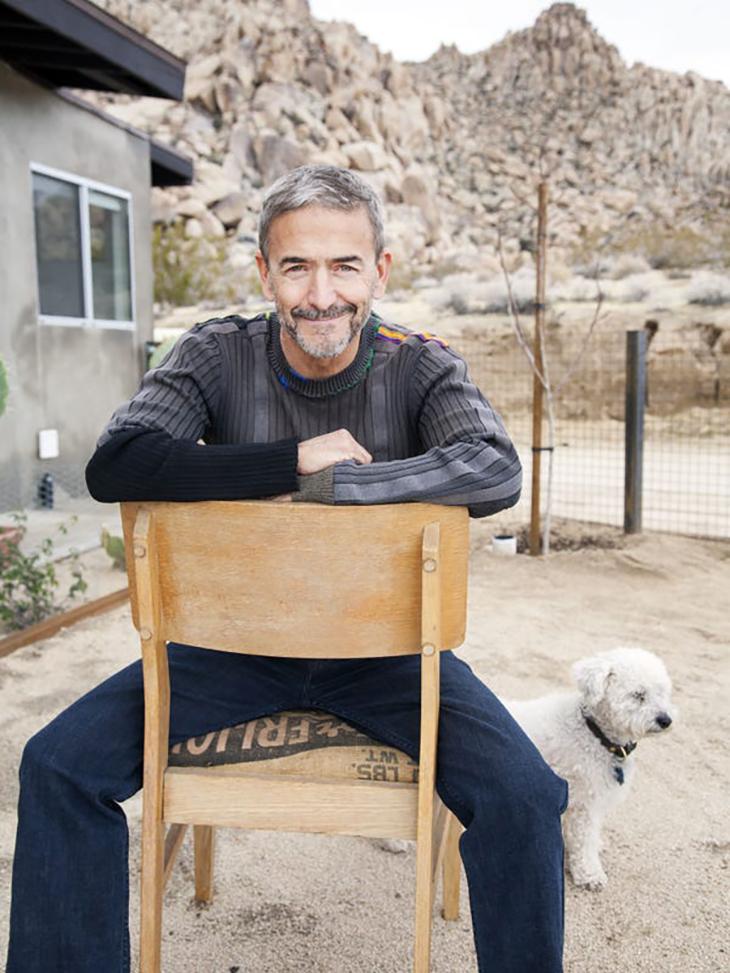
Bernard Leibov is the founder and director of BoxoPROJECTS, an artist’s residency in Joshua Tree. “A lot of what’s been going on is more people’s fears than reality,” he told me. “There are distinct ideologies, but no evidence of conflict. A lot of what goes on happens on Facebook.” He says his neighbors, despite their distinctly different political affiliations, all support what he does, even allowing for overflow parking on their properties during the Joshua Treenial, which Leibov hosts on the grounds of his home. “I understand that there are local issues not being addressed that cause people to vote a different way,” he said. “But a lot of the threat is perceived. It could get violent … it’s what some people were expecting, but it didn’t happen.”
Leibov says he works with art as a way of starting a dialogue in the community. When an indigenous artist from British Columbia did a project about the constellations for their residency, Leibov said he received more feedback and discussion than ever before. “Eventually, people get engaged in these subjects,” he said. Many of the projects are now about social awareness, including a choreographer who collaborated with local Latin workers (“24 percent of the local population is Latin,” Leibov said, “and they’re very unseen.”). Meanwhile, he also knows that there’s a history of white poverty in the High Desert. He’s not sure of what that history is, exactly, but it could be a future project: “How do you tackle that as an art subject?”
Sounds like something worth pursuing, potentially bringing members of what could be referred to as ‘the two sides’ together; as a way to pare down some of that divisiveness. But as long as the pandemic reigns, such interactions will be limited to essential trips to the store, and those who do and who don’t wear their masks.
|
|
Bernard Leibov, director of BoxoPROJECTS. Photo: Rob Lebow |
Bus Stop Mural by Kelly Witmer |
|
|
|
Michael Shaw is a Los Angeles-based artist whose recent exhibits have included LSH CoLab and Eastside International in Los Angeles, and at Honey Ramka gallery in New York. He is the host of The Conversation Art Podcast, a show which launched in late 2011 and has featured guests from throughout the art world(s) in this country and abroad. Michael/The Conversation took part in the United States Artists Assembly in 2019 and was included in a KCHUNG residency at the Getty Museum in 2017. He also created and hosts the podcast How I Get By, which features conversations with guests about how they get by financially, and more broadly.
|
|
The Oakland Art Scene: In Place
by DeWitt Cheng
|
|
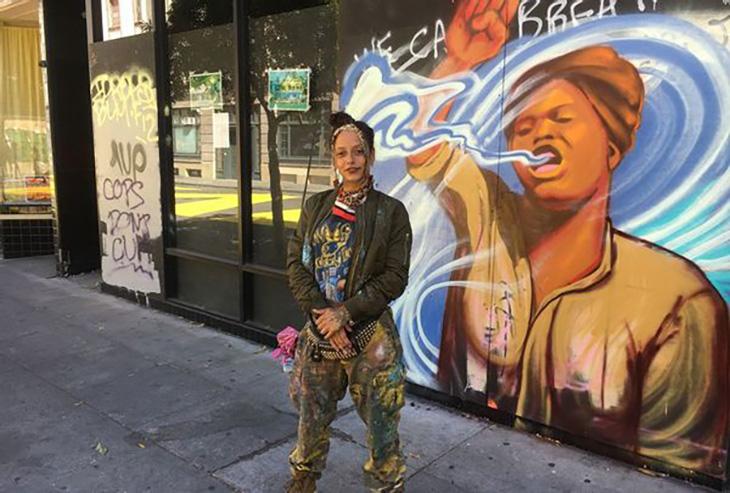
Artist Rachel Wolfe-Goldsmith stands in front of her mural "We Can
Breathe" in downtown Oakland. Photo courtesy of Rachel Wolfe-Goldsmith
|
|
Nearly nine months into the self-isolation imposed by the pandemic, everyone is ready — some of us, irrationally so — for a return to normalcy and social interaction. The election of the Biden-Harris ticket augurs well for reality-based government policies, but we cannot defy the realities of public health, either, no matter how much we may want to believe in radiologist Dr. Scott Atlas’ concern for grandma’s last Norman Rockwell Thanksgiving. We mask up and soldier on, looking forward to the vaccines that we anticipate are coming next year. |
|
With the prospective, gradual return to social mobility, I thought that now might be a good time to take stock of part of the Bay Area art scene. As a critic who has covered that scene for years, although in absentia during The Great Sabbatical, I wondered how the East Bay gallerists in Oakland and Berkeley were faring, now that receptions and walk-in traffic have been largely supplanted by online exhibitions and Zoom talks. Oakland will be receiving new press attention come January, as Kamala Harris, born in Oakland in 1964 to a mixed-race family, will become the first woman, the first Asian-American and the first Black to serve as vice-president. Though she is technically a boomer (just), she symbolizes the emergence of a younger, liberal, energetic (nice sneakers!) post-race Millennial demographic in U.S. politics.
I sent out an e-mail query; what emerged from the responses was a little surprising. I had expected a certain amount of “tales of woe and intrigue,” to quote Click and Clack, but the gallerists were matter-of-fact about the challenges of the pandemic, and upbeat about returning to normal, armed with new skills in online marketing.
|
|
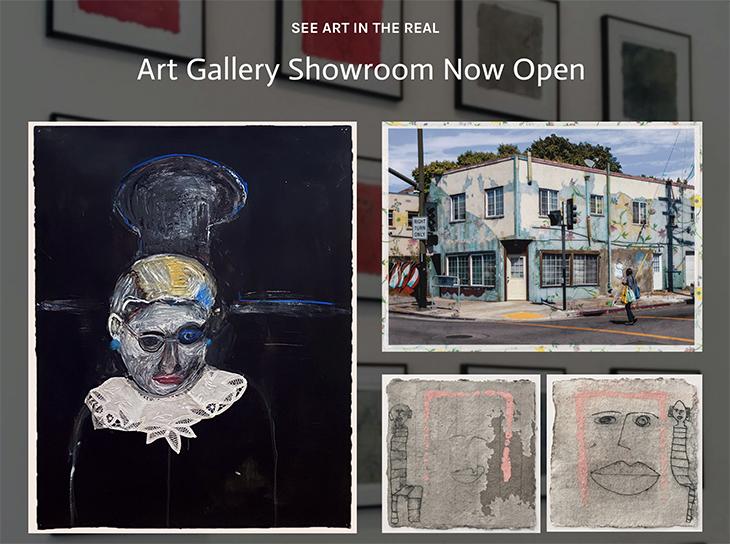
Transmission Gallery, Oakland, Art Gallery Showroom. Images (clockwise from left) by Livia Stein, Jeanne O’Connor and Joseph Mele |
|
It has not been a picnic, of course, but neither have the problems been insurmountable.
Jean Durant, President of the Oakland Art Murmur Board of Directors, points out that, while the local eviction moratorium and local grants for artists, small businesses and nonprofits helped to a certain extent, PPP funds were not available to her all-volunteer organization, necessitating increased fund-raising efforts. OAM has promoted online virtual art events on Facebook, Instagram and YouTube; informed the public that protocol-compliant gallery-going is safe and rejuvenating; encouraging consumers to think and buy local (“Buy Local Buy Art”); and collaborating with other institutions to promote local artists adversely affected by the shutdown. While the carnivalesque First Friday crowds are no longer joyfully swarming the Uptown streets, exhibitions continue, now assisted by digital innovations.
|
|
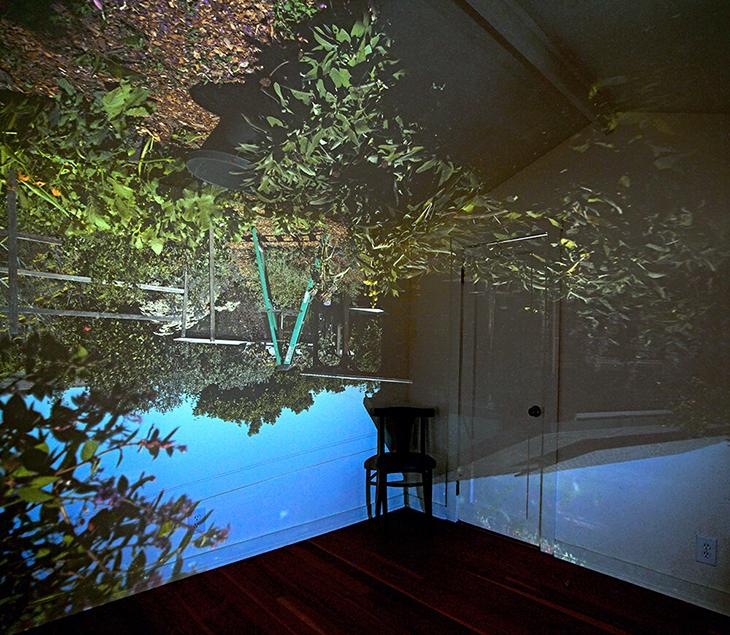
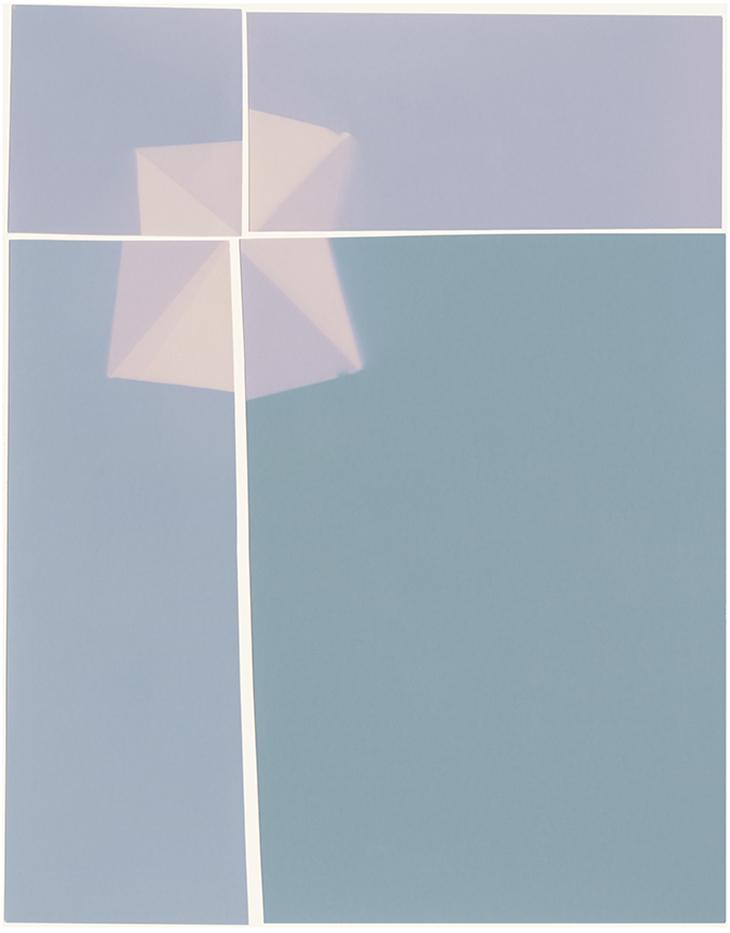
Cheryl and David Calleri, “Ladder,” 2020, pinhole photograph, archival pigment print, 8 x 8”. Courtesy of Vessel Gallery, Oakland |
Amanda Marchand, “Tufted Evening Primrose (Ilford MG FB 1P),” 2020, archival pigment print collage, 4 panels, 22 x 16 3/4”. Courtesy of Traywick Gallery, Berkeley |
|
TaVee Lee at Transmission Gallery has opened an artist’s showroom, featuring small rotating groups of work by different artists that can be purchased immediately, without waiting for the shows to end; she has also added handmade artisan jewelry and accessories, much of it made in Oakland. Lee adds, “Almost without fail, those who have come into the gallery have emphasized the uplifting satisfaction and pleasure of viewing real art in a real space … Like Transmission Gallery, Gearbox [Gallery, downstairs] has had nearly as many in-person visitors during regular gallery hours as before the pandemic ...”
Kathleen King of Mercury Twenty Gallery, who has also successfully initiated online art sales, concurs on the value of the real art-going experience as “a good COVID-era activity” for art fans afflicted with cabin fever.
Lonnie Lee was forced to close her popular Vessel Gallery by pandemic regulations shortly after it reopened last year, after a one-year post-eviction hiatus. Vessel has gone online as well, with an “Art is Essential” series of online exhibitions that has generated new interest, attendance, and sales. She notes: “An online art exhibition can remain online for as long as you post it. So a show can go on for years!” Look for a new online show by local sculptor Evan Holm whose canceled spring show will re-emerge, slightly adapted for an online audience.
Two galleries that had already been marketing heavily online have continued business smoothly during the shutdown. Danielle Fox at Slate Contemporary: “We have always gotten most of our business from internet and website marketing, as well as through word-of-mouth and old-fashioned networking ... [W]e market online, and people then e-mail us to find out more about the artwork and eventually make an appointment to see it in person at the gallery, or we bring it to them to see in their home ... Covid has not actually disrupted it at all.”
Katrina Traywick of Traywick Contemporary has a similar story: “We were largely operating by appointment before, and were offering special access by video or Facetime to out-of-town clients ever since we started doing national art fairs. Zoom has brought a whole new level of online outreach ... mostly around programs like artist talks. Our attendance for these Zoom events has often been double or triple in-person attendance for similar events here in our space.”
Contrary to the negativity that still permeates American culture to an extent, the East Bay art scene seems to be handling the challenges of the pandemic with creativity and grace. The last word goes to Art Murmur’s Durant: “It is common to hear the word ‘resilience’ used in reference to Oakland. We are resilient, and scrappy, and passionate about our home. We love our artists and we know that Oakland is the heart of creativity in the Bay Area … The only way to come through this tough time is for arts organizations to come together, collaborate, share resources, share ideas. Make something new.”
|
|
|
|
Dewitt Cheng is an art writer/critic based in the San Francisco Bay Area. He has written for twenty years for regional and national publications, in print and online, including: SanFranciscoArtMagazine.com, DailyGusto.com, ArtBusiness.com, VisualArtSource.com, Artweek, Art Ltd., Artillery, East Bay Express, East Bay Monthly, Sculpture, Modo, Artomity, and his blog, ArtOpticon.us, with articles archived at Authory.com. He has written dozens of catalogue essays for artists, galleries and museums, and is the author of “Inside Out: The Paintings of William Harsh.” In addition, he served as the curator at Stanford Art Spaces from 2013 to 2016, and later Peninsula Museum of Art, from 2017 to 2020.
|
|
|
|
Contact Information:
PO Box 2029, Thousand Oaks, CA 91358 • Ph: (213) 282-3444
|
|
|
|
|
|
|
|