|
|
We ask that you consider making a payment to any writer or each writer. Select one or more whose work you are impressed with, and drop some coin into their cup. These pros have things to say about art and more that we think you want to read about. And ponder. And compensate them for. 20% of your contribution will be added to support our staff that produces and administers the Weekly Newsletter and the VAS website.
Anything you chip in MEANS A LOT. Yes, even a buck!
We are in a new world. . .and this is a new solution. We all thank you!
|
|
|
This Week's Contents
(scroll to see the full content of each article; please click the cup and compensate the writer)
|
|
We all know that art presentation (not just visual art) has been significantly altered due to the Covid pandemic. We present this overview by JD Beltran, who both cites a range of specific solutions that are each of interest on their own merits; and assesses what they imply for the future of the arts after the expected return to the still unknown new normal. |
|
|
Pandemic Solutions
by JD Beltran
|
|
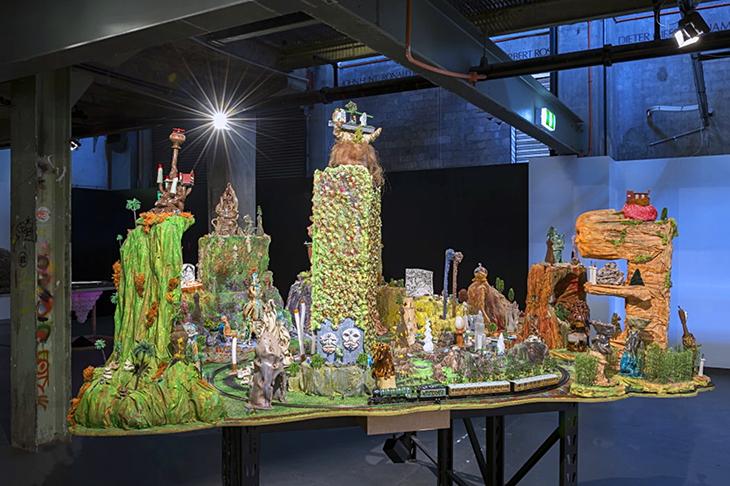
Emily Hunt, “Doctrine of Eternal Recurrence,” 2015. Photo: Brenton McGeachie |
|
It’s tough to recall what feels like a long, long, ago — the Before. Dropping into a museum or gallery to peer up close at the gestures of a Pollock drip painting, or lingering amidst Yayoi Kusama’s hallucinogenic mirrors (after fighting the crowds to get inside). Snuggling into a recliner in the dark — popcorn in hand — to await that blast of Dolby Sound accompanying the latest “007” flick. Snagging a coveted “Hamilton” ticket that delivered on its promise, despite being sardined into your nosebleed seat. Dressing up in your cultured best to take in YoYo Ma perform Bach’s Cello Suites. Going out to a restaurant. With a friend.
|
|
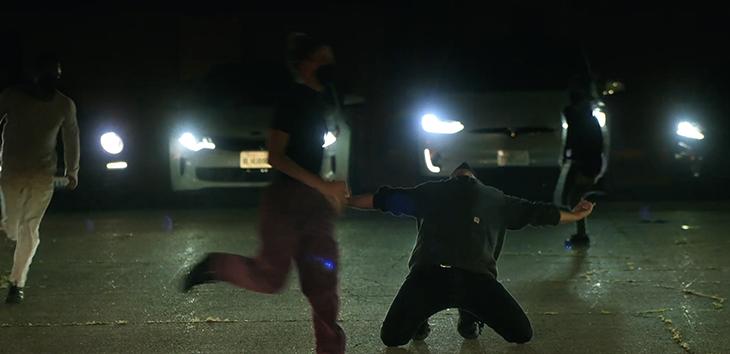
“Parked,” 2020, still from video performed
by Jacob Jonas The Company
|
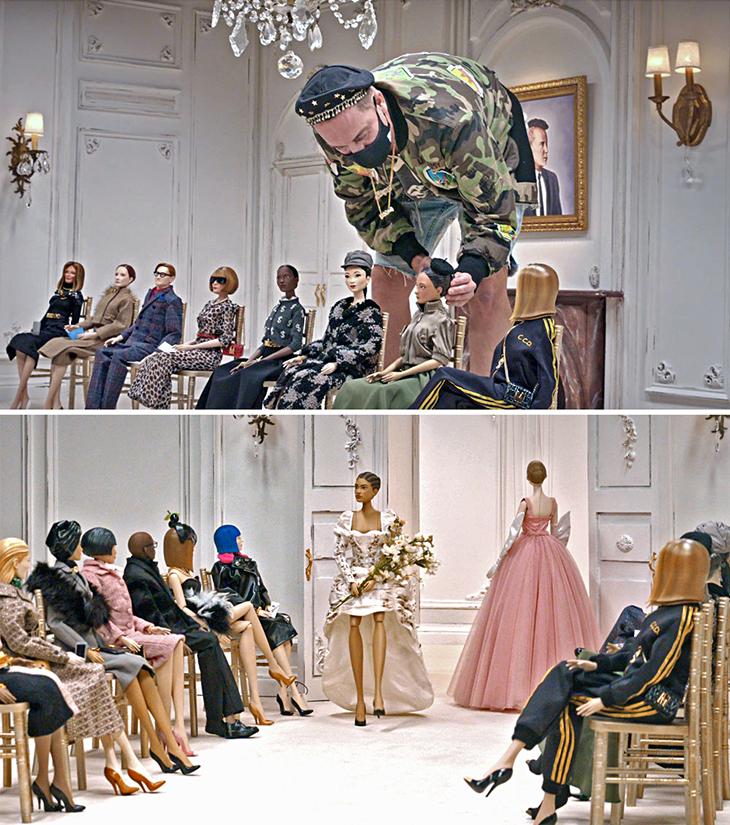
Marco Ovando, “Jeremy Scott and
Jim Henson Puppets,” photograph
|
|
And the After. Zoom screens. Youtube rehashes. Netflix. Facebook concerts. DoorDash Zoom cocktails with friends. More screens.
The Brookings Institute issued a report in August 2020, estimating losses of 2.7 million jobs and more than $150 billion in sales of goods and services for creative industries nationwide. “The fine and performing arts industries will be hit hardest, suffering estimated losses of almost 1.4 million jobs and $42.5 billion in sales.” The report also estimated “more than 2.3 million jobs and $74 billion in average monthly earnings for the creative occupations ... creative occupations in the fine and performing arts — which include the visual arts, music, theater, and dance — will be disproportionally affected, representing roughly a third of wage employment losses.”
Decimated. Last spring, presentations by cultural venues and artists came to a screeching halt, and the problem equation arose everywhere: how do we continue to do what we do to survive, but safely — without having audiences come into our buildings? How do we generate and present work that enables our performers and artists to stay 6 feet apart from one another? How — and when — can we sing, dance, perform and play music together IRL — again? And now, how can we possibly hope to channel a multi-dimensional experience from a flat screen?
The necessity of pivoting to virtuality has forced a mad scramble throughout the cultural sector, desperately seeking solutions. While the initial response of many was to sit and try to wait it out, fingers crossed, uncertain how long the pandemic would last. The last 6 months have cemented the realization that virtuality will remain the state of the world for some time, even despite the arrival of effective vaccines.
|
|
But there’s a thin silver lining somewhere. The deep reaches of artistic innovation have sparked creative, even thrilling, invention.
Dance and theater productions allow for broader creativity, as performers are inherently moving in space (and can stay physically apart). In May, Jacob Jonas The Company staged “Parked,” a socially distanced, drive-in dance performance on a stage of pavement at the Santa Monica Airport in Southern California. As night fell, thirty-five lottery-selected cars pulled into an empty top level airport parking lot, assembling in a circle. Their headlamps spot-lit seventeen masked dancers, leaping and lunging across the lot in the one-night theater-in-the-round. And Manhattan’s New York Live Arts held dance performances in its glass-walled lobby, viewable from the sidewalk outside or via livestreaming.
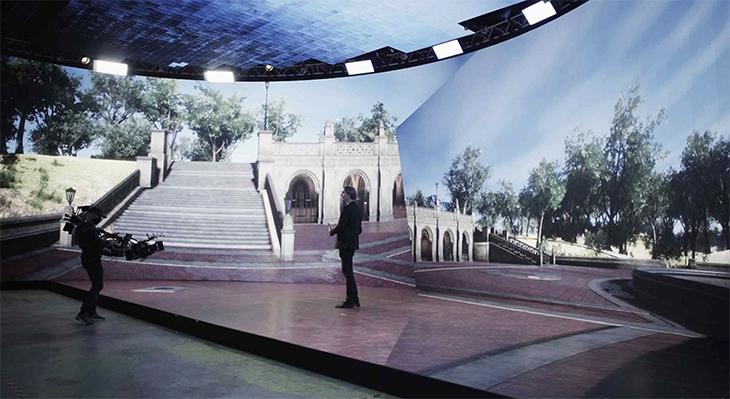
How about puppets? In September 2020, Jeremy Scott of the fashion house Moschino teamed up with Jim Henson's Creature Shop to create an entire puppet show to showcase all 40 pieces from Scott’s collection, hand crafted as scaled-down miniatures. The “show’s” front row audience even included a liliputian Anna Wintour. Later in the year, French start-up Mado XR unveiled a 5,000 sq. ft. LED virtual production studio in Paris that accommodates performances, fashion shows and the like to livestream and appear as if they are originating anywhere, including on the moon.
|
|
MADO XR, LED Cave Virtual Production Studio, photograph |
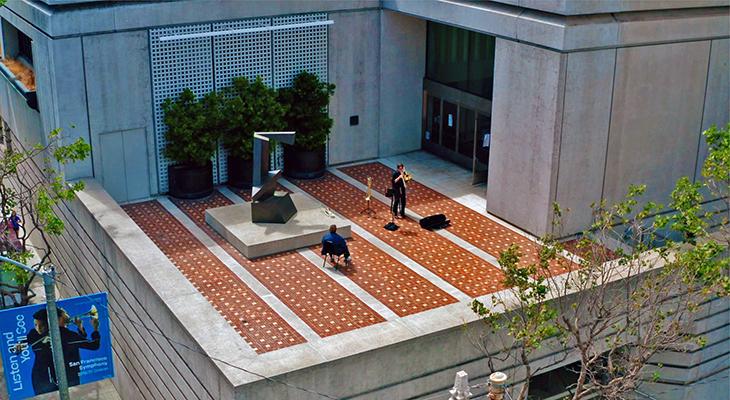
“Tim Higgins Performs 1:1 Concert,” photo.
Courtesy of the San Francisco Symphony
|
|
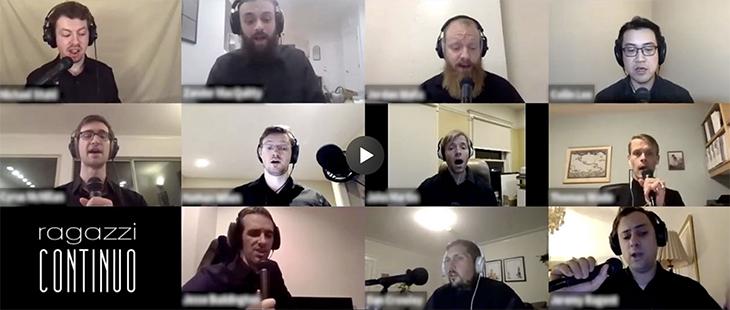
The Ragazzi Continuo using JackTrip Virtual Studio |
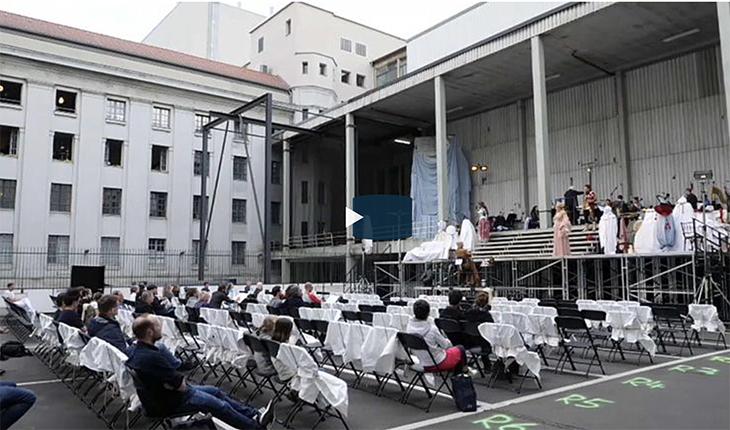
Wagner’s “Das Rheingold” performed on a
makeshift stage in a car park in Berlin, Germany
|
|
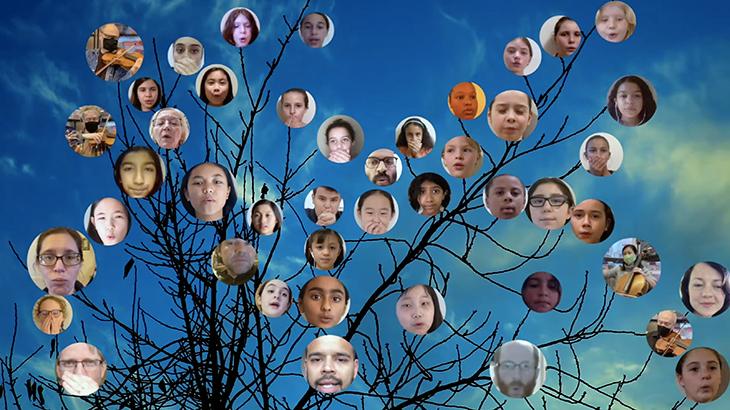
Music ensembles and orchestras face more of an uphill battle. Safe social distancing mandates that musicians must perform masked and at least 6 feet apart from fellow musicians and from their audiences, and probably outdoors — nearly impossible circumstances. Still, the San Francisco Symphony, led by Essa-Pekka Salonen in his debut season, soldiered on, both in person and apart. They first performed the delightful and funny virtual performance of Rossini’s “William Tell Overture," complete with kids, cats, dogs, hammers, and screwdrivers. They subsequently launched the brilliant concept of free 1:1 Concerts for the local community, wherein a single musician performs for a single audience member.
Although an online experience certainly is better than no experience at all, there is no substitute for the sensation that you are watching something in real time. Operas, choral groups, and theater companies have the additional public health challenge that their music and performances require their artists and actors to constantly exhale their breath, creating a dangerous situation of potentially spreading the virus in order to perform their art.
Technology has come to the rescue for singing groups, with the development of special singing masks as well as live streaming technology, from the JackTrip Foundation [https://www.jacktrip.org]. Coordinated video and high-quality audio streams through the JackTrip headset has empowered choral groups like the Ragazzi Boys Chorus to debut live virtual performances.
|
|
Opera companies and theater groups also have tapped into their ability to stage their productions with their performers in multiple locations. The American Conservatory Theater’s San Francisco production of “In Love and Warcraft” coordinated timing, creative camera angles, and the matching Zoom backgrounds of their actors so they appear to be performing in the same room (even aligning the same poster on the back walls of two actors in two completely different spaces!) And operas in cities like Atlanta, Georgia; Berlin, Germany; and Naples, Italy are staging productions in the safer, well-ventilated outdoors.
The other silver lining is that with online presentation, cultural productions can now enjoy a global reach, in not only audiences but with their collaborators. The recent, thrilling Music of the Birds by Sahba Aminikia matched the San Francisco Girls Chorus and the Kronos Quartet (also located in San Francisco) with the Smithsonian National Museum of Natural History in Washington, D.C. and and the Sirkhane Social Circus School in Mardin, Turkey. Productions by the San Francisco Girls Chorus also highlight the critical role that film and video production now have in empowering arts presenters to offer compelling content that can closely recreate the in person experience. Impeccable sound recording and creative, groundbreaking filmmaking, video editing and production mimic one’s being in the space with the Girls Chorus singers, offering a keener sense of experiencing a live performance.
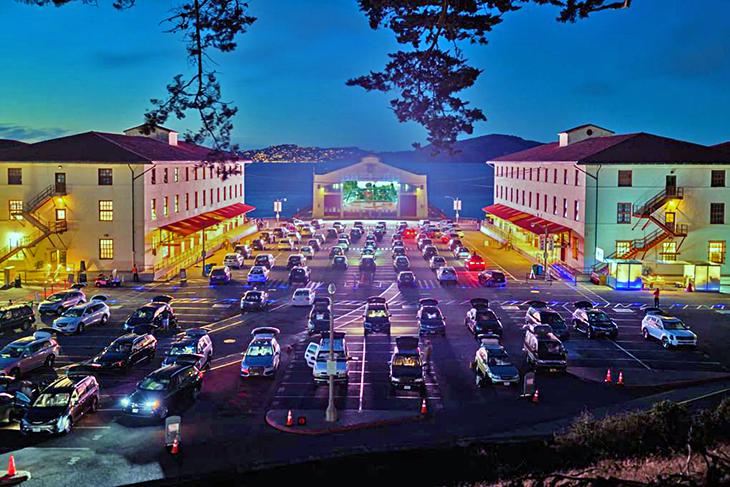
This certainly is true of the film arts, which, having been literally kicked out of theaters, have tapped into the nostalgic drive-in experience. The venerable Sundance Film Festival, usually only available to the few who journey to Park City, Utah with invitations and tickets in hand, pivoted into offering live screenings of its 2021 selections, debuting the films countrywide through screening partnerships with indie cinemas and cultural organizations located well beyond Utah. |
|
“Music of the Birds,” photo. Sahba Aminikia, composer; performed by Chorus School Level II with the Kronos Quartet. Courtesy of the San Francisco Girls Chorus |
Charlie Villyard “Fort Mason Center
for Arts and Culture,” photograph
|
|
It paired with the Roxie Theater and Fort Mason Center for Arts & Culture, which was set up specifically to allow arts offerings to be screened to live audiences, drive-in style. (Fort Mason’s drive-in also is screening productions by SFFilm and the San Francisco Opera, and was even tapped to present, live, the 2020 Presidential Debate.)
The visual arts — critically dependent on presenting exhibitions in interior spaces — are among the most critically impacted, suffering mandated closures of their venues and facing a foreboding existential threat to their being.
|
|
“Gogh by Car,” concept art for the drive-in
Vincent Van Gogh exhibition in Toronto, 2020
|
|
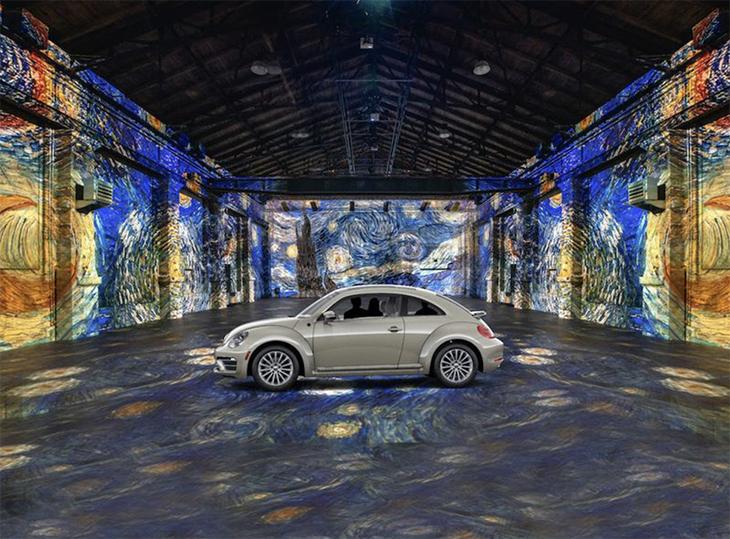
One museum’s strategy, Newfields in Indianapolis, Indiana (formerly the Indianapolis Museum of Art), has been widely criticized as an extreme, even devastating act portending a troubling future for art museum exhibitions. Its entire contemporary art collection was removed, formerly housed in a space equal to almost half a football field. In its place, the museum installed a permanent projection-based venue, the LUME, that can immerse socially distanced viewers in gigantic digital projections. Their first LUME exhibition features floor-to-ceiling selections of Van Gogh paintings, draping museum goers in gargantuan sunflowers, cobalt skies studded with swirly stars, and at least five different versions of Van Gogh’s face — making for thousands of perfect future Instagram moments. Museum President Charles Venable explained, “We sold 50,000 tickets … We have an Edward Hopper exhibition up right now — and I can guarantee you we won’t get 50,000 people to go see Hopper.” To enhance the experience, “gentle scents” are paired with the paintings — like citrus for a still life — along with a synchronized classical music score. The venue’s bar and cafe also will feature treats and cocktails customized to match the artwork. “We’re not sure if we’ll have a ‘bloody ear’ cocktail or anything,” Venable joked, “but there will be a theme.”
|
|
The Van Gogh projections exhibition, designed and conceived by Massimiliano Siccardi (who pioneered immersive digital art experiences in France) is on a global tour, having already attracted huge audiences in Toronto, Canada and Paris, France. I snagged a ticket to the San Francisco version, “Immersive Van Gogh” to check it out in early May 2021. The chance to stroll amidst 100,000 cubic-feet of projections starts at $39.99 for adults (the $99 package includes skipping the line, a Van Gogh pillow and a limited edition poster). Other add-ons include Van Gogh themed face masks and key chains; I wouldn’t be surprised if one of those key chains features a replica of a severed ear.
Many museum directors would probably rather jump off a cliff than stage something like LUME. Indeed, on February 17th the Board of Trustees and Board of Governors of Newfields announced, “This morning, we accepted Dr. Charles Venable’s resignation as President of Newfields,” and reference to the LUME exhibition has disappeared from the Newfields website altogether. One might argue that LUME wasn’t all that far removed from a Yayoi Kusama “Infinity Mirror Room” — only 100 times bigger, capable of captivating thousands more people at once (rather than one), and around 1,000 times more lucrative. Desperate times seem to invoke desperate measures that are seen by some museum directors as the only way they can keep their doors open. Newfields is Exhibit A in how such risks can blow up on them.
|
|
Courtesy of Debra Walker, “48.Pillars” at The Arc, SanFrancisco |
|
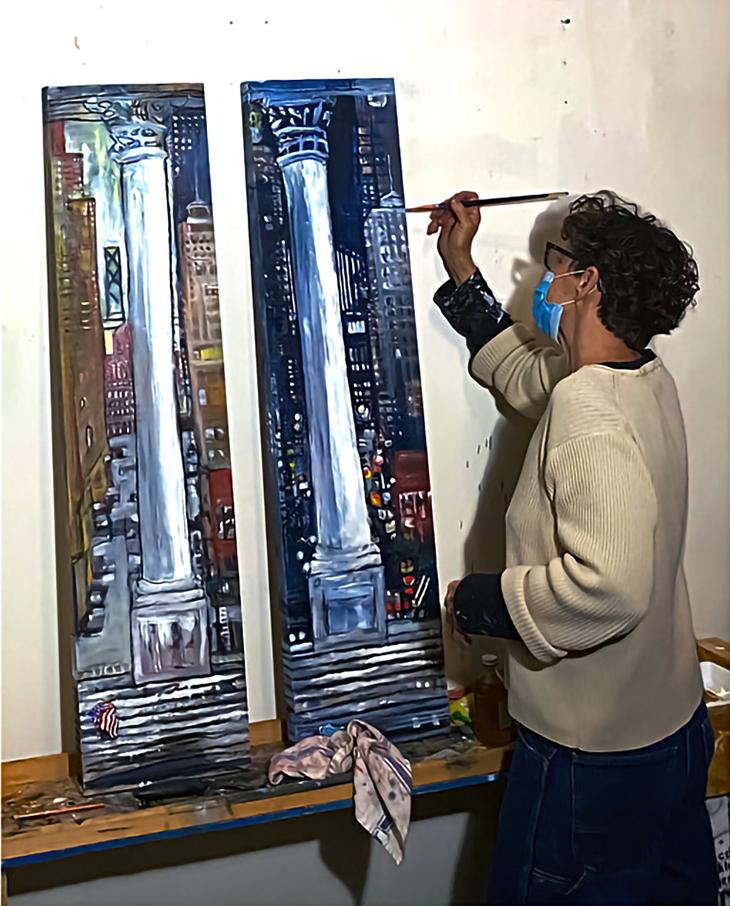
Many visual art venues, nonetheless, have offered their own virtual programming solutions. Realizing the allure of live or live + asynchronous (i.e., previously recorded) hybrid programming (and Zoom-Bombers seem allergic to fine art, at least so far), many museums and galleries now offer livestreamed performances, live curator walk-throughs of their exhibitions, and even the ability to talk one-on-one with the artists. In New York last September, the Metropolitan Museum of Art featured three livestreams of Bill T. Jones’ and Taiwanese-American artist Lee Mingwei’s site-specific iteration of the durational performance work “OUR LABYRINTH.” On the other coast, the 4th Annual “48 Pillars” exhibition at Arc Gallery in San Francisco features a live curator’s tour on February 27th, and live conversations with each of the artists over the course of the next month, including artists Matt Frederick, Ellen Konar/Steve Goldband, Ina Morava, Stephen Nama, William Salit, E.P. Souza, and Debra Walker. Although local shelter-in-place rules continue to prevent group openings, the ability to talk with the curator and participating artists in an intimate virtual space from anywhere in the world offers a novel way to experience the work.
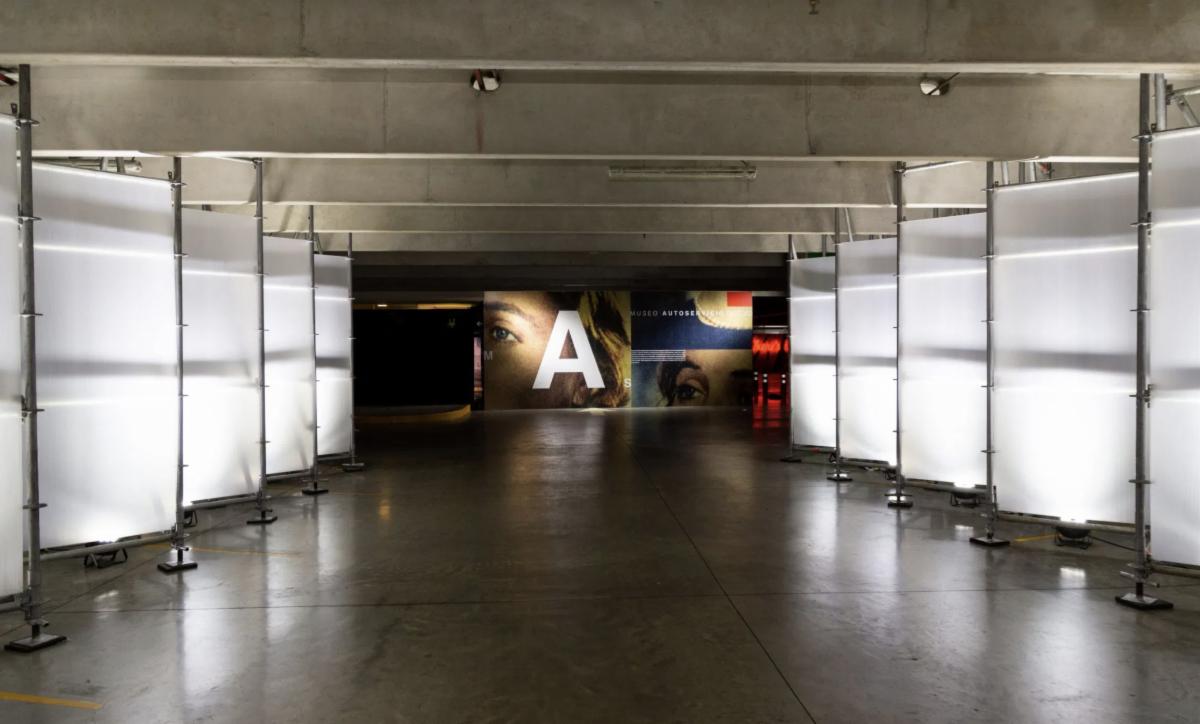
Other visual arts venues have experimented with safe physical programming through drive-ins, drive-through or drive-by/walk-by exhibits, mural shows, and outdoor displays. Mexico City opened its first drive-through art show, “Objects in the Mirror Are Closer Than They Appear,” wherein the art was viewed entirely from cars in an empty tricked-out shopping mall parking lot. Six galleries and twenty-four artists — most of them Mexican and ranging from emerging to well-established — staged the ambitious makeshift gallery in which attendees drove slowly through three levels of the parking garage to examine 37 pieces of art while listening to an audio track.
|
|
This novel and far-ranging expansion of how exhibitions can be accessed enables a serendipitously inclusive opportunity to view museum collections and gallery exhibits. Indeed, according to a feature in the Smithsonian Magazine, art venues are now rethinking the planning of their future physical spaces, expanding beyond the traditional interior exhibition experience to tap into 24/7 accessible window exhibition spaces and outdoor courtyards.
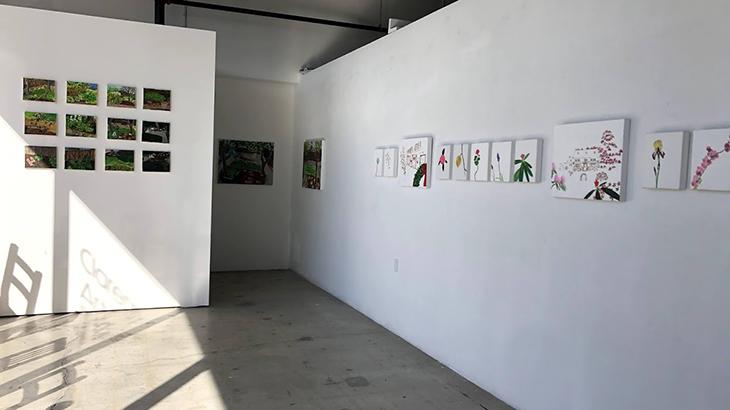
Visual art venues that are able to be open to limited capacity have had to tap into the timed experience, requiring most visitors to visit the work by appointment only or during scheduled time slots. Galleries and museums fortunate to have storefront and/or windowed space, however, allow getting somewhat closer to experience the art, without the potential dangers of inhabiting an interior space. California artist Perry Meigs recently opened “Insights From My Garden” at the Claremont Artist Studios in San Mateo, California, a gallery space that enjoys the advantage of floor-to-ceiling windows fronting the sidewalk. One can view most of the paintings through the windows from a safe 10-foot distance, any time night and day, or visit the gallery, masked and by appointment. Meigs’ paintings of verdant green trees, squares of grass lined with Elephant Ears, vibrant Fushcia, purple blooms and luscious yellow fruit succeed in her stated endeavor: “I wanted capture the texture and sense of California light.” Refreshing, exhilarating, yet also meditative, the loosely painted foliage practically glows with life in the gallery’s expansive, light-filled space. The physical layout exemplifies possible future strategies for presenting and accessing visual art. Meigs, an art teacher who splits her teaching duties with studio time, also welcomed the chance to create the paintings sitting at an easel in her garden. “It was so nice to be doing something other than looking at a screen,” she mused.
|
|
Museo Autoservicio Mexico DriveThrough. Photo: Roberto Phillipe |
Perry Meigs, “Insights from my Garden," installation
view at Claremont Art Studios, 2021
|
|
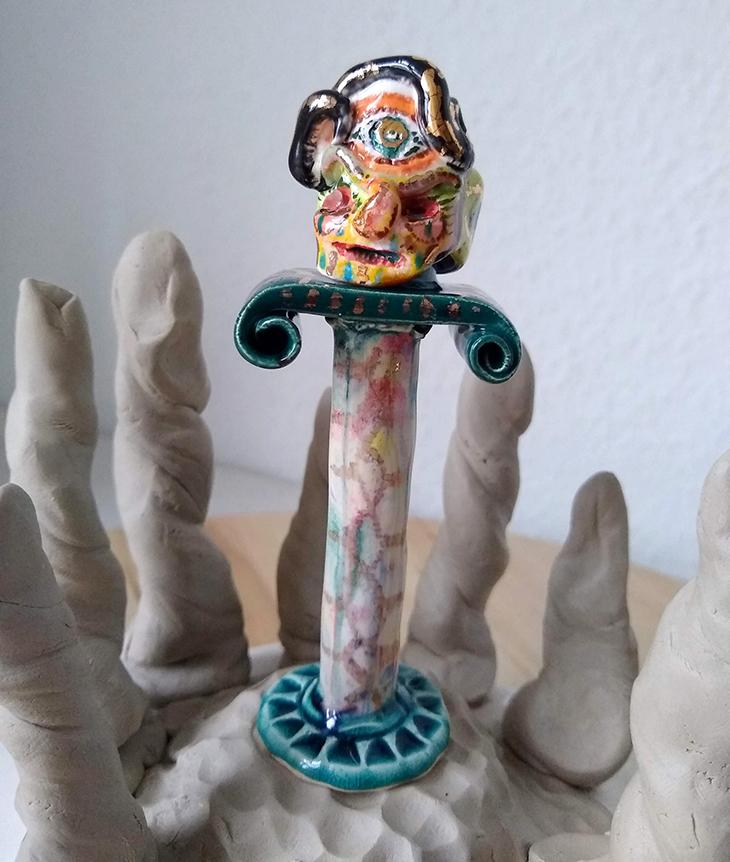
Emily Hunt, "Chaos - Techno Peasant Ring," glazed
Limoges porcelain with 12 karat gold lustre
|
|
Australian artist Emily Hunt sadly agrees. After landing an exhibition of her newest body of work — hundreds of meticulously crafted porcelain and cloth sculptures — at the Kunstraum Kreuzberg/Bethanien in Berlin, Germany, her magical grand opening in November 2020 was not one overflowing with champagne, flowers, and hundreds of well-wishers, but was instead a video camera feed through which the audience virtually roamed desolate galleries full of her work. After spending years conceptualizing and creating the artworks, to be deprived of your premiere audience has to be heartbreaking. “It was an emotional, very weepy time … well, this is the pandemic,” Hunt reflected. Instead of a live audience, her show was translated to a virtual Google Streetview version, where audiences pointed and clicked to “traverse” the galleries and “look” at the art. “The digital aspect of art has been part of the art world for a very long time and there’s been some good things that have happened,” Hunt observed, philosophically. “But my work really has to be seen in person. So I think there’s an absolute difference between digital and analog and in real life.”
The pandemic unexpectedly and painfully has forced the cultural sector into a period of reckoning. Artists and arts presenters have been compelled to revisit their traditional models of production and presentation — many of them decades old and integral elements of their artistic disciplines — along with reexamining the desires and tastes of their audiences, as well as such patrons’ willingness to seek, pay for, and support something new. Much of the art world is still holding its breath to see who will survive, and how. In the meantime, it’s critical for artists and audiences to embrace this virtual revolution, in order for everyone to come out safely. On the After side.
|
|
|
|
JD Beltran is a writer, filmmaker, and award-winning artist based in San Francisco, California, where for four years she was an art & culture columnist for SFGate. For five years, she also covered art & culture for the Huffington Post. JD Belran's website. Photo: Sebastien Bachar
|
|
|
|
Contact Information:
PO Box 2029, Thousand Oaks, CA 91358 • Ph: (213) 482-4724
|
|
|
|
|
|
|
|