Issue No. 53 January 2024

VCU Institute of Molecular Medicine (VIMM) NEWS & VIEWS
The VIMM, established in 2008 by Paul B. Fisher, MPh, PhD, FNAI, the Founding Director, is comprised of outstanding scientists/clinicians from VCU School of Medicine, VCU and external experts focusing on important medically-related research in cancer, neurodegeneration and infectious diseases. The purpose of this NEWS & VIEWS is to highlight the exciting research being performed by VIMM members.     

New approach to pancreatic cancer treatment, shows promise for increased survival and expands therapeutic grid.


Preclinical research published in the Journal for ImmunoTherapy of Cancer directs to a promising new treatment option for patients with pancreatic cancer. Researchers from VCU Institute of Molecular Medicine (VIMM) and VCU Massey Comprehensive Cancer Center showed that [pIC]PEI treatment is non-toxic toward normal pancreatic cells while displaying strong cytotoxic and potent immune activating activities in PDAC, making it an attractive therapeutic when used alone or in conjunction with SOC therapeutic agents, potentially providing a safe and effective treatment protocol with translational potential for the effective therapy of PDAC.


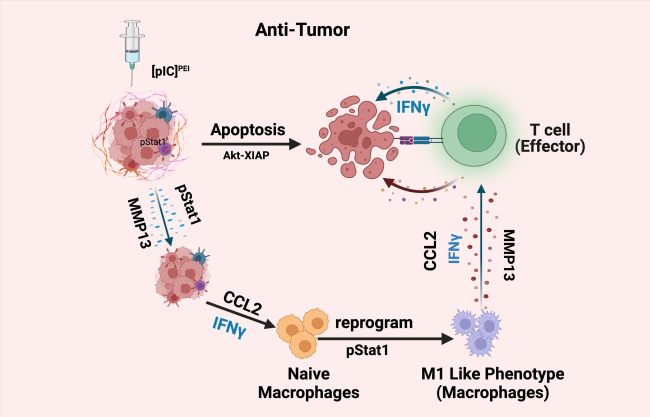
The study explains the potential breakthrough of [pIC]PEI as an innovative therapeutic strategy for pancreatic ductal adenocarcinoma (PDAC), a notoriously challenging cancer to treat effectively. Emphasizing the difficult nature of PDAC due to late-stage diagnoses and rapid disease progression, the research underscores the unique quality of [pIC]PEI in selectively inducing apoptosis in PDAC cells while sparing normal pancreatic epithelial cells, a critical attribute for avoiding adverse effects on overall animal health. Experimental findings from nude mouse models and transgenic animal models of PDAC highlight the treatment's efficacy in restricting tumor growth and metastasis. Mechanistically, [pIC]PEI engages immune-mediated pathways, including macrophage polarization and the activation of an IFN-γ-Stat1-CCL2-MMP13 axis, contributing to a comprehensive understanding of its mode of action. Notably, the treatment demonstrates anti-fibrotic activity, potentially disrupting a crucial aspect of tumor microenvironment dynamics in PDAC. Furthermore, [pIC]PEI exhibits synergistic effects with the standard-of-care drug Gemcitabine, opening avenues for combination therapy. Clinical trials evaluating the safety and efficacy of [pIC]PEI in patients with various solid tumors, have yielded promising results, establishing a solid foundation for considering the translation of this innovative approach into clinical trials specifically targeting PDAC, where its potential impact could be groundbreaking. The established safety profiles of both [pIC]PEI and Gem further underscore the relevance and urgency of exploring [pIC]PEI as a viable and potentially transformative therapeutic intervention for PDAC patients. This research not only sheds light on the intricate mechanisms underlying the anti-PDAC effects of [pIC]PEI but also holds promise for offering a novel and potentially more effective therapeutic strategy for patients grappling with the invariably fatal PDAC. The results from this study pave the way for a hopeful paradigm shift in the clinical landscape, directing further exploration and validation of [pIC]PEI-based therapies for the benefit of patients facing the terrible prognosis of PDAC.

Figure Legend: Cytosolic [pIC]PEI delivery induces apoptosis and triggers potent antitumor immunity in immune competent PDAC mice. The immune stimulation involves Stat1 activation, inducing CCL2 and MMP13 for macrophage polarization. [pIC]PEI also prompts apoptosis via the AKT-XIAP pathway and enhances macrophage differentiation and T-cell activation through IFNγ-Stat1-CCL2 signaling in PDAC. 

Publication:


Bhoopathi P, Kumar A, Pradhan AK, Maji S, Mannangatti P, Windle JJ, Subler MA, Zhang D, Vudatha V, Trevino JG, Madan E, Atfi A, Sarkar D, Gogna R, Das SK, Emdad L, Fisher PB. Cytoplasmic-delivery of polyinosine-polycytidylic acid inhibits pancreatic cancer progression increasing survival by activating Stat1-CCL2-mediated immunity. J Immunother Cancer. 2023 Nov;11(11):e007624. PMCID: PMC10649894 DOI: 10.1136/jitc-2023-007624


About the Investigators:


Paul B. Fisher, MPh, PhD, FNAI, is Director of the VCU Institute of Molecular Medicine (VIMM), a Professor in the VCU Department of Human and Molecular Genetics (HMG), and holds the Thelma Newmeyer Corman Chair in Cancer Research in the VCU Massey Comprehensive Cancer Center (MCCC), Virginia Commonwealth University (VCU), School of Medicine (SOM), Richmond, VA. Praveen Bhoopathi, PhD, the lead author of this research study is an instructor in HMG and member of VIMM. Amit Kumar, PhD and Santanu Maji, PhD, are Postdoctoral research scientists in HMG and member of VIMM. Anjan K Pradhan, PhD is a former instructor in HMG. Padmanabhan Mannangatti, PhD is a senior technician and laboratory manager in the Fisher laboratory and member of VIMM. Devanand Sarkar, MBBS, PhD, is a Professor in HMG, VCU SOM, as well as the Harrison Foundation Distinguished Professor in Cancer Research. He is Associate Director for Training and Education of the MCCC, and Associate Scientific Director, Cancer Therapeutics in the VIMM. Rajan Gogna, PhD, ​is an Assistant Professor, Lab Head, Cell Competition in Tumor Microenvironment Laboratory​, Co-Director, Tumor Microenvironment Program in the VIMM. Esha Madan, PhD, is an Assistant Professor, Department of Surgery, VCU SOM, Member of VCU MCCC. Azeddine Atfi, PhD, is a Professor and Chair of the Division of Cellular and Molecular Pathogenesis, Department of Pathology, Leader of the Cancer Biology Program at VCU MCCC, and a Member of the VIMM. Jose Trevino, M.D is an Associate Professor and Division Head, Department of Surgery, VCU SOM, member of VCU MCCC. Vignesh Vudatha, M.D, a surgery resident, Department of Surgery, VCU SOM. Dongyu Zhang, PhD, a member of Department of Surgery, VCU SOM. Jolene Windle, PhD, is a Professor in HMG, VCU SOM, and a Member of the VIMM and VCU MCCC. Mark A Subler, PhD, Associate Professor in HMG and a Member of the VIMM and VCU MCCC. Swadesh K. Das, PhD is Associate Professor in HMG and a Member of the VIMM and VCU MCCC. Luni Emdad, PhD, is Associate Professor in HMG and a Member of the VIMM and VCU MCCC and co-corresponding author of this study.


The present study was supported in part by the Thelma Newmeyer Corman Endowment (PBF), developmental funds from the VCU Institute of Molecular Medicine (PB, LE, SKD, PBF), research support from the Department of Human and Molecular Genetics (PB, LE) and National Cancer Institute Cancer Center Support Grant to VCU Massey Cancer Center P30 CA16059. We thank Yee Aung and Daniel Sanchez De La Rosa for excellent technical assistance.