Funny Animal Group Names

December Ranger Programs

Everybody Outdoors

January Ranger Programs

Letter from the Editor

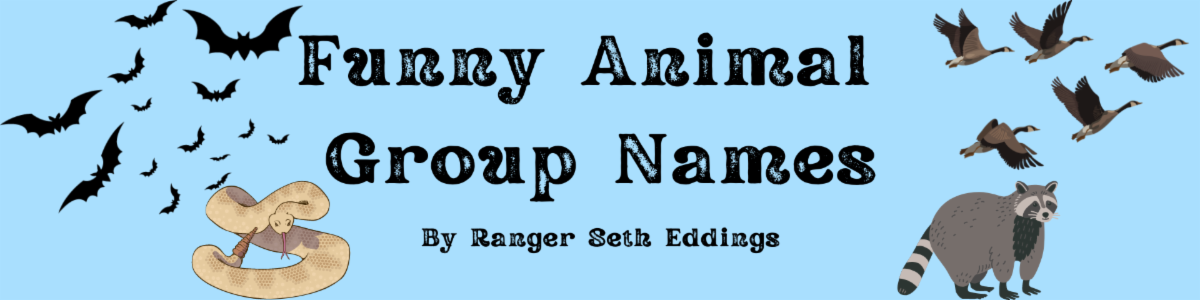
A collective noun is used in the English language to represent a specific group of nouns. There are many fun names for groups in the animal kingdom. Some of the most common animal group names are herd and flock. Herd is used for terrestrial animals and flock is used to refer to birds. More often than not, there are alternative collective nouns that are unique to the animal. For example, a group of elephants would commonly be called a “herd of elephants.” However, the collective noun is called a “memory of elephants.” This may possibly stem from elephants having an excellent memory. Some of the animals on this list may have more than one collective noun for their group. All these animals on this list can be found in Sycamore Grove Park, so keep an eye out for these groups of animals!  


1. Murder of Crows

Crows have been the symbol of death, darkness, and mystery, in many cultures. This could be due to their scavenger tendencies, eating dead animals, and long ago, corpses after bloody battles. 

2. Conspiracy of Ravens

Ravens are known for their high intellect and teamwork. When you see a large group of ravens it can seem like they are plotting something.


3. Covey of Quail

The word “covey” comes from an old English word that means “small game bird.” How fitting for our small, California quail. 

4. Siege of Herons

In Sycamore Grove Park there is a siege of herons that have been nesting here for years. They get this name because when they are huddled together, they look as if they are planning an attack. 


5. Parliament of Owls 

A parliament means “a formal conference for the discussion of public affairs” according to Merriam Webster. Owls, in the past, have been described as wise birds. However, in modern times we now know owls are not the most intelligent bird around, but definitely one of the fiercest. 

6. Wedge of Geese

This one is simple: when geese fly in a v-formation it looks as if they are flying in a wedge, like a wedge of cheese.

7. Committee of Vultures

Vultures have three group names! A group of vultures sitting or roosting together is called a “committee.” When they are together in flight they are known as a “kettle.” Finally, when vultures are crowded around a dead animal, feasting, they are called a “wake.” While one or two eat, all the other vultures sit and watch, making it look like a wake before a funeral.  


8. Rafter of Turkeys

Turkeys tend to roost in the canopies of trees for protection and safety at night. Much like the rafters in a barn. Yes, they do fly up there! 


9. Kettle of Hawks

The sight of a group of hawks flying in the air is called a “kettle.” They swirl in circles, using a thermal, or “hot spot,” in the air to gain elevation for an easy flight. As they swirl and spiral in circles, it is as if they are ingredients being stirred in a kettle. 


10. Convocation of Eagles 

Convocation is the action of calling important people together for a formal assembly. Eagles are also called a “soar of eagles” when spotted in flight.


11. Cauldron of Bats

A group of bats is called a “cauldron.” When spotted in vast numbers, bats are called a “colony.” I think cauldron is more fitting for these critters.


12. Rhumba of Rattlesnakes

Rhumba, translated from Cuban Spanish to English, means a “party” or “carousel.” That is one party I might skip!

13. Gang of (Black Tailed) Weasels

Weasels, although cute faced and cuddly looking, they are vicious to their prey. So naturally, a group of them would be terrifying. In pop culture, a gang of weasels are used as overly exaggerated gangsters, like in Disney's “Who Framed Roger Rabbit?”  


14. Bale of Turtles

A bale of turtles gets their name because when turtles sunbathe on docks or driftwood it looks as if they are stacked on top of each other. A “bale” is described as a stack of objects.


15. Maelstrom of Salamanders

Maelstrom comes from a Dutch word that translates to “a powerful whirlpool in the sea or river.” This is fitting for a group of salamanders because they are amphibians and can be found in water.

16. Romp of River Otters

The otters get the name “romp” because they are often seen playing around with each other and being energetic. 

17. Gaze of Raccoons 

As you can see, in the image provided, this is how they get their group name.


18. Passel of Opossums 

“Passel”, means a large group of people or things of an unspecified number. Opossums are a marsupial meaning they have a pouch; they are the only marsupials found in North America.


19. Clowder of Bobcats 

Clowder comes from a late 1700’s English word, “clodder” meaning a clotted mass.  


20. Cete of Badgers 

Badgers are often solitary creatures until a female has their pups in the Spring. She can have 1-5 pups at a time creating a “Cete.” 

December Ranger Programs 

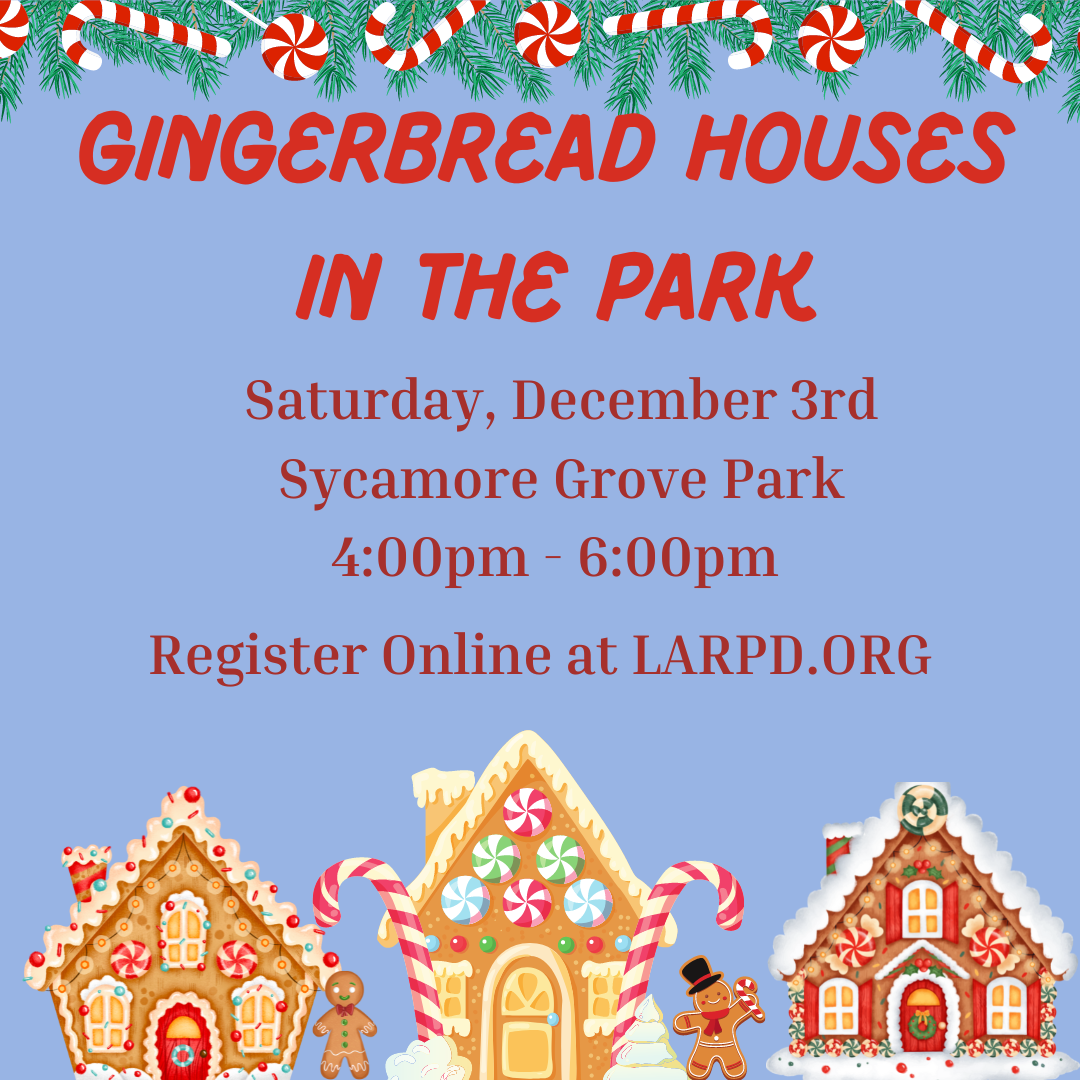
Saturday, December 3rd

4:00 PM – 6:00 PM 

Sycamore Grove Park

Reservable Picnic Area (5035 Arroyo Road)

PROGRAM IS FULL

Come out to Sycamore Grove Park on a cool winter afternoon where we will be putting together a delicious winter craft. There will also be a campfire and s'mores, so don't forget to bring an appetite! We will be providing gingerbread house kits and a few extra supplies; you are welcome to bring any other extra treats you might like to add. 

Cost: $20

Register online! 

Saturday, December 10th

4:00 PM – 8:00 PM 

Sycamore Grove Park

Arroyo Road Entrance (5049 Arroyo Road) 

Join Rangers Seth & Gilbert and some of Santa’s helpers for a holiday carnival in the park. There will be fun Midway games, face painting, arts & crafts, and holiday treats. Be sure to dress for the weather. Under 18 must be accompanied by a registered adult.

Cost: $15

Register online! 

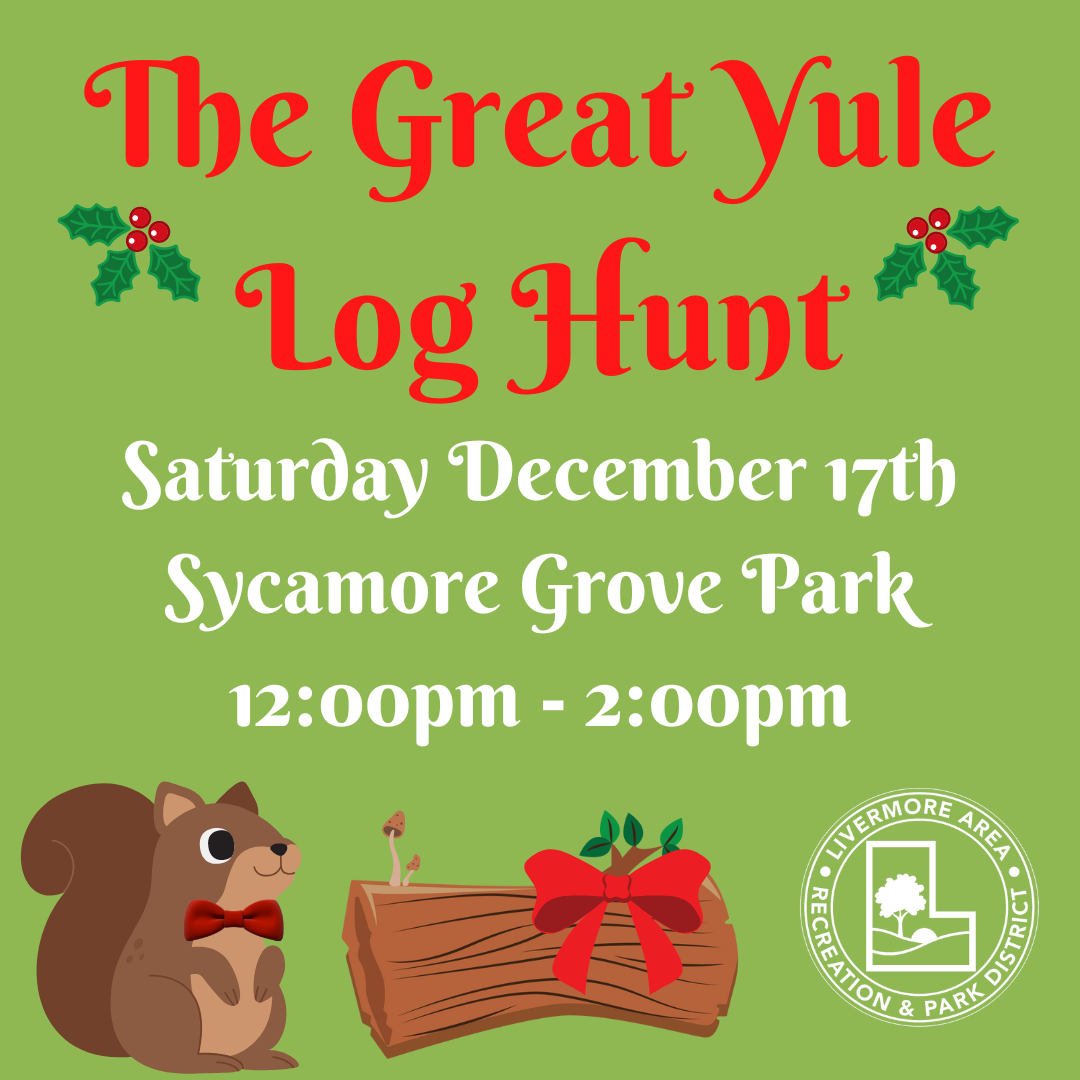
Saturday, December 17th

12:00 PM – 2:00 PM 

Sycamore Grove Park,

Reservable Picnic Area (5035 Arroyo Road) 

Grab your silliest holiday hat and join Ranger Eric for the 28th annual hunt for the fabled Yule Log! We'll prepare for the hunt with games, merriment, and tales of ancient Yule celebrations. Then we'll be off on an old-fashioned hunt for that elusive log. After the hunt, we'll gather around the fire with warm wassail and treats to make our own Yule Logs to take home.

Cancelled if raining.

RSVP by calling (925) 960-2400 or emailing Ranger Eric at ewhiteside@larpd.org 

Sunday, December 18th

2:00PM 

Sycamore Grove Park

Reservable Picnic Area (5035 Arroyo Road) 

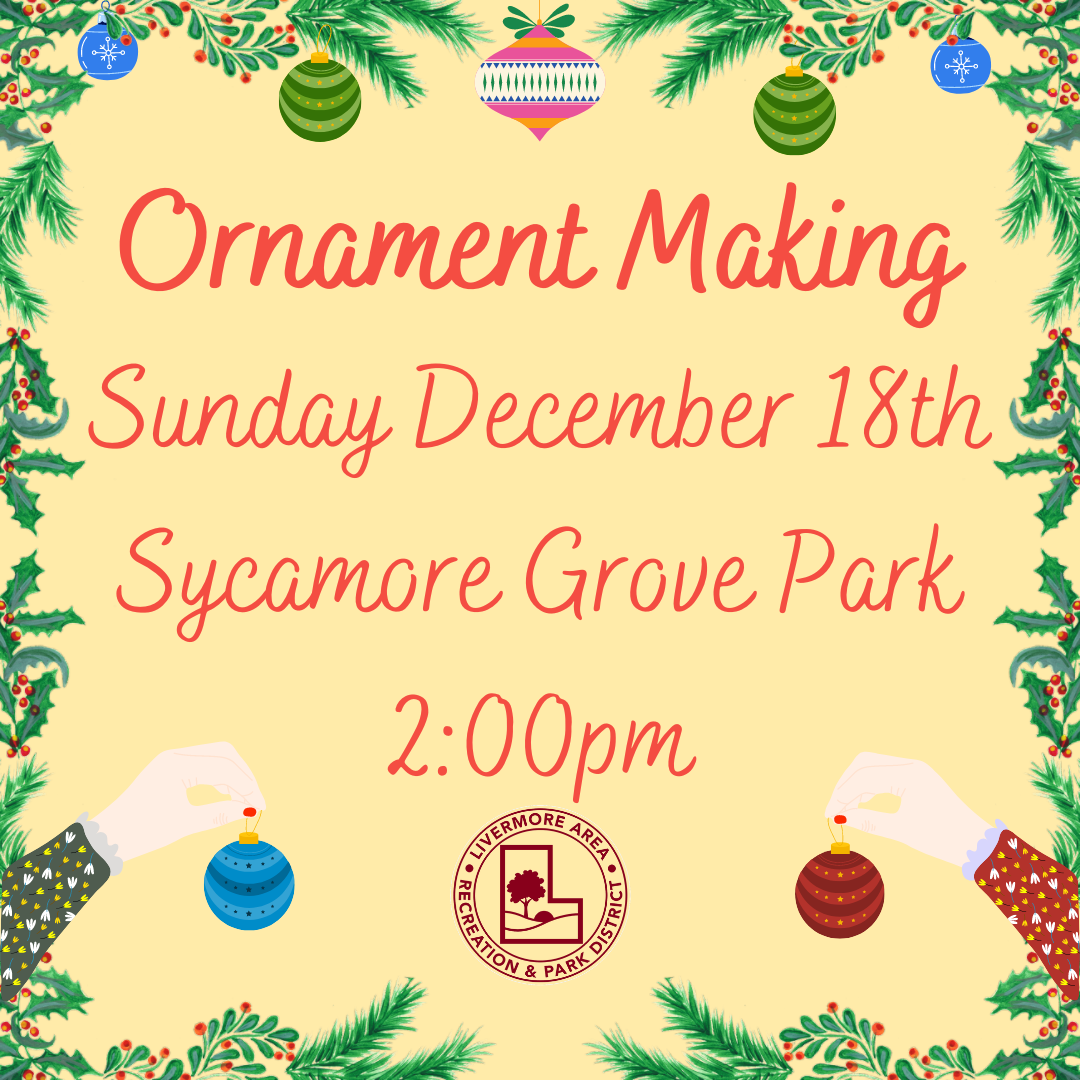
Join Ranger Vickie and celebrate the holidays by making an ornament you can take home with you. We will have some natural items on hand to make your ornament. Feel free to bring any additional ribbon, paint or other decorations you may have at home to add to your ornament.  RSVP by calling (925) 960-2400 or emailing Ranger Vickie at veggert@larpd.org. 

My college biology classmate stood there explaining to me, “So, living in South America from ages 5 to 15, and watching my herpetologist parents conduct research and identify new species of frogs deep in the rainforest, I always knew I was meant to be outdoors.” Okay, so this wasn’t exactly what he said, but he had the assuredness to go with such a statement, as if he had a special inborn right to these pursuits. He had a calling to nature, had grown up knee-deep in formative and unique outdoor experiences, and as a kid been nurtured by adult role-models who also had a love and knowledge of the outdoors that they were readily able and willing to pass on. It intimidated me. It made me question if I was welcome, if this place was for me. It was the same feeling I’d later get self-consciously assembling the tent my first time camping, or nervously walking into a surplus store by myself to try and buy a backpacking pack. 

This isn’t to say I didn’t have my own childhood experiences that led to a love of nature and the outdoors. But they seemed more mundane and day-to-day, such as homemade terrariums from empty peanut butter jars, where a leaf and a stick decorated a caught spider’s new home (and later catching flies in the backyard to unsuccessfully feed these spiders). I think these simple childhood experiences were the ordinary, everyday seeds that would lead to a continued passion for the outdoors. 

Yet for many this isn’t enough. Most children love learning about animals, catching bugs, playing wild in the outdoors; they beg their parents for a menagerie of pets, imagine themselves roughing it and living on their own in tree houses of their own making. This comes through in other ways as well, like imaginary play or stories with talking animals and plants, a magical connection to nature. So why, when so many children have this seemingly inherent and universal love of nature, isn’t there a bigger and more diverse population of adults in the outdoors? 

The reasons are varied, many, and intersectional, and for some can be hard to imagine if it differs from one’s own personal experience. 

Exposure and outdoor opportunities can taper off as children get older, especially for urban or low-income communities. Children can lack an adult role-model to foster a continuing love of nature. Children, and later adults, who don’t see themselves represented in the outdoors can then believe that the outdoors is not for them. If we don’t see a diverse representation of hikers on the trails, models selling us camping equipment, or rangers, naturalists, conservationists, and environmentalists in our outdoor spaces, how easily the underlying message becomes “you and your kind are not welcome here.” 

Even if interest from childhood remains, there are barriers still as adults. Increases to park fees that make national parks no longer accessible to low-income families. Lack of means to travel or reach these natural treasures. Outdoor spaces or interpretation that do not consider people with disabilities. Cultural and historical reasons and fears that make spending free time outdoors an absurd proposition. Legitimate concerns of threats to personal safety from others. Fear of judgment, a lack of self-confidence, feeling one doesn’t have the “permission” to be there. The list goes on and on. 

So “I didn’t catch and identify new species of glass frogs as an infant in Ecuador, so what business do I have here” could instead be: “I don’t have the right gear for hiking, or the money to afford the gear, so I couldn’t just hit the trails,” or, “I feel unwelcome and physically threatened in those spaces, so I shouldn’t go there,” and, “My family never did any of this outdoors stuff, so there’s no way I could get into it now.” 

Fortunately, there are people and organizations on many fronts fighting for access to the outdoors for all: Latino Outdoors, OUT There Adventures, Outdoor Afro, and The Oath to name a few. Free nature centers and special discounted park passes for low-income families are other ways institutions work towards inclusivity. The efforts of organizations and programs like these, and support and awareness from people like you, are what we need to tear down these barriers. Dedicated to fostering diversity, inclusion, and equity in the outdoors, these organizations create access points and empower communities by connecting them to nature and outdoor experiences. From meet-ups for inclusive hikes to Instagram hashtags showcasing underrepresented groups at their nature-tackling finest, they’re changing the landscape. 

The outdoors is for everybody. No one should be barred from experiencing the chittering company of birds and squirrels during a hike in the woods, the smell of the forest understory after a good rain, or the relief of getting up a challenging summit and being rewarded with a breathtaking view. We must continue to fight, advocate, self-evaluate, challenge, and work towards making that a reality. 


January Ranger Programs

Sunday, January 1st

7:00 AM 

Sycamore Grove Park,

Wetmore Road Entrance

(1051 Wetmore Road) 

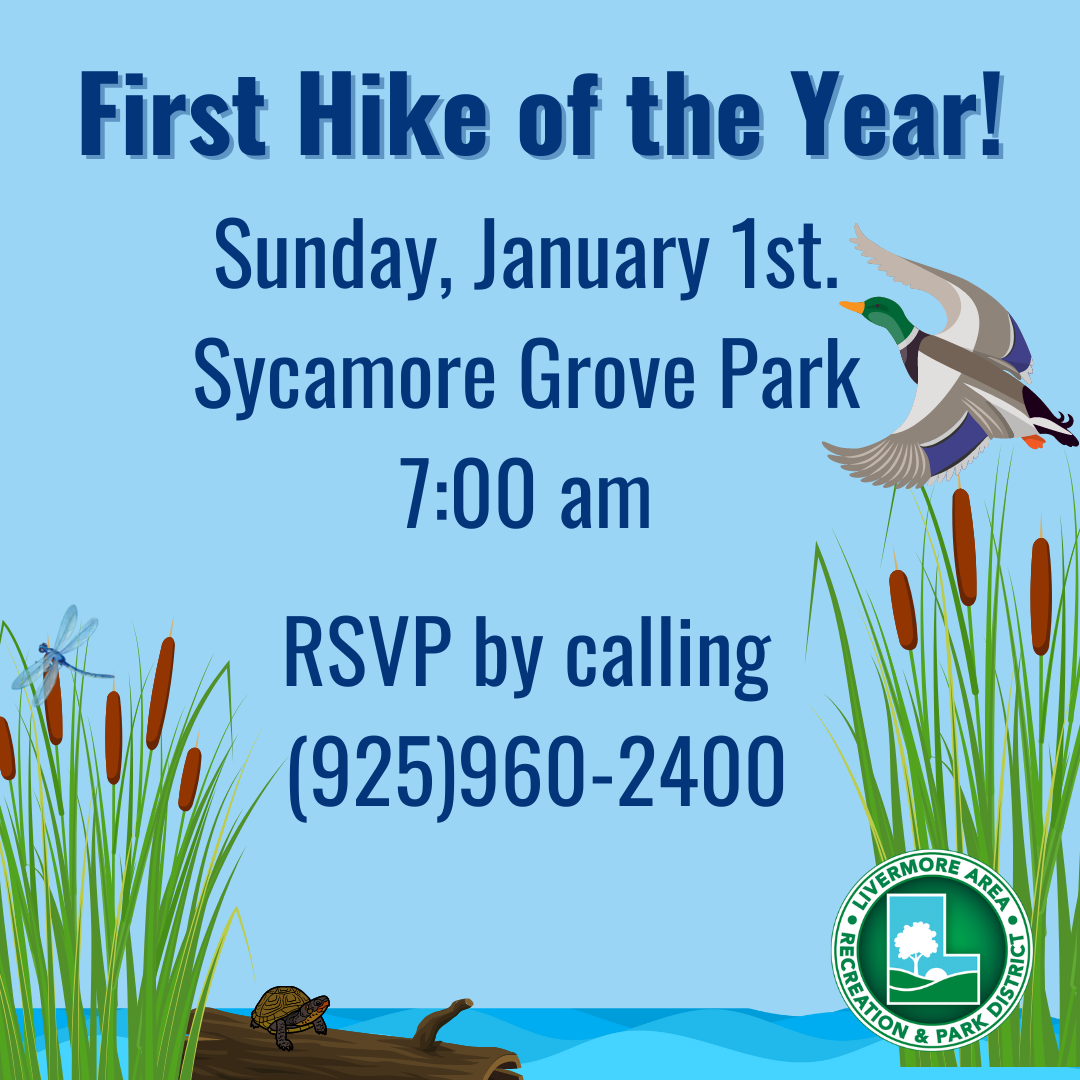
Join Ranger Danny on the first hike of the new year! We will enjoy the morning air and take about a 3 mile round hike up to Cattail Pond. Please RSVP by calling (925) 960-2400 or emailing Ranger Danny at dhaberman@larpd.org.

Saturday, January 7th

2:00 PM 

Amphitheater, Sycamore Grove Park, Wetmore Road Entrance

(1051 Wetmore Road) 

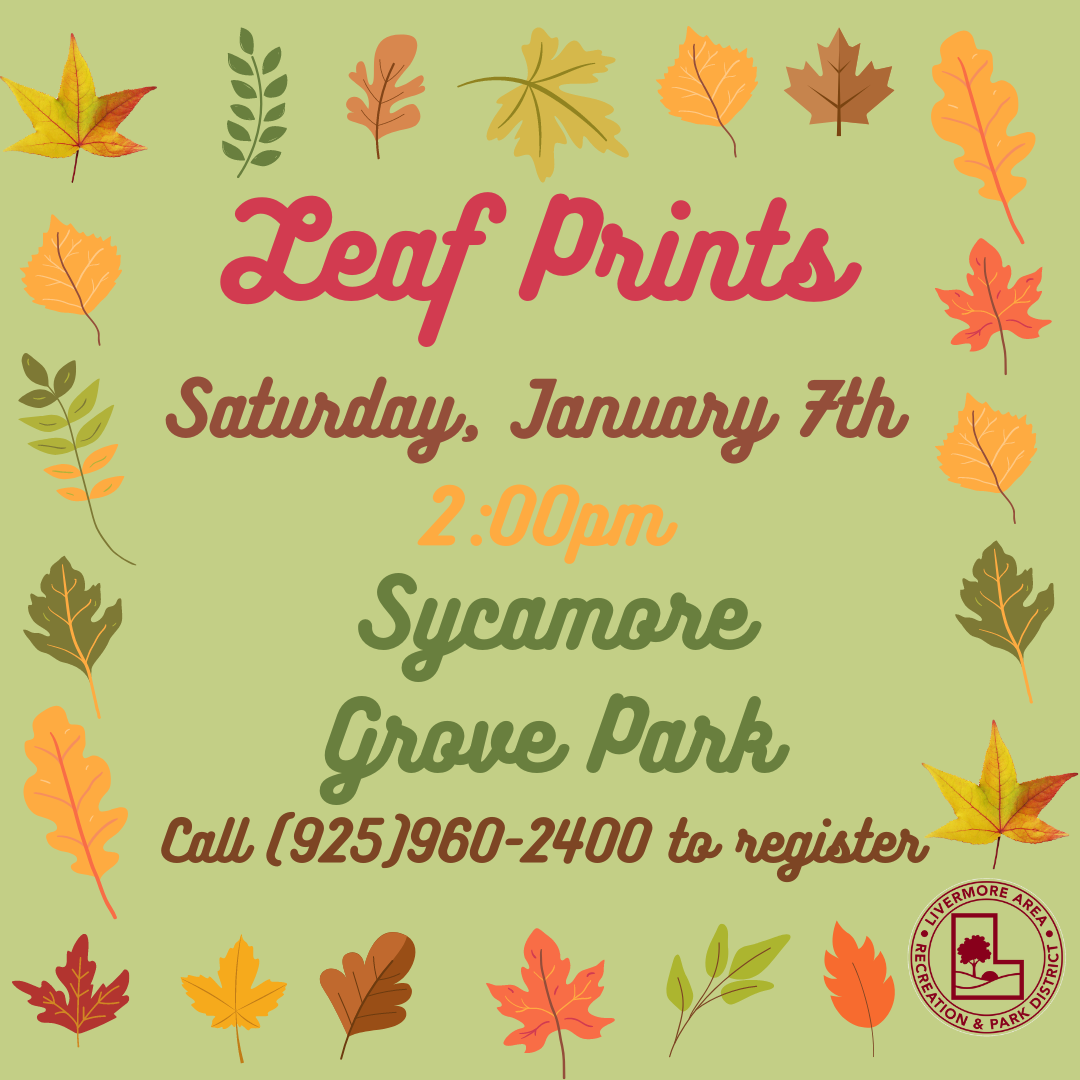
Let's make some art using the plant powerhouse, leaves! Join Range Lauren for a drop by opportunity to make your own Sycamore Grove inspired art to take home with you and learn a bit about the different leaf adaptations around the world.  Please RSVP by calling (925) 960-2400 or emailing Ranger Lauren at lsalcedo@larpd.org. 


Sunday, January 8th

2:00 PM 

Sycamore Grove Park,

Reservable Picnic Area (5035 Arroyo Road) 

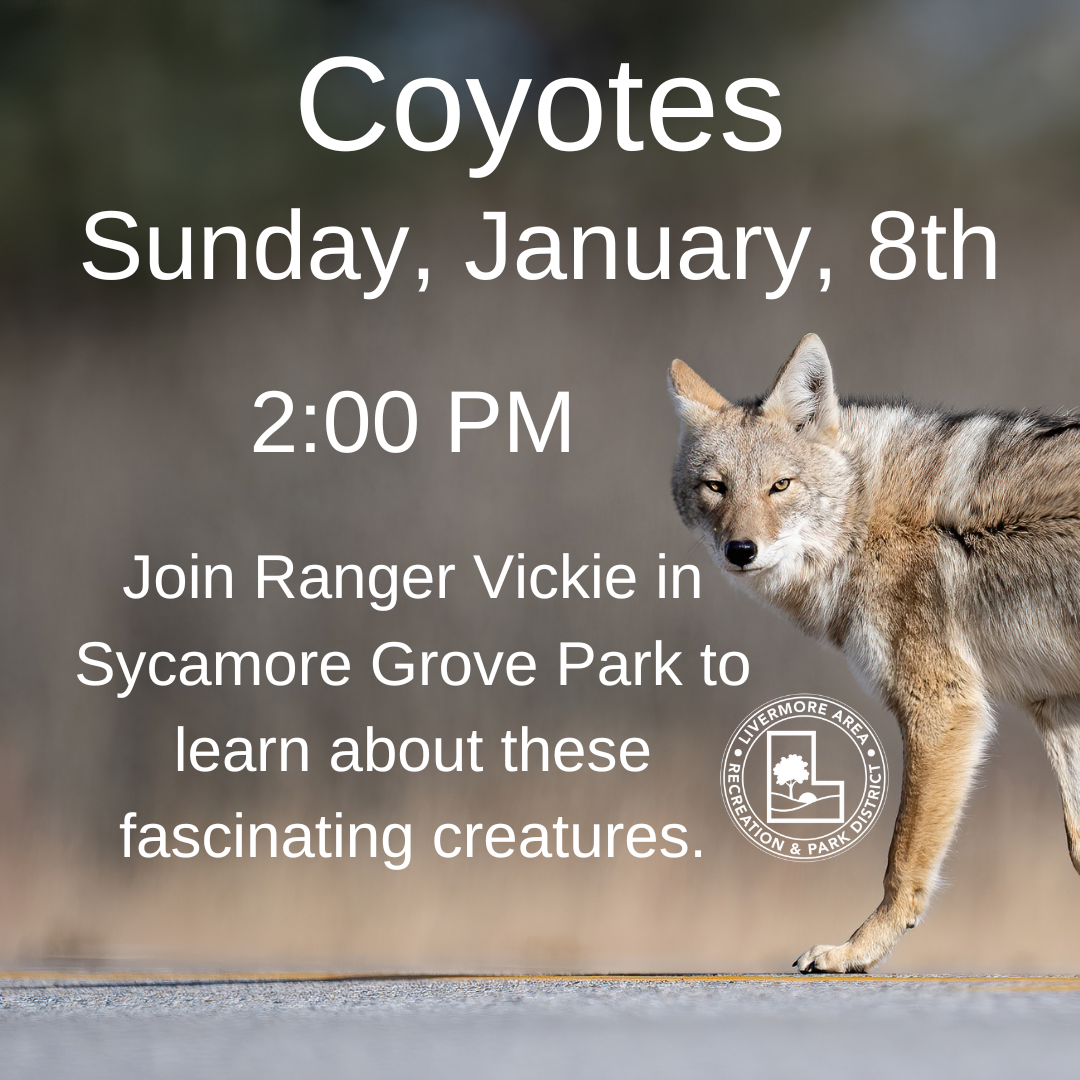
Come join Ranger Vickie as we discuss the coyote and the role it plays in our ecosystem. There will be a presentation and some things to see/ touch. RSVP by calling (925) 960-2400 or emailing Ranger Vickie at veggert@larpd.org.

Saturday, January 14th

2:00 PM 

Amphitheater, Sycamore Grove Park, Wetmore Road Entrance

(1051 Wetmore Road) 

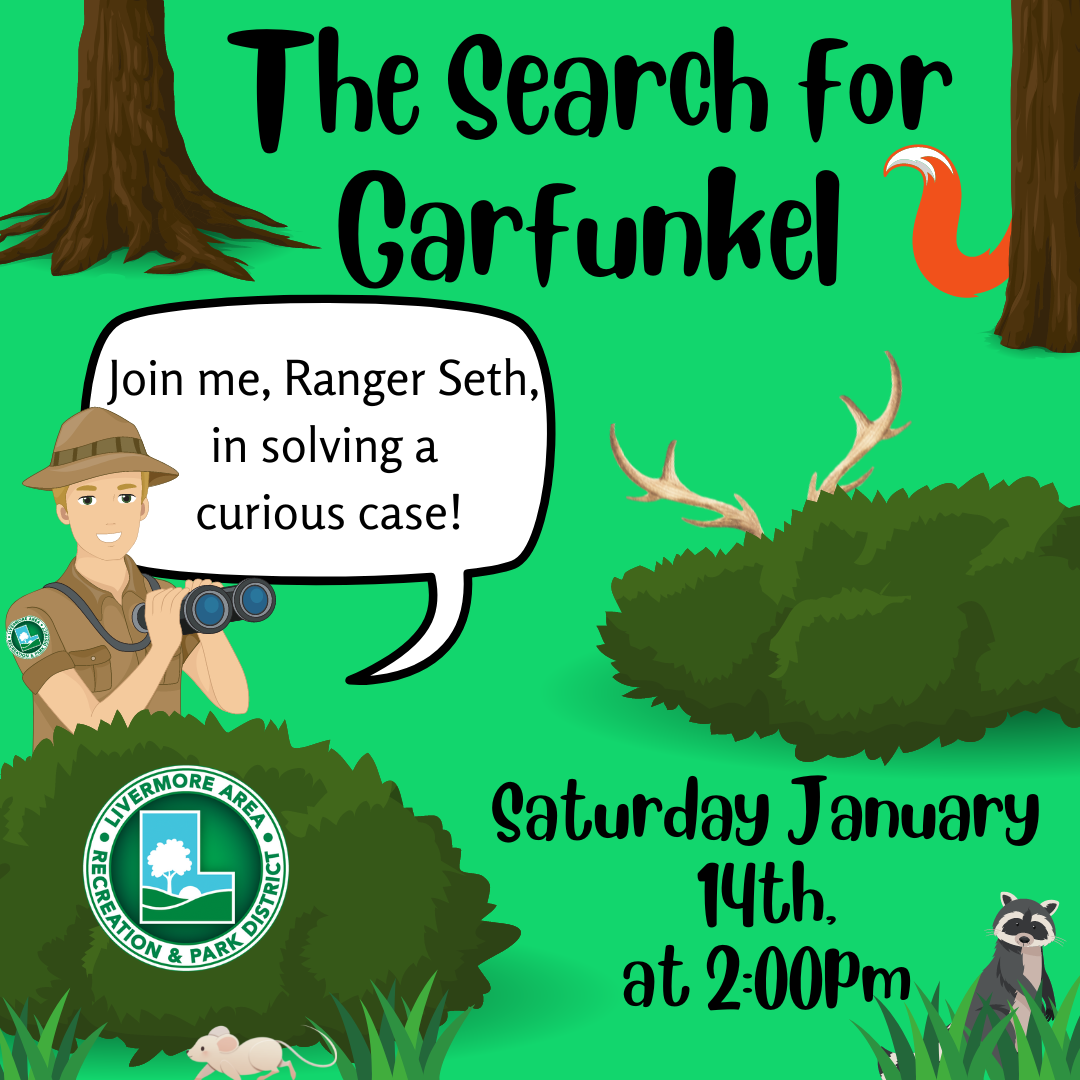
Something has been scurrying around Sycamore Grove Park, causing mild mischief but also leaving little gifts for visitors. It's been hiding in the tall grass and always just out of sight of the Rangers. We are not sure who, or what this thing even is. The only fact we do know is it is small but very quick and goes by the name Garfunkel. Please help Ranger Seth by joining him to try and solve this mystery. The search will be a short hike in the park looking for clues along the way. This is perfect for families and children 4 and older. The search will start at the Amphitheater. Please RSVP by calling (925) 960-2400 or emailing Ranger Seth at seddings@larpd.org.  


Sunday, January 15th

10:00 AM - 1:00 PM

Sycamore Grove Park,

Reservable Picnic Area

(5035 Arroyo Road) 

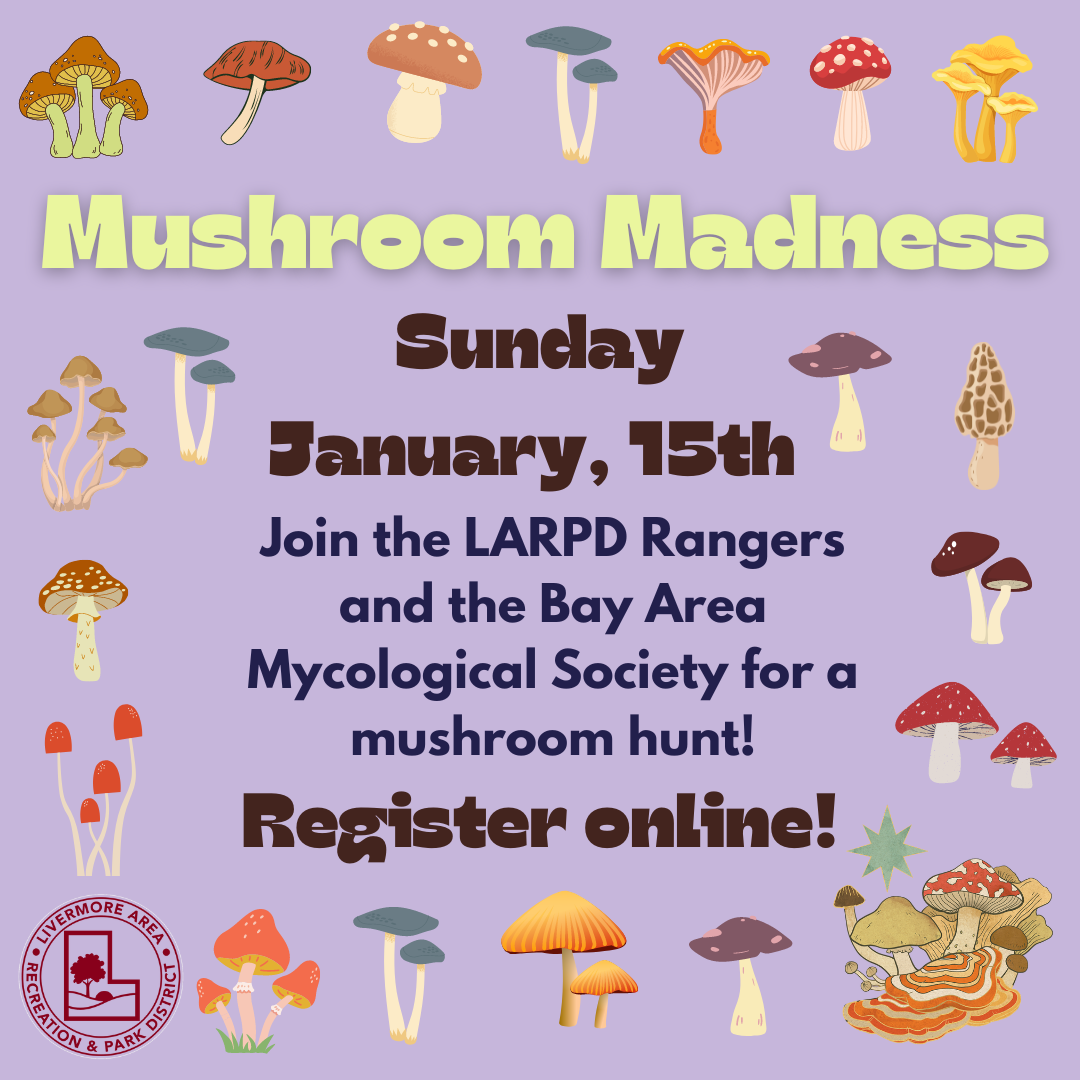
Join LARPD Rangers and the Bay Area Mycological Society for the return of our annual SGP mushroom hunt! We will crawl around under trees, wander through meadows, and look at rotting logs to see how many different types of fungi we can find. Please remember that you may take lots of photos, but mushrooms may NOT be removed from the park! This event will happen rain or shine!

Register online.

Sunday, January 22nd

2:00 PM 

Sycamore Grove Park,

Reservable Picnic Area

(5035 Arroyo Road) 

Scared of snakes? Curious to learn more? Join LARPD Rangers Vickie and Mae to uncover all the shocking mysteries about snakes and how fascinating they are! We will face our fears by handling live gopher and king snakes, feeling real rattlesnake skin and rattles, learning interesting facts, and hearing wild stories about snake encounters. Please remember to be respectful of wild creatures and we encourage hand washing before and after petting the snakes! Hand Sanitizer will be provided on property. This event will happen rain or shine! Please RSVP by calling (925) 960-2400 or emailing Ranger Mae at Mbailey@larpd.org  

Letter from the Editor

Hello,


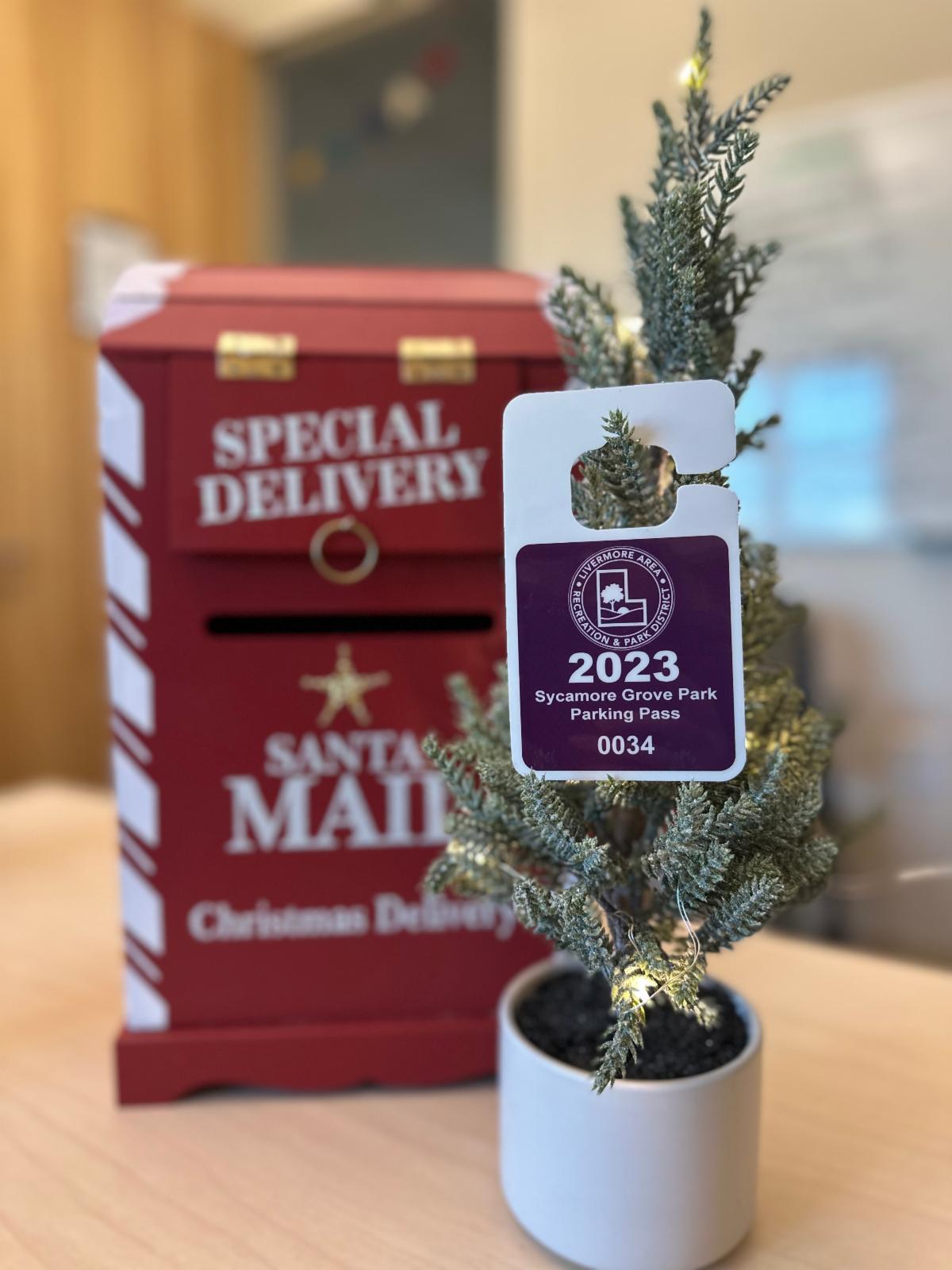
We have made it to the end of the year and that means it is time for the new year! 2023 Annual Passes are going on sale on December 1st. With the holiday season upon us, Annual Passes are a great gift to give to your favorite nature lover. The pass allows frequent park visitors to save money and time. If you are a Livermore resident and come once a month or more, it will be worth your while! Out-of-district residents who visit the park twice a month or more will also save money. Seniors (Age 60+) receive a substantial discount. Annual Passes are hang-tags that you can use in multiple vehicles. Passes are prorated for blocks of months, so you get the same great value regardless of when you purchase your pass. Annual Passes must be visible on the dash or rear-view mirror. Annual passes can be purchased from the rangers in the park or by calling the Robert Livermore Community Center at (925)373-5700. See the chart below for pricing!


All of the LARPD Open Space Staff wish you and your loved ones a very happy Holiday Season!


Thanks for reading!

Dora O'Brien

LARPD Naturalist and Valley Wilds Editor

Click to Download this Valley Wilds
Facebook  Instagram