How Do I Value My Wooden Recorders? | | |
This article was originally run in May of 2016. Recent updates were provided by ARS board member and von Huene employee Eric Haas.
| | |
Knowing the value of your wooden recorders not only helps in properly insuring them, but also in pricing them to sell. For insurance purposes, determine whether your policy will let you insure your instrument(s) at replacement value, current value, or purchase price. If it is insured at current value, or you are looking to sell, then answering the following questions can help you.
-
How old is the instrument? In general, wooden recorders do not increase in value with age.
- Who made the instrument? Is it a factory instrument or is it handmade?
If it is handmade, start by contacting the recorder maker - they can help determine its current worth.
If it is a factory instrument, then a good starting point is 1/2 to 3/4 the original purchase price. The age of the instrument and identifying the answers to the following questions may increase or decrease the value further.
-
What was the original purchase price? If you do not know this information, either contact the maker or the manufacturer may have pricing information if you know the year or timeframe of purchase.
-
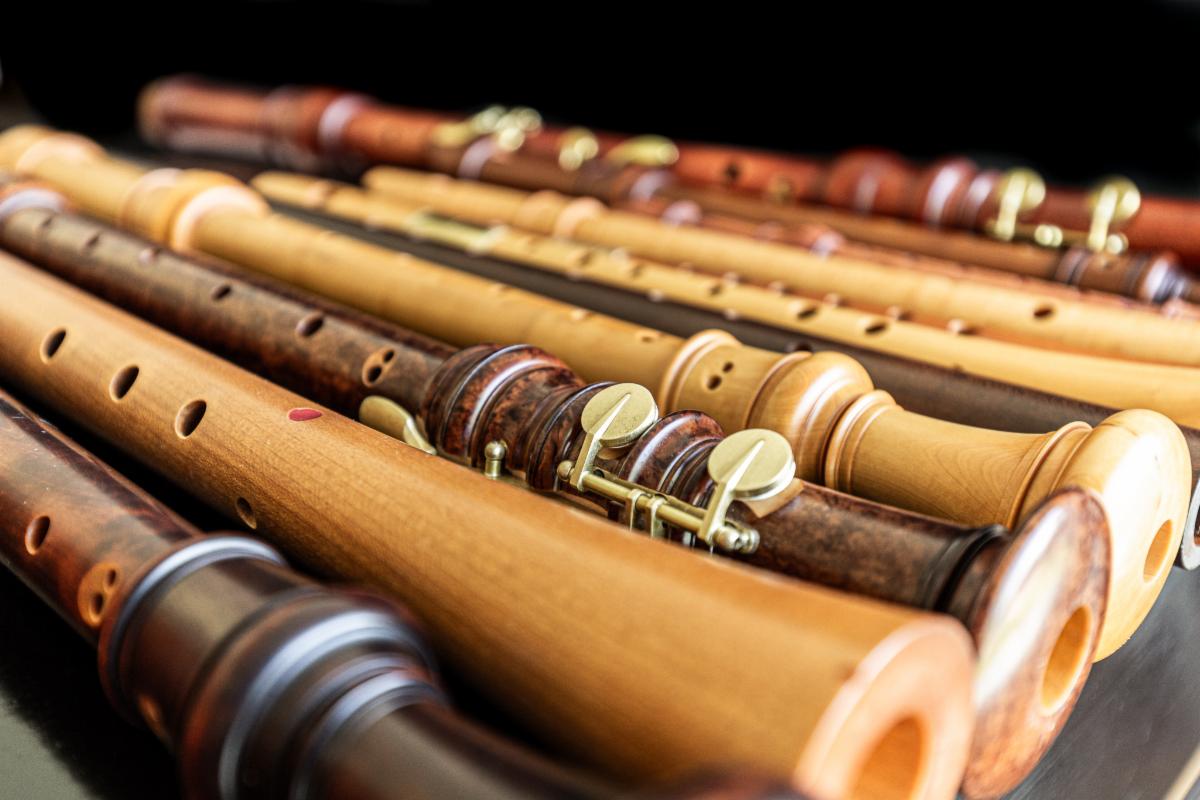
What wood is it made from? Some popular woods for recorders are maple, rosewood, boxwood, and grenadilla. If it is made of boxwood, it is helpful to know if it is European or South American boxwood (Castello or Maracaibo). If you can identify the wood, then making comparisons to other sold instruments, or talking to a recorder dealer can help in identifying its value.
-
How is the instrument finished? Does it have an oiled exterior, a wax-impregnated wood, or heavily varnished? The type of finish will determine the upkeep for the owner - a wax-impregnated wood will not need regular oiling, but an oiled interior will If an instrument has not been properly cared for, the value will decrease.
-
Does it use the baroque fingering system? If the recorder uses the German fingering system, it is only sentimental in value.
| |
| |  |
-
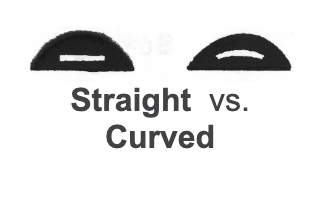
Does it have a curved windway? A straight slot at the windway indicates an instrument with only sentimental value. Inexpensive recorders are machine sloteed, which is easy, but results in recorders that clogs easily and has had very little time spend on voicing. A curved windway is more valuable. A well crafted windway, including "mid level" Moecks and Mollenhauers, has a curvature the length of the windway both on the block and on the roof, so that the windway channel is larger in the center of the windway than it is at either the blowing or exit ends. All recorder roofs will sag over time, and this curvature means that there is some leeway in the windway to account for this. It also allows for the moisture to have more room to run off so the windway doesn't clog as quickly. An instrument where care has been taken in the windway design will also reflect care in the voicing and tuning.
-
What is the pitch of the instrument? Have someone else watch the tuner and play the lowest note to identify the pitch (this includes the tuning; e.g. is it at 415 or 440?). It is best to have a second person look at the tuner to ensure accuracy because you as the player can easily manipulate the breath control to achieve a certain pitch.
-
How is the tuning of the instrument overall? Playing each note with a tuner, particularly focusing on intervals such as fifths and octaves, will help determine if the instrument is well-tuned. A well-tuned instrument will have more value. Once again, it is best if a second person is holding and viewing the tuner. Handmade instruments will likely be much more evenly tuned throughout the range of the instrument than factory instruments. Minor adjustments to breath speed or fingerings are common, especially for factory instruments, but if there are many notes or intervals that require manipulation, the instrument's value will be affected.
Once you are armed with this information, you can research sites like eBay, or other used instrument sites to find a similar instrument. Be sure to look at sold prices, not asking prices. For used instrument sites, a few examples include:
The von Huene Workshop ( www.vonhuene.com ),
Lazar's Early Music ( http://lazarsearlymusic.com ),
Unicorn Music ( www.buyrecorders.com ).
Call or send your instrument to one of the above dealers or another recorder dealer that sells used instruments for further assessment. Since they see used instruments frequently, they have a greater knowledge of what they are currently worth.
| | |
Recorder dealers can help you sell your instruments as well, but keep in mind that they will collect a commission. For some, it is worth the commission price to have someone handle the sale. For direct sales, being able to assess the value of your instrument using the guidelines above and comparing them to instruments through sites like those listed above will help you determine a fair price.
| |
|
Do you enjoy our ARS NOVA emails?
Click here for our archives, with articles on many topics ranging from how to care for your recorders, to useful apps, to scholarship and grant opportunities though ARS. If you've received this from a friend, sign up for your own monthly subscription using this link.
| | |
How to Join the ARS
Take advantage of our 1/2 price rate for first-time members! Get immediate access to all the information available on our website, as well as other member benefits including the quarterly American Recorder magazine.
Click here for info
| | |
P.O. Box 480054 Charlotte
NC 28269-5300
Phone: 1-704-509-1422
Toll Free: 1-844-509-1422
Fax: 1-866-773-1538
| | | | | |