|
Today's economic developers are expected to understand housing, workforce development, infrastructure, transportation, entrepreneurship, tourism, small business growth, community engagement, placemaking, and economic resilience. They work at the intersection of government, business, education, and community development, often serving as connectors between stakeholders with competing priorities and limited resources.
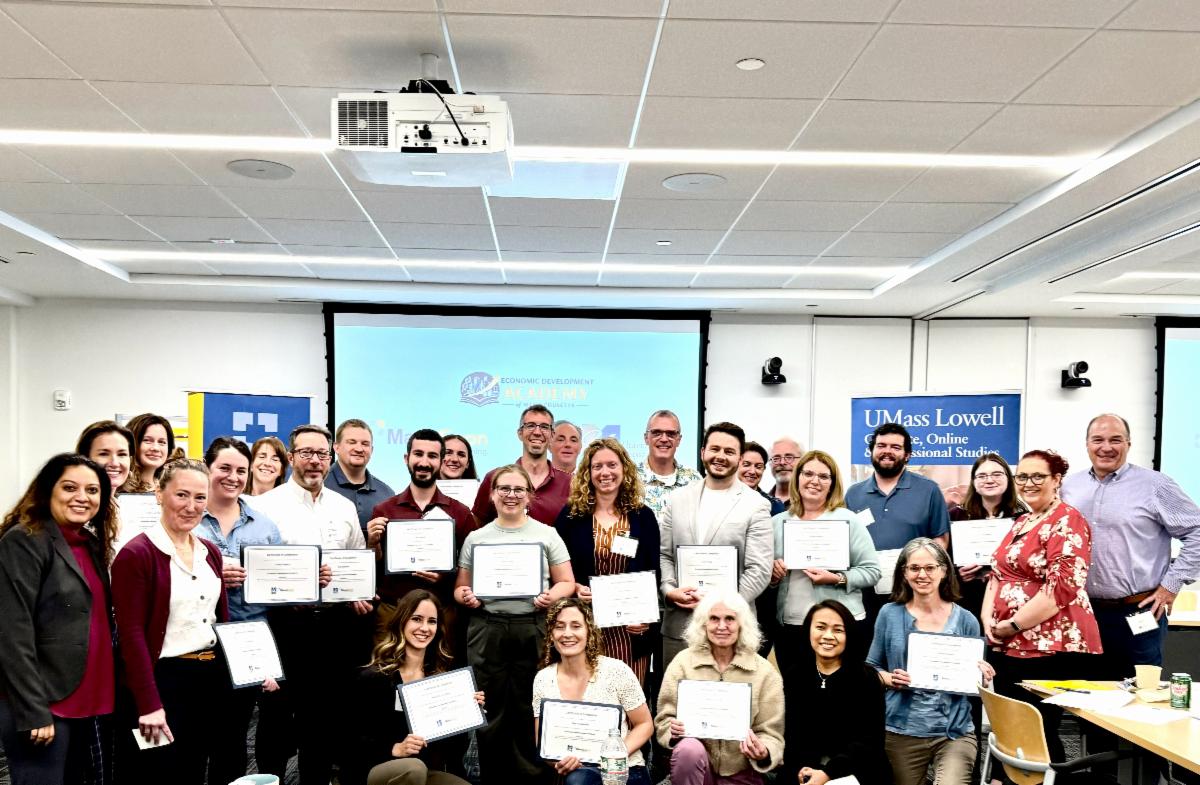
During the inaugural Economic Development Academy, participant John Sisson, an economic developer with more than a decade of experience, described the profession as being a "concierge" for the community. The description resonated with many participants. Economic developers are frequently called upon to connect businesses with resources, guide an applicant through local permitting processes, assist residents and entrepreneurs, coordinate with all internal departments as well as state and regional partners, and help navigate complex community challenges.
In many municipalities, economic development professionals are an "office of one," serving simultaneously as strategists, connectors, marketers, problem solvers, and advocates for business and community growth.
Yet despite the growing complexity and importance of the profession, economic development remains one of the few fields without a clearly defined educational pathway. Most practitioners enter the profession from planning, municipal government, communications, real estate, business, nonprofit leadership, or public policy. They develop their expertise through experience, mentorship, professional networks, and on-the-job learning rather than through formal economic development education.
The need for foundational economic development education has never been greater.
That question from Pete Abair ultimately became one of the driving forces behind the Massachusetts Economic Development Academy.
Convened by MassEcon, in partnership with UMass Lowell and supported by the Massachusetts Municipal Association (MMA), the Academy was designed around a simple question: What foundational knowledge should every economic developer in Massachusetts possess, regardless of the community they serve?
|