CVMA's Official Monthly Newsletter | | |
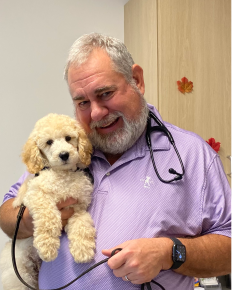
Dr. Bruederle is a past President of the Chicago Veterinary Medical Association. He has been the past President of the University of Illinois College of Veterinary Medicine Alumni Association, served as the Alternate Delegate to the AVMA House of Delegates, was a board member on the oversight committee for Chicago Animal Care and Control, is a board member of Safe Humane Chicago, was the student liaison for AAHA to U of I, and currently sits on AVMA’s Committee on Veterinary Technician Education and Activities--the accrediting body for over 215 veterinary technician schools. Dr. Bruederle worked at Burnham Park Animal Hospital for 28 years. He is currently semi-retired working as a relief veterinarian at over 30 clinics. Dr. Bruederlie volunteered and represented the CVMA at Chicago White Sox Dog Days since 1999. The first year he was able to throw out the first pitch. It was not a strike, but it did make it to the catcher on a fly.
Dr. Bruederle wishes to thank the CVMA for the opportunities it has provided and encourages everyone to help strengthen our profession and protect our right to practice by volunteering.
Thank you to Dr. Bruederle for his commitment to CVMA throughout the years and for his contributions to the field of veterinary medicine.
| This section has been updated to remove information that was not accurate. We apologize for the error. | | CVMA U offers premier premier face-to-face and online courses to advance expertise while earning six (6) RACE approved CE hours per successful completion of each course. Stay up-to-the-minute with current, relevant information presented by renown experts in the field of veterinary medicine. Attendees are sent electronic student notes provided by the instructor. | |
June In-Person Course
Toxicology
Presenter: Renee D. Schmid, DVM, DABT, DABVT
Date: June 17, 2026 Time: 8:30am-4pm CT
Location: Brookfield Zoo Discovery Center, Complimentary Parking
Six (6) RACE-approved credit hours
Continental breakfast and buffet lunch are served
REGISTER
Be ready to dig deep into toxicology. Dr. Renee Schmid, Director of Veterinary Toxicology and Senior Veterinary Toxicologist with Pet Poison Helpline will guide attendees through the vast terrain of small animal toxicology. The day will start with a review of general aspects of approaching a potentially poisoned patient, discussing ideal medications to have in the clinic, and choosing the appropriate decontamination method for the patient. As the course progresses, a variety of specific toxins, ranging from chocolate to heroin, and everything in between will be discussed.
LEARN MORE ABOUT THE PRESENTER
REGISTER TODAY
| |
|
Full CVMA U Course Schedule
Below is the full schedule of CVMA U online and in-person courses for 2026. Learn more. Register for multiple courses and receive course discounts. Please contact Kayla at kmarshall@chicagovma.org or call 630.325.1231 if you would like assistance.
June 17 – Toxicology
Presenter: Renee D. Schmid, DVM, DABT, DABVT
September 16 – Chronic Enteropathies
Presenter: Kasey Mabry, DVM, MS, DACVIM-SA
Starts October 7: Online Course – Internal Medicine in Real Life: Practical Strategies for Your Toughest Chronic Cases
Presenter: Kelly Cairns, DVM, MS, DACVIM (Small Animal Internal Medicine)
November 11 – Oncology
Presenter: Timothy M. Fan, DVM, PhD, DACVIM
December 16 – Radiology
Presenter: Marc Lee, DVM, DACVR
Register today
Course fees are tax deductible in accordance with the law.
| |
NEW ROLL-OUT IN JUNE 2026
CVMA U ONLINE "ON-DEMAND" COURSE
Date: Take whenever you like
Location: Take wherever you like
Six (6) RACE-approved credit hours
CVMA is pleased to roll out our first "ON DEMAND" Online course program in June 2026. Registrants will receive recordings of the course to hear and view. At the end of the course, successful completion of an examination is required to earn the RACE credit hours. The first course will be
| |
Emergency and Critical Care for the General Practitioner
Presenter: Caroline Tonozzi, DVM, DACVECC
ECC in veterinary medicine provides urgent and life-saving care for animals. This course will cover the following Emergency and Critical Care topics for the general practitioner:
Identifying shock and developing a fluid therapy plan
To learn more, contact Kayla at kmarshall@chicagovma.org or call (630) 325-1231
BE ON THE LOOKOUT FOR MORE INFORMATON IN JUNE
| | |
IF NOT A MEMBER, DO NOT WAIT.
JOIN TO RECEIVE COURSE DISCOUNTS AND MEMBERSHIP BENEFITS
Membership and course fees are tax deductible in according with the law.
| | |
VETS and CVTs: SPREAD THE WORD!
NEW CVMA VETERINARY TECHNICIAN PROGRAM
| |
CVMA recognizes the important role that Certified Veterinary Technicians (CVTs) have in the field of veterinary medicine. CVMA is excited to offer our CVT Program to provide CVTs with what they need to excel. CVT membership provides access to all CVMA's robust member benefits.
2026 CVT Introductory Membership Rate: $45
-
CVT members gain access to discounted in-person and online RACE-approved continuing education courses through CVMA U. Each course is RACE approved for six (6) credit hours. The first course rate for a CVT member is $40.
- Membership benefits also include access pet-loss resources for clients, government affairs advocacy, scholarship opportunities, exclusive member discounts on professional and personal services--including loan management, lawyers, printing and graphic design services, technology discounts, surgical supplies, career board, article library access, complimentary and confidential mental health services for the CVT and their families.
JOIN TODAY
For more information about the CVT program, visit the website CVT Corner, call Kayla at 630.325.1231, or write to kmarshall@chicagovma.org.
| |
TOPIC OF INTEREST
PAIN MANAGEMENT
|
Performing Oral Regional Nerve Blocks for Veterinary Patients
All oral surgical procedures should include a regional block. The materials are readily available in practice, and the local anesthetic will help provide more balanced anesthesia. More.
| Instituting a Multimodal Pain Management Protocol Although the exact protocols for multimodal pain management may vary based on individual practice resources, the basic components remain the same.More. | |
VetConnectChicago Sponsors
| | |
CVMA thanks Synergy Surgical and Provide for being valued CVMA sponsors
and for their commitment to our members.
| | |
Synergy Surgical is proud to serve as the inaugural sponsor of VetConnectChicago and support the Chicago veterinary community. Synergy Surgical provides access to more than 160,000 surgical devices from 150+ leading manufacturers, along with our own line of premium Synergy Surgical sutures, surgical mesh, skin staplers, and nitrile exam gloves. Focused on flexibility, service, and supply efficiency, Synergy Surgical helps clinics source the devices they already trust. No contracts or minimum orders are required. The company continues to grow, with additional products currently in development under the Synergy Surgical brand.
Synergy Surgical is also a Value-Added Member Benefit Partner. Sign into the member portal to find their CVMA order discount code.
| |
Banking Built for Bold Moves
Provide’s customized loans and expert support can help your hospital thrive at every stage.
Big goals need more than a loan — they need a partner. Powered by Fifth Third, Provide empowers veterinarians to build their legacies. As a leader in tech-enabled financial services for aspiring and established animal hospital owners, Provide offers an unmatched combination of industry expertise, personalized service, and customized financial products — enabling veterinarians to achieve their ownership dreams, realize financial independence, and strengthen their communities.
Ready to take the next step? Reach out to your dedicated Provide representative, David Soto, Regional Director of Practice Finance, today at 614.381.0554 or at david.soto@getprovide.com.
| | |
Articles for the Veterinary Professional
CVMA has a library of relevant and current articles for our members. We strive to bring you the information you need. If you have written an article or would like to share one that would benefit the CVMA community, send the article to Michele at mcohen@chicagovma.org.
| An Overview of Brachycephalic Obstructive Airway Syndrome The primary anatomic abnormalities, as well as secondary respiratory and gastrointestinal complications, associated with BOAS along with key conformation and lifestyle risk factors that exacerbate the clinical signs of the syndrome are reviewed. More. | A Guide to Brachycephalic Obstructive Airway Syndrome Surgery Surgical options are available for correcting components of BOAS (e.g., overlong and thickened soft palate, stenotic nares, everted laryngeal saccules). Standardized perioperative protocols may decrease respiratory complications and/or postoperative regurgitation. More. | Understanding and Addressing Brachycephalic Ocular Syndrome Excessively long eyelids, shallow orbits, eyelid conformation, and lash abnormalities and other anomalies predispose brachycephatic patients to chronic ocular exposure, which can lead to discomfort and globe- or vision-threatening sequelae. More. | Osteoarthritis Has a High Prevalence in Dogs Undergoing Routine Dental Prophylaxis The study's objective was to determine the prevalence of radiographic osteoarthritis (OA) and the joints affected in medium to large dogs undergoing dental prophylaxis. More. | Echinococcus Multilocularis Found in Washington Coyotes E multilocularis can cause severe disease if passed to domestic canines or humans. It was considered rare in North America until approximately 15 years ago, when cases in dogs and humans began appearing in Canada and the Midwestern United States. More. | Performing Oral Regional Nerve Blocks for Veterinary Patients Oral surgical procedures should include a regional block. The materials are readily available in practice, and the local anesthetic will help provide more balanced anesthesia. More. | Backyard Chicken Perches Chickens are sound sleepers--surprising, but true, for a prey animal. They instinctively seek out a high spot to sleep in to protect them from predators. Predator protection is not the only benefit of sleeping off the ground. More. | Canine Anal Sacculitis: A Brief Review With a Focus on the Recent Literature Anal sacculitis refers to inflammation and/or infection of one or both anal sacs. It is a common non-neoplastic anal sac disease in dogs with a heterogenous presentation. More. | | 2026 State of Shelter Pet Adoption Report Throughout Hill’s Pet Nutrition’s ongoing research about the barriers to pet adoption, one consistent insight broke through: large dogs face disproportionate barriers to adoption. More. | | High-flow Nasal Oxygen Therapy High-flow nasal oxygen therapy (HFNOT) has been increasingly adopted in veterinary medicine as a noninvasive modality to support oxygenation in dogs and cats with respiratory compromise. More. | Diagnostic Limitations of Oropharyngeal Swab Cultures and Inconsistent Presence of Secondary Bacterial Infection In Canine Aspiration Pneumonia In dogs, aspiration pneumonia (AP) has long been assumed to be synonymous with secondary bacterial infection (SBI), prompting treatment with antimicrobials. Recent studies have suggested that AP can occur in some dogs without SBI, refuting use of antimicrobials. More. | The Great Pretender: Understanding Addison’s Disease in Dogs Addison’s disease, also known as hypoadrenocorticism, is often called the “great pretender,” as its symptoms can mimic many other, far more common problems. More. | Unlocking How Dogs’ Fungal Ear Infections Evade Treatment Points Vets to Drug Stewardship Mutations in a key protein make a yeast found in dogs with common outer ear infections more resistant to the topical antifungals used to treat it according to veterinarians and pathobiologists at the University of Illinois Urbana-Champaign. More. | “A Practice Divide Between Neurologists and Surgeons”: How Does It Affect Patient Outcomes? Specialists can take different approaches to the same condition. Future research can offer clarity on clinical decision-making. More. | Go with the Workflow: Reimagine Auditing Medical record and invoice auditing is challenging due to of the lack of time. Answers to auditing challenges are at hand. More. | 2026 Annual Pet Parasite Forecasts Continued expansion of Lyme disease, ehrlichiosis, anaplasmosis, and heartworm nationwide is expected making year-round prevention essential. More. | AI and Veterinary Medicine Artificial intelligence has entered the conversation in veterinary medicine. Veterinarians are skeptical not believing a machine replaces medical judgment or a nuanced decision that comes from years of clinical experience. More. |
Paws for a Moment: Recognizing and Treating Shock in Small Animals
Shock in small animal patients represents a dynamic and life-threatening failure of tissue perfusion that demands rapid, informed, and adaptable clinical management. More.
| CDC Confirms Cat-to-Human Transmission of Avian Influenza A public health investigation documented the transmission of highly pathogenic avian influenza virus (HPAI, more specifically avian influenza type A H5N1) from a domestic cat to a human, but health officials maintain that the risk remains low. More. | Clinician Brief: Hantavirus Pulmonary Syndrome (HPS) Hantaviruses are spread by rodents' body fluids and excrement. People mostly contract hantavirus by breathing in the virus. Most hantaviruses found in North, Central, and South America can cause hantavirus pulmonary syndrome (HPS). Andes virus, which is found in South America, has reportedly had person-to-person transmission. More. | Hantavirus in the United States. A recent suspected hantavirus case in Illinois is a stark reminder that the potentially deadly virus does exist in the U.S. More. | Battling Giants: A Case of Canine Dioctophymiasis The giant kidney worm is a lesser-known parasite that is contracted through the ingestion of undercooked frogs and fish or contaminated drinking water. More. | 2026 Hill's Pet Nutrition World of the Kitten Report This report aims to offer valuable insights into kittens, including general information about essential aspects of kitten development and proper husbandry, nutrition, and veterinary care. It highlights the implications of “kitten-season” and overpopulation, shelter operations, and fostering processes. More. | Curtailing Canine Chronic Ulcerative Stomatitis CCUS is an immune-mediated oral mucosal disease characterized by ulcerative lesions, severe halitosis, and oral discomfort associated with contact of mucosal surfaces with plaque-retentive surfaces of the teeth. These mucosal lesions have been referred to as "kissing lesions". More. | Salmonella Outbreak Caused by Pet Veiled Chameleons Public health officials are investigating a multistate Salmonella outbreak linked to contact with veiled chameleons that has sickened five toddlers in the past few months. More. | 2026 AAHA Diabetes Management Guidelines for Cats Diabetes management in cats requires a different approach from diabetes in dogs. With the availability of SGLT2-inhibitor drugs for cats, treatment strategies continue to diverge between these two species. More. | | Government affairs are vital for veterinarians and CVTs to shape regulations affecting animal welfare, public health, and practice operations, including drug licensing, and controlled substance compliance. Involvement ensures veterinary expertise influences policies on zoonotic diseases, food safety, and environmental health. Members having an interest in participating on Government Affairs Committee should contact Michele Cohen at mcohen@chicagovma.org. | |
Illinois House Bill 5411: Bill to amend Vet Med Practice Act to allow non-veterinarians to perform Rabies vaccinations.
- Original language was adjusted to only allow only licensed CVTs to perform Rabies vaccines under direct supervision of a veterinarian after the DVM performs an examination.
- Currently the bill is out of committee and awaiting further progress within the whole House chamber.
- No companion Senate bill has been introduced.
| |
The Combating Illicit Xylazine Act in the Federal Congress
- S.545 (Senate): Advanced out of Senate Committee and awaiting vote by whole chamber.
- H.R.1266 (House): Sitting in House Committee. Hearing was held in late March. No movement since that hearing.
| |
Recent US Supreme Court Options Affecting Veterinary Telehealth:
-
Chiles v. Salazar, SCOTUS decision in March 2026: Case revolved around Colorado's law against conversion therapy. Court ruled there is a difference between state and local laws regulating Speech by medical professionals versus Conduct by those same professionals. States cannot set laws infringing upon medical personnel free speech (such as talk therapy or general offer of advice), but states can regulate actions taken by personnel such as procedures, performing therapy, ordering diagnostics, or prescribing medications.
-
Hines v. Pardue, 5th circuit decision that was denied SCOTUS heating: This was a free speech challenge to Texas's VCPR requirements prior to telehealth visits for pets.
| |
Note from Dr. Karen Woodard, CVMA Secretary and Government Affairs Representative: The results of the above two decisions do not mean in-person VCPR requirements by states are overturned. The state-specific VCPR requirements are still valid when applied to conduct; for example, prescribing without a valid VCPR per state requirements would still be prohibited. Recall that licensed veterinarians are accountable to upholding VCPR legal requirements, not third-party telehealth platforms.
Note: CVMA congratulates Dr. Woodard for completing her Masters in Animal Law.
| May is Mental Health Awareness Month | | |
MAKE YOU A PRIORITY
May is Mental Health Awareness Month. This is a time for veterinarians to reflect on and remember to take care of themselves--to make YOU a priority. Many veterinarians face compassion fatigue, burnout, and psychological distress.
You, your families, your friends, and your clients need you to to take care of you and to be good to yourself.
CVMA has a complimentary, confidential mental health member program that provides connections with professionals to meet specific mental health needs. This program is available to members and their families through the CVMA Stay Healthy program. Visit the Value-Added Member Benefits folder to access this information.
If you need assistance accessing the member portal, contact Kayla at kmarshall@chicagovma.org or call (630) 325-1231.
| Supporting Clients Through Pet Loss: Compassionate Strategies for Veterinary Teams Mental Health Awareness Month offers an opportunity to reflect on how grief affects not only clients but also the veterinary professionals who support them. More. | CVMA Provides Support CVMA provides an avenue for pet owners to mourn and grieve the loss of their pets. CVMA maintains a phone helpline with veterinarian volunteers responding to the callers. Further, a real-time virtual support group led by a certified therapist is available. Help your clients with grieving pet loss by referring them to the CVMA Pet-Loss Program. More. | | |
Veterinary Practice Resources
Practice resources optimize clinic efficiency, safeguard team well-being, and drive profitability. Streamlining workflows and expanding access to care, practices support their staff, reduce turnover, and can deliver high-quality medical care to patients.
| |
VMG/AAHA Chart of Accounts
VMG/AAHA Chart of Accounts is available offering veterinary practices a modern and consistent framework for organizing financial data. The resource helps practices better categorize revenue and expenses, improve reporting, compare performance, and make informed business decisions. Take a look.
| Committee Member Outreach | | |
Stewardship Drives CVMA
CVMA members drive the organization. Stewardship is a key to building a strong organization that stays on their mission of advancing the veterinary profession through advocacy, engagement, and enrichment while protecting animal welfare and public health.
CVMA is aware of your busy schedules. Being a member of a committee will not be time consuming but will be meaningful. Your opinions and insight are valuable.
Membership: Identifies the needs and interests of the Association members.
Government Affairs: Monitors local and regional legislative developments that impact the veterinary profession.
Public Education: Works to increase public awareness of the Association and the veterinary profession as a whole.
Finance: Provides overall financial oversight of the Chicago Veterinary
Medical Association.
Please contact Michele Cohen at mcohen@chicagovma.org for more information. Your stewardship takes CVMA to the next level.
| |
CVMA Board of Directors
Make a Difference The governance of the Chicago Veterinary Medical Association is vested in a Board of Directors consisting of members entitled to vote and to hold office. The main responsibility of the Board of Directors is to follow the mission and vision of the Association while ensuring fiduciary strength and sustainability CVMA.
Now is an appropriate time to consider if you would like to be part of this vital team for 2027. If you are interested, reach out to Michele at mcohen@chicagovma.org. You will make a difference.
| | |
University of Chicago Career Fair: July 23rd, 2026
The University of Chicago, in partnership with the Judy and Peter Blum Kovler Foundation, will host the 15th annual Peter and Judy Kovler Career Conference for high school students on July 23, 2026, at the Hyde Park campus. The event will welcome more than 250 local high school students for a day of career exploration and connection.
Through the Public Education Committee, CVMA volunteers have a presence at this Career Fair to educate high school students regarding the field of veterinary medicine. To volunteer at this event, contact Kayla at kmarshall@chicagovma.org.
| |
Value-Added Benefits for Members | | |
Take a Look. Take Advantage.
CVMA is pleased to bring you the following Value-Added Member Benefits found in our member portal in the Member Benefits file.
A) We have partnered with attorneys, business services, a veterinary supply company, and wealth management companies to support your needs and to provide discounts or extra services to our members. Our newest Value-Added partner is a financial institution that has a veterinary financial department to provide financial advice and assistance.
B) As a member and through a CVMA partnership, you receive discounts on technical equipment, travel, sports and theatre tickets, amusement park tickets, more. See what is featured this month for CVMA members and use the member discount code.
C) Complimentary mental health connections with Professionals are provided to
members and their families through our CVMA Stay Healthy program. Visit the
Value-Added Member Benefits folder to access this information.
D) Pet owners visit our website to "Find a Veterinarian" in their area or for a specific
pet wellness need. All CVMA members are listed in this area. Please be sure that
your contact information is accurate in the member portal.
E) The Career Board has career roles posted for those in the field of
Veterinary medicine. If you have a need to hire someone or are looking for a
position, this is tool to use. An area also exists for Relief Veterinarians.
If you would like assistance entering the member portal and/or locating the above benefits, contact Kayla at kmarshall@chicagovma.org for assistance or call 630.325.1231.
| | |
Happy Anniversary to Us
CVMA has a history of dedicated stewards. These visionaries created an organization in 1896, Chicago Veterinary Society, with the purpose of forming an organization for the mutual benefit of its members, both intellectually and socially, and for the elevation of the professional generally.
Today, CVMA plays a critical role in the health and well-being of animals recognizing the importance of the animal/human bond. This development took place as a result of volunteers who made a difference to the profession—many of whom served as President of the esteemed organization. Thank you to the past and present stewards for ensuring that the field of veterinary medicine is protected, elevated, and moves forward to the future.
Presidents' List.
| |
May's History Trivia Question: The first female veterinarian graduated in 1903 from which of the following schools:
- University of Illinois
- Ohio State University
- McKillip Veterinary College
-
New York State Veterinary College
Answer to April's History Trivia Question: True or false-McKillip Veterinary College had basketball, handball, football, and baseball teams?* Answer: True.
*The answer to the May history trivia question will be found in the May edition of VetConnectChicago.
| | |
Dr. Jordan Siegel
With sadness, we share that Dr. Jordan Siegel, husband of Dr. Karen Heger, passed away on March 23, 2026. Jordan was a Lifetime member of CVMA.
For more than 40 years, Jordan practiced at several veterinary clinics, established Naper-Ridge Animal Clinic, and was the program director at the Vet Tech Institute at Fox College where he set up their first veterinary nursing program. Jordan's sharp wit, mentorship, and care for animals will be missed.
| |
LET'S CONNECT
Official Facebook Page
Look for this photo on the official CVMA Facebook page and follow us. Spread our word while spreading your own word.
| Join the conversation and keep up with the latest news, events, and resources from the CVMA. Follow us on Facebook and Instagram for updates from the local veterinary community. See continuing education opportunities, advocacy efforts, and a behind-the-scenes look at CVMA in action. Stay informed. Stay connected. If you have questions, contact Kayla at kmarshall@chicagovma.org. See you on Instagram and Facebook. | | |
Our Mission
The Chicago Veterinary Medical Association (CVMA) is a 501(c)6 non-profit organization that advances the veterinary profession through advocacy, engagement, and enrichment while protecting animal welfare and public health.
cvma@chicagovma.org | www.chicagovma.org
630.325.1231
| | | | |