|
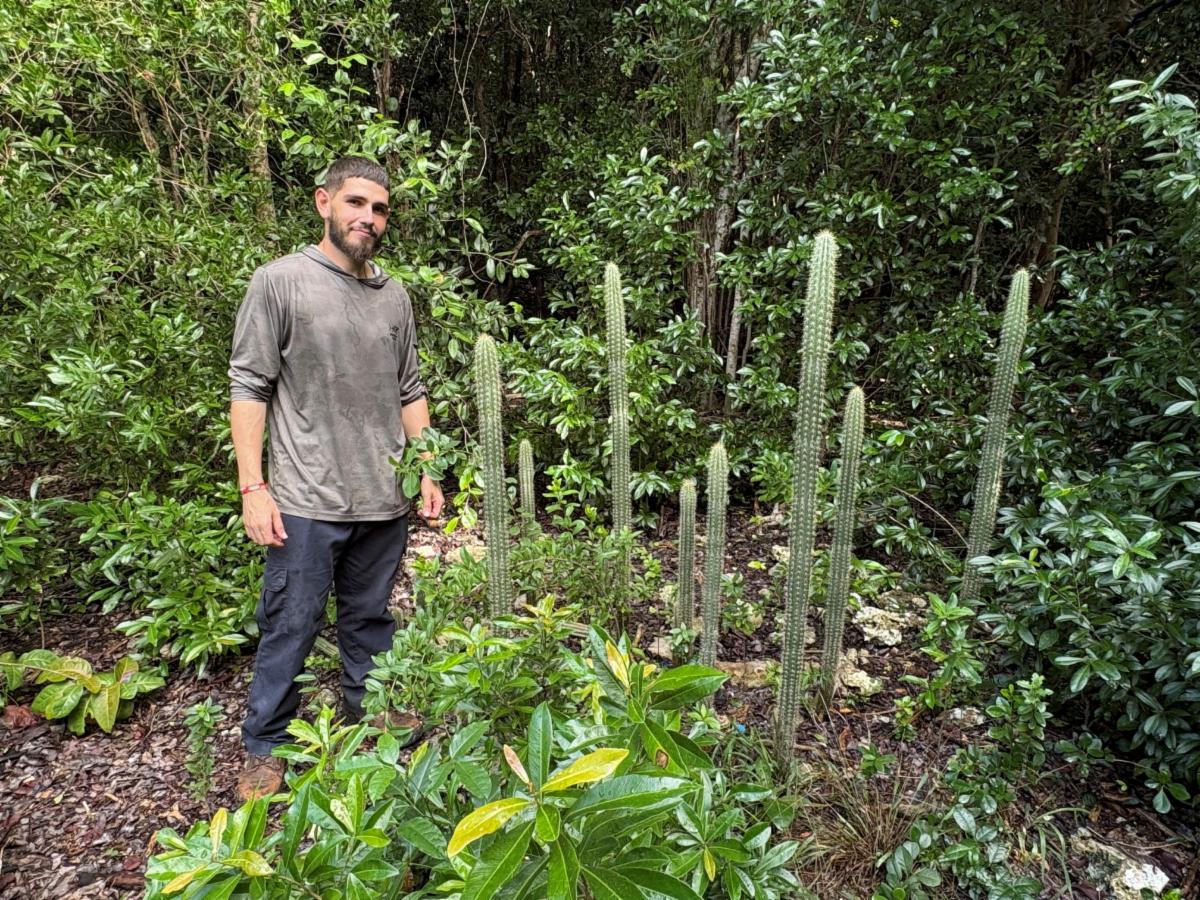
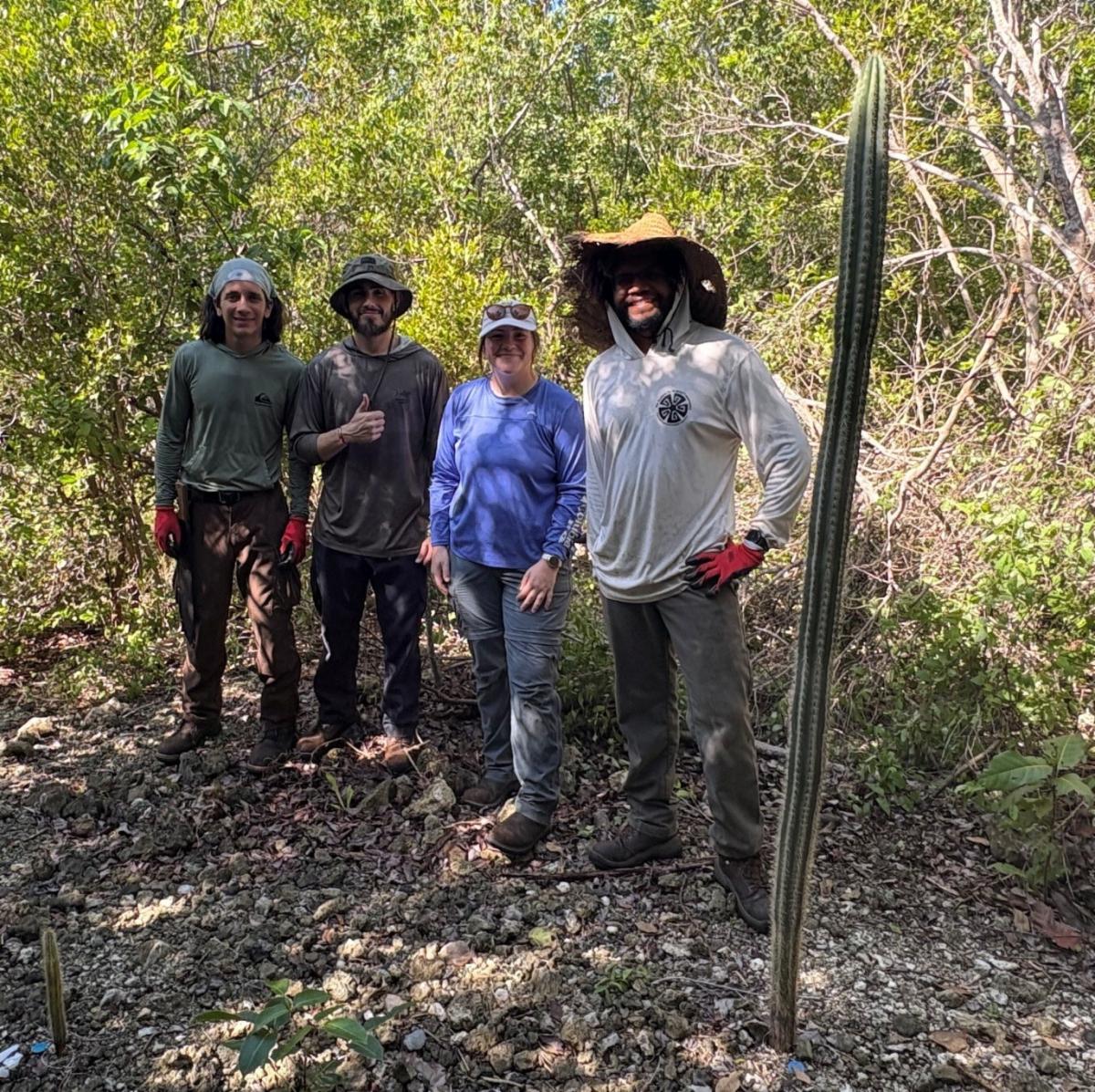
This past week, a team from The Institute for Regional Conservation (IRC) completed a habitat restoration project to support the Village's remaining populations of the endangered Key Tree Cactus.
Working in collaboration with Village staff, the team spent three days clearing encroaching vegetation around these rare plants at Village-owned conservation properties in Islamorada.
This effort helped restore the habitat conditions that the Key Tree Cactus requires to survive and thrive. By reducing competition from surrounding vegetation, the project improves the likelihood that these plants will grow, reproduce, and contribute to the recovery of the species in the wild.
The Key Tree Cactus is one of the most endangered cactus species in the world and is found only in the Florida Keys, northwestern Cuba, and parts of the Bahamas.
Current estimates indicate that only about 184 individual Key Tree Cacti remain in the Florida Keys, distributed among just 12 locations from Key Largo to Big Pine Key. The decline has been dramatic. In 1994, approximately 3,435 individual plants were documented in the wild.
Within Islamorada, approximately 70 individual Key Tree Cacti remain, clustered in three locations on Village-owned conservation lands on Upper Matecumbe Key.
These plants represent roughly 38% of the entire Florida Keys population, making Islamorada one of the most important strongholds for the species' survival.
The Village greatly appreciates the expertise and dedication of The Institute for Regional Conservation, whose work helps protect and restore South Florida's unique natural resources.
IRC is a nonprofit conservation organization that works throughout South Florida and the Florida Keys to protect, restore, and manage native ecosystems, plants, and wildlife through scientific research, habitat restoration, and regional biodiversity conservation initiatives aimed at preventing local extinction.
For more information about the IRC, visit
https://www.regionalconservation.org/index.html
|