March 2026

California Vine Lines is a bimonthly publication of the California Association of Winegrape Growers (CAWG) to offer policymakers a snapshot of what is occurring in the grape-growing and wine industry. Please click on any of the links for more information about the issues highlighted below.  

Wine Paris 2026


Last month, the 50th anniversary of the Judgement of Paris offered a useful frame to analyze the current wine market. In 1976, disruption came from the margins when California burst onto the global stage. In 2026, recalibration is unfolding across the ecosystem.


Presented on the eve of Wine Paris 2026, the California Sustainable Winegrowing Alliance (CSWA) was awarded a 2026 V d’Or Business Award for Sustainability, recognizing its Climate Action Toolkit as one of the most impactful and responsible initiatives addressing environmental challenges in the global wine and spirits industry.


Created by Wine Institute and the California Association of Winegrape Growers, CSWA is a nonprofit organization that encourages adoption of sustainable winegrowing practices and communicates the California wine industry’s global leadership through education, outreach, certification, and partnerships.

Fraudulent Wine Labels


Last month, a Napa Valley winemaker admitted to intentionally misrepresenting the origin of grapes to produce upscale wines. The owner of the now-closed winery pleaded guilty to an elaborate mislabeling ploy that prosecutors say sold upwards of $2.5 million of misrepresented wine sales. 


Prosecutors found that the winery fraudulently claimed its grapes were being grown in its sun-soaked Napa Valley vineyards, when in fact, he was swapping them out for cheaper substitutes and 'bulk grape juice.'

Wine: Place, Time, and Tariffs


Several months ago, when the rhetoric was running hot about potentially sky-high tariffs on imported wines, Jason Haas, Proprietor at Tablas Creek Vineyard in Paso Robles, wrote a blog about tariffs. One of his chief arguments about global trade policies for wine was the following:


"Wines are not commodities that are truly interchangeable between regions. For example, a California Sangiovese isn’t going to substitute for a Chianti, because the place is integral to the finished wine."

Tariffs & Imported Bulk Wine


When the Supreme Court recently rejected President Trump’s tariffs, the media immediately highlighted the New York City wine importer who took the case to court. While it is true that tariffs made it more costly for importers to bring in bottled Bordeaux, it is also true that the tariffs had no meaningful impact on the 45 million gallons of bulk wine that were imported into the U.S. in 2025.


That inexpensive bulk wine is often blended with domestic wine, and the consumer is never told the origin of what is actually in the bottle.


Tariffs also fail to meaningfully affect the bulk wine market for two key reasons. First, the price gap between imported bulk wine from many countries and domestic production is so large that even modest tariffs do little to close it. Second, the federal duty drawback system allows companies to reclaim tariffs and excise taxes, as long as they export a “like” product, effectively neutralizing the intended impact of those duties. This flawed program essentially made tariffs moot as companies can simply recover those costs through duty drawback.


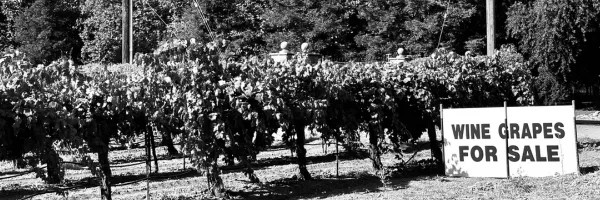
The combination of bulk imports and refunds through duty drawback has driven down grape prices, left fruit unsold, forced growers to pull out vineyards, and pushed generational farming families out of business.

Wineries Adapt to New Market


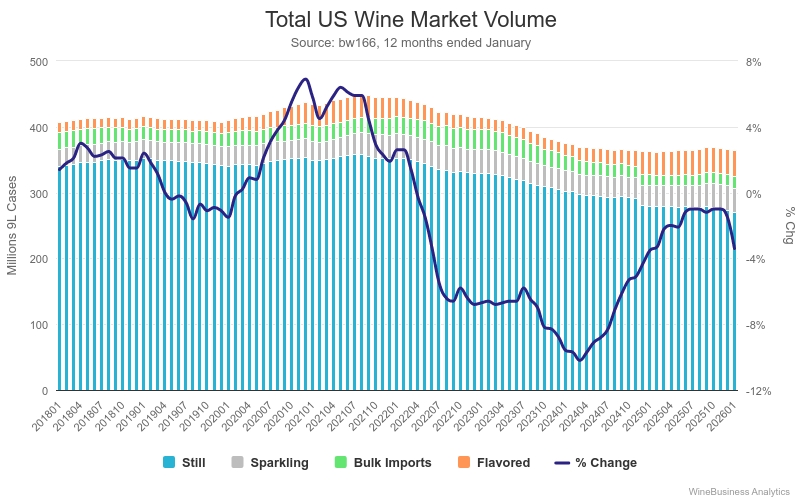
Wineries and growers across the United States are taking dramatic measures to bring wine production in line with expected demand and it’s often requiring painful decisions.


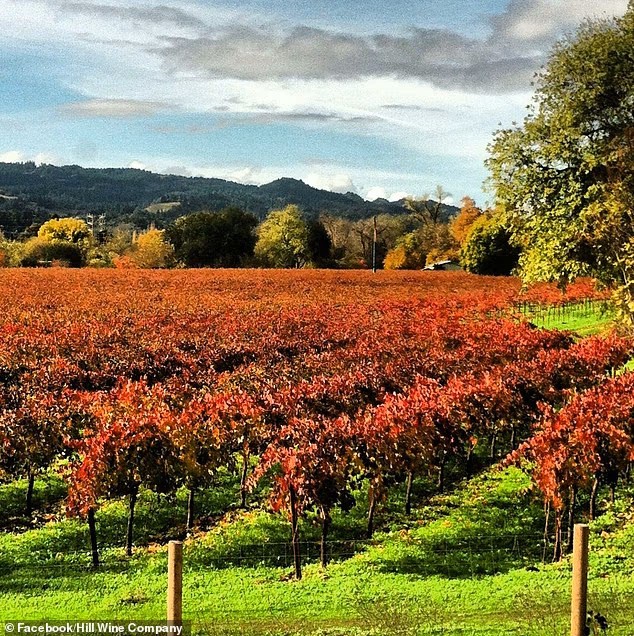
In California, thousands of vineyard acres have already been removed, and an additional 40,000 or more acres are expected to be pulled this year. Some of the largest winemaking facilities in the state have been idled and workers laid off as wineries cut operating costs and production capacity to get through an industrywide correction that could reshape much of the U.S. wine industry.

Red Blotch in Vineyards


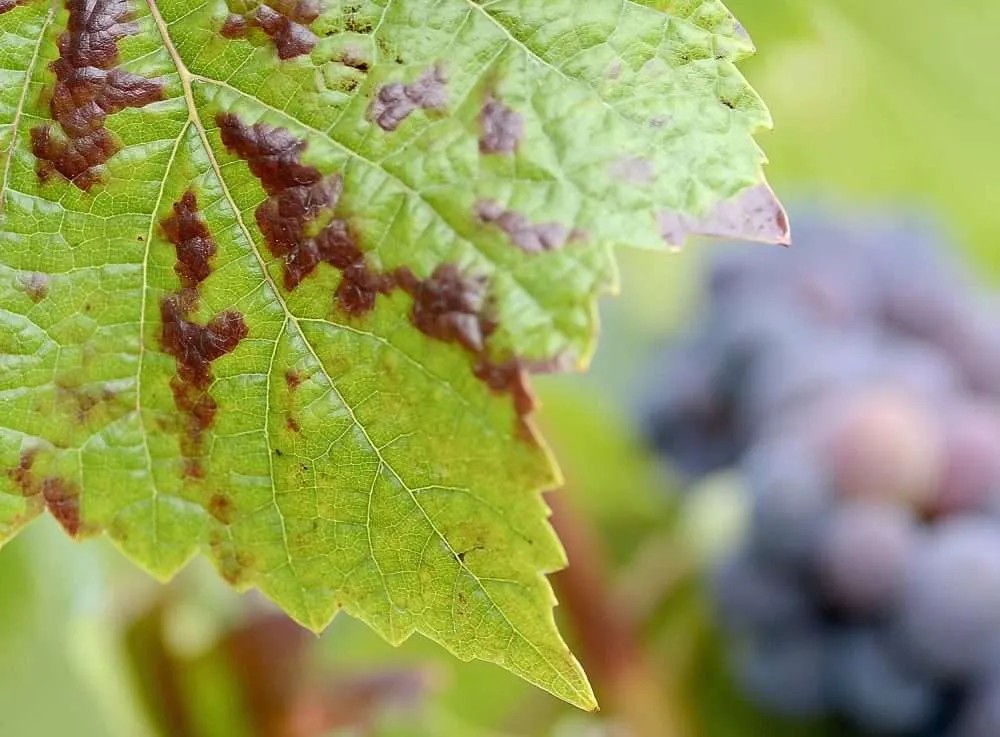
Vineyards around the world have reported more incidences of grapevine red blotch disease, ever since 2008, when scientists first described the virus that causes it. Researchers and growers have made progress understanding the disease’s viticultural impacts in a short time, but they still have much to learn about how to manage it, said Alexander Levin, director and viticulturist at Oregon State University’s Southern Oregon Research and Extension Center.

Down To Earth Month


April is Down to Earth Month, an ideal time to explore California wines grown and made with sustainable practices. Many of California’s wineries are celebrating throughout April with sustainably focused in-person events and experiences, as well as virtual events and special offers.


Explore events and offers throughout the state, and open a bottle of your favorite California wine to toast our commitment to sustainability, from grape to glass.

About the California Association of Winegrape Growers (CAWG)


Founded in 1974, CAWG stands as the statewide advocate for winegrape growers, representing the interests of California's winegrape industry. Our mission is to foster collaboration and advocate for policies that ensure the continued success of this economically vital industry.

cropped-CAWG_Refresh_w5_mark_square-192x192.png

California Association of Winegrape Growers

1121 L Street, Suite 304 • Sacramento, CA 95814 • www.cawg.org

Michael Miiller, Director of Government Relations

michael@cawg.org • (916) 379-8995 or (916) 204-0485