|
Day 20, Wednesday, November 29
ALBACETE
Only 1/3 of our month in Spain remains. That makes me sad. It started to rain in earnest around midnight last night. Today is a washout due to a low-pressure cell hanging over southern Spain. We are hitting the road for Albacete, about 210 kilometers northeast toward Barcelona, where the skies are clearer. The weather promises to be full sun starting tomorrow but significantly cooler – mid 50’s
The fog rolled in on the way to Albacete, and we encountered our first stretch of less-than-perfect highway, lasting about 50 miles. Spain is well aware of this stretch. We saw our first orange cones and construction zones. Although Spain's overall transportation infrastructure is top-notch, we have two quibbles: 1) Roundabouts; 2) Speed bumps.
In moderation, roundabouts are OK. We are seeing more and more of them in Wisconsin. I assume that they are cheaper than operating traffic lights, and it is claimed that they are safer. I have read that while roundabouts may produce a few more fender-benders, they are seldom more than minor sideswipes. Being T-boned at a traffic light intersection can be fatal.
But Spain, and Heinrich says France is worse, takes the concept too far. Not only are roundabouts spaced just about every kilometer on secondary roads and every block on city streets, but we have also come upon double, triple, and even quadruple roundabouts in series, in parallel, and stacked on top of each other, making it so you don’t have a clue which way you are going as you spin like a top. Not even Google Maps can keep up. More often than not, we spin out on the wrong exit only to wait for Google Maps and Garmin to re-route.
Then there are the speed bumps. Spain loves its speed bumps. These are not small rumble strips to wake you up or a tiny bump to remind you of some little traffic ‘thing’ coming up. These are gigantic mountains that you are forced to climb up and down as slowly as possible lest you be launched into outer space. And there aren’t just a few here and there. They are everywhere in towns and town outskirts, sometimes every few meters. The end result of these traffic impediments is frustratingly slow driving progress. Heinrich reported that in France, he stopped counting at 200, the number of roundabouts on a stretch of highway placed every half kilometer or so.
As we neared Albacete, the weather started to break, and the landscape transformed dramatically. The fog lifted, the rain turned to mist, and the olive groves and the mountains were gone. Rugged low hills with orange-black slag-like exposed rock predominate. We saw some longhorn cattle ranches and a bunch of those poplar tree plantations like those we saw before. Just before Albacete, we entered into a vast flat land. I am reminded of the My Fair Lady song, “The rain in Spain stays mainly in the plain.” We arrived at the RV park around 1:30 pm.
We are in a nice routine when we arrive in a new community – find the RV park, park and lock up, identify the nearest bus or train into the middle of town, locate the closest tourist information office to get city maps and tips on what to see, and then wander. We efficiently utilize this strategy in Albacete. We parked the RV, hopped on the bus, raced to the info office, picked up the map with the strategic sights circled, and headed off to visit as many of the circles as possible.
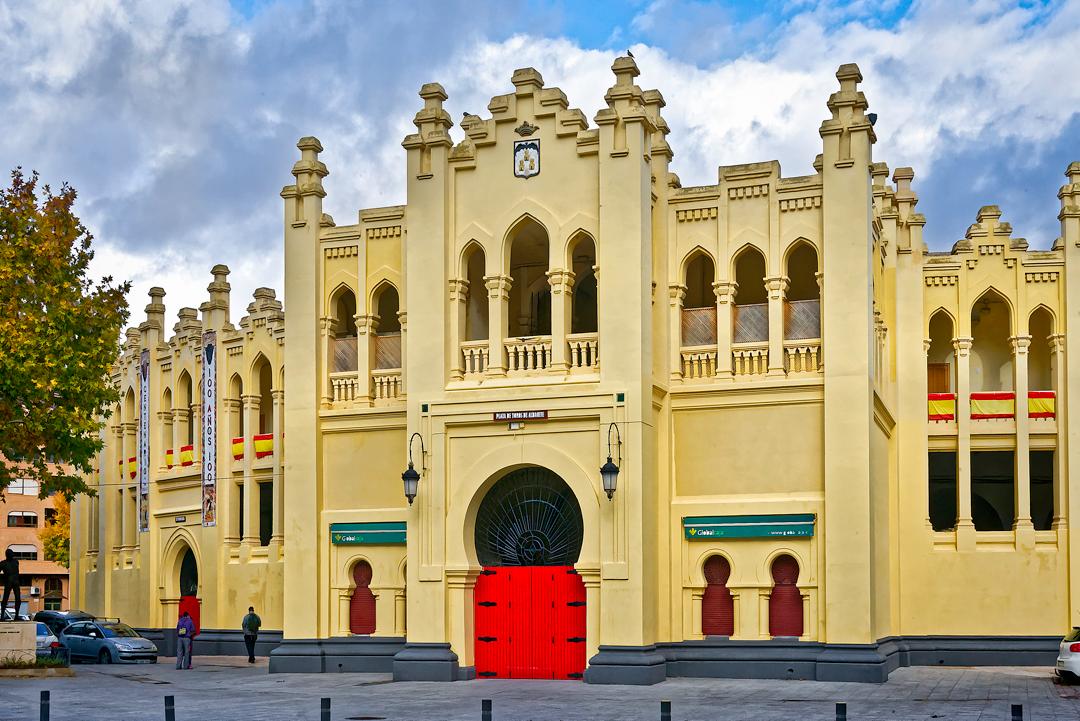
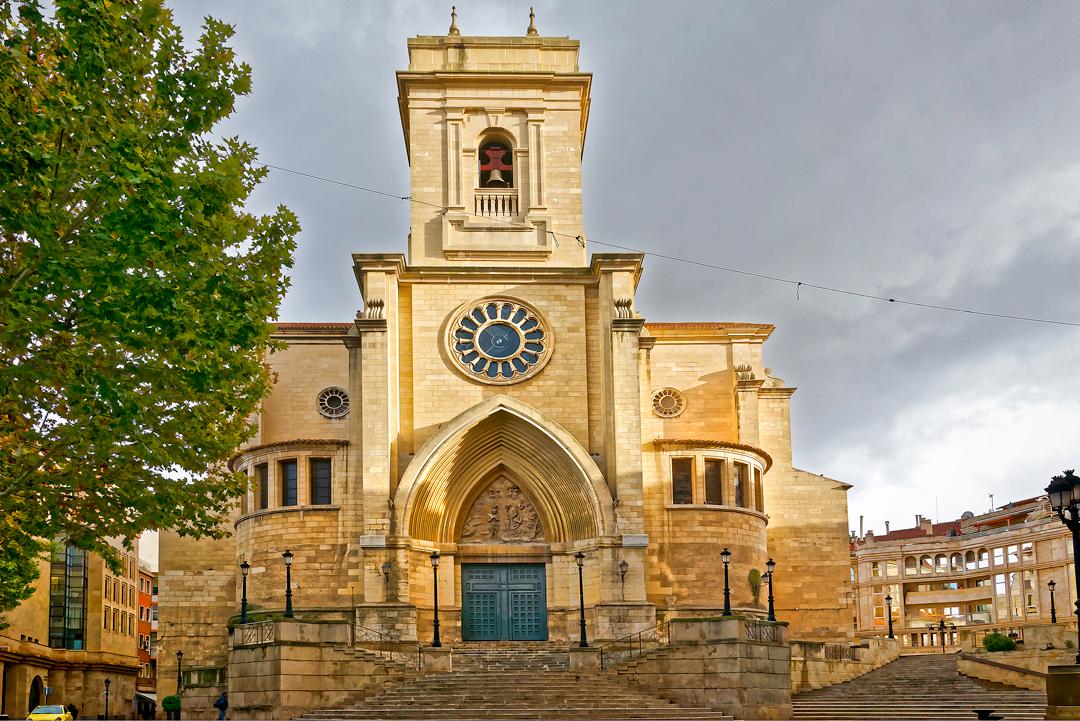
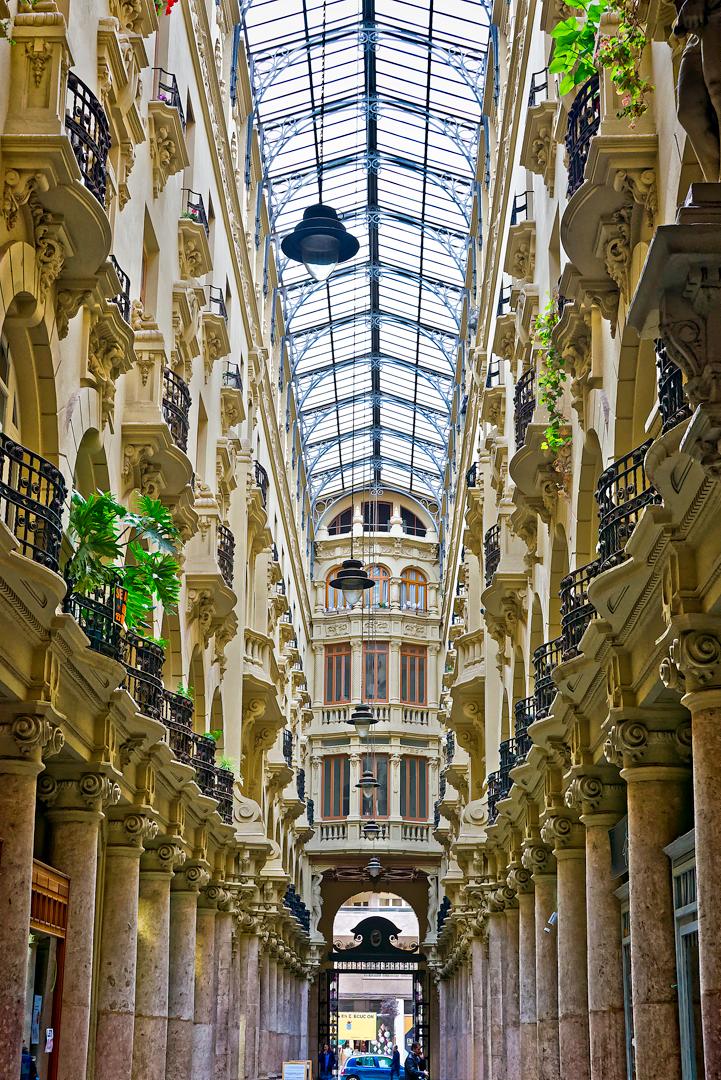
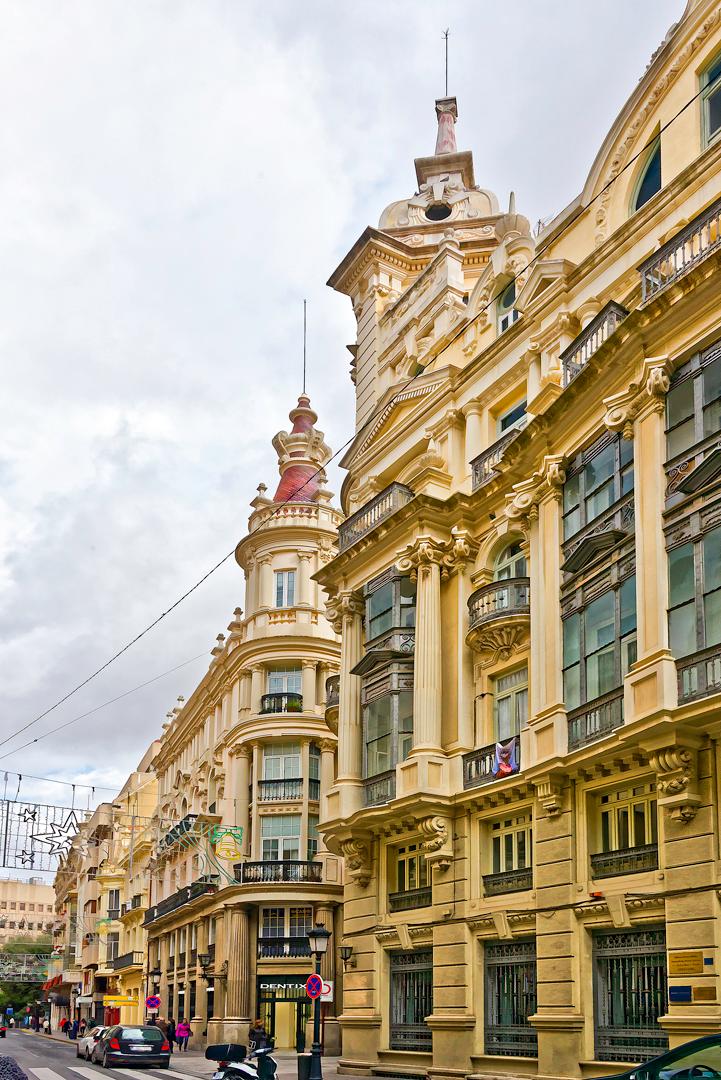
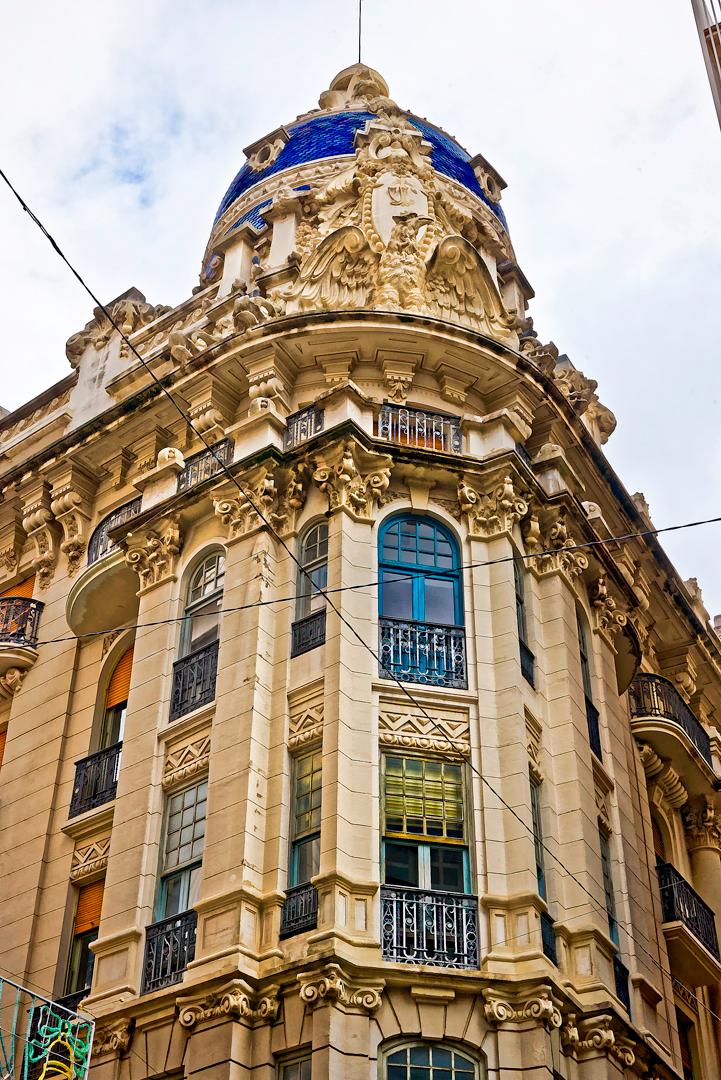
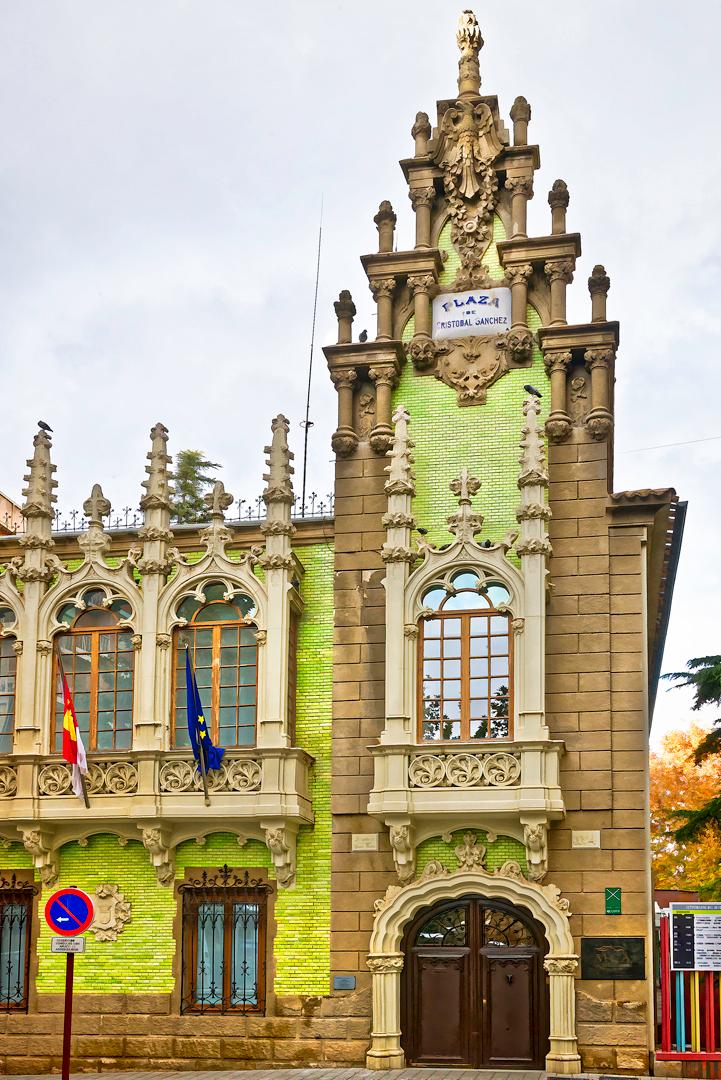
But Albacete, with a population of 175,000, is deader than a doornail compared to most other cities, even the smaller ones like Ubena and Baeza. Nothing in Albacete is open. Everything the tourist guide circled on our map was closed. Shops were battened down. Churches were locked. The bullfighting stadium was shuttered. The fairgrounds were gated.
|