|
Vintage Ventures - Spain 2017
November 30
Albarracin
| |
VINTAGE VENTURES: I write my travel journals to look back and remember our ventures. A secondary reason is to allow me to organize all my trip photos. I have thousands of photos. Organizing them into a cohesive story makes sense. | |
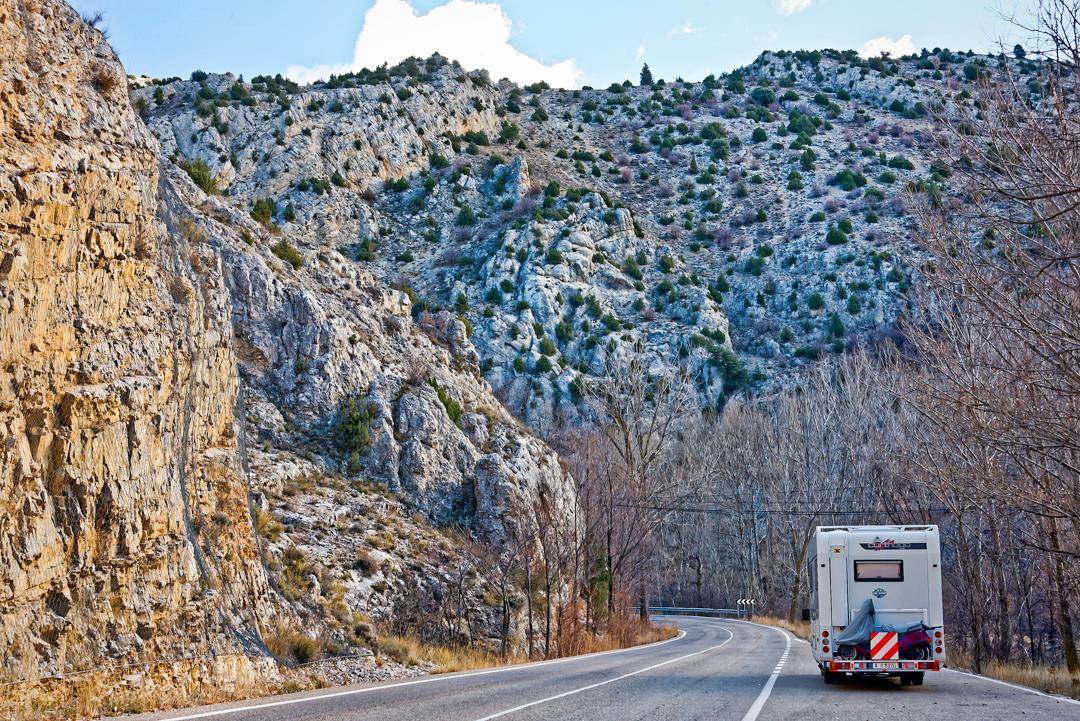
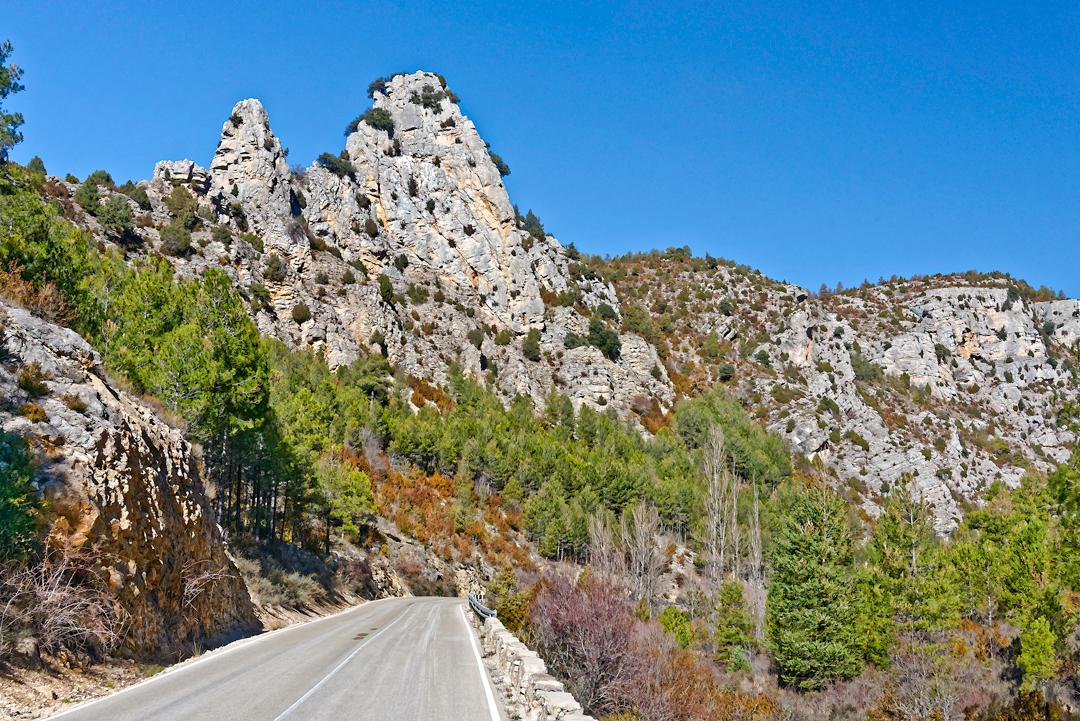
Driving through the rocky mountains towards the magical town of Albarracin. | |
|
Day 21, Thursday, November 30
ALBARRACIN
Burr! We woke up to the return of blue skies and bright sun but a very crispy 1.5 C (35 F). We quickly packed and took off for a 240-kilometer drive to Albarracin, billed as the most beautiful village in Spain. That turned out to be an understatement. When we drove into Albarracin, we drove into Heaven.
But first, the incredible drive. Heading northeast from Albacete, we saw huge flat fields all nicely plowed, waiting for spring planting. There seems to be a little light brown topsoil here with about 10% fewer rocks. Slowly we left the plains and entered into the darker reddish brown, slightly hillier plains interspersed with a smattering of large evergreen trees that naturally prune themselves into canopies of round balls. This is wine country. There is square after square of grapevine fields. Each square has rows of vines neatly tied to wire fencing. The squares are very neat and tidy, like the canopied ginseng fields in central Wisconsin.
About 70 kilometers north of Albacete, the agriculture ended, and we drove through an eerie scrub tree and rocky forest. It became hillier as we entered the foothills, leaving the plains behind. The short trees in this miniature forest are scrubby pines. It isn’t a dense forest, but the expanse of green is new. As the forest slowly grew taller and thicker, we realized that we were in the midst of a rare European phenomenon, a large expansive forest. Villages in this stretch are rare and tiny.
It is in this stretch where we encountered two of the most intelligently designed traffic circles ever constructed. The main highway went straight through; you didn’t have to enter the circle, so the main highway traffic didn’t have to slow down. Only if you wanted to turn onto the intersecting road (or roads) did you have to enter the circle, and, of course, the less traveled intersecting road could only use the circle. It was better than a traffic light at such an intersection, as traffic lights always uncannily turn red as soon as I approach. This is especially frustrating when the intersecting side road is empty. And it certainly was better than the normal roundabout slowing down all highway progress and confusing the hell out of you as you spin around looking for the correct way out of the circle. It got my endorsement. However, after encountering two of these engineering marvels in a row, we never saw them again.
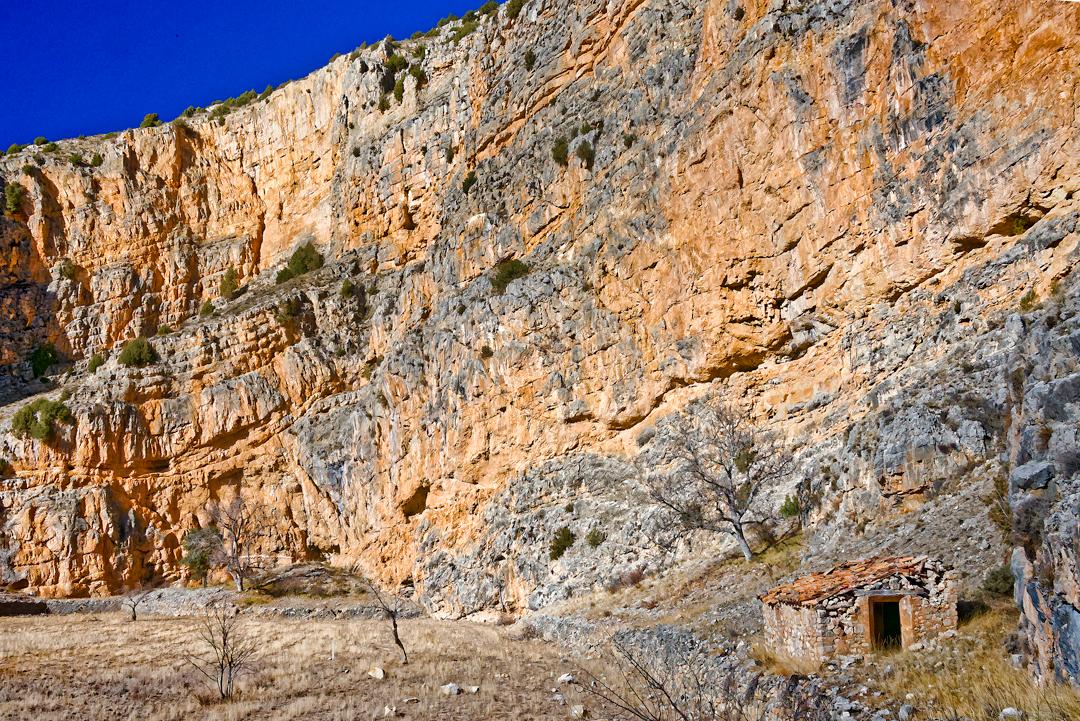
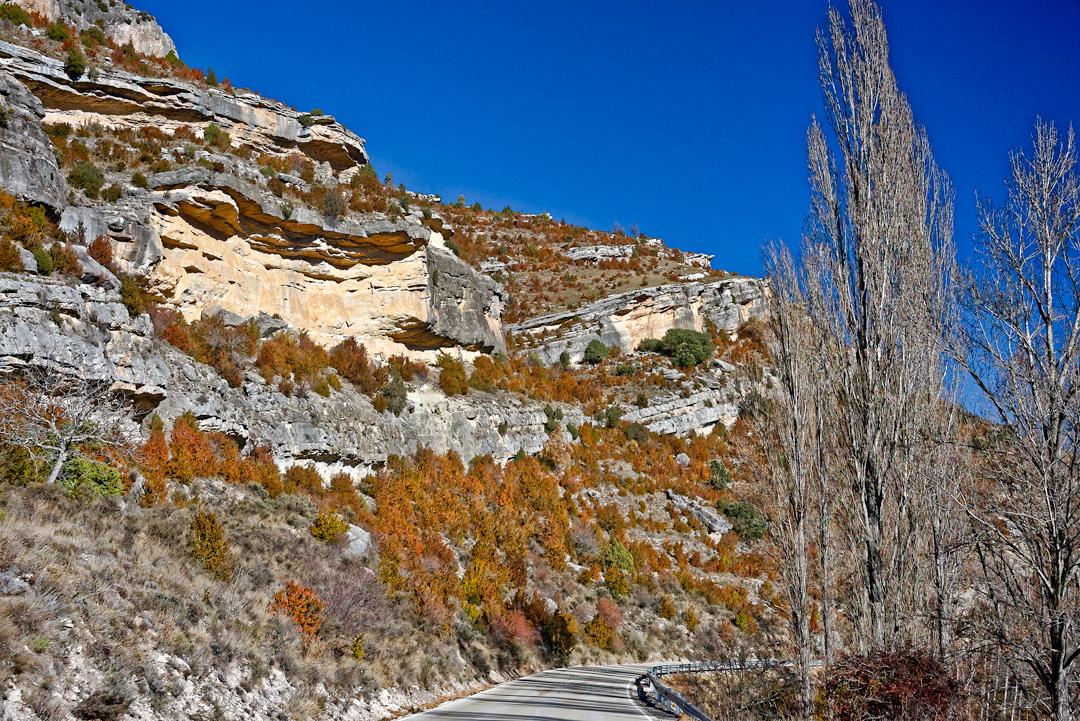
By the time we reached 80 kilometers from Albarracin, the foothills grew into low mountains. The area remained sparse but alternated between forest and scrub. The steep rocky faces became a pallet of deep burgundy with splashes of oranges, browns, greens, and yellows. Major sections of the route that Google Maps sent us were not listed on our detailed paper maps. That gave us cause for concern as we feared turning onto some gravel mountain goat path. To our delight, these phantom roads were brand new and in perfect shape.
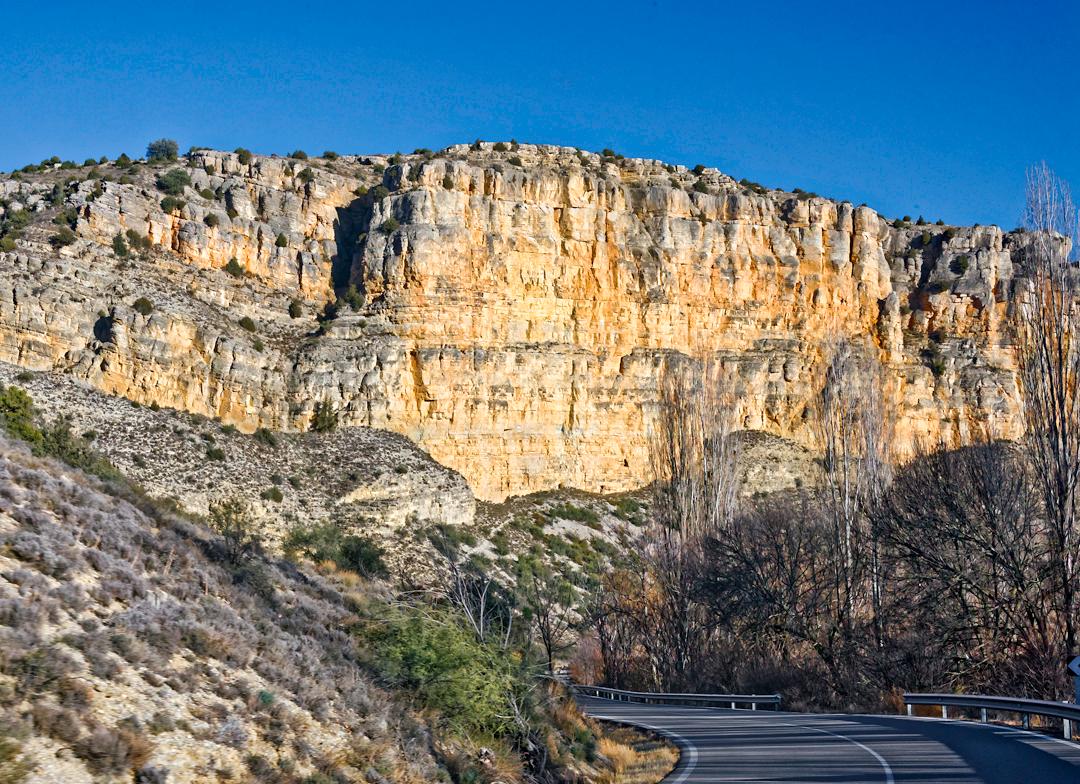
The closer we got to Albarracin, the taller the mountains grew and the more spectacular they became. The road crawled around sheer rock faces leaving us awestruck at every tight curve and switch back. These rugged multi-colored mountains, with their tall vertical walls of slate-like layers, tilted in all kinds of crazy angles, were as beautiful as any range we have ever seen anywhere – and that includes the Rockies, Appalachians, Ozarks, Alaskan Brooks Range, and the Alps. A fast-running crystal clear creek carved this whole deep canyon that the road was following. It must have taken several million years to accomplish this feat.
| 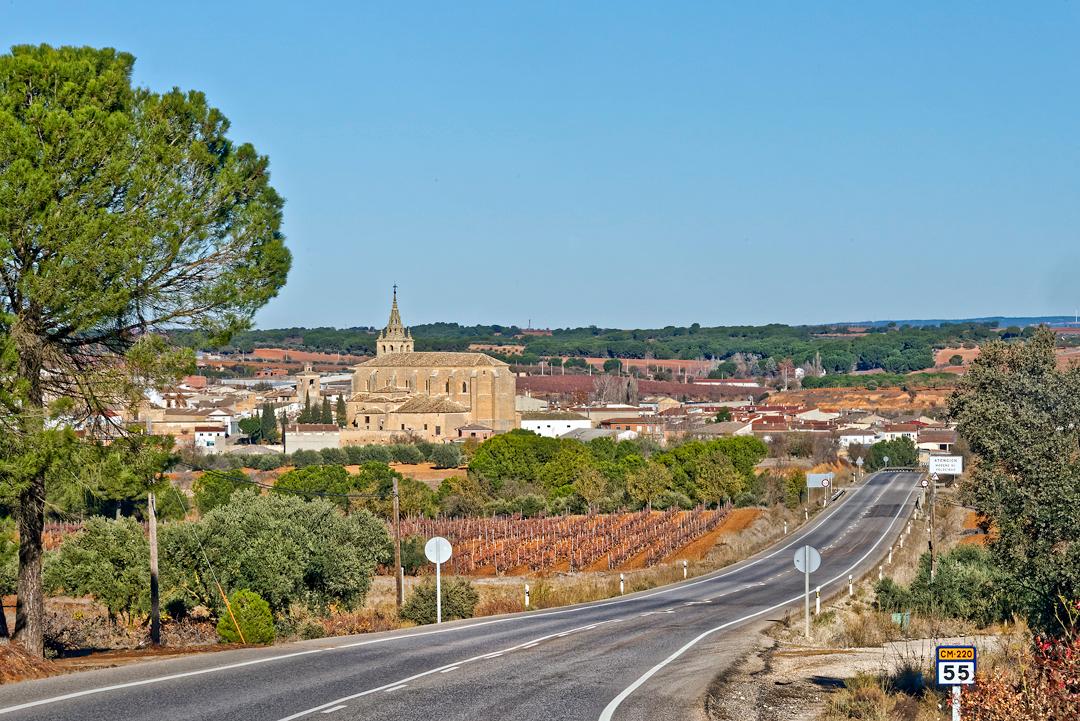 | We drove through wine country. | Then the mountains became rugged and parched. | The rocky layers curved and arched. | |
The miniature scrub pine forest. | |
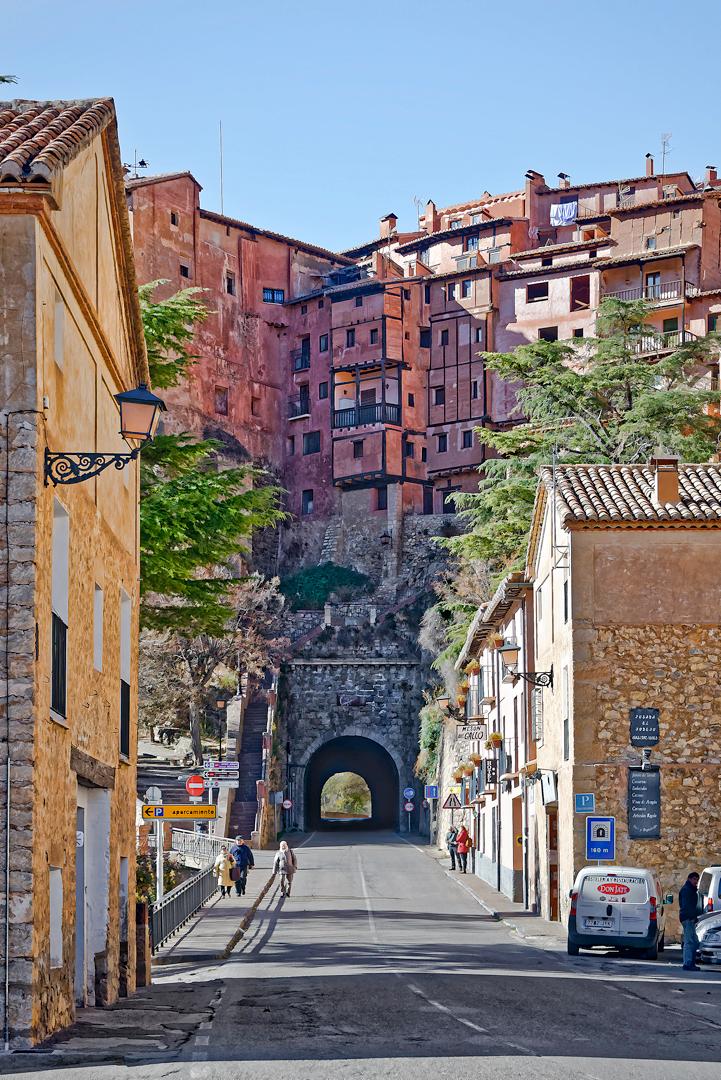
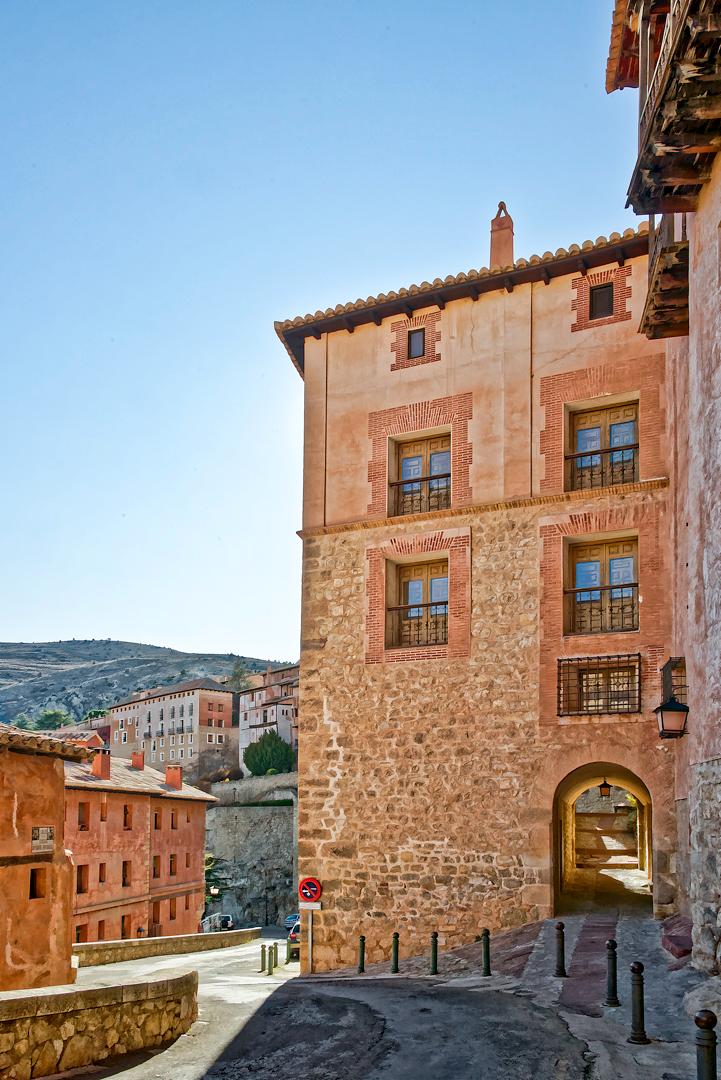
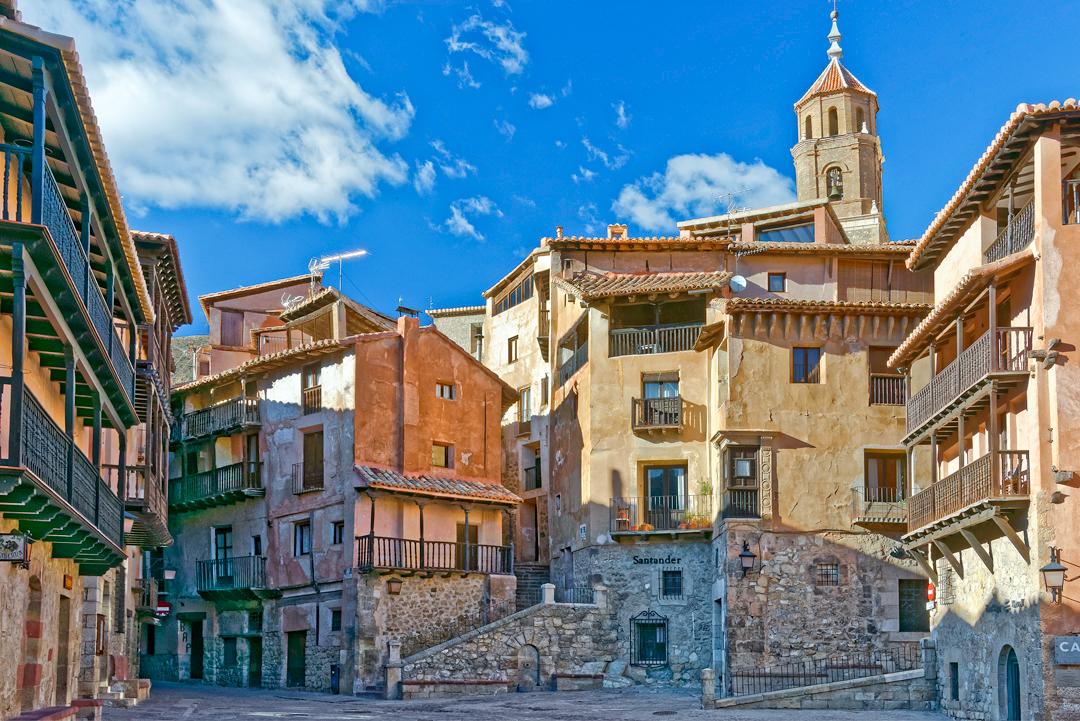
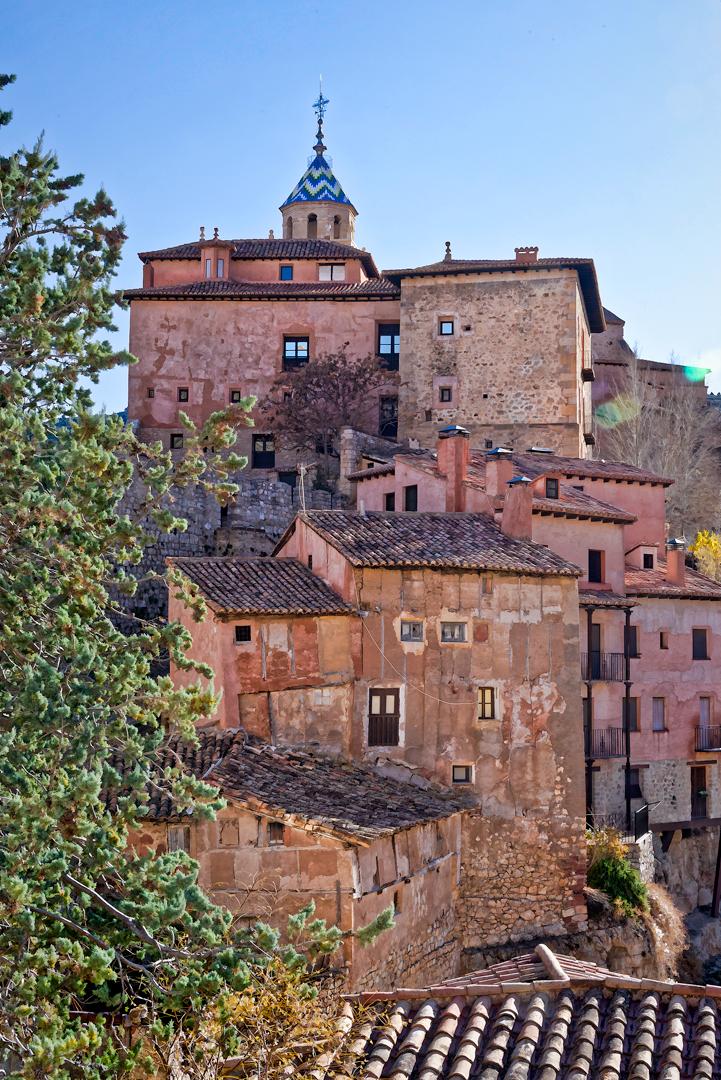
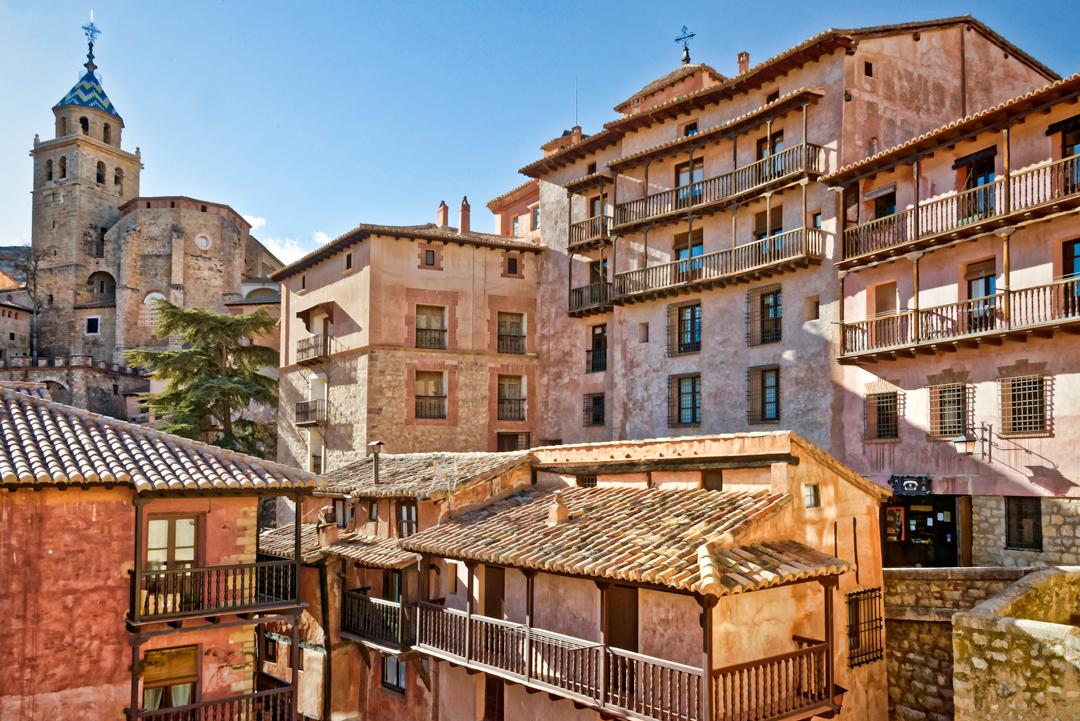
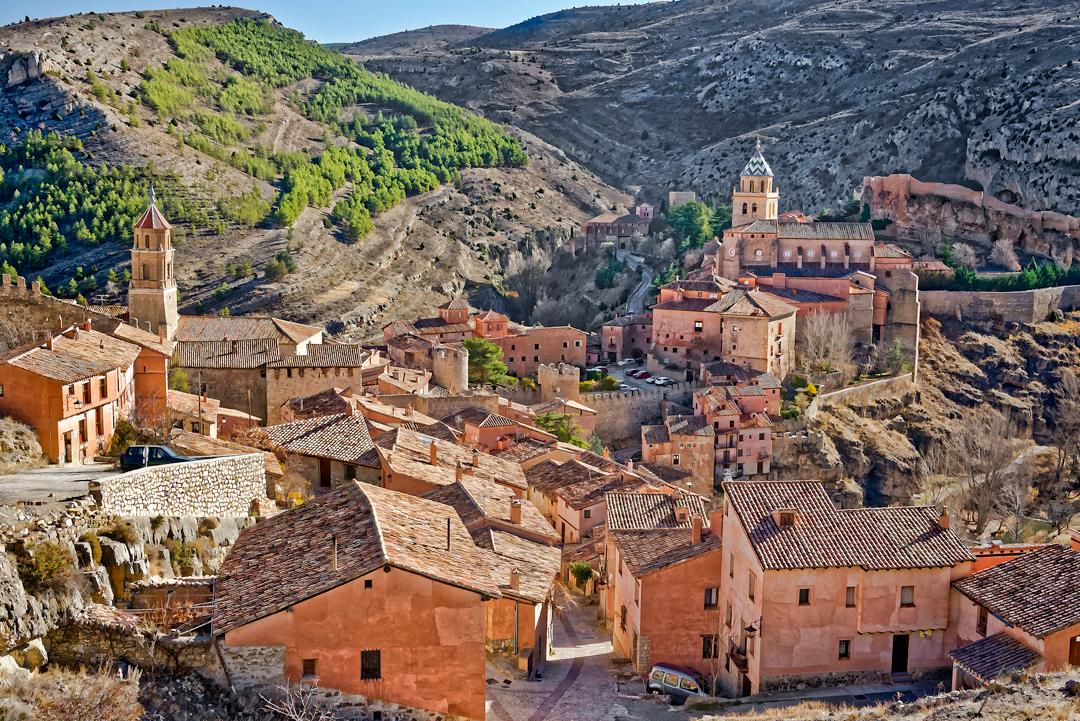
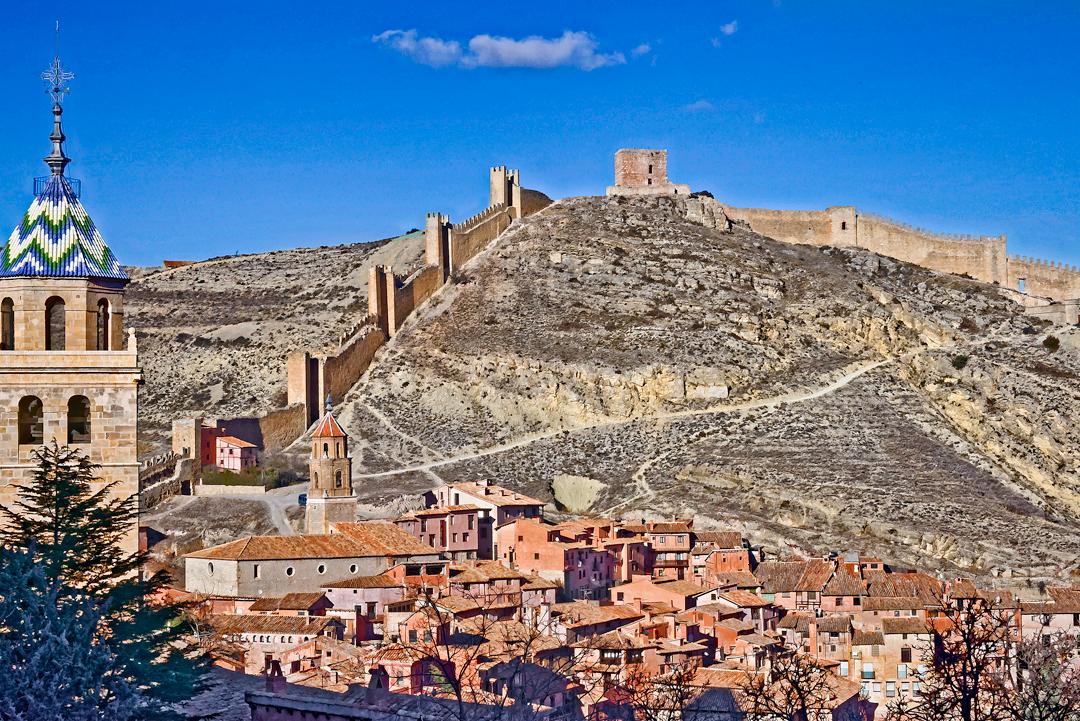
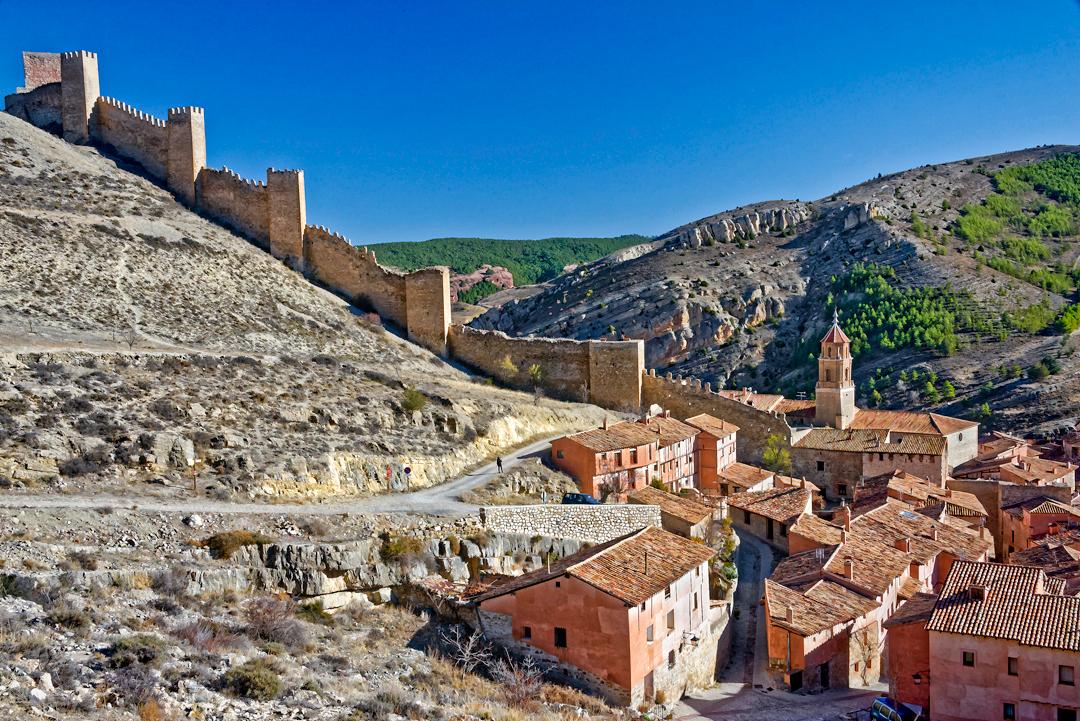
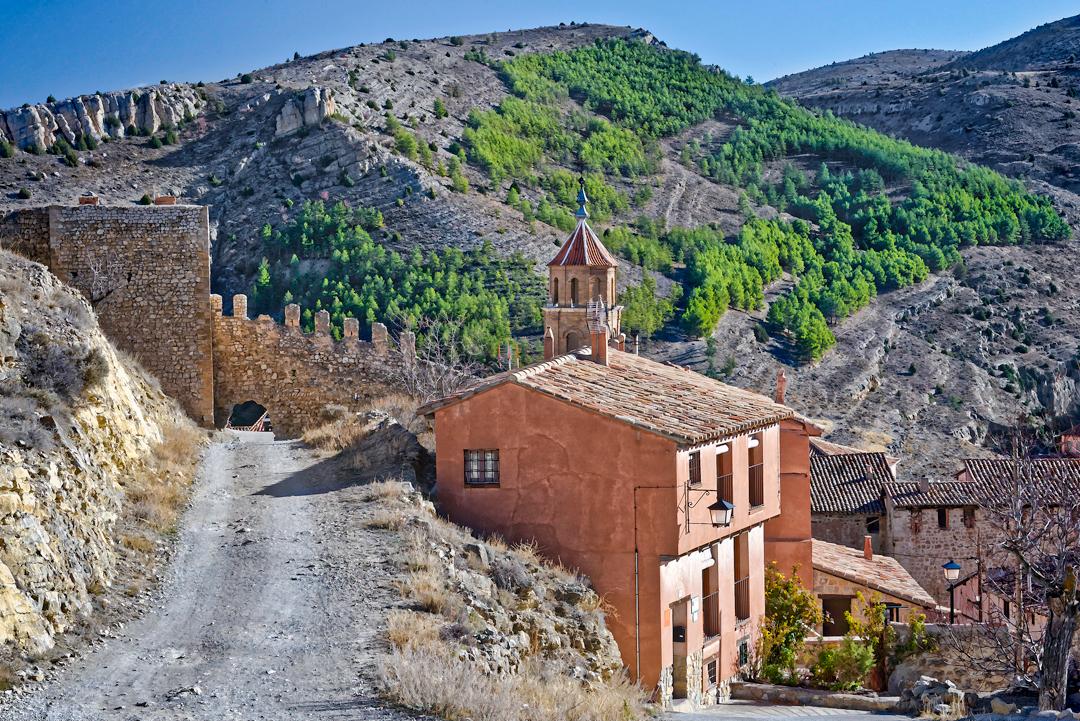
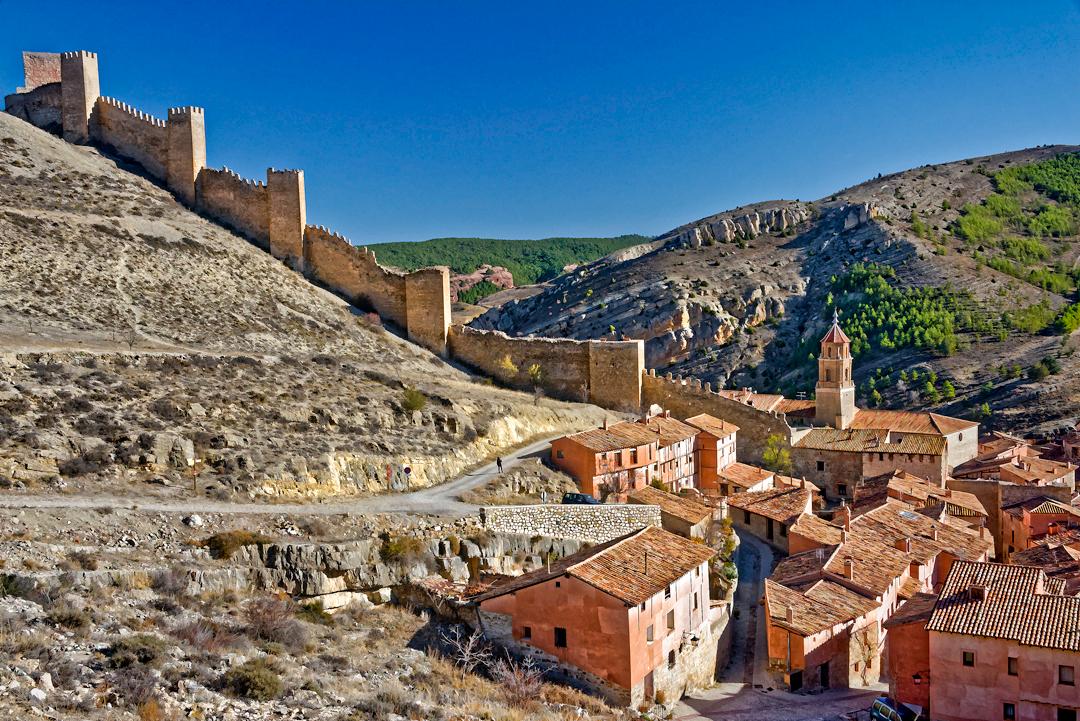
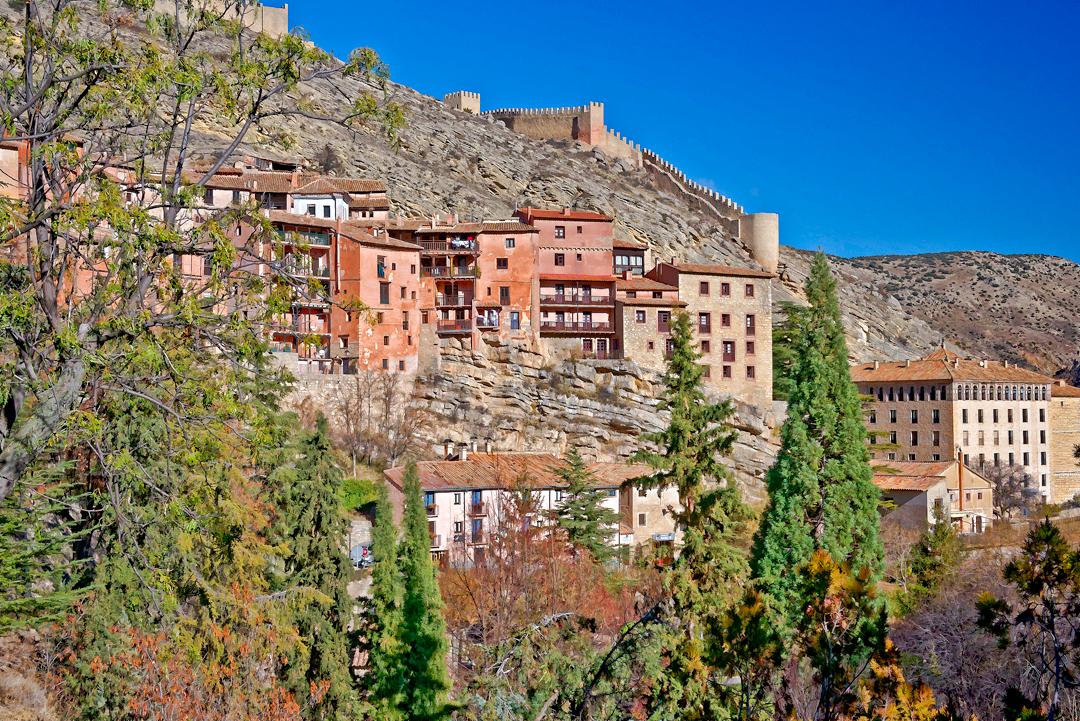
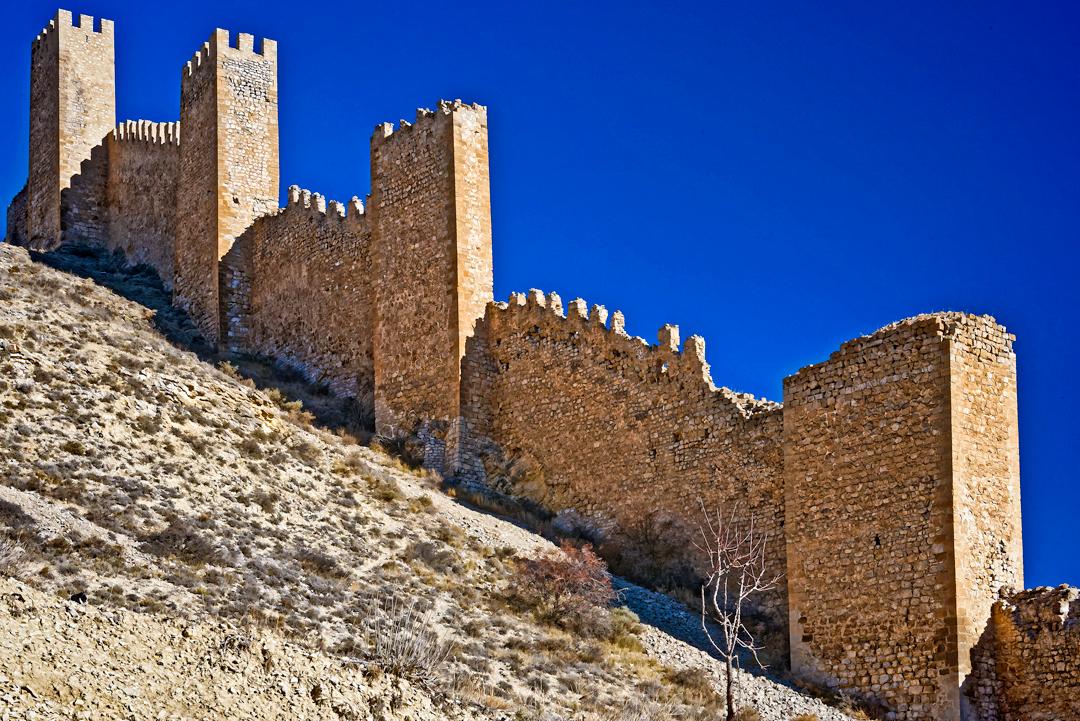
Then we approached Albarracin. It is an ancient rock village attached to the side of one of those colorful mountain cliffs. Running above the village over the top of the mountain is a long stonewall looking much like the Great Wall of China. The road entered at the foot of the village through a tunnel. When we emerged from the tunnel, we marveled at the village constructed into the side of the cliff. Everything; buildings, houses, walls, walkways, stairs, and streets, are all stone blending in nicely with the mountains, probably because the mountain rock was used as the primary building material – duh. | We entered Albarracine through the tunnel. | 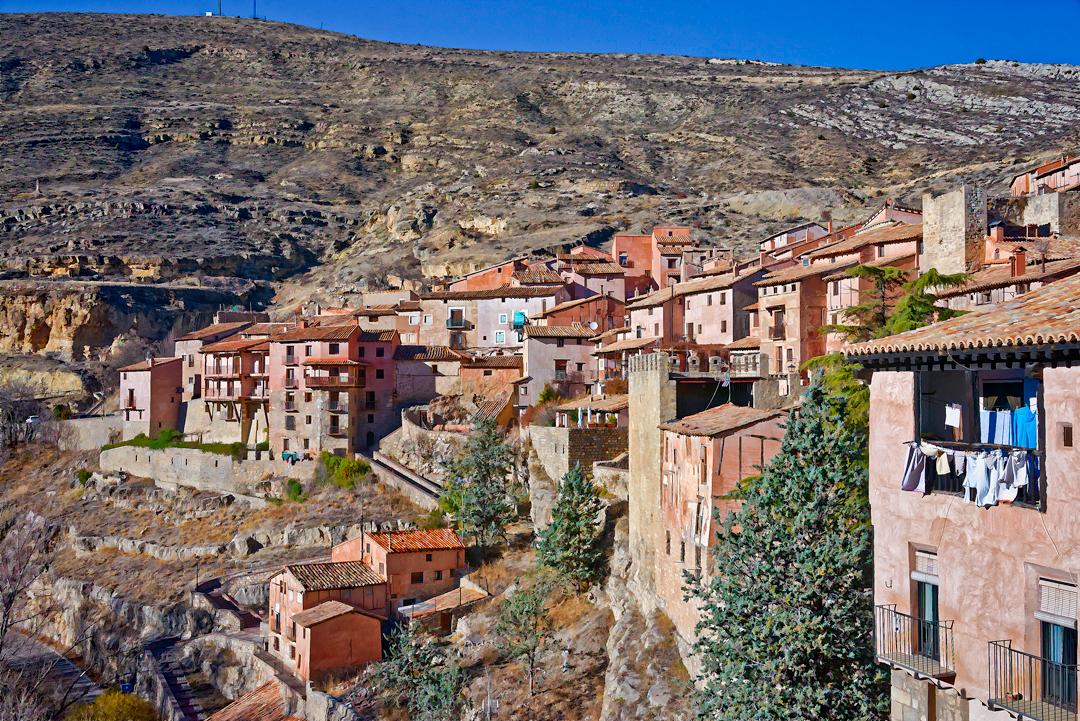 | 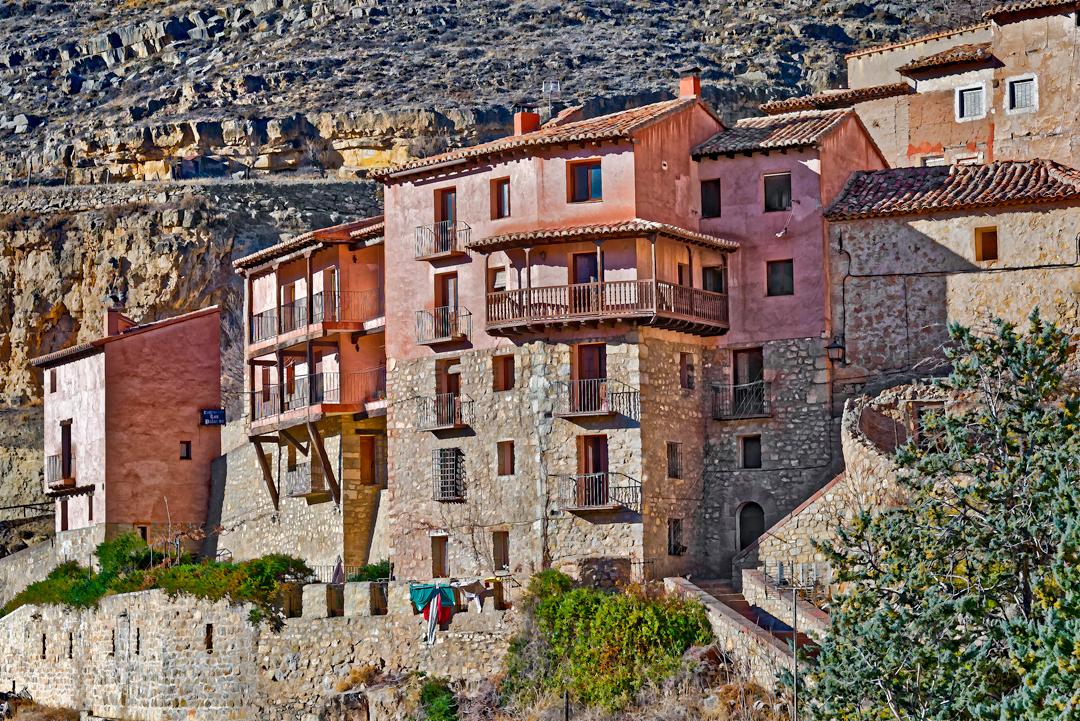 | |
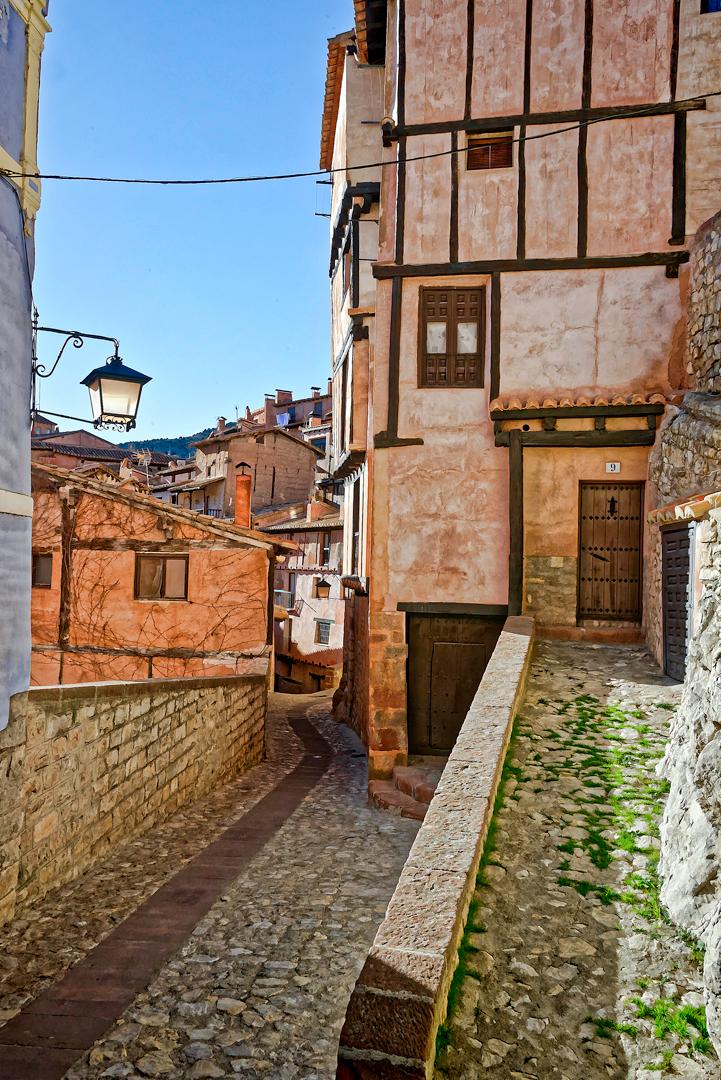
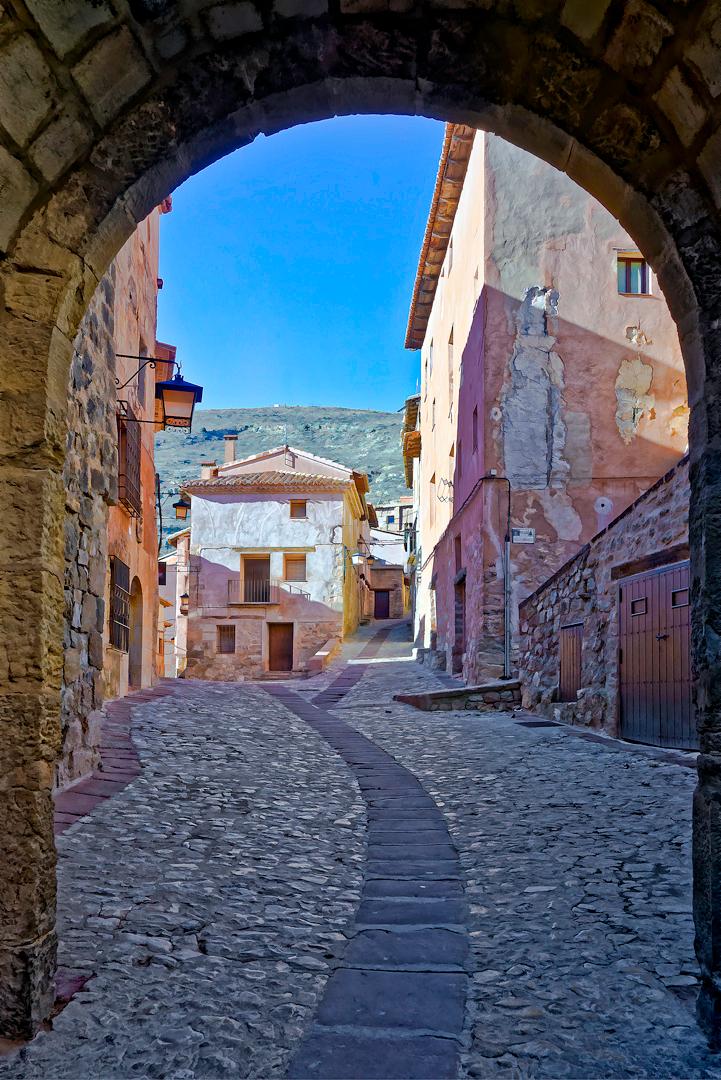
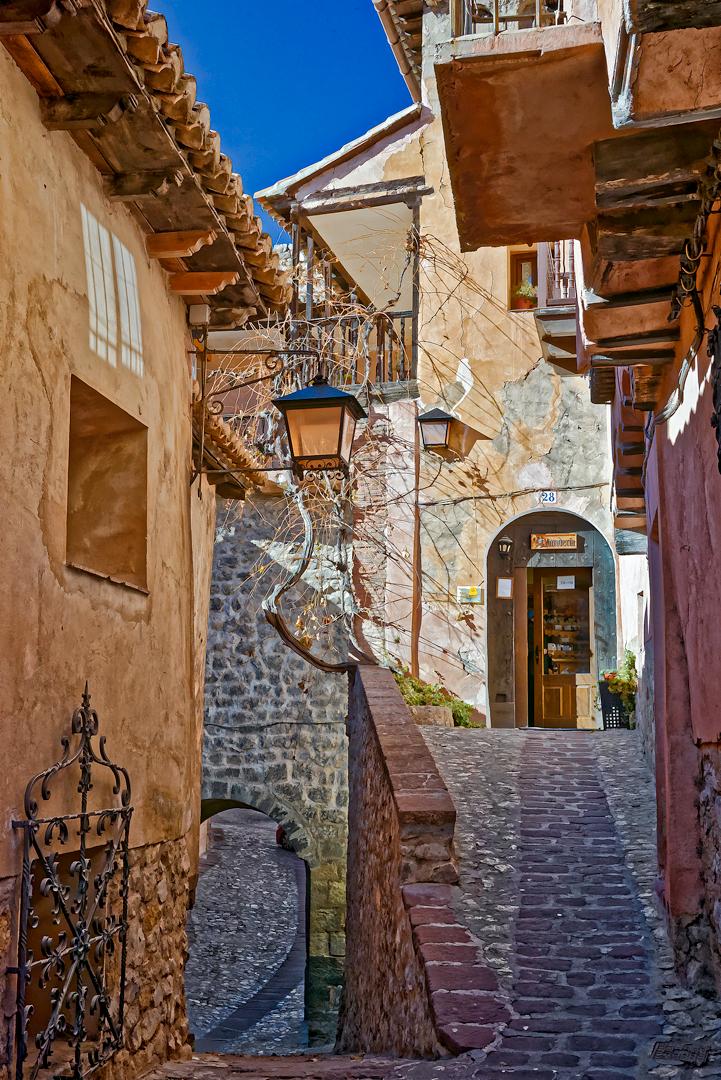
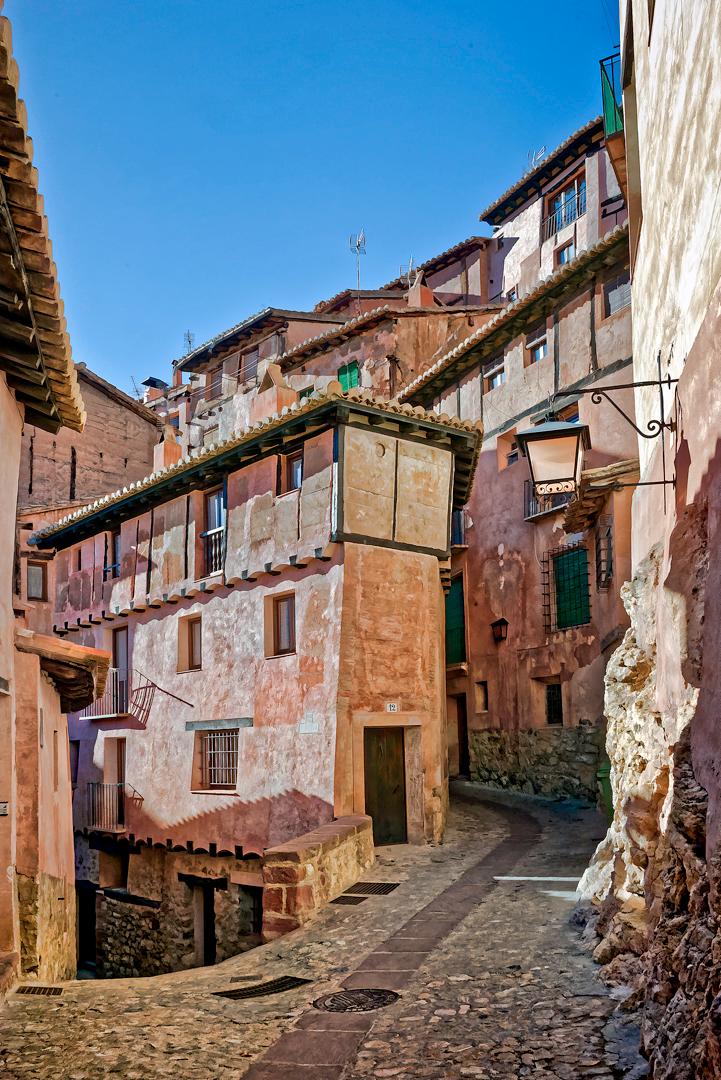
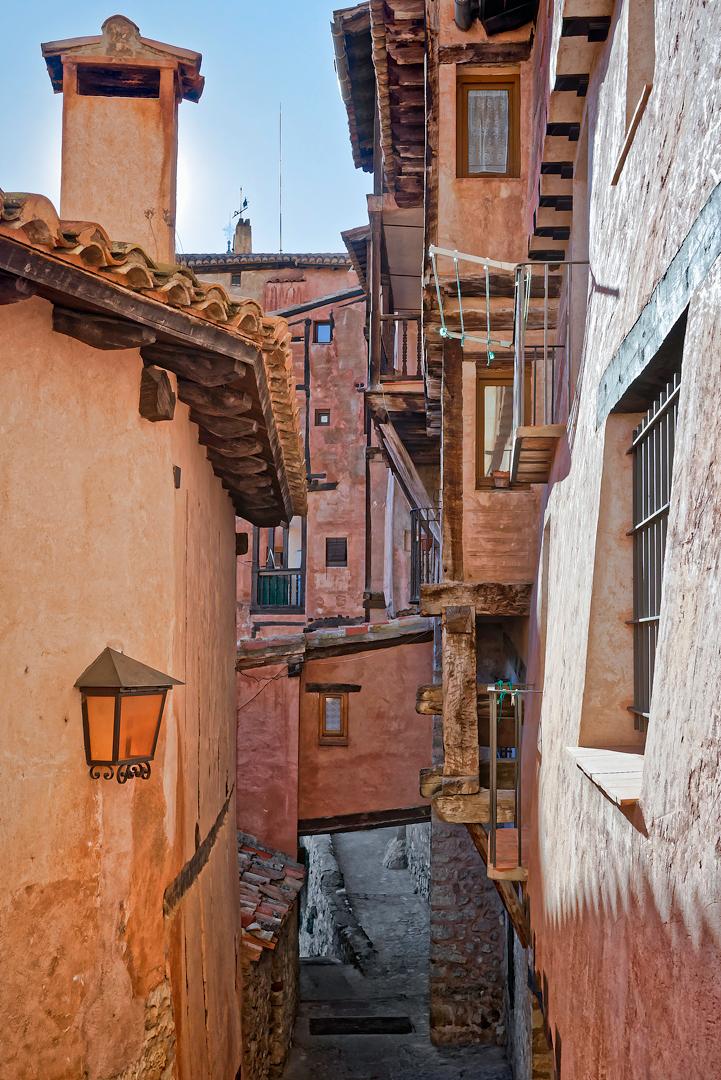
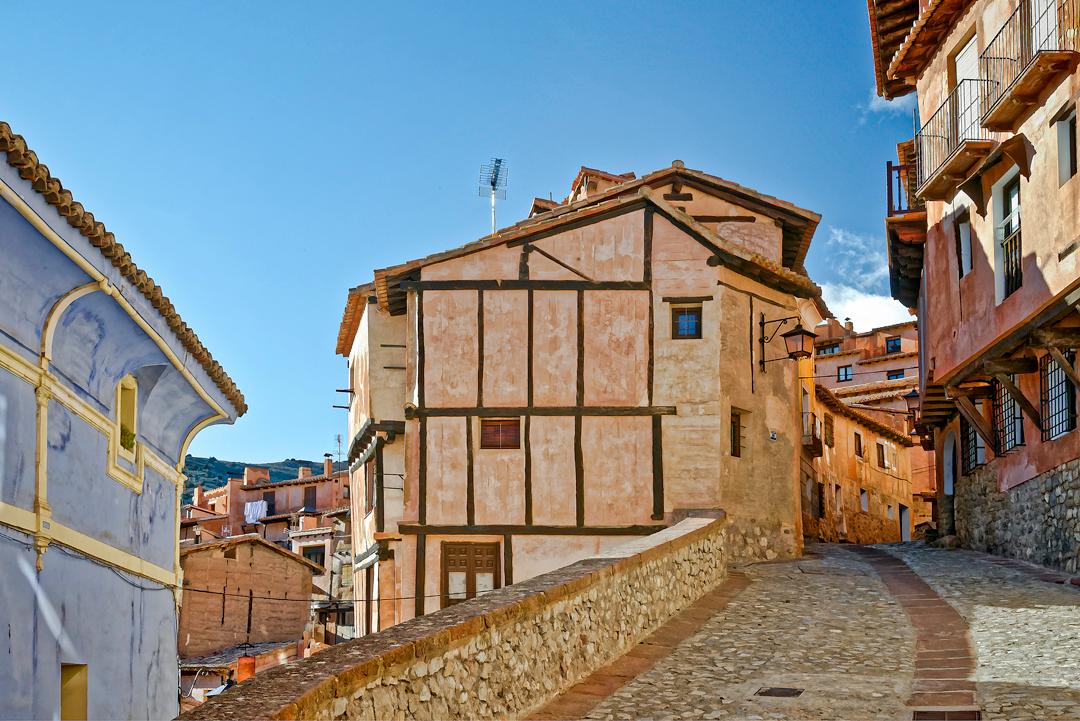
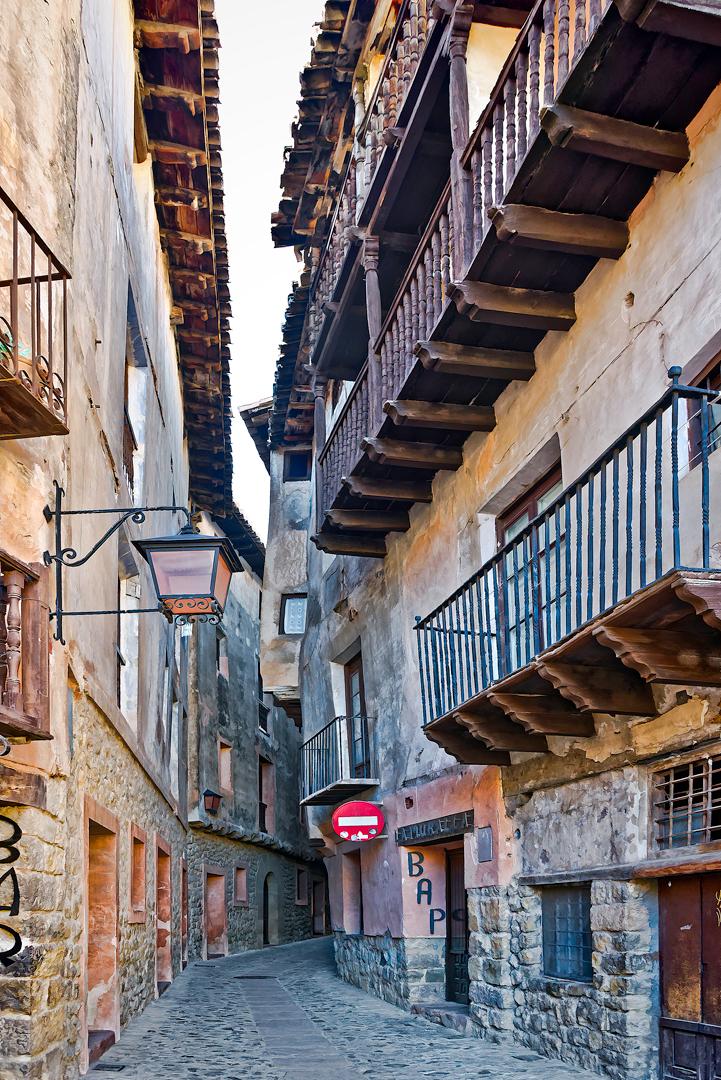
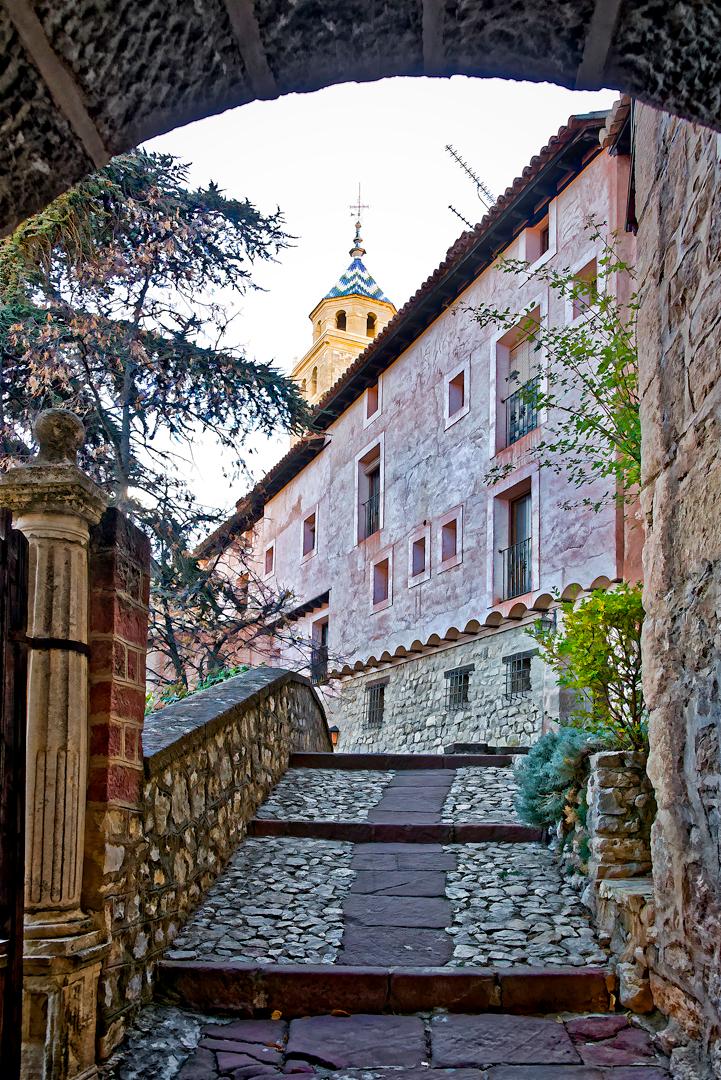
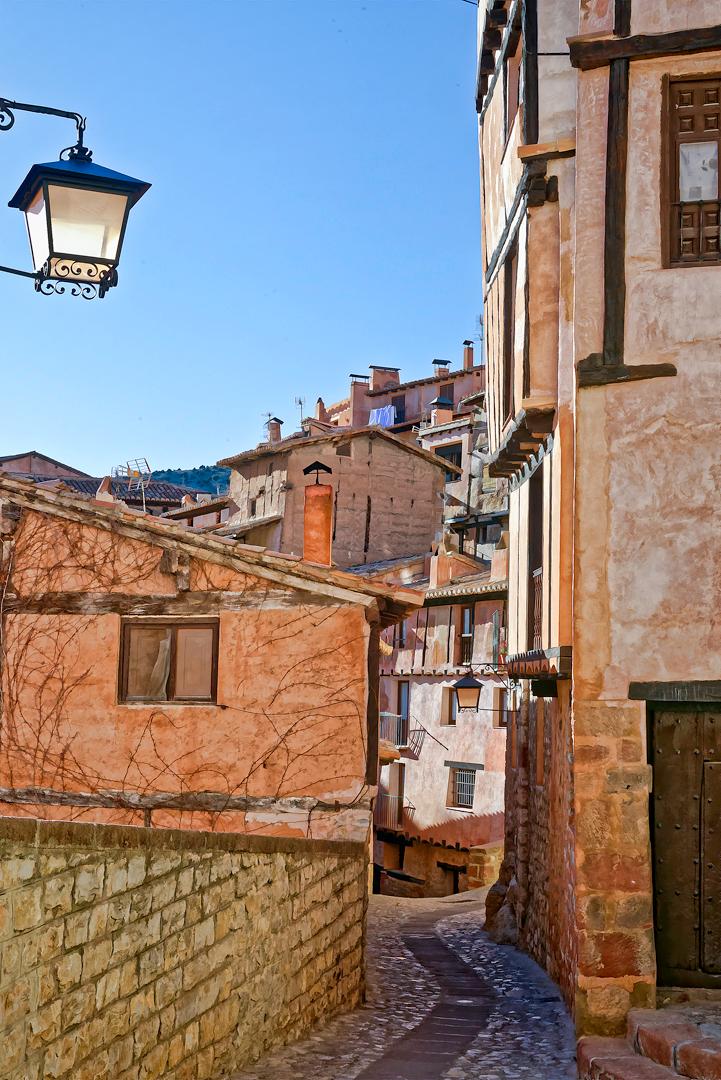
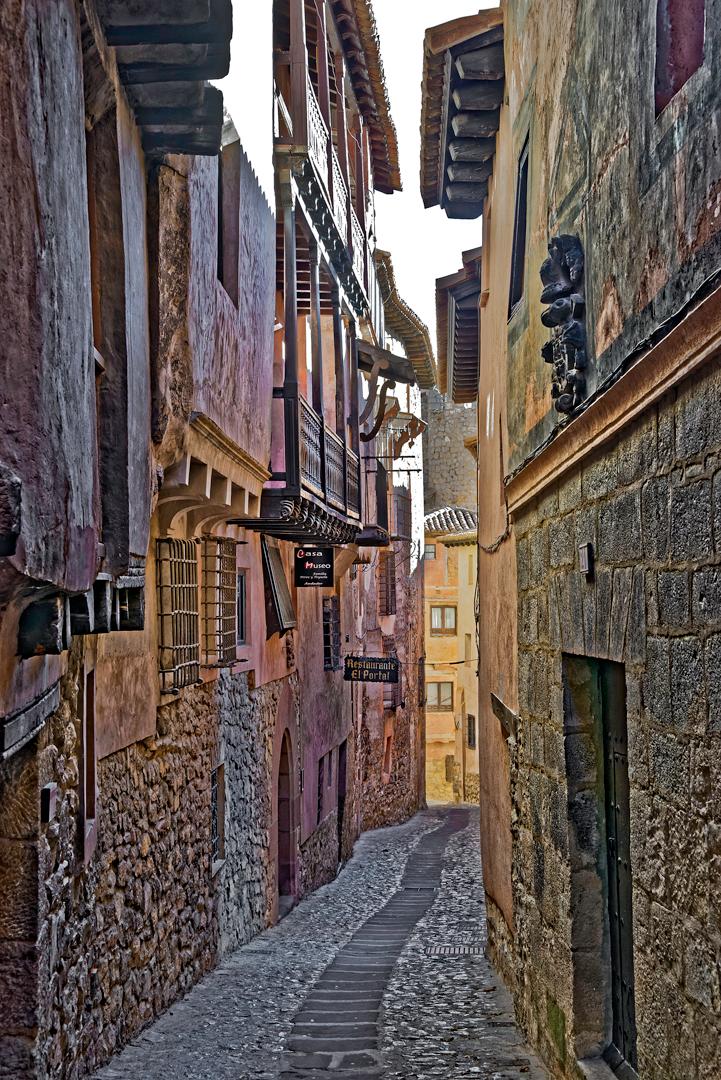
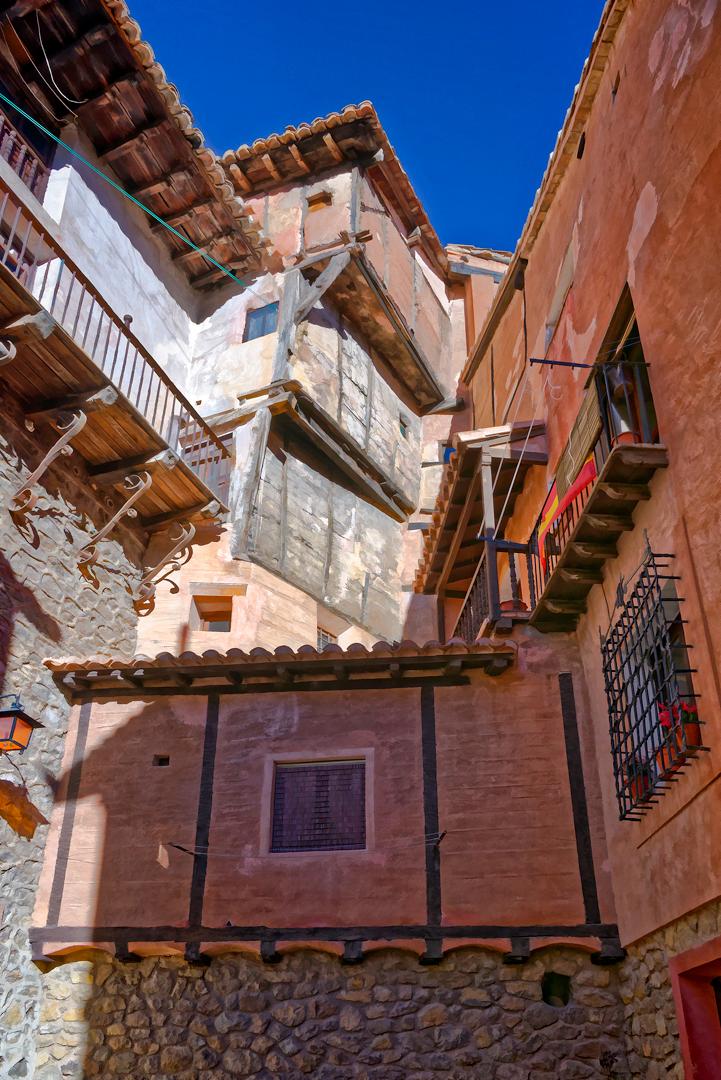
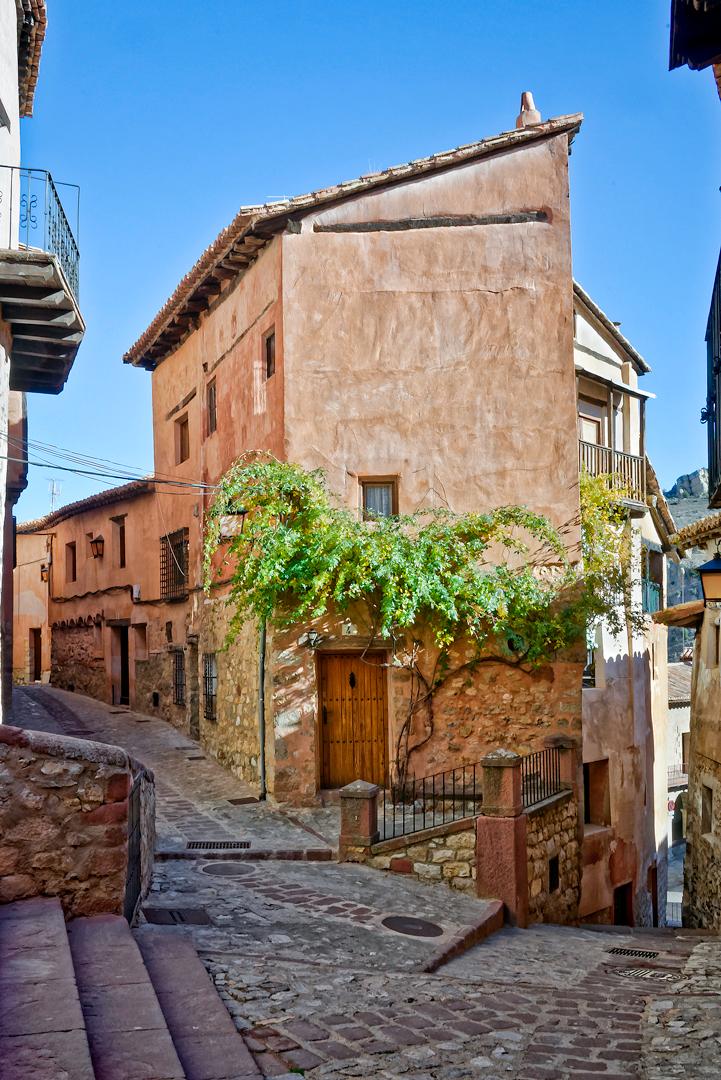
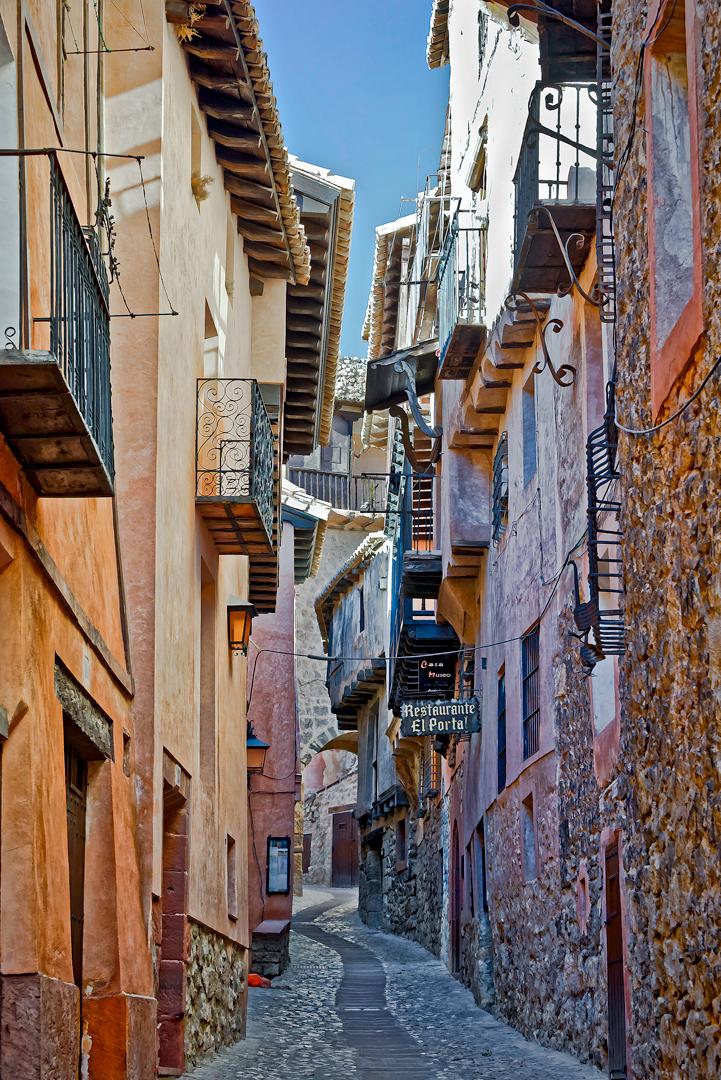
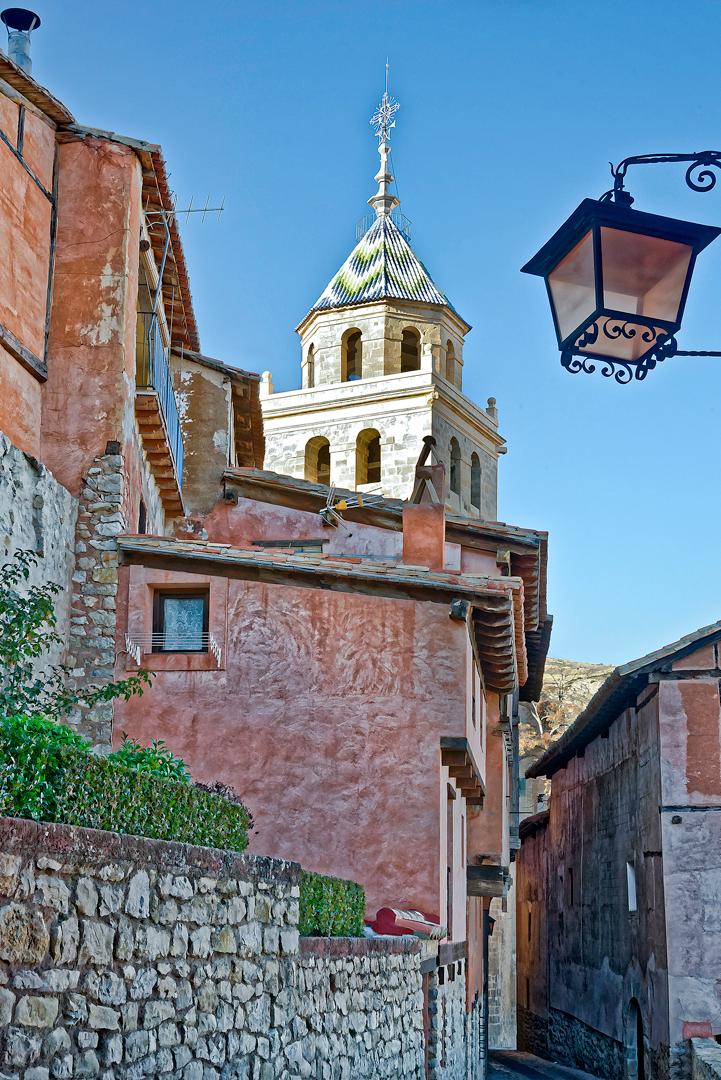
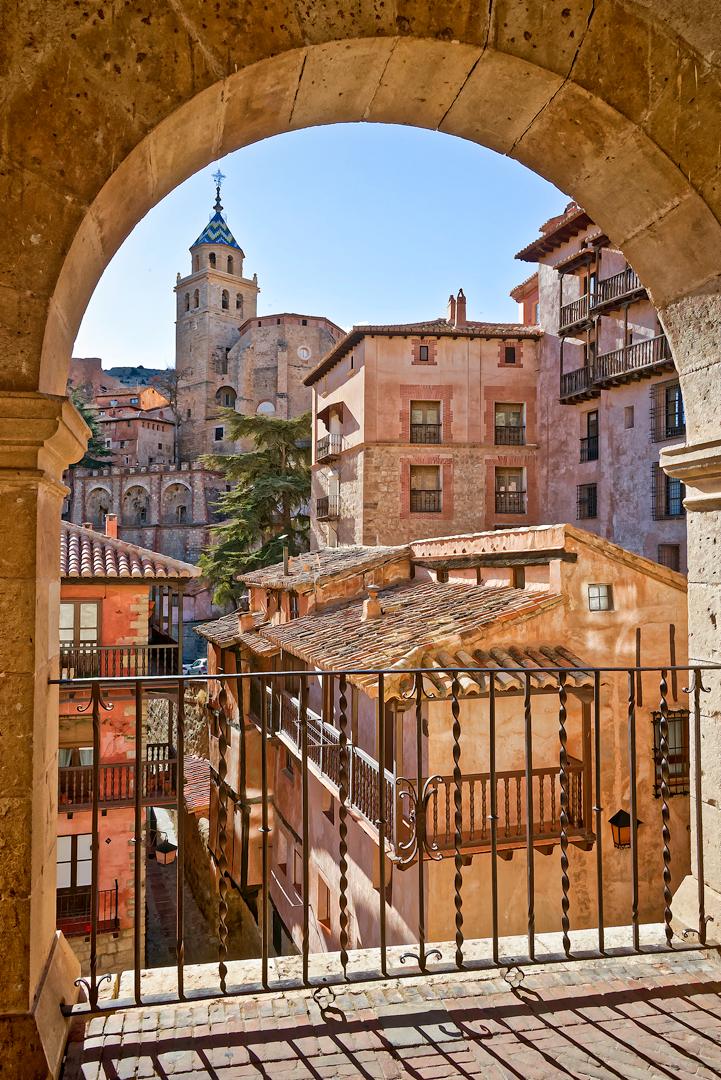
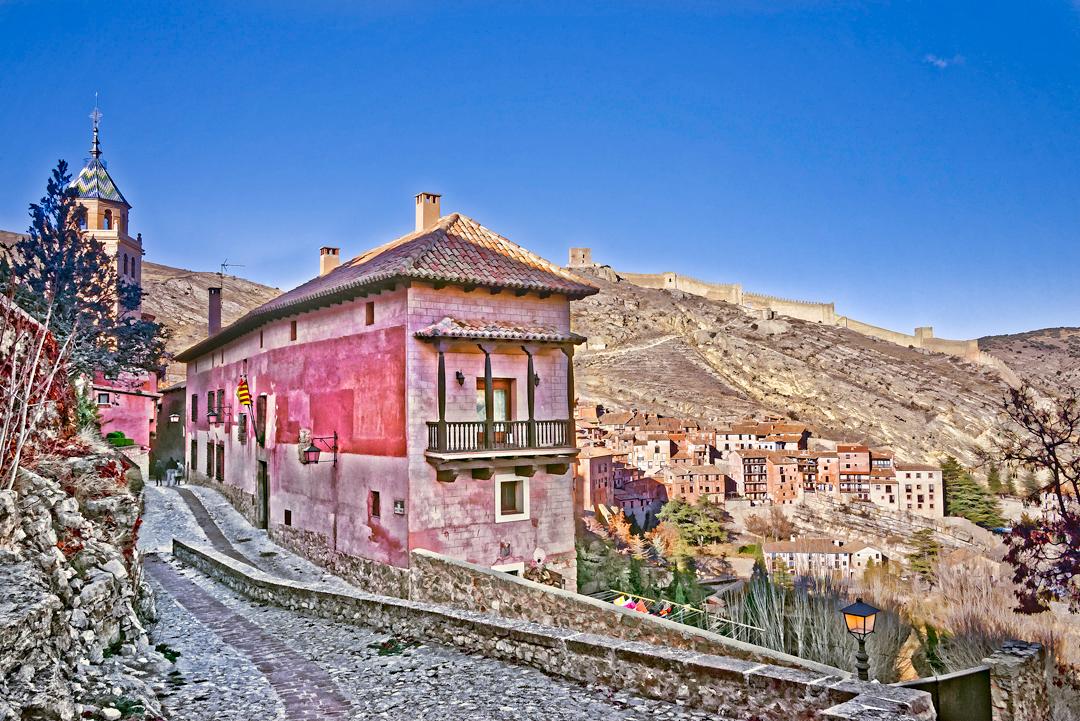
he whole village, not just the village center, is ancient. It is a magical medieval time warp. Streets, excuse me, alleyways, zigzagged and switchbacked as they climbed the mountain, snaking between, around, and through beautiful stone buildings, passages, and archways. It was eye-candy everywhere we looked - it was a quaint shop, hotel, bar, a cathedral steeple, a dark narrow passage, steps twisting to higher levels, and vistas of the mountains to die for. Albarricin takes the prize for the narrowest alleys, and that’s saying something. Many were less than shoulder wide, and the buildings lining the alley seemed to close in even more as they rose up, nearly meeting at their roofline. These long twisting tunnels have never seen sunlight.
We arrived at 2 pm, just when most of the shops were closing, leaving the village all but dead and abandoned. This was both good and bad. The museums and shops were closed, which was sad, but it left us completely alone to roam, explore, and wander every cranny of our own private magical world. Like every other ancient city center that we have wandered, the exterior was all middle ages, but the interiors of the shops, hotels, bars, restaurants, and the tiny glimpses we got of homes and apartments were all 'classy'. Albarracin is one of those magnificent jewels tucked away in the back of a secret drawer that you must peek at from time to time. My advice to the traveler to Spain is, do not miss the magic of Albarracin.
| 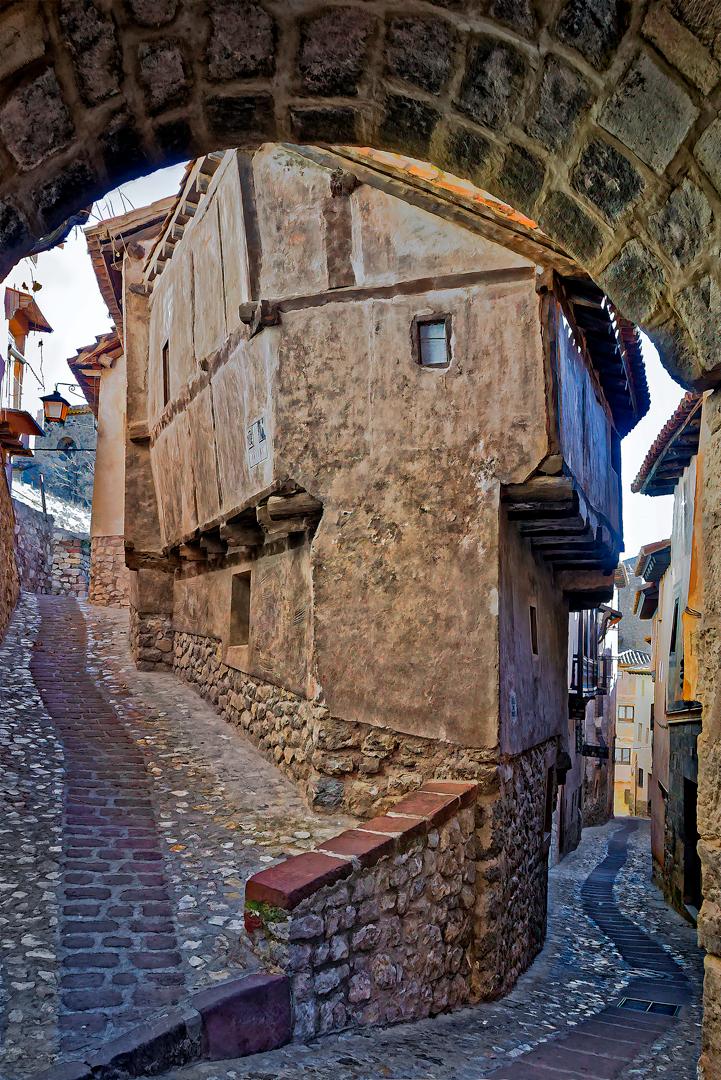 | Albarracin featured stone buildings and very narrow streets, giving the town a medieval feeling. | |
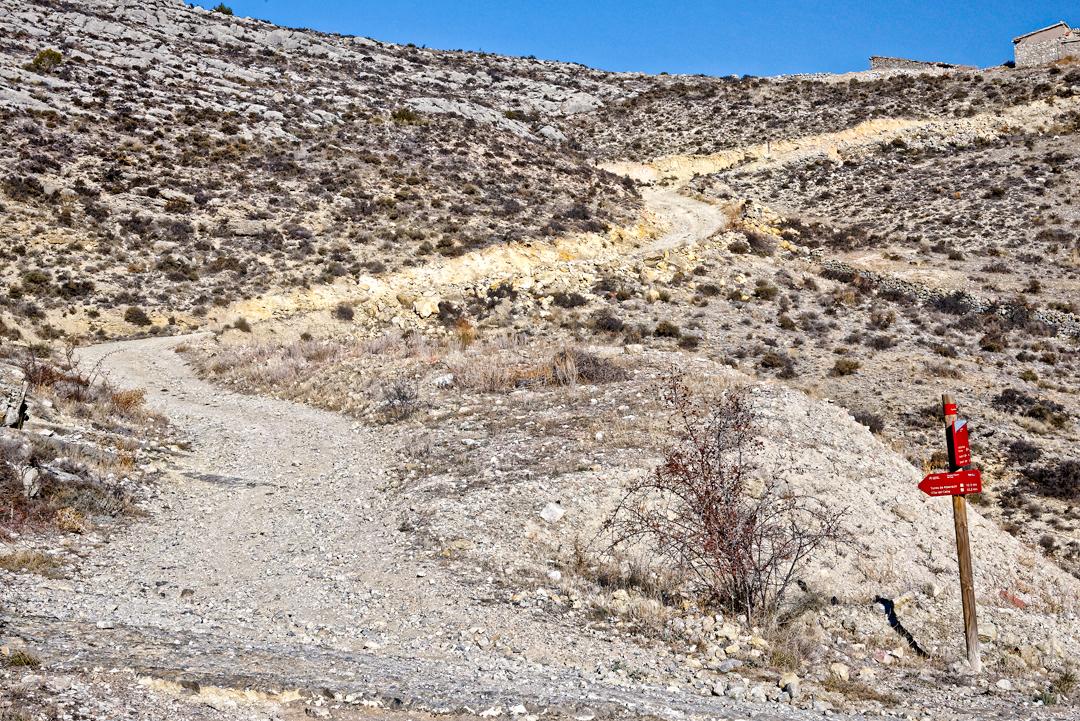
The maze of winding skinny streets was confusing but delightful. | Eventually, we walked up a gravel road to an overlook of the town. The protective wall became a prominent feature. | This rugged gravel road actually went to other little towns. Notice the road signs pointing the way. I couldn't convince Heinrich to drive the RV up this road. | 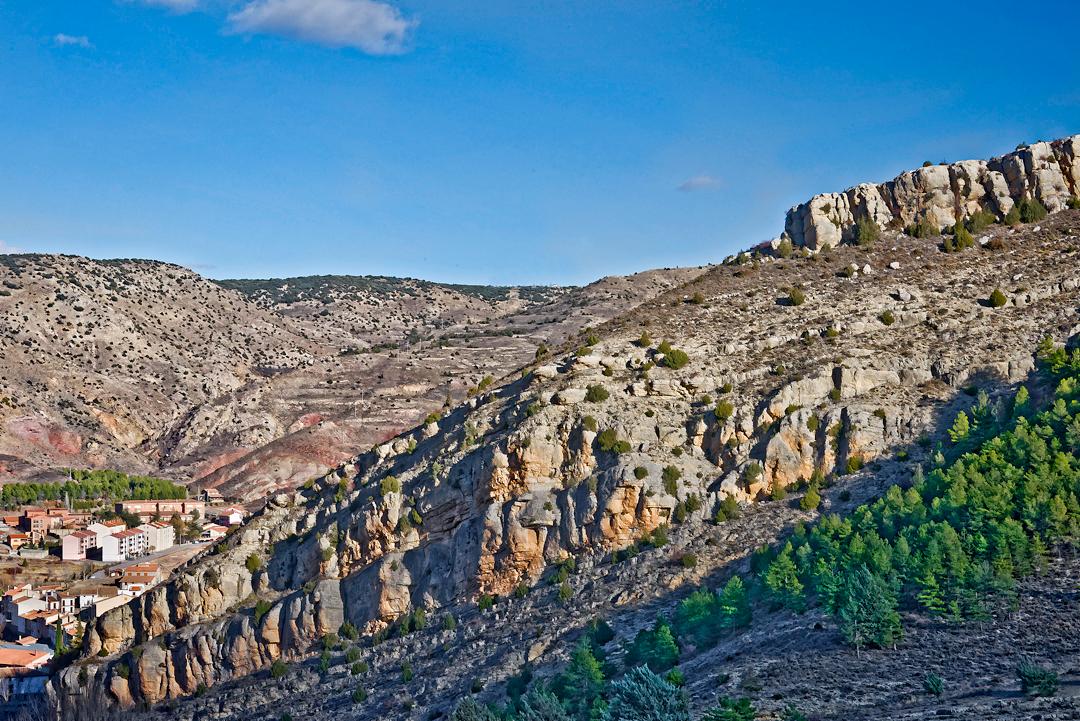 | |
Alas, it was time to move on as the sun threatened to sneak behind the mountain peaks. The 40-kilometer drive to the city of Teruel continued through the twisting delicious valley. As we neared Teruel, the rugged mountain valley spilled out onto a flat plain. We encountered the modern light-industrial park area of Teruel and what appeared to be an airline 'bone-yard'. There were acres of 747s with many recognizable European airline logos just sitting.
Google Maps flawlessly directed us to the RV parking spot. As winter approaches, and as we stay inland away from the more visited Mediterranean coast, it is difficult to find commercial RV parks. The cities and towns provide a nice substitute. The last three nights, we boondocked in town-provided RV spots. These are free parking lots on the outskirts of town with about a dozen or so spots reserved for RVs. There were no showers or electricity hookups, but most provided an RV dump station and clean water. With our recharging while driving and Heinrich’s solar panels, the RV ‘house’ batteries have remained full, so electricity was not a problem. We have kept the grey and black water tanks empty, and the clean water tank topped off every day with the provided service. The parking is free, and parking spots are usually right next to a bus stop for easy access to town.
Finding some of these RV parking places is like looking for the proverbial needle in a haystack. We need both Google Maps and Garmin GPS plus paper map backups. The Garmin GPS is useful because it accepts GPS coordinates, and Diane found the coordinates for a lot of the places we wanted to go to. Unfortunately, Garmin has a tendency to avoid city bypasses and routed us through towns and cities; even on service roads along the sides of highways. We speculated that Garmin must get a kickback from the merchants. Going through the downtowns would be picturesque, of course; however, it does slow you way down if you are trying to make good time. But worse, many downtown streets are extremely narrow, providing for white-knuckle RV driving.
Google Maps does not allow for coordinate input, at least not that we have figured out, but it does recognize many of the street addresses that Garmin doesn’t have a clue on. Google Maps also gives far better routes. Paper maps give us a nice reference when the two nav systems give competing route options, helping us make the best choice. (We did eventually learn how to input gps coordinates into Google Maps).
Another difference between Garmin and Google is how they name the roads. Here Garmin is really nuts. Spain loves naming things with ultra-long names. A museum might be named something like “Centro de Artesania de la Comunidad Valenciana”, a restaurant might be “Orio Gastronomia Vasca”, and a street could be “Gran Via Del Marques Del Turia” (no simple Oak Street or 1st Avenue). When translated, these names are all very descriptive and make sense. The problem with Garmin is that instead of naming a road after the assigned highway number, it has the tendency to pick its long and obscure street name. When twirling around a roundabout with all the exits listed in road numbers, Garmin lists the exits as ultra-long street names – not very helpful.
Tonight’s spot is right next to a Mercadona (a supermarket chain), so we naturally find a reason to go in and pick up a few items. As previously mentioned, going into markets and supermarkets with ridiculously low prices provides fine entertainment for us – better than a movie.
I steamed up a batch of broccoli florets and rice plus my salsa; Diane fried another tortilla de patata and baked another little chicken. It is then that I notice that she is cheating on the chicken as it only takes her five minutes to cook. It turns out that Lidl sells these chickens precooked, like our rotisserie chickens, but then vacuum wraps them, very unlike our messy rotisserie chickens. It is perfect for RVing; just pop it in the oven to heat. Diane makes up a nice batch of hot-spiced wine to take the chill out of the evening. Goodnight.
| |
Dave and Wanda
Get Vaccinated To Save Lives.
Virtual Business Card
North America . Europe . Mexico . Asia . Product Reviews . Books & Maps
Please send us your thoughts and any errors we may have missed. We're on the road and cellular service is intermittent in the remote areas. As soon as we get online, we are eager to read all of your messages.
Message us: 715-252-6664 | 715-252-3326
Email: alloverthemaptravelventures@gmail.com
| | | | |