Logo.png

Vintage Ventures - Spain 2017

November 25

Alhambra

VINTAGE VENTURES: I write my travel journals to look back and remember our ventures. A secondary reason is to allow me to organize all my trip photos. I have thousands of photos. Organizing them into a cohesive story makes sense.

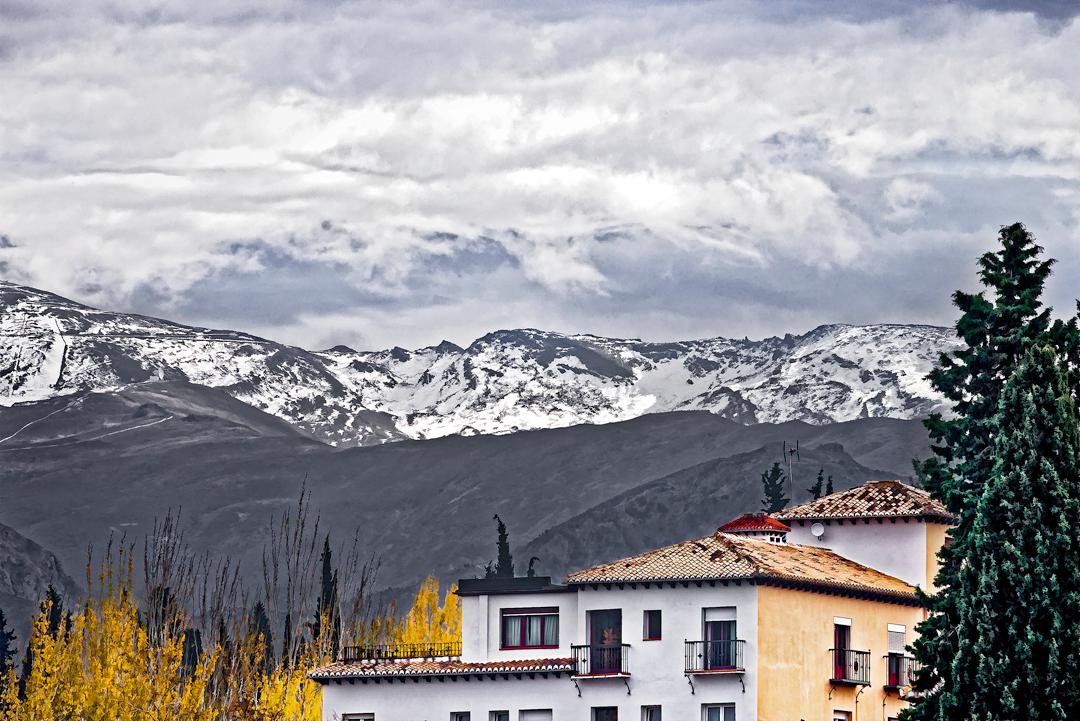
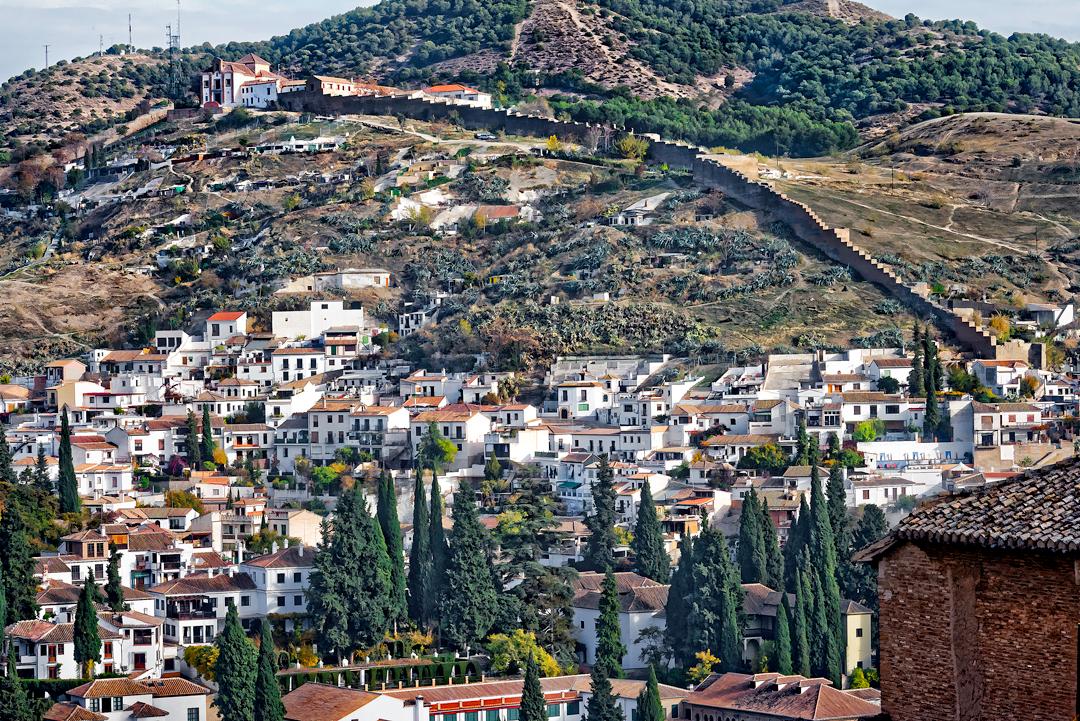
The whitecapped mountains surrounding Granada as seen from Alhambra.

Day 16, Saturday, November 25


ALHAMBRA! JUST AMAZING!


We got up at O’Dark Hundred (6 am) to catch the 7:20 am bus. Once in town, we transferred to the C-7 bus that wound up a mountainside to deliver us to La Alhambra, the famed walled capital of the Moorish Empire in Spain. We rented one of those iPod-like information guides at the gate, which was very helpful. 


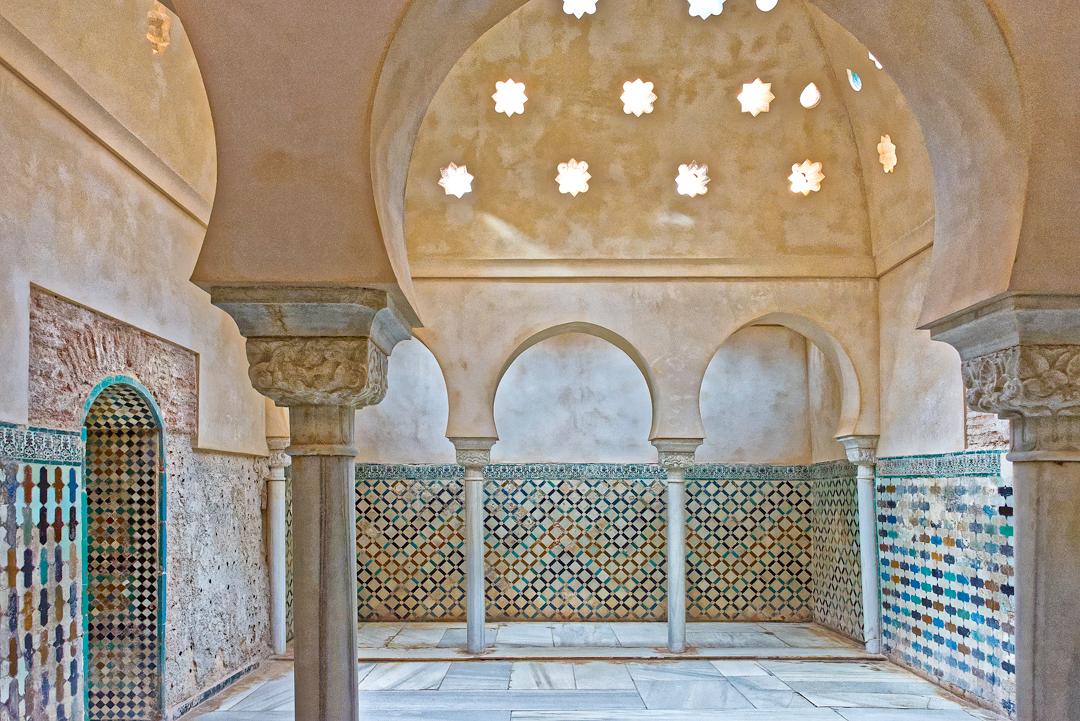
Perched on the summit of a mountain overlooking Granada, the ancient city is about a square mile in size. It is, in turn, overlooked by the snowcapped Sierra Nevada Mountains off to the east. There are two parts to the complex: 1) The large walled city with the original palace/castle, the Palacio (palace) del Partal, built by the Moors in the 1300s; the large mosque that was converted to the Church of Santa María de la Alhambra when the Christians took over in 1492; the 'Alcazaba' fort and barracks; housing for craftsmen; some hot baths; and housing for the wealthy; 2) The adjacent, 'General Life' section, is terraced for both agriculture and elaborate gardens and fountains. There is also another palace located here, so I wasn’t completely sure how 'general' the General Life area was.


Much of the complex is meticulously maintained and restored. Unfortunately, much of the housing had been destroyed, but archeologists have extensive digs in all of these residential areas revealing the floor plans of the houses. They have recovered many artifacts depicting life and its culture, which are displayed in the art museum.


The original ancient city had received its water from a mountain reservoir and aqueduct system that diverted water from the Rio Darro. Water to Alhambra has been restored, so the many reflection pools, fountains, and gardens are full, working, and blooming.


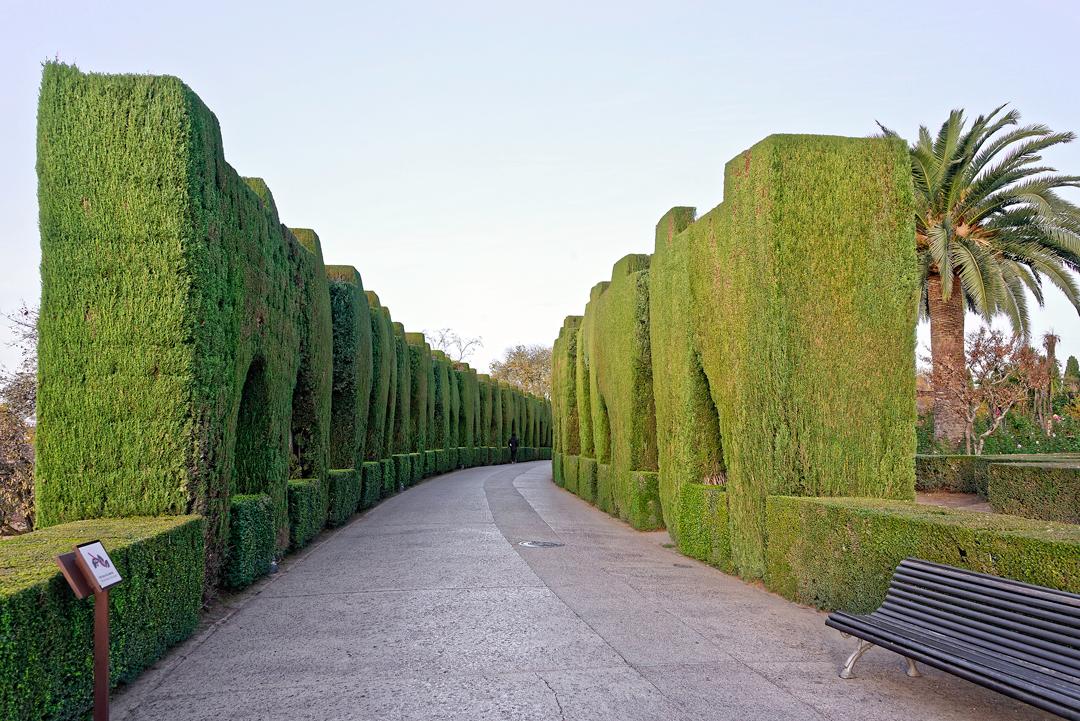
The approach to the complex immediately catches your attention. The walled entrance is set in a gorgeous view framed with beautiful foliage and flowers. The reddish walls themselves have intricate rock and stone patterns. Next, the main path is lined with huge, closely cropped shrubs in the shapes of arches. By the time you reach the open courtyards where the monster stone buildings are located, you are already wowed by gardens and stunning views. Then the buildings blew us away. 

The entrance walkway to Alhambra.

In the heart of the Alhambra complex is the cathedral, formally a mosque converted into a Christian cathedral by the victorious Christians. King Ferdinand and Queen Isabella’s Spanish forces forced the Moor Empire to surrender its whittled-down empire, including the capital city of Alhambra, on January 2, 1492. 1492 was a big year for the king and queen.


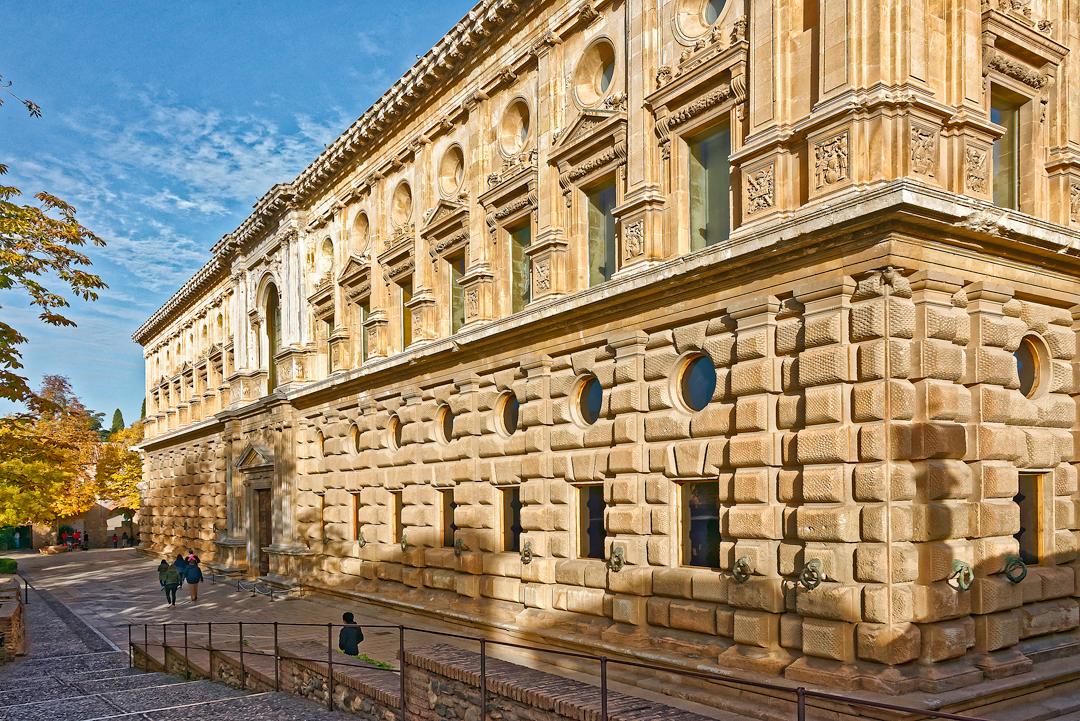
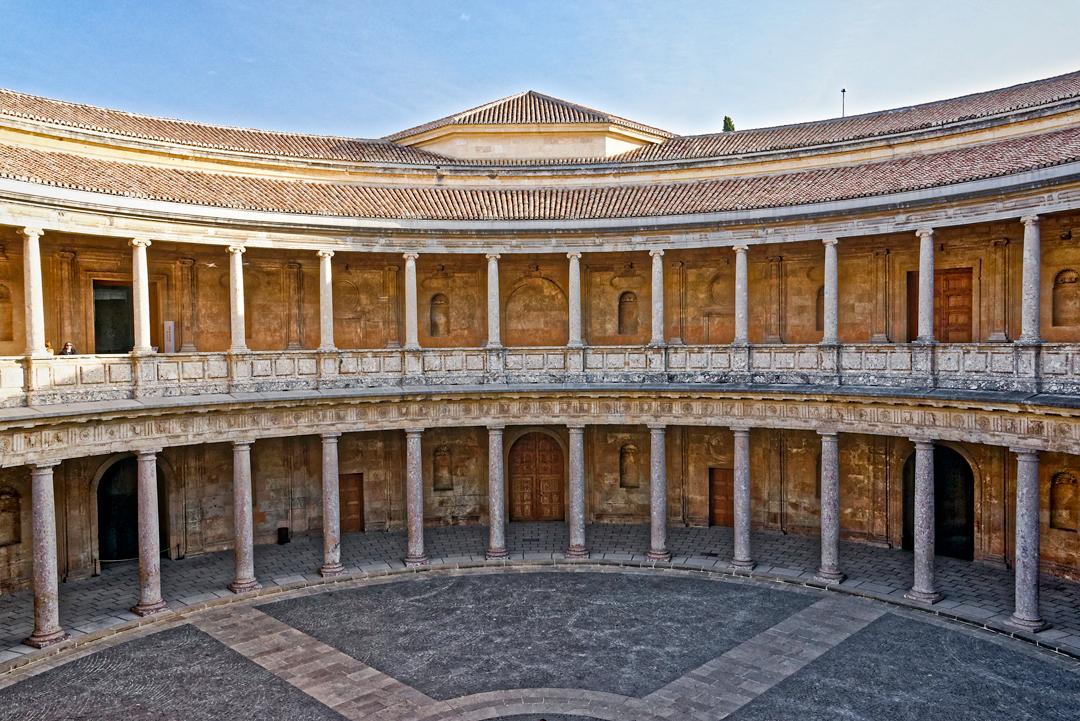
Next is the Palacio de Carlos V, a grand square two-story building with an open round courtyard in the center. It houses a beautiful museum displaying art and artifacts depicting the culture of Alhambra. The stone exterior is built with a mosaic of large square stones with deep reliefs giving the building a one-of-a-kind texture. It was built in 1535.


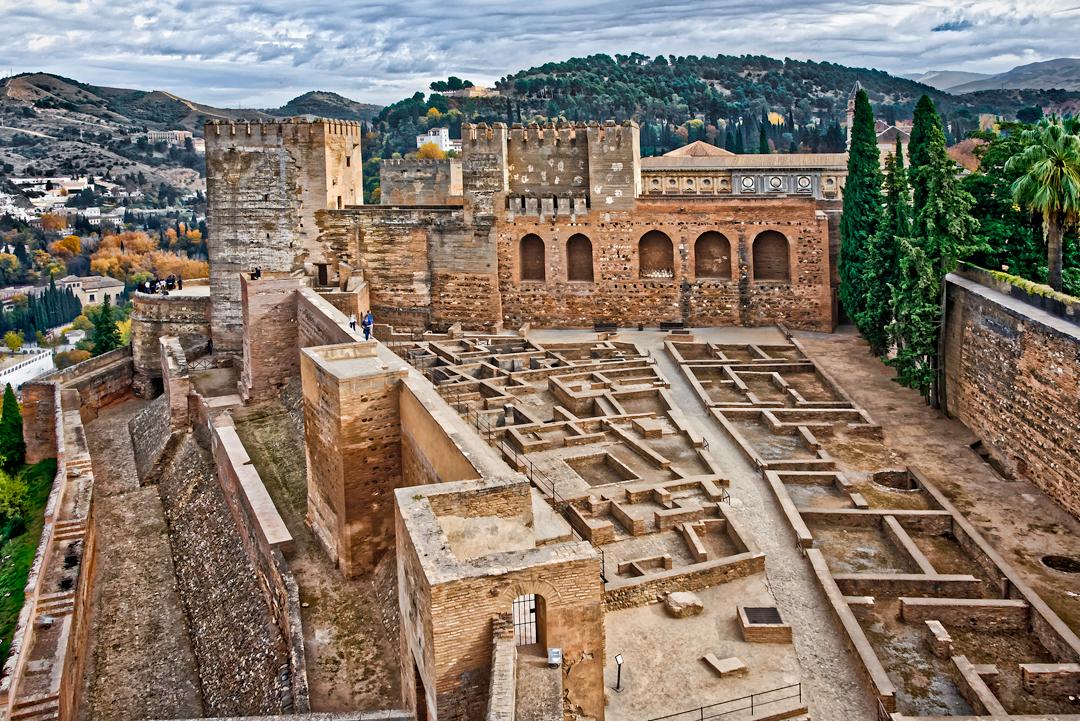
The Alcazaba, the ‘fortification area’, features tall towers and thick walls we could explore and climb. Of course, all the stone works here and throughout the complex were put together in beautiful artistic patterns. Even the walkways, no, especially the walkways, were works of art. Every small stone was placed in an exact way to make unique flowing patterns.

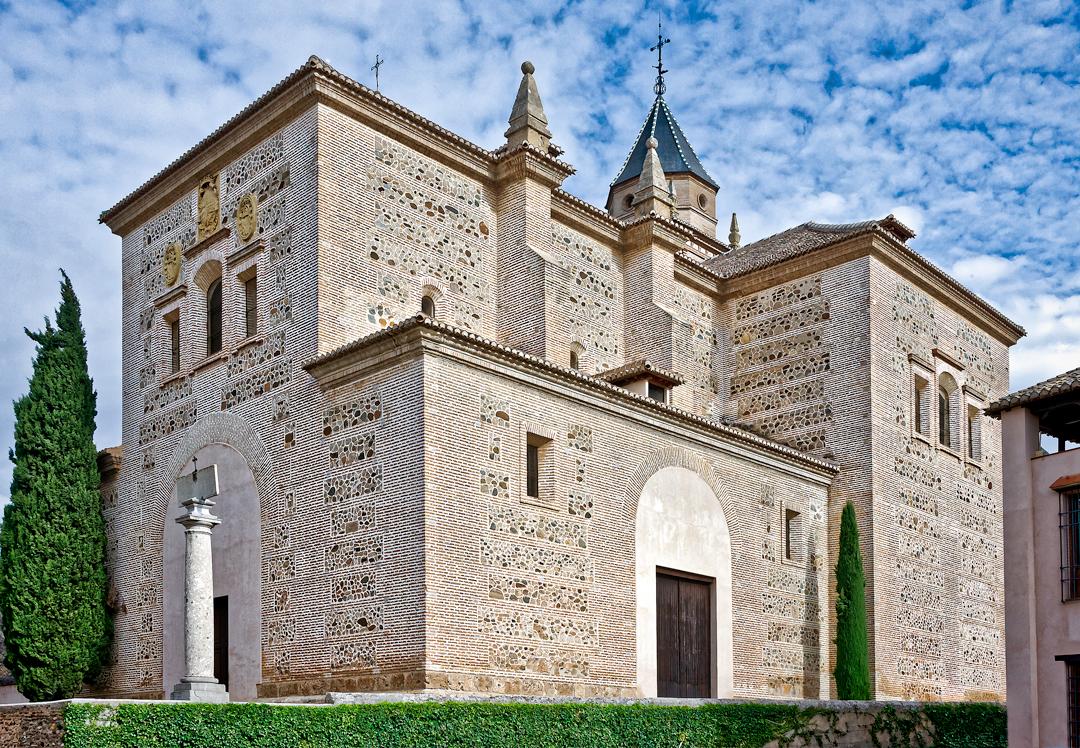
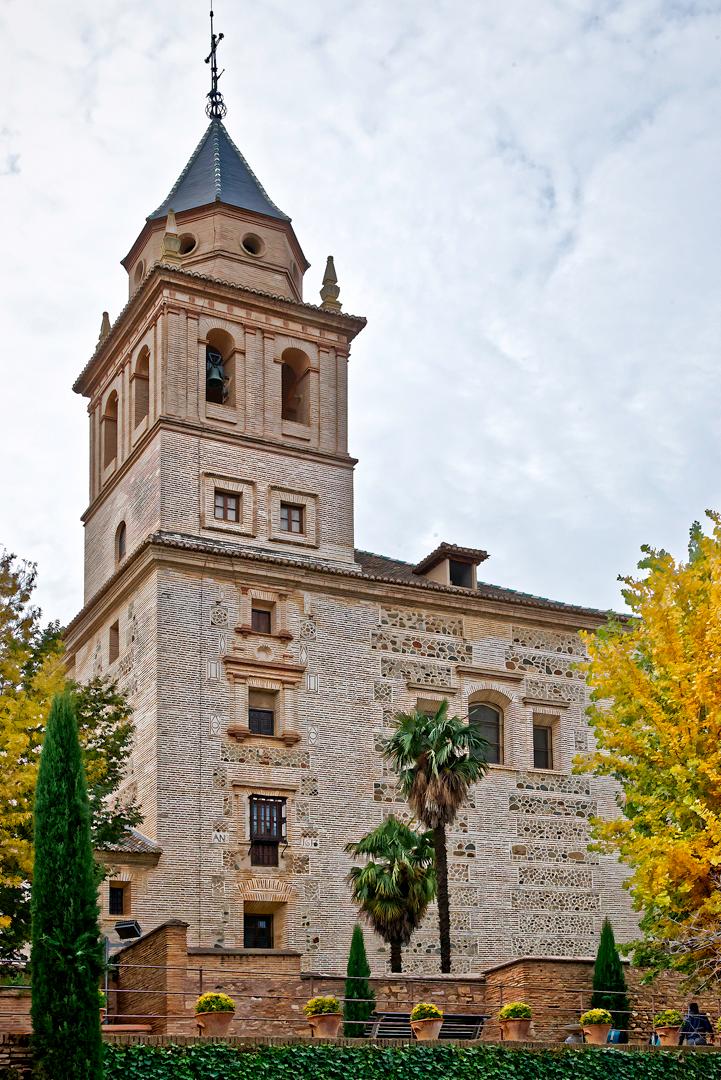
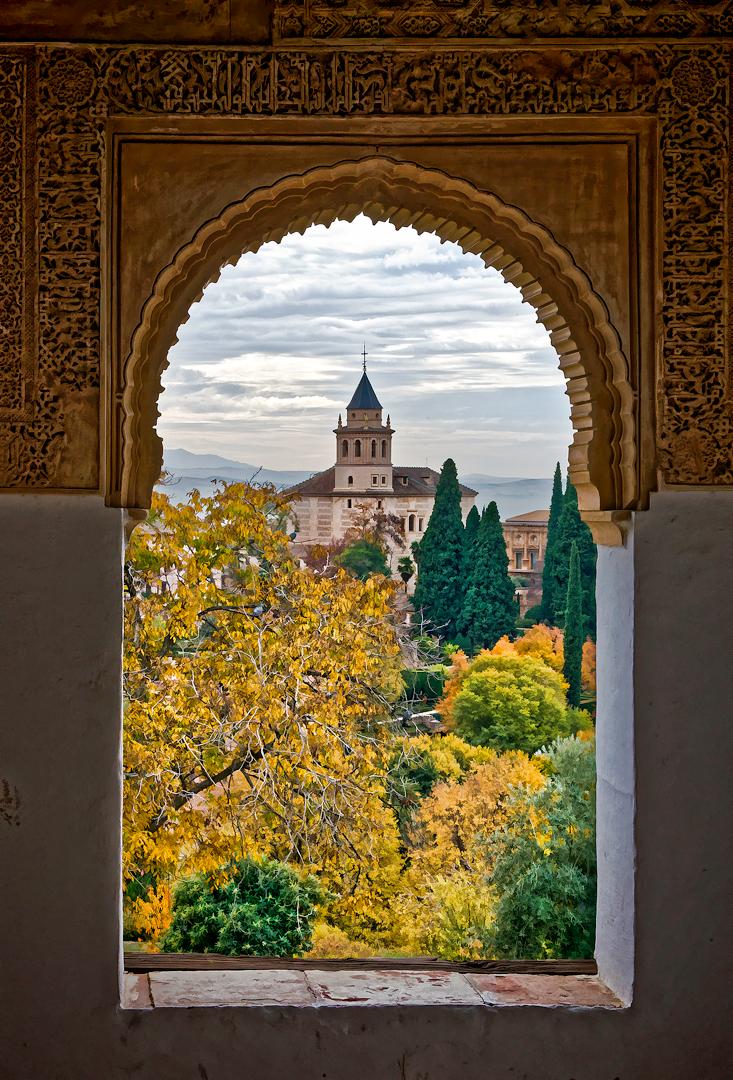
Above and below: The Church of Santa María de la Alhambra. It is prominently located in the heart of the Alhambra complex.

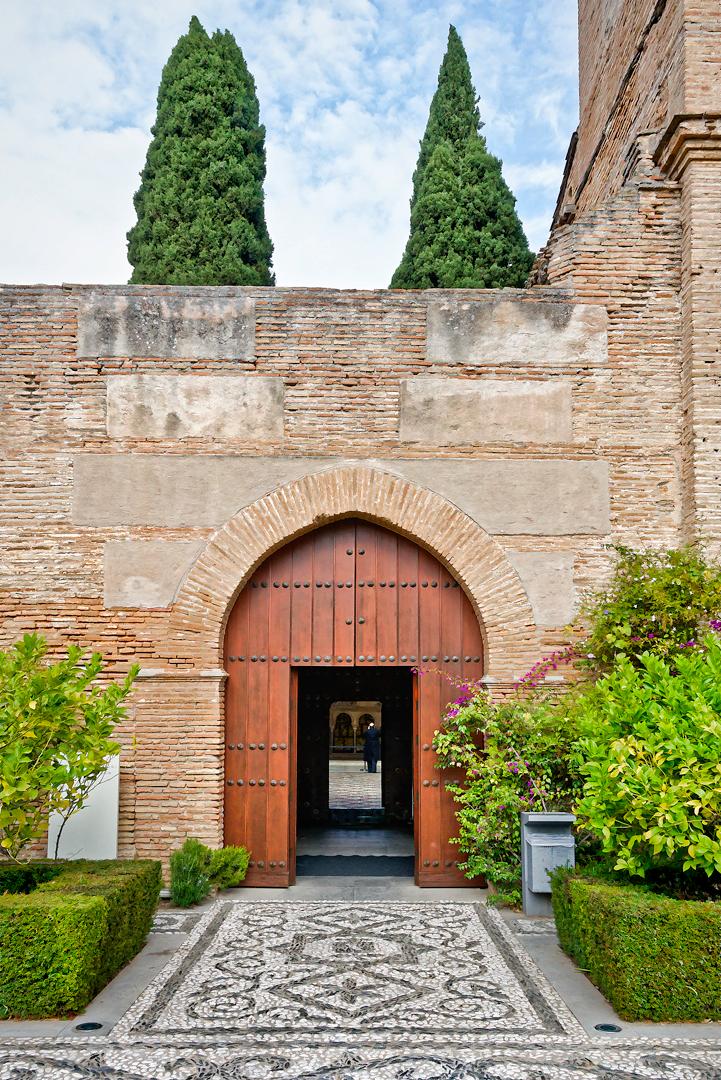
A view from a church portal.

The Palacio (palace) de Carlos V, built in 1530, is now a museum.

The interior circle courtyard of the Palacio de Carlos V.

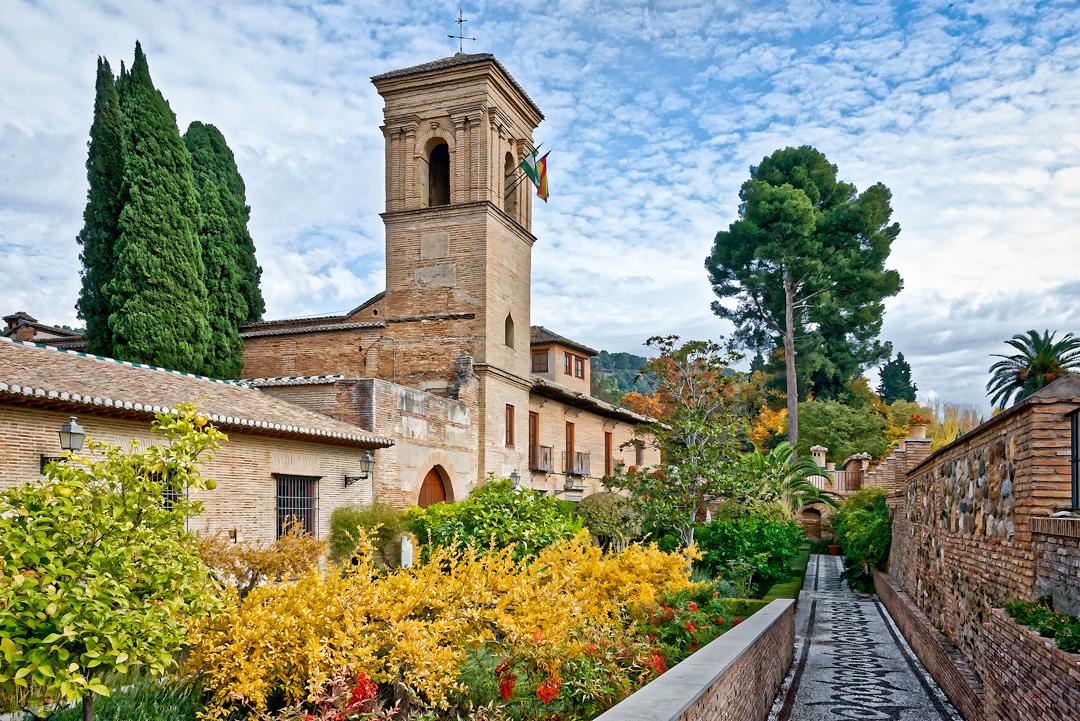
The Parador de San Fransico. Built in 1493 as a convent, the Franciscans abandoned it in 1835. It was then converted into a barracks during the remainder of the 1800s. Currently, it is a parador, which is a state-owned hotel. Spain has a network of 96 state-run hotels. (Portugal has one.)

What is left of the Alcazaba (fort). The foundations are from the soldiers' barracks.

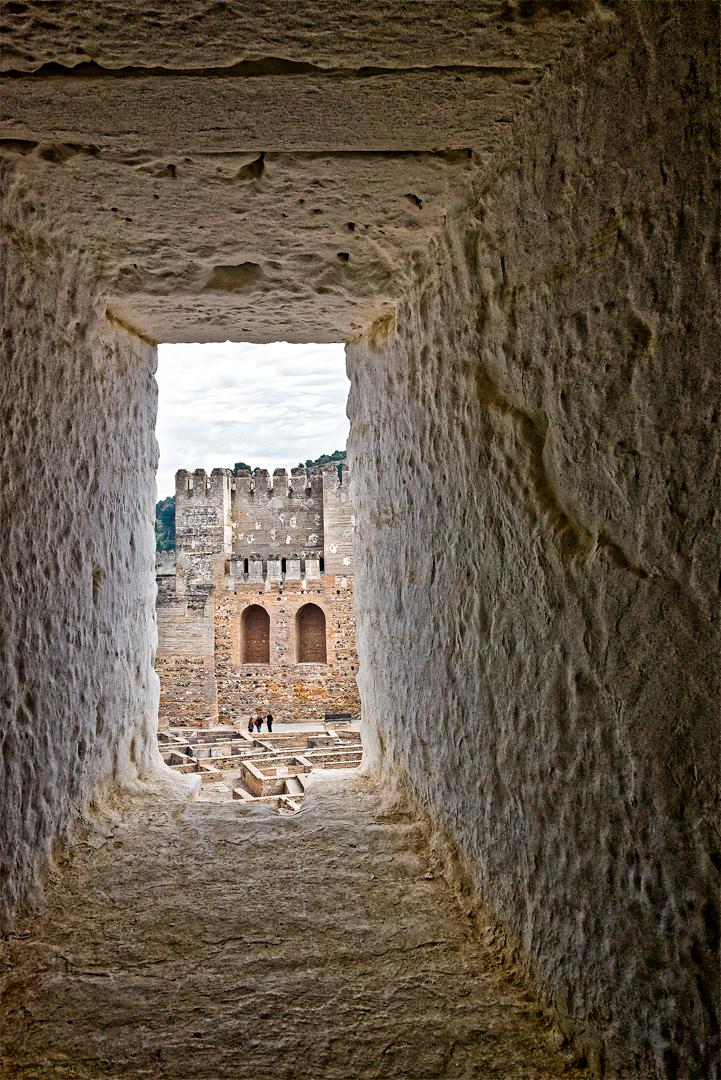
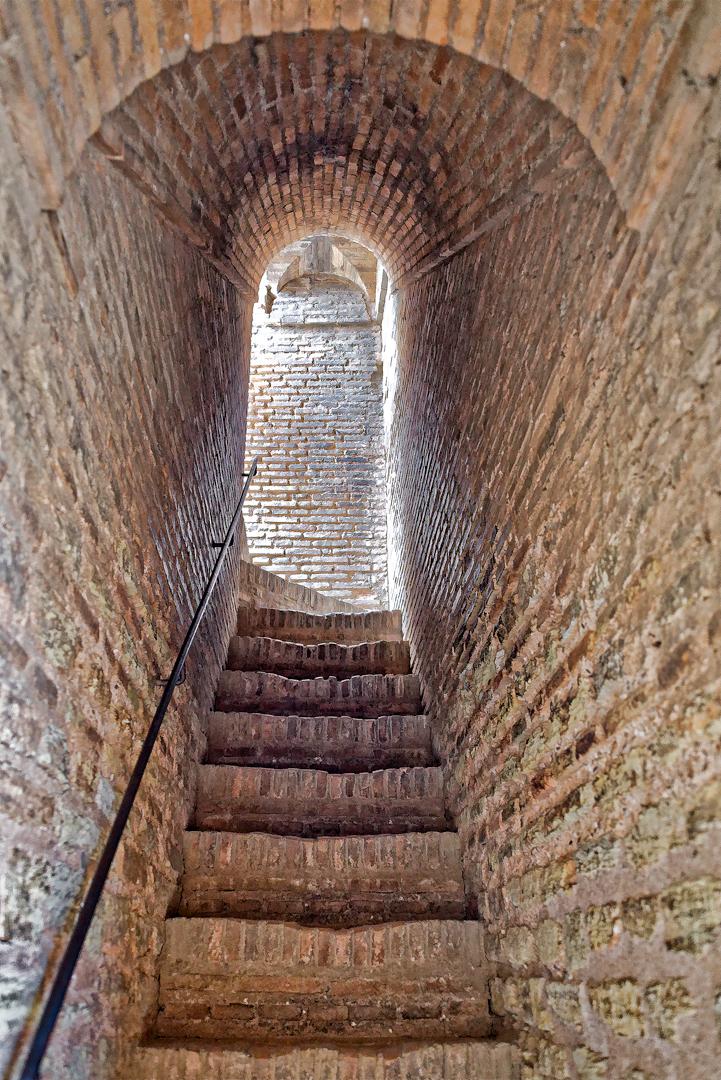
The fort had plenty of passageways to explore.

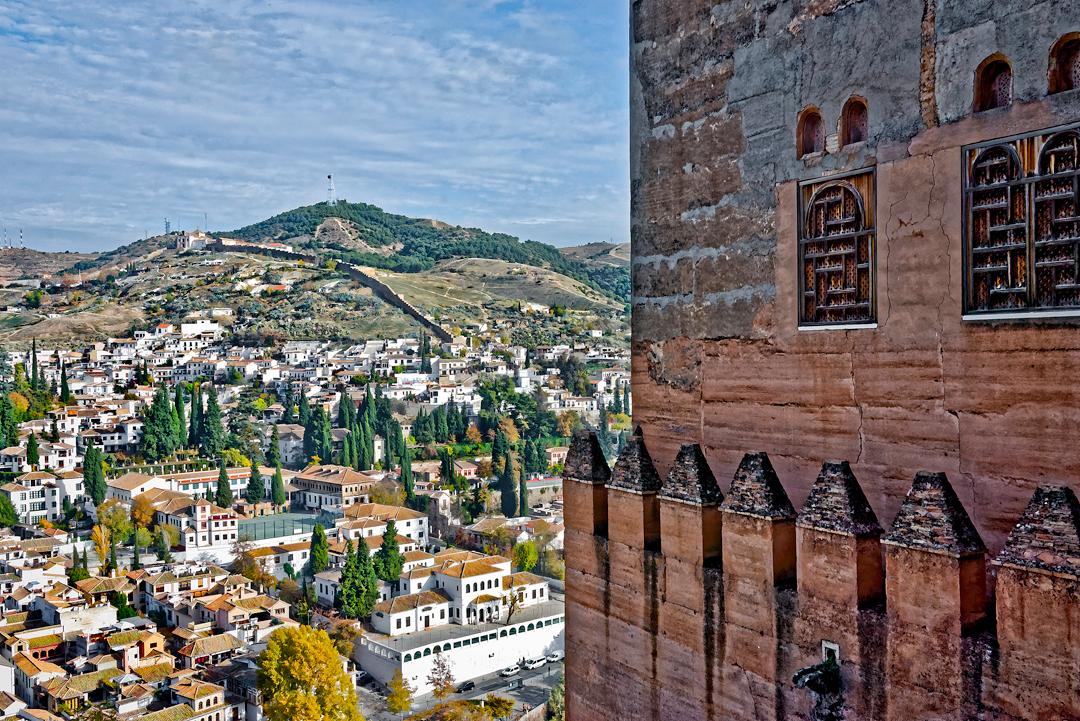
The fort provids impressive views of the city of Granada below.

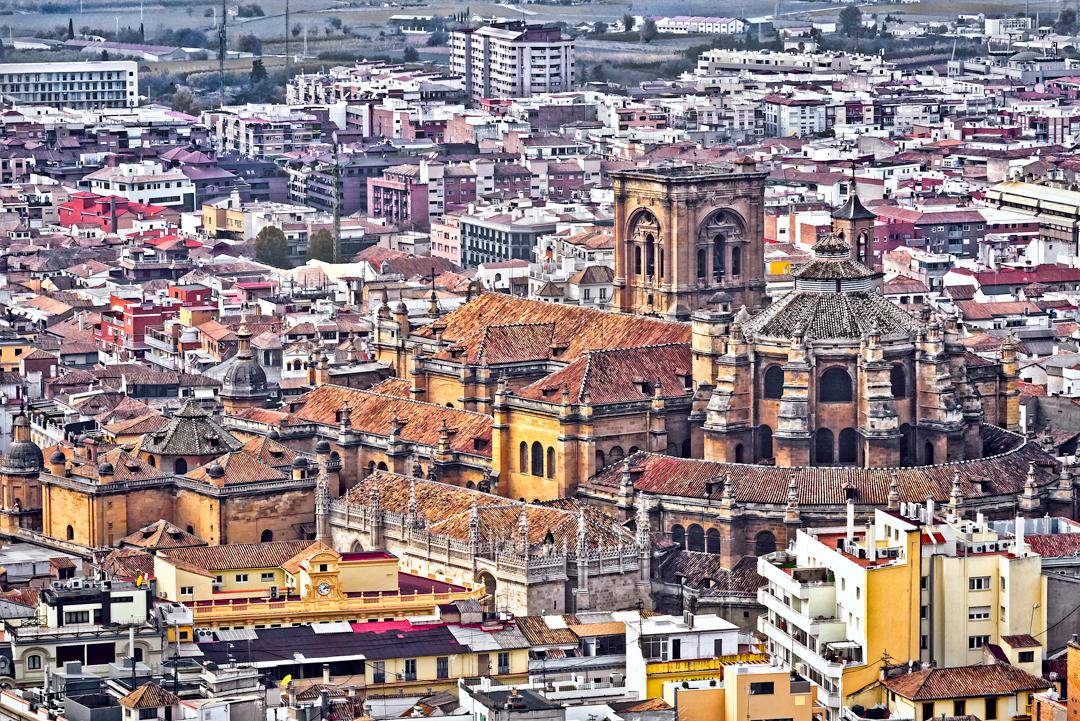
The view from Alhambra of the Cathedral in Granada that we toured yesterday.

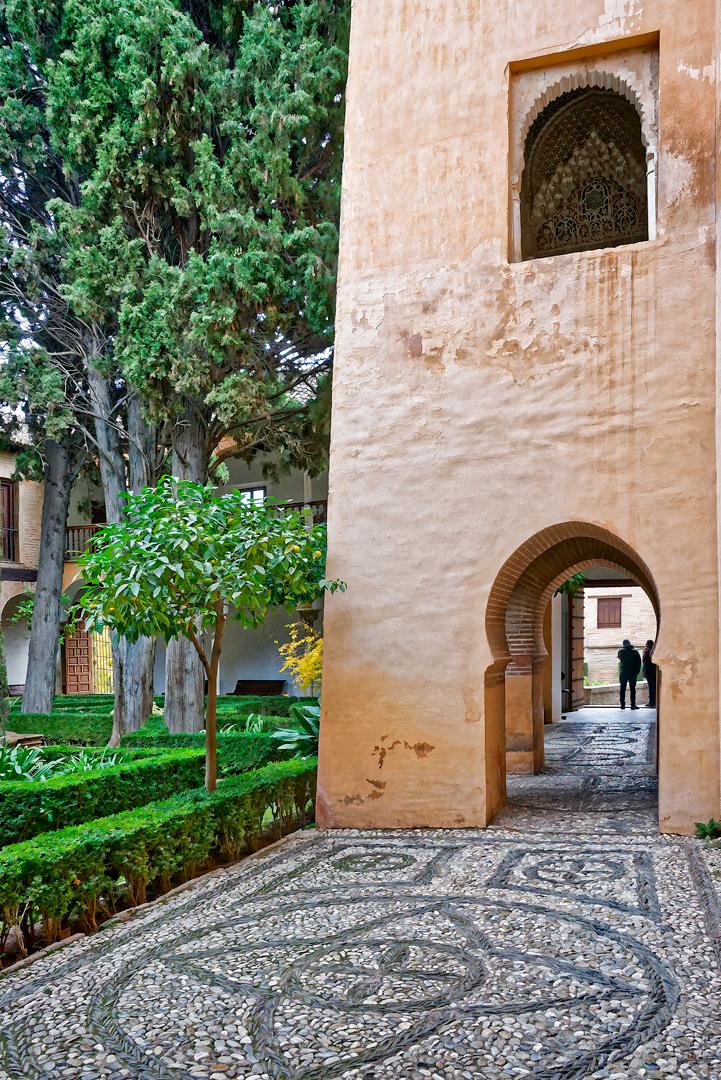
We loved the stone walkways.

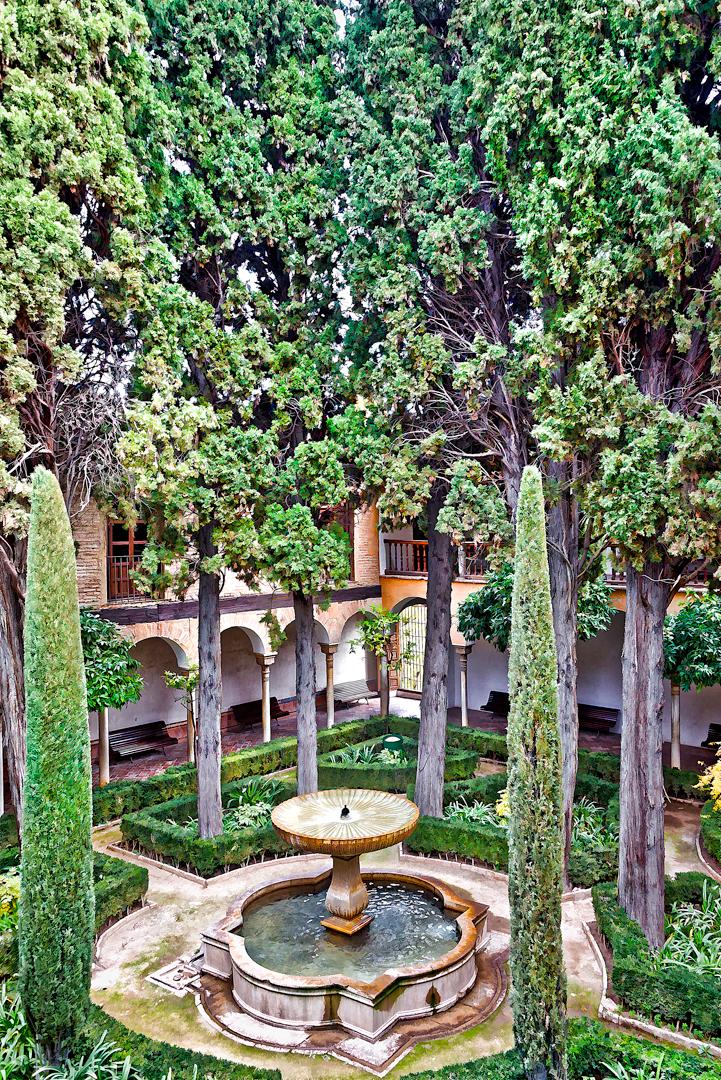
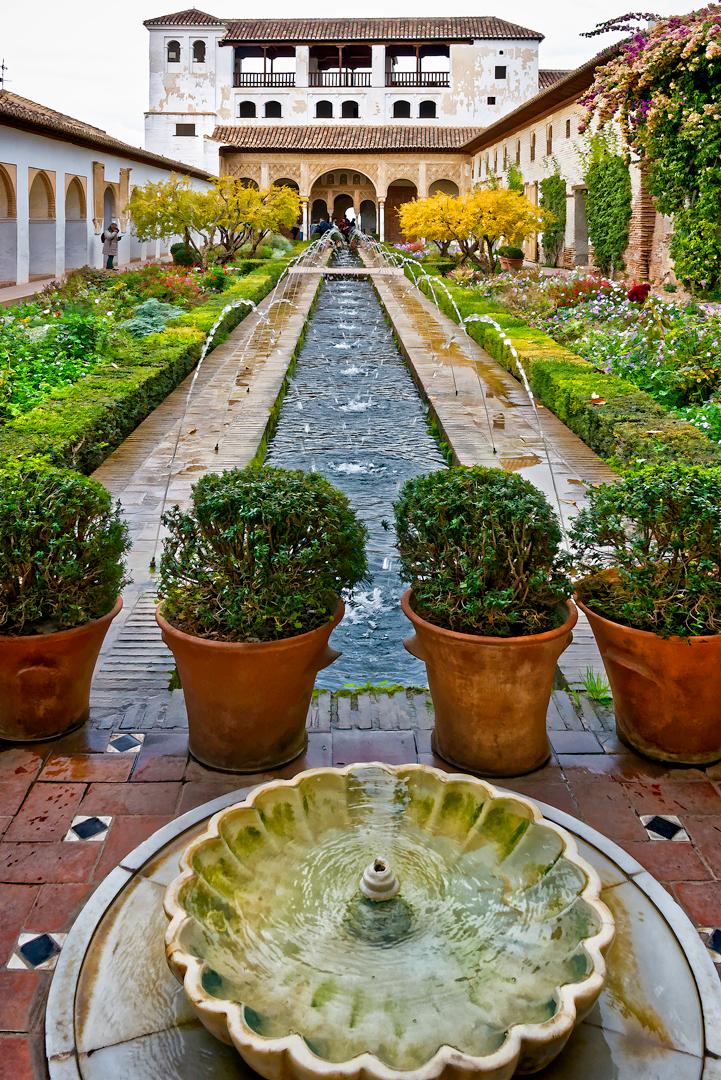
The gardens were gorgeous even at the end of November.

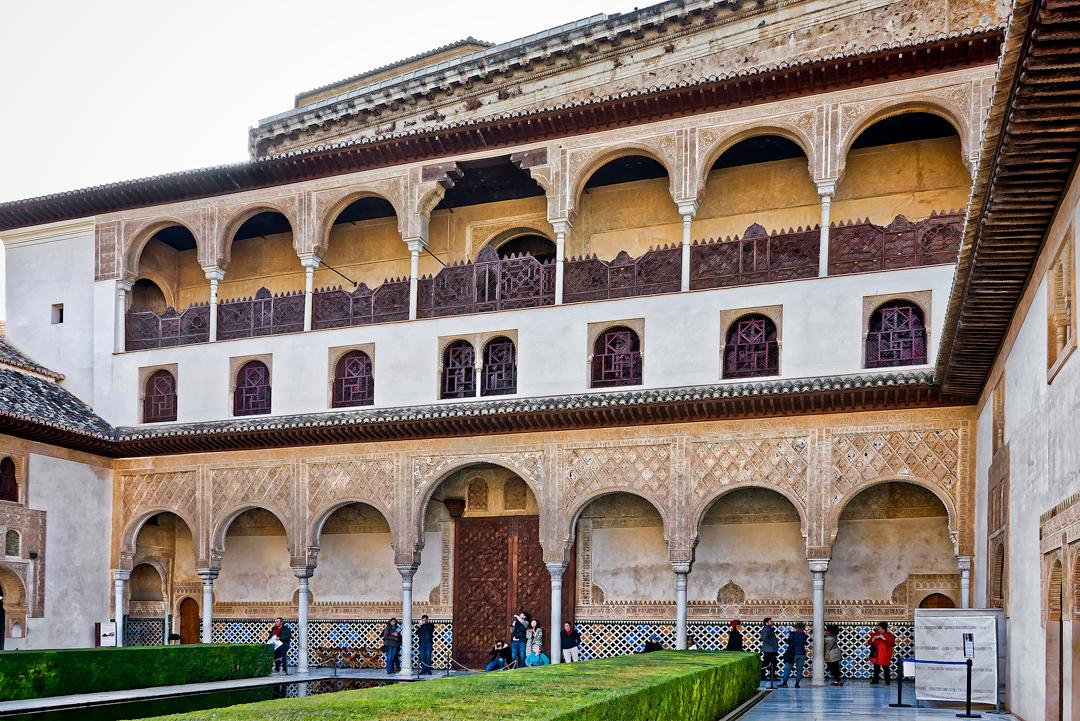
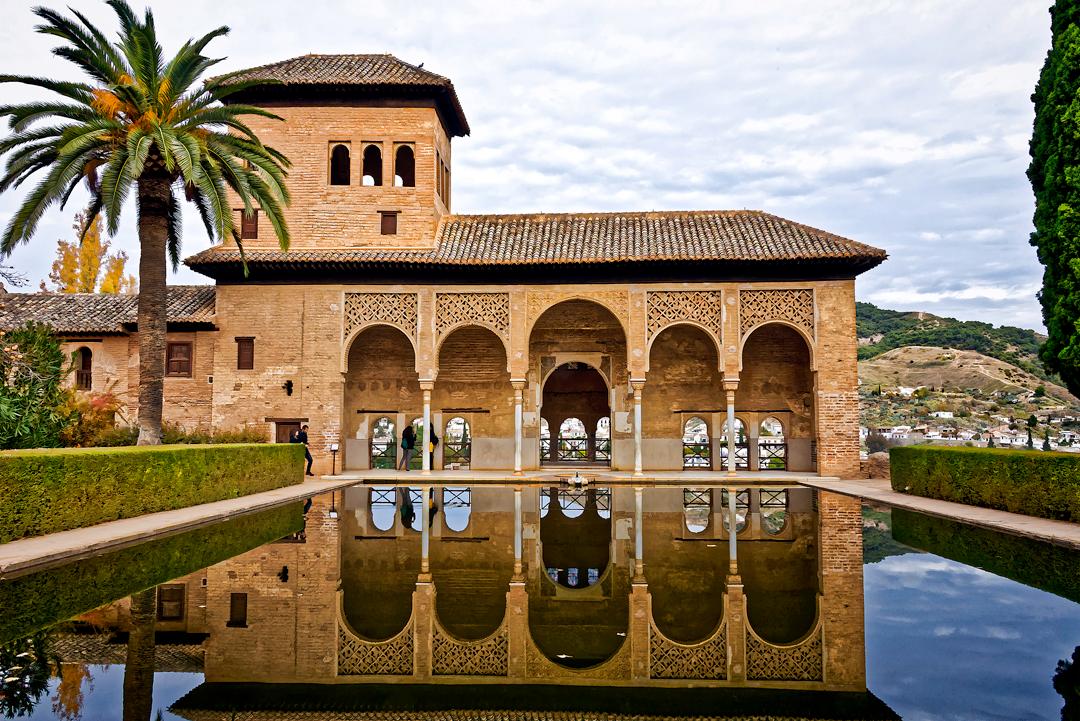
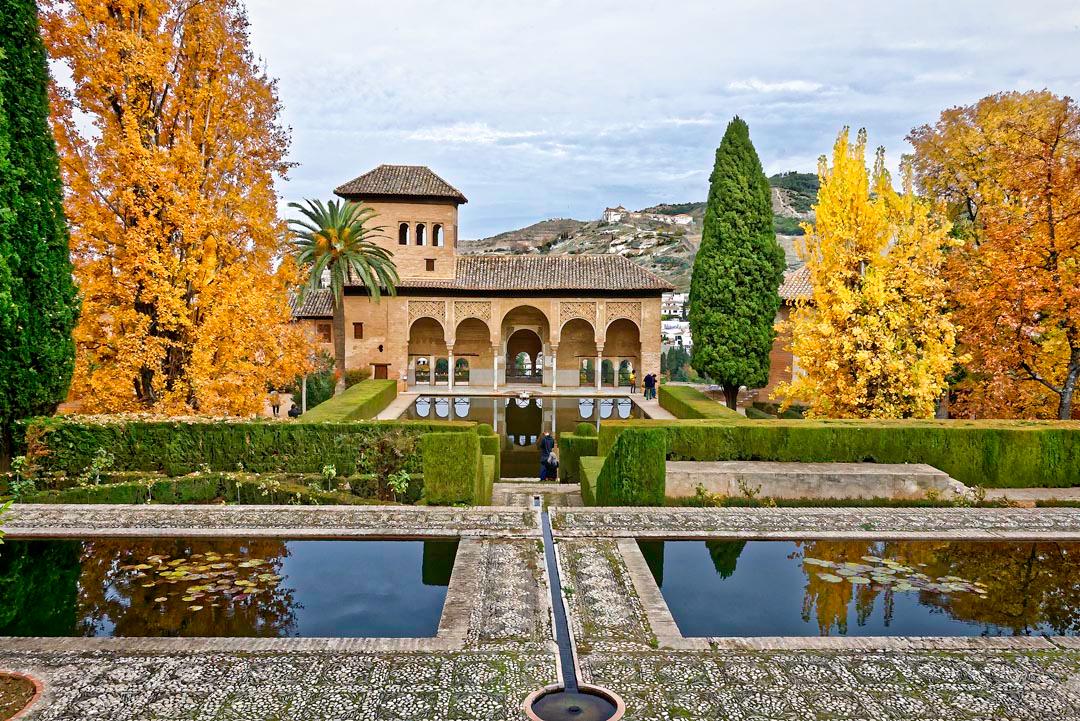
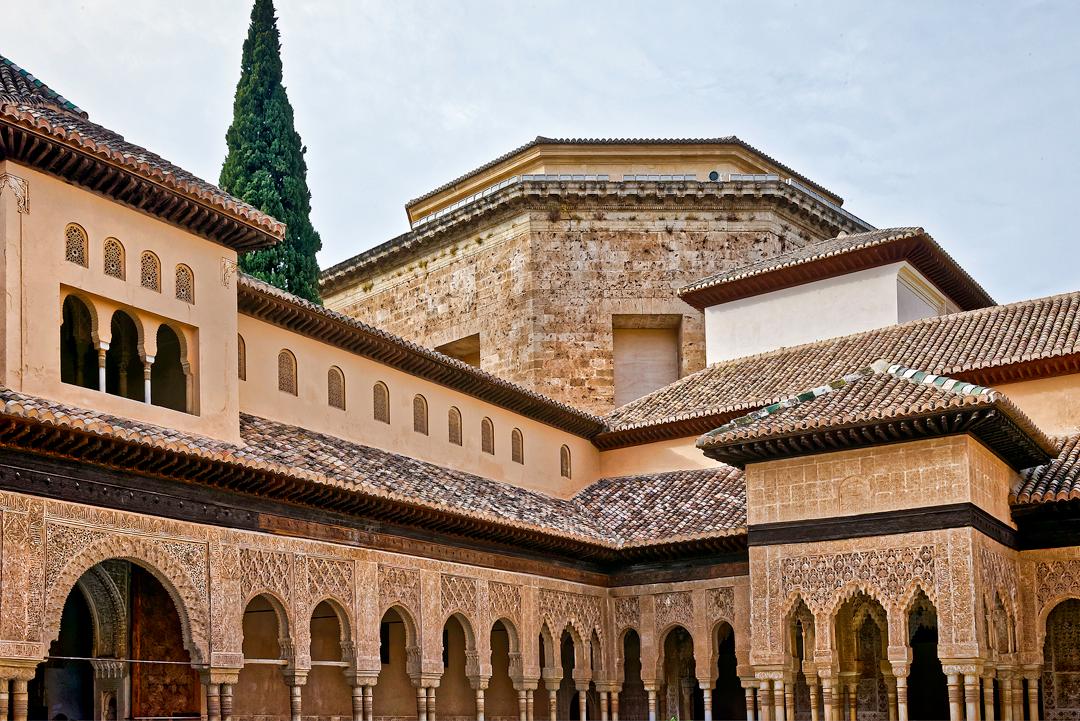
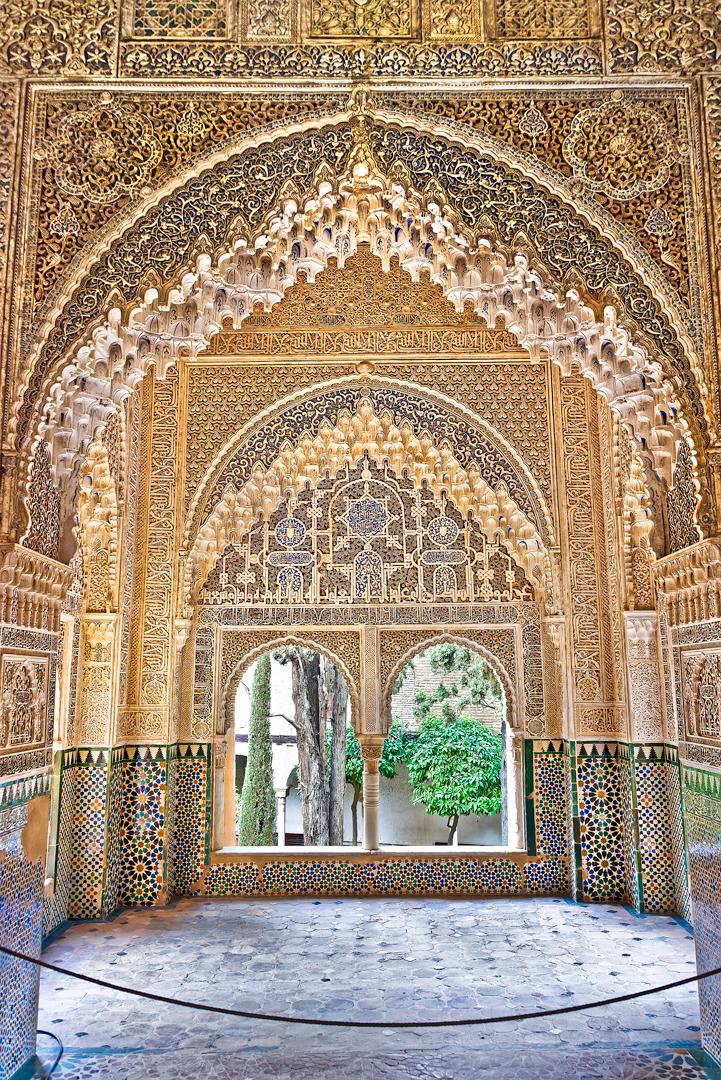
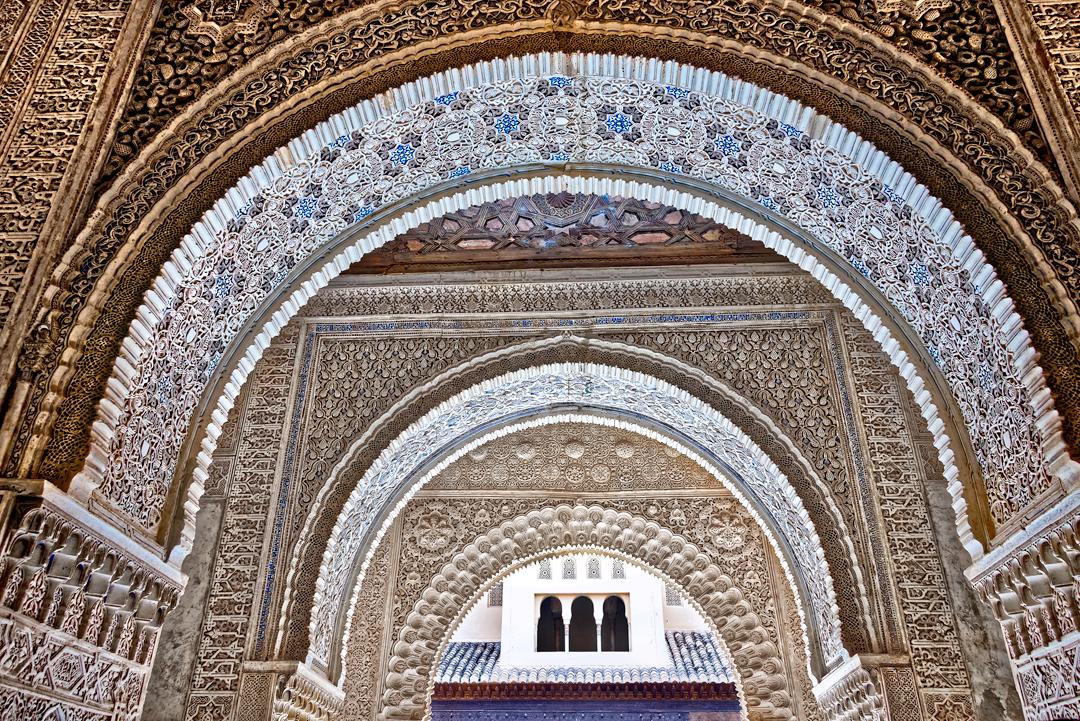
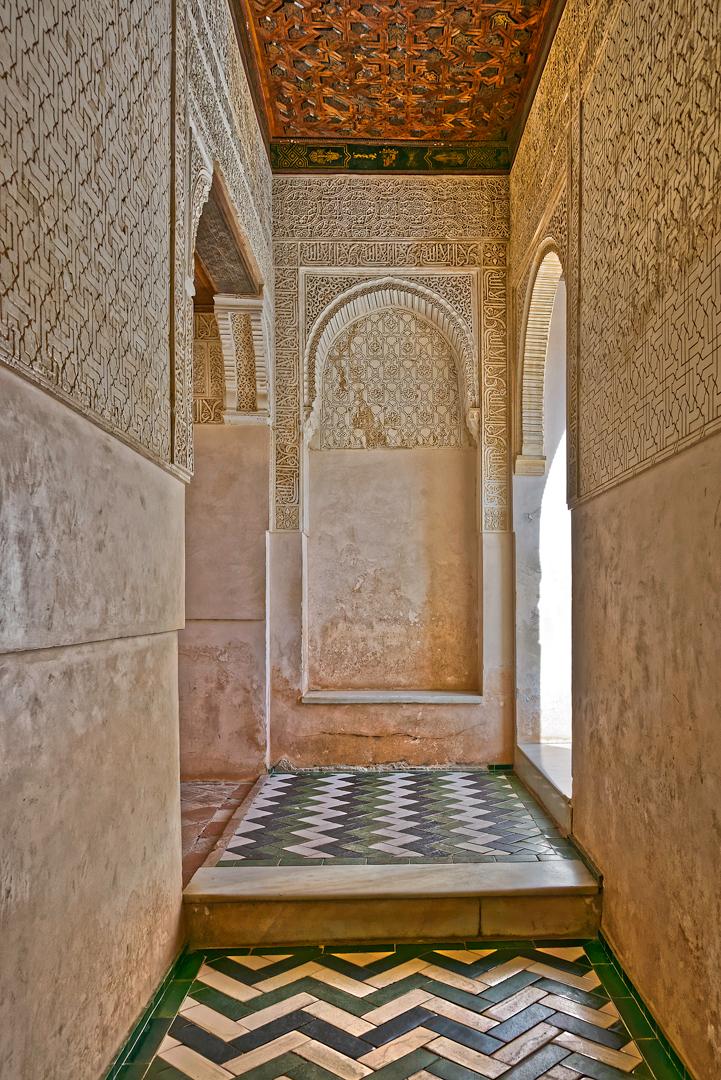
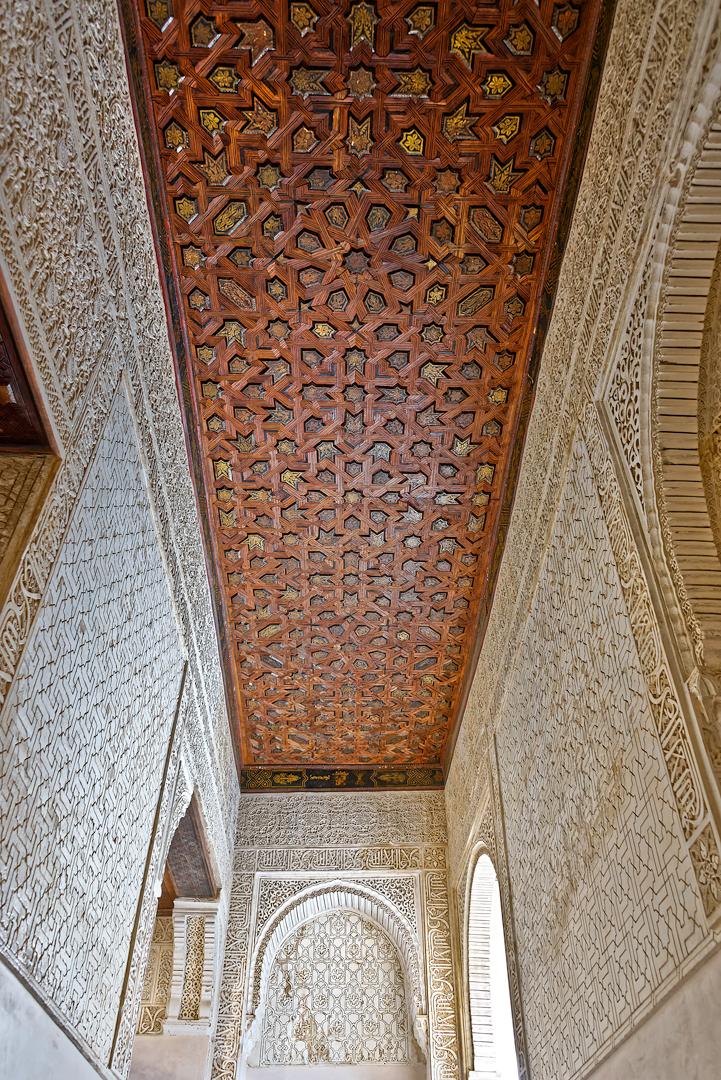
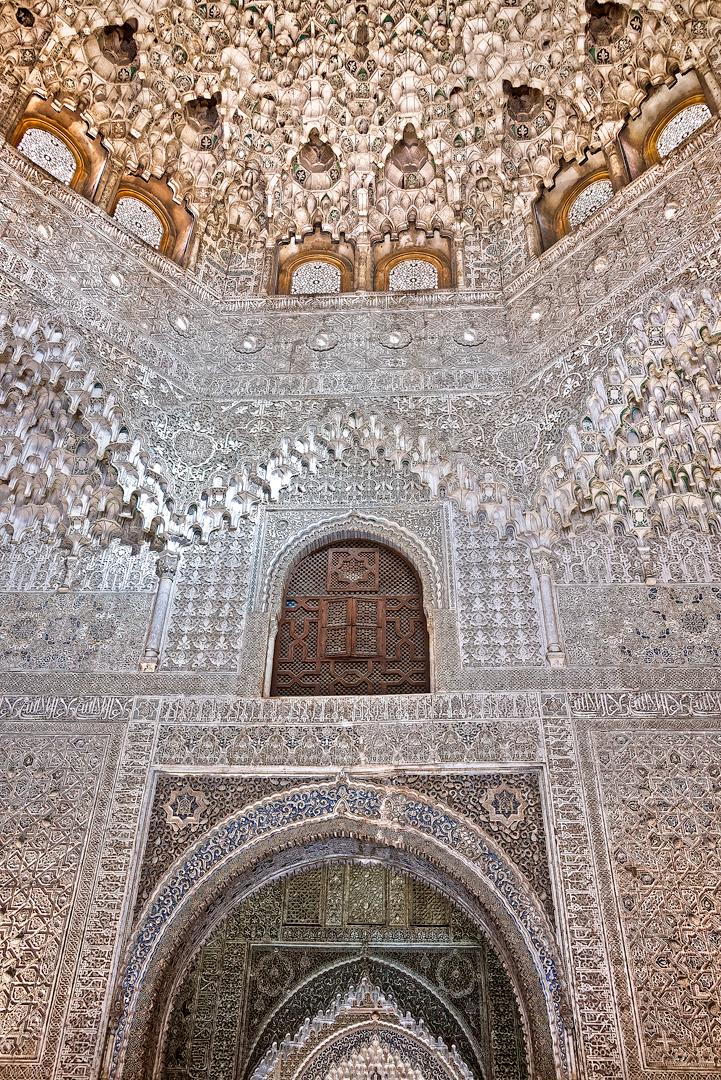
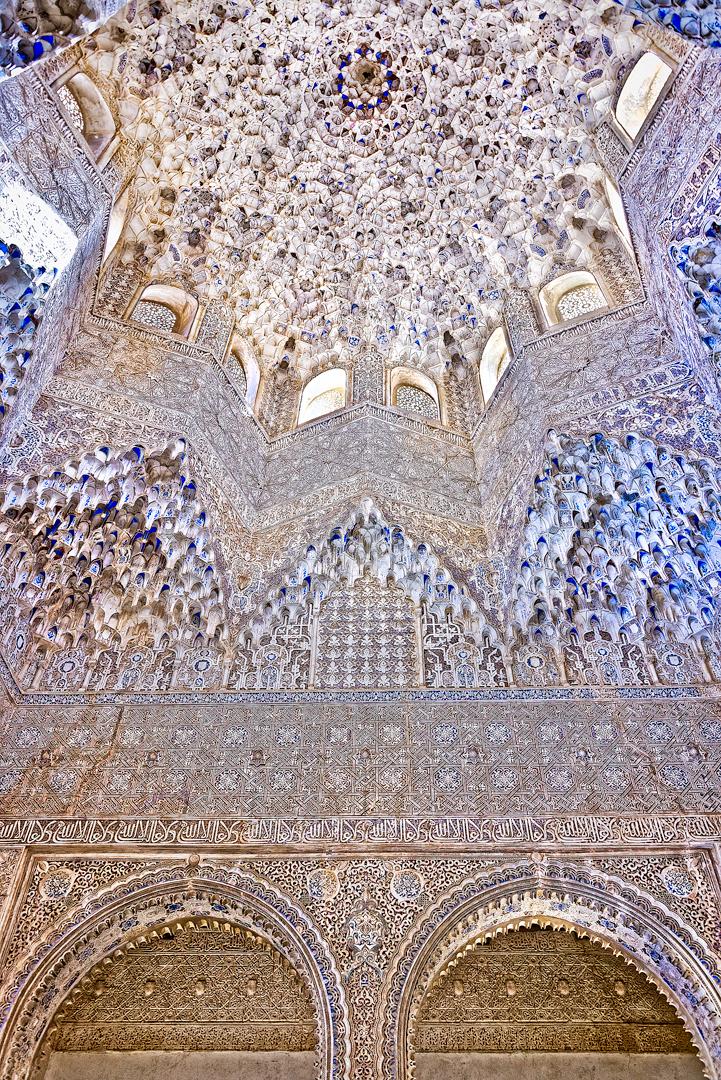
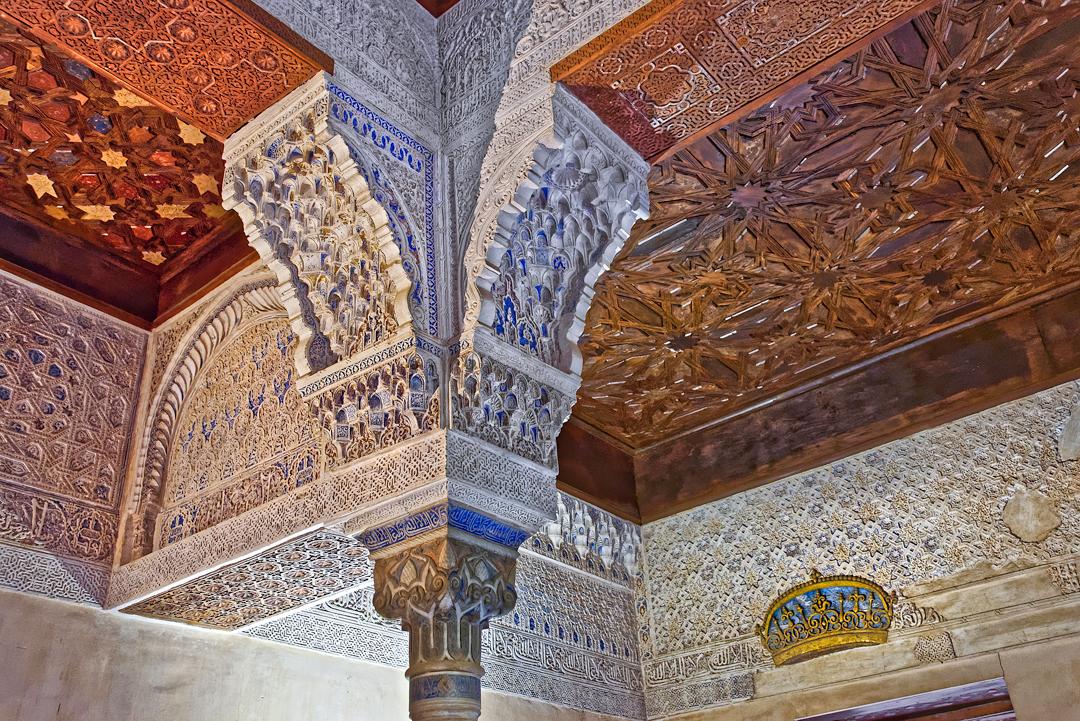
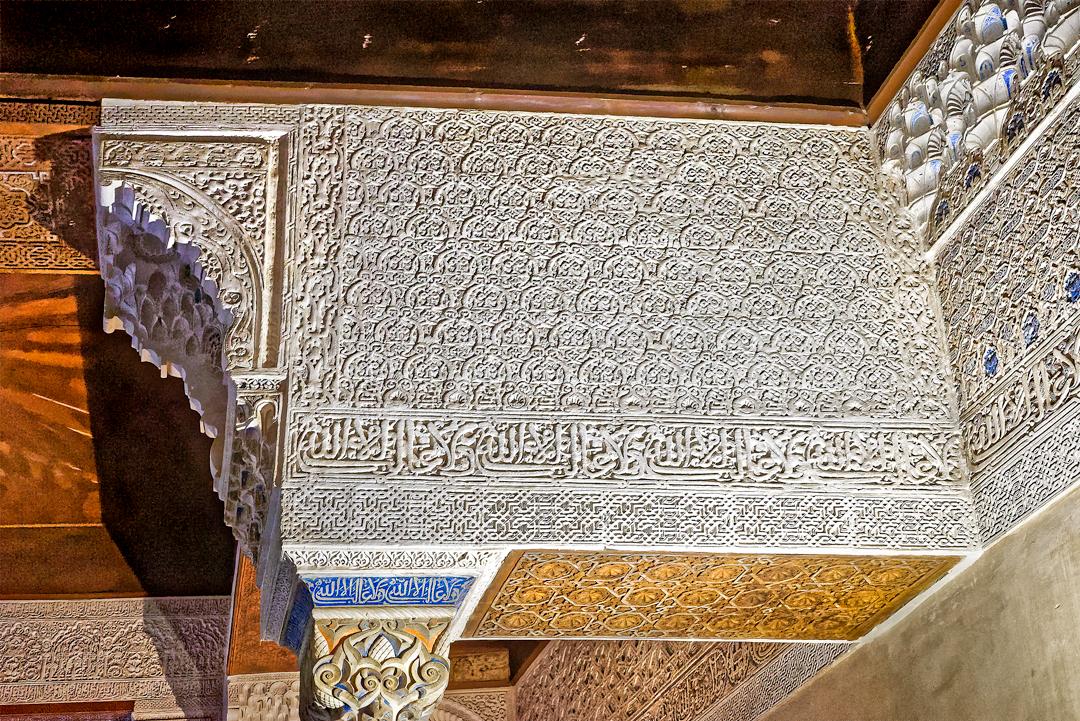
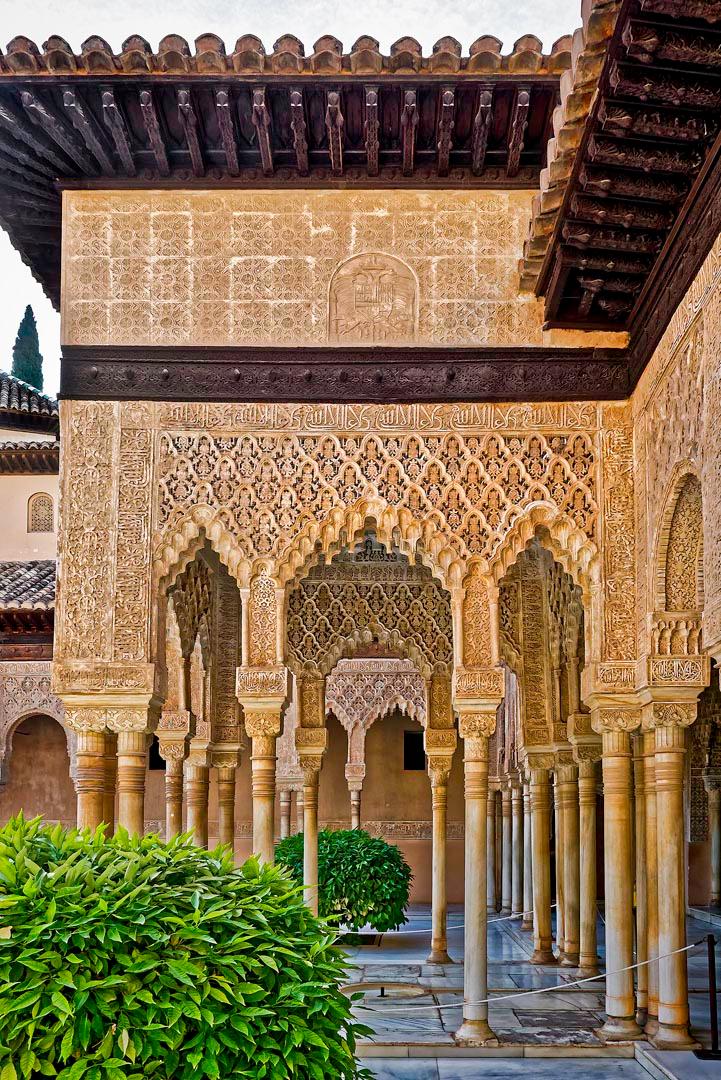
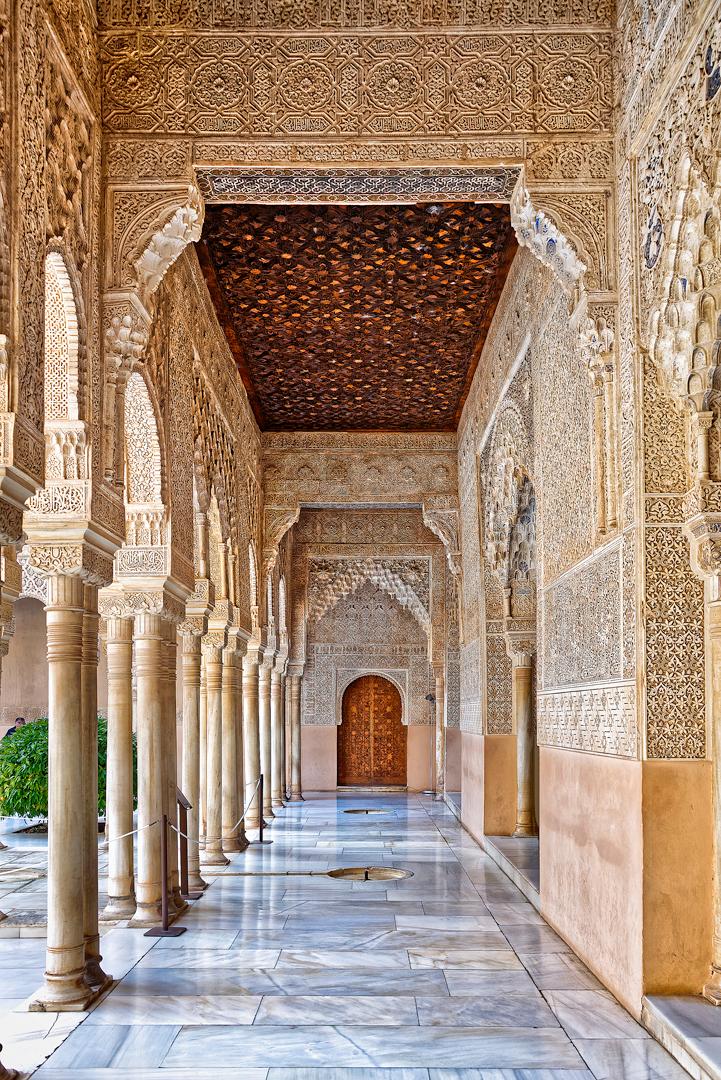
The most breathtaking area was the main palace, the Palacio del Partal. The craftsmanship needed to create the intricately carved alabaster walls, ceilings, and doorway arches are lost to the ages. Modern craftsmanship could never match it. The reflection pools and gardens were contemplative inspirations. Water, stone, art, nature, and incredible views were in perfect harmony. All one could do was gawk in amazement.


This sectioned-off palace complex and grounds are the main attraction. When we purchased our tickets, we had to sign up for a particular time to visit, and we were provided one hour to complete our tour of the palace complex. This was to keep the wear and tear down to a minimum.

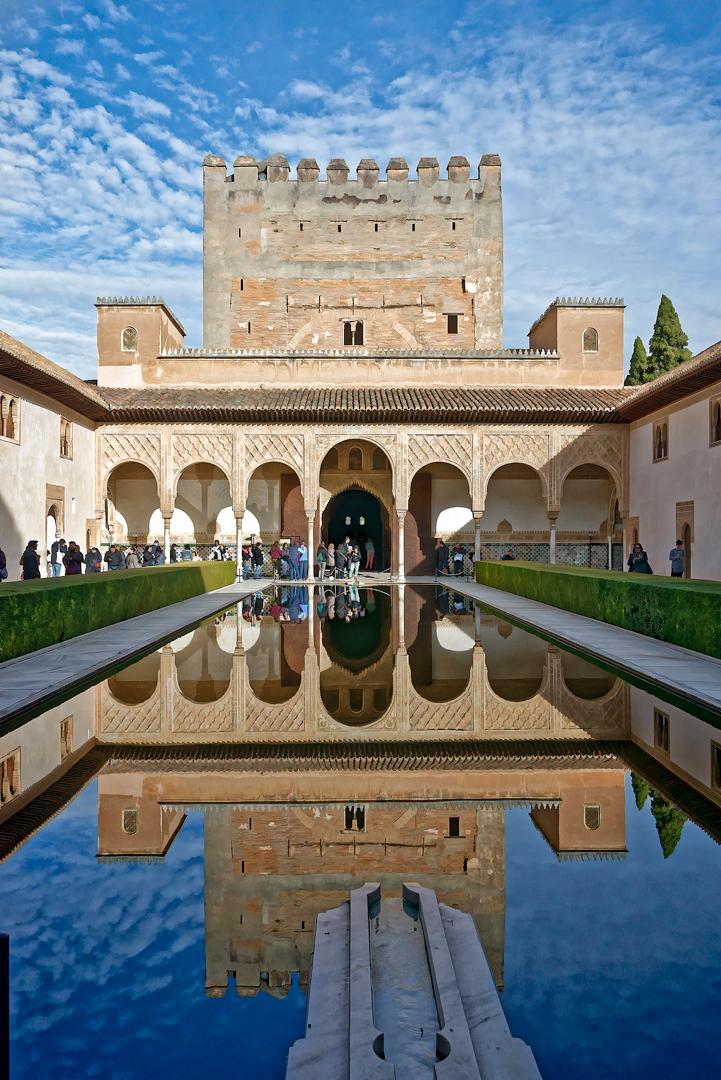
The reflection pools were a nice touch. We were especially impressed with how well they were restored.

Constructed in the 1300s, the craftsmanship is spectacular. We are so fortunate that so much of this has survived over the centuries.

Thinking the separate General Life area would be a letdown, the gardens, pools, palace, and view again blew us away. We spent seven hours exploring the entire grounds and could have easily doubled that. The General Life area was for ordinary people.

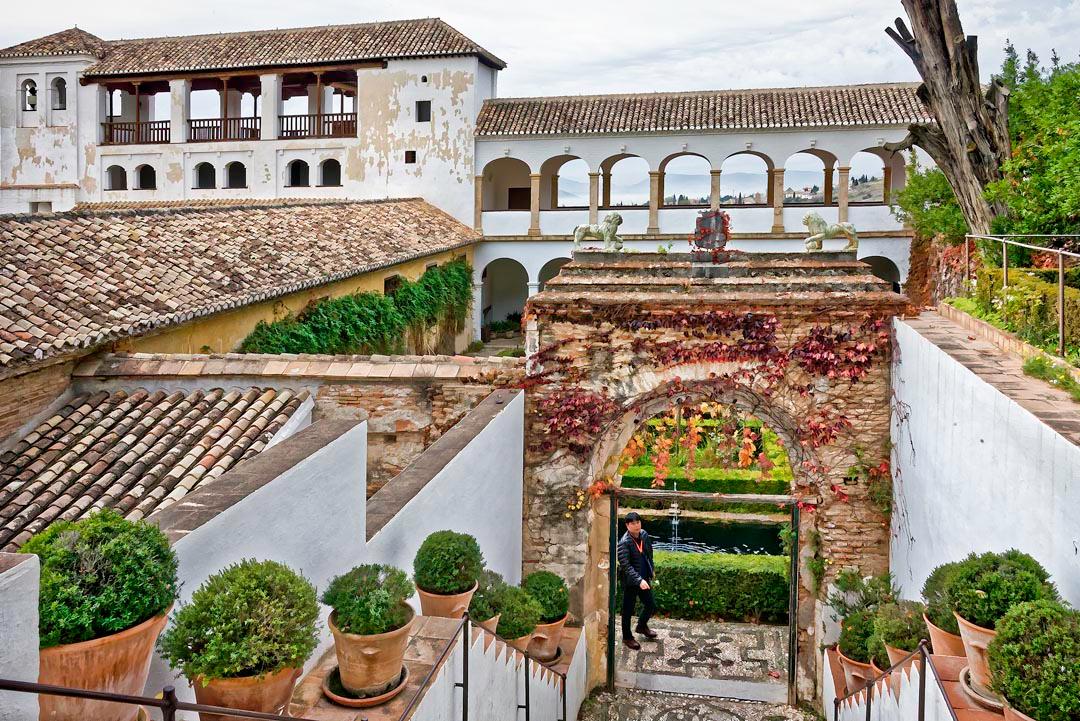
Above and below: The palace grounds in the General Life section of Alhambra. Amazingly, the General Life area had its own palace.

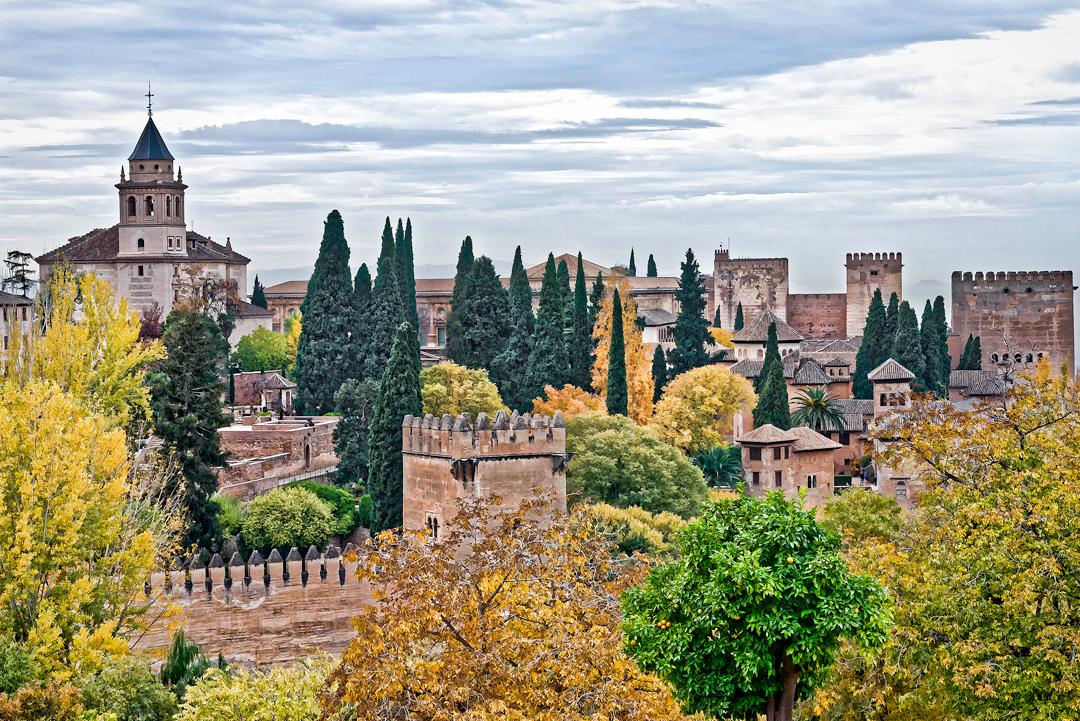
Looking out from the General Life area toward the center of Alhambra.

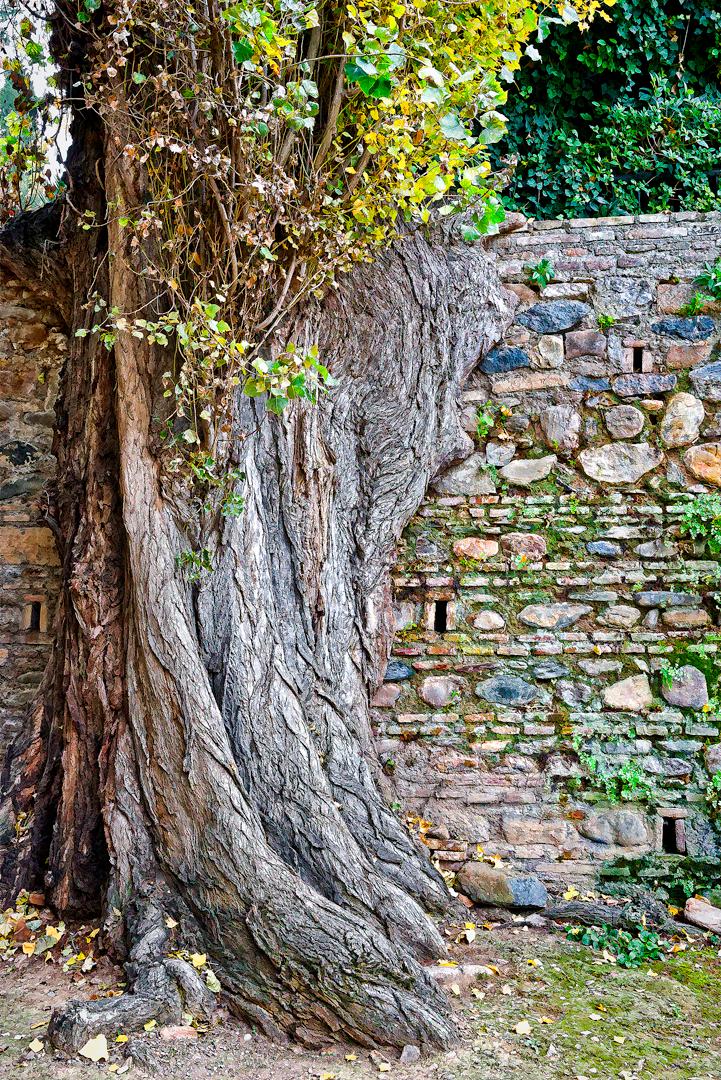
Nothing special; I just loved how the stone wall shaped the tree.

The strategy of limiting the number of tickets worked nicely. There was a fair-sized crowd, but it was never jammed, and there were many out-of-the-way areas that only some found. It is in Alhambra that we see our first contingent of Asian tourists. They know where the most spectacular spots are.


We caught the C-3 bus to the city and were surprised when it dropped us off at the beginning of the Realejo, the Jewish section, that we had only touched on the day before. So, we wandered this section and found it to have its own flavor. First of all, the streets were significantly wider and straighter. Like most of Granada’s neighborhoods, it was hung onto a hillside, so we had to do a fair amount of climbing, but the houses were more prominent, and all were walled and gated. There were some incredible murals, mostly of wild biblical scenes. We both agreed that however lovely it was, it was no match for the Albaicin and Socromente sections.


After a pretty thorough once-over, we returned to the city center and decided to find an outdoor café that served the Spanish national dish, Paella. We were a bit on the timid side, so we bypassed the octopus and muscle version for the chicken version. It was a bed of rice in a delicate sauce with chicken legs, large well-cooked butter beans, and diced peppers; all served in a shallow black iron frying pan. It was delicious, but I kept looking for some Tabasco sauce to kick it up a notch. No luck.


We took the 7 pm bus home – what we now call the RV.

Dave and Wanda

Get Vaccinated To Save Lives.

Virtual Business Card

North America . Europe . Mexico . Asia . Product Reviews . Books & Maps


Please send us your thoughts and any errors we may have missed. We're on the road and cellular service is intermittent in the remote areas. As soon as we get online, we are eager to read all of your messages.


Message us: 715-252-6664 | 715-252-3326
Email: alloverthemaptravelventures@gmail.com

Visit our Website