Logo.png

Vintage Ventures - Spain 2017

December 6

Montserrat

VINTAGE VENTURES: I write my travel journals to look back and remember our ventures. A secondary reason is to allow me to organize all my trip photos. I have thousands of photos. Organizing them into a cohesive story makes sense.

Reaching the Montserrat Monastery Village took us to the top of the mountains.

Day 27, Wednesday, December 6


MONTSERRAT 


Diane has always known about and has always wanted to see the mountaintop monastery village of Montserrat. There is a train from Barcelona to Montserrat, and we had previously purchased our tickets a couple of days earlier. The trip is only 20 Euros roundtrip, but to make it worthwhile, we have to get out of the RV by 7 am – ouch. 


Once on our way, transportation couldn’t have been smoother. The L95 showed up just as we arrived at the bus stand. Unknown to us and much to our surprise, the L95 made a stop at Plaça de Espanya, the very place where we catch the R5 train for Montserrat. We thought we had to take the L95 all the way to Plaça de Catalunya and backtrack on the L1 subway to Plaça de Espanya to catch the R5. We quickly jumped out of the bus and descended into the huge network of subway and train tubes under Espanya. We waited about 15 minutes for the R5, and then we were off to the mountains.


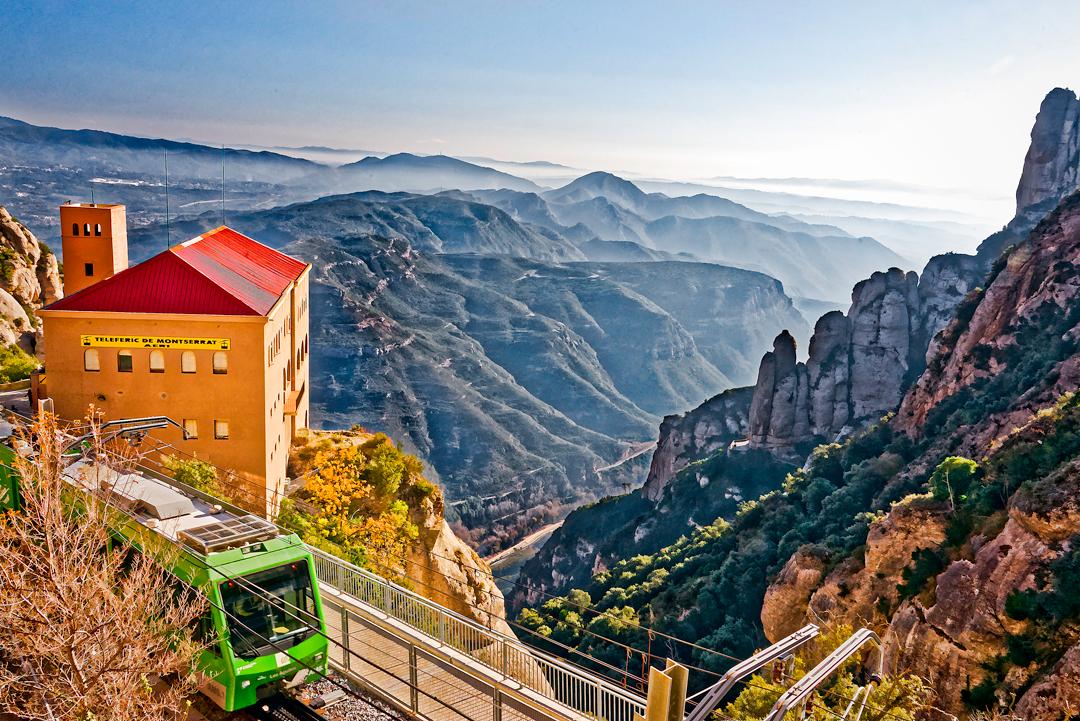
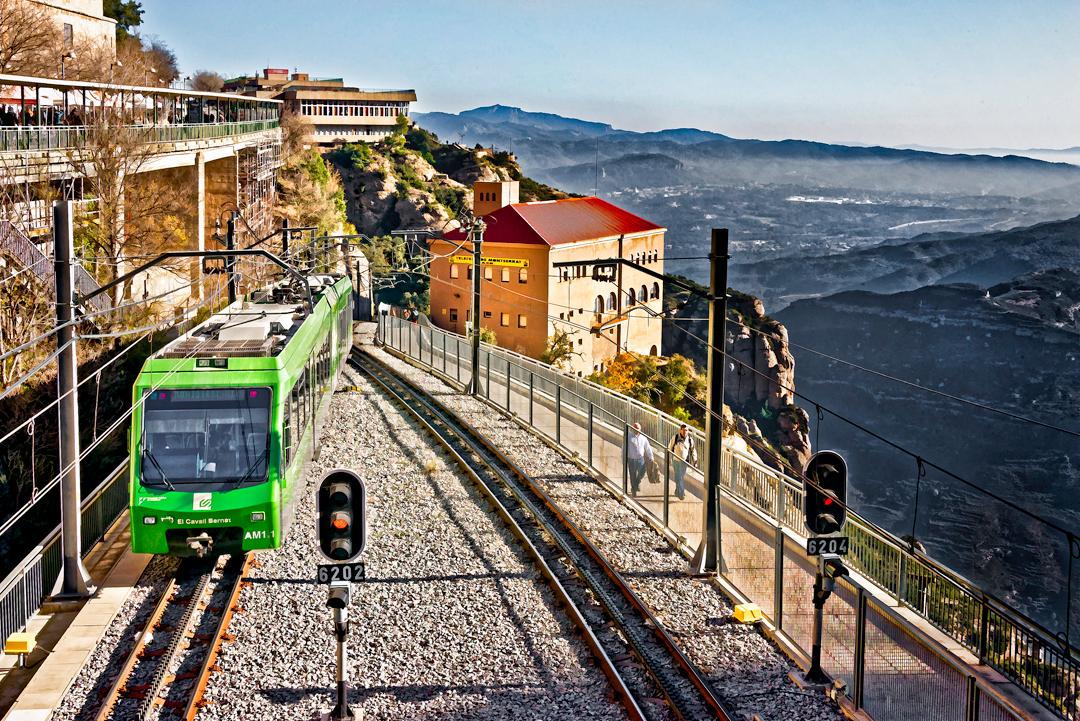
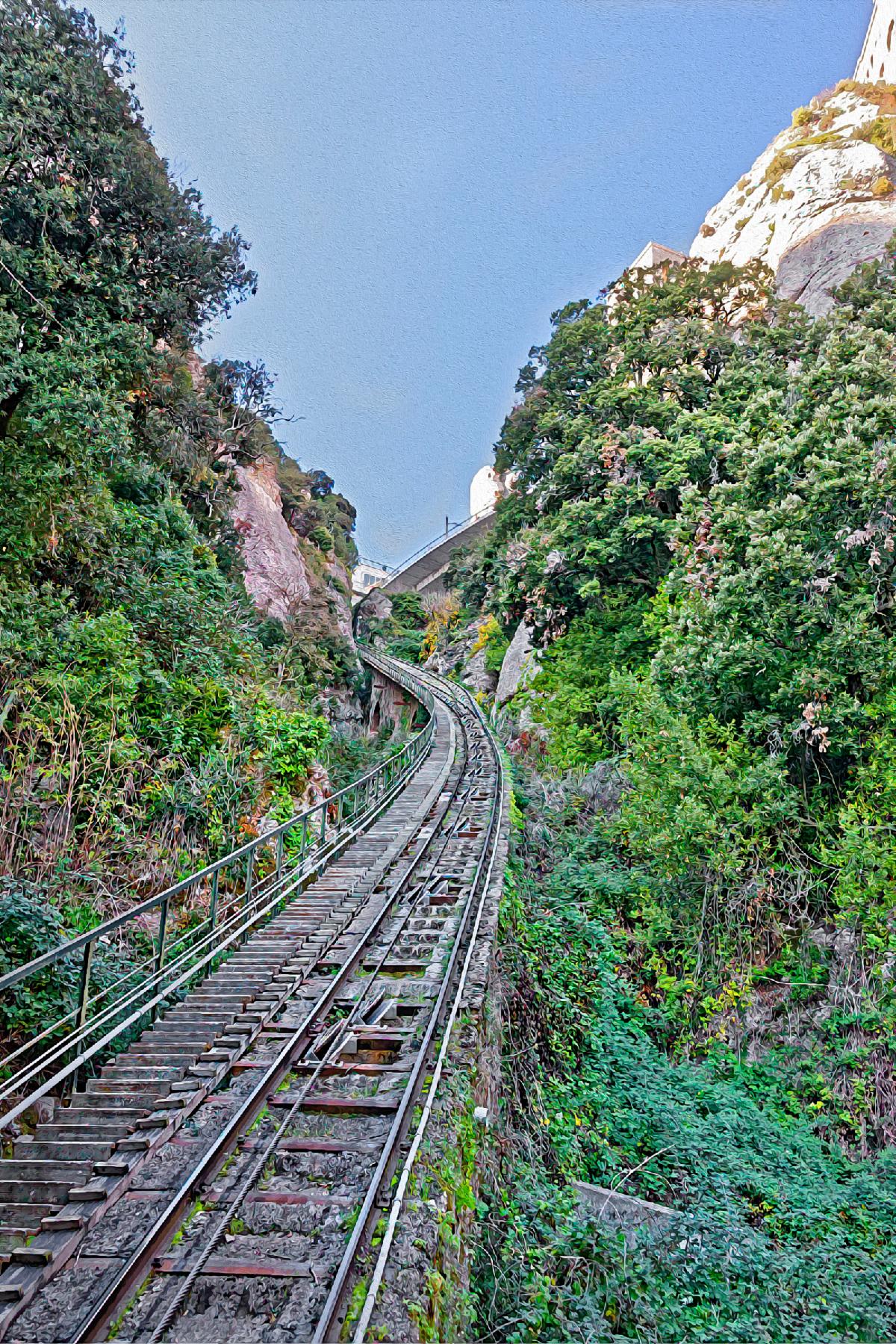
At the little valley town of Monistrol Montserrat, we had to transfer to a special ‘rack-train’ that was waiting for our R5 to arrive. Within a minute or two we were, again, on our way. The rack-train has a third ratcheted rail in the middle of the two normal outer rails. This train crawls up the side of the mountain at what feels like a 45-degree angle. The ratcheted rail keeps the trains from slipping back down the mountain. And what a ride it was. Like the C31 road from Tarragona to Barcelona that just barely hangs on to the side of the coastal mountains, the rack-train seems barely attached to the mountainside as it defies gravity. You can also take a cable car up to the monastery, which looks cool.

The rack-train that clawed up the mountain. Notice the third rail. This rail is ratcheted to prevent the train from going backward.

From what I could learn, this whole village and monastery complex was built because there is a nearby shallow cove along a goat’s path where someone or some people had a religious vision. That may be true, but I think the real reason for all of this splendor is the unique spire-shaped mountain columns that soar above the village.


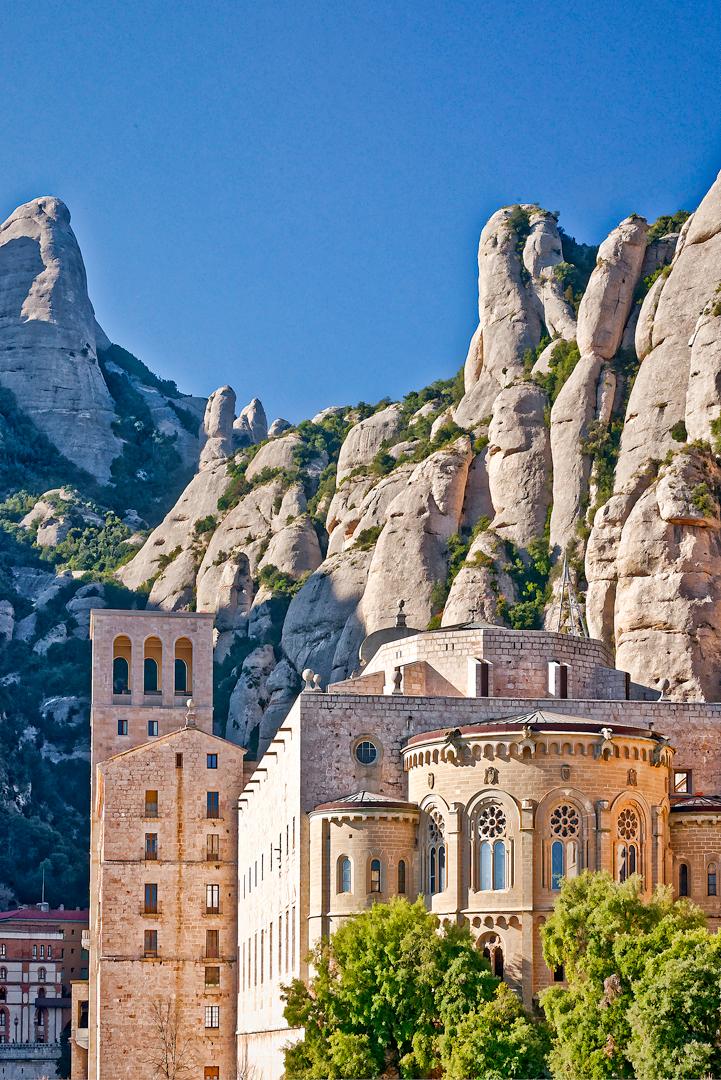
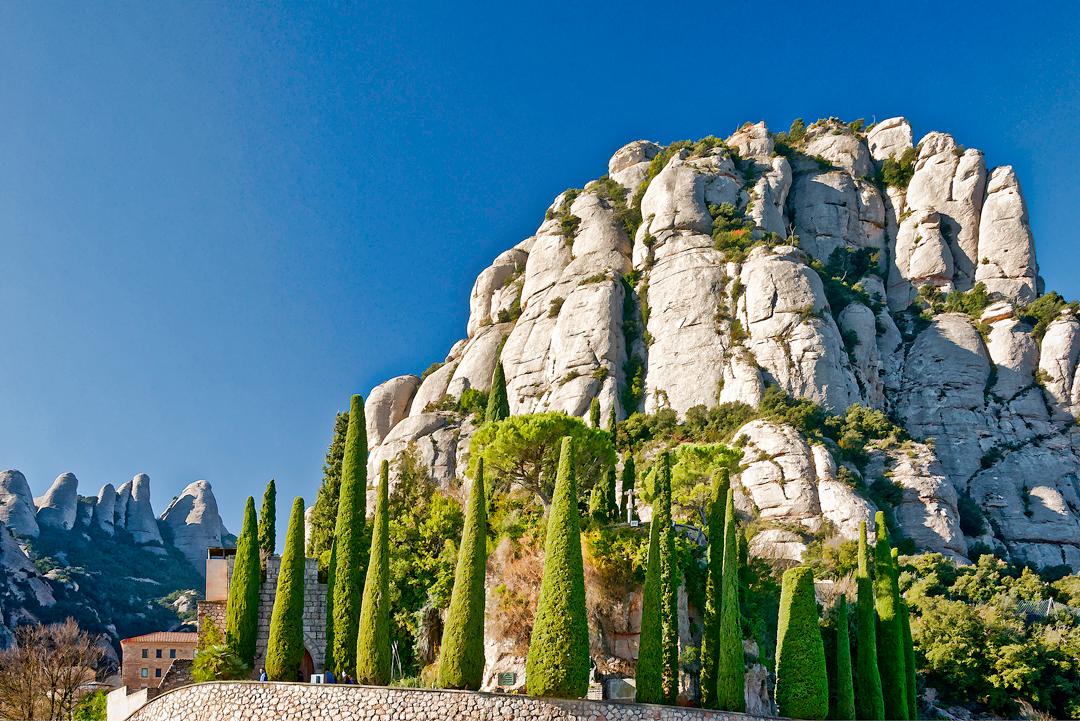
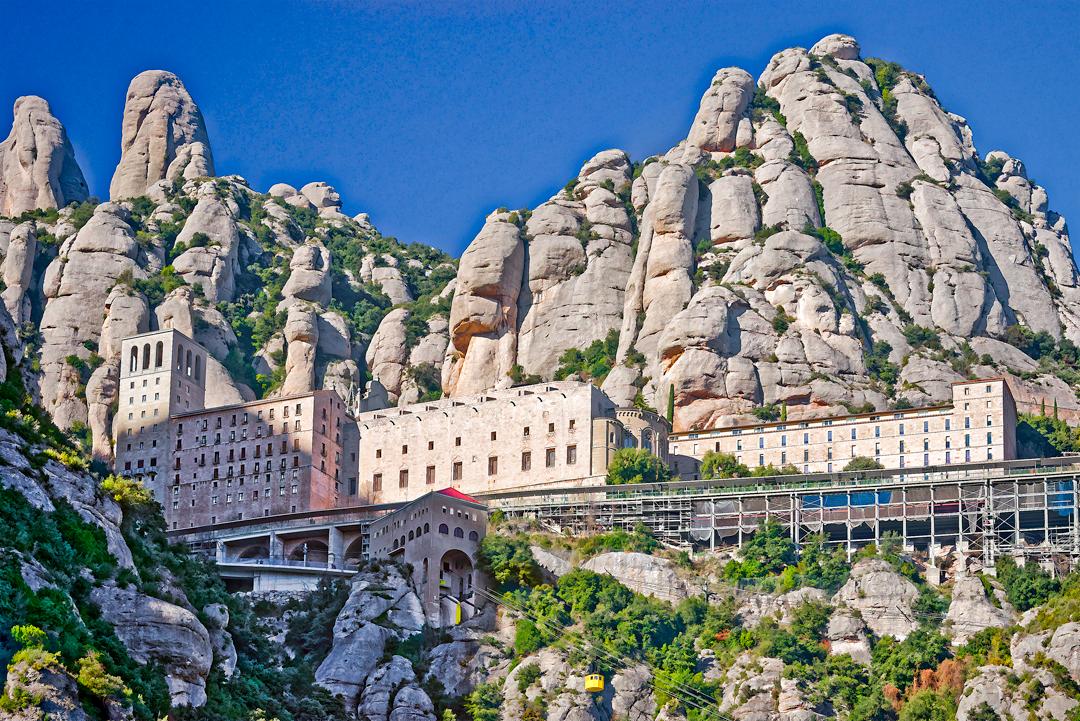
These are the very columns that must have inspired Gaudi when designing the columns in his cathedral. They are unique to Montserrat – about 20 grouped together in a line of tall narrow cylindrical spires looking down on the village. They are just beautiful. What force of nature sculpted that grouping of cylinders?

The back of the monastery's church under the odd-shaped rock columns.

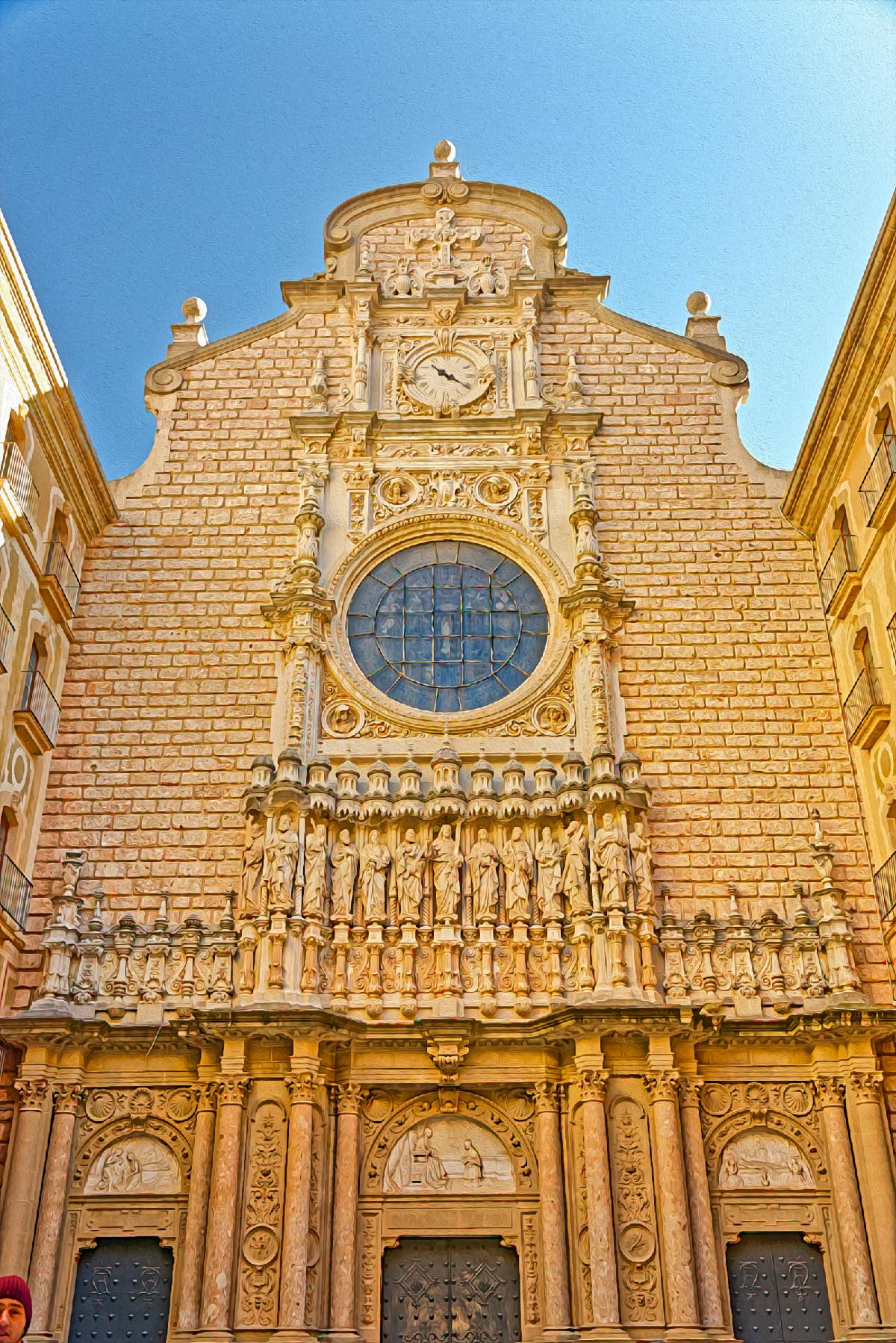
The front entrance to the church.

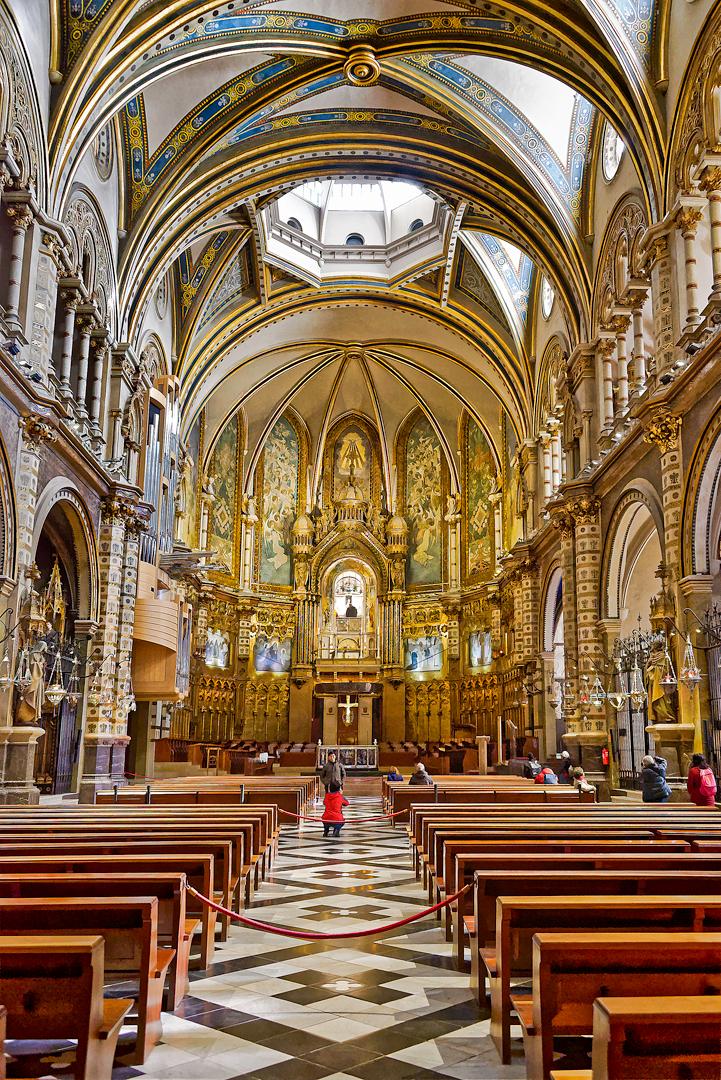
Inside the church, from the back to the front. I kept thinking, how did they get all the building materials up this mountain? The entire monastery and supporting village had to be hauled up the steep mountain.

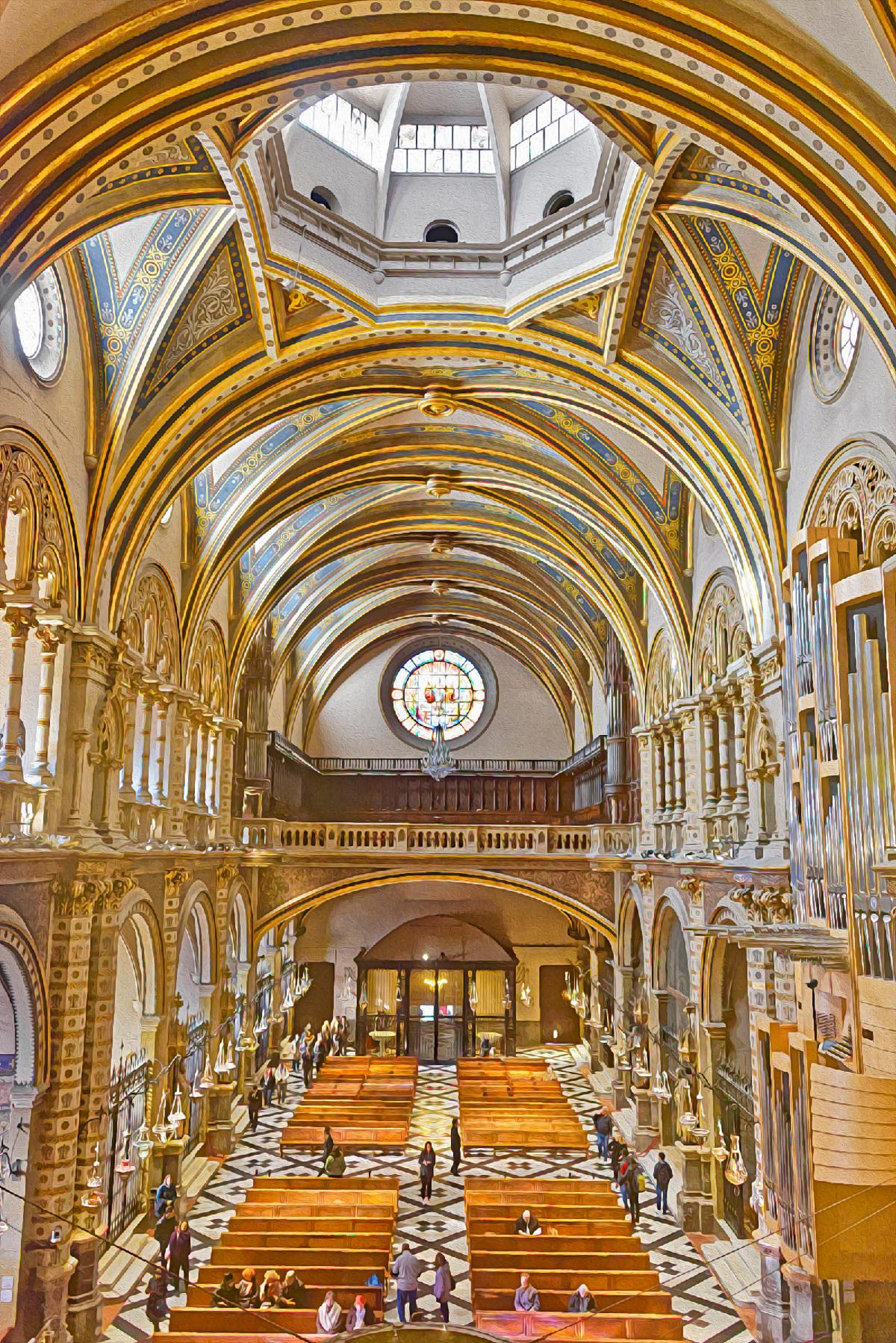
Looking towards the back from a balcony overlooking the front altar.

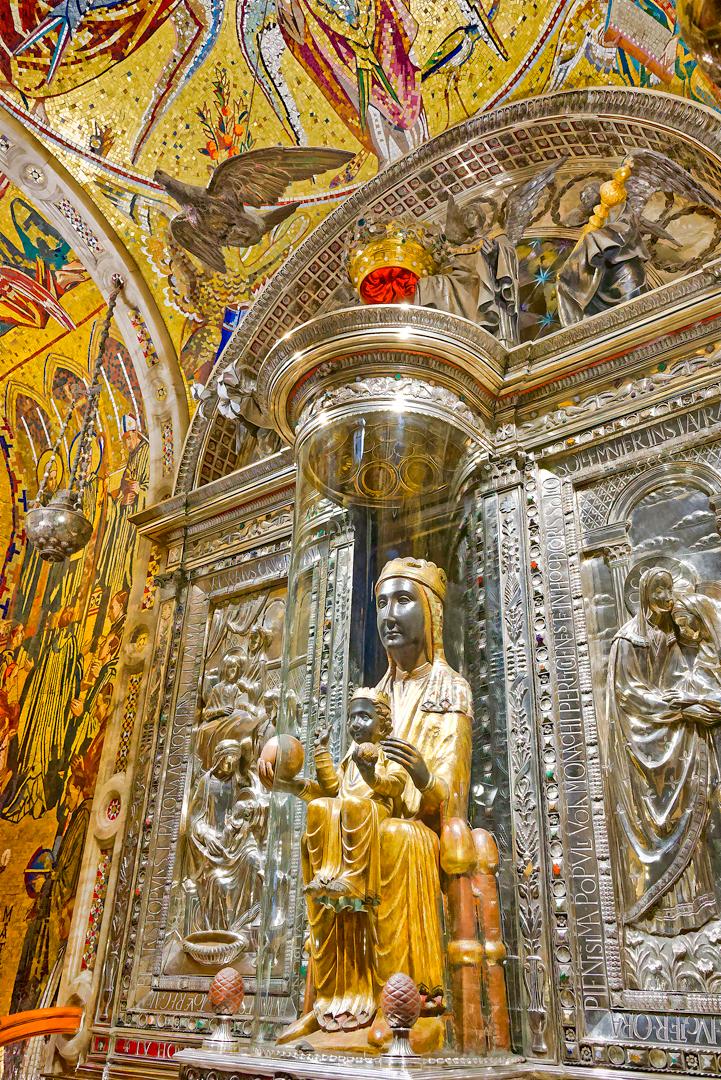
Notice the black baby Jesus and Mother Mary.

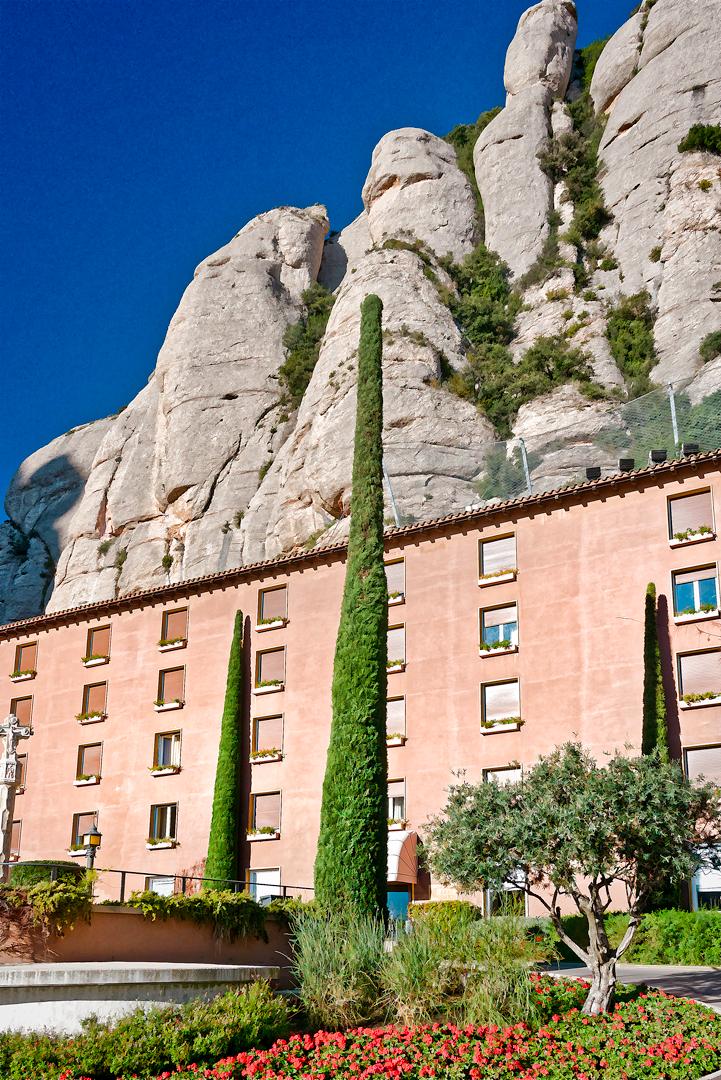
The rock columns were magnificent.

I loved the matching shrubbery.

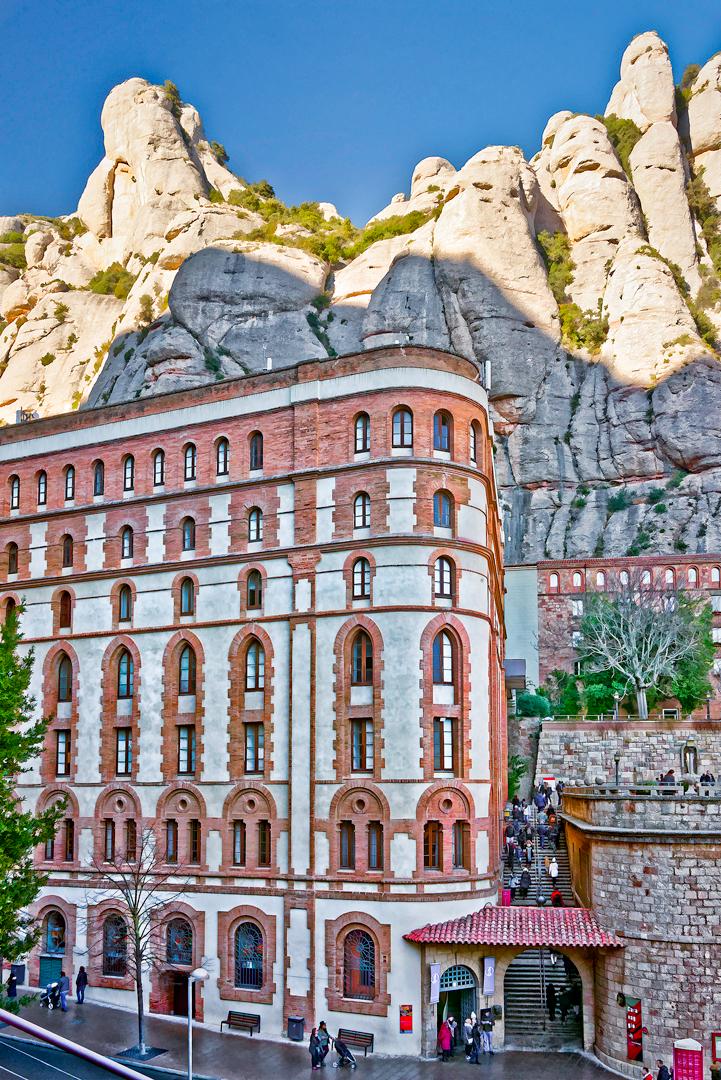
The village hotel.

There is a 'funicular' train that goes from the village straight up to the very top of the mountain. Sadly, it was down for refurbishment until March. I so wanted to take that ride. There is, however, another funicular train that goes down to the trail leading to the cove where the vision reportedly took place. We took that one. The view back up to the village from the path was amazing.


The walkway to the cove turned out to be a lot farther and hillier than we had imagined. But the panorama was stupendous, and the mountain face was filled with beautiful colored twisting layers and laden with odd rock and gravel – nature is an exquisite artist.


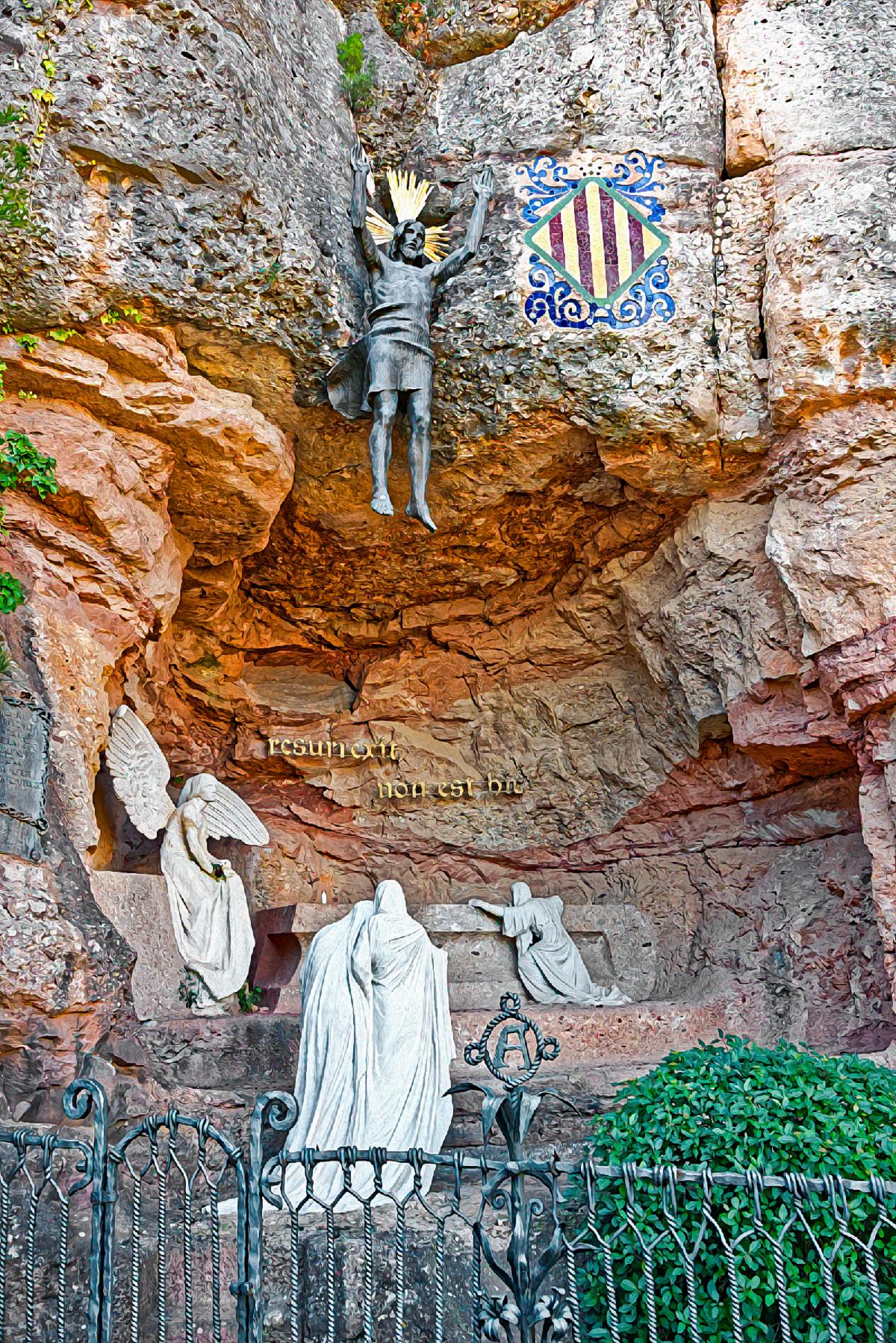
Speaking of artists, along the way, famous artists were commissioned to erect sculptures depicting various scenes of Jesus. My favorite, of course, was designed by Gaudi. That made me think. Gaudi saw those crazy rock spires – hmmmmmm! Maybe they were the inspiration for his cathedral columns?!


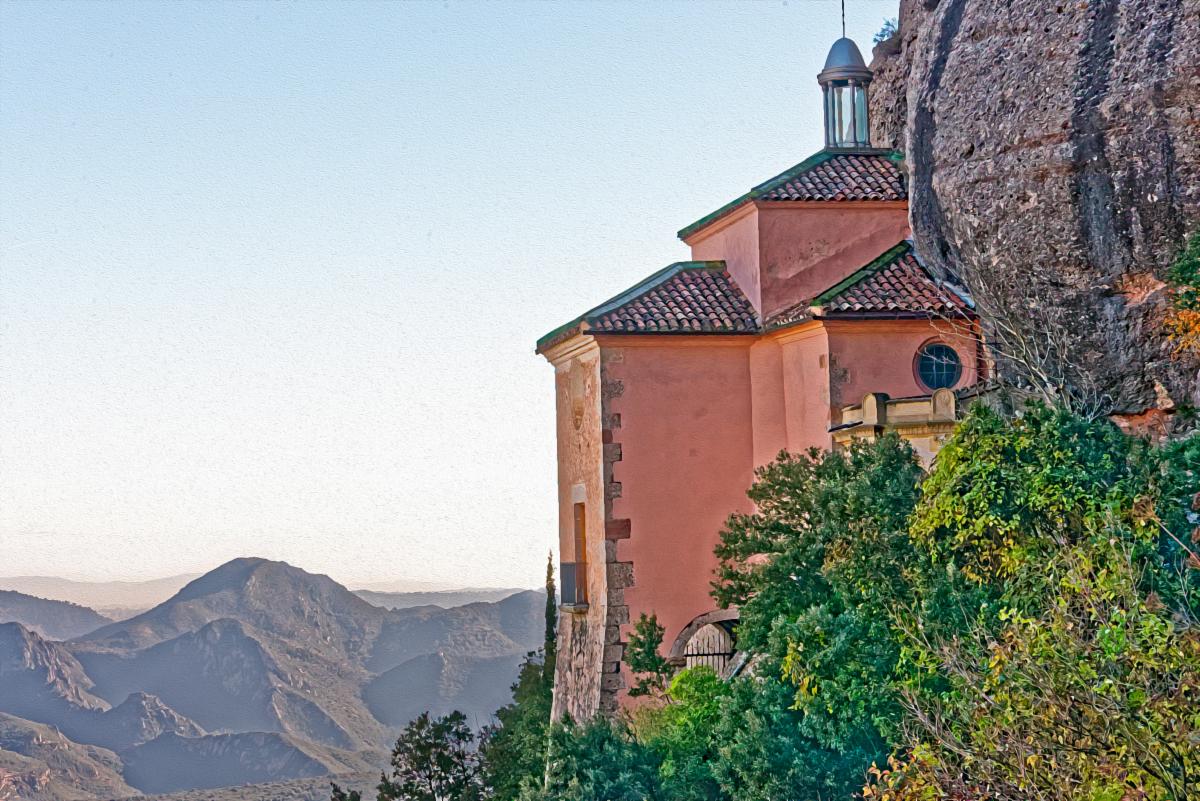
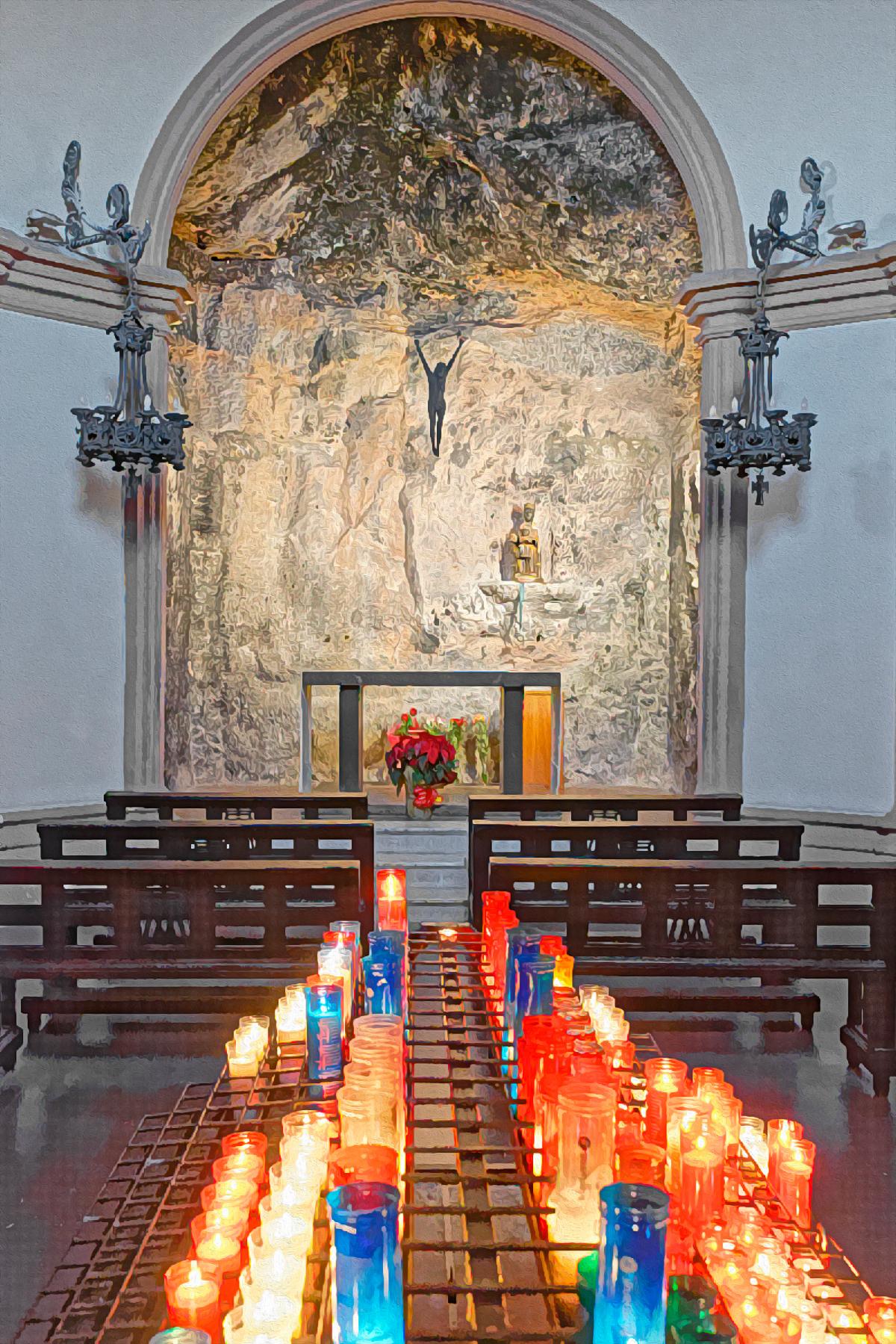
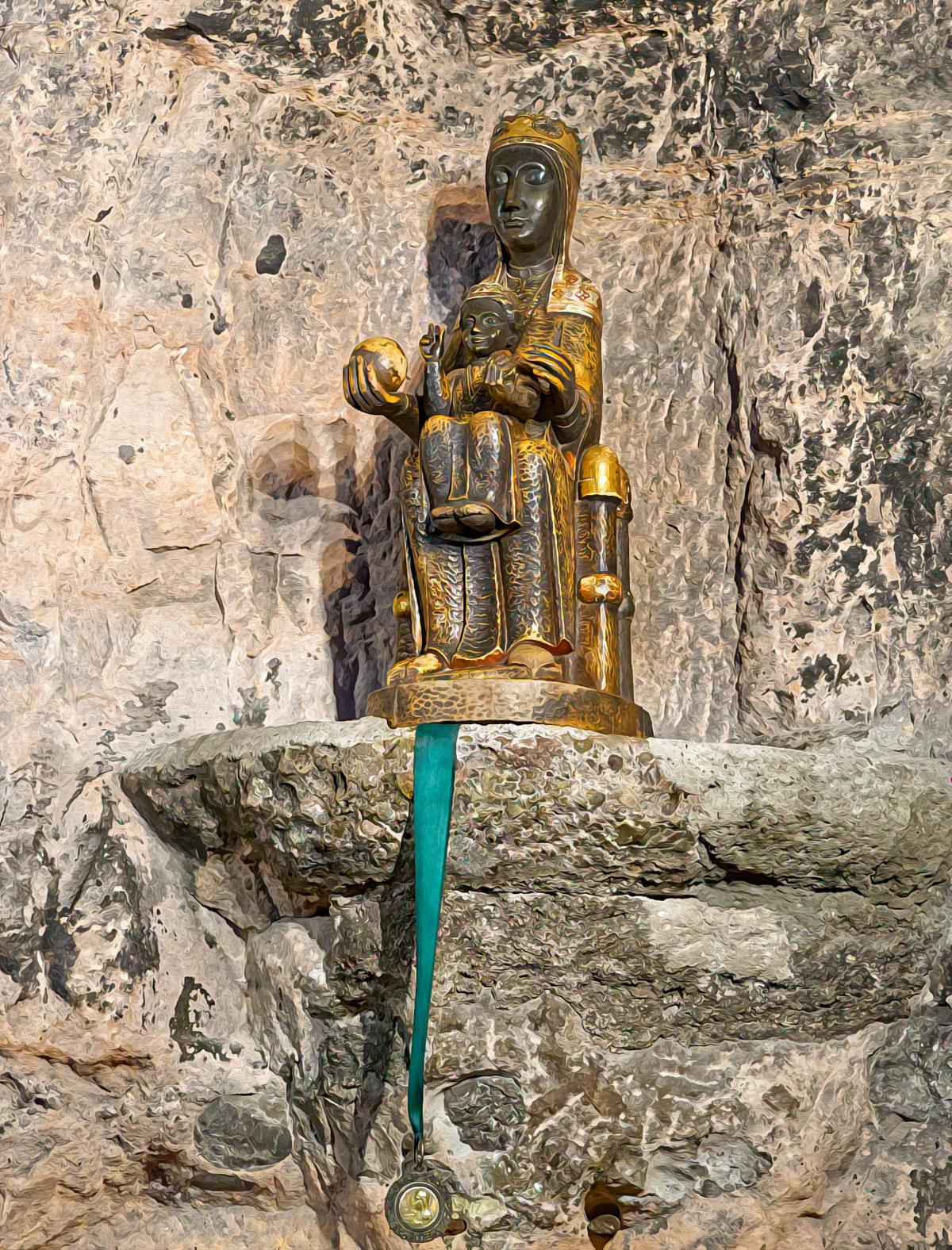
The walkway ended at a small chapel hanging out from a rock outcropping. Inside the chapel were some pews and rows of candles. On the interior wall facing the mountain was the cove, a small indentation into the mountainside. On that wall hung a small statute of a black Madonna and a black baby Jesus. I liked that – Jesus wouldn’t have been the Nordic white European longhaired hippy we usually see depicted.


When we returned to the funicular train, we found the operator in a bit of a tizzy. It seemed that the train was broken and we had to walk straight up to the village. After several speeches and calls on his radio, all in Spanish, I asked him what was going on. He replied in his broken English, “It better you walk, but we try go back up, you come if want.” Well, we took the chance, and the train made it. Once the train was secured, the operator took off his hat and said, “Whew.” He really was nervous.

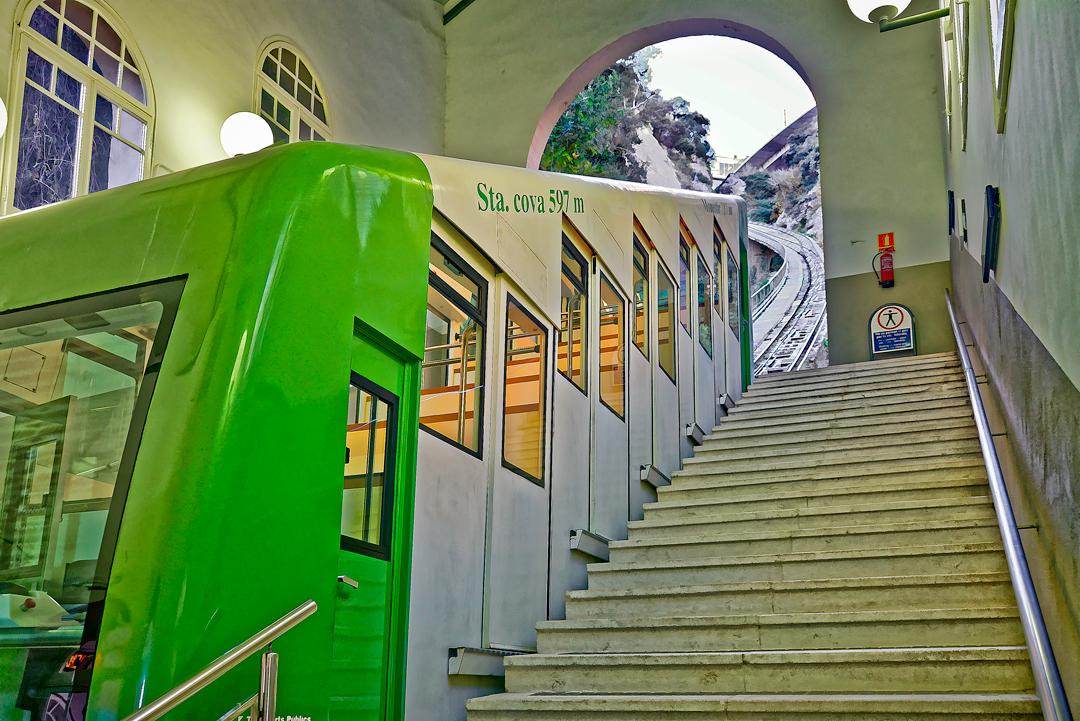
The funicular train.

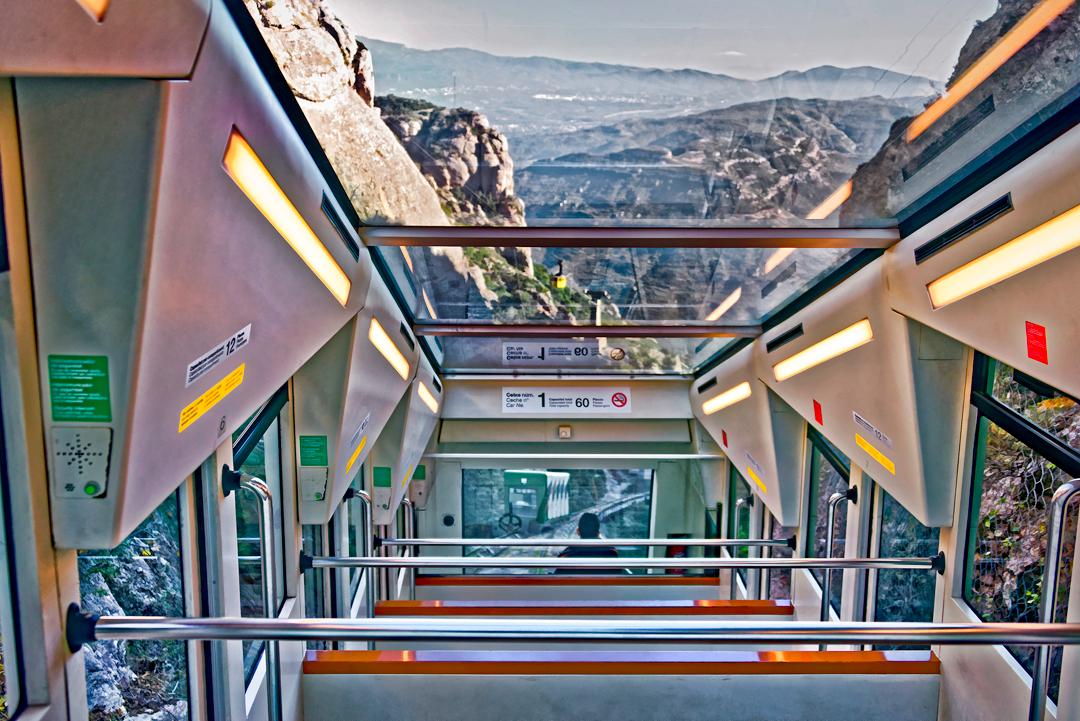
Notice the steps to the left of the tracks. If the train hadn't been able to take us up the tracks, we would have walked those steps. It was worth taking the chance on the broken train. A funicular train is different from a rack-train. The rack-train climbs up the tracks on its own power. A cable pulls up funicular trains. The other end of the cable is attached to another car. The weight of the descending car helps to pull up the ascending car. When the two cars meet in the middle, the track splits into two so they can pass each other. If you look hard, you can see where the track splits in this photo.

The view from inside the funicular train car.

The view of the village from where the funicular train let us off. This was the beginning of the trail leading to the cove where the vision reportedly happened.

Along the trail to the cove, monuments were erected. This is the monument that Gaudi designed.

A chapel was built in front of the little cove. The cove is barely an indentation in the side of the cliff. It is difficult to figure out how the chapel is even anchored onto the cliff.

This is the inside of the chapel protecting the tiny cove. It is amazing that the entire monastery complex was inspired and built due to a vision at this seemingly insignificant spot.

Another statue commemorating the vision. Again, notice that the baby Jesus and Mother Mary are black.

The way the mountains were facing, the sun faded quickly in the village, and that meant chilly air. By 3 pm, we were looking for our return rack train ride. The ride back was long but efficient and beautiful. Back at the RV, Diane heated up delicious leftovers from delicious previous meals. This is our last fun evening in Spain. Tomorrow is packing and preparing for home. The wine flowed like water. I don’t remember going to bed.

Dave and Wanda

Get Vaccinated To Save Lives.

Virtual Business Card

North America . Europe . Mexico . Asia . Product Reviews . Books & Maps


Please send us your thoughts and any errors we may have missed. We're on the road and cellular service is intermittent in the remote areas. As soon as we get online, we are eager to read all of your messages.


Message us: 715-252-6664 | 715-252-3326

Email: alloverthemaptravelventures@gmail.com

Visit our Website