|
Day 14, Thursday, November 23
Today we made a 300-kilometer dash south to the ancient city of Granada. We didn’t unpack anything the night before, so taking off was quick. We were on the road by 9 am. Spain’s roads continue to amaze us (although their maps do not). I have yet to see a patch, crack, or bump. The whole transportation infrastructure is A-1. The trains, highways, and the one airport we saw (Barcelona) are modern and in top shape. We even saw an “unjunky” car junkyard. The cars were stacked on large outdoor ‘shelves’, each in various states of meticulously removed parts—no rusty crap lying around - just neat rows of dead but colorful cars.
Our route paralleled the Mediterranean coast but about 100 miles inland. As we drove south, we saw many brand-new factories and warehouses from Murcia to Lorca, a 50-mile stretch. There must have been a recent significant economic uptick. This stretch is only slightly less arid than the badlands we left behind, but agriculture has picked up with many fields of different vegetables. When the Spanish irrigate, they irrigate very efficiently. They line each row of crops with 1-inch black plastic pipe with tiny holes in them. The water, when turned on, barely seeps out onto the crop’s roots, wasting nary a drop. Seeing fields of green leafy vegetable crops juxtaposed by dusty tan hillsides and mountains is a bit odd.
Also, near the city of Murcia, we start to see highway signs in Spanish and Arabic. Spain is not very diverse. I have seen about six black people, and only in the larger cities. I have seen a handful of Muslim families, but that is about it. Even the tourists are pretty much 50% Spanish, and the rest are European, as far away as Finland, but all white. So seeing the squiggly Arabic symbols came as a surprise.
Spain does have a long Arabian history, especially in this part of Spain. We are close to Gibraltar, where the Moors came up from Morocco and established a kingdom. As recently as 1492, there existed the Arabian Kingdom of Granada. This was before the Christian monarchy conquered it. Sadly, the Christians destroyed much of the Arabian culture – they couldn't have any competition. Apparently, enough remains to justify Arabic highway signs.
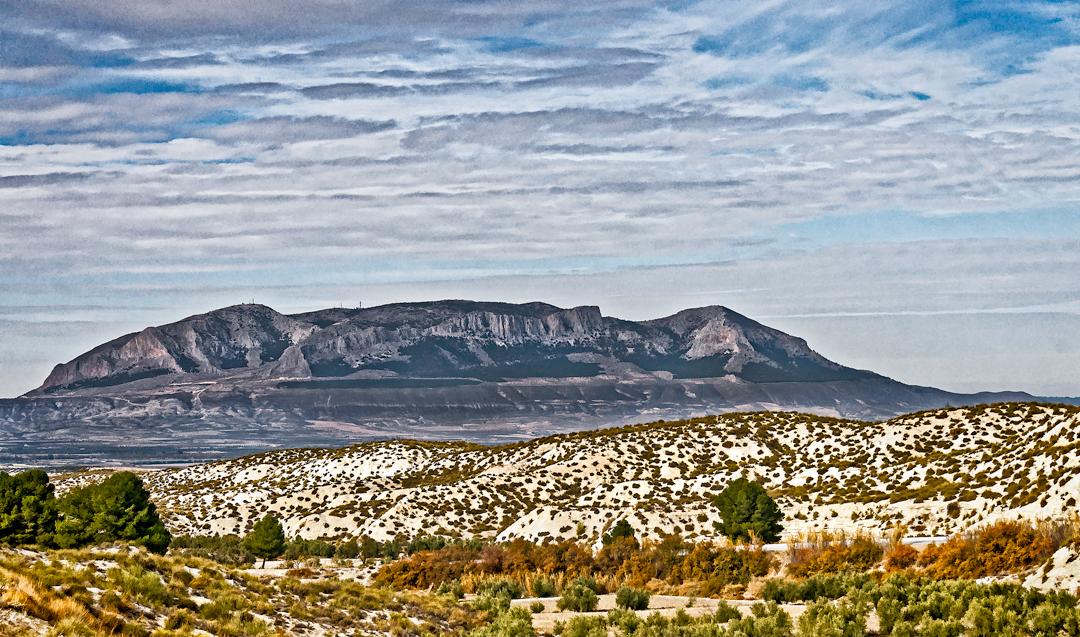
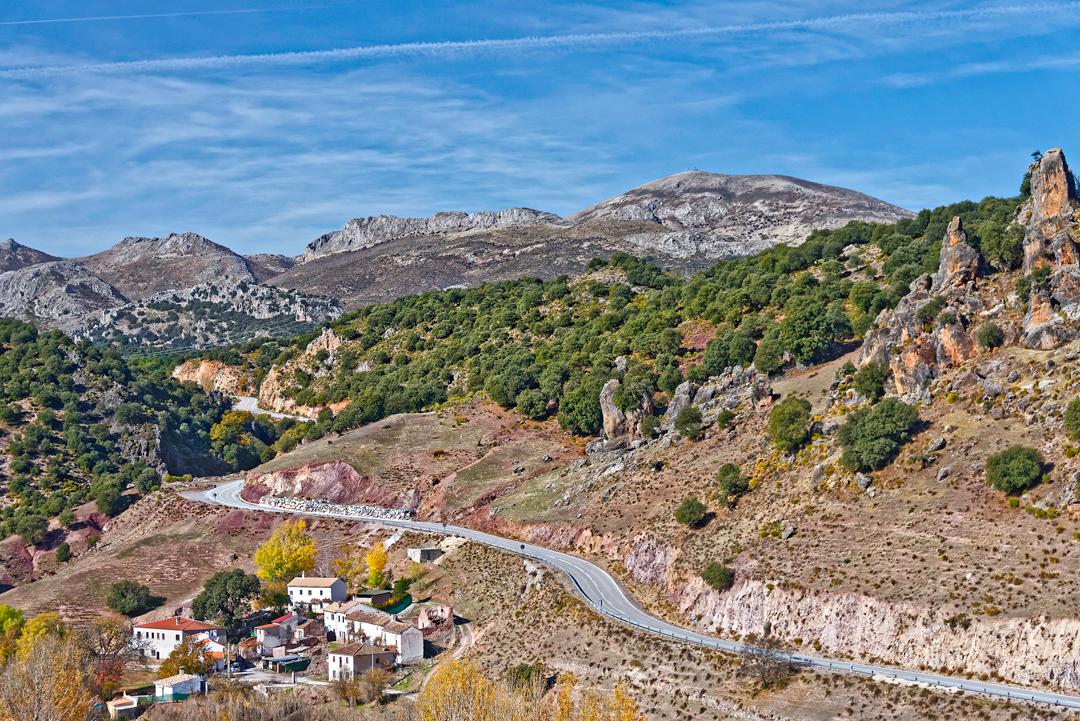
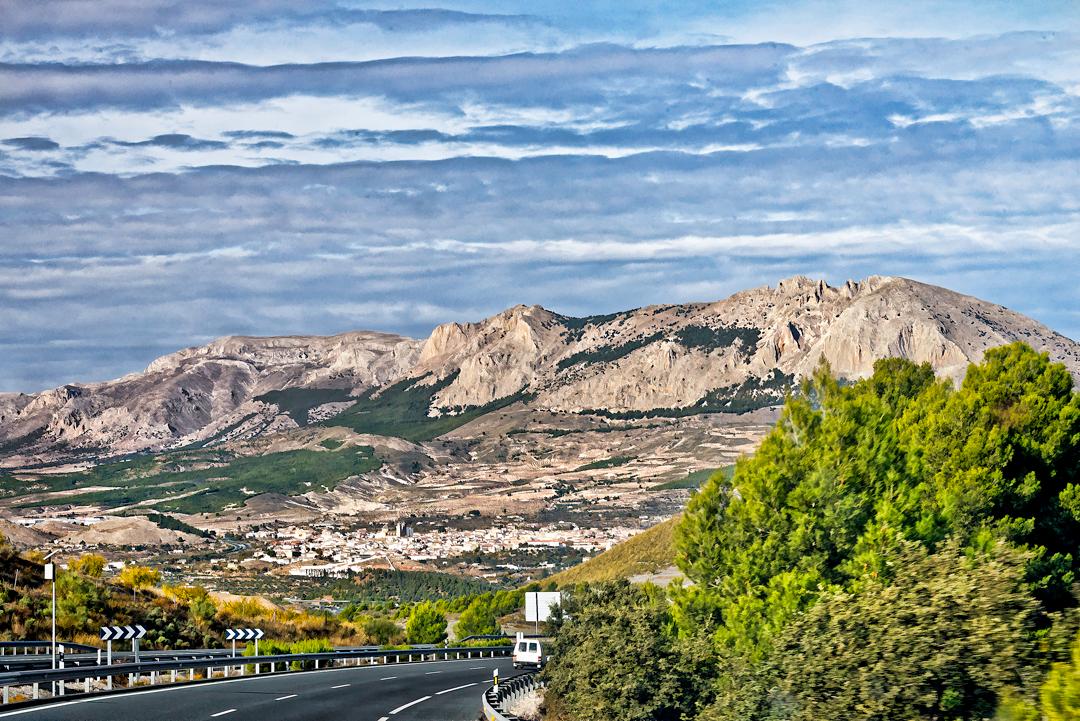
The 300-kilometer drive to Granada was exquisite. Every ten or so kilometers put us in a different climate; different colors of gravel and rock; different mountain textures - craggy then smooth then craggy again; different valleys from desert rainbow-colored badlands to stunted green forests, then olive groves, then vegetable agriculture and then sometimes nearly all at once. Spain is a rugged mountainous but beautiful country.
Just north of Granada is supposed to be a famous ski resort. No way, I figured, but then around Baja, we saw a snow-capped mountain towering above desert valleys and lower barren rock mountains. The closer we got to Granada, the more snowcaps we saw. Mountains ring Granada, and the tall mountains to the city's east are very tall and snowcapped. At one point near Granada, the highway climbed through a 1400-meter (4600-feet high) mountain pass. The views were incredible, but the mountains with the snow were still towering over the pass and nearby mountains. At the pass, we witnessed our first tall, dense pine forest.
About 50 kilometers from Granada, we saw houses dug into hillside cliffs. Most looked pretty poor, but a few were nice ones. For a short time, we saw what looked like poplar tree plantations (maybe for pulp or wood stove pellets?) Then we witnessed a grove of ‘what-ever-they-were’ planted up a steep hillside without terracing. How do you harvest from trees that go up such a steep hillside?
|