|
Vintage Ventures - Yucatán 2018
February 2018
Merida
| |
VINTAGE VENTURES: I write my travel journals to look back and remember our ventures. A secondary reason is to allow me to organize all my trip photos. I have thousands of photos. Organizing them into a cohesive story makes sense. | |
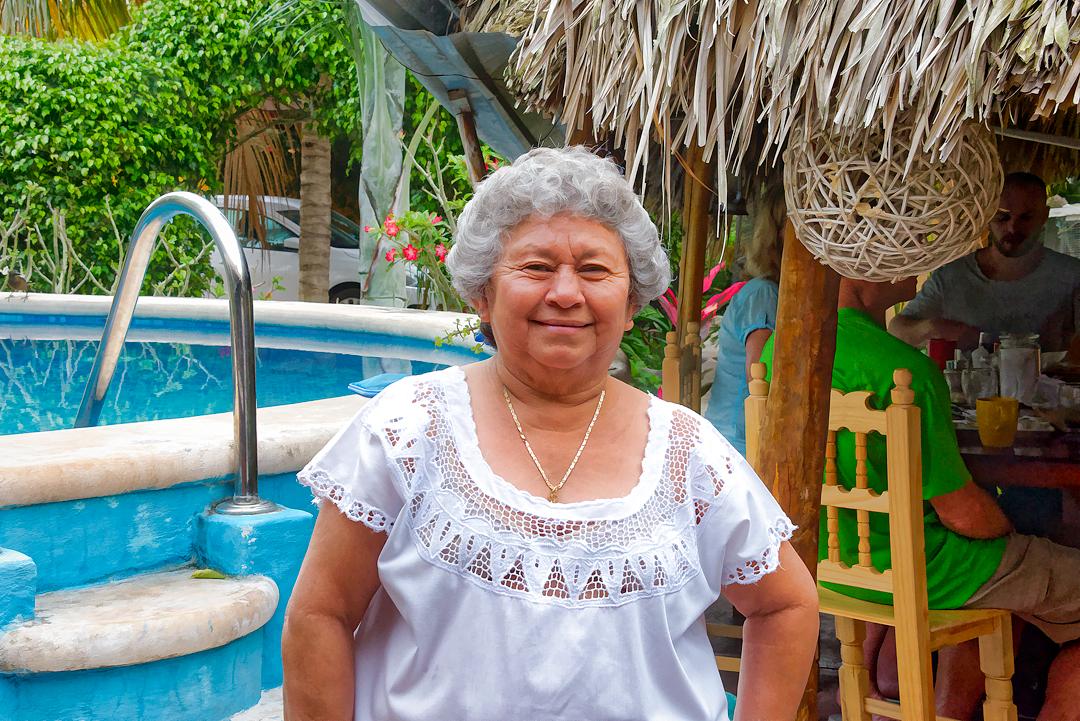
We said goodbye to Susi, the owner and operator of our Airbnb in Valladolid. Her Airbnb was more like a hotel, complete with a lush garden and swimming pool. Her facility had about eight mini-apartments. | |
|
DAY 10 – Monday, February 12, 2018
TRANSITION FROM VALLADOLID TO MERIDA
Our ADO bus was scheduled to leave Valladolid at 9:20 am, so we were up at 6 am to complete packing and enjoy Susi’s breakfast at 8 am (Susi is our Airbnb host in Valladolid). We missed our Airbnb breakfast yesterday because we left so early for Chichen Itza, so we were blown away when we sat down to a fabulous breakfast this morning. We had Mexican scrambled eggs with a black bean sauce and a spicy picante, all wrapped in several warm tortillas. There was also delicious coffee, fruit juice, bread and jam, and a fruit plate. We hugged Susi and promised to leave a well-earned great review on the Airbnb website.
The modern 1st class ADO bus to Merida costs $12.50 US each—the 9:30 am bus left at 9:45 am. The Spanish dubbed movie on the bus was The Great Wall, with Matt Damon fighting off hoards of green slimy monsters with many Chinese good guys. I remember the movie received terrible reviews when it was released, but it was an absolute riot dubbed in Spanish.
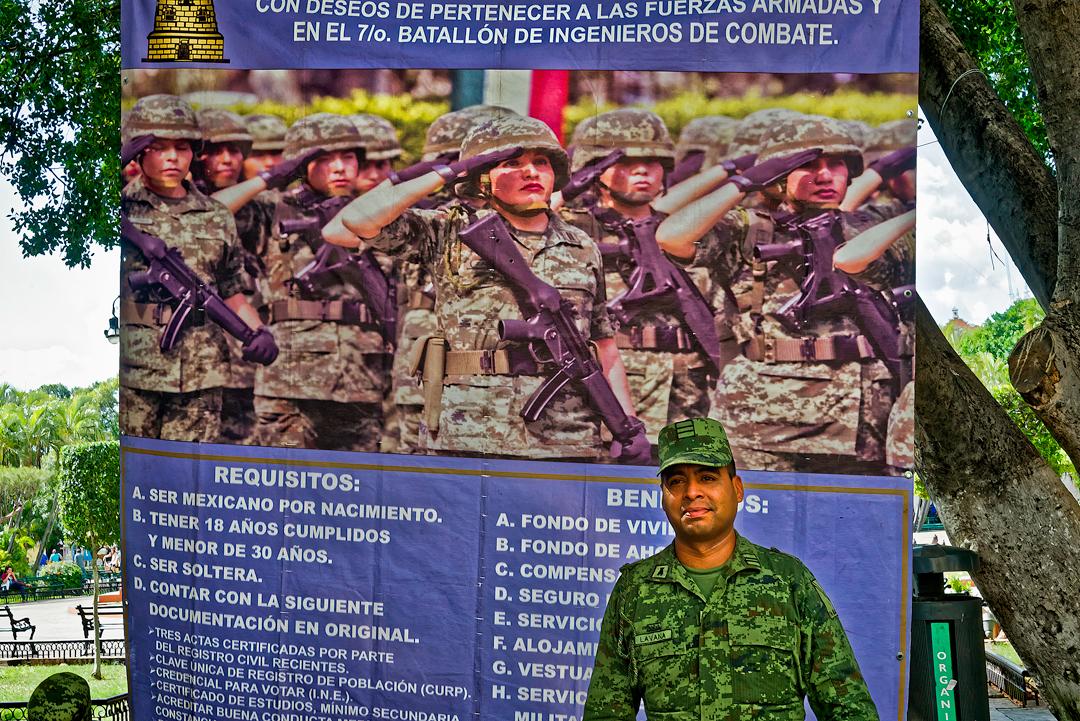
I also noticed a couple of military-style checkpoints on the expressway to Merida. The black-clothed police set up their checkpoints in the shade of underpasses. Traffic was funneled down to one lane with orange cones. The police, with their menacing-looking assault rifles, picked out vehicles, seemingly at random, to inspect. I noticed that many of these vehicles were packed to the gills with personal stuff, and all of it was being removed and searched. I guessed they were looking for signs of drugs and/or drug activity.
We arrived in Merida at 11:45 am. We knew the Airbnb was about 5 miles from the bus station, so we grabbed a taxi for 90 pesos ($5 US). Many Yucatán city streets are arranged in a grid, with east-west streets being odd and north-south streets even numbered. We were looking for Calle 31, which should have been easy to find.
It turned out that there are three or four Calle 31s in Merida because they start over when the street numbers reach zero. So, you have to know the city district's name as well as the street name. I knew this and told the taxi driver we wanted Calle 31 in Jesus Carranza. What we didn’t know, and neither did the taxi driver know, is that Jesus Carranza has a Calle 31A, a Calle 31B, and a Calle 31. We buzzed around and around Jesus Carranza but couldn’t find the house number, which was 482D. Wanda came to the rescue by plugging the address into Google Maps, and sure enough, we were only two blocks away from the Airbnb. Relieved, the taxi driver dropped us off.
| 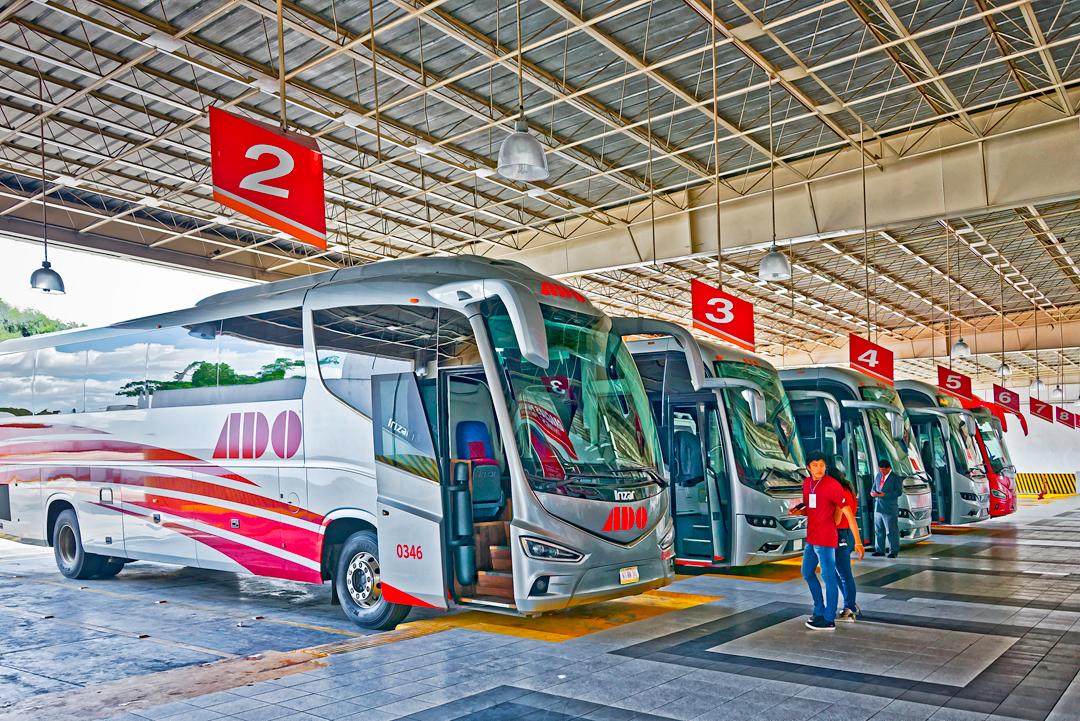 | The ultra-modern ADO buses at the bus station in Valladolid. | |
After experiencing two great Airbnbs on our vacation so far, we were flabbergasted by how awesome this one was. It was huge, modern, clean, had tons of closet space and shelf space, and had a terrific bathroom. We quickly unpacked, gooped up with sun-screen, and went out to learn the lay of the land.
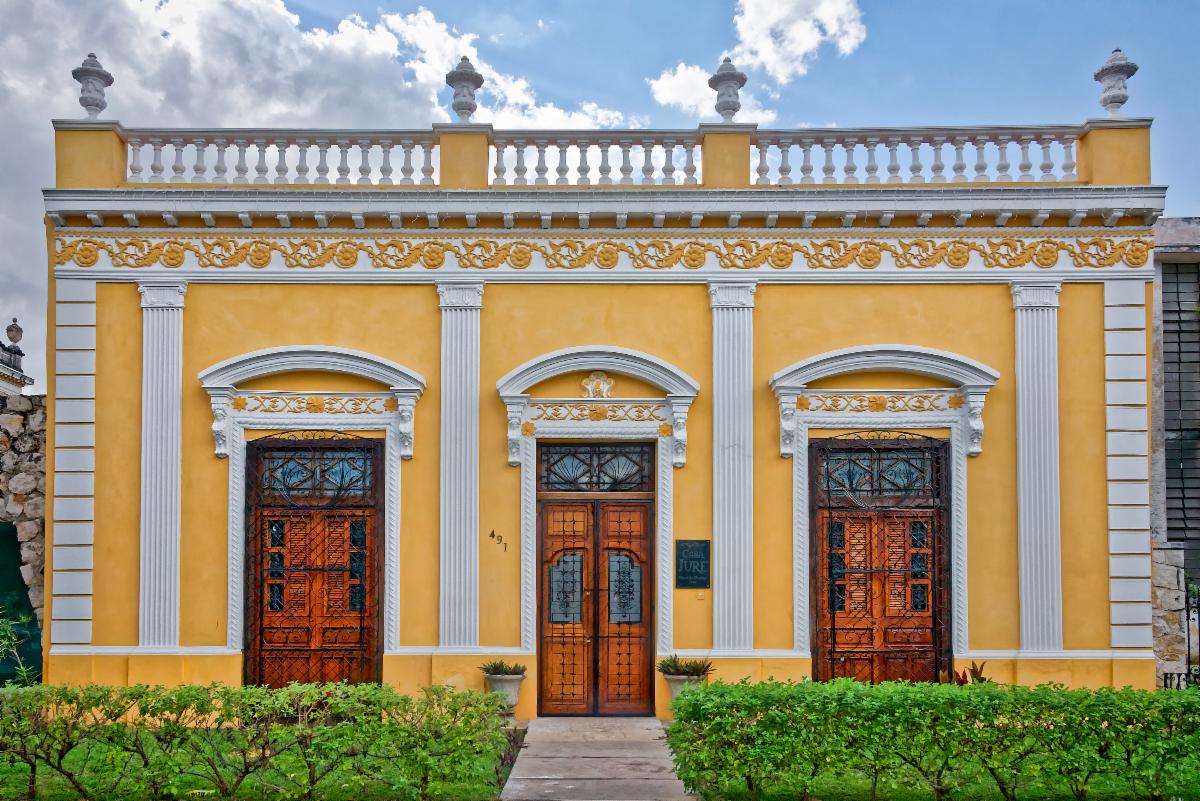
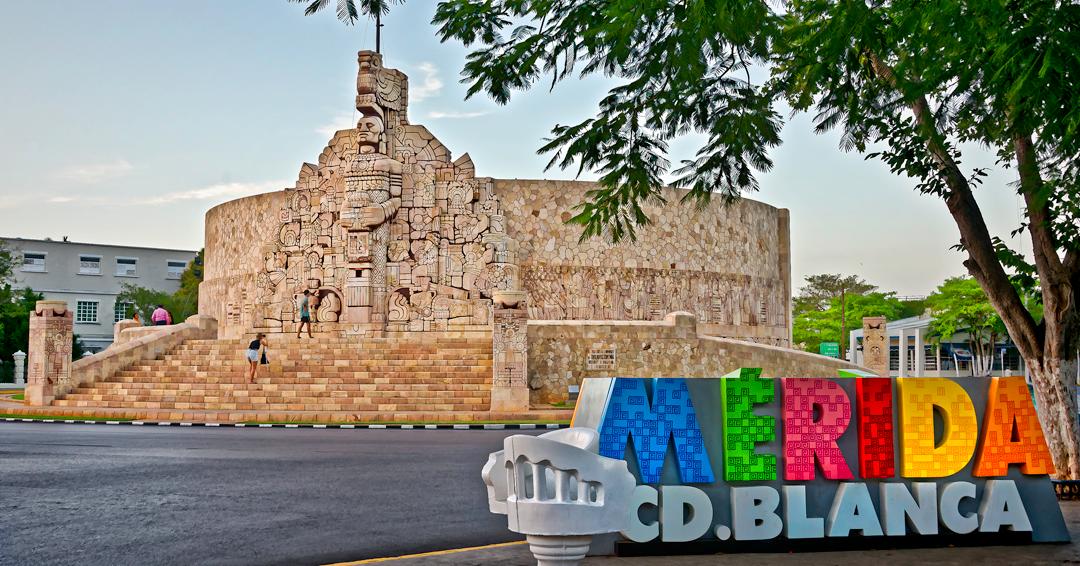
Our Airbnb was ideally located. It was in a nice neighborhood just a couple of blocks away from Paseo de Montejo, an ultra-wide boulevard lined with beautiful historic buildings, shade trees, tall palms, and home to cool historic monuments standing in the center of all of its traffic circles. It is considered to be Merida's most beautiful street.
Paseo de Montejo sort of feeds into the historic downtown city center. I say 'sort of' because the boulevard abruptly ends a few blocks north of the city center. You then detour over to Calle 60, a nice commercial-business street lined with small plazas and churches.
Later, we found a Walmart just three blocks from our Airbnb and a tamale street vendor next to that. Although I’m not a big fan of Walmart, we were able to purchase a few items here that we couldn’t find anywhere else, like razor blades to fit our razor, Neutrogena 70 sunscreen, etc. Walmart also sold inexpensive bottled water, which we bought every evening on our return to the Airbnb. Early on in our vacation, we learned that you must stay hydrated in the Yucatán heat.
| 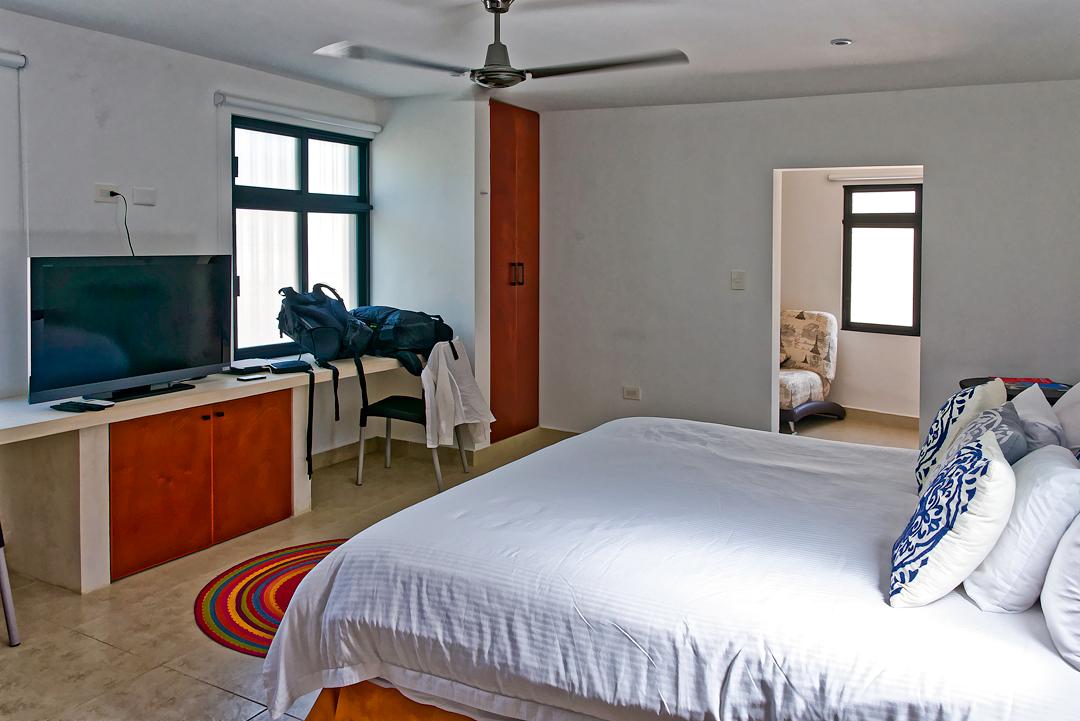 | Above and below: Our spacious new Airbnb in Merida. | 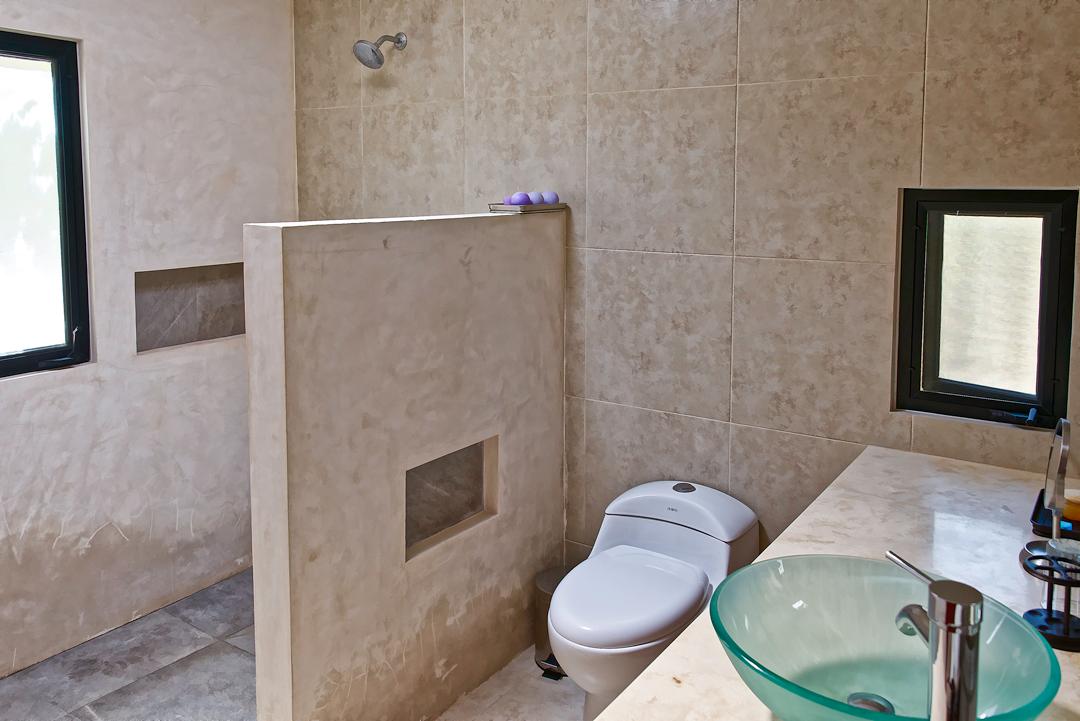 | |
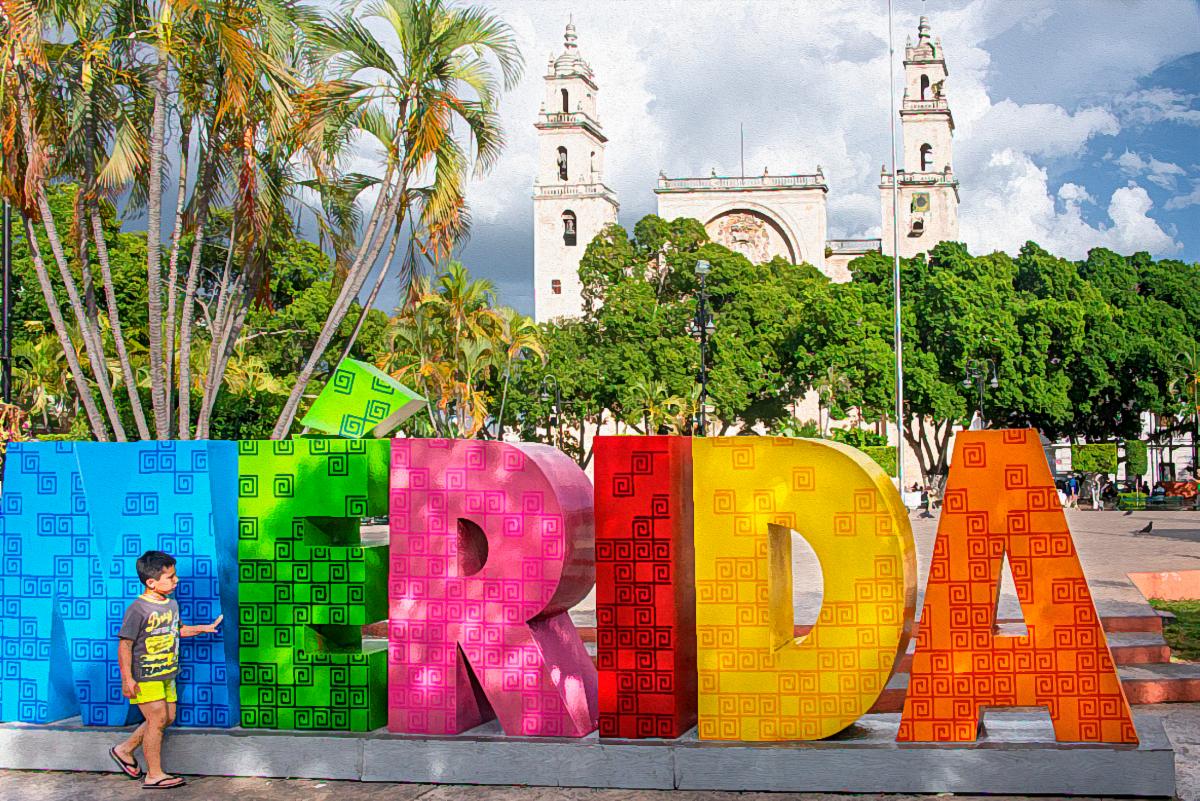
On our first walk down Paseo de Montejo, we made a mad dash to the Plaza Grande, the very heart of Merida. Plaza Grande is a lush, spacious square surrounded by gorgeous ancient buildings, including the Cathedral de San Idelfonso, the oldest cathedral in the western hemisphere mainland (the only cathedral that is older is located on the Caribbean Island of the Dominican Republic), and a bunch of historic ornate municipal buildings. We read that Merida is slow and laid back. Whoever wrote that bit of tourist info never went downtown. Surrounding Plaza Grande for about a mile radius was one of the most bustling-hustling city hubs we have experienced.
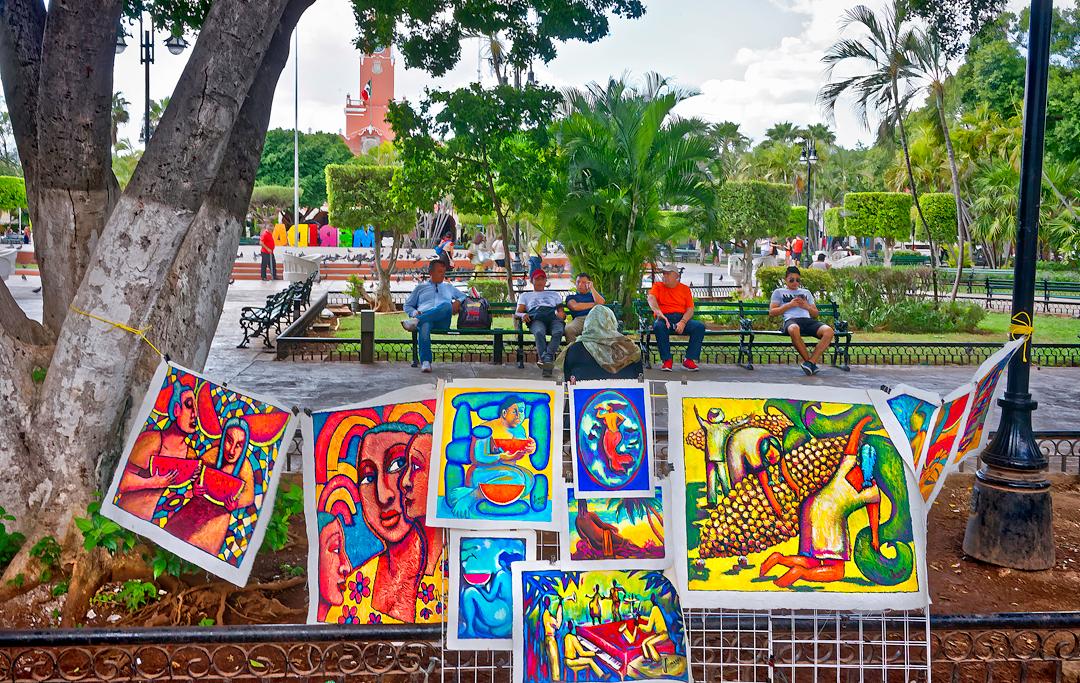
At the very center of this bustling hub, Plaza Grande is also a cultural center. We saw political rallies, Police flag rituals, incredible street musicians, street dances, vendor markets, and throngs of people hanging out.
Merida has an extensive but complicated bus system. I found a corner newsstand and bought a metro bus map hoping it would help me to figure out the routes. The bus only cost 8 pesos and, once learned, would be a great way to get around the city. Like the buses in Puerto Vallarta, the buses in Merida were beat-up ancient Mercedes stick shift rattletraps with the names of the neighborhoods they serviced handwritten on their windshields. Of course, these neighborhoods were unknown to me and written in Spanish, so that didn’t help us much, at least not at first. But, at a mere 8 pesos, I was determined to figure out the routes.
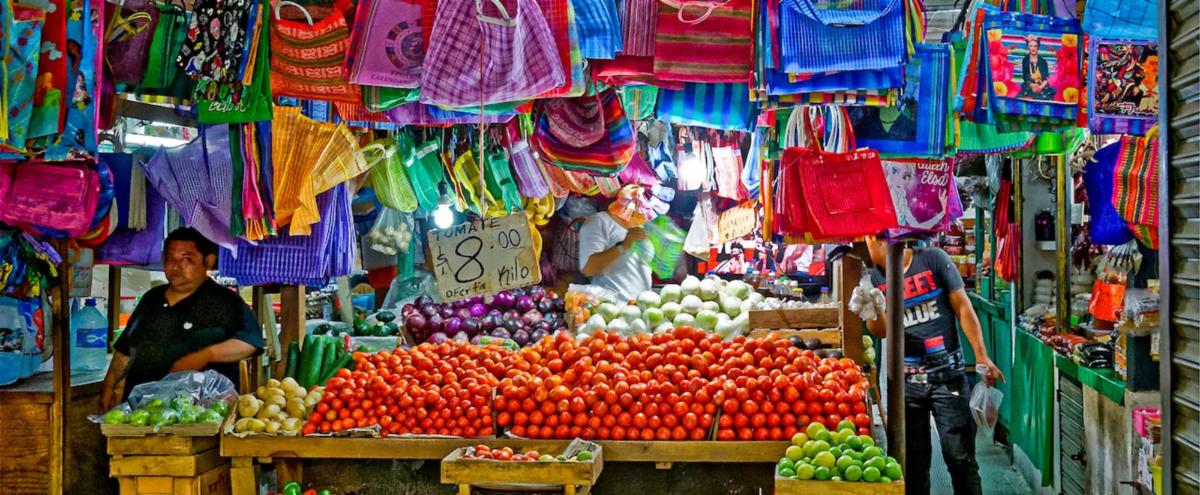
About four or five blocks away from Plaza Grande is the gigantic Market. This people-packed area is easily four giant city blocks of roofed and outdoor vendors from fruits and veggies, to shoes and shoe repair, to animal feeds, to restaurants and food carts, to rows and rows of bus and colectivo stands, to butcher and meat shops, to Panama hat vendors, flowers, and just about everything else imaginable. There are shops, stands, carts, and roving vendors of all ages, from very young kids to the elderly. Every second or third vendor had a thumping speaker blaring out Latin beats, competing in a cacophony of vibes to get your attention. The insane chaos of it left us speechless – the power of the chaos left us awed. We’ve experienced many city markets, especially in Europe, but nothing like this.
After the delicious fruits in Valladolid, we picked up some sliced mangos, peeled mandarins, and sliced papayas, only to be disappointed. The mangos were more rind than flesh, the mandarins were mouth-puckering sour, and the papaya was past its prime. We learned to be more careful in picking out fruit in Merida.
On one street corner, a talented street hustler approached us. He casually inquired where we were from and what we had already seen in Mexico. He claimed to be a genuine Mayan and tried to teach us some Mayan words. He told us about a workers’ cooperative where Mayan artisans made arts and crafts and proceeded to show us the building displaying these wares, which just happened to be half a block away.
Of course, we knew this was a hustle, but we thought it wouldn’t hurt to see if these items were genuine Mayan crafts or just Chinese imports. He handed us over to an equally talented hustler in the building. This new guy claimed to have inherited a vast ranch that grew sisal, an agave plant that produced a traditional fiber made into a strong sisal rope and made into Panama hats when further processed. He went on to explain that his hats are handmade by elderly Mayan ladies in caves on his ranch and that he is responsible for their wellbeing, and if we bought a hat from him, his lady craftswomen would be forever grateful. The hats were expensive, he claimed because it took a woman three weeks in a damp, humid cave to make them (The dampness of the cave being necessary to soften up the sisal fibers).
The hat he picked out for me was very nice but 1400 pesos? When I balked, he quickly wrapped a feminine ribbon around the brim and put it on Wanda’s head. Wanda liked it, and the guy zeroed in for the kill. He’d reluctantly accept 1200 pesos, and he had a Visa machine. I knew I was cooked and bought it. I didn’t buy the story, but Wanda did look snappy in the hat, so it was worth it. Later, we went to the city tourist information center at Plaza Grande and saw a poster warning tourists that there isn’t a Mayan workers’ cooperative and that women aren’t making sisal hats in caves. Oh well, it was a lovely hat, and, as I stated, Wanda looked snappy.
In the evening, after hearing a guy squawking an impassioned political gripe through an unintelligible megaphone, a young Korean kid started playing some wonderfully intricate Wes Montgomery-like jazz. We learned that he wanders the world and plays in various parks and plazas, wowing passersby with his jazz licks. His handle is joje0731, and he plays a Gibson 335 electric guitar through a battery-powered amp. He uses a looper pedal to lay down a rhythm and then plays jazz solos over the rhythm loop. He is a true phenom.
After devouring a delicious strawberry cream paleta, we returned to the Airbnb. It was a great day.
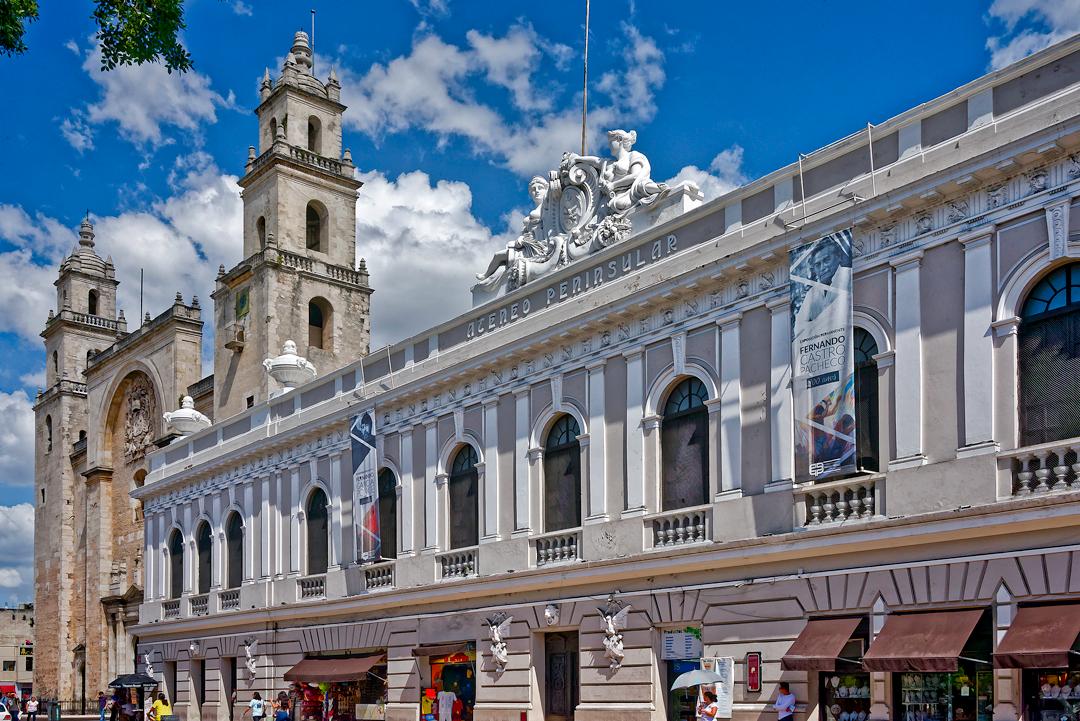
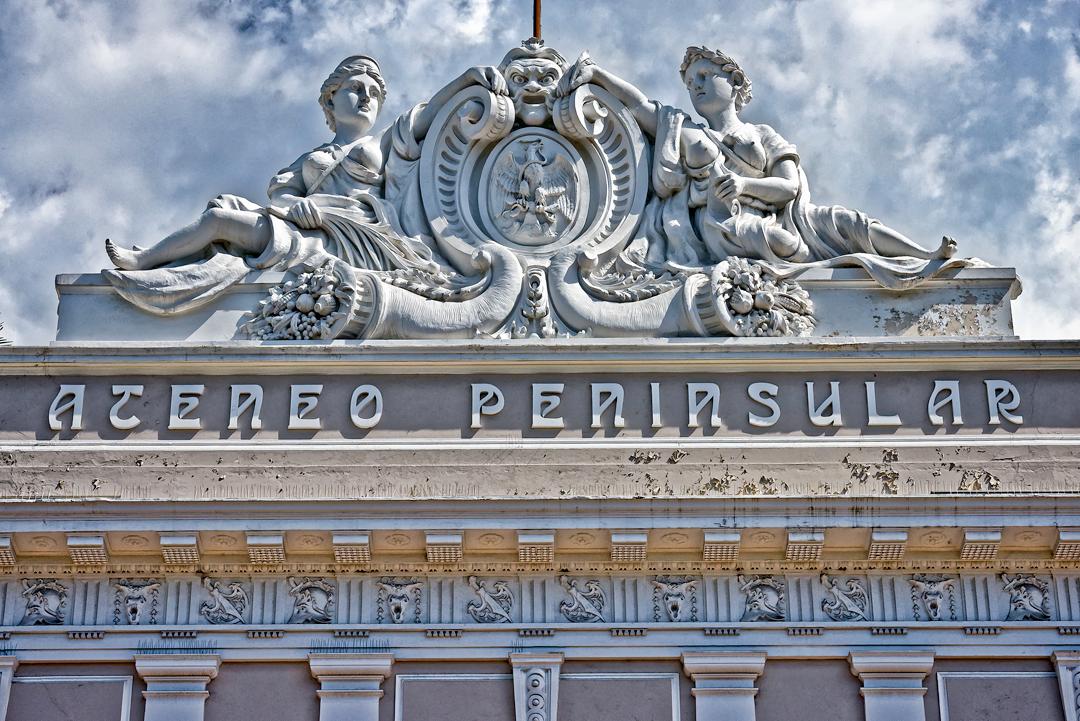
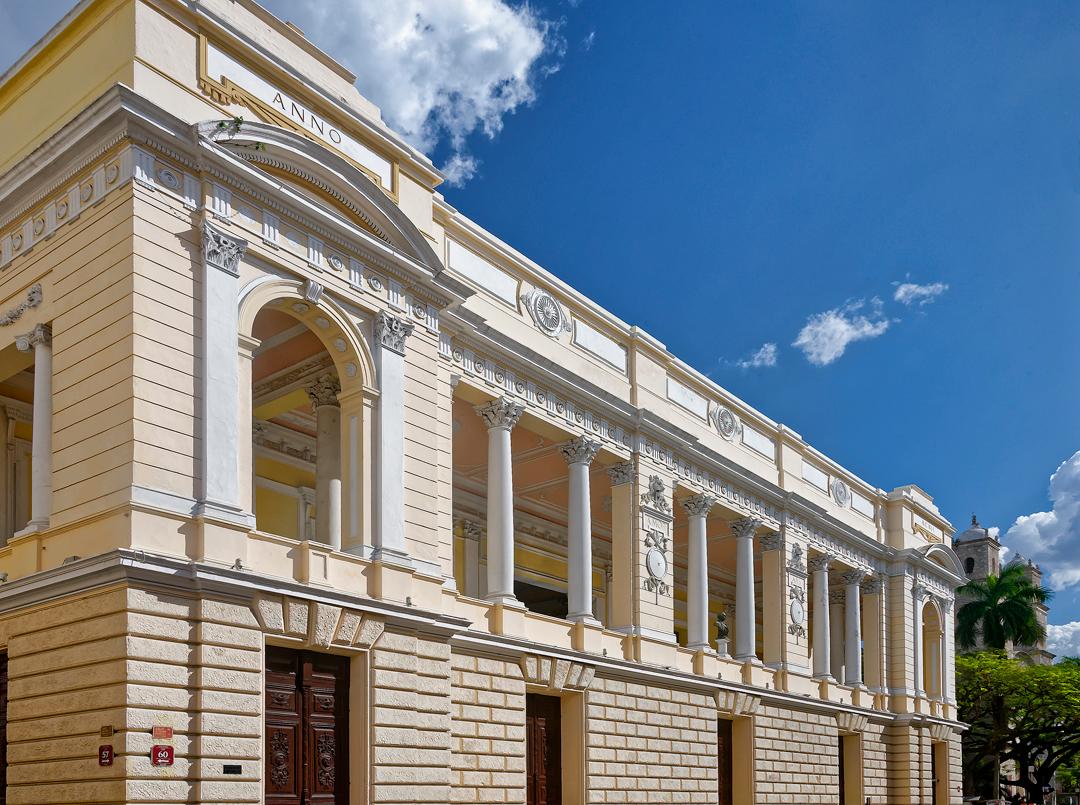
| 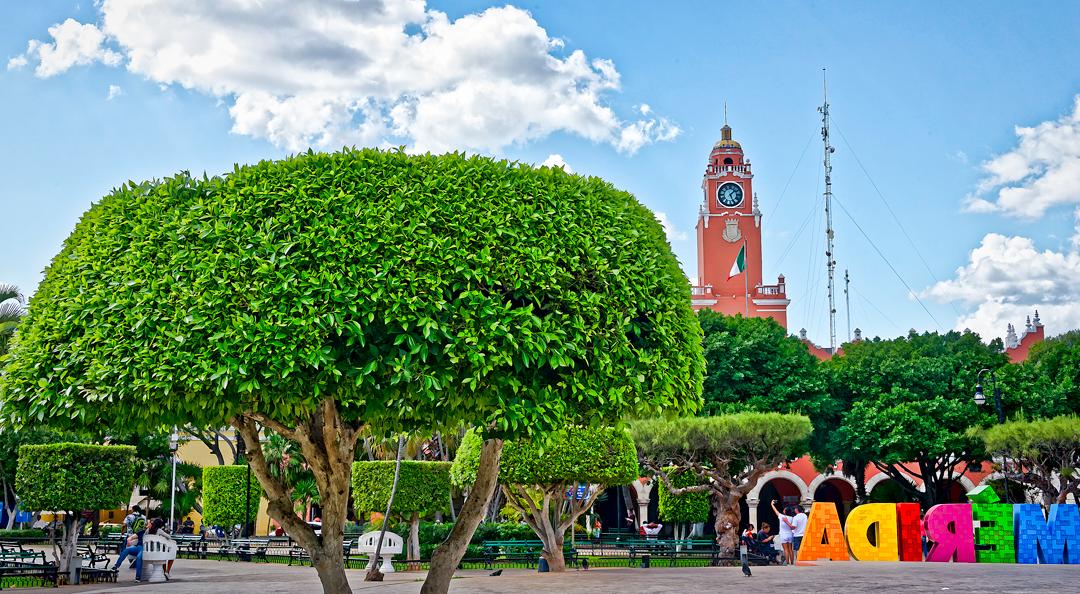 | Plaza Grande is like a bullseye in the middle of Merida. The entire city seems to revolve around this large plaza. | In the background is the Cathedral de San Idelfonso, the oldest cathedral in the western hemisphere mainland. | Artists set up around Plaza Grande as they do around Jackson Square in New Orleans. | There was a military presence at Plaza Grande. | Just a tiny corner of the massive market in Merida. We will cover the market more fully on a later day. | Above and below: The historic Ateneo Peninsular building is slated for renovation. (Spoiler Alert: The renovation was completed in January 2023. It is now a museum.) | |
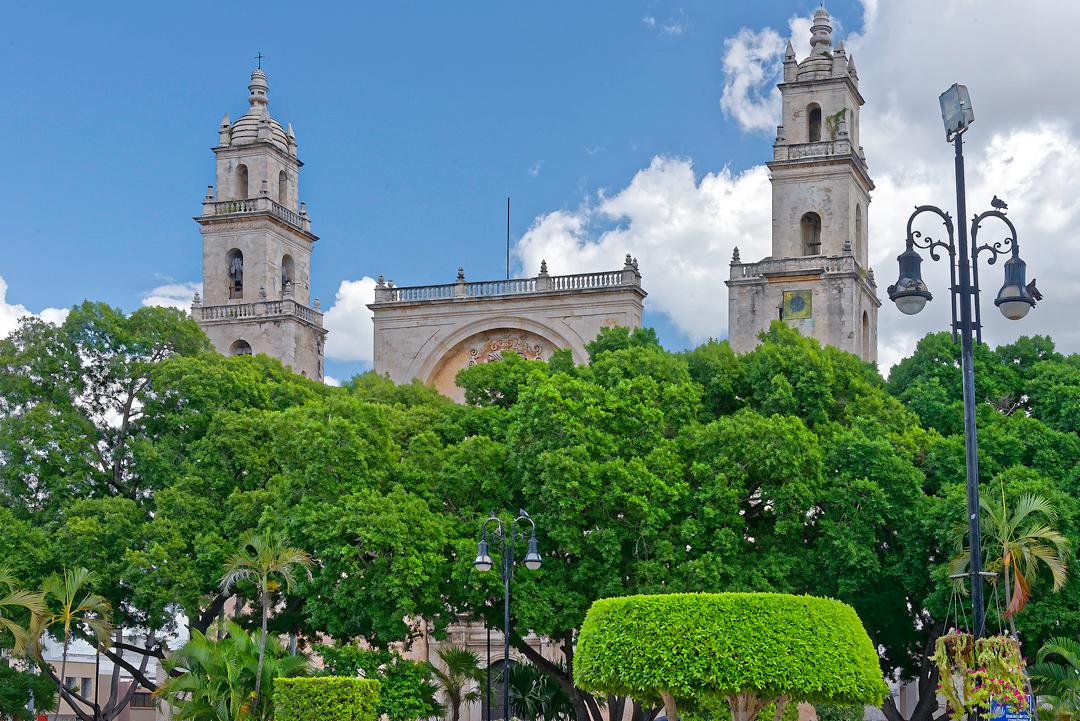
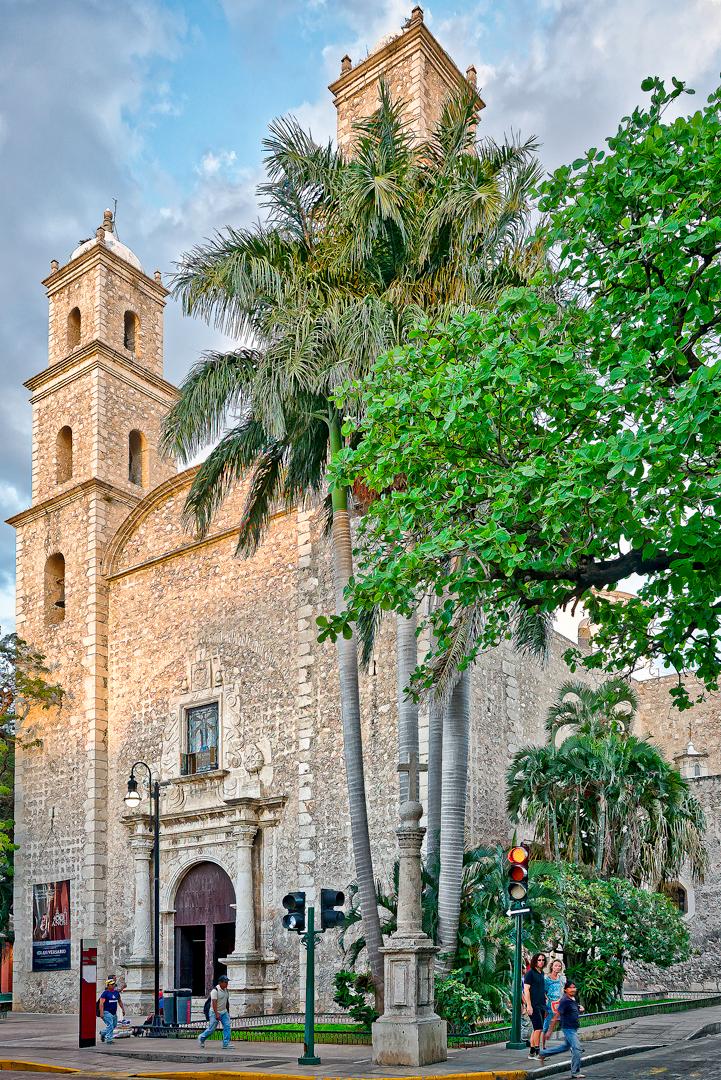
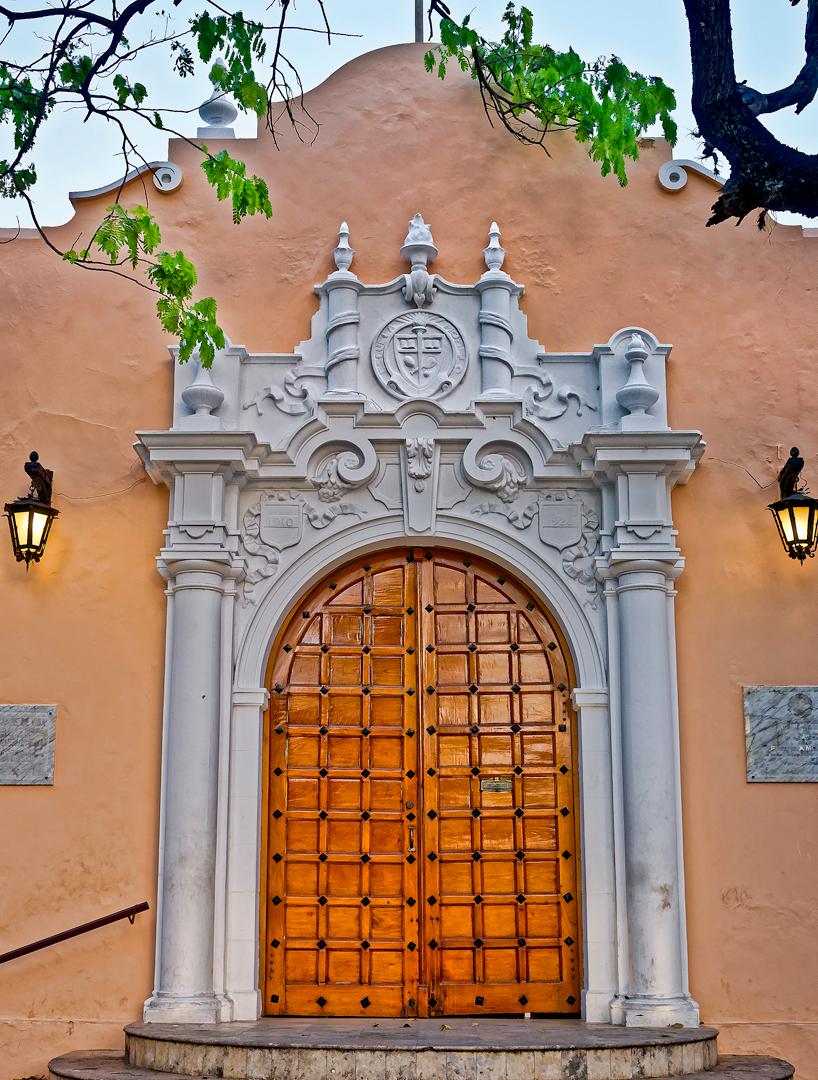
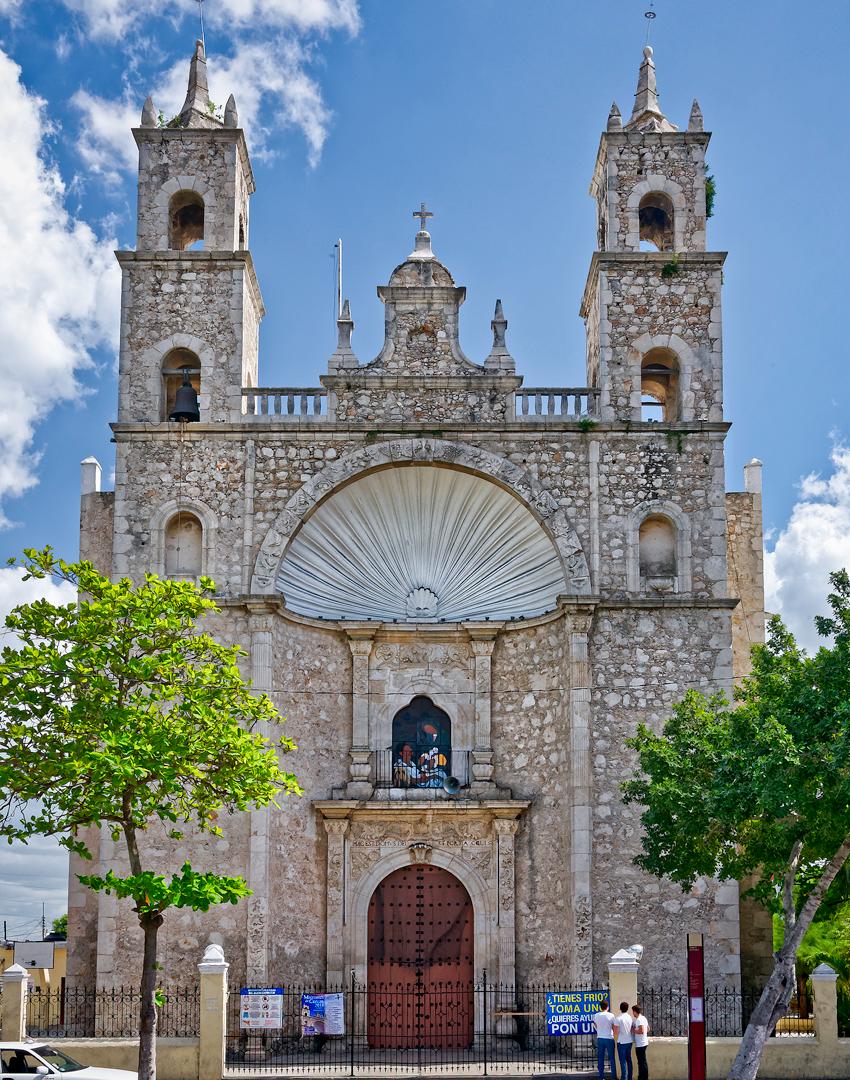
Churches with double towers are everywhere in Merida. This church, just a few blocks away from the main cathedral at Plaza Grande, is a smaller version. PLEASE NOTE: We are not church fanatics. In many cultures, churches have been and, in some cases, still are center of their culture. Some of the grandest architectural examples are churches. That certainly is true in Europe. | |
|
DAY 11 – Tuesday, February 13, 2018
LAY OF THE LAND DAY
The metro bus route map was so complicated and difficult to decipher that it was useless. The problem was that there were tons and tons of routes with all of them overlapping that it was impossible to depict an individual route on a map – they all just melded together in one big route blob. What turned out to be helpful was the Merida Metro Bus website.
There are three kinds of routes: 1) South Bound. These started near the city center and wandered south. 2) North Bound. These also started near the city center and wandered north. 3) Circuitous. These wandered around the city. On the website, you could put in the name of a neighborhood, and it would tell you the buses that serviced that neighborhood. Then you look up each bus route separately, and it will show you a map of just that route.
Of course, that would be way too simple. Each route had a route number and a bus number. Neither number meant anything because neither was placed on any metro bus. Fortunately, the website showed a picture of each bus’s windshield, listing the neighborhoods it serviced. So, you just wrote down (or memorized) the names on the windshield, allowing you to identify that bus when you saw it on the street. Just as easy as that. After a few days, we could identify the Carranza bus, the San Lucia bus, the Grand Plaza bus (which serviced the Grand Plaza Mall way up north, NOT the Plaza Grande in downtown centro), and a few more.
While I was figuring all this out, one of the brothers of Liliana, our Airbnb host, delivered a knockout breakfast. It started with a fruit plate of sliced papaya, watermelon, honeydew melon, and espresso coffee with plenty of cream on the side. Then we got a plate full of delightful scrambled eggs and the most flavorful and sweet hand-squeezed OJ. Next came toast and jam and yogurt and oatmeal. We were both stuffed by the time we ventured out at 11:30 am.
| 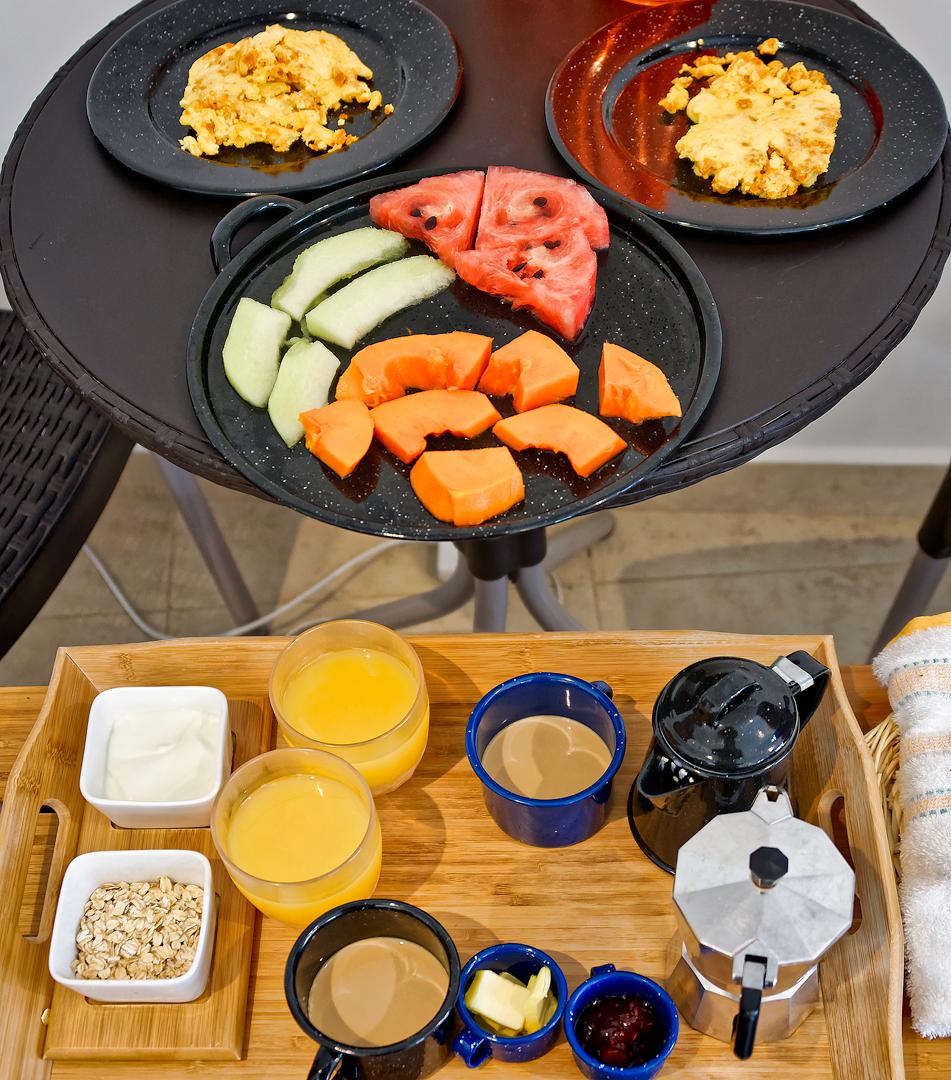 | The Airbnbs in the Yucatán included breakfast. We were getting spoiled. | |
|
We flagged down our first bus. The street corner, just one block away from the Airbnb, has about 20 bus routes converging at that particular intersection. We quickly learned that any bus with Centro written on the windshield would get us downtown. 16 pesos later (8 pesos each), we were downtown.
Although we had already walked the historic Paseo de Montejo, enjoyed the Plaza Grande, and marveled at the insane market area, we planned many day trips outside the city. This meant that we had to find all the colectivo stands and all the bus stations as this would be our only form of transportation. Many of these day trips required us to leave early in the morning, so we needed to map out all of these stations and stands beforehand.
We discovered that Merida has five main bus stations (and a few smaller ones):
1) CAME. The 1st class ADO buses serve this bus terminal. It was the station where we arrived from Valladolid. The station is mainly for the ADO express buses that go to the main cities throughout Yucatán and Mexico in general.
2) TAME. This station is for many more prominent 2nd class bus services like Oriente, Mayab, ATS, and TRT buses. These buses go to smaller towns and cities in the Yucatán and also some of the bigger cities, but these routes make a zillion stops along the way – they are not express routes.
3) NORESTE STATION. This station serves many more tiny towns and villages with buses from the Noreste Line, Lineas Unidas del Sur, and the Luz Line, all 2nd class bus companies.
4) TERMINAL ORIENTE. For some reason, Oriente utilizes both this station and TAME.
5) TERMINAL AUTO PROGRESO. This bus line serves the route from Merida to Progreso, the popular beach town about 30 kilometers to the north.
The colectivo stands, and there are tons of them, are spread out everywhere around the downtown area, the market area, and several of the smaller plazas. Finding the right colectivo, going to the town you are looking for, takes patience, luck, shoe leather, and a few Spanish words like “donde es colectivo para (wherever).” But we eventually found every one we wanted to find.
I had read reviews on many highly rated but inexpensive restaurants, so we also mapped them out for later. The tourist info place we visited yesterday gave us a decent city map so I could mark all these places down. This map became my lifeline as we explored more and more of the city and surrounding area.
Another errand that we needed to do was to find a place to exchange dollars for pesos. On this day, the rate was 18.83 pesos per dollar, which was very good. Most shops and banks were giving 17.50 pesos per dollar, but I found one exchange that was giving 17.70. I gave the lady $200 US, and after she scrutinized my bills, she returned a $5 US bill because it had the tiniest tear on one corner. She also didn’t like a couple of $20 US bills for various marks on them. After digging around my wallet, I found $195 of bills she accepted.
Today is Fat Tuesday. That means it is the height of Carnival. We expected to see some celebrations, parades, and music. When we found the Progreso Bus Station, there was a line around the block to ride the bus to Progreso for whatever Carnival celebration they had going on up there.
But where was Merida’s festival? Around 3 pm, we returned to the tourist info center only to find out we had missed it. There was a designated festival grounds south of the city, and the city ran free buses down to the festival grounds all day long. Unfortunately, the festival was already winding down, and by the time we would have arrived, it would be time to clean up the trash. This was a big disappointment. For someone that lived in New Orleans (Wanda's hometown and where I graduated high school), it was unheard of to finish up Fat Tuesday in the afternoon. Oh well, it is what it is!
All this running around had worn off our breakfast, so we looked for some mango slices and, this time, got some perfect ones – delicious. Wanda also got a coconut paleta, which was also delicious, and I got a bunch of different Mexican chocolates. The chocolate was terrific, but I sure didn’t need the sugar.
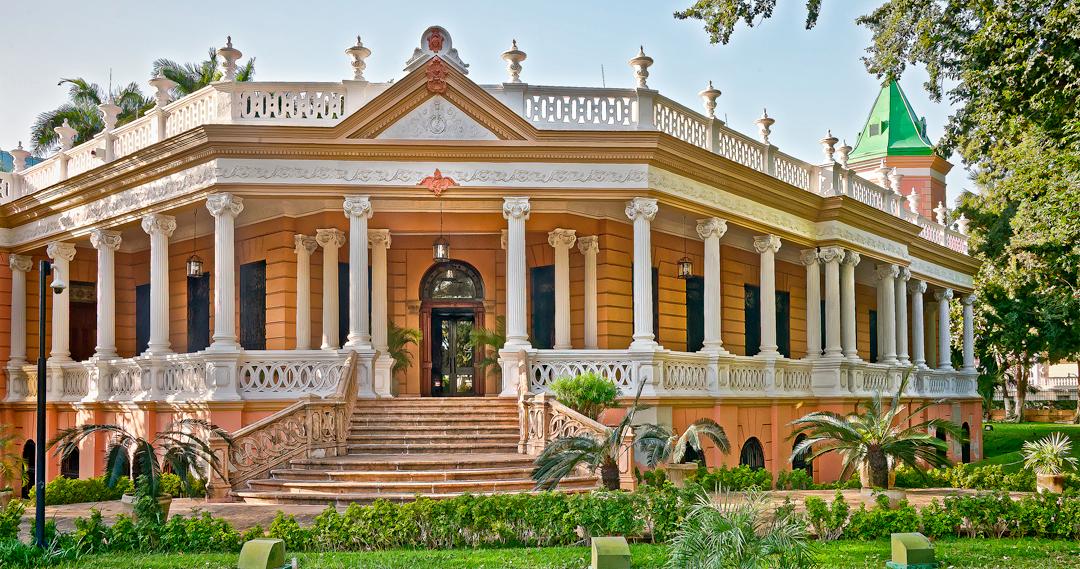
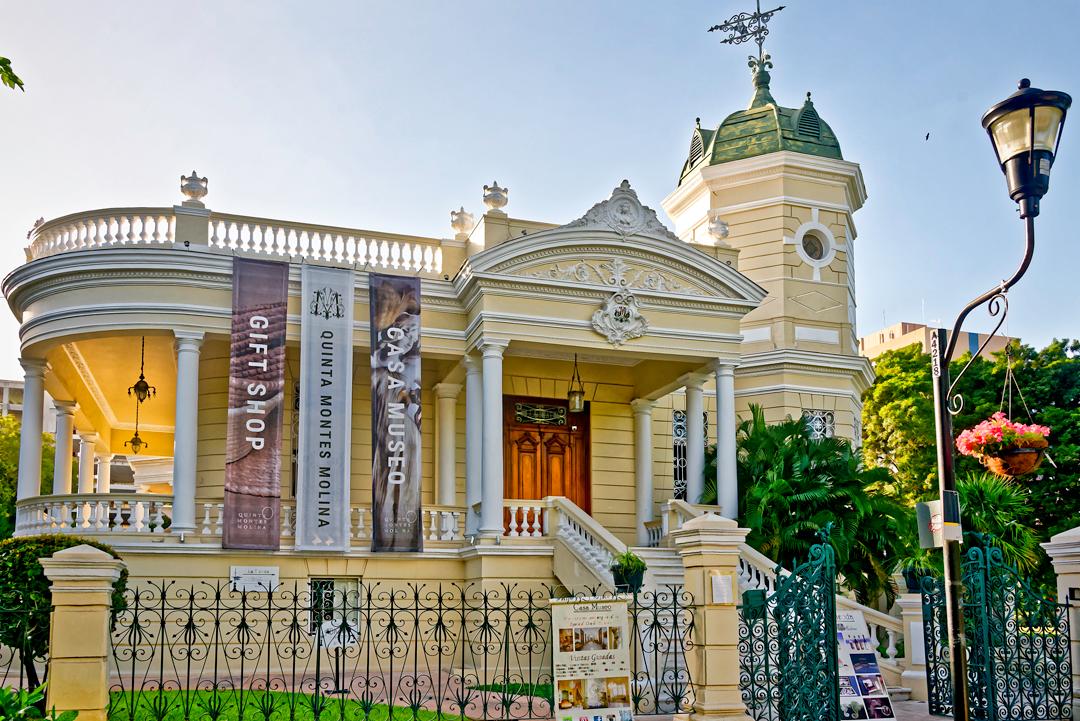
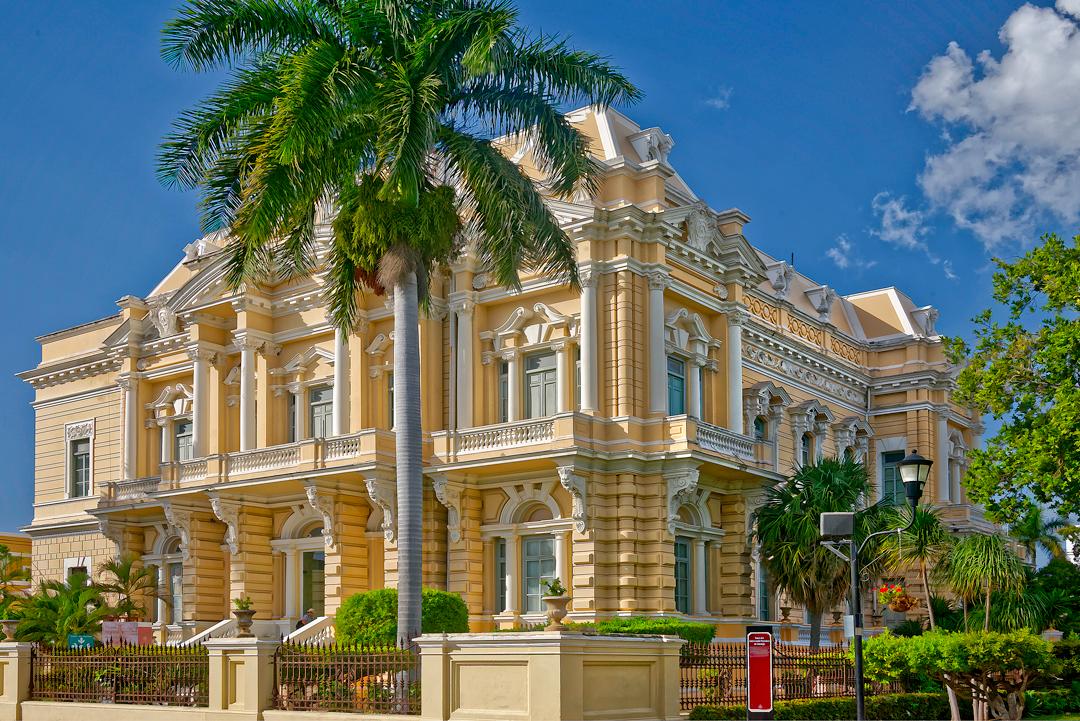
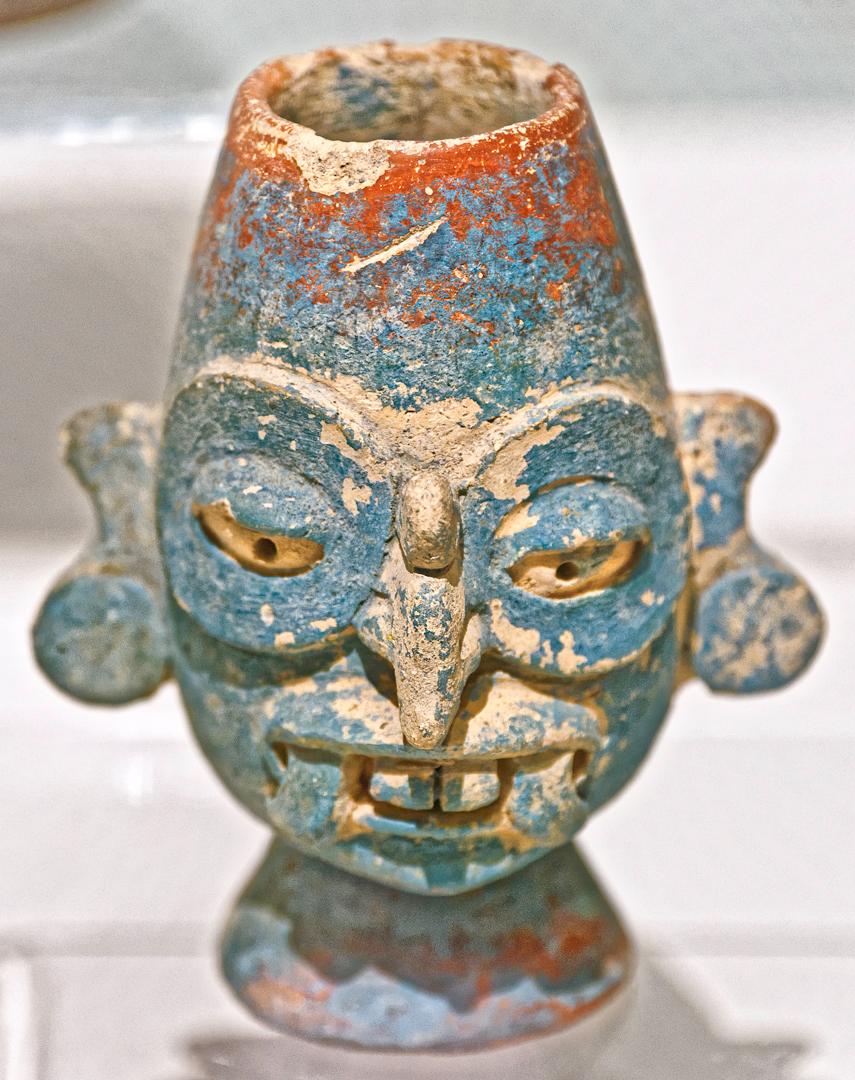
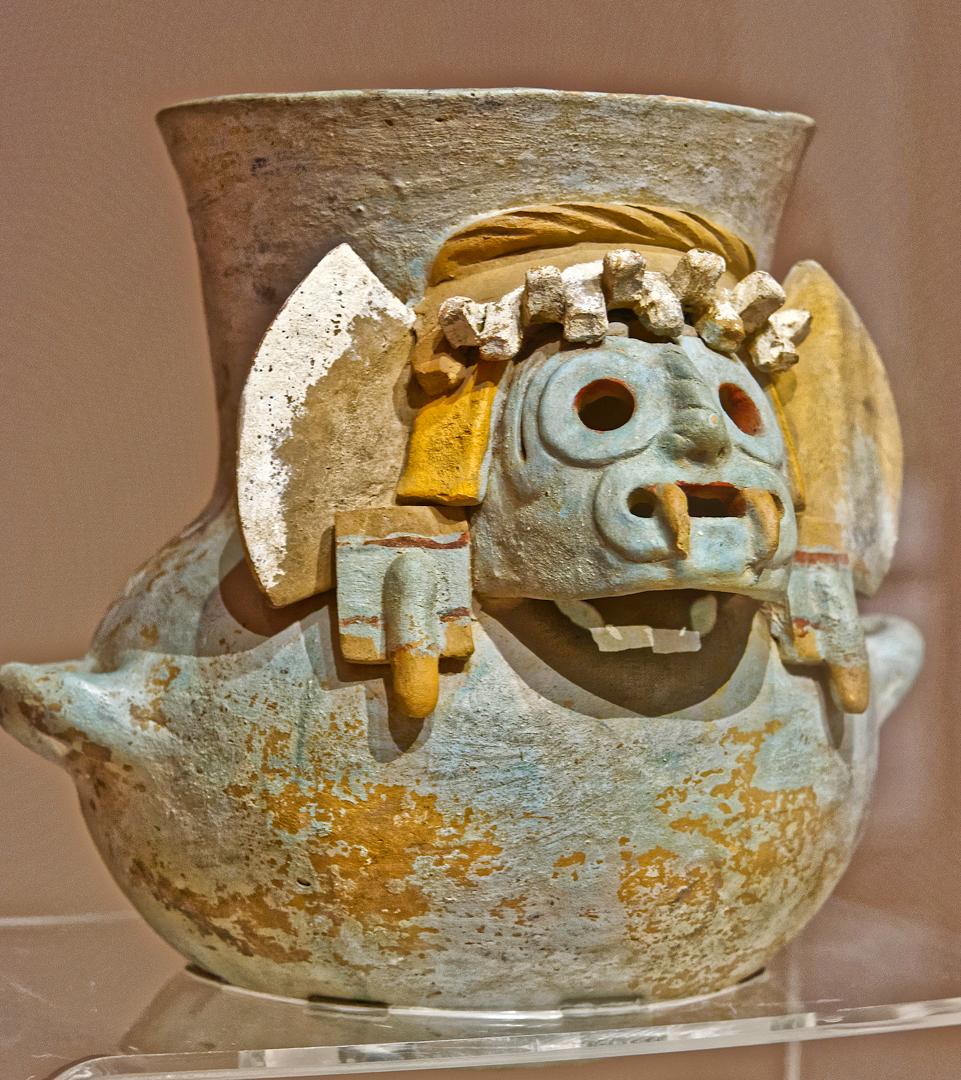
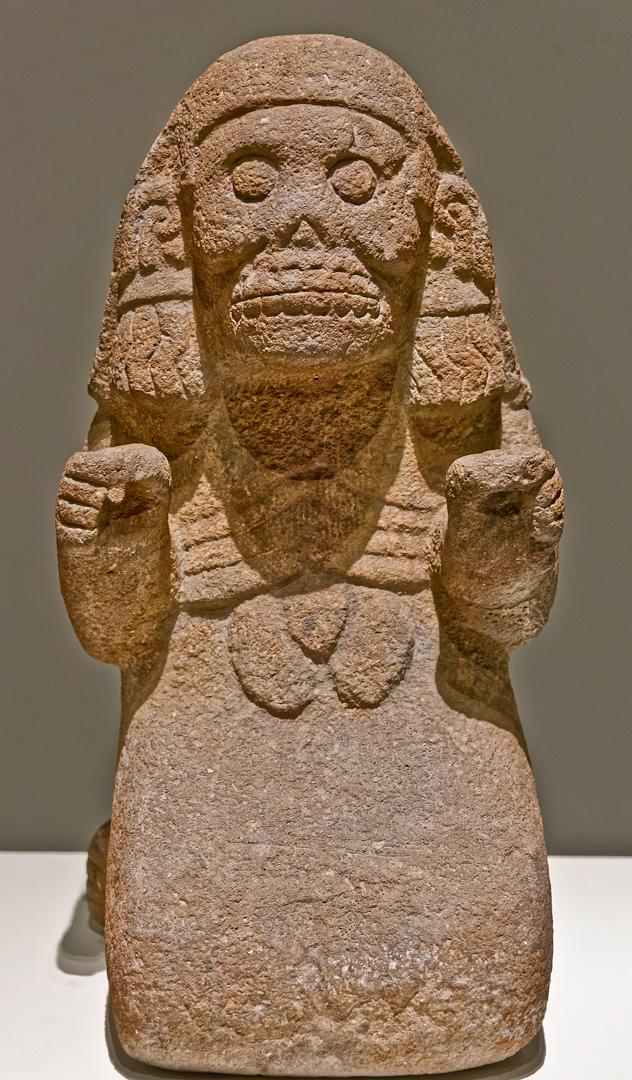
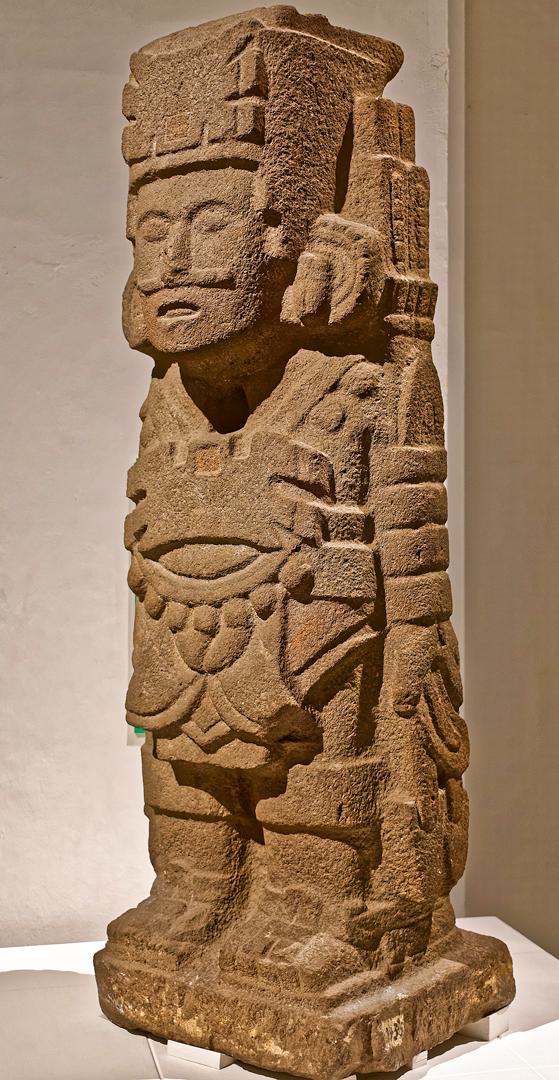
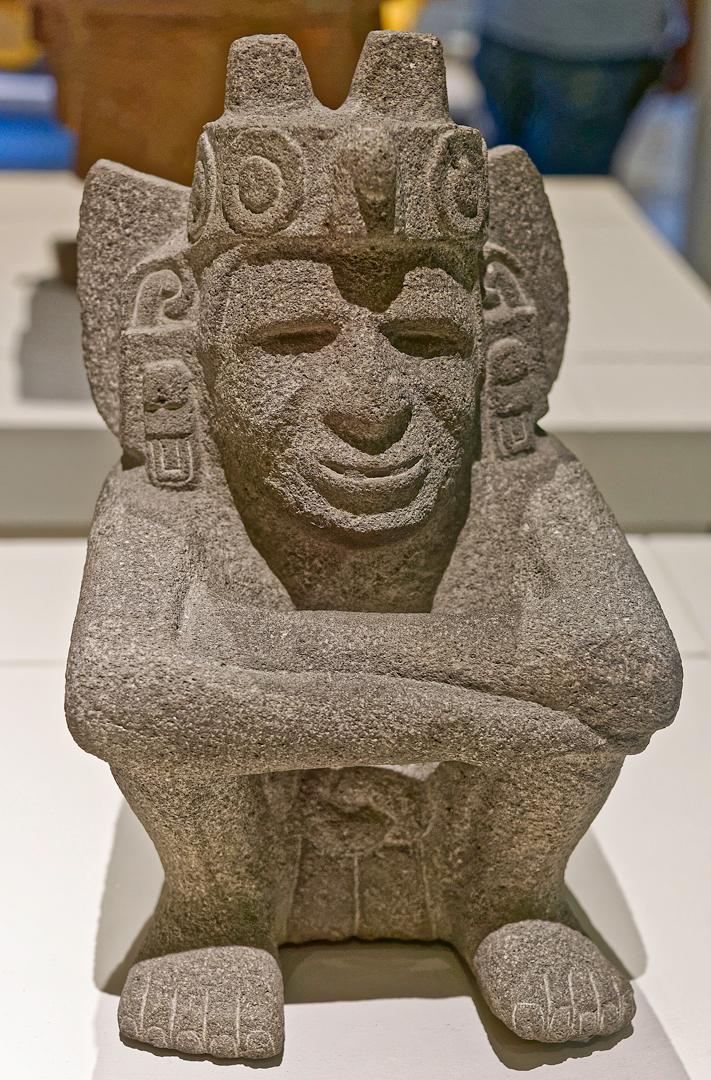
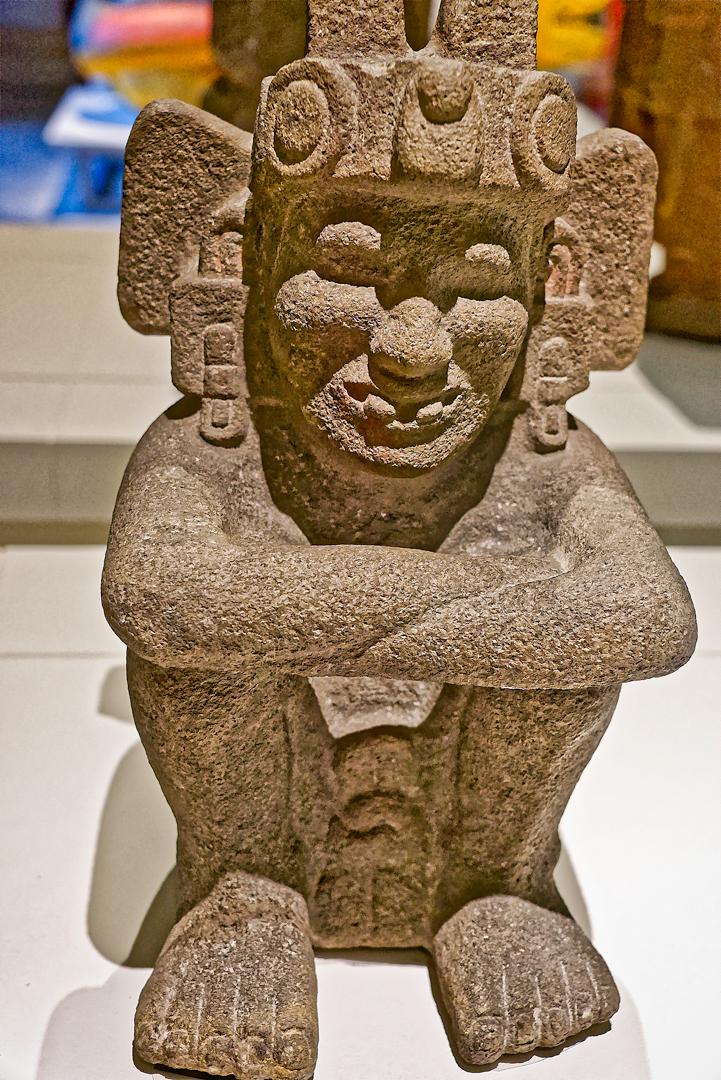
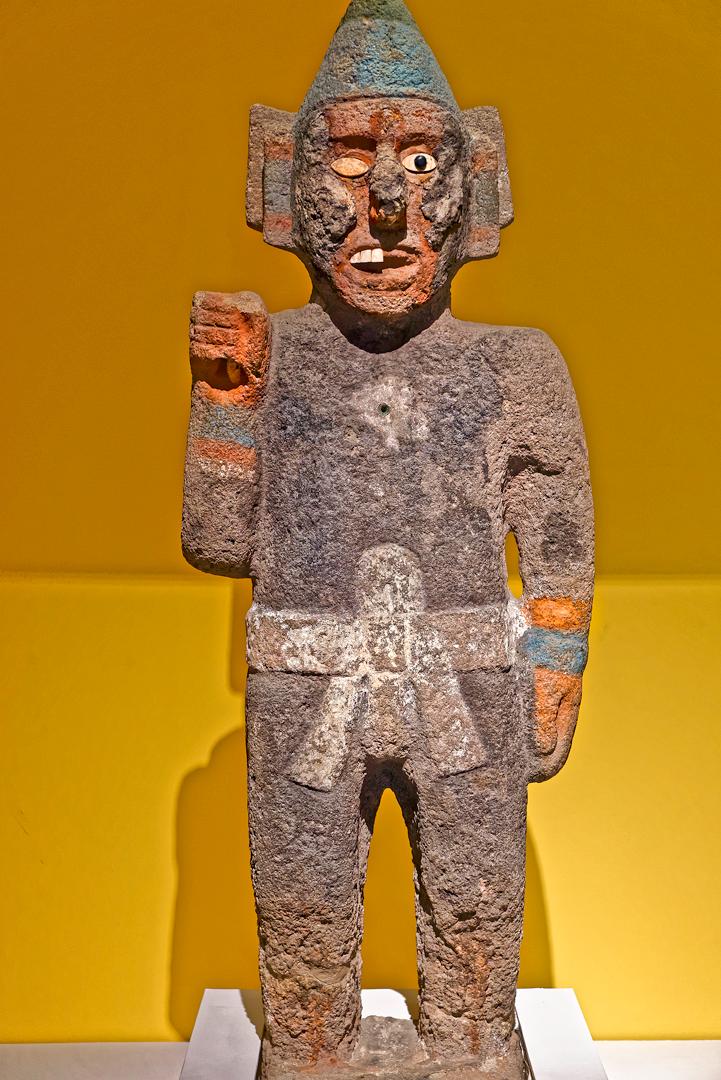
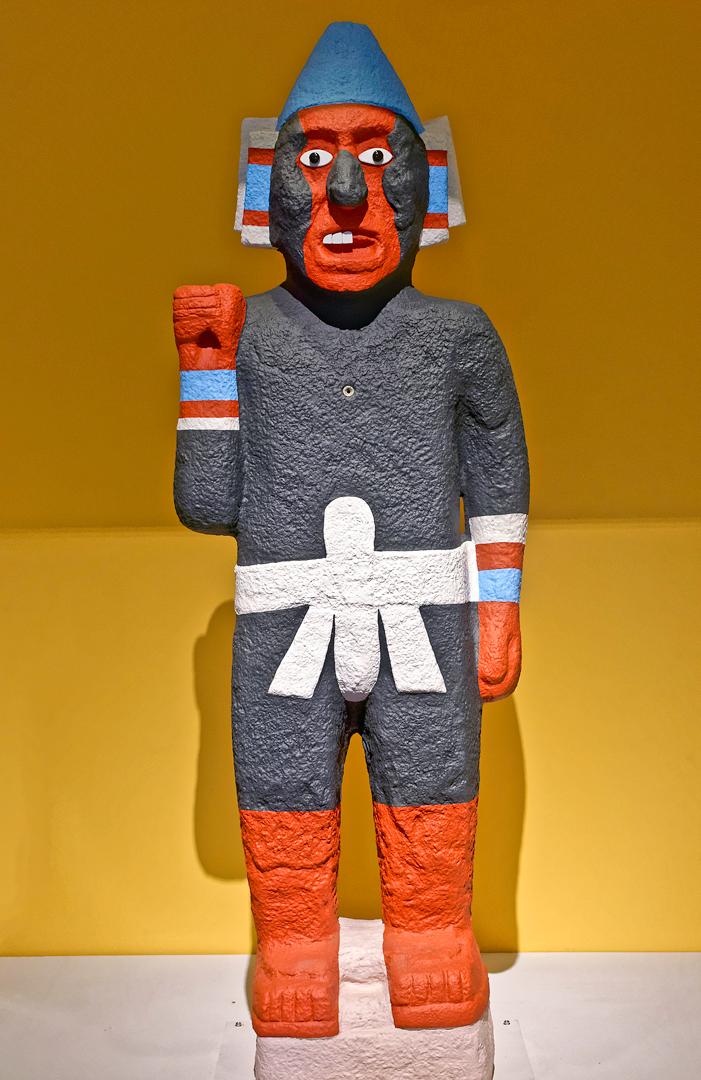
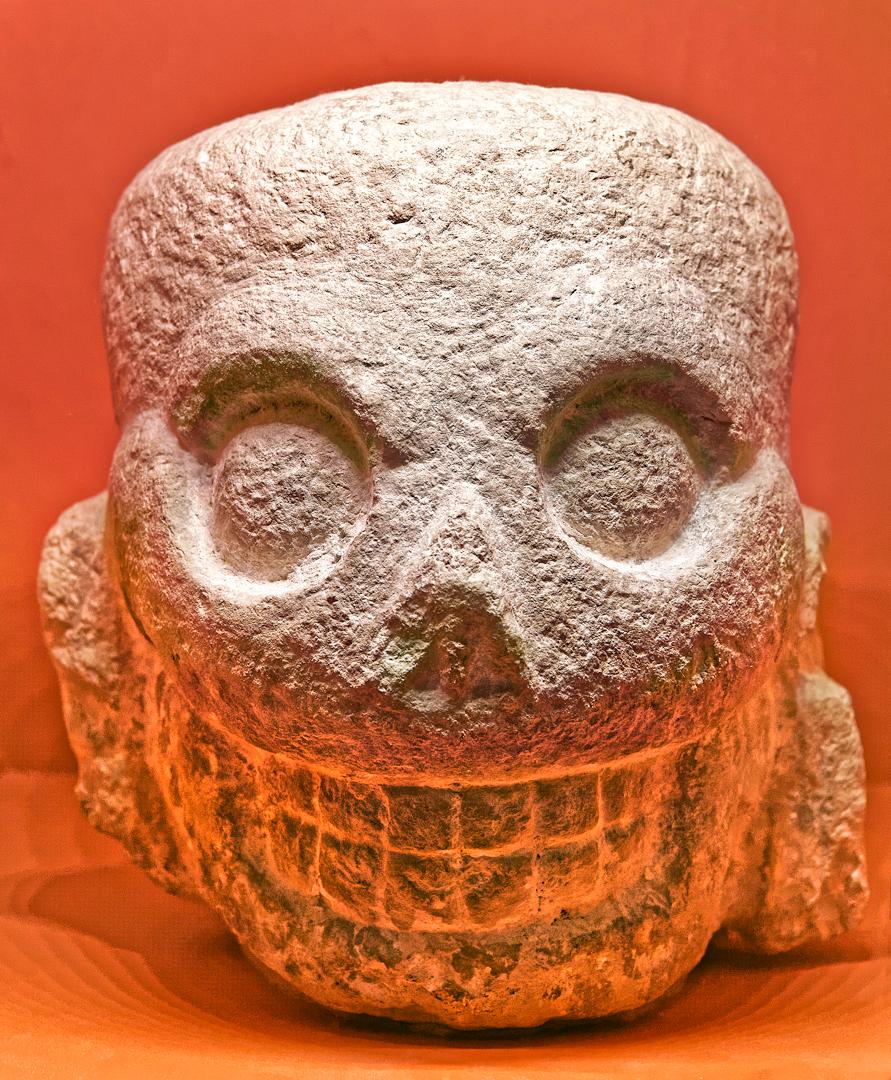
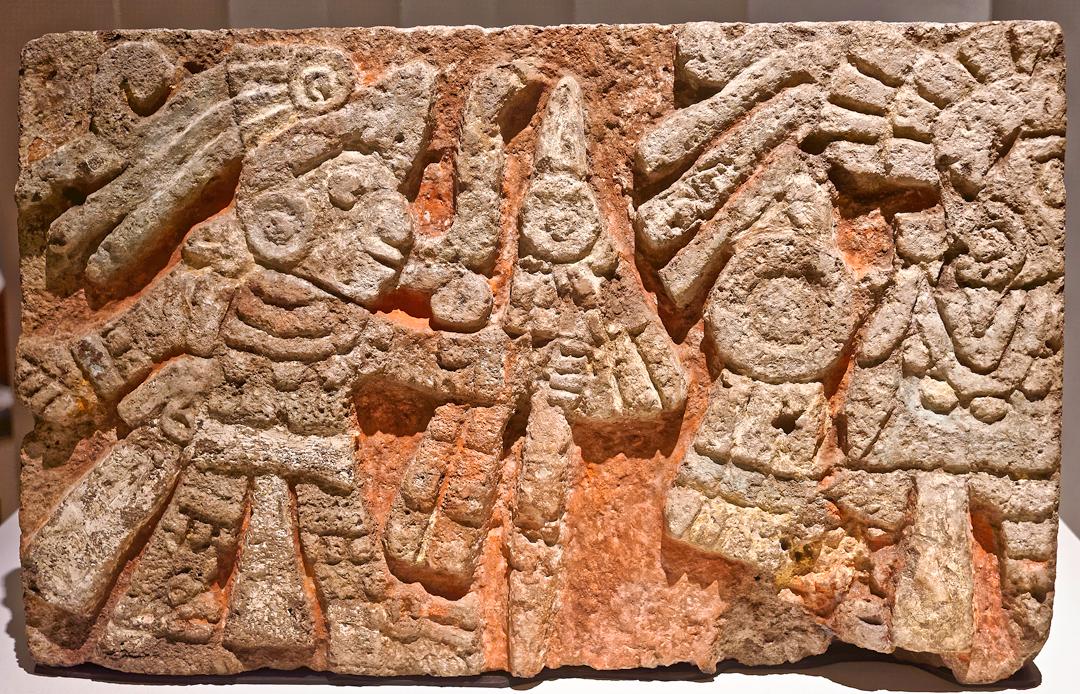
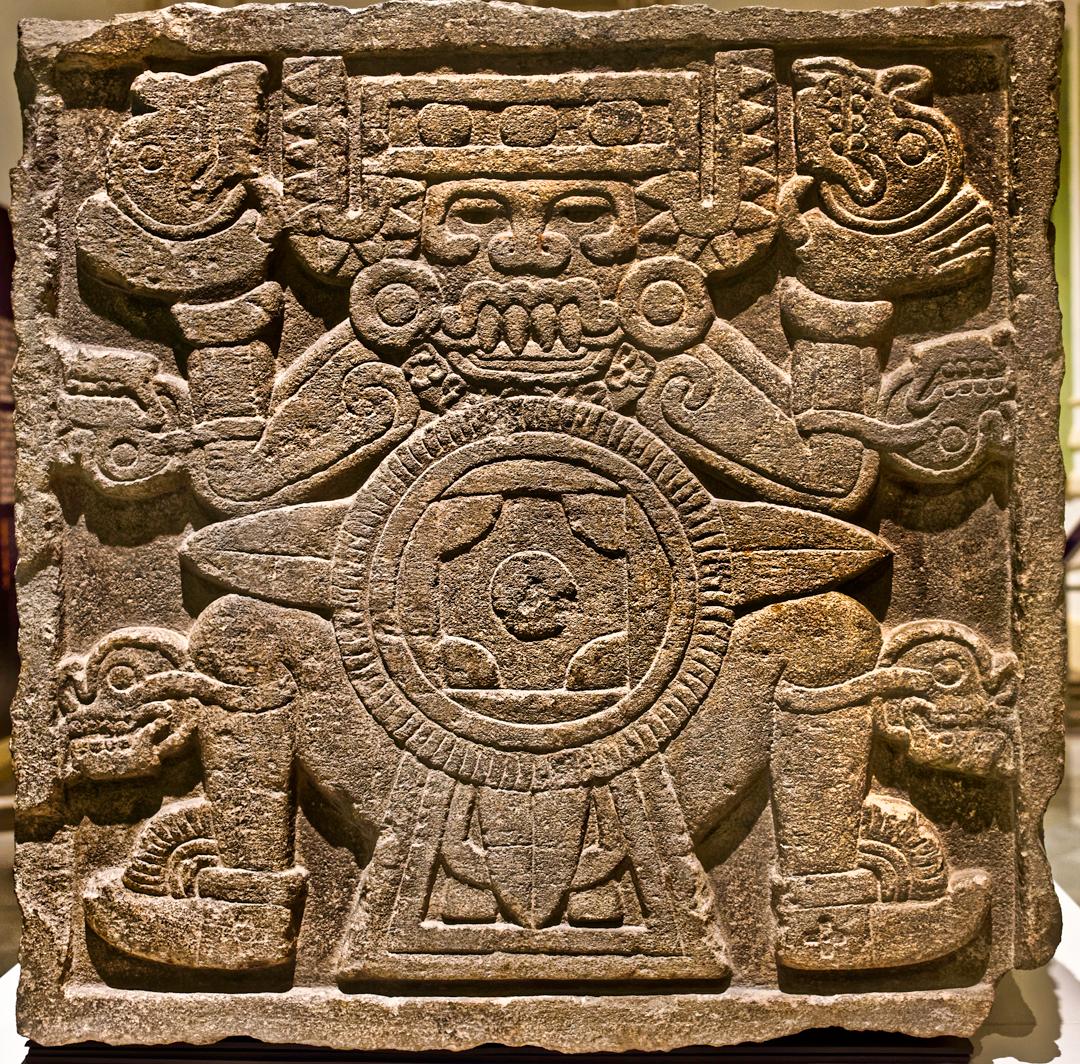
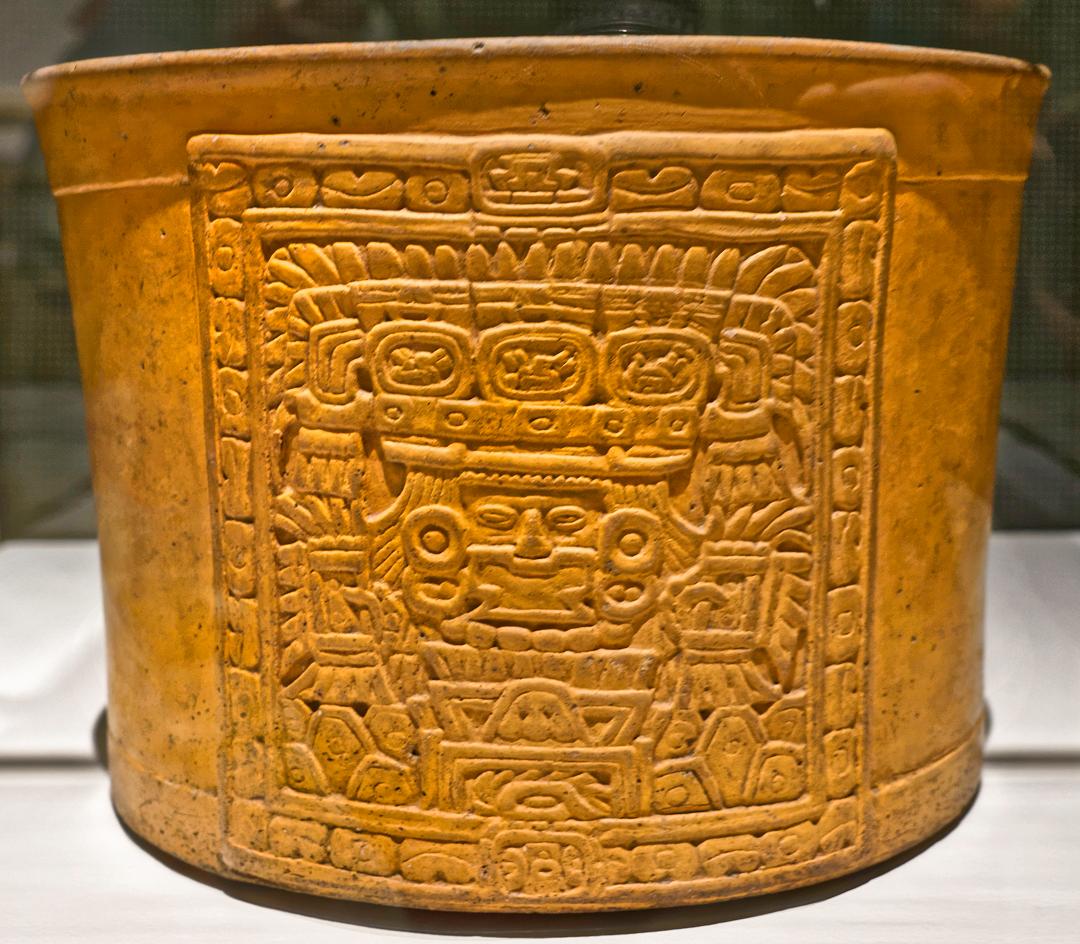
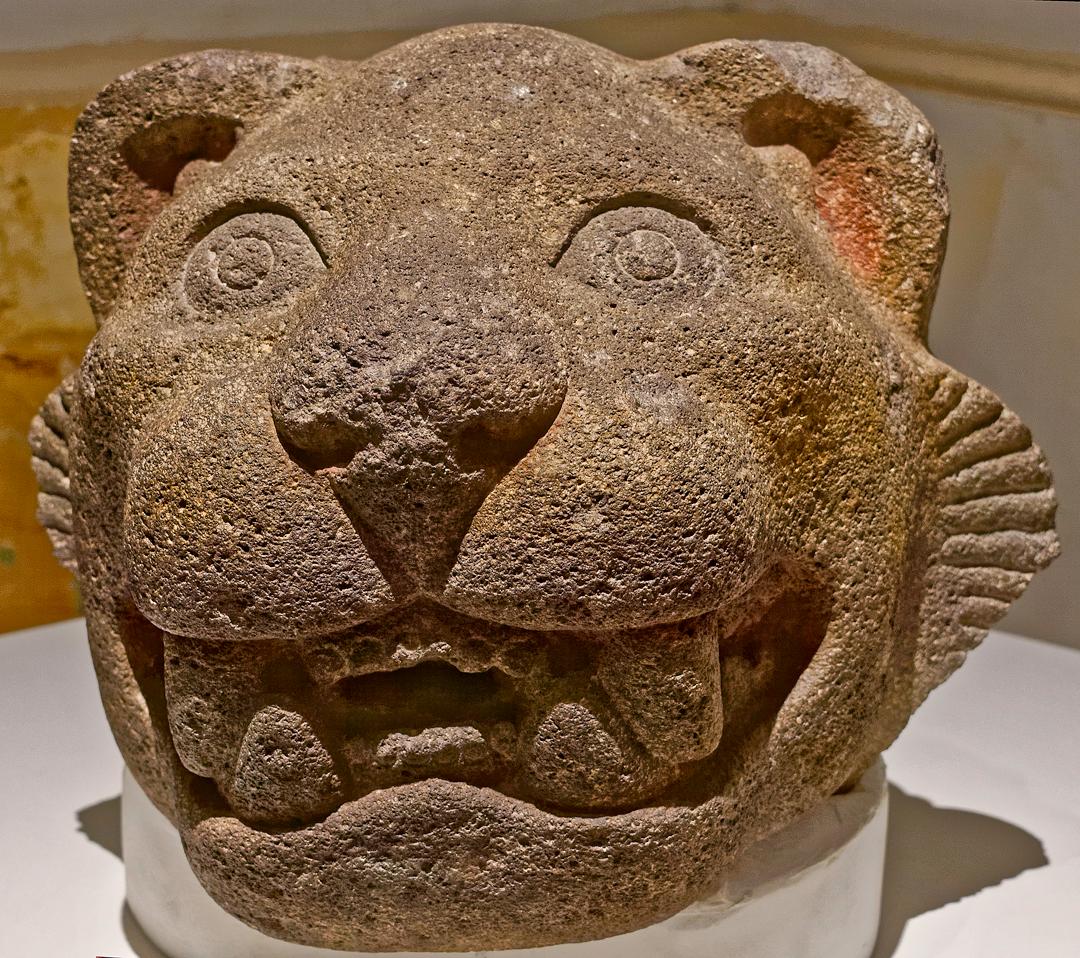
Back on Paseo de Montejo, there is a Mayan Archaeological Museum that we had read about. The museum was housed in the Palacio Cantón, a most beautiful ornate building on a street full of beautifully ornate buildings. Although the museum turned out to be smaller than expected, with just three or four rooms on the first floor, the artifacts it had were in excellent shape. We had been used to seeing extremely weathered art forms at the ruins, so these preserved specimens were a treat.
| |
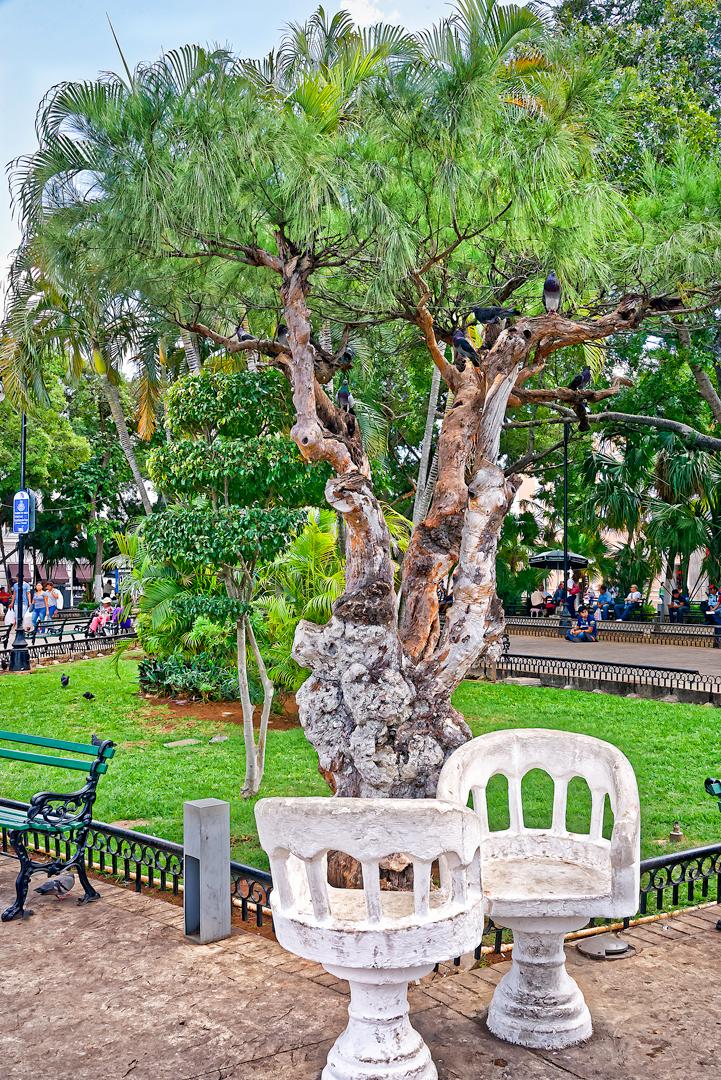
Iconic chairs at the iconic Plaza Grande. | |
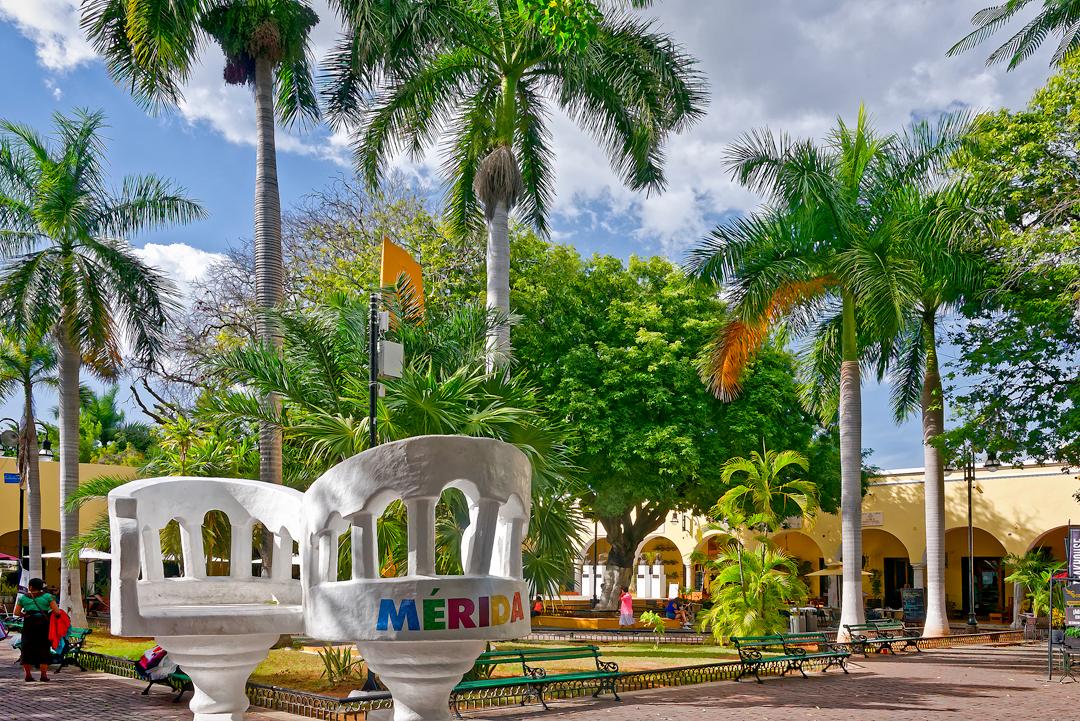
Giant versions of the iconic chairs at a smaller plaza near downtown. | |
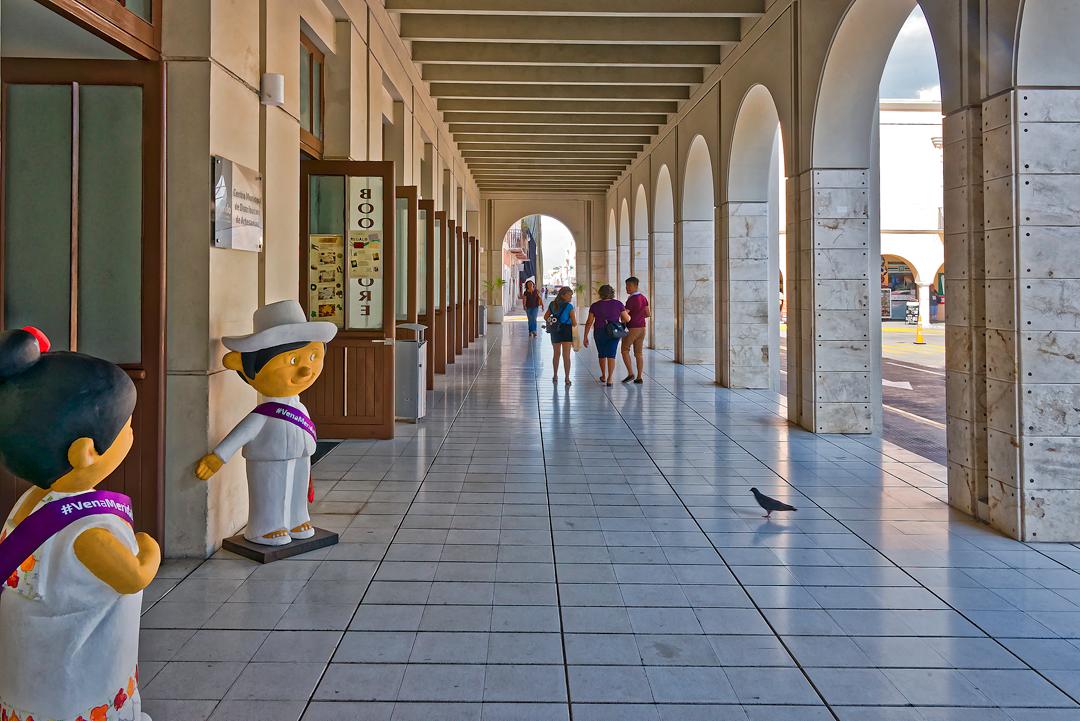
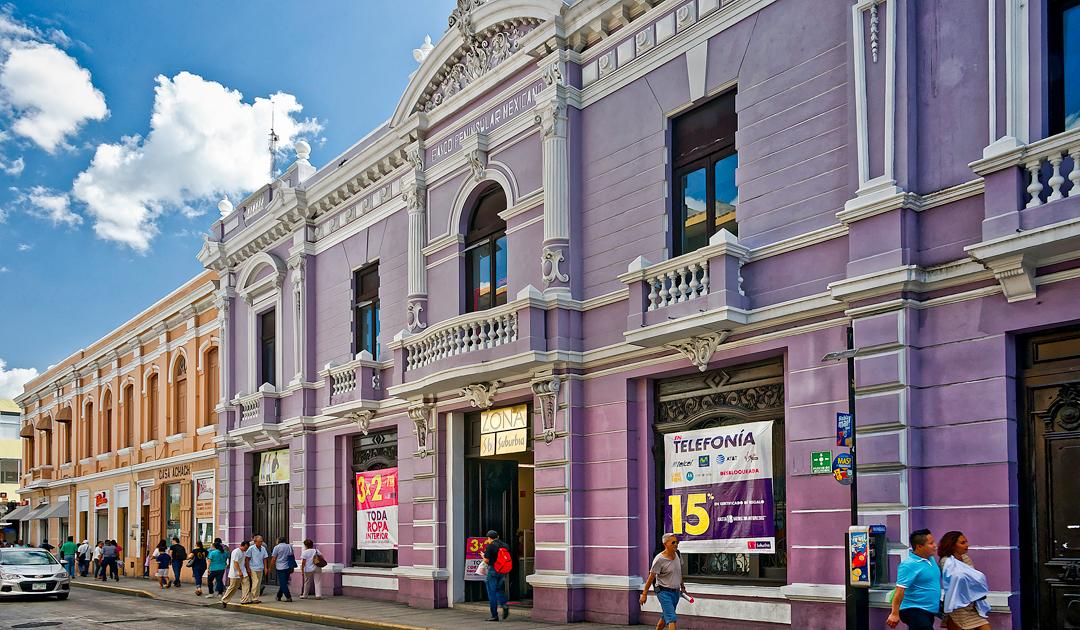
Above and below: Some downtown buildings. | |
The following series of photos were taken along the magnificent Paseo de Montejo, Merida's most beautiful and historical street. | |
|
Above: The Palacio Cantón. Located along the fabulous Paseo de Montejo, this mansion was built in 1911 for General Francisco Cantón Rosado, who died just six years later. It now houses the Mayan Archaeological Museum with some spectacular examples of Mayan art. We checked it out. The house and the artifacts were impressive.
Below: The next series of photos are examples of the Mayan art displayed in the Anthropology Museum.
| |
|
Above: The actual art piece as it survives.
Below: A rendition of how it would have appeared when created.
| Two major streets intersect at this roundabout, with the awesome monument in the middle. | |
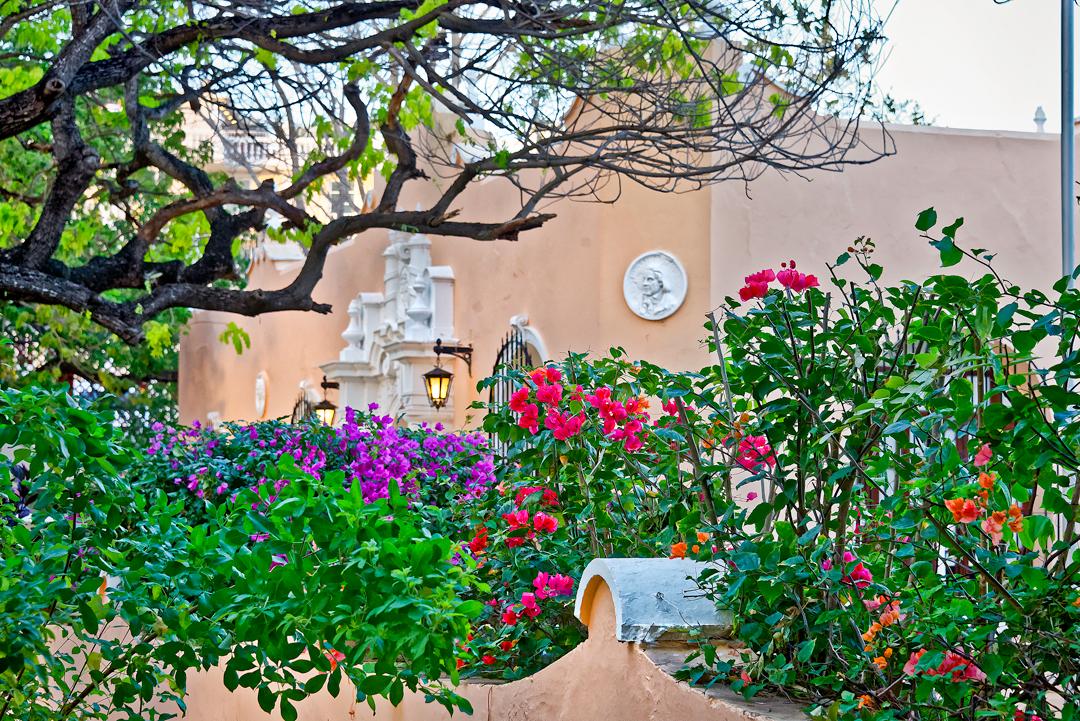
Every neighborhood has a church. All the churches are interesting from an architectural standpoint. | |
On the way back to the Airbnb, we stumbled across a Walmart, which turned out to be very close to the Airbnb, and picked up some toiletries. We also bought a pastry that we discovered in Tulum. Walmart’s version was horrible. After overdosing on the Mexican chocolate and gagging on the Walmart pastry, it was a delight to run across a street cart vendor with fresh hot tamales right next to Walmart. They were wonderful, cheap (15 pesos each), big, fat, and delicious. | | | | |