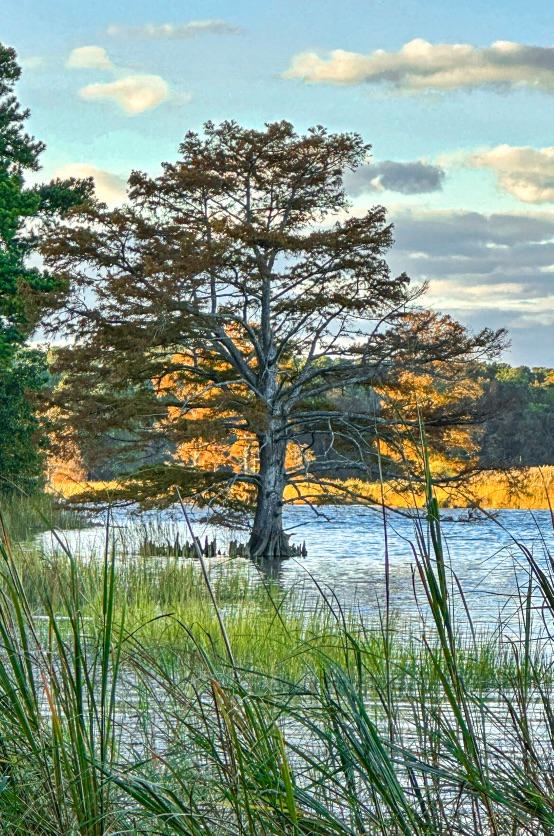
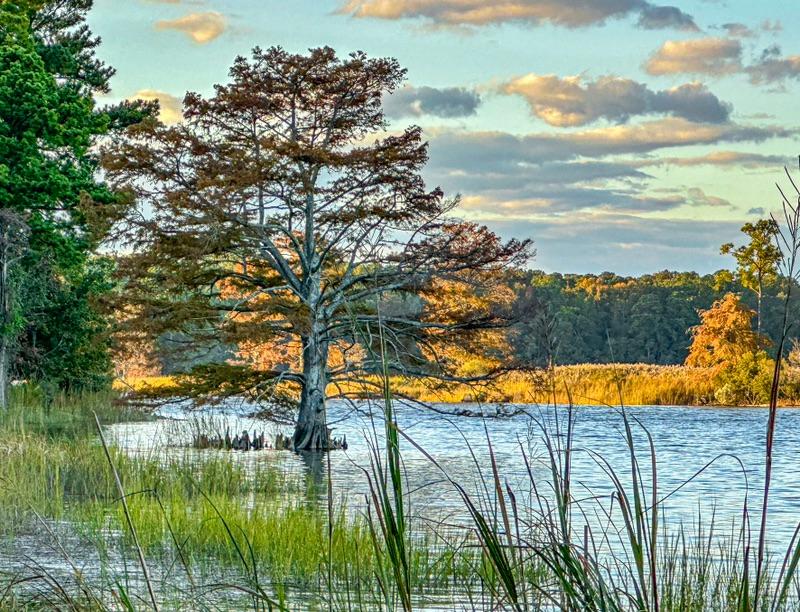
Virginia - North Carolina: Tuesday, October 18, 2022 | |
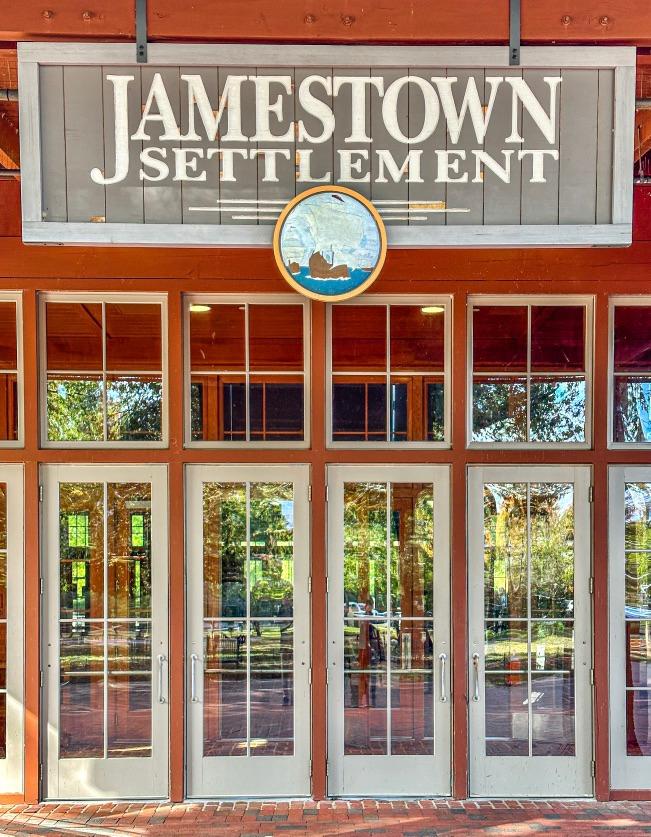
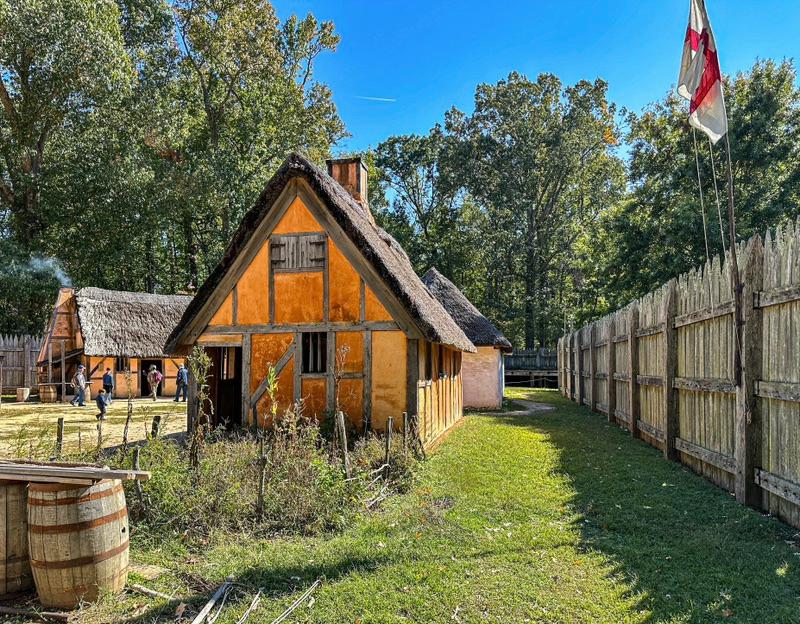
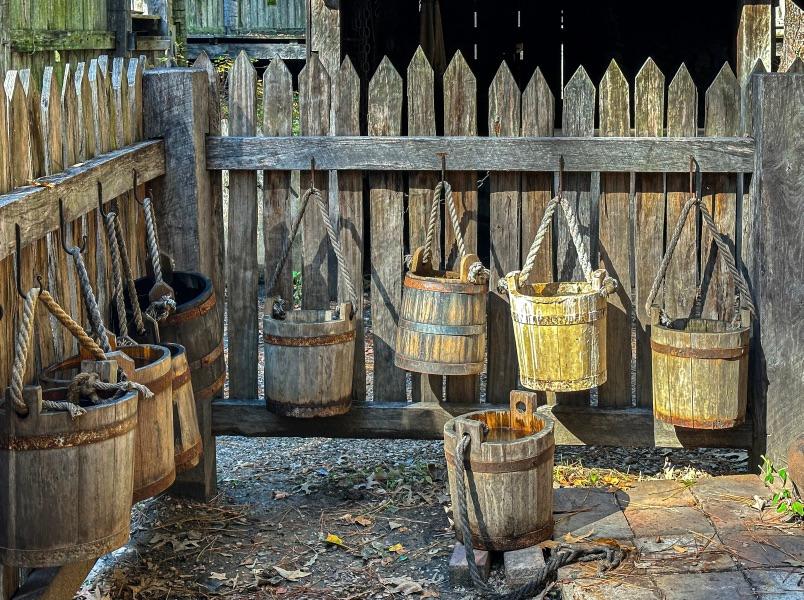
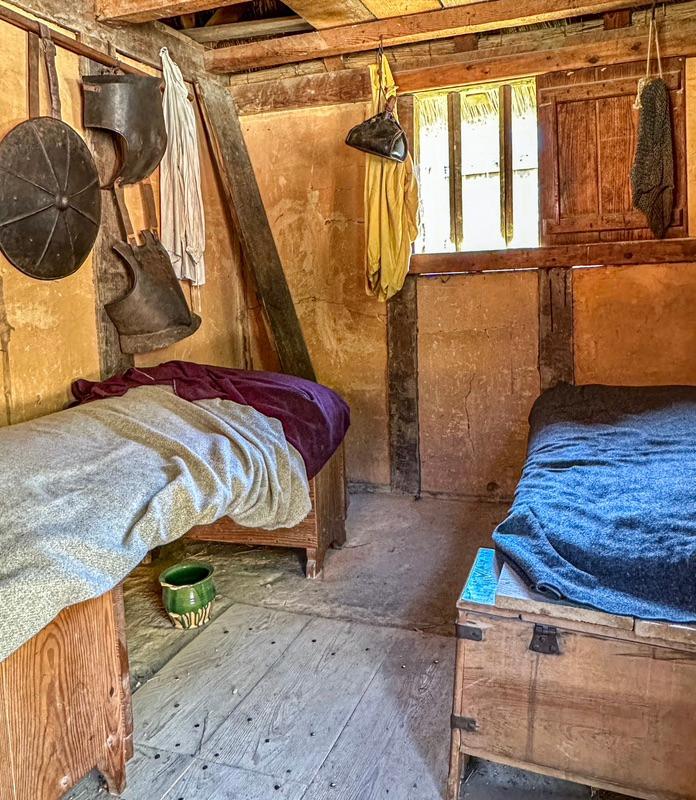
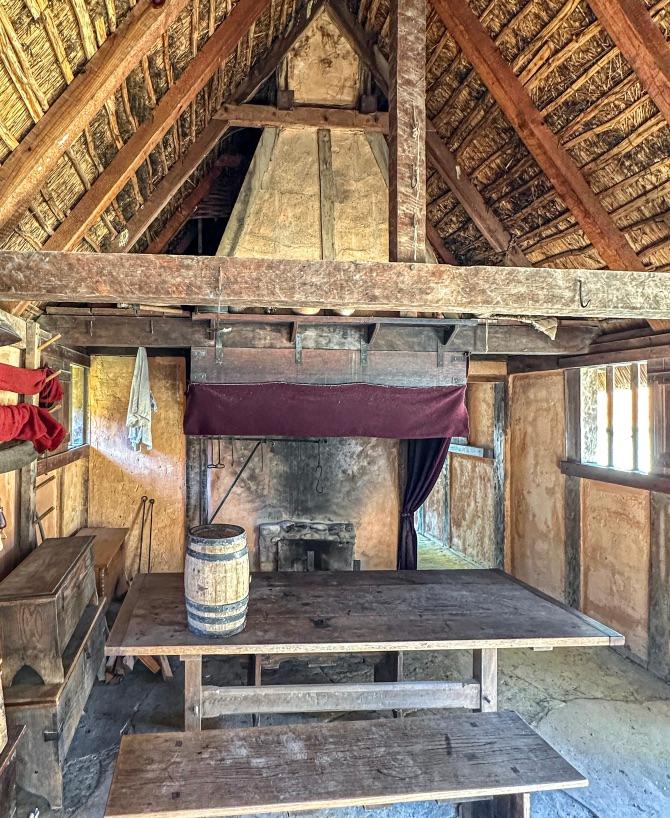
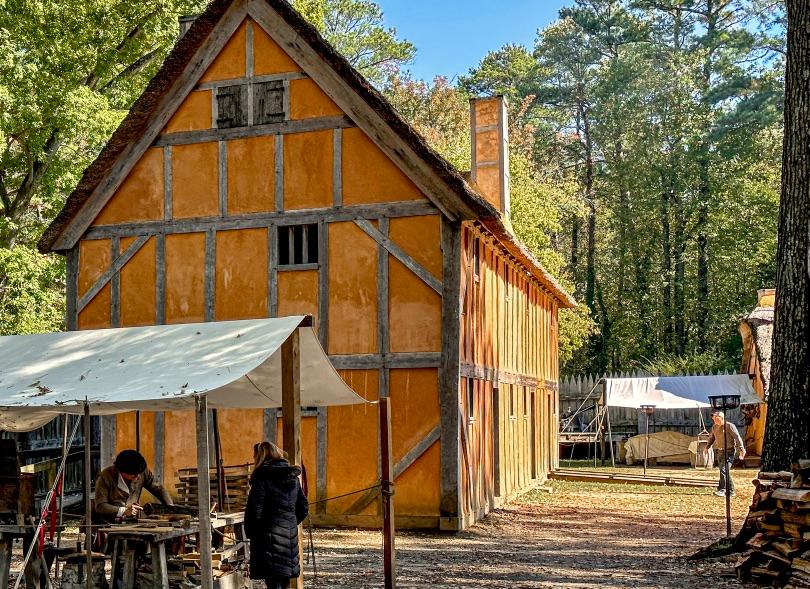
We started the day at the Jamestown Settlement, the re-created living-museum built and operated by the state of Virginia. | |
|
As predicted, yesterday was a complete washout. We spent the day catching up on chores. However, today we took in the history of Jamestown, Virginia.
JAMESTOWN, May 14, 1607: Three boats approach the north bank of the James River, just a few miles from the mouth of the river as it meets Chesapeake Bay. 104 passengers disembark. Jamestown is established.
A couple of quick facts:
JAMESTOWN WAS NOT THE FIRST: Jamestown wasn’t the first European settlement in the New World. Since landing in the Caribbean in 1492, Spain had established many settlements in South and Central America. In 1500, Portuguese sailor Pedro Alvares Cabral, looking for Southern Africa, landed in what is now Brazil. Talk about poor navigation. Anyway, he, along with 1200 adventurers, established a settlement. The new territory, Brazil, was claimed for Portugal and Brazilians still speak Portuguese.
Jamestown wasn’t even the first attempt to establish a European settlement in North America. We now know that the Vikings settled in Newfoundland in 1021, however we don’t why they left. In 1570, Spain attempted to establish a Jesuit mission close to where Jamestown was eventually established. In February, 1571, the entire missionary, except for one boy, was snuffed out by the local Indians. The boy, Alonso de Olmos, was rescued the following year. England’s Sir Walter Raleigh sent a group of would-be settlers to Roanoke Island in what is now North Carolina in 1587. The settlers vanished and it is now dubbed the Lost Colony.
JAMESTOWN IS NOT PLYMOUTH: Jamestown is not to be confused with the Mayflower Pilgrims that landed at Plymouth Rock. This settlement happened in 1620 farther north in what is now Massachusetts. The two settlements were very different. The Pilgrims came to the New World for religious reasons. The Jamestown adventurers came to find profit and fortune. From the start, it was a financial venture.
THANKSGIVING: Jamestown is not associated with Thanksgiving. That is part of the Plymouth lore.
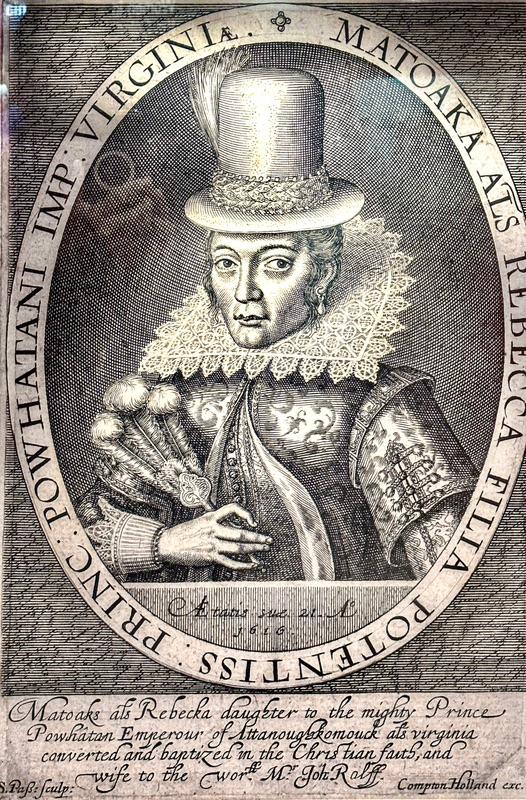
POCAHONTAS: Pocahontas was a real person. Her given name was Amonute. As was the custom, she also had a secret name - Matoaka. Pocahontas was a nickname given to her by her father. It meant “playful” and “mischevious”. Her father was Chief Wahunsonacock, the powerful Powhatan Chief. Her marriage did help to promote peace between the European settlers and the Powhatan Confederacy, at least for a time. But, she did not marry John Smith, the settlement’s first leader. She married a successful tobacco farmer, John Rolfe, well after John Smith had left the settlement.
Over the course of 2 1/4 years, John Smith, along with his leadership duties, explored 3,000 miles of the Cheasapeake waterway in a rowboat. At one point, he was captured by a tribe of Powhatan Indians. Legend has it that just as Chief Wahunonacock was going to have him killed, 13 year old Pocahontas threw herself onto John Smith and begged her father not to kill him. This has all been thoroughly debunked, but it did make for a fanciful Walt Disney narrative.
| |
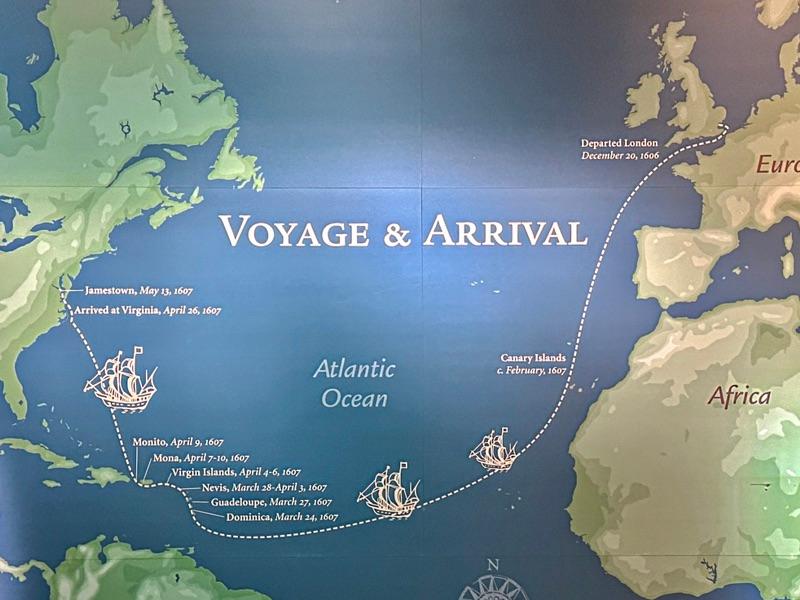
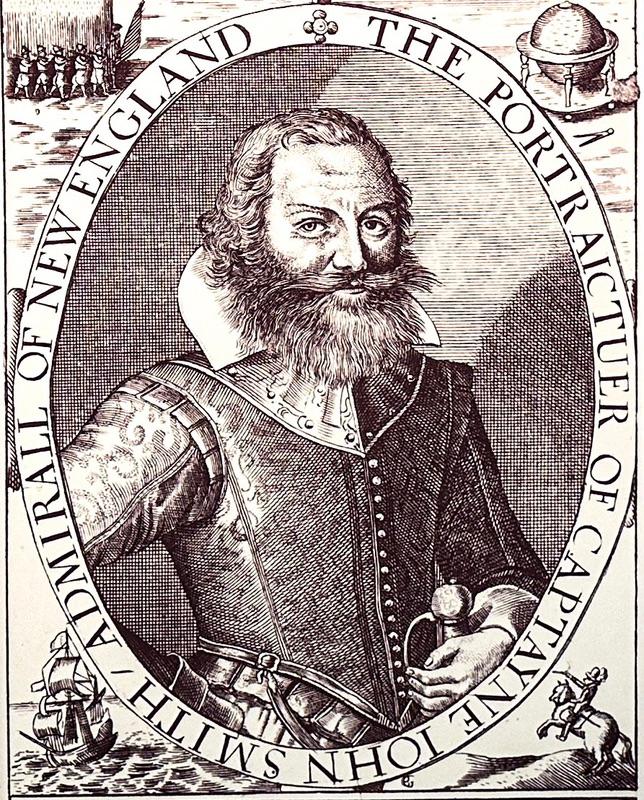
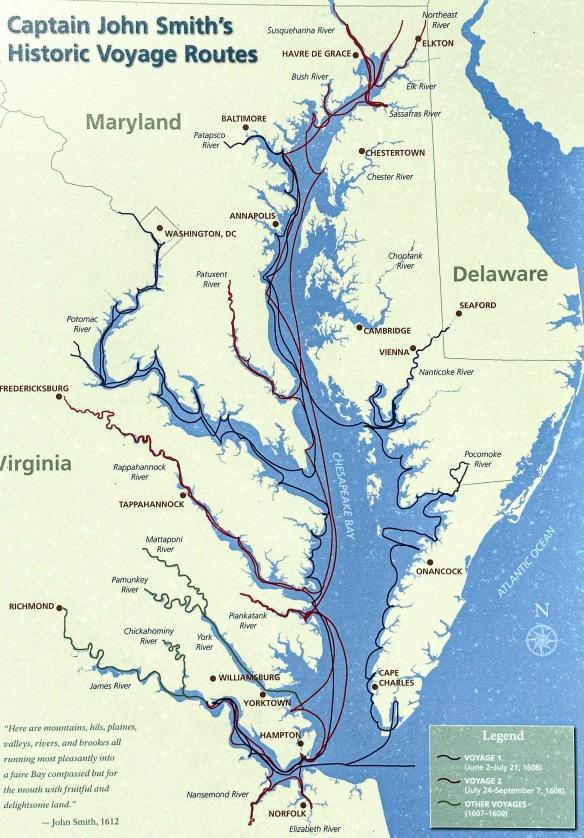
The route that the three ships took to get to their landing on the James River. | John Smith, at the age of 27, was recruited by the Virginia Company as one of the original Jamestown settlers. He was named as one of the leaders of the colony. After the first year, only 38 of the 104 original settlers survived. Stronger leadership was needed. In September 1608, John was elected as the colony president. Although he wasn’t particularly well like by the settlers, his leadership got them through the next difficult year until an accidental explosion forced him to return to England in October 1609. | Amazingly, during John Smith’s brief 2 1/4 year stint in Jamestown, he explored and mapped 3,000 miles of the Chesapeake Bay waterway. Each line on the map indicates the various routes he took. His writings and maps became the primary reference for many years. He did this all in a row boat. | There have been hundreds of “imagined” likenesses of Pocahontas over the centuries. This is the only image that she actually sat for. She was in England at the time. However, since part of her appeal and fame while in England came from the fact that she was Indian, it is conceivable that the artist exaggerated certain features to fit the “savage” image of the popular mindset at the time. | |
Anyway, back to reality, in 1613, well after John Smith returned to England, English Captain Samuel Argall took Pocahontas hostage, hoping to negotiate a permanent peace with her father. She was placed under the custody of Sir Thomas Gate, the marshal of Virginia. He treated her like a guest and taught her English customs. She converted to Christianity and was given the name Rebecca. Talk about Stockholm Syndrome. Actually, this isn’t all that surprising. Tribes often kidnapped other tribe’s women. The captured women were expected to assimilate into the new tribe’s culture.
And Pocahontas did assimilate. With the blessing of her father and the governor of Virginia, she married John Rolfe, a very successful tobacco farmer, on April 5, 1614. The marriage did bring peace for a while. The couple had a son, Thomas Rolfe, and in 1616, the family sailed to England. Sadly, Pocahontas became ill and died just one day before the family was to return to Jamestown in March 1617. Subsequently, John Rolfe left for Virginia, leaving his son behind. John was killed in the Indian Massacre of 1622. Thomas, after receiving an English education, returned to Virginia to become a prominent citizen.
| 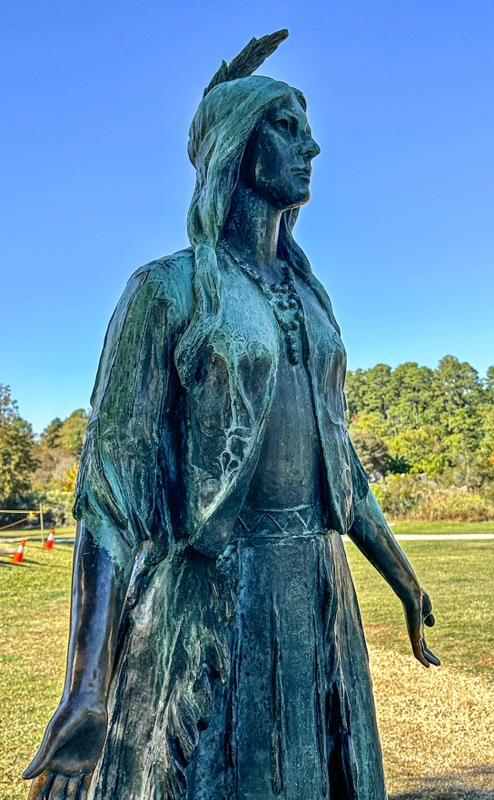 | Another “imagined” statue of Pocahontas. | |
We followed the plan that I laid out a couple of days ago. First, we went to the Jamestown Settlement. This is operated by the state of Virginia. There is a museum and a re-creation of the settlement at this site. The museum was excellent, chock full of historical facts laid out in a logical and easy to follow manner. The evolution of Jamestown and the Virginian Colony is far more interesting and amazing than I had remembered from high school history classes. We could have spent days at the museum alone. The best way to start, is to watch the documentary videos. All the videos were both entertaining and informative.
The museum displays presented the many trials and tribulations faced by the colony. For instance: Of the first 104 settlers that landed on April 14, 1607, only 38 survived the first year. The great famine of the winter of 1609-10, almost doomed the town, taking another heavy toll. In fact, in June 1610, the remaining settlers packed up and were about to sail back to England, when they met Baron De La Warr (yes, that is pronounced Delaware) sailing towards Jamestown, bringing vital supplies.
I have one observation here. These settlers were living next to one of the best fisheries in the world, the Chesapeake water system. Why didn’t they fish? The same thing happened to the Lewis and Clark Expedition when they nearly starved on the Pacific Coast. They were camped on one of the world’s greatest salmon fisheries and never once fished.
Jamestown was the brain child of a group of investors called the Virginia Company. Joint-stock ventures, as the Virginia Company was, became all the rage for investors during this time in England. Joint-stock ventures were the precursor to modern-day corporations.
The Virginia Company looked at all the riches that Spain brought back from the New World and promoted Jamestown as the North American equivalent. The plan was to bring back gold and silver to repay the investors. However, as the mortality rate rose, and no gold and silver were brought back, prospects for profits faded.
There were Mulberry trees in Virginia which silkworms love. The Company attempted to initiate a silkworm industry. That failed. Tobacco did prove to be profitable, but it came too late to save the Virginia Company. After the Indian Massacre of 1622 killed many settlers, the King rescinded the Company’s charter, making Virginia a royal colony under his control.
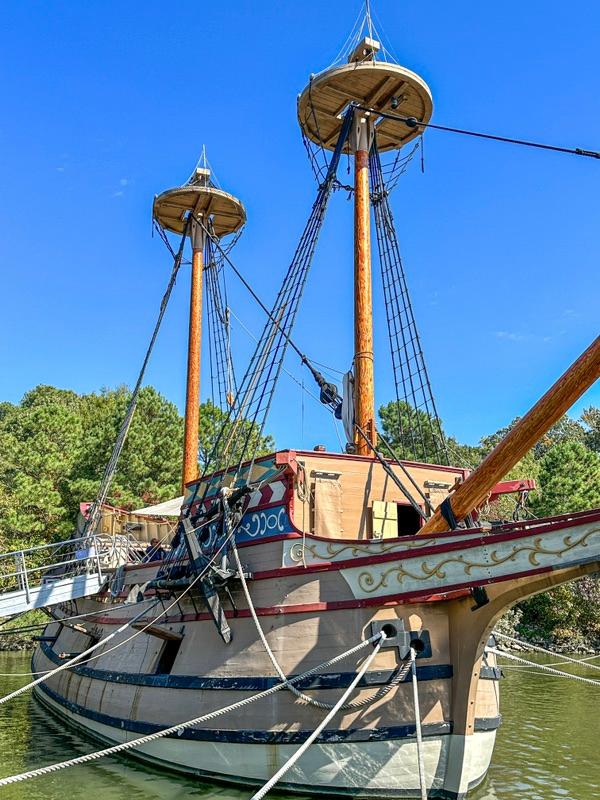
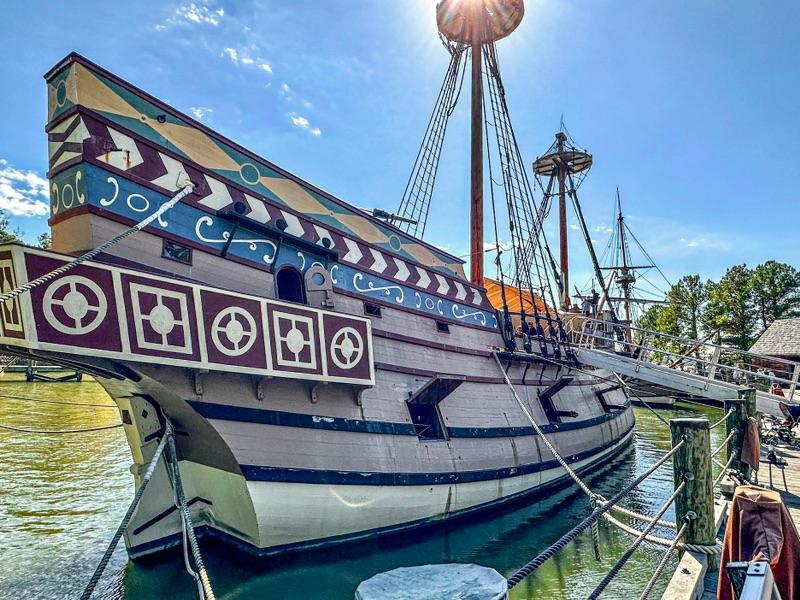
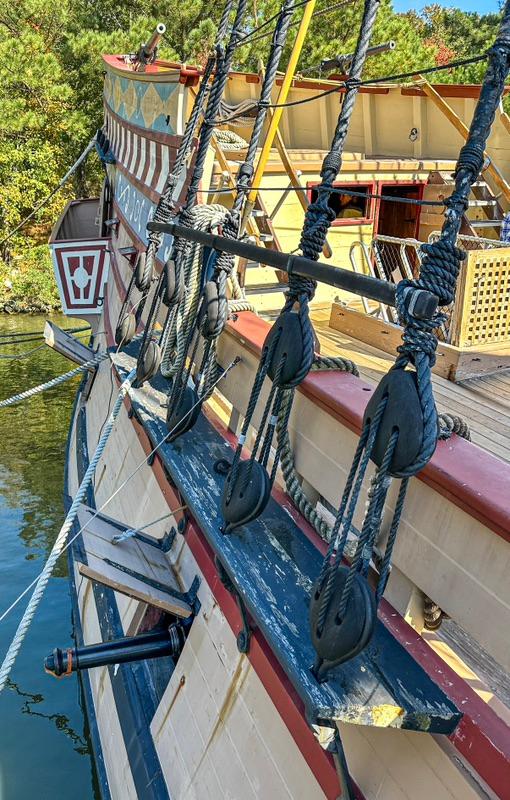
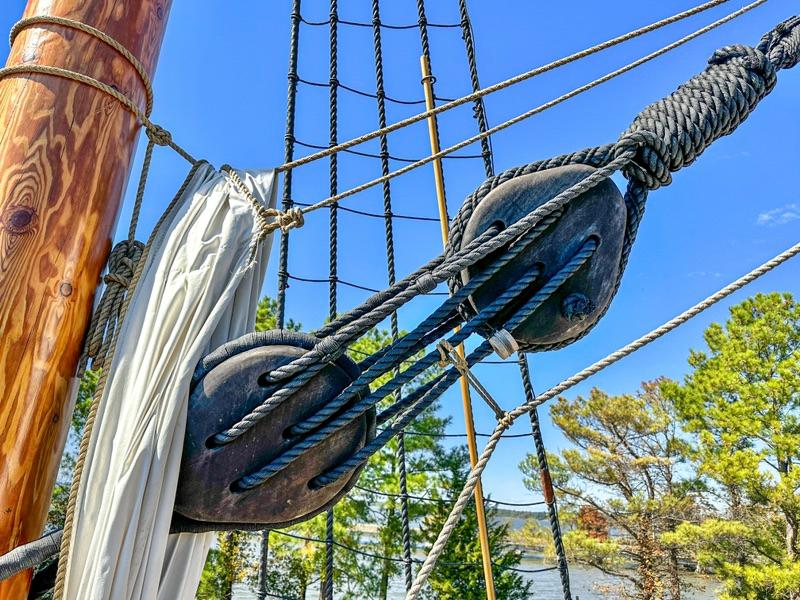
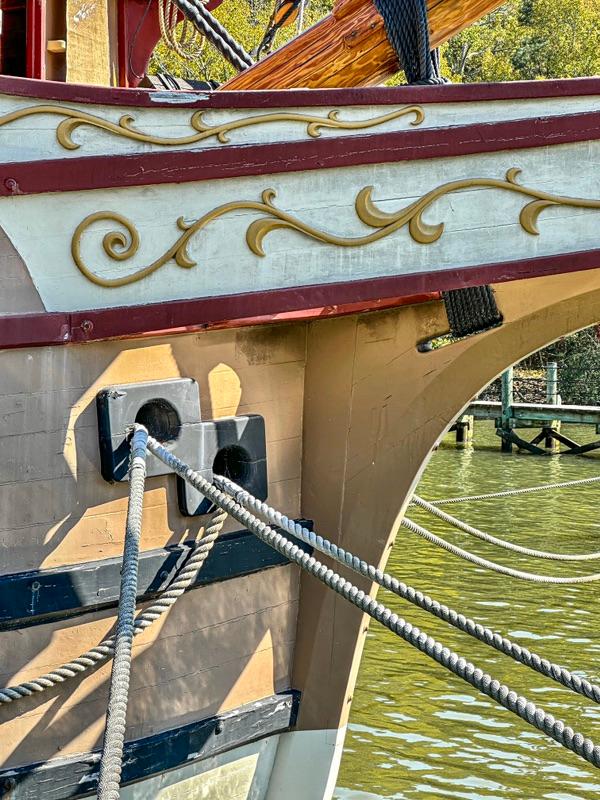
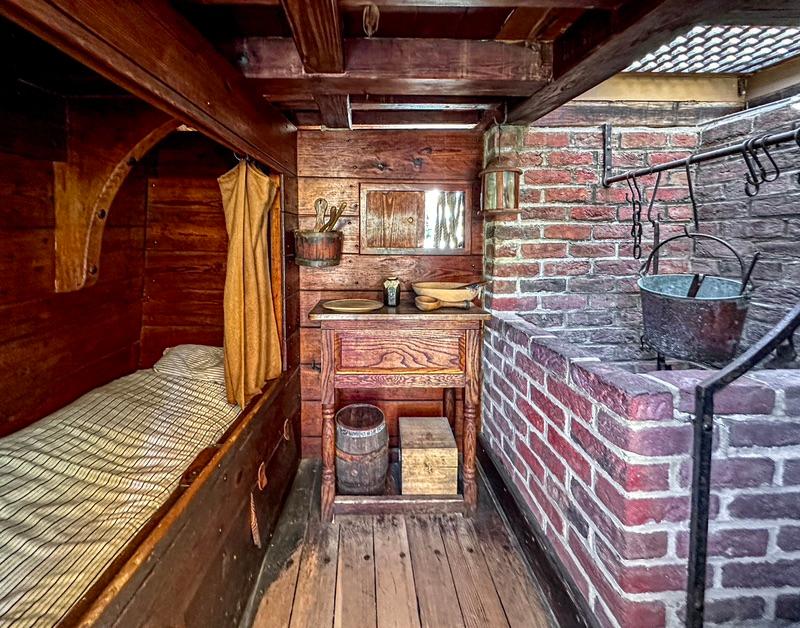
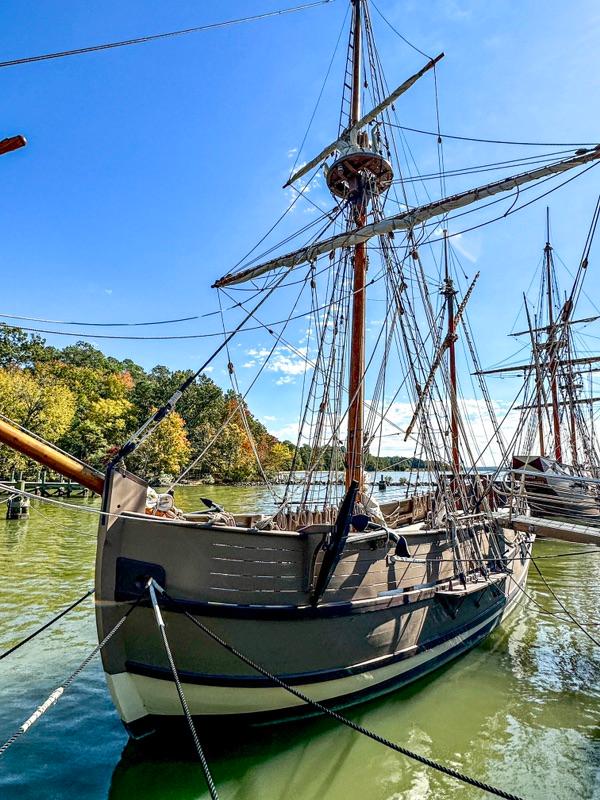
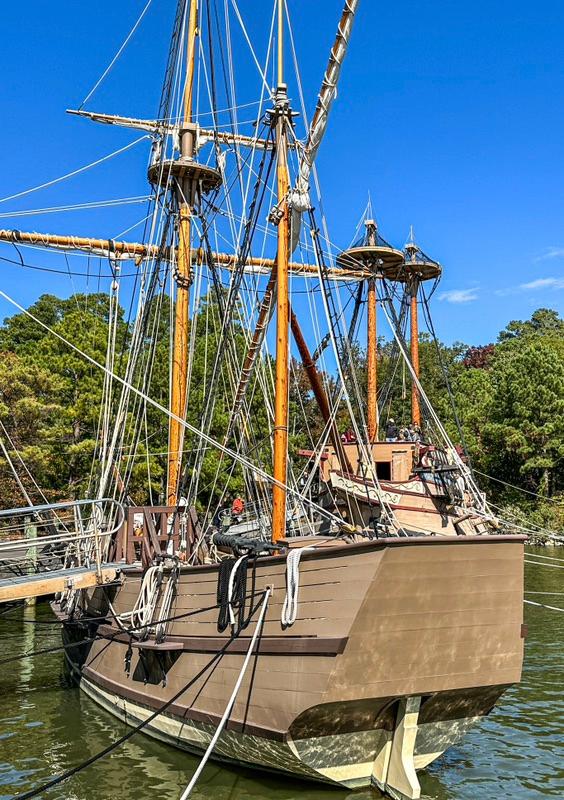
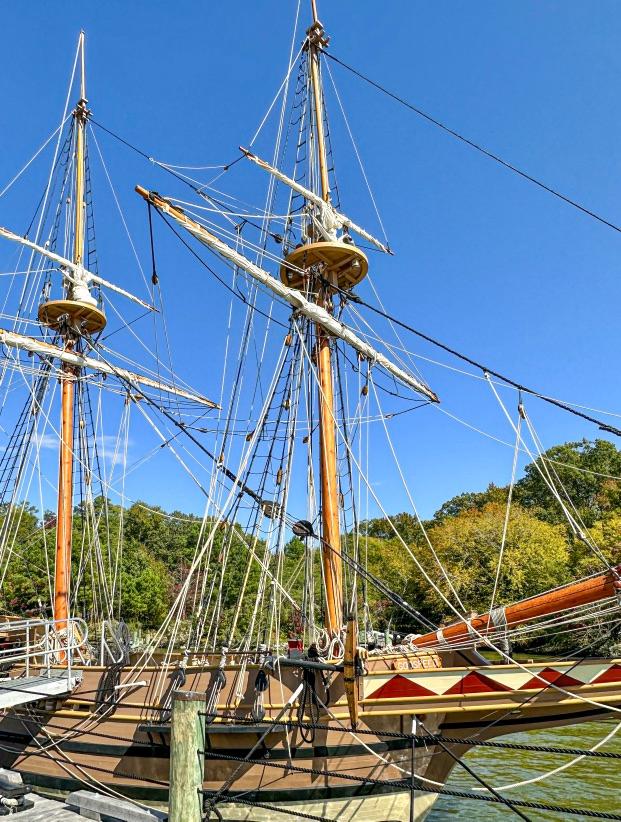
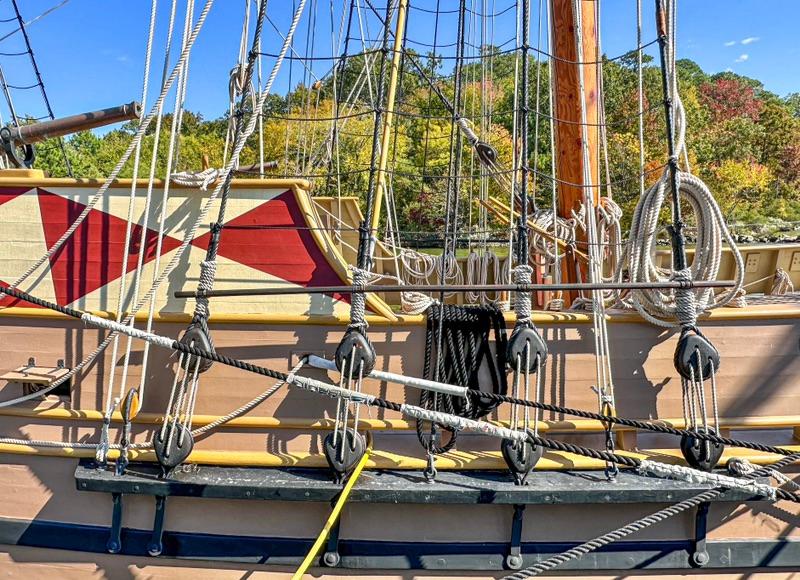
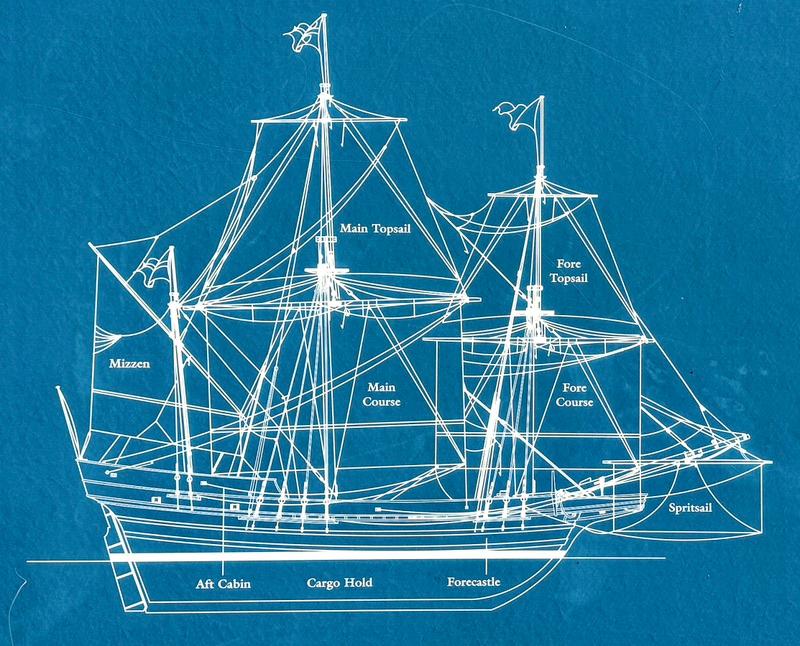
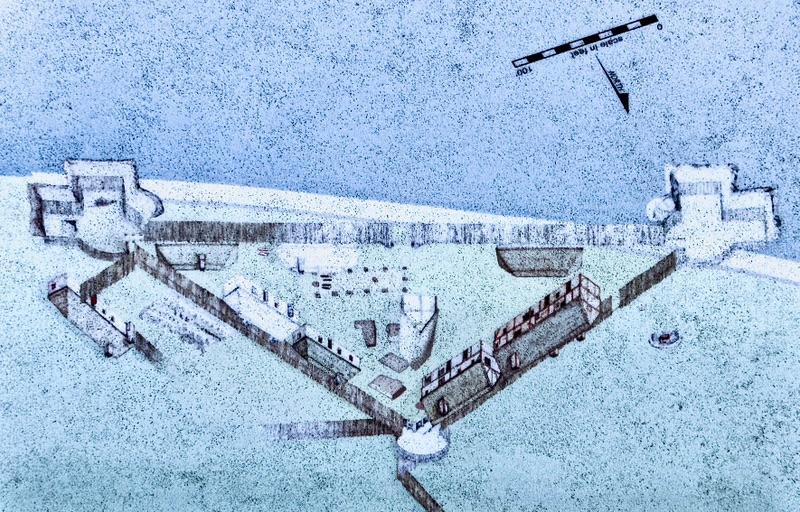
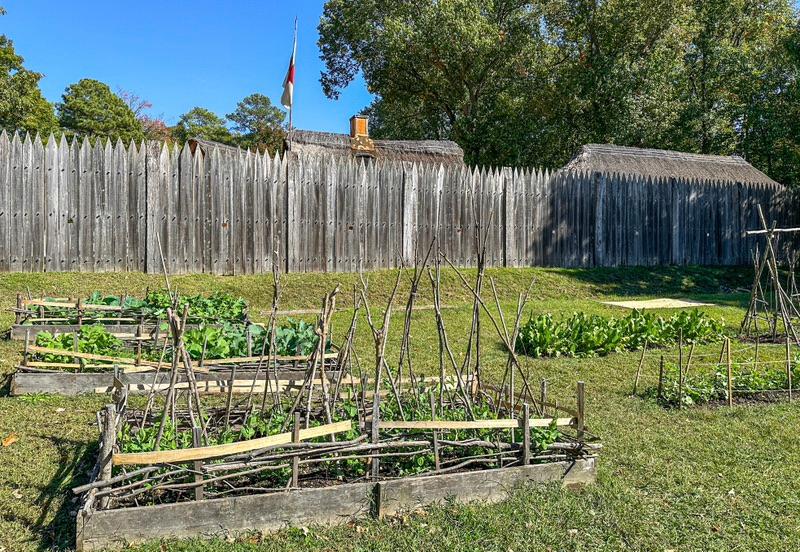
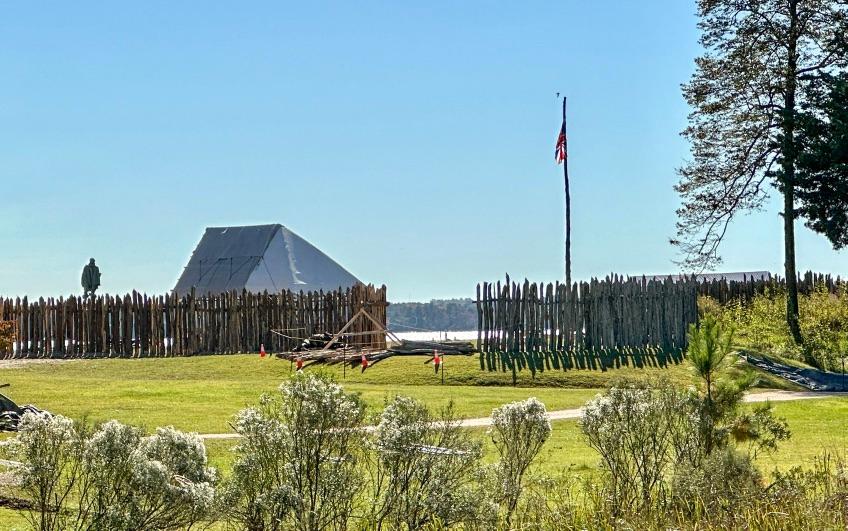
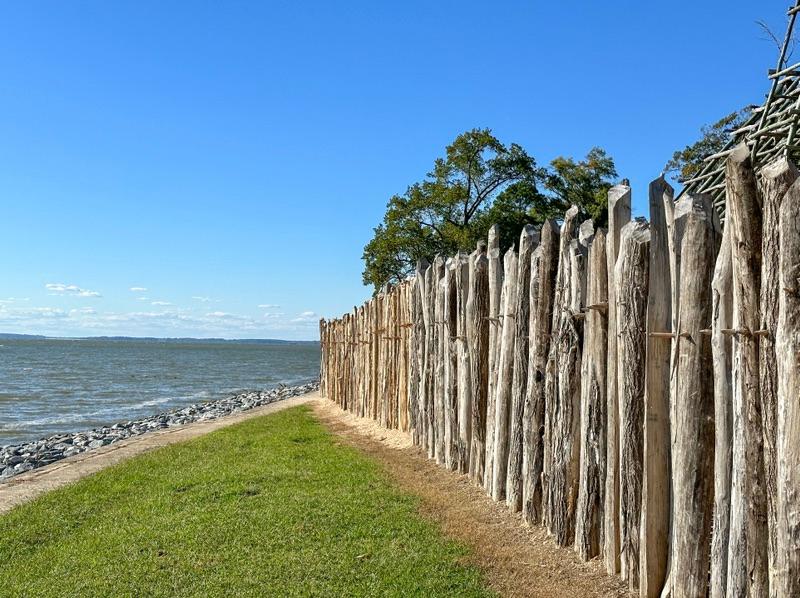
There was the introduction of slavery, the Bacon Rebellion, the burning of Jamestown, moving the capital to Williamsburg, etc. Too much to write here. Suffice to say, it was terrific, and that was just the museum. Outside, the entire original Jamestown fort was re-created. A Powhatan village was re-created. And the original three ships were re-created. I loved the ships. They were all sea worthy and we were allowed to board the flag ship, the Susan Constant. I was blown away at the tiny size of the ships that brought the 104 settlers.
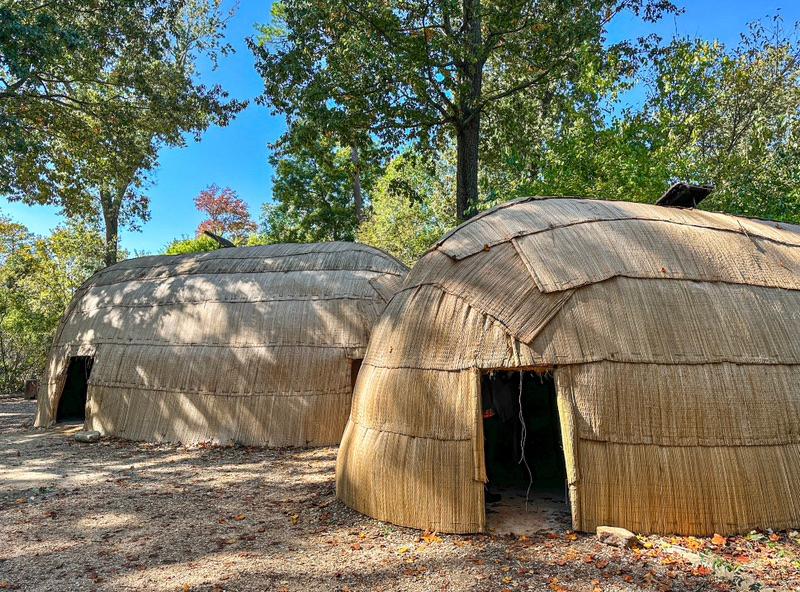
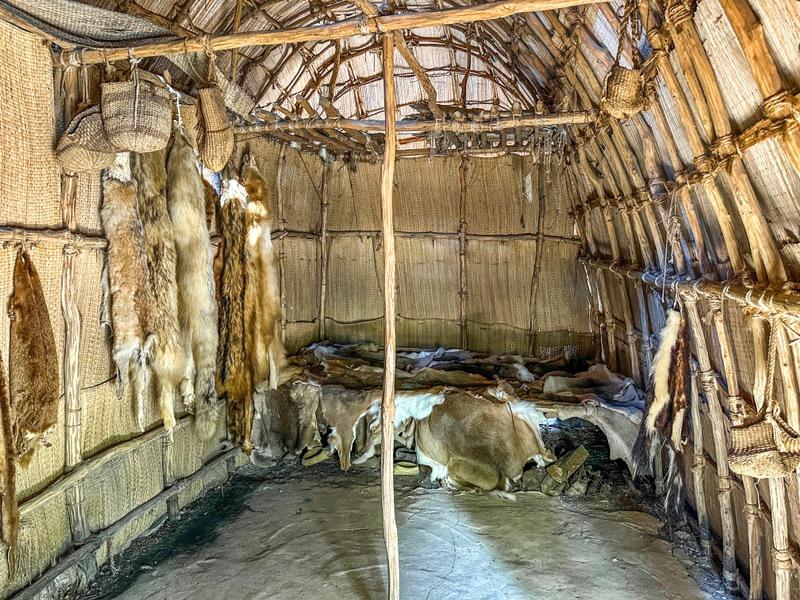
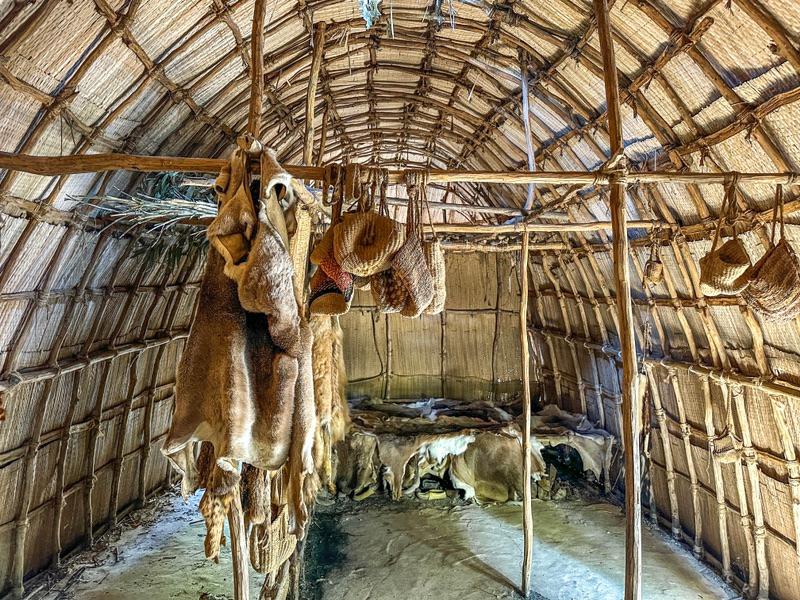
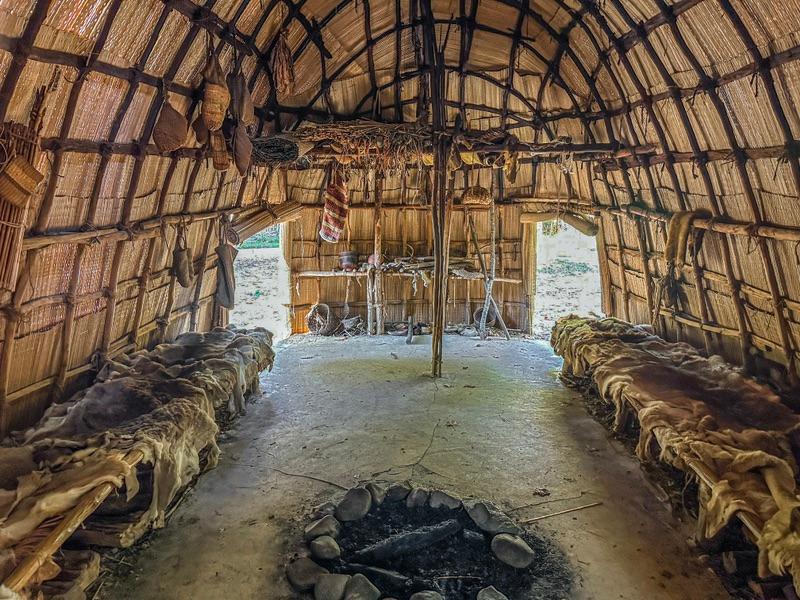
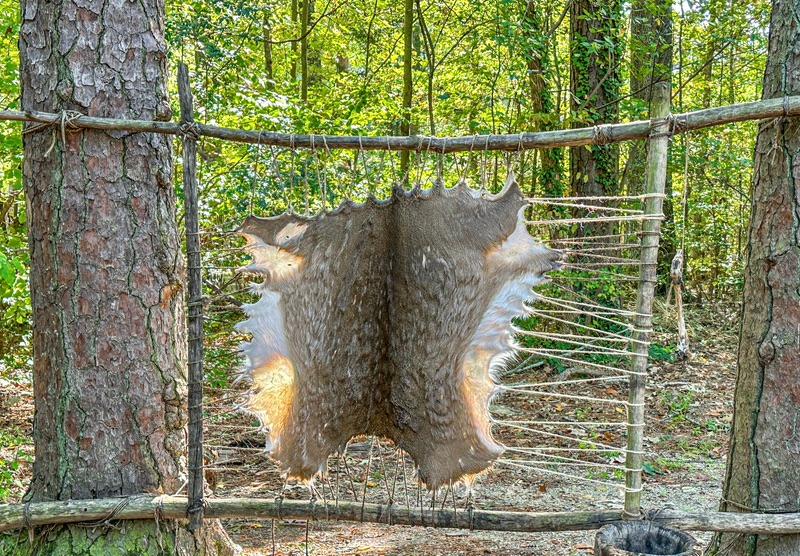
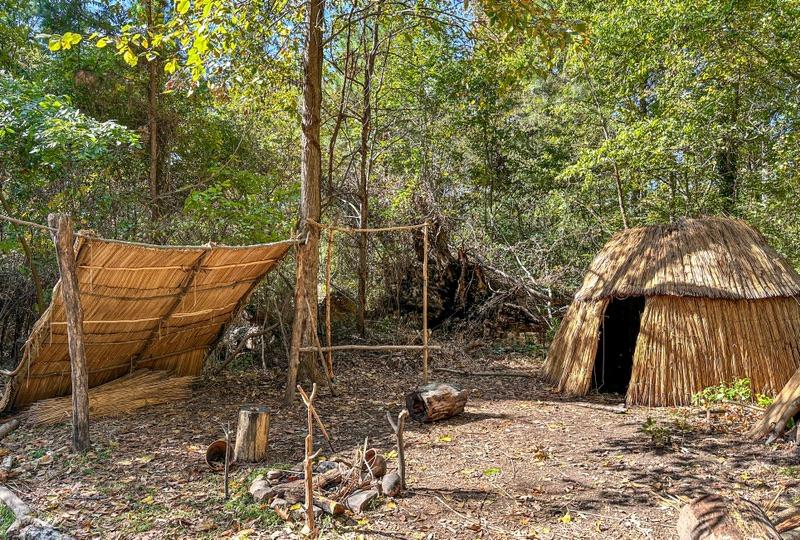
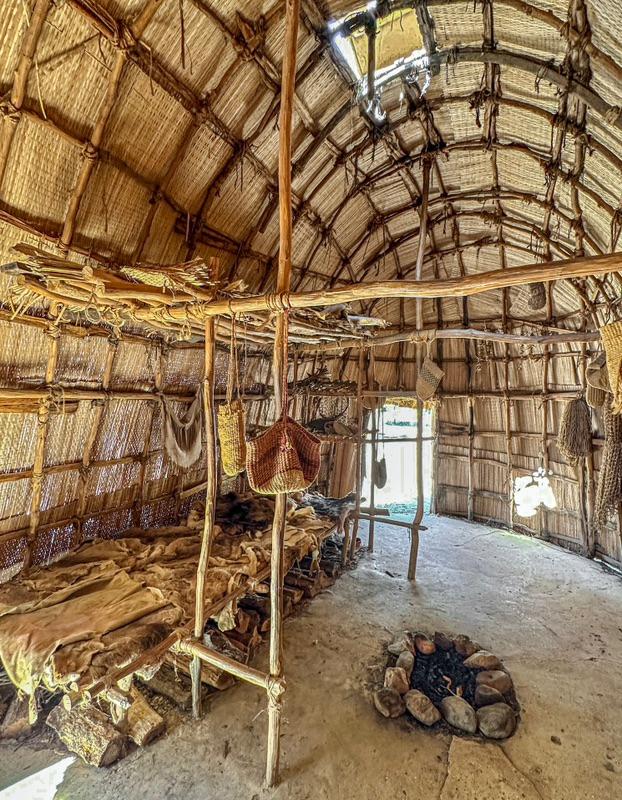
| 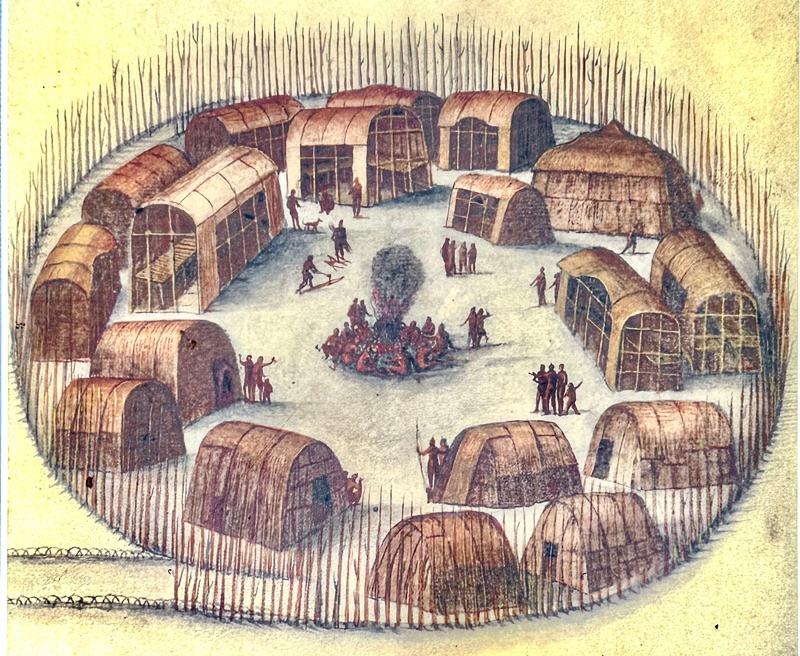 | A depiction of a Powhatan village. | The re-created Powhatan village. | |
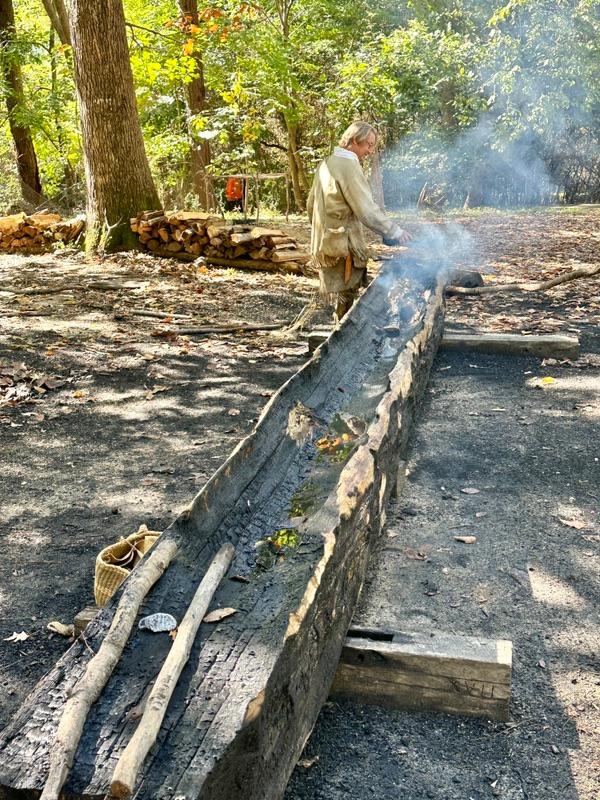
Using fire to build a log canoe. | |
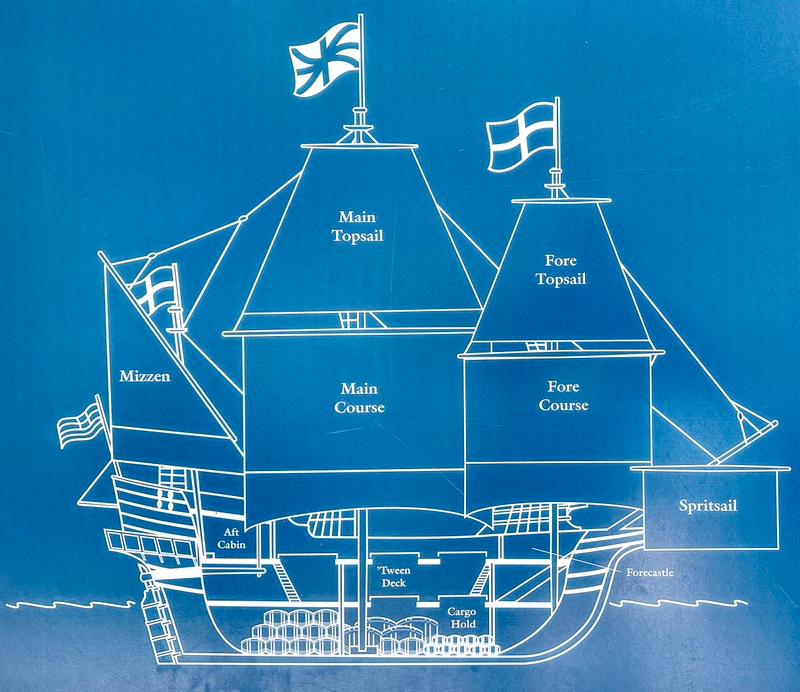
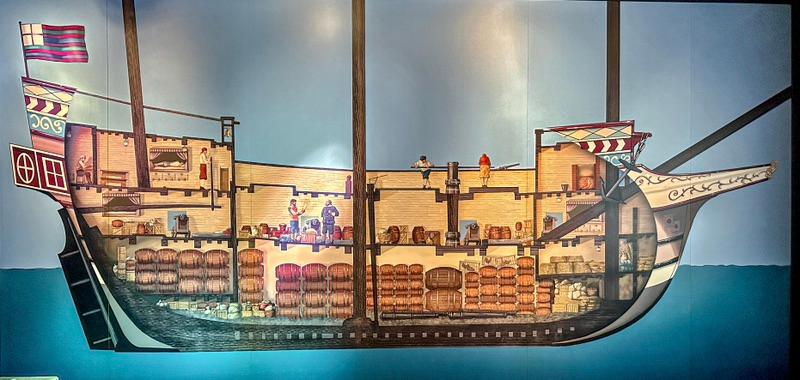
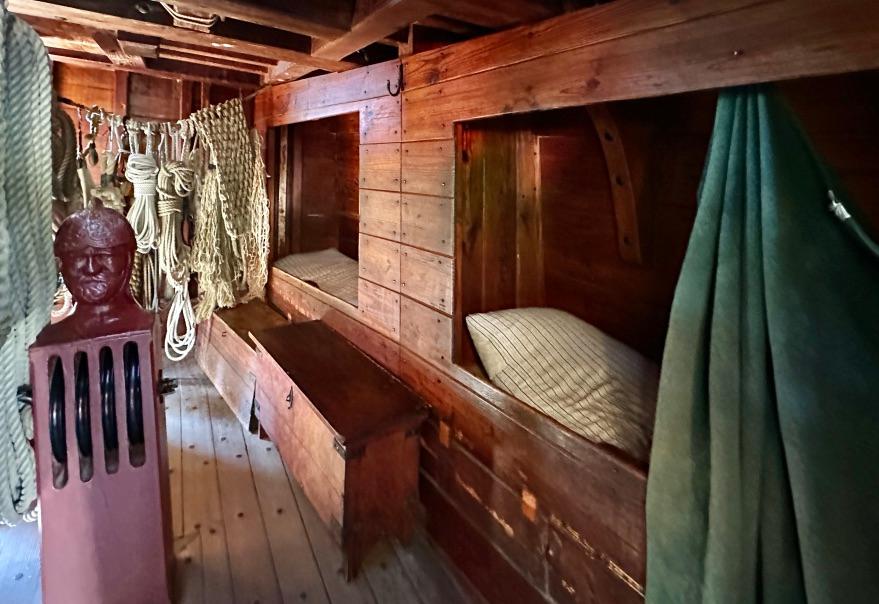
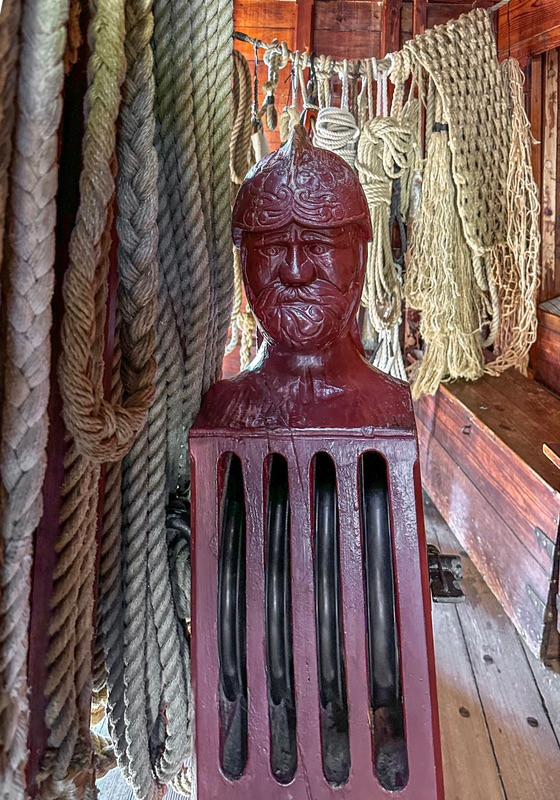
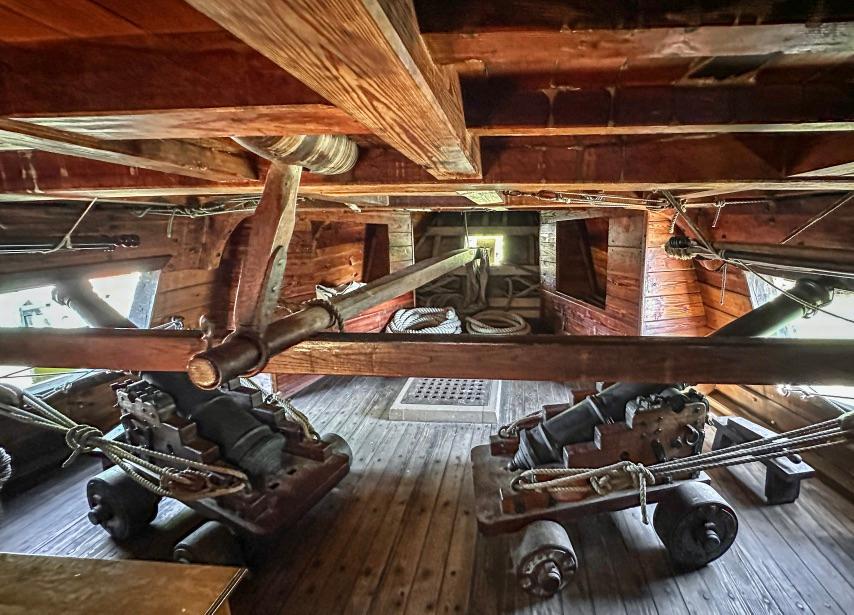
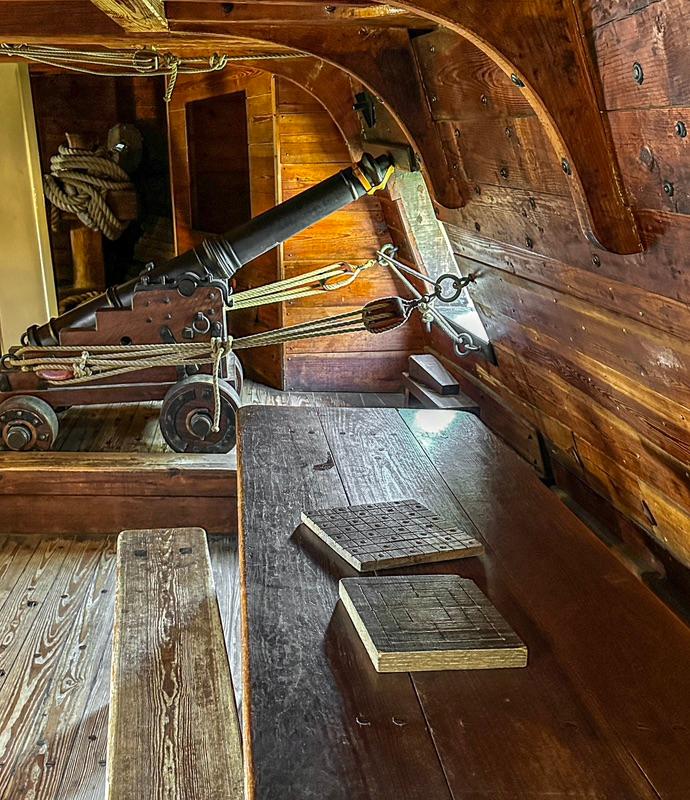
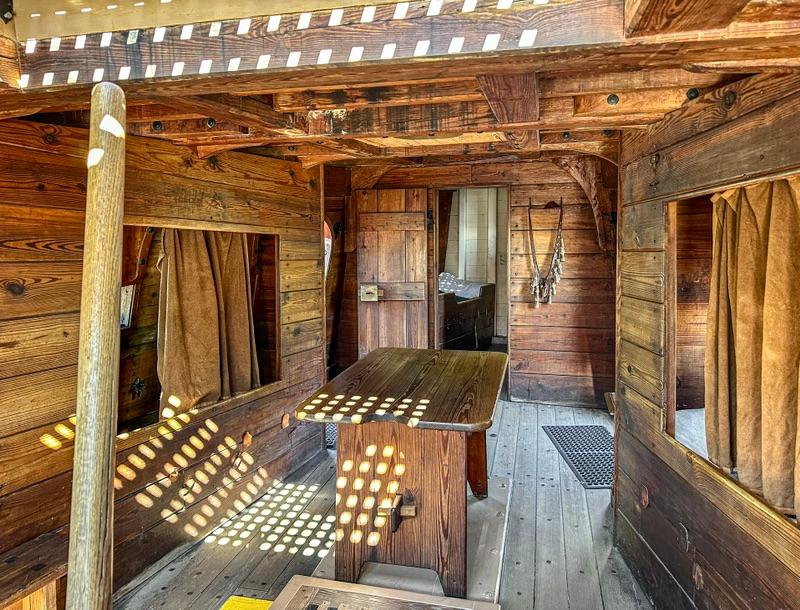
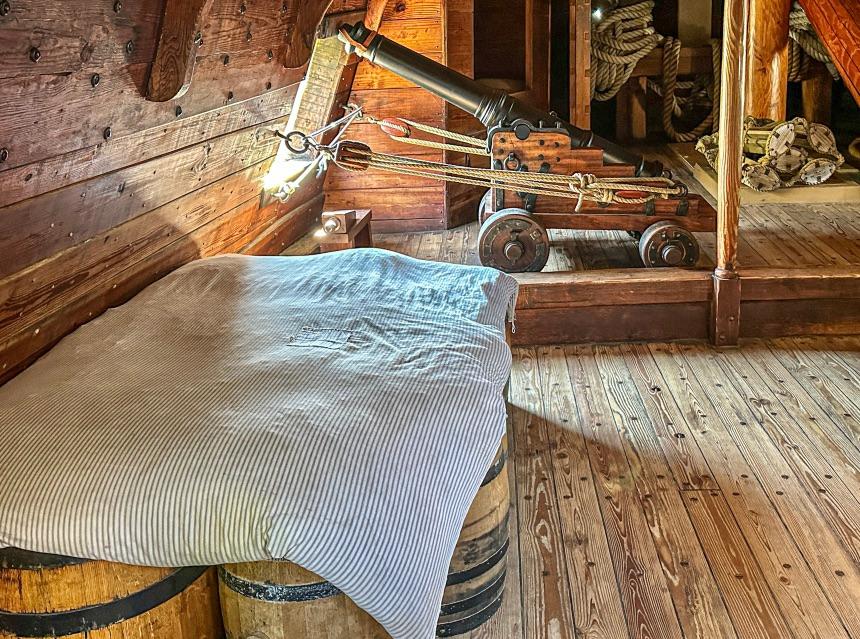
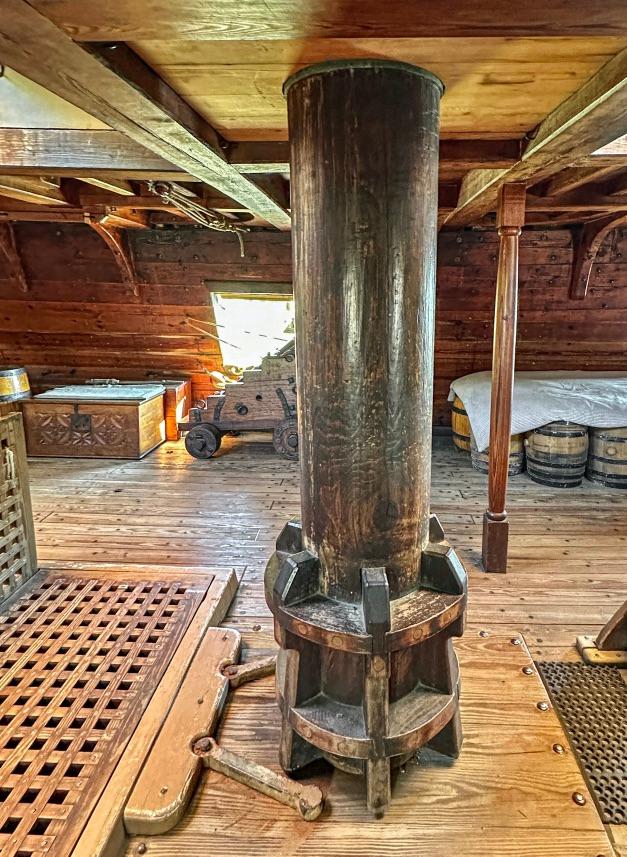
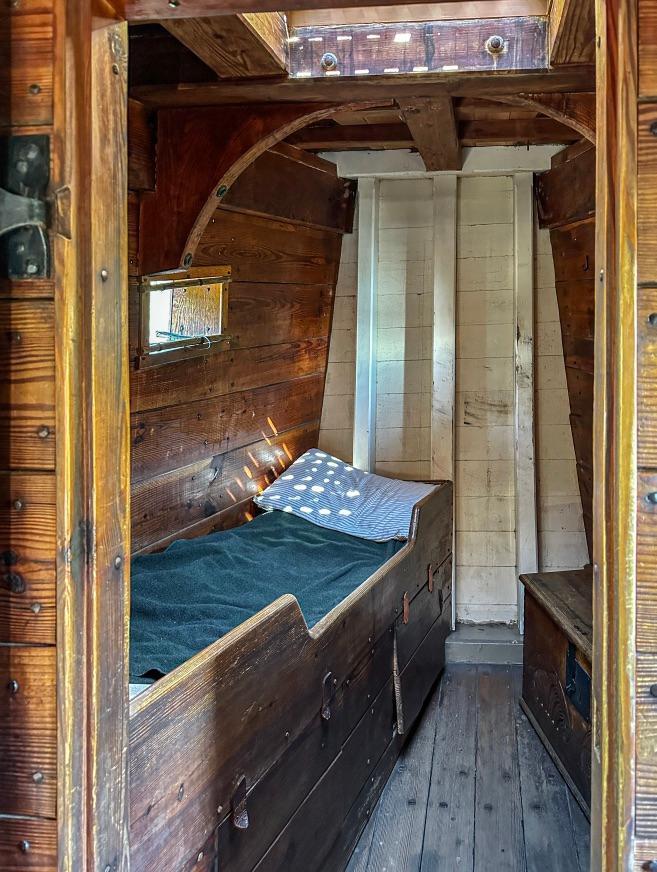
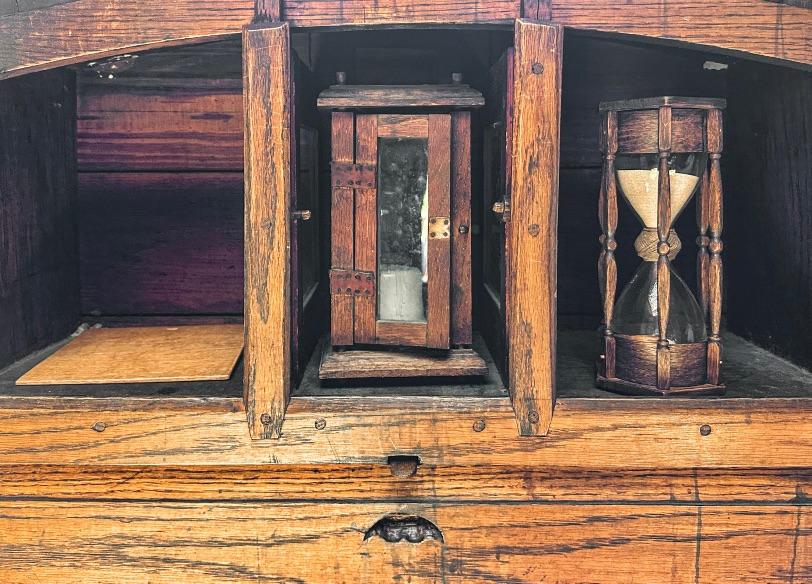
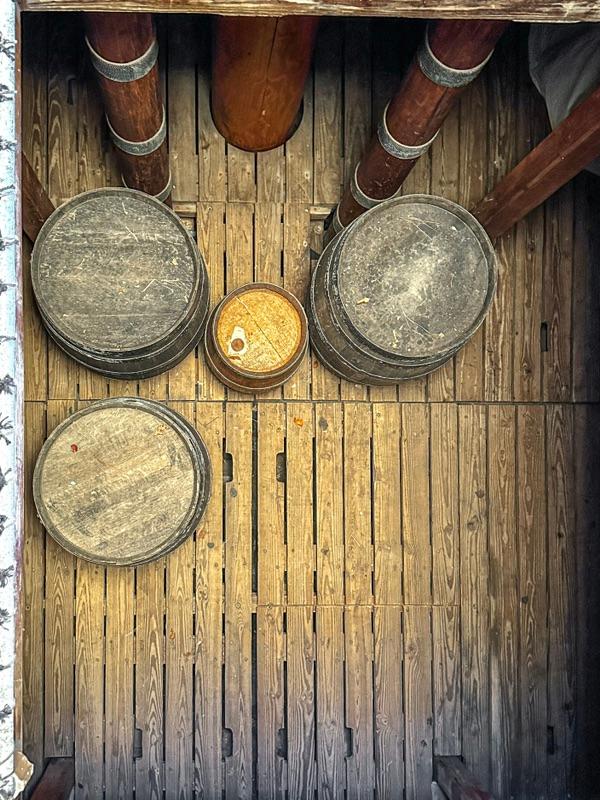
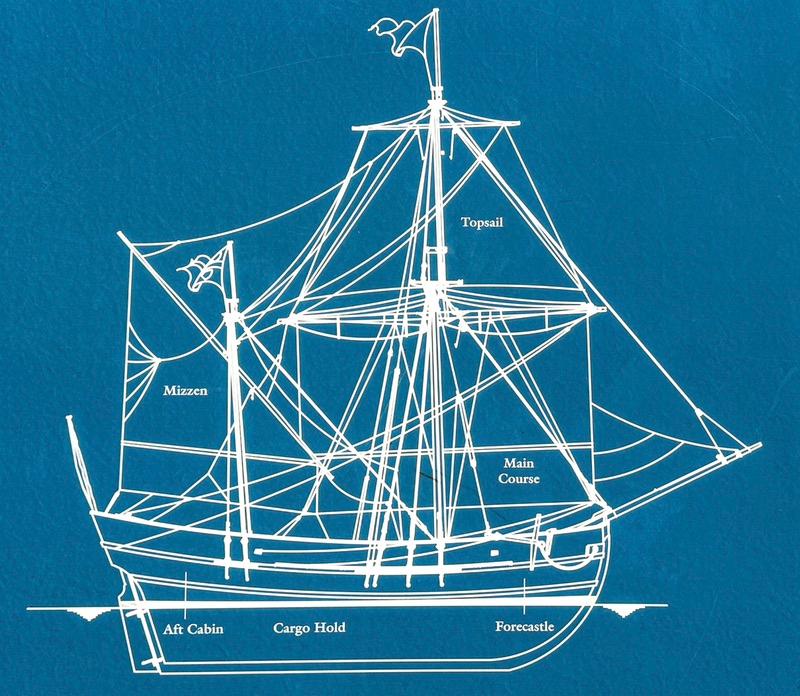
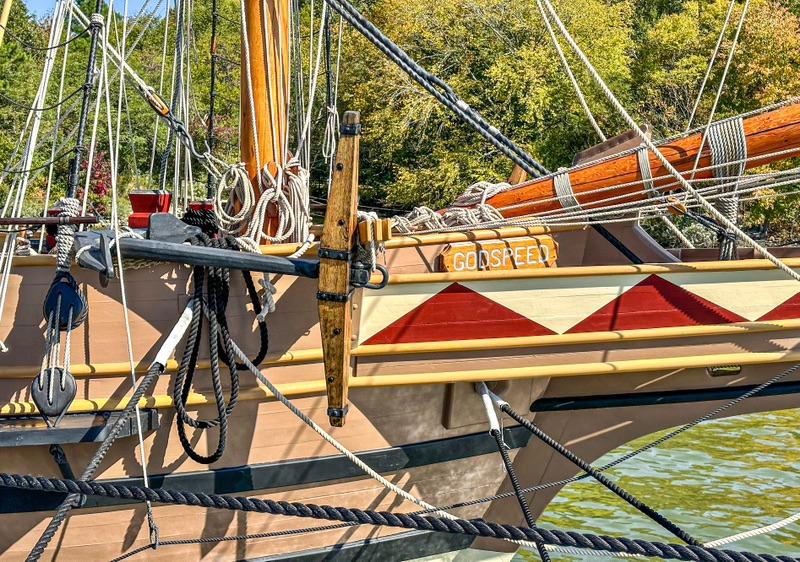
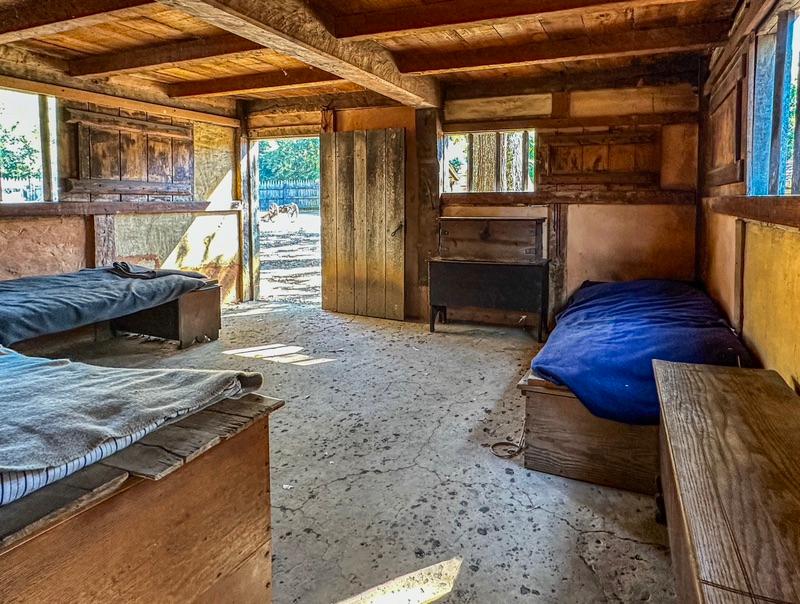
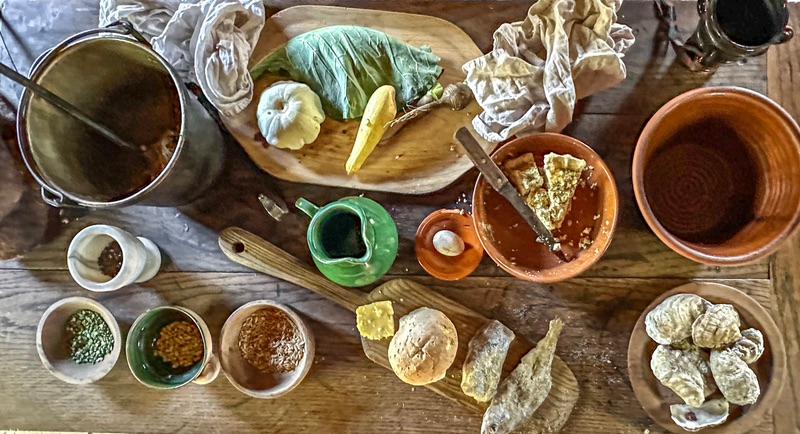
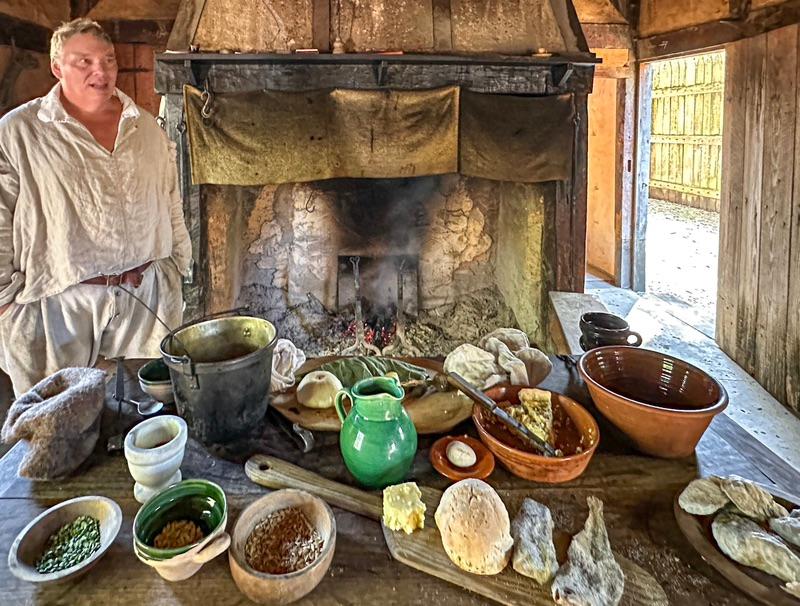
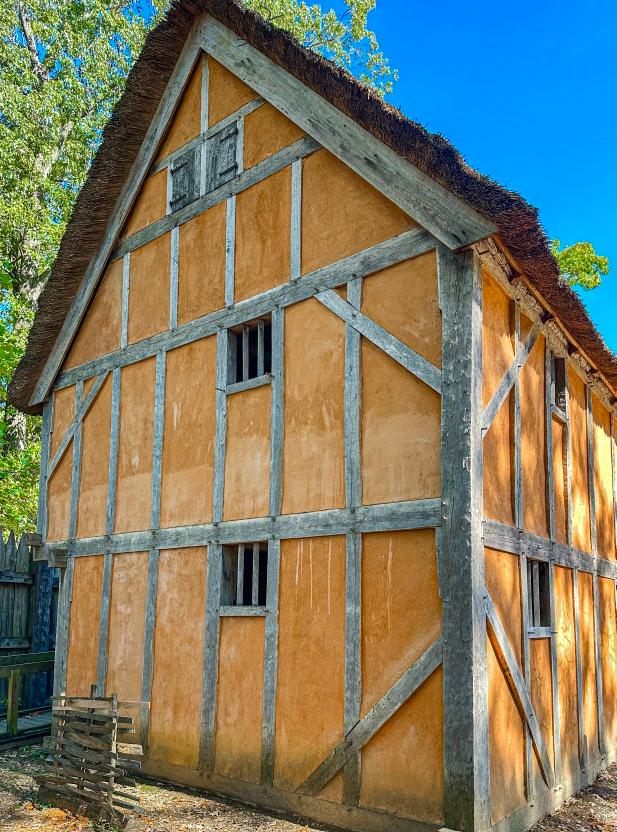
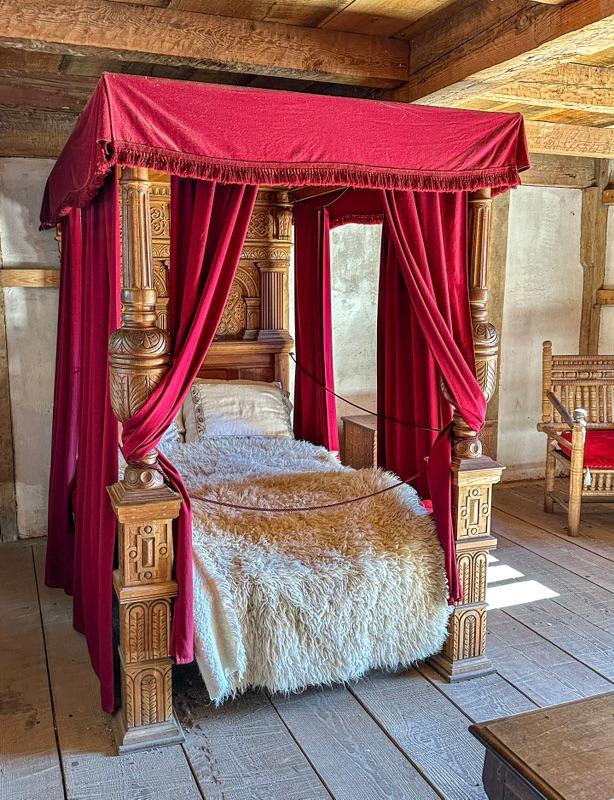
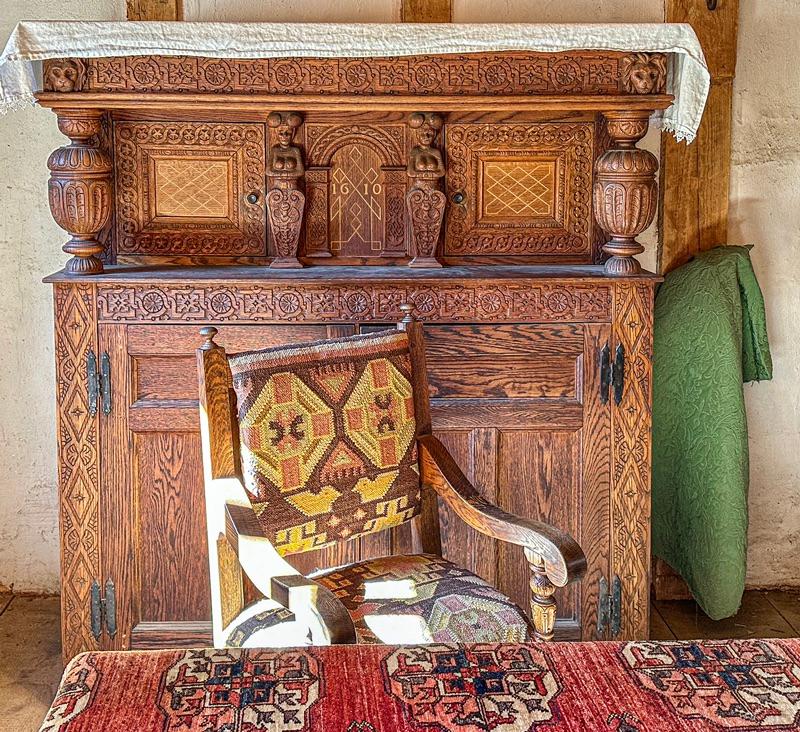
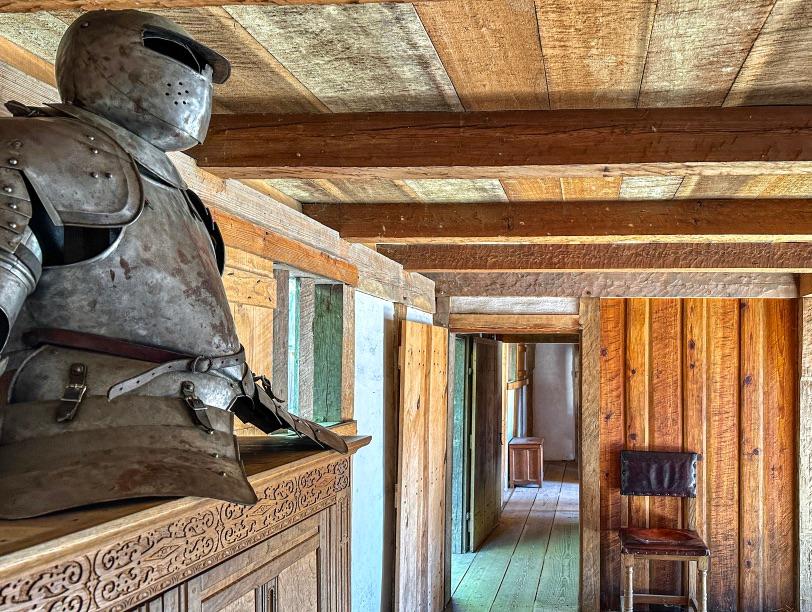
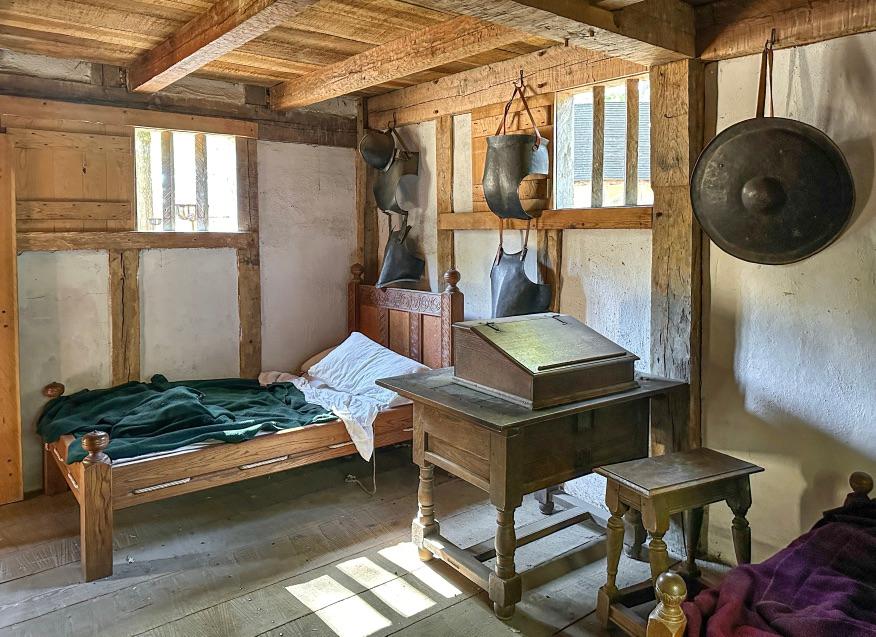
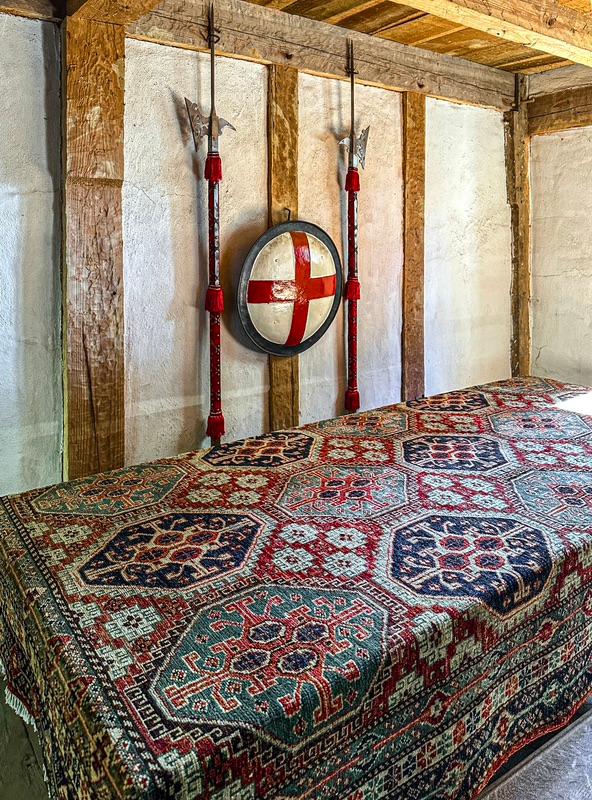
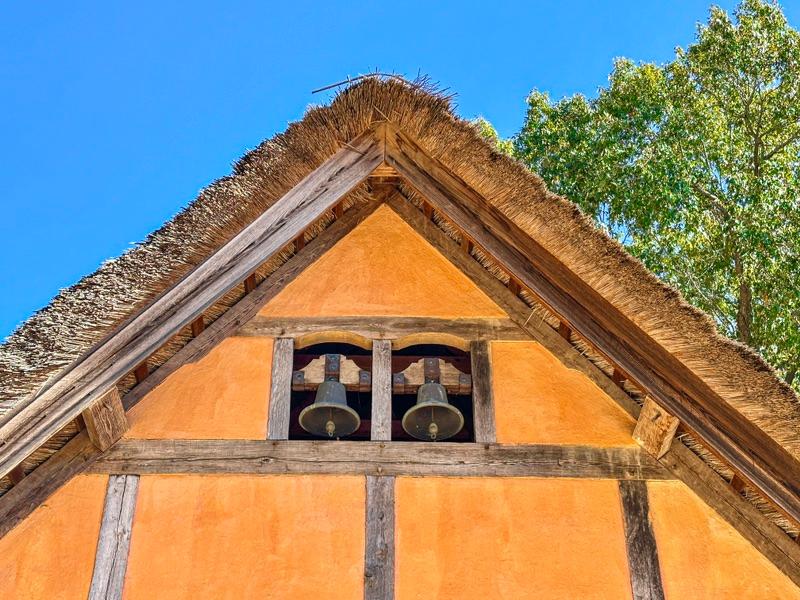
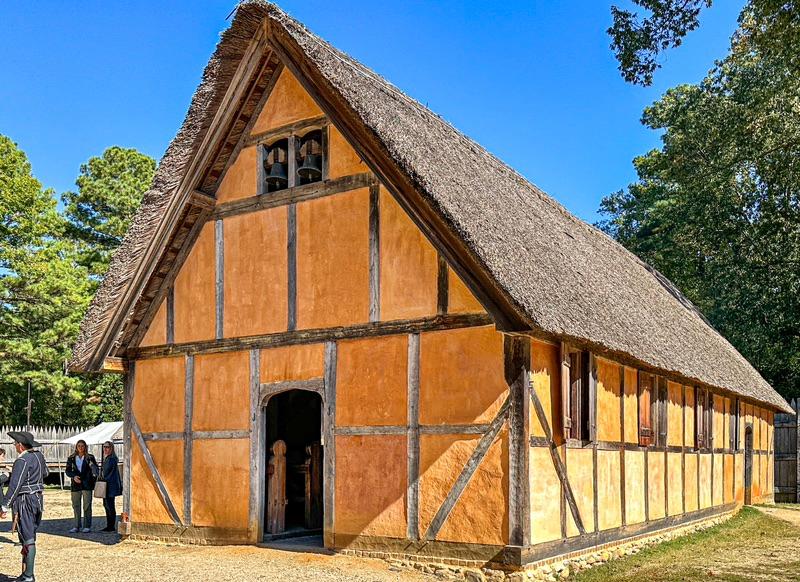
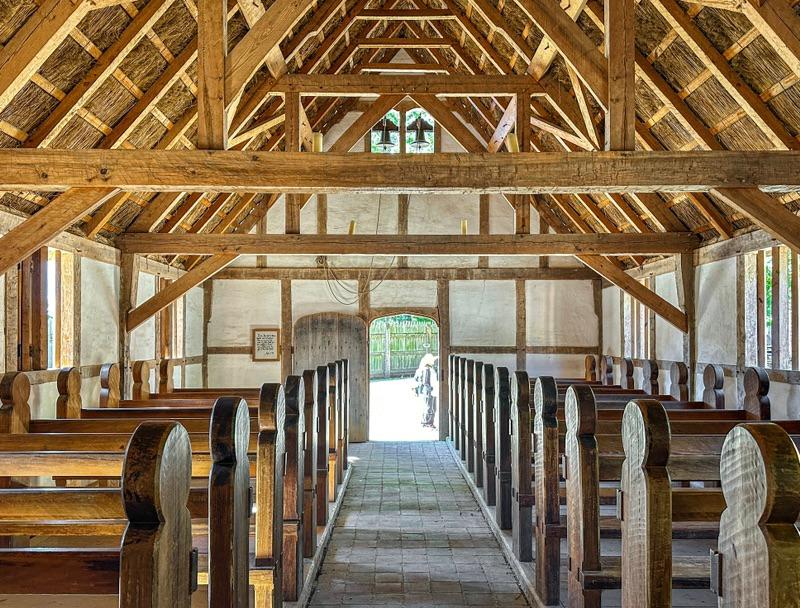
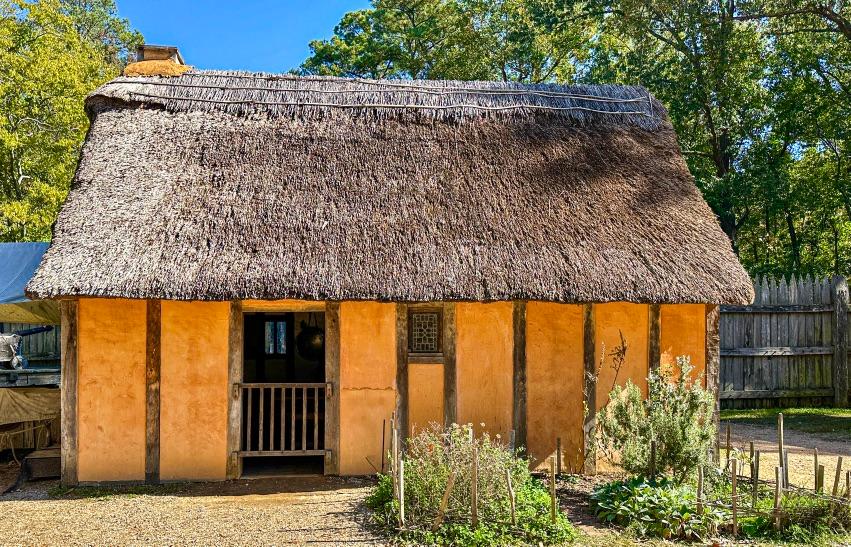
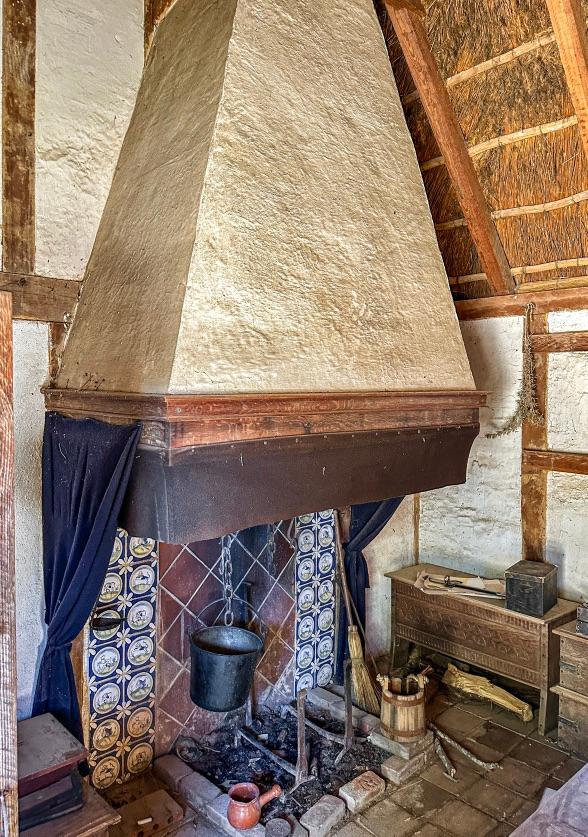
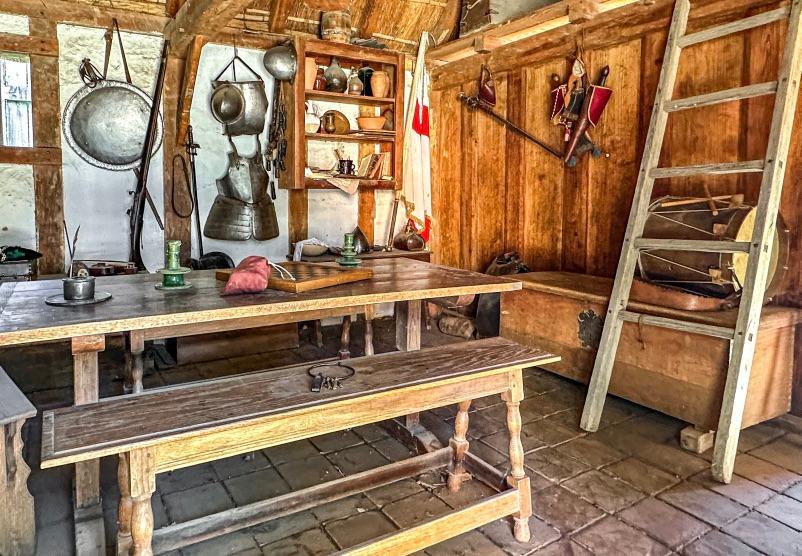
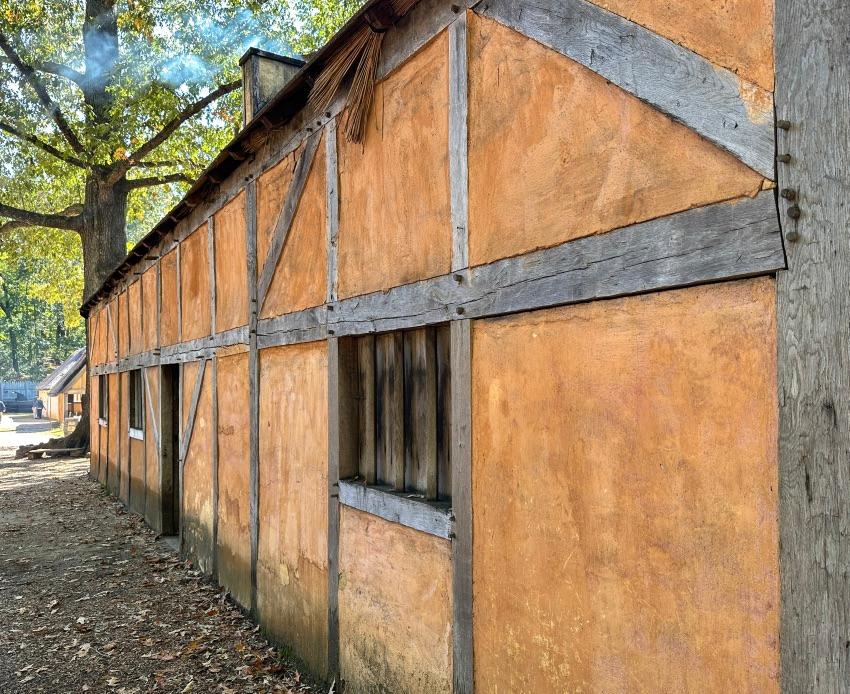
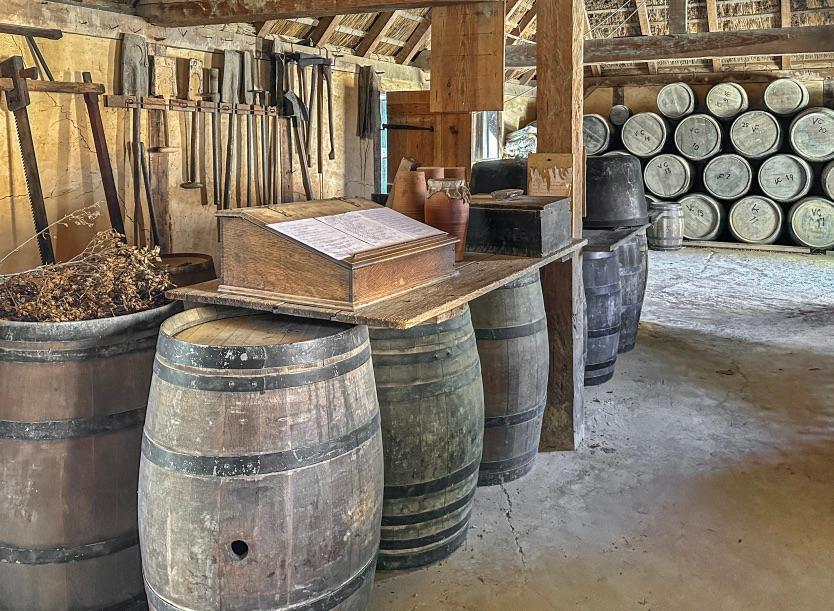
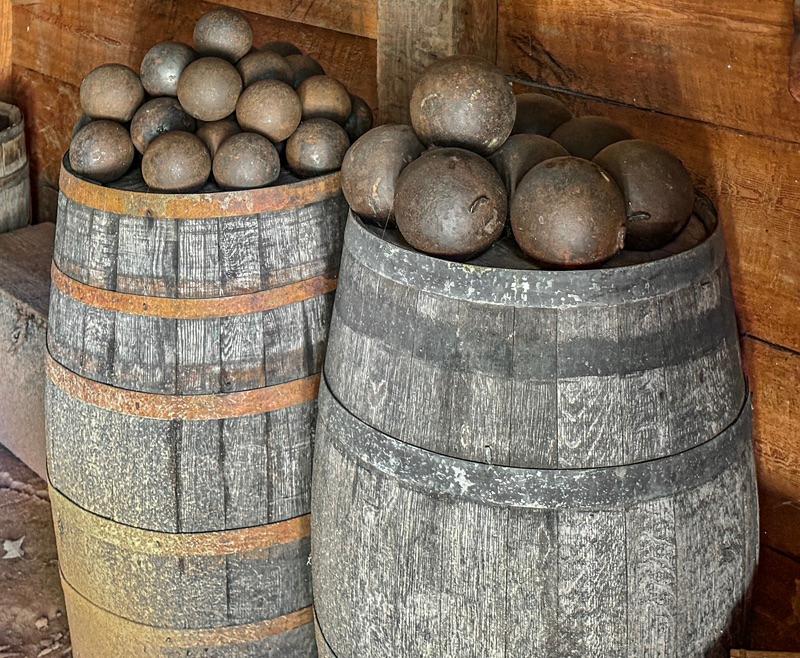
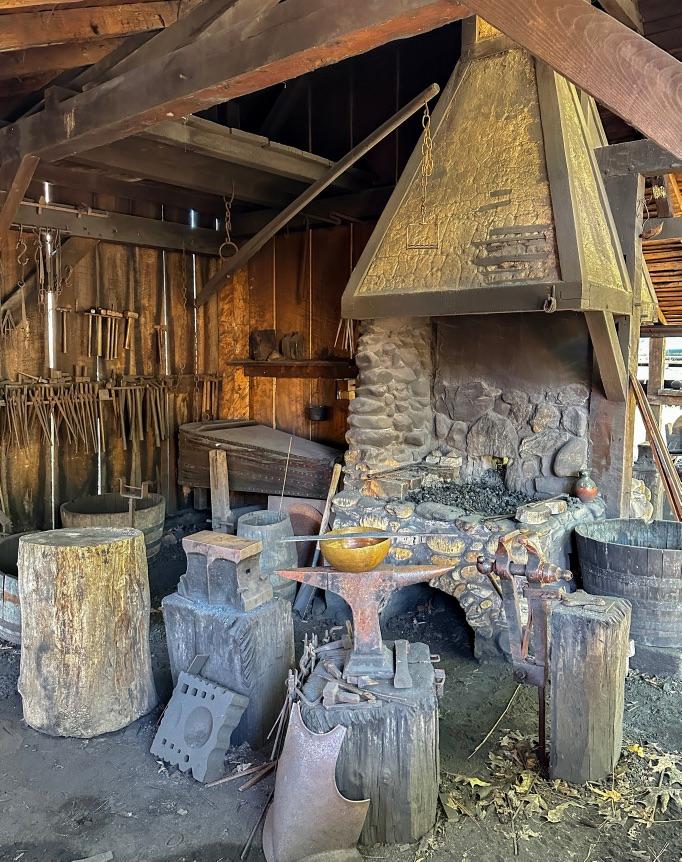
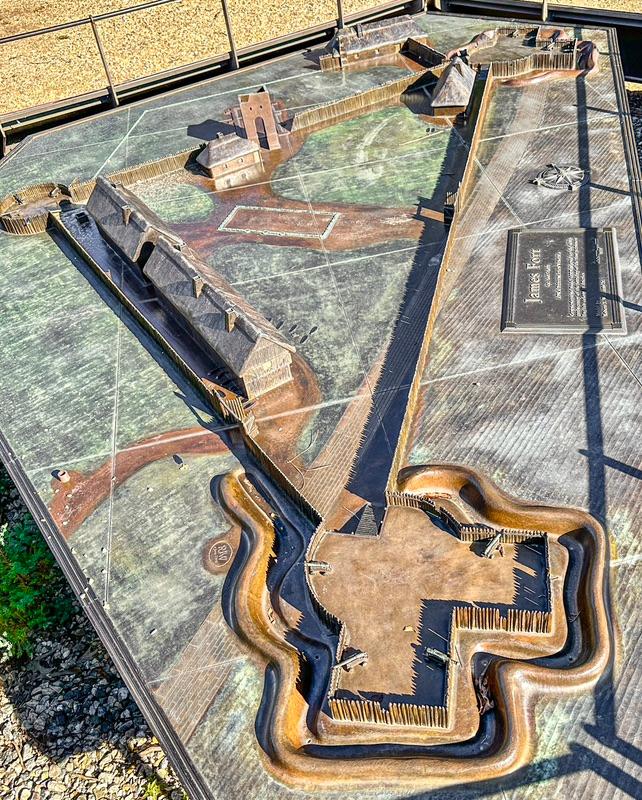
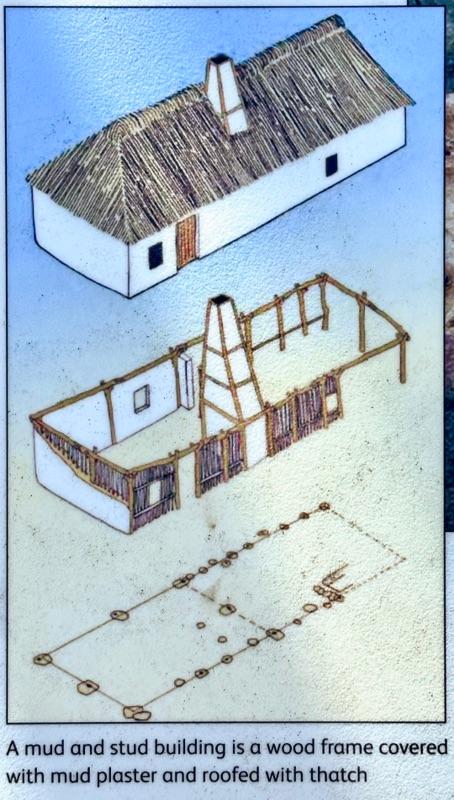
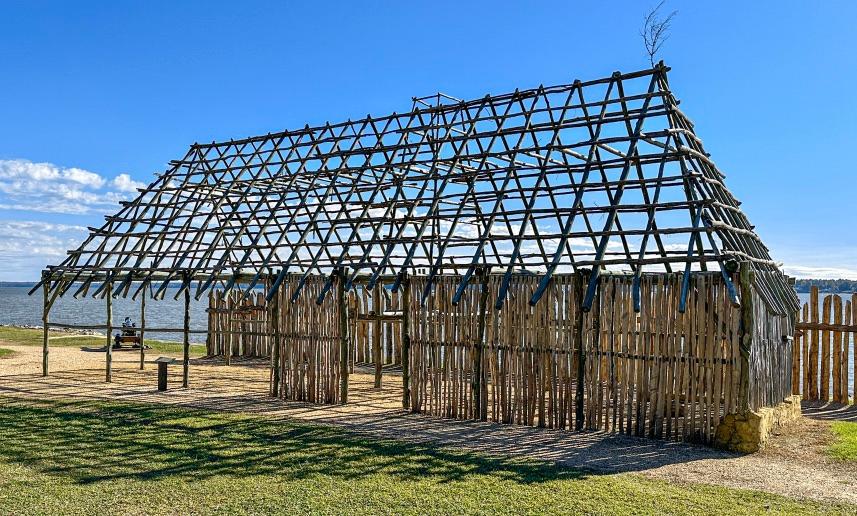
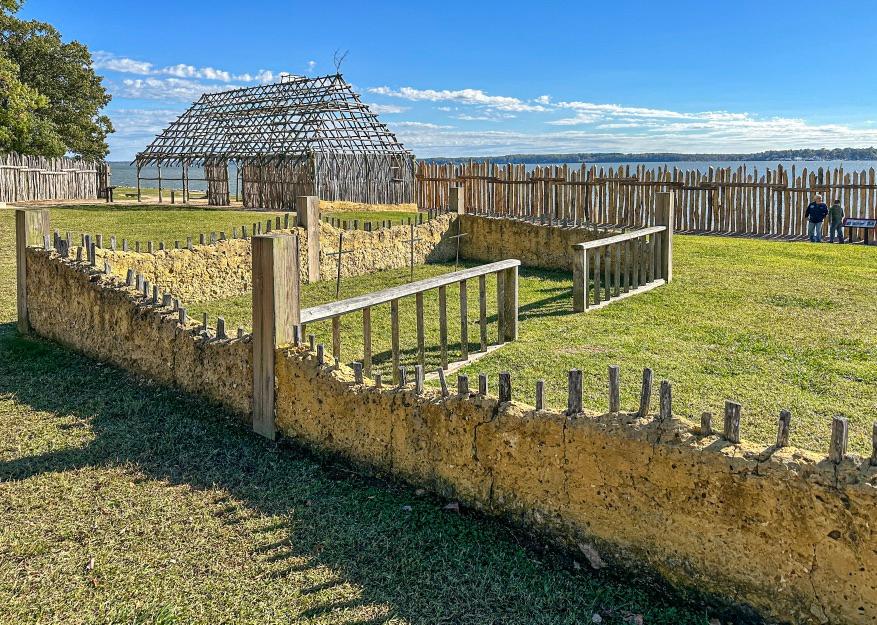
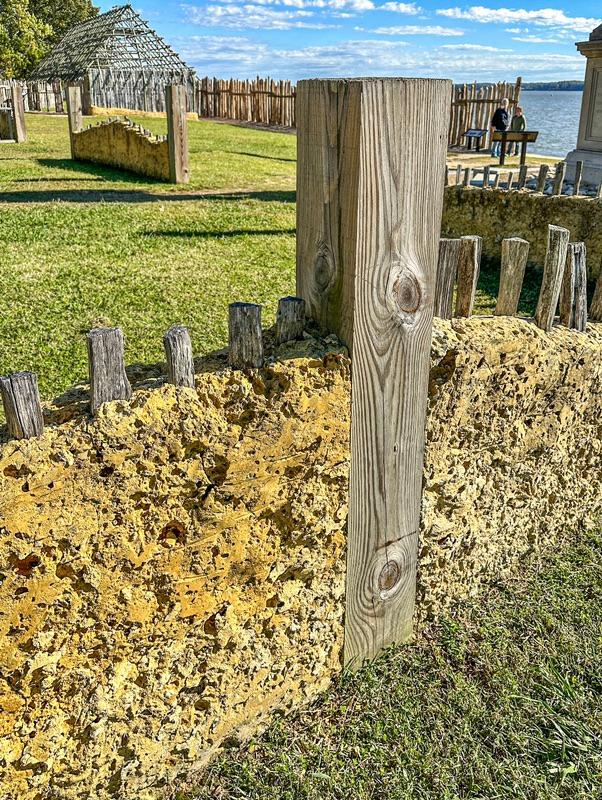
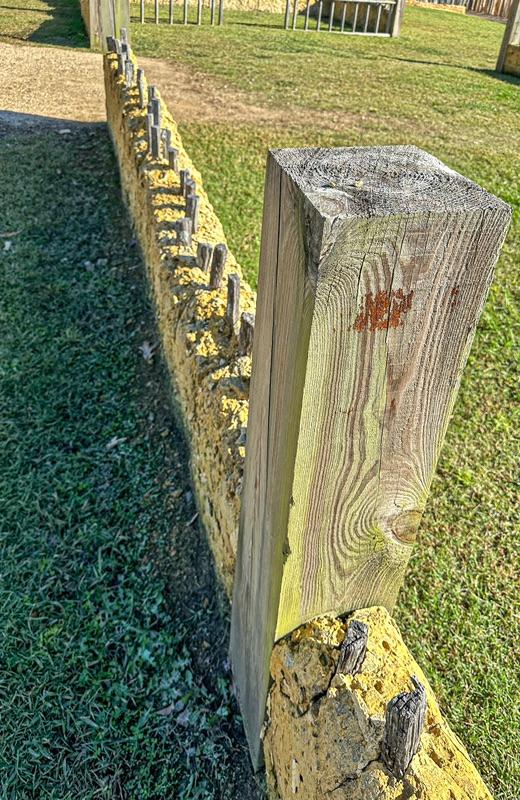
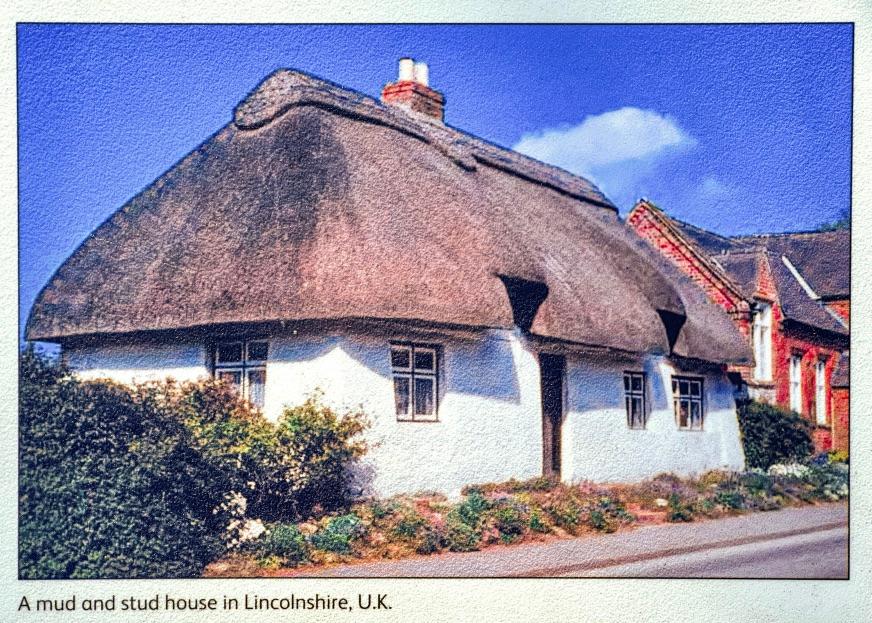
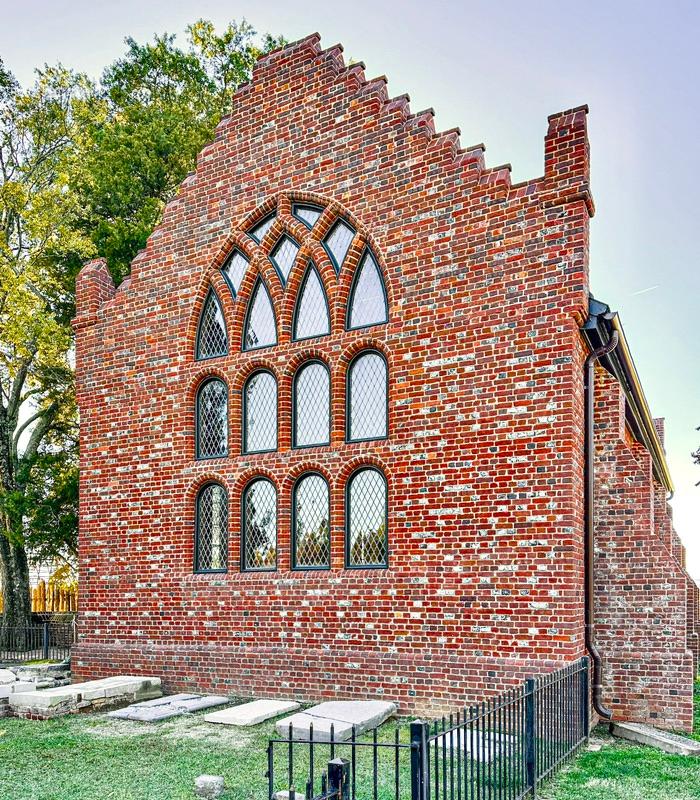
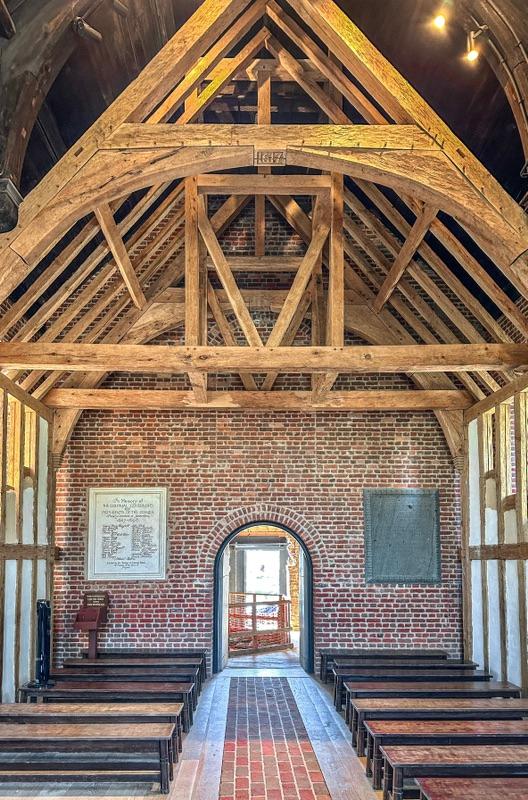
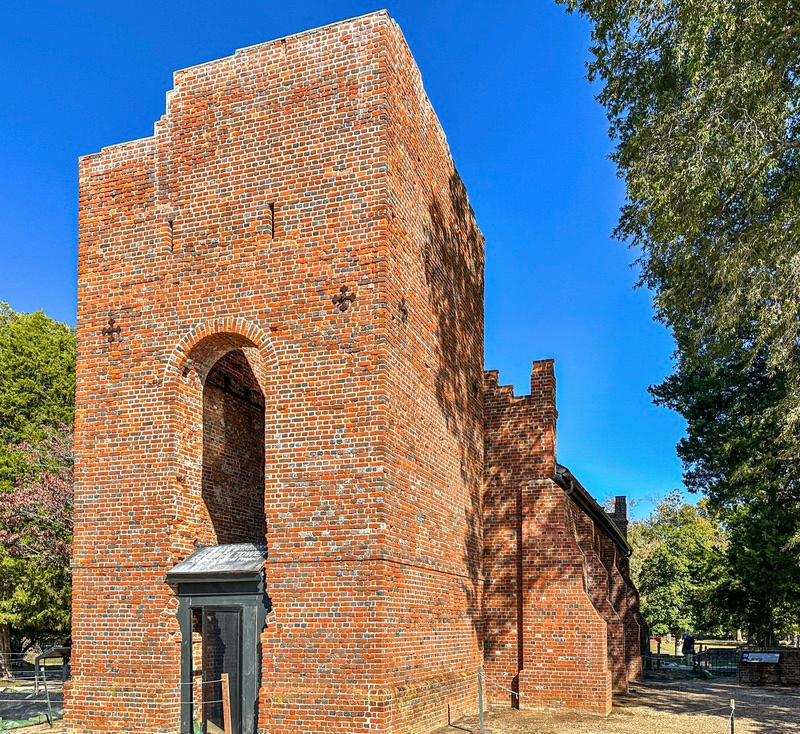
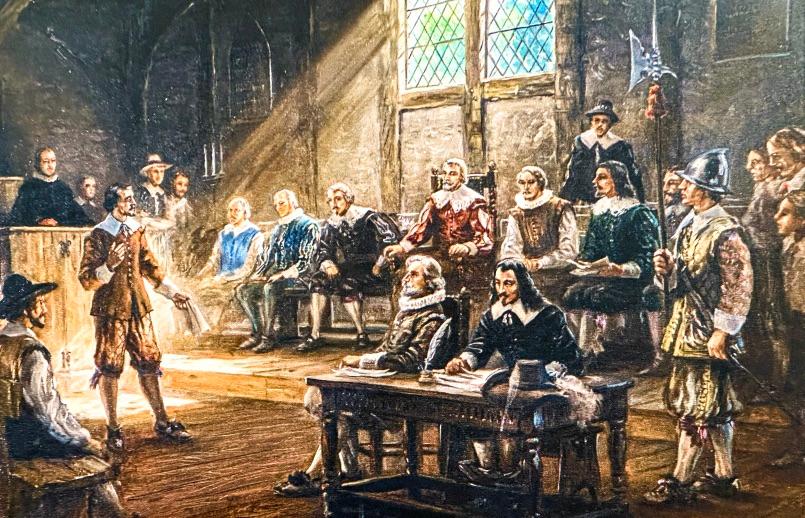
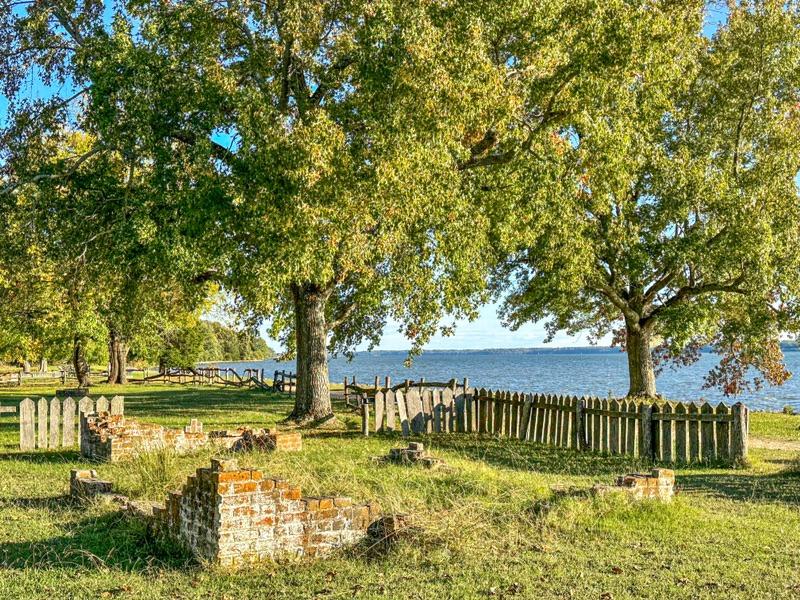
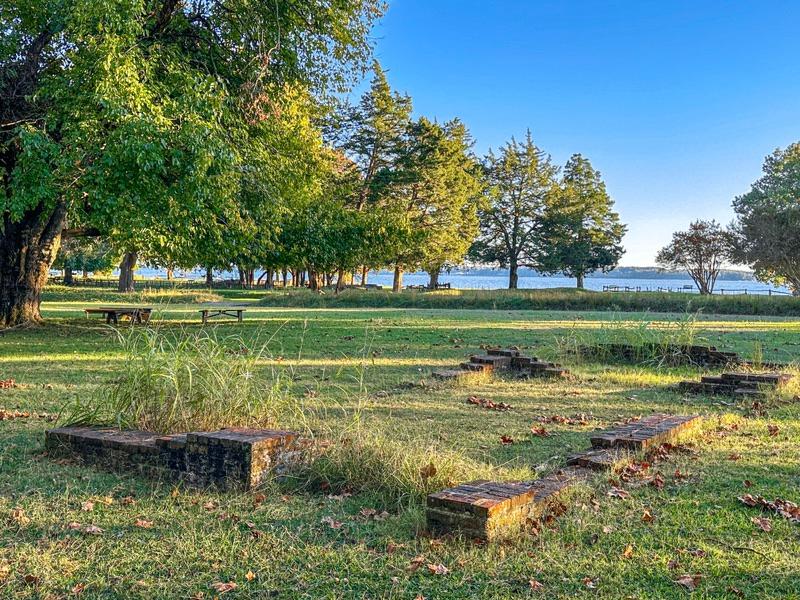
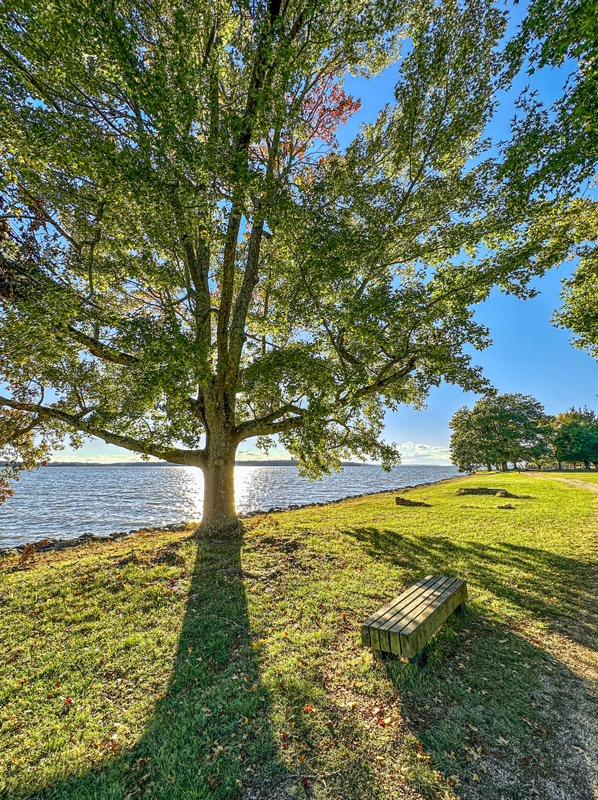
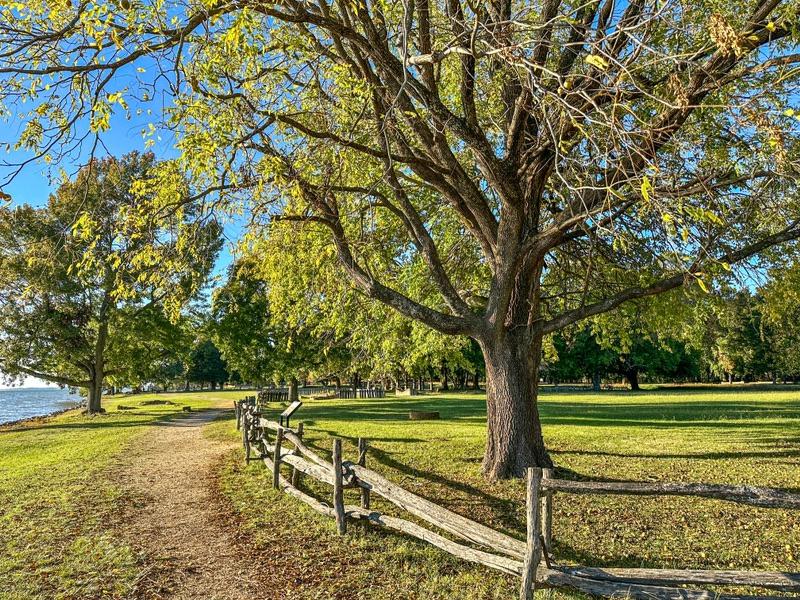
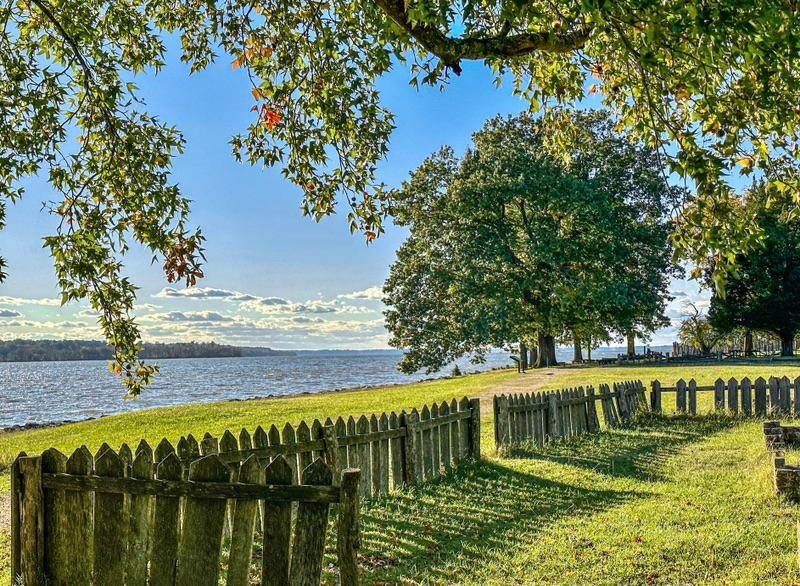
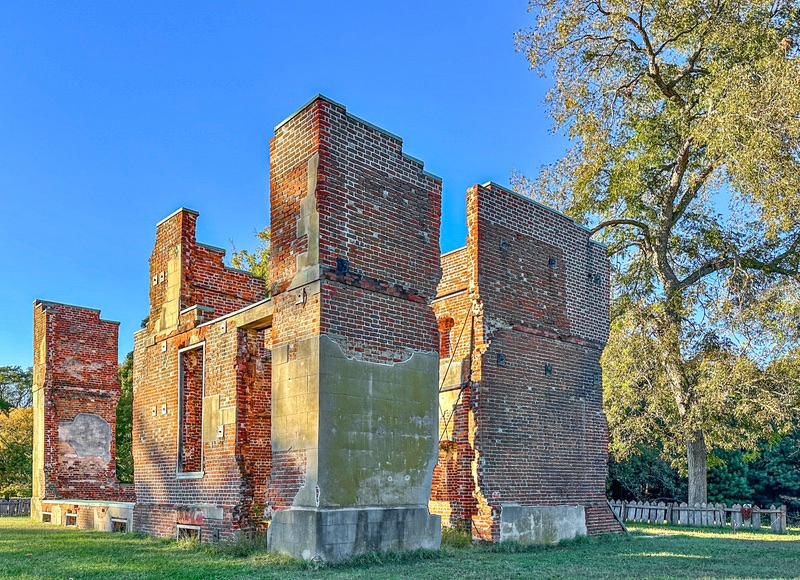
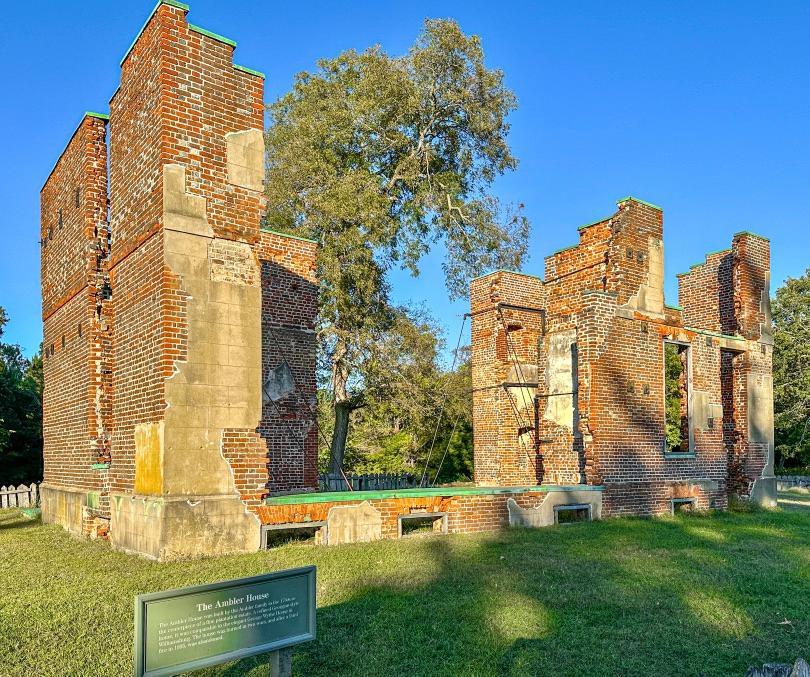
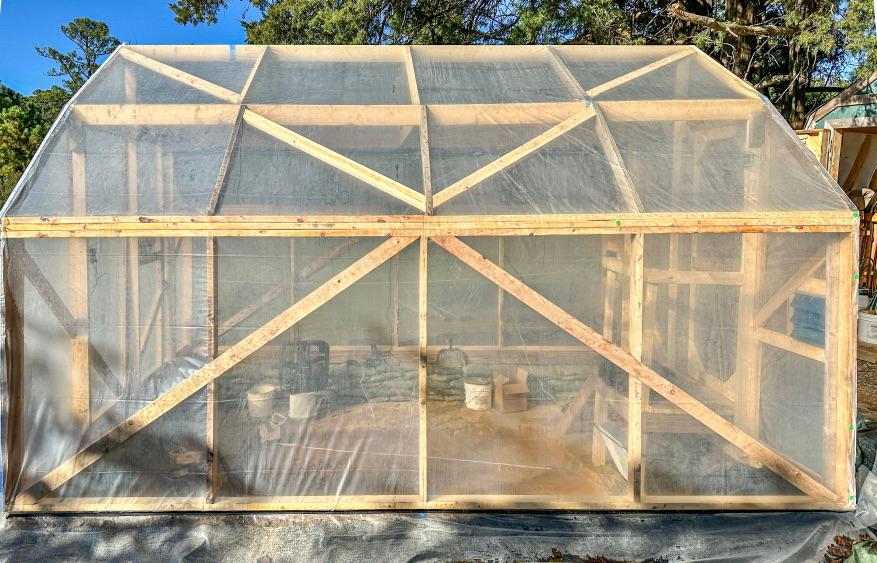
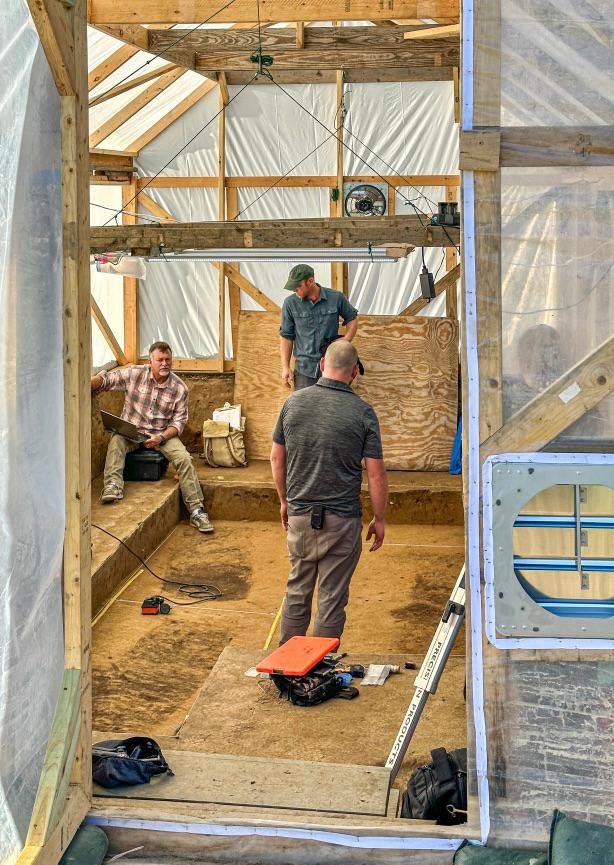
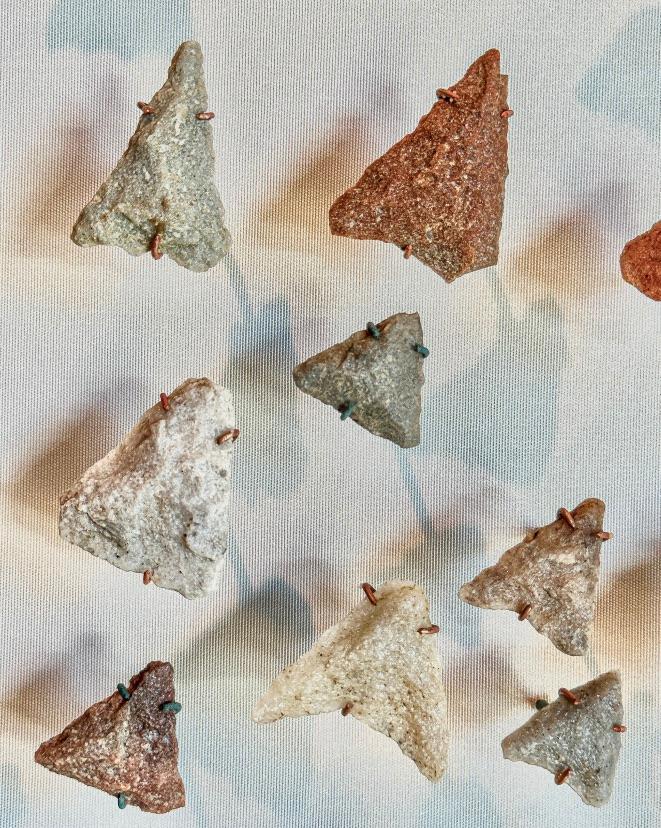
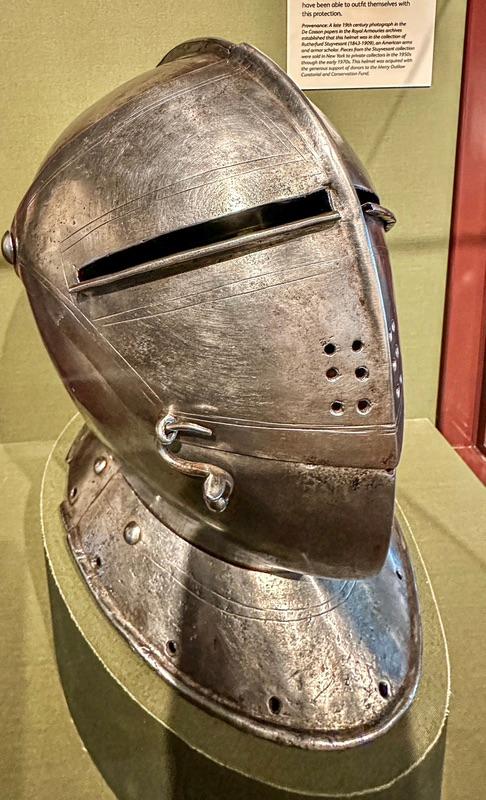
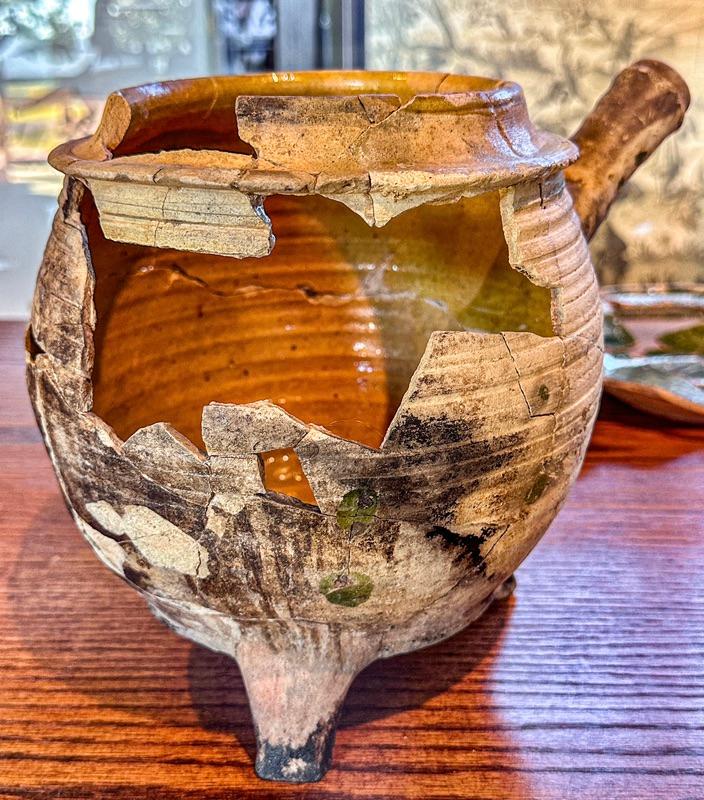
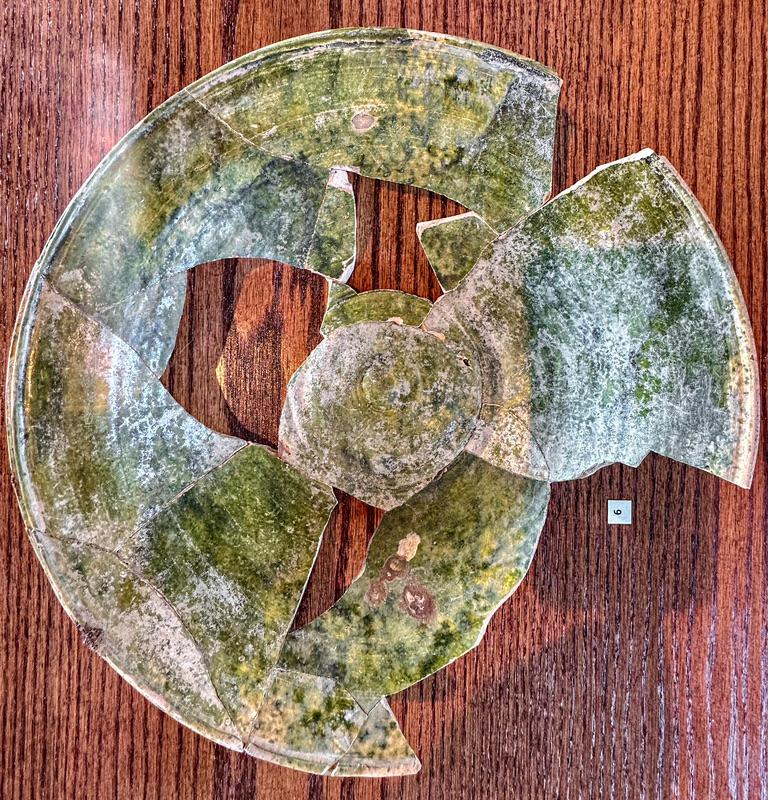
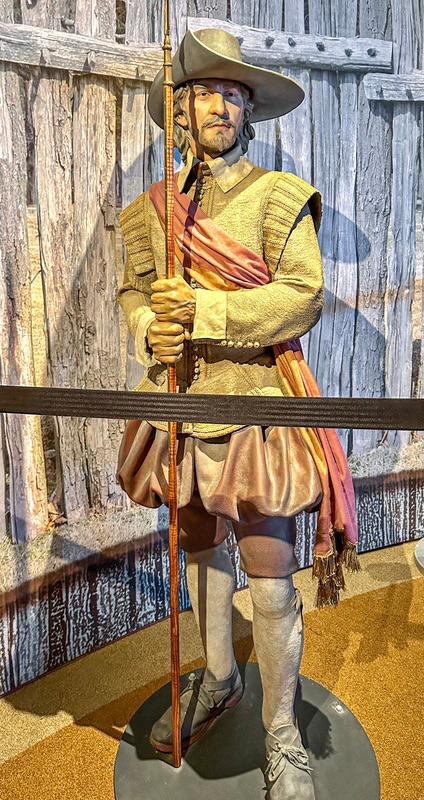
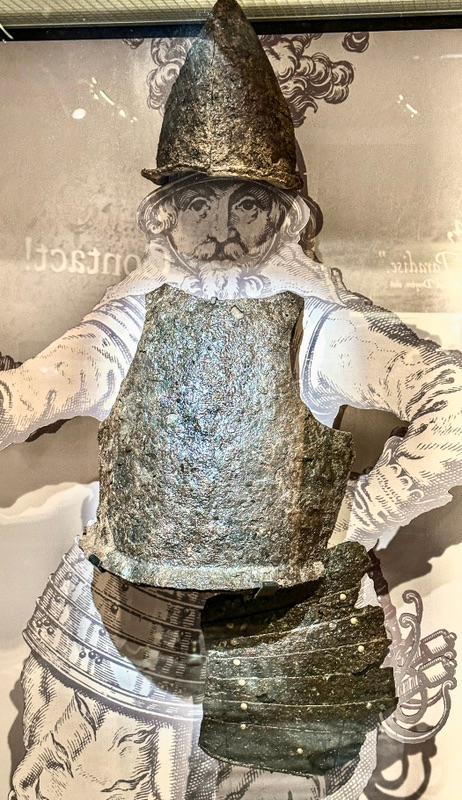
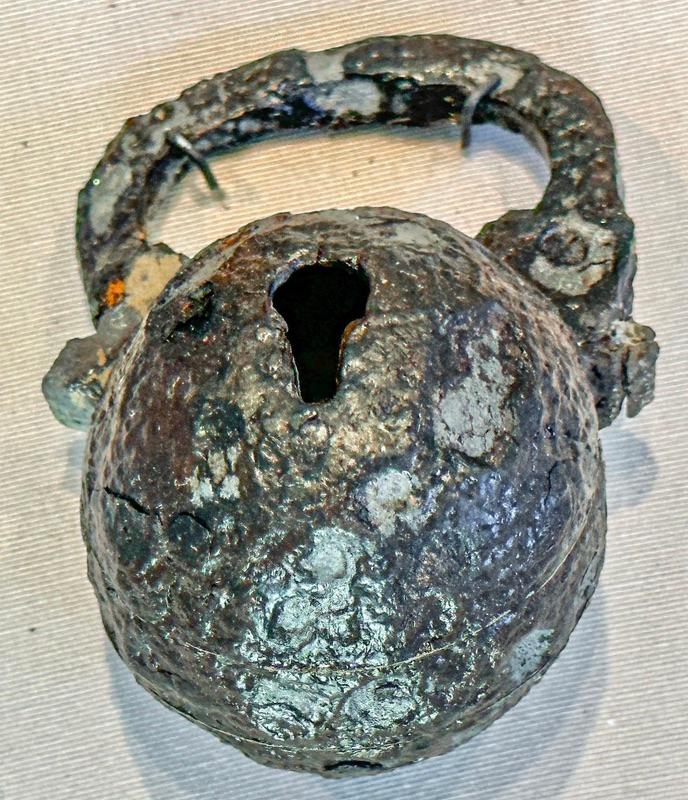
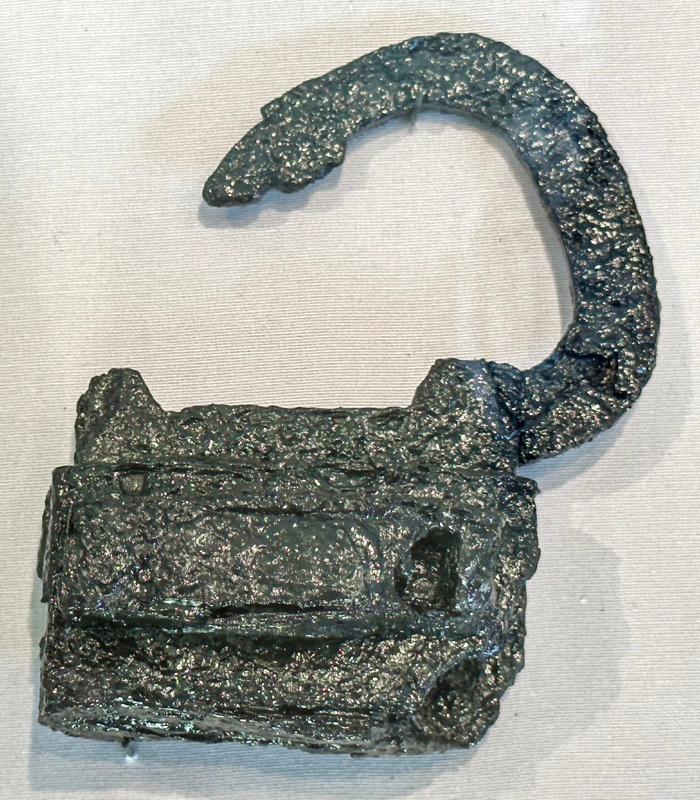
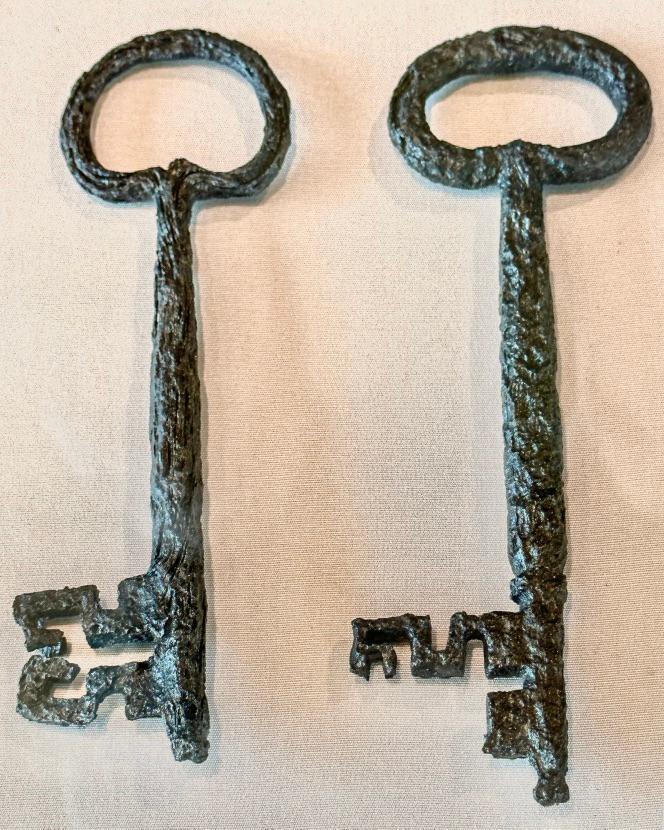
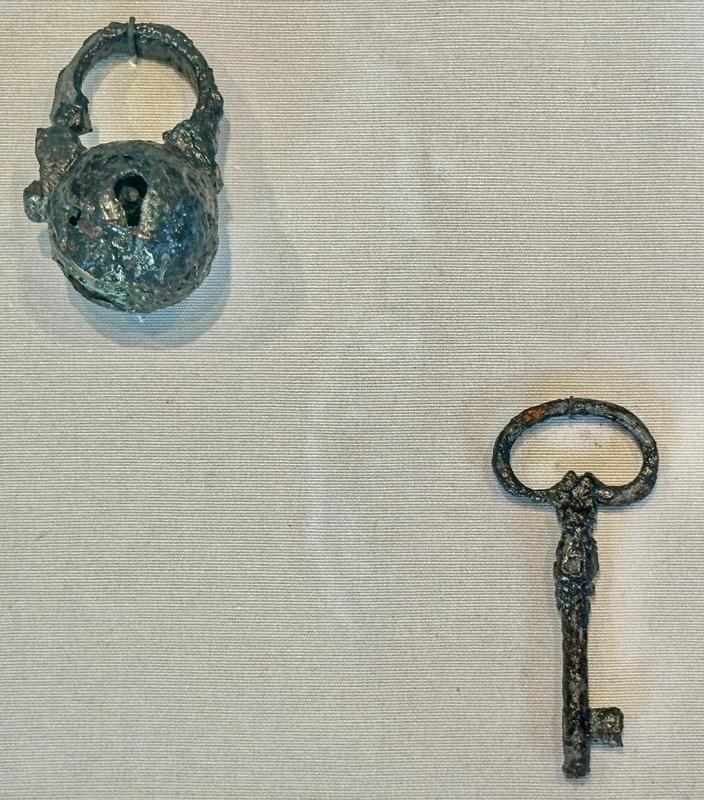
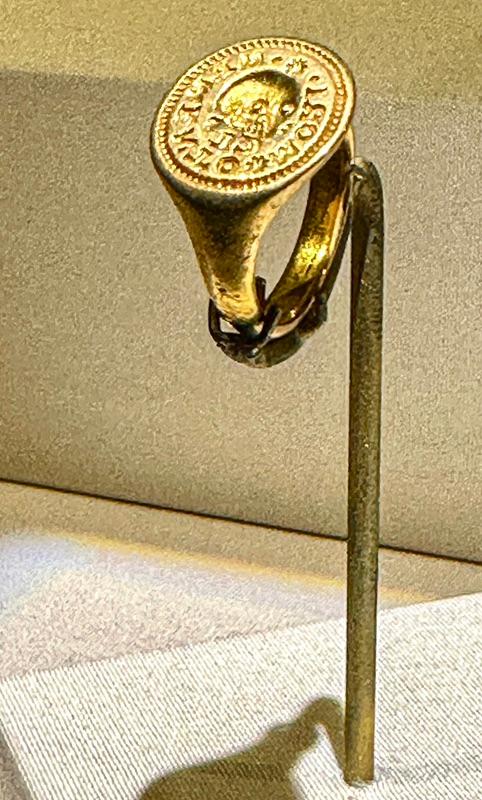
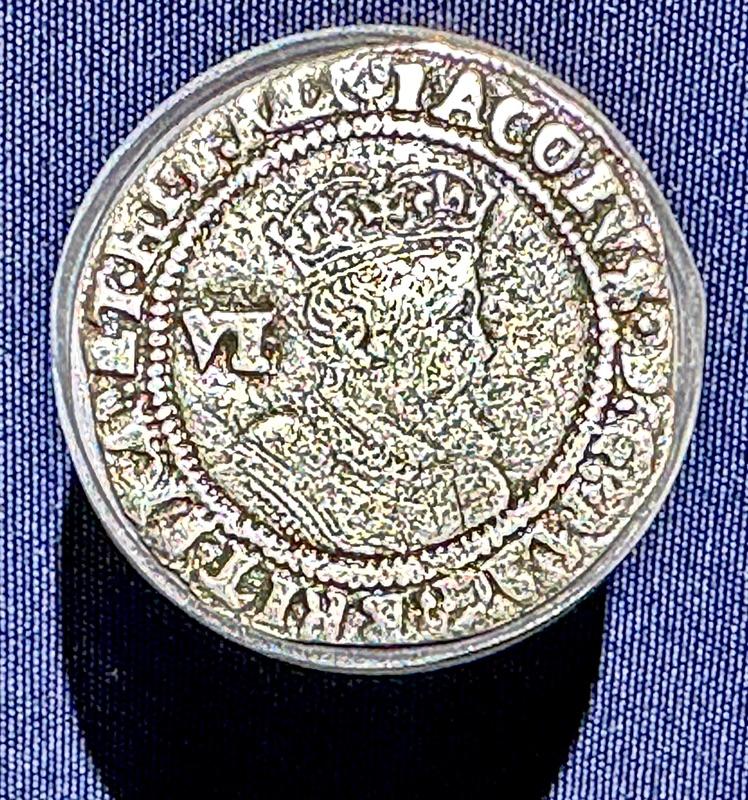
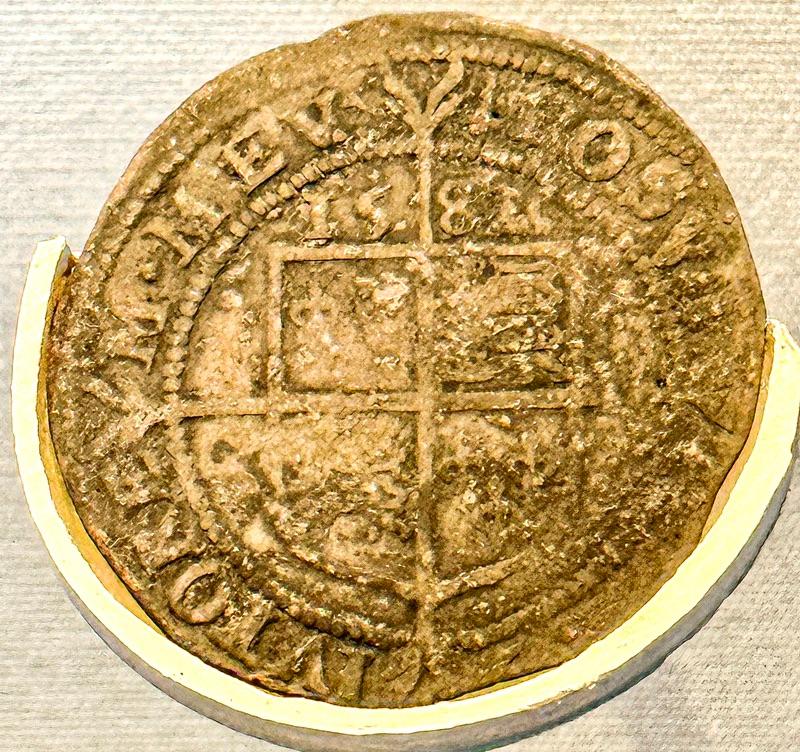
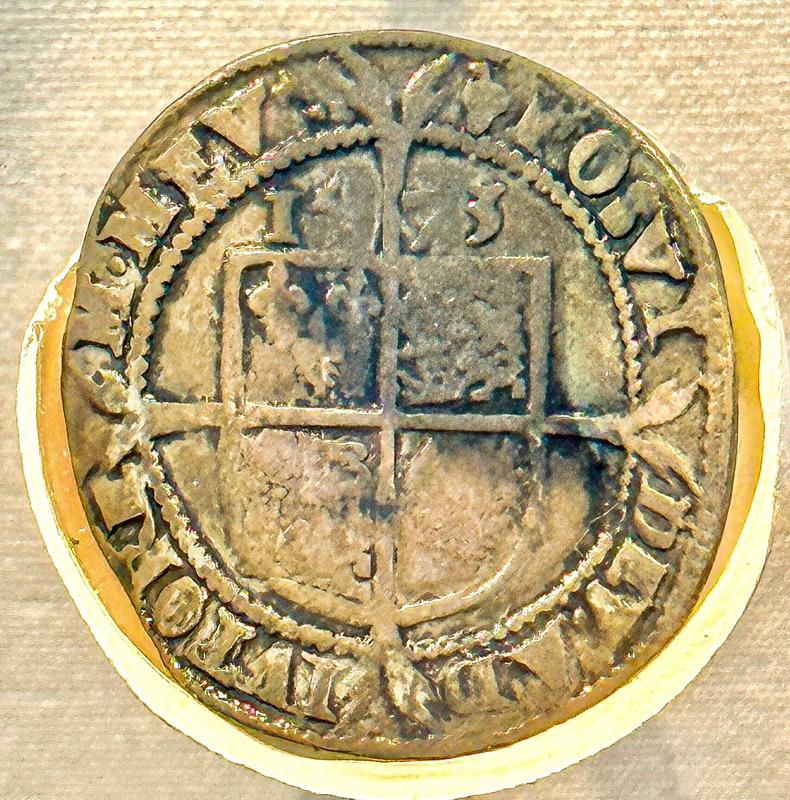
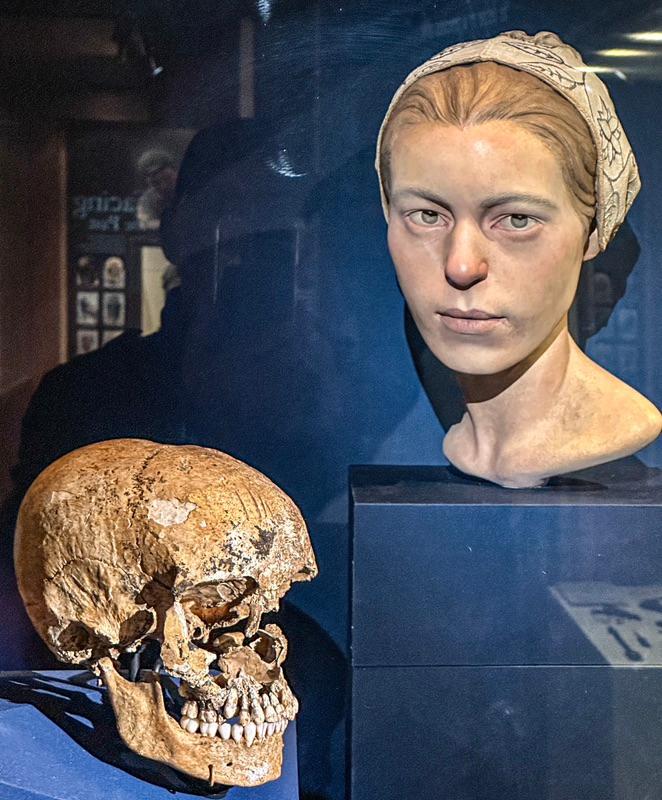
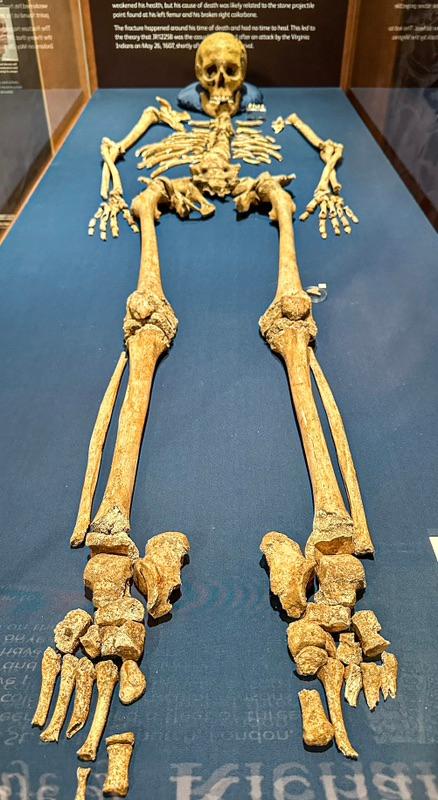
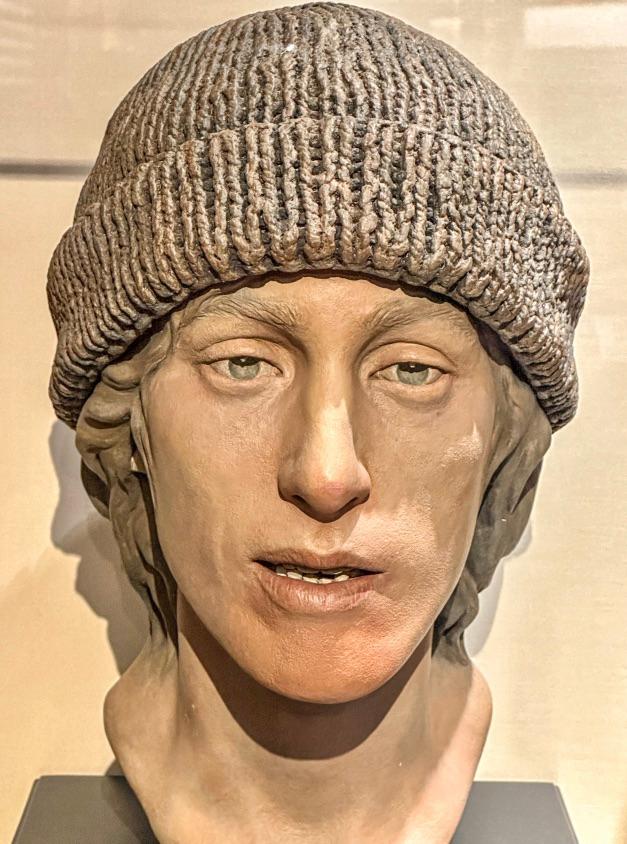
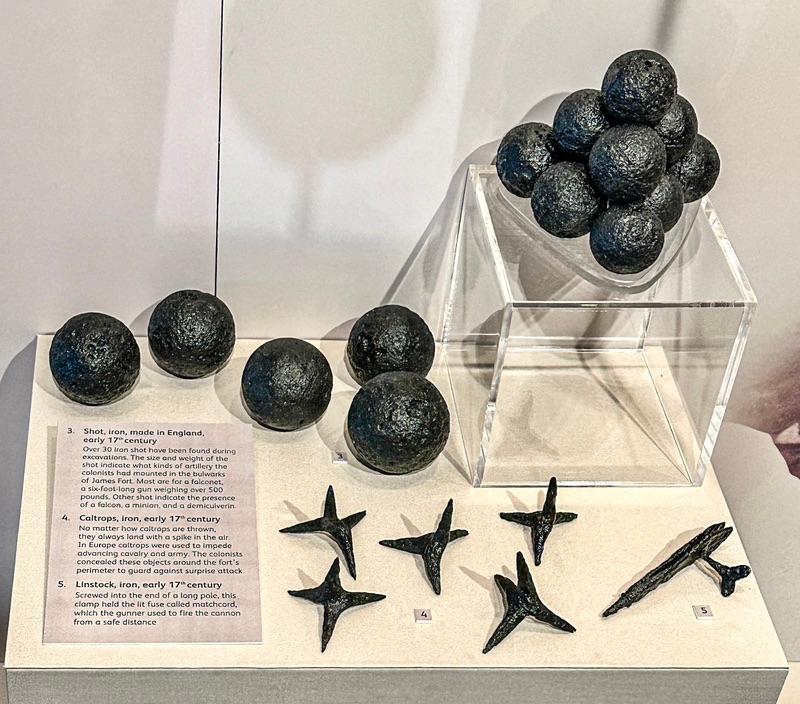
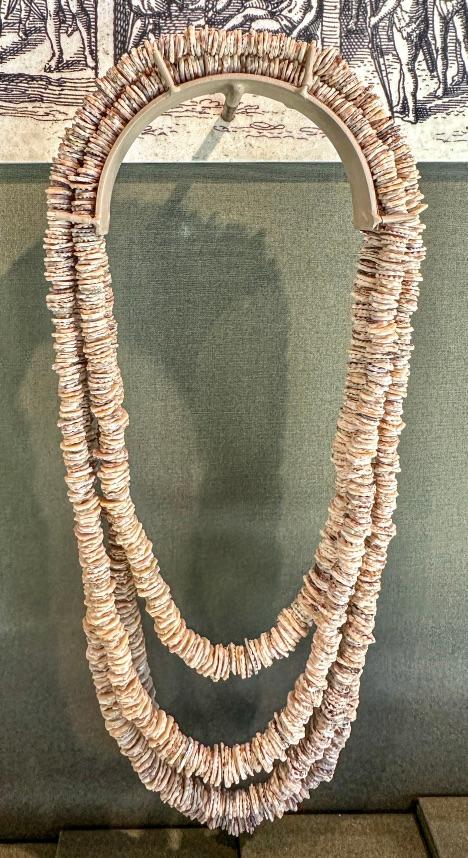
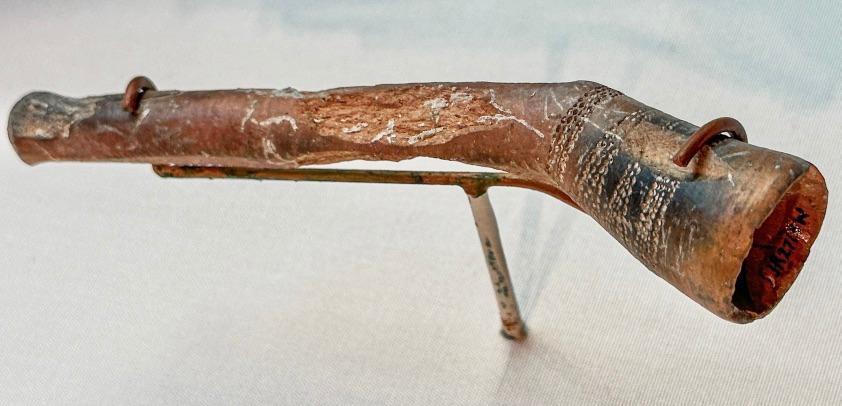
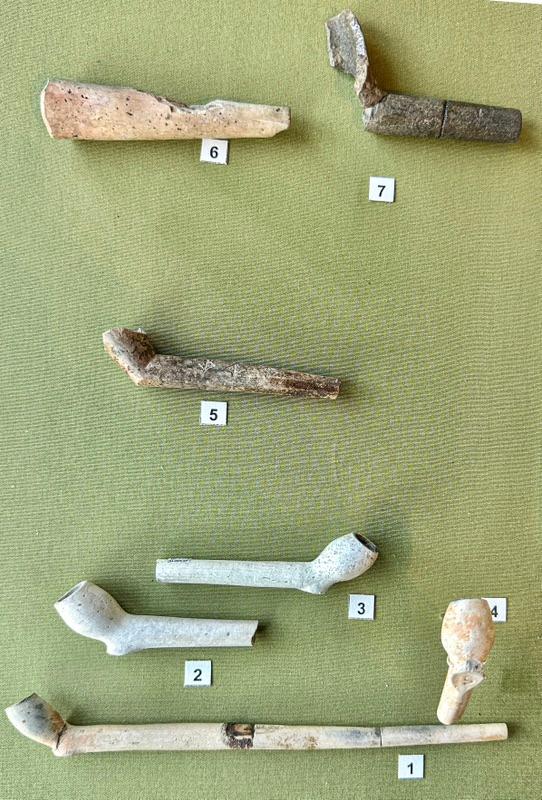
The SUSAN CONSTANT: Deck Length: 82’. Passengers: 54. Crew: 17 | Above and below: Cutaway drawings of the Susan Constant, the largest of the three ships. | We were allowed to board the Susan Constant. It is difficult to understand how 54 passengers and 17 crew could live on board for four months, not to mention the provisions needed for the voyage, the future settlement, and the crew for the return trip to England. | The interior was re-created to accurate specifications. All three ships are sea worthy and occasionally are taken out to sea. | The captain’s quarters is in the back of the ship. It is the most stable room on board. | Looking below to the lower storage deck. | The DISCOVERY: Deck length: 51’. Passengers: 12. Crew: 9 | The GODSPEED. Deck length: 65’. Passengers: 39. Crew: 13 | A drawing of the original triangular shaped fort built for protection from both Indians and the possibility of a Spanish attack. | Gardens outside the fort walls. | A typical house within the walls of the fort. Most houses were built outside the fort’s walls. | The breads and a bread pudding was made by this guy in the old world manner. | The more posh Governor’s house. | A replica of the original church that doubled as the town hall. | A warehouse for food, weapons, and sundry supplies. | A couple miles down the road, is the actual Jamestown location. This is a National Historical Park. The ruins are being meticulously unearthed by archeologists. The discovered artifacts are displayed in the park’s museum, which is a different kind of museum, but just as amazing as the Jamestown Settlement museum. We got to freely walk the grounds of the whole town. Even with most of the original buildings lost, it felt alive. | Another depiction of the original triangular-shaped Jamestown fort. | The mud and stud building style was typical at the time. | This is an example of the framework for a mud and stud building. | Above and below: An example of how the mud and stud walls are put together. | Apparently, this building style is still used in some parts of England. | The back of the rebuilt church. | There were four versions of the church. The first mud and stud version was built in 1608 (That framework is re-created in this current version). In 1617, a better church with a strong thick cobblestone foundation replaced the first building. The settlement was governed by an assembly of representatives. In 1619, the assembly started to use the church as its meeting hall. In 1639, using the cobblestone foundation, new church construction began. It took nearly a decade to complete. That church was burned in 1676 during Bacon’s rebellion. In 1686, a fourth church was built. A brick tower was added which is still standing today. | The front of the rebuilt church. The brick tower is the only part left from the church version built in 1686. | A painting of the first meeting of the governing assembly in the church. | While the fort provided protection if/when needed, most of the town was laid out along the river front. We walked the “streets” where the homes once stood. Some foundations could still be seen. | Above and below: Meticulous archeological digging techniques are used to find artifacts from the Jamestown. | The museum displays many of the artifacts discovered. | Apparently, this is the style of clothing some settlers wore. | Personal protective armor found at Jamestown. | A gorgeous gold ring found. | Through intensive forensics, this skull of a 14 year old girl definitively showed that canablism occurred during the famine of 1609-10, called the Starving Time. Only 20% of the settlers survived the famine. | One of the original settlers, Richard Mutton, a teenage boy about 15 years old, died soon after landing in a scuffle with Indians. He was one of four boys that came in the first group. | Tobacco pipes. Tobacco became an important and lucrative cash crop. | Jamestown, and consequently the Jamestown National Historical Park, is on a peninsula that is technically an island - there is a tiny waterway that cuts off the peninsula. The ride back, as the sun was sitting low in the sky, was bathed in golden rays. | |
Glossary of terms used for newcomers: 1) V-Jer. The name of our camper. 2) Saturn. The name of our Van. 3) Duende. Our mischievous gremlin that breaks things. 4) Tata. The good gremlin that helps us fix Duende’s dirty work. 5) The Black Hole. This is what we call Walmart because every time we go in for just a couple of items, we come out spending way more than we figured. 6) QT. Quaint Town. 7) Little Buddy. This is what we call our Dyson cordless stick vacuum. | | | | |