|
Dear Colleagues, Students, Alumni, and Community Partners,
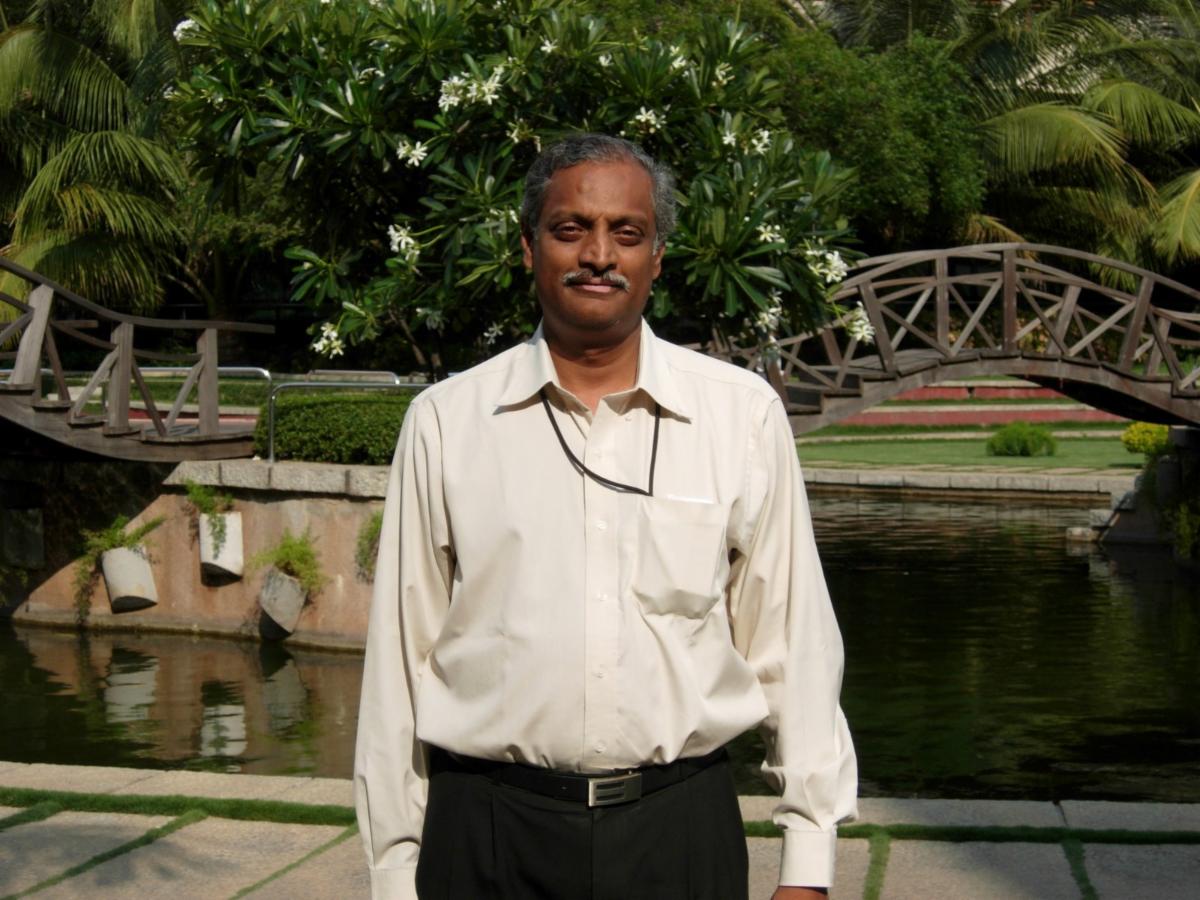
When I was conducting a study on leadership in a global society in Bengaluru, India, I interviewed a host of leaders of multinationals. During one of the more memorable interviews, my conversation with Rajani Kanth Katragadda was more akin to a lesson in leadership. At the time, Rajani was Associate Vice President of the Infosys Leadership Institute which still today is an essential element of the Infosys ethos and commitment to professional growth.
At one point in our conversation, Rajani explained that the Institute prepared far more leaders than its own ranks could absorb, and I prompted, “From a Western perspective, you are creating your own competition.”
His rueful grin suggested another viewpoint. Rajani explained, "If all you have is one apple, then you have to decide how much to cut off and give to others, but if you have a bushel of apples or an entire tree, then you can share with the entire world."
The principle of abundance rather than scarcity drove his organization’s decision-making. Instead of viewing too many leaders as a competitive force, Infosys leaders viewed a surfeit as raising the bar for everyone. Operating from a perspective of abundance rather than one of limitation is a lasting pillar of leadership success.
Lesson delivered and embraced.
To grow an organization requires leaders to envision a world of possibilities, not merely one with limitations. To grow an organization also requires action, not only dreams.
I noted in my July 28th newsletter (Volume 1, Edition 4) that our School of Education has no program to prepare culturally and linguistically competent counselors and school psychologists for our region, yet we have over 1,100 undergraduate psychology majors with no pathway at our university following commencement. I presented additional compelling data to make the case for addressing this need. I mentioned that among the various ways to remedy this, was that just after my arrival in June, CSUCI colleagues and I wrote a Title V federal grant titled Caminos for Future Counselors, Psychologists, Teachers, and Leaders.
It is my privilege to announce that our School of Education has been awarded nearly $3M to establish new programs to educate future counselors and school psychologists. These students will earn an MS degree in Counseling with a Pupil Personnel Services credential and support the needs of our region’s public schools. Further, this project will permit us to add wrap-around services such as mentoring and career counseling and to increase available scholarships. This project will expand the number of Hispanic and other underrepresented graduate and professional students that we can serve. Along with the tenure line our University has granted us to search for a professor to lead our new counseling and school psychology programs, our Caminos project will go far to embody that entire apple tree.
Nobel Laureate Amartya Sen, whose work has greatly affected my global research, wrote, “Economic growth without investment in human development is unsustainable—and unethical.” In securing our Caminos grant, we have committed to human development in many ways and to embracing the abundance that is at our fingertips.
Looking forward,
Elizabeth
Elizabeth C. Orozco Reilly
|