A quarterly research brief from the Center on Trauma and Children
Trauma Responsive Child Welfare Systems
This
Evidence in Action highlights
a new book edited by researchers at the University of Kentucky Center on Trauma and Children:
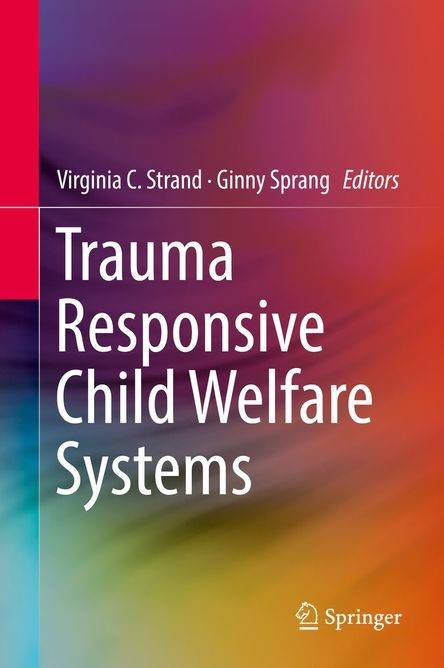
Strand, V. C., & Sprang, G. (Eds.) (2018).
Trauma Responsive Child Welfare Systems. Springer.
T
his comprehensive reference offers a robust framework for introducing and sustaining trauma-responsive services and culture in child welfare systems. Organized
around concepts of safety, permanency, and well-being, chapters describe innovations in child protection, violence prevention, foster care, and adoption services to reduce immediate effects of trauma on children and improve long-term development and maturation. Foundations and interventions for practice include collaborations with families and community entities, cultural competency, trauma-responsive assessment and treatment, promoting trauma-informed parenting, and, when appropriate, working toward reunification of families. The book's chapters on agency culture also address staffing, supervisory, and training issues, planning and implementation, and developing a competent, committed, and sturdy workforce.
Among the topics covered:
Trauma-informed family engagement with resistant clients
Introducing evidence-based trauma treatment in preventive services
Working with resource parents for trauma-informed foster care
Use of implementation science principles in program development for sustainability
Trauma informed and secondary traumatic stress informed organizational readiness assessments
Caseworker training for trauma practice and building worker resiliency
Translational Tips
Increasing awareness about the impact of historical trauma and present day bias is just a beginning. Staff at all levels need ongoing support for identifying and realigning attitudes that promote both personal and community cultural awareness.
The supervisor is the key person who works to set up a dynamic, trauma-informed community of practice for the team. Within "communities of practice," workers develop or enhance their professional identities, learn new concepts, and ultimately make meaning out of their work.
The trauma lens must turn its focus inward; workers who do that will be in a better position to recognize "symptoms" in themselves requiring attention since secondary trauma often mimics the post-traumatic stress identified in clients.
Decades of trauma research suggests that trauma-informed approaches are the framework most likely to be effective in guiding the development and adaptation of interventions to address child sex trafficking because they target the source of the distress and can neutralize the power differential that characterizes the victim-perpetrator experience. However child welfare workers work within systems that may unintentionally recreate these experiences for victims, a problem that must be overcome to provide adequate protection and care.