|
Introduction
The role of caring for traumatized individuals has been widely recognized as having inherent risks for secondary exposure to trauma and associated distress. Child welfare work in particular has been found to be an occupation where indirect exposure to trauma is especially prevalent as are related experiences of secondary traumatic stress (STS) and burnout (Bride, Jones & Macmaster, 2007; Nelson-Gardell & Harris, 2003). As child welfare and foster care systems move toward implementation of trauma informed care, the potential for STS in foster parents should be examined yet there has been minimal research in this area to date.
The Study
This study analyzed the STS experiences of foster parents from one state's child welfare system (N=1213). A brief, electronic survey was sent to all foster parents (state and private agency) in a predominantly rural, southeastern state of the U.S. that included items regarding demographic information, foster parenting experiences, and supports received in the foster parenting role. Questions regarding exposure to the details of their children's trauma were included in addition to established measures of STS, burnout and compassion satisfaction.
Findings Descriptive analysis of the foster parents' experiences as well as an examination of factors associated with the development of STS was conducted and confirmed the significance of STS in this sample of foster parents.
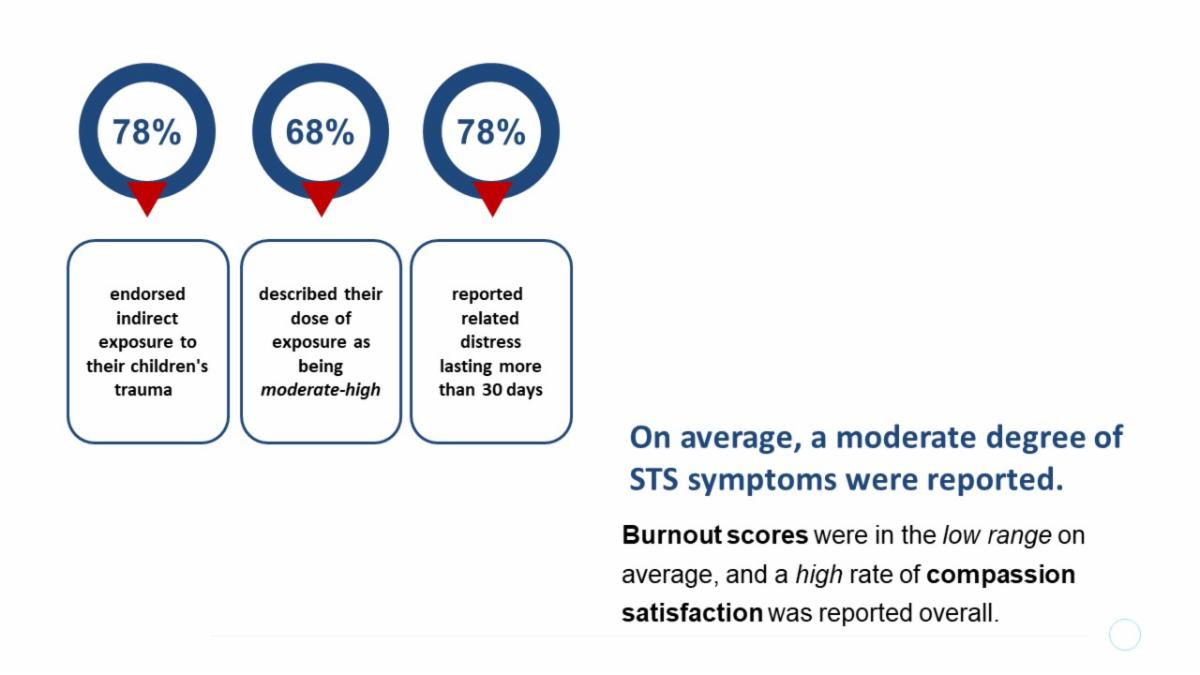
- Indirect exposure to child trauma at a high dose was the norm, primarily from children reporting trauma to their foster parents and child welfare workers sharing details about a child's trauma
- Related distress was endorsed by 78% of foster parents with 25.8% reporting moderate-extreme distress
- 32.7% and 30.6% reported relational and work-related functional impairment respectively
- Average Total Scores on the STSS (mean=34.74; SD=11.1) indicated moderate symptoms of STS on average with a subset of foster parents (15%) reporting very high levels of STS indicative of possible Posttraumatic Stress Disorder
- Average burnout and high compassion satisfaction were reported overall
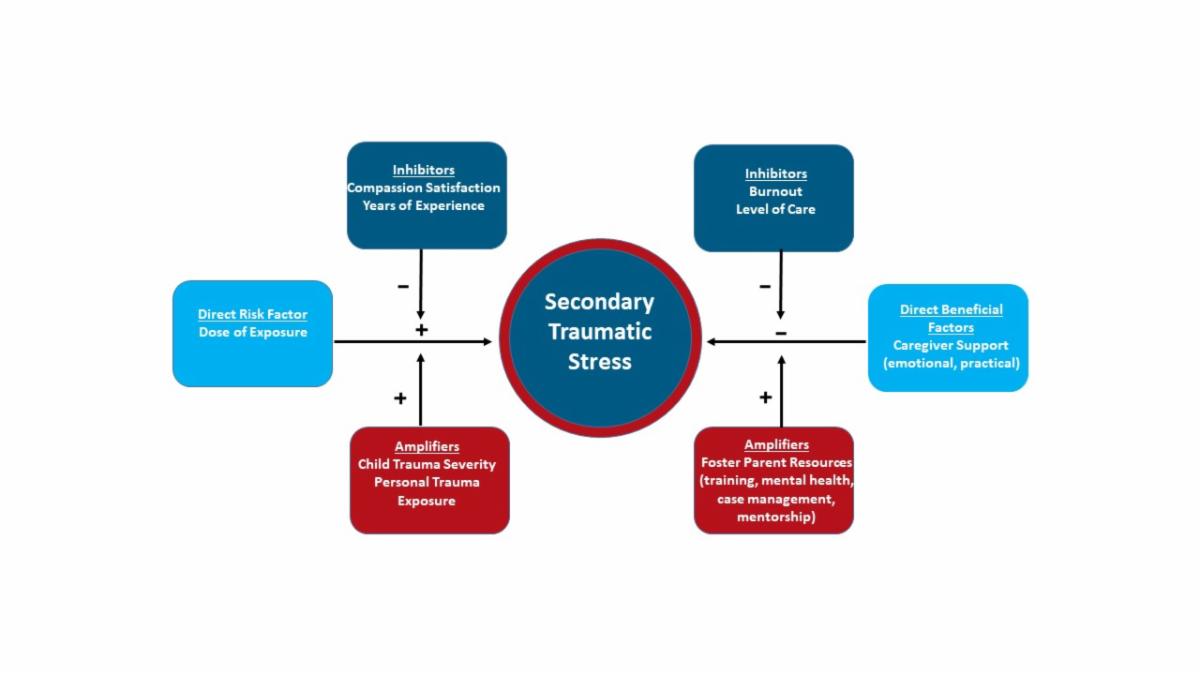
Further analysis was conducted to examine contributing factors that potentially increase or mitigate a foster parent's risk for STS. The figure below depicts the conceptual model tested.
Hierarchical regression analyses of risk and beneficial factor models accounted for 23.2 and 46.5 percent of the variance in STS symptoms respectively. Other key findings included:
- Dose of exposure was found to be a direct risk factor, which is consistent with previous research on STS
- High levels of support reported overall, but not for the high STS group; caregiving support was found to be a direct mitigating factor for STS
- Significant moderators were identified: burnout, compassion satisfaction, foster parenting experience, foster parent resources, level of care
Discussion
- STS is an important "work force" issue in foster care though this does not properly highlight the complexity of this problem as it affects the well-being of families
- Foster parents with higher STS have been found to report greater intent to leave foster care (Hannah & Woolgar, 2019) suggesting this is a critical target for promoting stability
- Emerging research indicates foster parents already utilize moderate amounts of self-care suggesting the need for secondary trauma-specific prevention & intervention efforts
Translational Tips
- Prepare foster parents for indirect trauma exposure
- Normalize and increase awareness/self-monitoring of STS
- Provide STS informed mentorship and support to foster parents
- Increase access to trauma interventions for children and foster parents
- Increase foster parent efficacy in caring for children affected by trauma
- Routinely assess/address foster parents' emotional and practical supports
- Support ongoing research of STS in this population
|