|
How do you leverage a student’s “sweet spot” for learning?
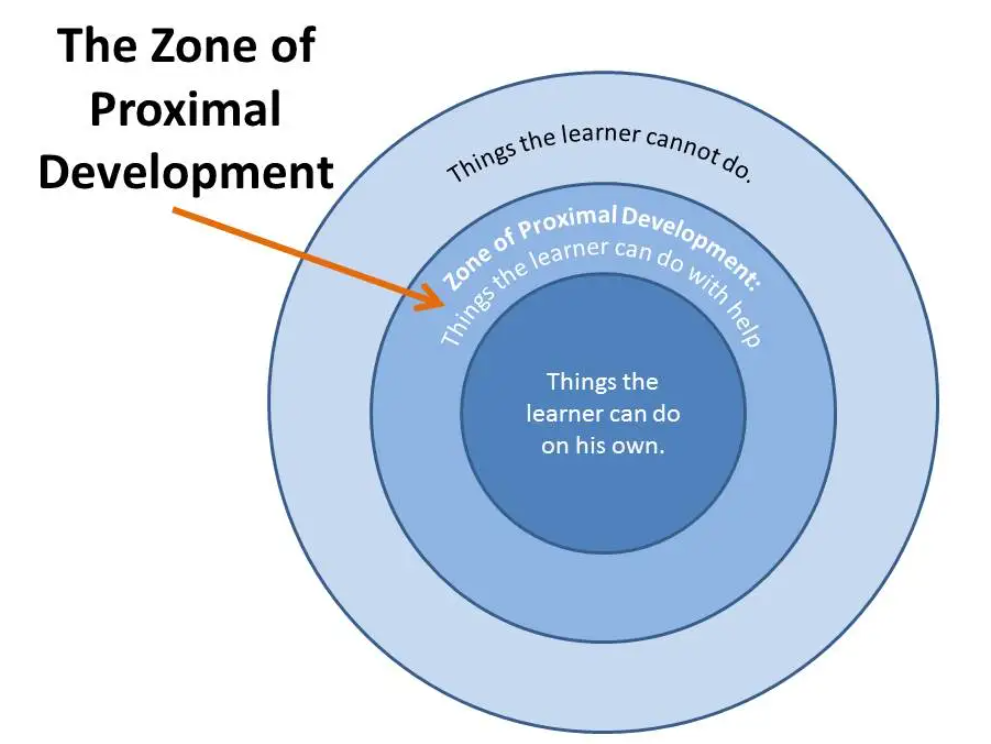
Educators aim to work within a student’s Zone of Proximal Development (ZPD) - the space just beyond what a student can do independently while still being achievable with guidance. Tasks that are too easy lead to no growth, while tasks that are too difficult cause frustration. The new afterschool club pilot (AES) refers to this as "productive struggle". You as a literacy coach can apply this concept during sessions.
Observe what your student can do easily, then adjust tasks to provide the right level of challenge. For example, if a student can repeat a short sentence during echo reading without looking at the text, it’s too easy - use a longer portion of text, perhaps several sentences, that requires more effort. Conversely, if a task is too difficult even with support, simplify it or backup to an earlier skill.
Keep in mind that difficulty level can fluctuate within the same book. Continuously adjusting the level of challenge - across and within sessions - is key. This helps students stretch their abilities, build persistence, and experience success with guided effort.
|