2024 Portland Region Voter Guide | |
|
While many of our members are no doubt paying attention to this year's Presidential Election, many candidates are on the ballot closer to home in municipal elections across our region. These local elections will effect everything from the production of affordable housing, to maintaining sustainable property tax rates, and encouraging economic development.
Below we offer summaries of the races in six of our eight communities holding elections for municipal office this year. Highlights include three open City Council seats in Portland, two incumbents facing challenges in South Portland, and an open mayoral seat in Westbrook. We have attempted to frame the major issues in many of the communities, and have provided links to the most helpful resources for more information on the candidates. We encourage you to read on and make a plan for informed voting on these important municipal races.
Should you have any questions about any of the races in your community, please do not hesitate to reach out to our President & CEO, Quincy Hentzel, at qhentzel@portlandregion.com or our Director of Advocacy, Eamonn Dundon, at edundon@portlandregion.com.
| | |
Vote Yes on Portland Question A | |
|
Vote YES on Question A “An Act to Amend the City of Portland's Emergency Wage Provision.”
What is the problem we are trying to solve? In 2020, a referendum was passed increasing the minimum wage in Portland to $15/hr and also adding an emergency wage provision – therefore when a State of Emergency is called, the minimum wage in Portland increases to time and a half, or $22.50/hr. An unintended consequence of this ordinance is when a state of emergency is called by the Governor for an emergency or disaster happening within the state but not creating an active hazard in the City of Portland. For example, last year the Governor declared a state of emergency because of Hurricane Lee. This storm impacted several counties Downeast, but had virtually no negative impacts in Portland. Because of how the ordinance is currently written, employers in Portland had no choice but to pay the increased wage of $22.50/hr while this was in effect for several days, leading many of them to close for that period. This harm is felt particularly by businesses like childcare and social service providers, who already work on extremely limited budgets.
Question A does not eliminate the emergency wage provision but rather limits its application to situations where there is an actual emergency or hazardous condition in Portland that might impact employees who have to go to work. The question puts the power of triggering the emergency wage in the hands of the Portland City Manager, not the Governor of Maine, therefore creating more of a nexus of what’s actually taking place in the city and how it impacts employees. It’s important to note, only the City of Portland has an emergency wage provision. This ordinance does not exist in any other municipality in the state.
The Democratic Socialists of America, the authors of the original ordinance, are now the primary opponent against this common sense change. They will fight to keep the language the same in their effort to push Portland, Maine to the highest minimum wage in the country. A campaign, known as Keep it Local Portland, has been organized to ensure voters are educated on this question and you can support their efforts by making a contribution below.
| | | |
|
The Races: This year Portland voters are faced with a significant opportunity to reshape the City Council. Three incumbent City Councilors all declined to seek reelection, and thus the three individuals elected this year will form 1/3 of the new City Council next year. The open seats include an At-Large seat vacated by Councilor Roberto Rodriguez, the District 1 seat vacated by Anna Trevorrow, and the District 2 seat vacated by Victoria Pelletier.
The Issues: As we consider the candidates for office in these three seats our focus is on several key issues that will determine the path forward for Portland:
- Supporting our expanded homeless shelter capacity, bringing unhoused individuals indoors and ending homeless encampments in our city parks and streets.
- Reforming our municipal needle exchange to repeal the current policy that allows clients to receive 100 needles per visit, with a return closer to the prior policy that required a 1-to-1 exchange for clean needles.
- Preserving the tip credit and resisting calls to eliminate it, which 61% of Portland voters rejected in 2022.
- Reforming our housing development policies to reduce the 25% tax on multi-family housing developments passed as part of Portland's "Green New Deal" in 2020.
| | | |
|
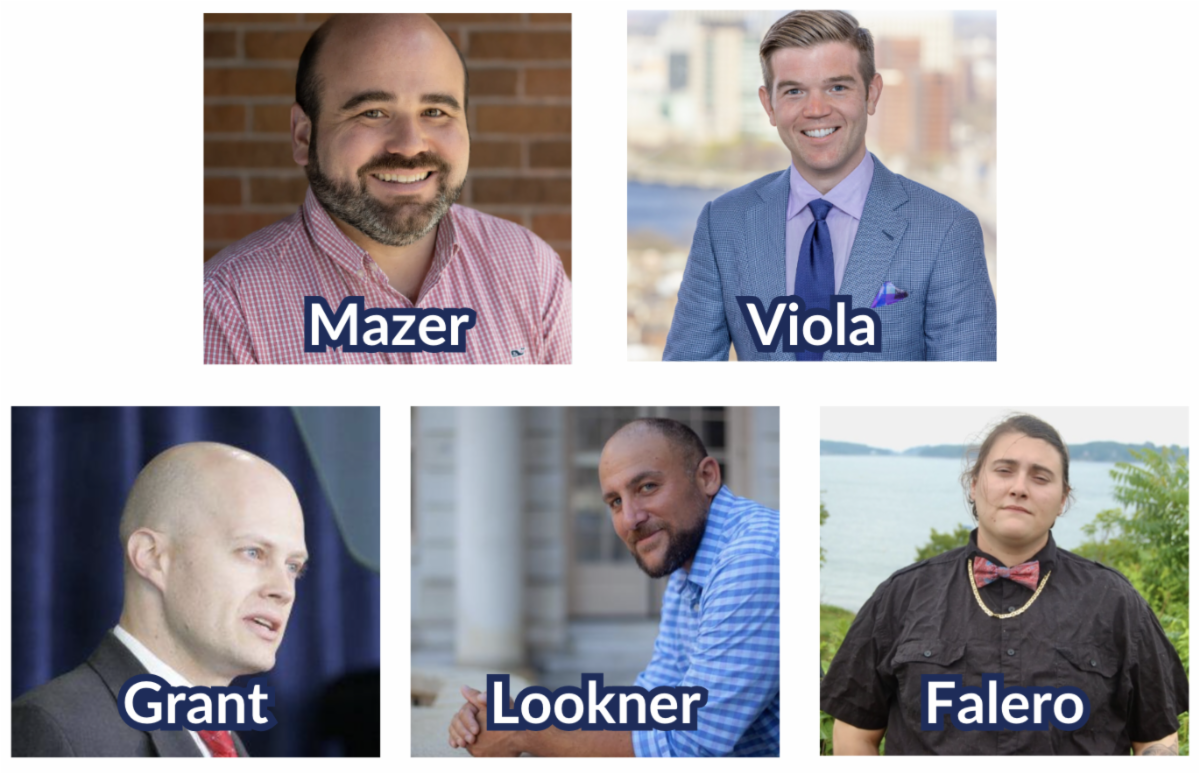
Brandon Mazer: Brandon is a municipal law attorney and engaged community member who is currently serving as Chair of Portland's Planning Board, a position in which he has approved over 1,600 units of new affordable housing. Brandon supports our investments in homeless shelter capacity and has pledged to oppose all efforts to legalize encampments. He also supports efforts to reform the needle exchange program. He is a strong proponent of maintaining the tip credit, and has pledged to revisit the 25% tax on multifamily housing passed as part of the "Green New Deal".
Jake Viola: Jake currently works as a Deputy Chief Engagement Officer for the Commonwealth of Massachusetts, with prior history in strategic consulting for government, along with involvement in his neighborhood association. Jake strongly opposes homeless encampments and supports our shelter capacity expansion initiatives. Additionally, he has been a proponent for revisiting our needle exchange policy. He agrees that we must revisit the 25% tax on multi-family housing.
Ben Grant: Ben Grant is an attorney representing organized labor, including the teacher's union. He currently serves on the School Board which has confronted challenges in recent years following several management crises including failure to pay staff in a timely manner. Ben has stated he is opposed to permanent encampments and has indicated openness to revisiting the city's needle exchange policy. It is unclear where he stands on the preservation of the tip credit and a revisit of the 25% tax on multi-family housing.
Grayson Lookner: Grayson Lookner is an incumbent State Representative, kayak guide and stagehand. He plans to serve on both the City Council and the State House of Representatives should he win, which has led to some question as to how he can effectively manage both positions simultaneously. Grayson "strongly supports" the right of homeless individuals to camp in our city parks. He has not committed to reexamining the needle exchange policy, and supports the establishment of "safe" injection sites in Portland. He fully supports the 25% tax on multi-family housing and supports the repeal of the tip credit which 61% of Portland voters voted against in 2022.
Jess Falero: Jess Falero is a Community Health Specialist at the Church of Safe Injection and a leader of the "Stop the Sweeps" movement that sought to allow encampments in all city parks and sidewalks. Jess does not support changes to the needle exchange program and would like to see "safe" injection sites in Portland. She supports eliminating the tip credit, and does not support reducing the 25% tax on multifamily housing.
| | |
|
District 1 City Council
East End, Bayside, Old Port, Islands
| | |
|
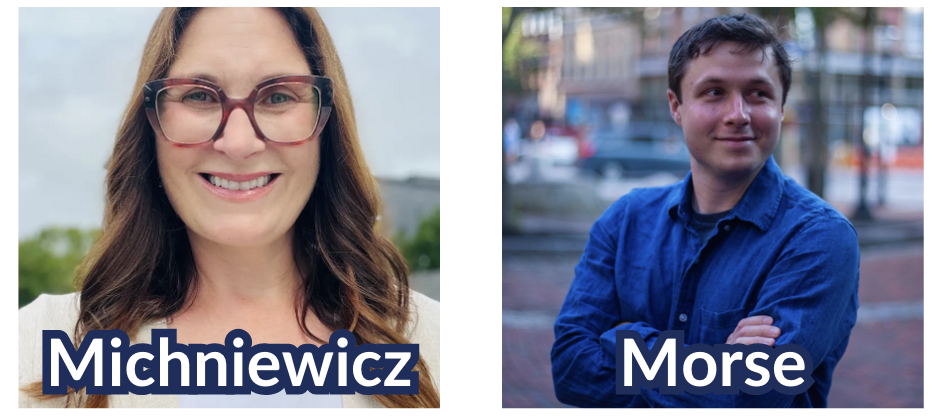
Sarah Michniewicz: Sarah Michniewicz is a professional seamstress and designer who has been President of the Bayside Neighborhood Association since 2017. Sarah strongly supports the city's existing encampment policy, which prioritizes filling all empty shelter beds before allowing encampments and she was an proponent of Portland's new state-of-the-art Homeless Services Center. She wants to revisit current city policy around the needle exchange, calling the current 100-needles per client "too high". She is strongly opposed to eliminating the tip credit, and is open to revisiting the multi-family housing tax and perhaps setting it at a lower amount to spur more housing development.
Todd Morse: Todd Morse is a chief technology officer and founder of the Urbanist Coalition of Portland. He is undecided on the right of homeless individuals to sleep in public spaces, but he does place a priority on bringing people inside. He is open to revisiting the city's needle policy, but does not support a return to the 1-to-1 exchange. He "leans opposed" to both eliminating the tip credit and maintaining the city's 25% tax on multi-family housing, calling the current level of tax "too high".
| | |
|
District 2 City Council
West End, Parkside, St. John Valley
| | |
|
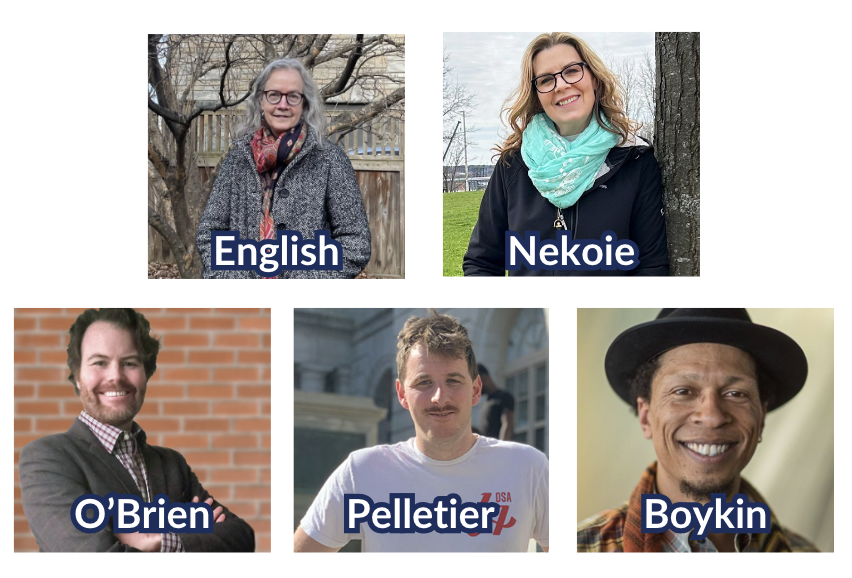
Nancy English: Nancy English is a retired paralegal at the City of Portland's city attorney's office. Nancy is strongly opposed to encampments on public property, citing the limited resources of the city to adequately manage such sites. She is in favor of revisiting the city's needle exchange policy given the public health risks of improperly disposed needles. She is strongly opposed to eliminating the tip credit, and agrees with us that the 25% tax on multi-family housing is hindering new housing development.
Catherine Nekoie: Catherine Nekoie is a small business owner and realtor. Catherine is strongly opposed to encampments on public property and supports efforts to bring homeless individuals indoors. She has indicated an openess to revisiting the city's needle exchange policy with an eye towards encouraging more contact between drug users and rehabilitation options. She is strongly opposed to eliminating the tip credit, and strongly supports the city's 25% tax on multi-family housing.
Robert O'Brien: Robert O'Brien is a senior housing consultant and former member of two Portland Charter Commissions and the Portland School Board. Robert is generally opposed to encampments on public property, and supports efforts to get people into shelter. He agrees that the needle exchange policy should be revisited. Finally, his positions on the tip credit and the 25% tax on multi-family housing are unclear, except to say that he feels the tax on multi-family housing should be revisited to encourage smaller developments.
Wesley Pelletier: Wesley Pelletier is a software developer and leader of the Maine Democratic Socialists of America. In that role, Wesley has advocated for citizen initiatives that sought to install a strong boss-mayor of Portland, remove City Council oversight of public school spending, and eliminate the tip credit, all of which Portland voters have rejected. Wesley strongly supports the rights of homeless individuals to camp in public, while criticizing the city's state-of-the-art Homeless Services Center and calling for organized encampments in city parks. He is opposed to revisiting the city's needle exchange program, and would like to see the establishment of "safe" injection sites in Portland. Not only does he strongly support eliminating the tip credit, he ran the campaign to do it. Additionally, he was a top advocate for the establishment of the 25% tax on multi-family housing.
Atiim Boykin: Atiim Boykin is a case manager at the Maine Office of Behavioral Health. Atiim is undecided on public encampments in the city, but supports "designated areas" in which homeless individuals can camp under supervision. He is undecided on the needle exchange policy, but believes a 1-to-1 exchange ratio is too low. He strongly supports eliminating the tip credit, along with maintaining the city's 25% tax on multi-family housing development.
| | |
|
For More Information: Our friends at the citizen advocacy group Portland Voices conducted a lengthy survey of the candidates on a range of issues that we encourage you to check out.
Similarly, the Democratic Socialists of America surveyed the candidates, and we feel their questionnaire is an illuminating look at their preferred candidates and their priorities.
Finally, the Portland Press Herald conducted profiles of all the candidates, which compare them on a number of key issues. You can read their profile of the At-Large candidates here, the District 1 candidates here, and the District 2 candidates here.
| | |
|
The Races: Two seats are open on the South Portland City Council. Incumbent Steve Riley faces challenger Jessica Walker for the District 4 seat. Councilor Riley has been supportive of Chamber priorities around economic development and growth in South Portland. He recently wrote this op-ed calling for more investment and growth to better expand the city's tax base.
In the District 3 race, Mayor Misha Pride faces challenger Rob Kierstead. Mayor Pride has been skeptical of new growth and development in South Portland, has gone on the record in opposition to pending economic development projects, and recently suggested residents secure a reverse mortgage if they cannot afford their property taxes, rather than grow the tax base as the Chamber continues to push for.
South Portland voters will also vote on a charter amendment around park protections and three bond questions that total $16.3 million for improvements for school infrastructure, turf athletic fields, and concession improvements.
For More Information: Former South Portland/Cape Elizabeth Community Chamber President Orion Breen recently interviewed all four council candidates. Additionally, the League of Women Voters held a forum with the candidates. A sample municipal ballot can be found here.
| | |
|
The Races: Six candidates are running for three seats on the Cape Elizabeth Town Council. Incumbent Town Council Chair Timothy Reiniger and candidates David Andrews and David Hughes form a more conservative slate of candidates that is skeptical of affordable housing growth and major school construction bonding. Former Cumberland County District Attorney Jonathan Sahrbeck, incumbent School Board member Elizabeth Scifres, and Andrew Swayze are more supportive of affordable housing initiatives and support major school construction bonding.
Voters will also decide on a $94.7 million bond question to fund a new middle school and improvements to Pond Cove Elementary and the high school.
For More Information: A candidates night was held on October 7th and recorded. Additionally, the Cape Courier ran responses to questions from all candidates on a range of municipal matters.
| | |
|
The Races: Three seats are open on the Scarborough Town Council. Incumbents Don Hamlin and Nick McGee not running. Three candidates are running to replace them in their two seats including Cory Fellows, Crescencia Maurer, and Scott Doherty.
Incumbent Councilor Jean Marie Caterina is resigning her seat to take a seat on the Cumberland County Commission. Former Councilor Bill Donovan is running unopposed to fill the remainder of her term on the Town Council.
Additionally, voters will decide on three bond questions related to land conservation ($6 million), body-worn police cameras ($1 million), and a new fire truck ($1 million).
For More Information: Our Scarborough Community Chamber hosted a candidates night in Town Council chambers with all candidates for municipal office in Scarborough (Sanitary District, Town Council, and School Board).
| | |
|
The Races: Four candidates are running for two open seats on the Gorham Town Council. Candidates include former Councilors Jim Hager and Janet Kuech, realtor David Willis, and retiree George Vercelli.
For More Information: The Baxter Memorial Library hosted a candidates night with all candidates in Gorham for municipal and state office, a recording of which can be found below. The Gorham Times provided brief profiles of each candidate for Town Council.
| | |
|
The Races: Westbrook voters face a ranked choice mayoral election to replace longtime public servant Mike Foley, who departed office earlier this year for a career opportunity. Incumbent Councilor and Acting Mayor David Morse faces former Councilor Lynda Adams and Planning Board Vice Chair Larry McWilliams in the race to become the next Mayor.
In Ward 3, incumbent Councilor Anna Turcotte faces challenger Anthony Dahms. In Ward 4, incumbent Councilor Gary Rairdon faces challenger Amy Faulkingham.
Incumbent City Councilor Michael Shaughnessy is running unopposed for reelection to the at-large City Council seat.
For More Information: Our friends at GPCOG recently hosted a radio interview of all three candidates for mayor.
| | |
Our Special Community Partners | |
Learn More About Your Chamber | | | | |