Issue 677 - July 24, 2026

IN THIS ISSUE


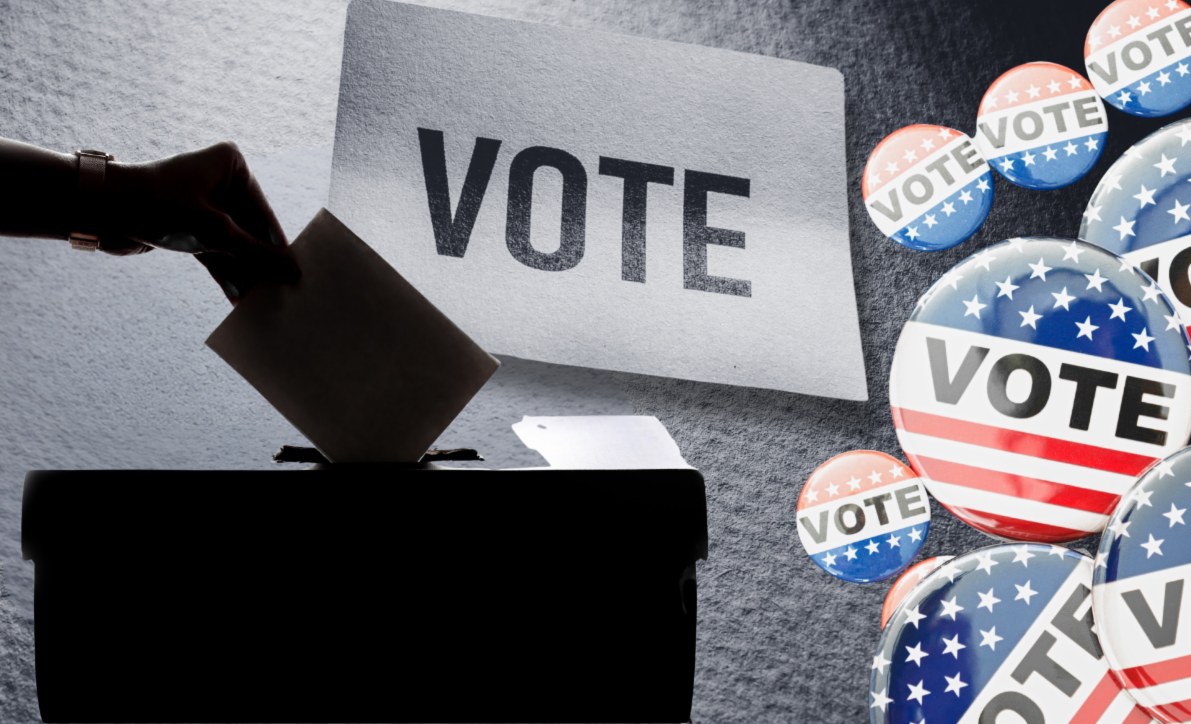
  • NEWS: While Approving One Major Voting Bill, Lawmakers Neglect Other Reforms
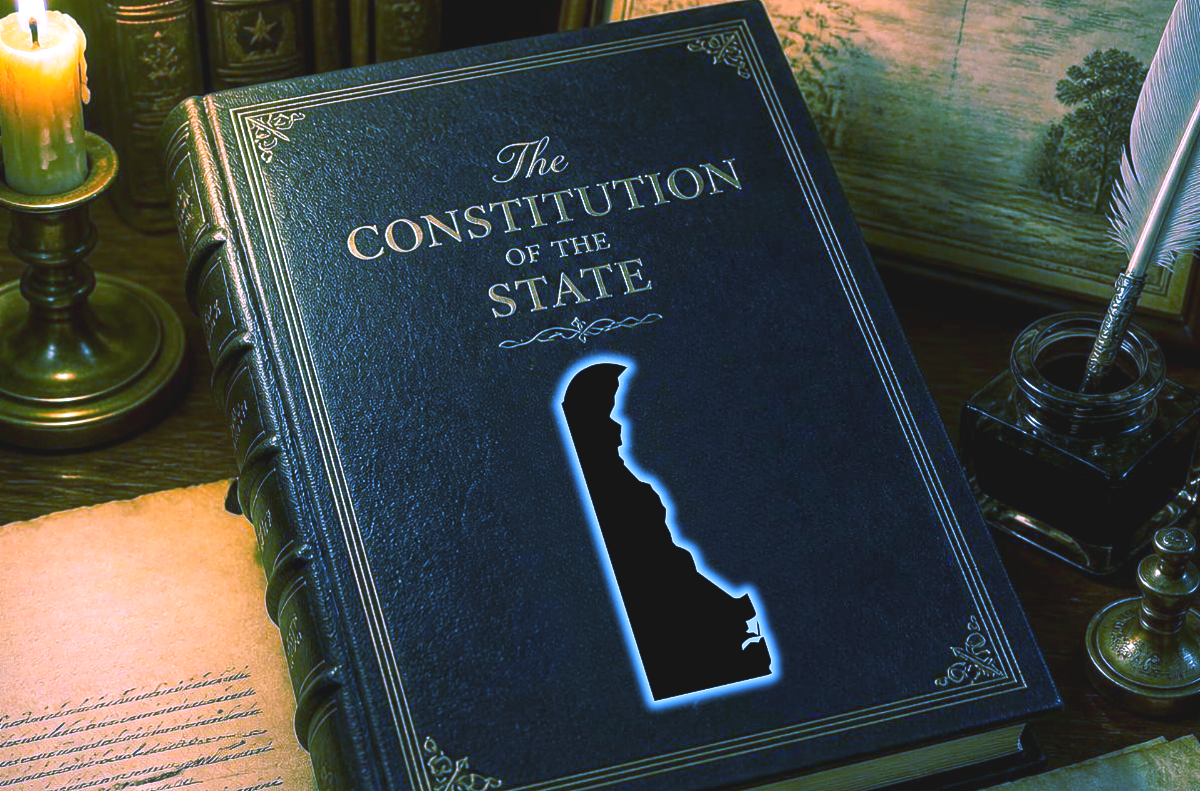
  • NEWS: Eight Proposed Constitutional Amendments Await the Next General Assembly
  • NEWS: New Law Will Advance "Next Generation 911" in Delaware

NEWS

While Approving One Major Voting Bill, Lawmakers Neglect Other Reforms


The Delaware John Lewis Voting Rights Act (House Bill 444) cleared the General Assembly on the last night of the session and is awaiting enactment at an expected signing ceremony with the governor.


The bill — intended to prevent voter suppression, vote dilution, and other discriminatory election practices — was fast-tracked through the legislature, taking less than a month from its introduction to its final passage.


Concerns were raised about the rushed measure, including how it defines voter suppression and the elimination of intent as a factor in determining whether voter suppression has occurred.


Still, while this significant voting bill was anointed for rapid approval, other voting reforms were left to languish and die on the vine.


EXPANDING PRIMARY VOTING

At present, Delaware holds "closed primaries," in which only voters registered with a party can cast ballots in that party's races. Eight states have this system, including neighboring Pennsylvania and New Jersey.


House Bill 188, sponsored by State Rep. Mike Smith (R-Pike Creek Valley), would have allowed unaffiliated voters to participate in Delaware primary elections. Registered Republicans and Democrats would still be limited to voting only in their own parties' primaries. Eight states take this approach, sometimes referred to as semi-closed primaries, including New Hampshire, Massachusetts, and Rhode Island.


In Delaware, there are approximately 800,000 registered voters, with about 170,000 of these citizens unaffiliated. If current trends continue, unaffiliated voters are expected to soon become Delaware's largest voting bloc.


"This bill is about fairness and inclusion," Rep. Smith said. "All of the positive feedback I've received from people in the community tells me this is something Delawareans want. I intended to reintroduce it in the next session."


HB 188 passed the House on a tight vote, but died without being considered in the Senate.


EXPANDING THE SCOPE OF MANDATORY RECOUNTS

Sponsored by State Rep. Bryan Shupe (R-Milford South, Ellendale), House Bill 86 sought to expand the scope of mandatory election recounts to any election where the margin of victory was 1% or less.


Current law calls for a recount only if the number of votes separating two candidates is less than one-half of 1%.


The bill passed the House 37-3 at the end of last June, then spent a year in the Senate Elections & Government Affairs Committee without a hearing until it died at the end of the session.


"I don't know why anyone would oppose or block this bill from becoming law," Rep. Shupe said. "It increases clarity in the outcomes of close elections and carries no additional cost to taxpayers."


IMPROVING THE TIMING OF THE STATE PRIMARY

Delaware has one of the latest state primary elections in the nation, taking place "the second Tuesday after the first Monday in September." This year, that means there are only 49 days between the September 15 primary and the November 3 general election.


Only three other states have primary elections on or after September 1.


Delaware's primary election timing creates significant issues for both the voting public and the candidates running in these races, matters that are further complicated by Delaware's closed primary system. The short time between the primary and general elections gives voters a small window to become familiar with the victorious candidates. Those candidates are additionally handicapped by a restricted ability to replenish funds, limited time to smooth over hard feelings with the supporters of their defeated opponents, and the need to refocus their efforts on encompassing all voters instead of just those sharing their political party affiliation.


Sponsored by State Rep. Stephanie T. Bolden (D-Wilmington East), and co-sponsored by State Rep. Lyndon Yearick (R-Camden, Woodside), House Bill 65 would have moved the date of primary elections from late summer to mid-spring—the fourth Tuesday in April. In presidential election years, this date would have coincided with the presidential primary, saving taxpayers money by combining the elections.


The bipartisan measure passed the House on April 8, 2025, 39-1. It then spent the next 16 months in Senate limbo without ever being considered by the chamber.


REVIEWING MOTOR-VOTER REGISTRATIONS

Three years ago, Delaware's enhanced motor-voter law went into effect.


Under the statute, every voting-age person who completes an application for the issuance or renewal of their Delaware driver's license, learner's permit, or identification card with the Division of Motor Vehicles (DMV), and is not already registered to vote, is automatically registered by the Department of Elections (DOE).


Under the process, the DMV is supposed to confirm citizenship status before forwarding registration information. State Rep. Bryan Shupe (Milford South, Ellendale) learned earlier this year that the system may not be working as intended. "A green card holder in my district contacted me after she was automatically registered to vote [after visiting the DMV]," he said.


A green card, officially known as a Permanent Resident Card, grants authorization to live and work permanently in the U.S. However, green card recipients are not citizens and are not entitled to vote in state or federal elections.


House Substitute 2 for House Bill 317, sponsored by Rep. Shupe, would have required the Division of Motor Vehicles to conduct an audit of voter registrations that used a driver's license predating the implementation of REAL ID, and who obtained a driver's license or identification card after Automatic Voter Registration took effect in June 2023.


"I introduced the first version of this bill around St. Patrick's Day, and refined and revised it twice to address concerns," Rep. Shupe said. "Was the issue that my constituent brought to my attention a one-time occurrence, or did it indicate something more systemic?"


That question will not get answered anytime soon. Despite state revenue forecasts unexpectedly increasing by more than $152 million in mid-June, the Democratic majority controlling the House Appropriations Committee refused to release the bill for consideration. It carried an annual cost of $100,000.

NEWS

Eight Proposed Constitutional Amendments Await the Next General Assembly


The 153rd General Assembly passed eight proposed constitutional amendments, which will now await consideration by the next incarnation of the state legislature.


Delaware is unique in the way it alters its state constitution. It is the only state in the nation that amends its constitution without requiring approval by voters. Instead, proposed amendments become effective after receiving a minimum two-thirds approval in two consecutive General Assemblies. Unlike other lawmaking, constitutional amendments are not signed by the governor.


Citizens participate indirectly in the amendment process by having an opportunity to select the members of the next General Assembly that will vote on the second leg of the proposals.


In the House, constitutional amendments must receive at least 28 "yes" votes for passage and garner no fewer than 14 votes in the 21-member Senate.


The following pending amendments will soon be printed in multiple Delaware newspapers to inform citizens of some of the amendments at stake when they head to the polls in November.


SS 1 for SB 2 – Early Voting: This proposed amendment would change the Delaware State Constitution to specifically allow for early, in-person voting, 10 days before a general, primary, or special election. The General Assembly passed legislation in 2019 allowing it, but it was later found to be unconstitutional. That decision was vacated by the Supreme Court in 2024 on the grounds the plaintiffs "did not have standing," not because the legal argument did not have merit. So while Delaware still has early in-person voting without the amendment, it stands on shaky legal ground.


SS 1 for SB 3 with HA 1 – No Excuse Absentee Voting: At present, people wishing to cast an absentee ballot must meet one of the qualifying criteria specified under the law (e.g., vacation, illness, impairment, military service, work conflict, etc.).This amendment would legalize "no excuse" absentee voting. Voters would still be required to submit an absentee ballot application. It would also enshrine the current permanent absentee voting status and the reasons for granting it.


SS 2 for SB 100 – Same-Sex Marriages: This proposal seeks to add marriage as a fundamental right in the state constitution, "that may not be denied or abridged on the basis of gender or any other legally protected criteria" (e.g., race, color, national origin). The bill cleared the legislature on a contested vote. Opponents did not challenge the established concept of same-sex unions, but rather contended that there was no compelling need for an amendment at this time. Marriage equality is already well-protected under Delaware law, with the state having legalized the practice 13 years ago. More importantly, a U.S. Supreme Court decision in 2015 held that the right to same-sex marriage is protected under two clauses of the 14th amendment to the U.S. Constitution. There is no case pending consideration by the High Court that poses any threat to this right.


SB 264 – Filling a Vacancy in the Office of Lt. Governor: This bill is a proposal to hold a special election when there is a vacancy in the office of Lieutenant Governor, unless the vacancy occurs on or after July 1 in a year when the office is on the ballot. This amendment is modeled after the process of filling a vacancy in the General Assembly. 


HS 1 for HB 35 – Abolishing the Death Penalty: Delaware has not had a functional death penalty for the last decade. On August 2, 2016, the Delaware Supreme Court declared the state’s capital sentencing procedures unconstitutional. Two years ago, lawmakers removed the flawed capital punishment statute from the Code. While most House Republicans supported striking the broken law from the books, they take issue with amending the state constitution to tie the hands of future legislators and prevent them from revisiting the issue in the future. In an earlier debate on the issue, State Rep. Jeff Spiegelman (R-Townsend, Clayton) said the cautious and sparing use of capital punishment should remain as an extreme alternative to deal with those convicted of the most horrendous crimes. While he conceded that the way Delaware has applied the death penalty in the past has been legally problematic, to remove this option from Delaware law through a constitutional amendment would "potentially place our children and grandchildren in a courtroom with a monster and an inability to administer anything approaching a just sentence.” HS 1 for HB 35 cleared the House with the minimum number of votes needed.


HB 180 – Restoration of the Voting Rights of Ex-Felons: This proposed amendment seeks to restore the voting rights of convicted felons after they have served their sentence or were pardoned. Voting rights would be restored even if the former felon has not paid court-ordered restitution. The amendment would also eliminate the suspension of voting rights as part of the punishment for crimes related to interfering with or tampering with an election. The legislation also deletes outdated provisions of the voting laws dealing with voter qualifications that were long ago superseded by federal law. The bill was contested, with 10 House Republicans opposing it.


HS 1 for HB 320 w/ HA 1 – Technical Changes: This measure seeks to make necessary technical corrections identified by legislative staff while adding earlier amendments to the Delaware Constitution. 


HB 430 – Barring Corporate Business Owners from Voting in Municipal Elections: About a dozen municipalities in Delaware allow non-resident property owners, including corporations and trusts, to cast votes in their elections. In many cases, these practices have been in place for decades, and all were previously approved by the General Assembly. Late last year, the ACLU filed a lawsuit against the Town of Fenwick Island, which is one of the municipalities allowing such voting. The advocacy group argued that this infringed on the principle of "one person, one vote" and violated the state constitutional mandate of "free and equal" elections. The town's attorneys countered that every qualified voter—human or entity—is limited to a single vote. They also noted that since property owners pay taxes and are subject to the town's ordinances, they had a right to be involved in the electoral process. The Delaware Superior Court dismissed the lawsuit, ruling in favor of Fenwick Island. Just days before the decision was handed down, House Bill 430 was filed. House Republicans overwhelmingly opposed the measure, contending that it tramples local control, imposes a solution to a problem that has not been demonstrated to exist, and would leave many local businesses and homeowners subject to taxation without representation. The amendment cleared the House with the minimum 28 votes.

NEWS

New Law Will Advance "Next Generation 911" in Delaware


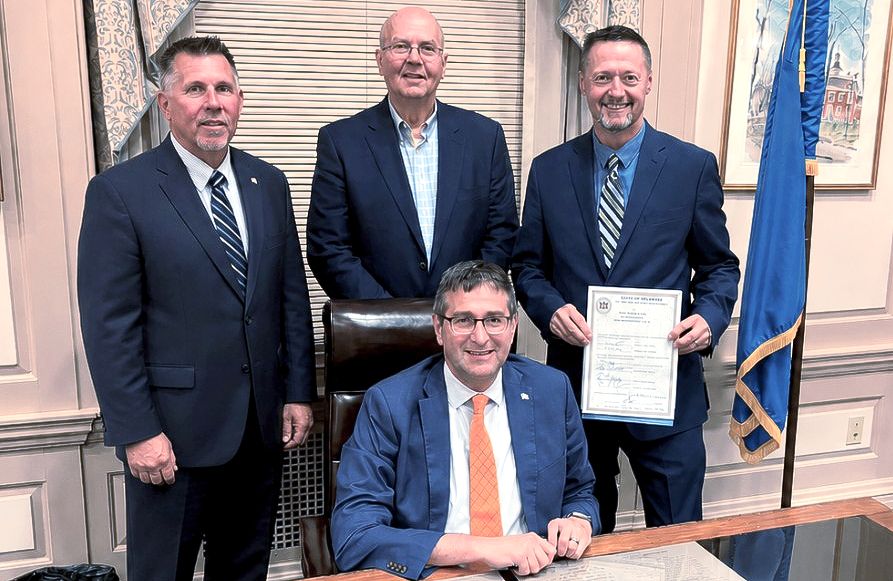
Governor Matt Meyer has signed bipartisan legislation to transition Delaware's current emergency communications network to a Next Generation 911 (NG911) system.


The upgraded NG911 will replace Delaware's legacy 911 system with a secure, internet protocol-based network that supports voice calls, text-to-911, and multimedia such as photos and videos. It will also improve caller location accuracy, strengthen data sharing with first responders, and enhance system resiliency during emergencies.


The technological improvements come with a price tag. House Bill 468 will raise the needed funds through a modest fee increase. Sponsored by State Reps. William Bush (D-Clayton, Cheswold, Wyoming) and Danny Short (R-Seaford) and State Sen. Nicole Poore (D-New Castle), the new law will increase the monthly 911 surcharge from 60 cents to 90 cents—the first hike in 25 years. The additional $4.5 million in annual revenue will fund the infrastructure, equipment, software, cybersecurity, and training needed to deploy and maintain the new state-of-the-art emergency communications network. The proposal won unanimous approval in the General Assembly. 


"While the cost to Delaware households is minimal, less than $4 per year, I believe the benefits gained from next-generation 911 communications will be immeasurable,” said Rep. Short (in individual photo). “This investment will modernize our emergency communications system, equipping first responders with capabilities that improve response times, enhance situational awareness, and ultimately save lives, far outstripping the modest cost of implementing these new technologies."


Delaware's emergency communications professionals answer more than 700,000 voice 911 calls and process at least 20,000 text-to-911 messages each year. The statewide system includes eight Public Safety Answering Points (PSAPs), staffed by approximately 300 telecommunications specialists who provide 24-hour emergency dispatch services.


In the top photo, from left: Director of Communications Eric Wagner, 911 Emergency Services Board member Michael Vincent, E911 Director Robert Williams, and Governor Matthew Meyer (center).