News & Updates from WAGLAC
August 16, 2022
|
|
The Fall WAGLAC meeting will be held October 17-18, 2022 at the Westin in San Diego, California. Please mark your calendars. More details to follow.
|
|
Arctic Warming Is Happening Faster Than Described, Analysis Shows
By Henry Fountain
NYTimes
Aug. 11, 2022
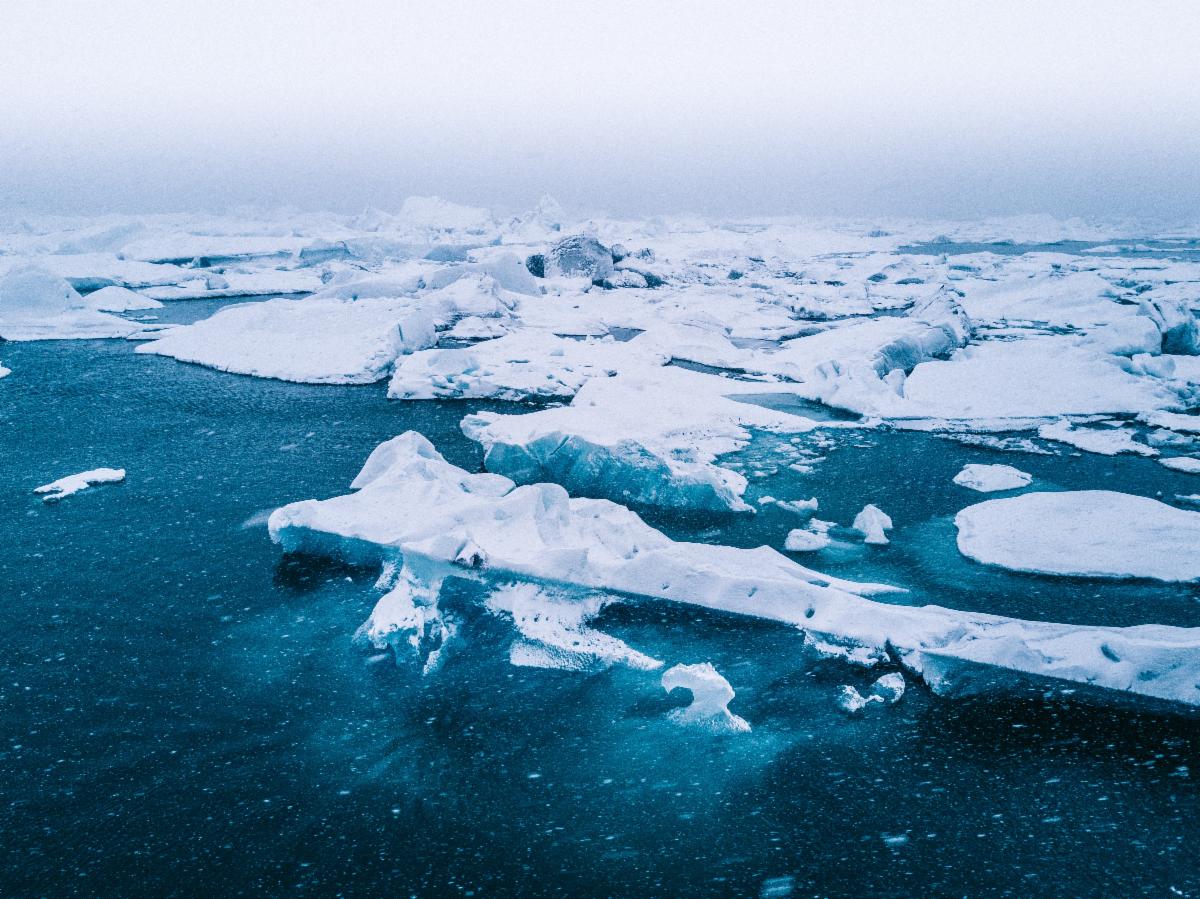
“The warming at the top of the globe, a sign of climate change, is happening much faster than previously described compared with the global average, scientists said [last] Thursday.
. . . .
Over the past four decades, the region has been heating up four times faster than the global average, not the two to three times that has commonly been reported. And some parts of the region, notably the Barents Sea north of Norway and Russia, are warming up to seven times faster, they said.
One result of rapid Arctic warming is faster melting of the Greenland ice sheet, which adds to sea-level rise. But the impacts extend far beyond the Arctic, reaching down to influence weather like extreme rainfall and heat waves in North America and elsewhere. By altering the temperature difference between the North Pole and the Equator, the warming Arctic appears to have affected storm tracks and wind speed in North America.”
|
|
STATE ATTORNEYS GENERAL SPLIT ON ISSUE OF EPA ESTABLISHING NAAQS FOR GREENHOUSE GASES
On August 9, 2022, West Virginia Attorney General Patrick Morrisey joined by nineteen other state attorneys general sent a letter to the Environmental Protection Agency (EPA) in response to a July 28, 2022 letter by eight state attorneys general sent to EPA requesting the agency to establish National Ambient Air Quality Standards (NAAQS) for greenhouse gases. (See WAGLAC newsletter dated August 2, 2022). The August 9th response letter urged EPA to reject the request to establish NAAQs for greenhouse gases. The response letter states that the July 28th letter “mischaracterizes the text, purpose, and enforcement history of the Clean Air Act. To list CO2 as a ‘criteria pollutant,’ EPA must ‘plan[] to issue [certain] air quality criteria’ based on ‘the latest scientific knowledge useful in indicating the kind and extent of all identifiable effects on public health or welfare which may be expected from the presence of’ CO2 ‘in the ambient air in varying quantities.’ ,. . . But is far from clear how standards (the letter doesn’t suggest what kind) to which viable state or federal plans could be tailored.”
|
|
FEDERAL COURT INVALIDATES NOAA APPROVAL OF KILLER WHALE AND CHINOOK HARVEST
U.S. District Court Judge Richard A. Jones granted summary judgment to Wild Fish Conservancy in its lawsuit challenging NOAA Fisheries decision authorized commercial salmon harvest in Southeast Alaska’s Chinook troll fishery. Judge Jones affirmed Magistrate Michell Peterson’s recommendation, which found that NOAA’s own analysis showed the harvest levels would push Southern resident killer whales and wild Chinook closer to extinction. The Court agreed NOAA violated the law by improperly relying on undeveloped and uncertain future mitigation to offset this ongoing harm to species protected under the Endangered Species Act.
|
|
ALASKA SUPREME COURT UPHOLDS STATE FISHERY MANAGEMENT PRACTICES
Cook Inlet Fisherman’s Fund sued the Alaska Board of Fisheries and the Department of Fish and Game asserting that the State’s fishery management practices in Cook Inlet violated state and federal law. The State opposed plaintiff's efforts to depose two Fish and Game employees asserting that all material facts were in the administrative record. The Alaska Superior Court granted the State’s motion to quash the deposition notices. The Alaska Supreme Court and Superior Court also granted summary judgment in favor of the State holding that the fishery was not governed by federal standards and finding the State had not violated any statute or regulation.
|
|
Administration Announces Availability of $725 Million from Bipartisan Infrastructure Law to Clean Up Legacy Pollution
The Department of the Interior . . . announced that nearly $725 million from President Biden’s Bipartisan Infrastructure Law is available to 22 states and the Navajo Nation to create good-paying union jobs and catalyze economic opportunity in coal communities by reclaiming abandoned mine lands (AML). The Notice of Funding Opportunity opened today and follows the release of final guidance for how eligible states and Tribes can apply for the historic funding.
The Bipartisan Infrastructure Law allocates nearly a total of $11.3 billion in AML funding over 15 years, which will help communities eliminate dangerous environmental conditions and pollution caused by past coal mining. This funding is expected to address the vast majority of inventoried abandoned mine lands in this country and prioritize jobs for current and former coal industry workers.”
|
|
Federal Court Reinstates Ban on New Coal Sales on Public Land
By Anna Phillips
Washington Post
August 12, 2022
U.S. Federal District Judge Brian Morris ordered the Interior Department to pause the issuing of new coal leases. “Judge Morris of the United States District Court for the District of Montana wrote that under the Trump administration, the department failed to study the full environmental effects of permitting more mining, as required by the National Environmental Policy Act. Morris’s order reinstates a 2016 freeze on new federal coal lease sales, which President Donald Trump lifted two months after taking office. The move was part of Trump’s effort to fulfill his campaign promise to promote American production of coal.”
|
|
"The U.S. District Court in South Dakota ruled on the urgency of protecting Native voters’ right to fair elections in Lower Brule Sioux Tribe v Lyman County, granting a preliminary injunction in favor of plaintiff tribal members.
The decision acknowledges that the county’s current redistricting plan would dilute the voting power of the Native community and requires the county commissioners to create a new plan for the county elections in November. Today’s decision ensures that all voters will have a meaningful say in their representation and it reverses a history in Lyman County, which has never seen Native representation at the county level."
|
|
OKLAHOMA V. CASTRO-HUERTA NPR PODCAST – WHAT POWER SHOULD STATES HAVE ON NATIVE AMERICAN LAND?
The link below is to an NPR Podcast that discusses the implications of the Supreme Court’s Oklahoma v. Castro-Huerta. Rebecca Nagle, a Journalist and member of Cherokee Nation, Sara Hill, Attorney General of the Cherokee Nation and Steve Kunzweiler, District Attorney for the County of Tulsa Oklahoma debate the impact of the decision on state/tribal jurisdiction within Indian County.
|
|
The Idaho Attorney General’s Office seeks an attorney to join a dynamic team advising the Idaho Department of Water Resources (IDWR) in Boise, Idaho. Attorneys representing IDWR provide advice on water rights administration and adjudications, appear before the Idaho Water Adjudication Court, argue cases before Idaho’s District Courts and the Idaho Supreme Court and assist IDWR with contracting, rulemaking and other matters.
Requirements: Admission to the Idaho State Bar and at least 2 years legal work experience is preferred. Strong writing and advocacy skills are required. Strong academic qualifications are required.
Applications: Forward cover letter, resume, unofficial law school transcript and writing sample to the following address: Idaho Attorney General’s Office, Attn: Victoria Wigle, P.O. Box 83720, Boise, ID 83720-0010.
|
|
|
|
Session 3: Workplace Safety Prosecutions
September 12, 2022 • 1:00 p.m. - 2:15 p.m. ET
Session 4: Animal Welfare & Wildlife Trafficking Prosecutions
October 17, 2022 • 1:00 p.m. - 2:00 p.m. ET
|
|
Violations of environmental standards may trigger both criminal and civil laws. What are considerations for state- and local-level prosecutors when facing a choice of enforcement route?
Join the State Energy & Environmental Impact Center at NYU School of Law, the Conference of Western Attorneys General, and the Environment & Natural Resources Division of the Department of Justice for a five-part training series specifically designed for state- and local-level prosecutors tasked with enforcement of environmental laws.
|
|
All summaries are posted in CWAG's google docs account, accessible through the link below. Should you have any issues with the links, contact Patricia Salazar with any questions.
|
|
New Indian Law Case Summaries |
|
Pueblo of Pojoaque v. Wilson, ___ F. Supp. 3d ___, 2022 WL 3139089 (D.N.M. Aug. 5, 2022): Tribe was entitled to declaratory judgment that the Indian Gaming Regulatory Act does not authorize the allocation of jurisdiction to a state court under a class III gaming compact over a slip-and-fall claim by a casino patron.
Caremark, LLC v. Chickasaw Nation, ___ F.4th ___, 2022 WL 3206683 (9th Cir. Aug. 9, 2022): Authority to resolve a tribe’s claim that it did not clearly and unambiguously waive its immunity from suit and thus could not have agreed to arbitrate a dispute over alleged noncompliance with Indian Health Care Improvement Act was delegated to the arbitrator under the parties’ contract documents.
|
|
In re S.H., ___ Cal. App. 5th ___, ___ Cal. Rptr. 3d ___, 2022 WL 3332988 (1st Dist. Aug. 12, 2022): Where a human services agency conceded noncompliance in a foster care proceeding with a state statute’s requirement to discuss possible Indian ancestry with extended family members, no need existed to conditionally affirm or reverse a juvenile court’s order placing the child with a maternal relative given the agency’s continuing duty to inquire into such ancestry.
Smiley v. Crow, ___ F. Supp. 3d ___, 2022 WL 3326038 (W.D. Okla. Aug. 11, 2022): Cherokee Indian convicted in state court for murder was not entitled to the equitable tolling of the one-year limitation period in the Antiterrorism and Effective Death Penalty Act.
|
|
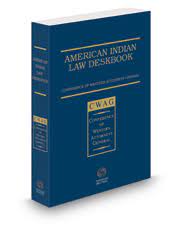
American Indian Law Deskbook |
|
Notice: 2022 Edition of the American Indian Law Deskbook now available on Westlaw and in hard-copy and electronic formats.
Editions of the Deskbook are published annually by Thomson Reuters, and the 2022 Edition was issued during the week of May 23, 2021. It is available on Westlaw in the Secondary Sources/Texts & Treatises category, in hard copy, and in electronic format.
Please click below or reach out to Clay Smith at clay.smith@cwagweb.org with questions regarding obtaining a copy of the American Indian Law Deskbook.
|
|
Western Attorneys General Litigation Action Committee
CWAG oversees and coordinates the Western Attorneys General Litigation Action Committee (WAGLAC), which consists of assistant attorneys general involved in litigation related to the environment, natural resources, public lands and Indian law. WAGLAC was formed over 40 years ago and meets three times per year to discuss the latest developments in these areas of the law. AGO staff gain important contacts throughout the country in these important areas of the law.
|
|
Contributions For WAGLAC Newsletter
We rely on our readers to send us links for the WAGLAC Newsletter. If you have or know of a recent (published in the last two weeks) case, statute or article relating to natural resources, environment, Indian law or federalism that you would like us to consider for inclusion in the Newsletter, please send it to Clive Strong. For a complete database of all previously published WAGLAC newsletters, please follow the link below.
|
|
Conference of Western Attorneys General | 1300 I Street, Sacramento, CA 95814 |
|
|
|
|
|
|