News & Updates from WAGLAC
December 13, 2022
|
|
Attendees will receive CLE credit.
Attendance is limited to members of state attorneys general offices.
|
|
The 2023 Winter WAGLAC meeting will be held in mid-February in the Phoenix, AZ area. The 2023 Summer WAGLAC meeting will be held in conjunction with the AGA/CWAG annual meeting June 19th through June 22nd in Rancho Palos Verdes, California. The 2023 Fall WAGLAC meeting will be held in mid-October at a yet-to-be-identified location.
In addition to the roundtable discussion of natural resources, environmental, public lands, mining, energy, and Indian law matters there will be a half-day seminar during the Winter and Fall WAGLAC meetings.
|
|
EPA Issues Guidance to States to Reduce Harmful PFAS Pollution
EPA Press Office
On December 6, 2022, “the U.S. Environmental Protection Agency (EPA) released a memorandum to states that provides direction on how to use the nation’s bedrock clean water permitting program to protect against per- and polyfluoroalkyl substances (PFAS). The guidance released today, which outlines how states can monitor for PFAS discharges and take steps to reduce them where they are detected, is part of the Agency’s holistic approach to addressing these harmful forever chemicals under EPA’s PFAS Strategic Roadmap.
This action is a critical step in EPA’s efforts to restrict PFAS at their source, which will reduce the levels of PFAS entering wastewater and stormwater systems and ultimately lower people’s exposure to PFAS through swimming, fishing, drinking and other pathways."
|
|
New Mexico seeks tougher provisions for U.S. nuclear dump
Susan Montoya Bryan
Washington Post/AP
December 9, 2022
“New Mexico officials outlined new conditions [last] Thursday for a proposed permit for the U.S. government to continue the disposal of nuclear waste in the southeast corner of the state, part of a multibillion-dollar federal cleanup program.
As a hedge against becoming the nation’s only permanent dumping ground, New Mexico wants to raise the bar with its proposal by demanding federal officials produce a full accounting of materials still needing to be cleaned up and shipped to the Waste Isolation Pilot Plant, or WIPP.
The state also is putting Congress on notice that the permit would be revoked if lawmakers expand the type of waste accepted at WIPP. Currently, the repository is licensed to take what is known as transuranic waste, or waste generated by the nation’s nuclear weapons program that is contaminated with radioactive elements heavier than uranium.”
|
|
Court seems unwilling to embrace broad version of “independent state legislature” theory
Amy Howe
SCOTUSblog
December 7, 2022
“The Supreme Court on [last] Wednesday signaled that it may not be ready to adopt a sweeping interpretation of the Constitution, known as the ‘independent state legislature’ theory, that would give state legislatures broad power to regulate federal elections without interference from state courts. Although some justices appeared receptive to that theory during nearly three hours of argument, it was not clear that there was a majority to endorse it, even as other justices focused on a narrower version of the theory that would preserve at least some role for state courts in enforcing state laws or the state constitution.
The dispute before the court in Moore v. Harper arose from a challenge to a new congressional map adopted by North Carolina’s Republican-controlled legislature in early November 2021. The North Carolina Supreme Court struck down the map after finding that it was a partisan gerrymander in violation of the North Carolina constitution. The question for the justices is whether the state court overstepped its authority under the U.S. Constitution’s elections clause, which says the time, place, and manner of congressional elections “shall be prescribed in each State by the Legislature thereof.”
|
|
Court drops consent requirement for filing of amicus briefs, makes other tweaks to rules
Amy Howe
SCOTUSblog
December 6, 2022
“The Supreme Court on Monday announced changes to its rules, which govern litigation before the court and its operations. Although the changes were largely technical, the new rules, which go into effect on Jan. 1, 2023, do contain some significant substantive changes – most notably, the elimination of the consent requirement for amicus briefs.
Under the court’s existing practice, anyone who wants to file an amicus brief in a case before the court must obtain consent from the litigants on both sides of the dispute. If consent is not granted, the would-be amicus must seek the court’s permission to file. Unlike many other federal courts, the Supreme Court – with rare exceptions – normally grants such requests; perhaps as a result, litigants overwhelmingly provide consent.”
|
|
Colorado has released its plan to reintroduce wolves. Now, it has to sell it.
Sam Brasch
Colorado Public Radio
December 9, 2022
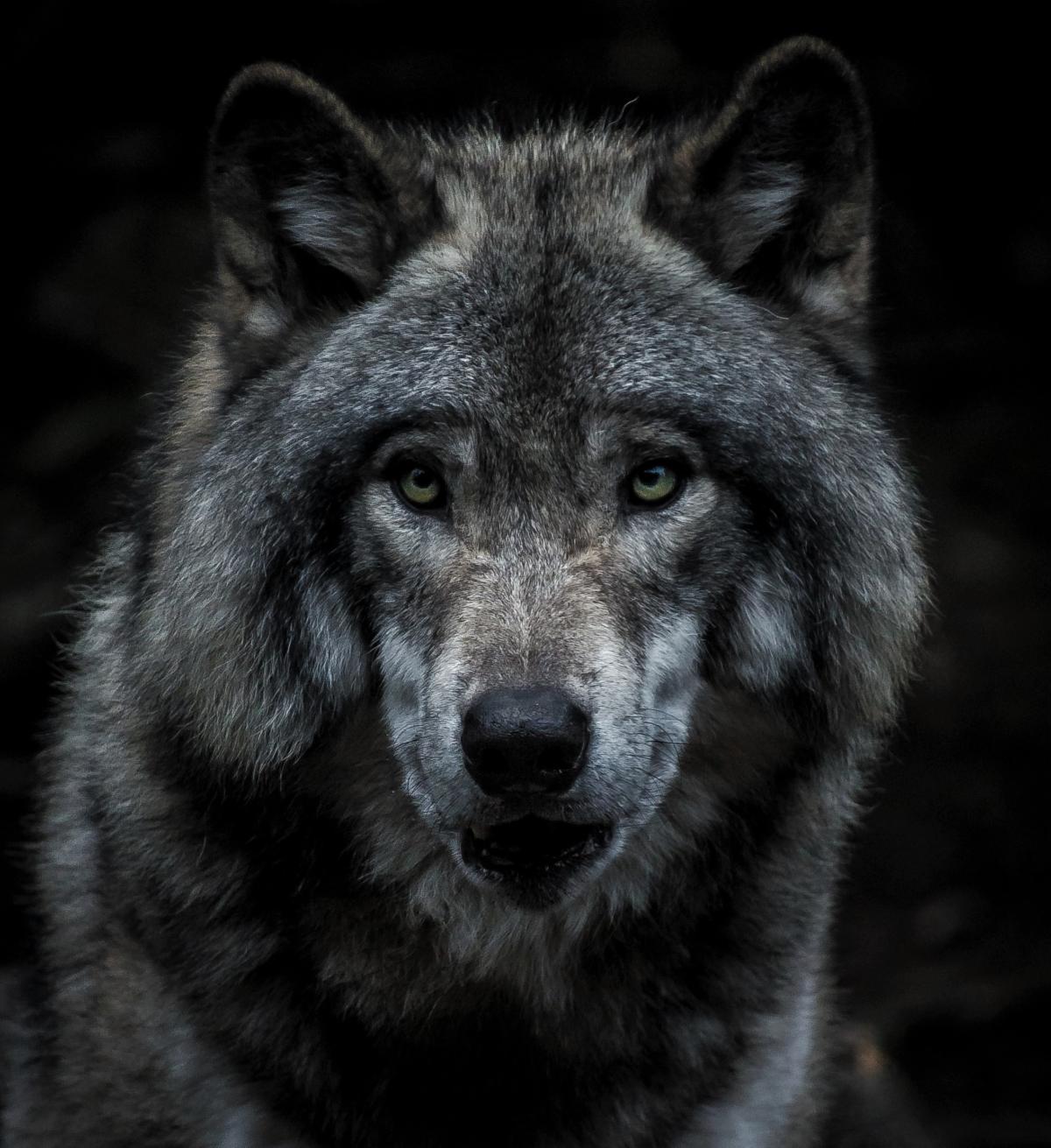
“Thirty to 50 wolves in the next five years. Brought from somewhere in the northern Rockies. Released in south-central Colorado.
Those are some details in a new draft wolf management plan released by state wildlife managers on Friday. The long-awaited document details the state’s proposal to carry out a 2020 ballot initiative ordering wolf reintroduction.
Under the measure, Colorado must put "paws on the ground" somewhere on the Western Slope by 2024 and offer fair compensation for lost livestock. The initiative otherwise gave state wildlife managers broad leeway to guide the reintroduction process.”
|
|
BIA PROPOSING CHANGES TO REGULATION GOVERNING APPROVAL OF CLASS 3 GAMING COMPACTS
“The Bureau of Indian Affairs (BIA) seeks input on changes to its regulations governing the review and approval of Tribal-State gaming compacts. The revisions would add factors and clarify how the Department reviews ‘Class III Tribal-State Gaming Compacts’’ (Tribal-State gaming compacts or compacts). Interested persons are invited to submit comments on or before March 1, 2023.”
|
|
WGA PASSES PILT RESOLUTION
Western Governors’ Association passed a resolution calling for the federal government to “honor its historic Payment In Lieu of Taxes (PILT) agreement with states and counties in the West to compensate them for the presence of tax-exempt federal lands within their borders. Predictable and full payments under the PILT and the Secure Rural Schools (SRS) programs are vital to the provision of state and county public goods and services, such as roads, emergency response, and wildlife and natural resources protection. Western Governors support legislative efforts to improve the predictability and reliability of PILT payments and ensure forest counties receive stable SRS payments.”
|
|
WGA DEMANDS FEDERAL GOVERNMENT HONOR STATUTORY OBLIGATION TO MAKE ROYALTY AND LEASE PAYMENT
The Western Governors’ Association passed a resolution calling on “the federal government to honor its statutory obligations to share royalty and lease payments with states and counties. States, as recipients of revenues from these programs and agreements, should be provided meaningful and substantial opportunities for consultation in the development of federal policy affecting those revenues.”
|
|
CONGRESS SET TO APPROVE CORPS WESTERN WATER COOPERATIVE COMMITTEE
Representative Peter DeFazio (D-Ore.), Chair of the House Committee on Transportation and Infrastructure (T&I), U.S. Senator Tom Carper (D-Del.), Chairman of the Senate Committee on Environment and Public Works (EPW), Senator Shelley Moore Capito (R-W.Va.), Ranking Member of the EPW Committee, and Representative Sam Graves (R-Mo.), Ranking Member of the T&I Committee, announced that they had reached final agreement on the Water Resources Development Act of 2022 (WRDA 2022). WRDA is biennial legislation that authorizes U.S. Army Corps of Engineer projects.
The final version of WRDA is the result of negotiations between the Senate and the House to reconcile differences between the Senate and House-passed versions of the legislation. North Dakota Senator Cramer’s and Oregon Senator Merkley’s proposal in the Senate version of WRDA to create a Corps of Engineers Water Cooperative Committee is included in the final version of WRDA. CWAG, Western Governors Association, and Western States Water Council endorsed creation of the Committee, which will provide a forum for addressing potential conflicts between federal laws — the Flood Control Act of 1944 and the Water Supply Act of 1958 — and "prior appropriation" laws that govern water allocations in Western States. Each governor and attorney general from the member states will have authority to appoint a member to the Committee.
|
|
All summaries are posted in CWAG's google docs account, accessible through the link below. Should you have any issues with the links, contact Patricia Salazar at psalazar@agalliance.org with any questions.
|
|
There were no new Indian Law summaries this week. Please check in next week for updates! |
|
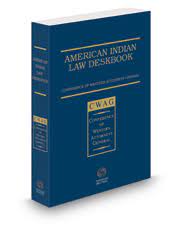
American Indian Law Deskbook |
|
Notice: 2022 Edition of the American Indian Law Deskbook is now available on Westlaw and in hard-copy and electronic formats.
Editions of the Deskbook are published annually by Thomson Reuters, and the 2022 Edition was issued during the week of May 23, 2021. It is available on Westlaw in the Secondary Sources/Texts & Treatises category, in hard copy, and in electronic format.
Please click the link below to order or reach out to Clay Smith at clay.smith@cwagweb.org with questions regarding obtaining a copy of the American Indian Law Deskbook.
|
|
Western Attorneys General Litigation Action Committee |
|
CWAG oversees and coordinates the Western Attorneys General Litigation Action Committee (WAGLAC), which consists of assistant attorneys general involved in litigation related to the environment, natural resources, public lands, and Indian law. WAGLAC was formed over 40 years ago and meets three times per year to discuss the latest developments in these areas of the law. AGO staff gain essential contacts throughout the country in these important areas of the law.
|
|
Contributions For WAGLAC Newsletter |
|
We rely on our readers to send us links for the WAGLAC Newsletter. If you have or know of a recent (published in the last two weeks) case, statute, or article relating to natural resources, environment, Indian law, or federalism that you would like us to consider for inclusion in the Newsletter, please do not hesitate to send it to Clive Strong at clive.strong@cwagweb.org.
|
|
For a complete database of all previously published WAGLAC newsletters, please click the Archive Button. |
|
|
Conference of Western Attorneys General
5050 Laguna Blvd | Suite 112-323 | Elk Grove, California 95758
|
|
|
|
|
|
|