News & Updates from WAGLAC
December 20, 2022
|
|
NOTE THE 2023 SUPER BOWL FORCES CHANGE TO THE LOCATION OF THE WINTER WAGLAC MEETING. The 2023 Winter WAGLAC meeting location has changed. The tentative dates for the Winter meeting are February 22nd and 23rd. The 2023 Summer WAGLAC meeting will be held in conjunction with the AGA/CWAG annual meeting on June 20th in Rancho Palos Verdes, California. The 2023 Fall WAGLAC Fall meeting will be held in mid-October in Phoenix, AZ.
In addition to the roundtable discussion of natural resources, environmental, public lands, mining, energy, and Indian law matters there will be a half-day seminar during the Winter and Fall WAGLAC meetings.
|
|
EPA Rescinds Controversial New Source Review Memorandum
EPA rescinded a Trump-era memorandum that barred the agency from independently determining whether “major source” new source review (NSR) air permits are necessary for new or modified facilities. In 2017, then EPA Administrator Scott Pruitt issued a memorandum that dropped a long-standing EPA policy that allowed the agency to use its own projections of a facility's potential future emissions to trigger Clean Air Act new source review (NSR) permitting requirements. The Pruitt memorandum provided that EPA would defer to a company’s assessment and state permit writers determination of whether NSR applied to its facility.
|
|
Attorney General Rosenblum Announces Largest Environmental Damage Recovery in Oregon History
“Oregon Attorney General Ellen Rosenblum [last week] announced a historic 698 million dollar settlement with the Monsanto Company (Monsanto) for their role in polluting Oregon with PCBs (polychlorinated biphenyls) for the past 90 + years. Monsanto was the only manufacturer, seller, and distributor of PCBs. PCBs are toxic compounds formerly used in coolants, electrical equipment (such as fluorescent lighting fixtures), and devices, as well as hydraulic oils. They were also previously used in products, including paint, caulking, and copy paper.
‘This is a huge win for our state,’ said AG Rosenblum. ‘PCBs are still present throughout Oregon — especially in our landfills and riverbeds — and they are exceedingly difficult to remove because they ‘bioaccumulate’ in fish and wildlife. Cleaning up our state from this horrific environmental degradation will be as costly and time-consuming as it sounds, but this settlement means we now will have resources to help tackle this problem.’
Monsanto is owned by Bayer AG, a massive German pharmaceutical and biotechnology company.
[The] settlement stems from a lawsuit filed by Attorney General Rosenblum against Monsanto in 2018. . . . . The Complaint in the case alleged Monsanto was aware as early as 1937 of the highly toxic nature of PCBs. Even with that knowledge, Oregon asserted, Monsanto continued to produce and promote the compounds for decades — until they were finally banned in 1977. The lawsuit asked for damages for the extensive harm to Oregon from PCB contamination, as well as clean-up costs.”
|
|
What a Republican House means for water fights
Hannah Northey
E&E News
12/16/2022
“Republicans taking control of the House will soon set their sights on a number of gnarly water policy and funding fights.
That includes scrutinizing a looming EPA Clean Water Act rule that’s already triggered lawsuits and congressional brawls; oversight of the federal government’s spending of billions of infrastructure dollars; and deciding the fate of an ongoing congressional investigation of Jackson, Miss., drinking water problems.”
|
|
CONGRESS PASSES THE STOP ACT
Indian County Today
December 2, 2022
The Senate unanimously passed H.R.2930, the Safeguard Tribal Objects of Patrimony Act of 2021 (STOP Act). President Biden is expected to sign the legislation.
“The STOP Act builds on the Native American Graves Protection and Repatriation Act, a 1990 law that made it illegal to traffic Native American cultural items, funerary objects and objects of patrimony by doubling existing penalties on those who steal or traffic in stolen items of Native American tribal heritage. It would also confirm the President’s authority to enter into agreements with foreign countries to return tribal items to their appropriate tribes and create a federal framework to support the voluntary return of sacred items, including a referral program whereby museums, tribes, and the federal government can identify tribal cultural items, and work to get them back to the appropriate tribe. Oversight of the implementation of the law will be conducted by a seven-member commission that will also settle disputes between individuals and tribes over the repatriation of items.”
|
|
RESPECT ACT REPEALS 11 FEDERAL LAWS DISCRIMINATING AGAINST NATIVE AMERICANS
Congress last week passed the Repealing Existing Substandard Provisions Encouraging Conciliation with Tribes (RESPECT) Act last week. South Dakota Senator Rounds issued the following list of 11 outdated laws that were repealed by the RESPECT ACT:
- 25 U.S.C. 302 Indian Reform School; rules and regulations; consent of parents to placing youth in reform school The Commissioner of Indian Affairs, under the direction of the Secretary of the Interior, is authorized and directed to select and designate some of the schools or other institution herein specifically provided for as an “Indian Reform School,” and to make all needful rules and regulations for its conduct, and the placing of Indian youth therein.
- 25 U.S.C. 72 Abrogation of treaties; Whenever the tribal organization of any Indian tribe is in actual hostility to the United States, the President is authorized, by proclamation, to declare all treaties with such tribe abrogated by such tribe if in his opinion the same can be done consistently with good faith and legal and national obligations.
- 25 U.S.C. 127 Moneys of annuities of hostile Indians; No moneys or annuities stipulated by any treaty with an Indian tribe for which appropriations are made shall be expended for, or paid, or delivered to any tribe which, since the next preceding payment under the such treaty, has engaged in hostilities against the United States, or against its citizens peacefully or lawfully sojourning or traveling within its jurisdiction at the time of such hostilities; nor in such case shall such stipulated payments or deliveries be resumed until new appropriations shall have been made therefor by Congress.
- 25 U.S.C. 128 Appropriations not paid to Indians at war with the United States; None of the appropriations made for the Indian Service shall be paid to any band of Indians or any portion of any band while at war with the United States or with the white citizens of any of the States or Territories.
- 25 U.S.C. 129 Moneys due Indians holding captives other than Indians withheld; The Secretary of the Interior is authorized to withhold, from any tribe of Indians who may hold any captives other than Indians, any moneys due them from the United States until said captives shall be surrendered to the lawful authorities of the United States.
- 25 U.S.C. 130 Withholding of moneys of goods on account of intoxicating liquors; No annuities, or moneys, or goods, shall be paid or distributed to Indians while they are under the influence of any description of intoxicating liquor, nor while there are good and sufficient reasons leading the officers or agents, whose duty it may be to make such payments or distribution, to believe that there is any species of intoxicating liquor within convenient reach.
- 25 U.S.C. 137 Supplies distributed to able-bodied males on condition; For the purpose of inducing Indians to labor and become self-supporting, it is provided that, in distributing the supplies and annuities to the Indians for whom the same are appropriated, the agent distributing the same shall require all able-bodied male Indians between the ages of eighteen and forty-five to perform service upon the reservation, for the benefit of themselves or of the tribe.
- 25 U.S.C. 138 Goods withheld from chiefs violating treaty stipulations; No delivery of goods or merchandise shall be made to the chiefs of any tribe, by authority of any treaty, if such chiefs have violated the stipulations contained in such treaty upon their part.
- 25 U.S.C. 273 Detail of Army officer; The Secretary of the Army shall be authorized to detail an officer of the Army, not above the rank of captain, for special duty with reference to Indian education.
- 25 U.S.C. 283 Regulations for withholding rations for nonattendance at schools; The Secretary of the Interior may in his discretion, establish such regulations as will prevent the issuing of rations or the furnishing of subsistence either in money or in kind to the head of any Indian family for or on account of any Indian child or children between the ages of eight and twenty-one years who shall not have attended school during the preceding year in accordance with such regulations.
- 25 U.S.C. 285 Withholding annuities from Osage Indians for nonattendance at schools; The Commissioner of Indian Affairs is authorized in his discretion to withhold any annuities or other payments due to Osage Indian minors, above six years of age, whose parents fail, neglect, or refuse to place such minors in some established school for a reasonable portion of each year and to keep such children in regular attendance thereof. The Commissioner of Indian Affairs is authorized to make such rules and regulations as may be necessary to put this provision into force and effect.
|
|
Tribal Water Rights to Play Role in Colorado River’s Dry Future
Dec. 15, 2022, 10:25 AM
Tribal water rights are emerging as one of the biggest wild cards in resolving the water shortage in the drought-stricken Colorado River Basin, one of the West’s most pressing water supply and environmental justice challenges, water law experts say.
Tribes say they want a prominent seat at the table as states [came together last] week at the Colorado River Water Users Association conference in Las Vegas to discuss how states can cut water use in the increasingly dry Colorado River Basin.
“We are trying to be part of the decision-makers and what’s happening,” said Manuel Heart, chairman of Colorado’s Ute Mountain Ute Tribe, speaking Thursday at the conference. “We, too, have needs.”
. . . .
But as water in the Colorado River diminishes, nobody knows yet how much of it belongs to the Navajo Nation and other regional tribes, since their water rights have never been quantified. There already isn’t enough water for all the Colorado River Basin’s 40 million people, and tribes could be entitled to as much as 25% of it, according to the multistate, multi-tribe Water & Tribes Initiative.
“It would be difficult to overstate the importance of tribal water rights as a wild card. They’re very significant,” Jason Robison, a law professor at the University of Wyoming who is affiliated with the Water and Tribes Initiative, said before the conference.
|
|
All summaries are posted in CWAG's google docs account, accessible through the link below. Should you have any issues with the links, contact Patricia Salazar at psalazar@agalliance.org with any questions.
|
|
In re Adrian L., ___ Cal. App. 5th ___, ___ Cal. Rptr. ___, 2022 WL 17661267 (Div. 1 Dec. 14, 2022): County department’s failure to inquire into Indian child status with extended family members as required by California statute was harmless where the inquiry would not have yielded information likely to bear meaningfully on such status.
|
|
Moore v. United States, ___ Fed. Cl. ___, 2022 WL 17729628 (Dec. 16, 2022): Court of federal claims lacked subject-matter jurisdiction under the Tucker Act over a claim for monetary relief by a member of the Choctaw and Chickasaw Nations based upon the application of Oklahoma criminal and child custody laws in alleged violation of several treaties.
|
|
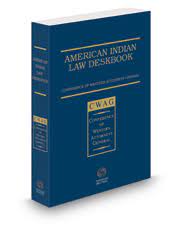
American Indian Law Deskbook |
|
Notice: 2022 Edition of the American Indian Law Deskbook is now available on Westlaw and in hard-copy and electronic formats.
Editions of the Deskbook are published annually by Thomson Reuters, and the 2022 Edition was issued during the week of May 23, 2021. It is available on Westlaw in the Secondary Sources/Texts & Treatises category, in hard copy, and in electronic format.
Please click the link below to order or reach out to Clay Smith at clay.smith@cwagweb.org with questions regarding obtaining a copy of the American Indian Law Deskbook.
|
|
Western Attorneys General Litigation Action Committee |
|
CWAG oversees and coordinates the Western Attorneys General Litigation Action Committee (WAGLAC), which consists of assistant attorneys general involved in litigation related to the environment, natural resources, public lands, and Indian law. WAGLAC was formed over 40 years ago and meets three times per year to discuss the latest developments in these areas of the law. AGO staff gain essential contacts throughout the country in these important areas of the law.
|
|
Contributions For WAGLAC Newsletter |
|
We rely on our readers to send us links for the WAGLAC Newsletter. If you have or know of a recent (published in the last two weeks) case, statute, or article relating to natural resources, environment, Indian law, or federalism that you would like us to consider for inclusion in the Newsletter, please do not hesitate to send it to Clive Strong at clive.strong@cwagweb.org.
|
|
For a complete database of all previously published WAGLAC newsletters, please click the Archive Button. |
|
|
Conference of Western Attorneys General
5050 Laguna Blvd | Suite 112-323 | Elk Grove, California 95758
|
|
|
|
|
|
|