News & Updates from WAGLAC
December 6, 2022
|
|
Attendees will receive CLE credit.
Attendance is limited to members of state attorneys general offices.
|
|
The 2023 Winter WAGLAC meeting will be held in mid-February in the Phoenix, AZ area. The 2023 Summer WAGLAC meeting will be held in conjunction with the AGA/CWAG annual meeting June 19th through June 22nd in Rancho Palos Verdes, California. The 2023 Fall WAGLAC meeting will be held in mid-October at a yet-to-be-identified location.
In addition to the roundtable discussion of natural resources, environmental, public lands, mining, energy, and Indian law matters there will be a half-day seminar during the Winter and Fall WAGLAC meetings.
|
|
Utah Leads Major Challenge to ESG Movement
“[Last] week, Utah Attorney General Sean D. Reyes led a coalition of 13 attorneys general by filing a motion to intervene, asking FERC (Federal Energy Regulatory Commission) to hold a hearing about Vanguard’s request for blanket authorization to buy significant amounts of shares of publicly listed utility companies. Attorney General Reyes is asking FERC for a hearing to examine Vanguard’s promises to FERC not to control utilities or impact electricity prices because those promises contradict Vanguard’s ESG (Environmental Social Governance) commitments to use its $8.5 trillion financial influence to pressure utility companies to eliminate fossil fuels.
‘Vanguard is speaking out of both sides of its mouth—telling FERC it is just a passive investor in utilities but at the same time committing to use its trillions to pressure companies away from fossil fuels,’ said Attorney General Reyes. ‘FERC should ensure that Vanguard’s activism will not lead to electricity price hikes and grid instability.’
FERC regularly reviews such applications, which it can either approve or deny. States say the hearing is necessary to determine whether electricity consumers and other ratepayers would be at risk of higher rates and reduced reliability of electricity supply if the purchases are approved.”
|
|
EPA closes in on veto of controversial Pebble Mine project
Zack Budryk
The Hill
December 2, 2022
“The proposed Pebble Mine seeks to extract ore from the Pebble deposit in the southwestern part of the state, the largest known undeveloped copper ore deposit in the world. It is also home to a salmon fishery that supplies half the world’s sockeye salmon, and opponents of the mine have warned the project would devastate the fishery.
‘If affirmed by EPA’s Office of Water during the fourth and final step, this action would help protect salmon fishery areas that support world-class commercial and recreational fisheries, and that have sustained Alaska Native communities for thousands of years, supporting a subsistence-based way of life for one of the last intact wild salmon-based cultures in the world,’ regional administrator Casey Sixkiller said in a statement recommending a veto.
Sixkiller’s recommendation is the penultimate step in the long, involved veto process. The recommendation will now go to the desk of Radhika Fox, the EPA’s assistant administrator for water, who has 60 days to either issue the veto, amend it or decline.”
|
|
A quiet bench on the Quiet Title Act: Justices hold muted debate on statute of limitations
Ronald Mann
SCOTUSblog
Dec 1, 2022
Last “Wednesday’s argument in Wilkins v. United States was a quiet one, with several of the justices saying so little that it is difficult to discern what they are thinking. Those who spoke extensively, however, seem ready to reject the government’s argument that the statute of limitations at issue here is a strict jurisdictional rule, as opposed to a ‘mere’ claims-processing rule, which could be waived in an appropriate case.
The dispute involves the Forest Service’s decision to permit general public use of a road near the Bitterroot National Forest in Montana. Larry Wilkins and his neighbor Gene Stanton (who live near the road) filed suit under the federal Quiet Title Act, arguing that general public use exceeds the terms of the easement that authorizes the road. Wilkins and the government fought in the lower courts over whether the suit, filed many years after the general public use began, was timely. The issue that came to the Supreme Court from that litigation is the one I mentioned above: whether the 12-year statute of limitations is a strict jurisdictional bar, which plainly would put Wilkins out of court, or instead a claims-processing rule, which would leave some opportunity for the trial court to excuse the tardy filing.”
|
|
Interior Department Takes Action to Reduce Methane Releases on Public and Tribal Lands
Date: Monday, November 28, 2022
Contact: Interior_Press@ios.doi.gov
“The Department of the Interior [last week] announced a proposed rule from the Bureau of Land Management (BLM) to address the waste of natural gas during the production of oil and gas on federal and Tribal lands. The proposed rule would generate $39.8 million a year in additional royalties for the American public and prevent billions of cubic feet of gas from being wasted through venting, flaring and leaks, boosting efficiency.”
|
|
Interior Department Strengthens Tribal Consultation Policies and Procedures
Date: Thursday, December 1, 2022
Contact: Interior_Press@ios.doi.gov
“The Department of the Interior today announced new policies and procedures to strengthen and fulfill the federal government’s responsibility to ensure regular and meaningful consultation with American Indian and Alaska Native Tribes, as well as a second policy for consultation with Alaska Native Claims Settlement Act (ANCSA) Corporations.
‘Tribes deserve a seat at the decision-making table before policies are made that impact their communities. Our ongoing efforts to evolve and strengthen consultation policies and procedures will ensure that Tribal Nations can engage at the highest levels of the federal government on the issues that matter most to their people,’ said Secretary Deb Haaland. ‘From climate resilience to clean energy investments, the Biden-Harris administration has made available unprecedented resources for Indian Country – but we can only maximize those investments by working directly with Tribes.’
“\’We must develop collaborative partnerships with Tribal nations so that we uphold our trust responsibilities and build consensus when developing policies that impact Tribes. These updated policies and procedures will further our work at the Department to protect and strengthen Tribal sovereignty,’ said Assistant Secretary for Indian Affairs Bryan Newland. “\’Consultation is the cornerstone of the political relationship between the United States and Tribal Nations as we work to revitalize the way of life for Indian people.’”
|
|
Department of Commerce to Join Interior, Agriculture in Commitment to Advancing Tribal Co-Stewardship of Public Lands and Waters
Date: Wednesday, November 30, 2022
Contact: Interior_Press@ios.doi.gov
“Last year, Secretary of the Interior Deb Haaland and Secretary of Agriculture Tom Vilsack signed Joint Secretary's Order 3403 (S.O. 3403) committing to Tribal and federal co-stewardship of federal lands, waters and wildlife, including through collaborative and cooperative agreements with Tribal Nations.” Last week the Department of Commerce announced that it would sign onto S.O. 3403. Commerce said that the “commitment furthers an all-of-government approach to co-stewardship and ensures that additional agencies — like the National Oceanic and Atmospheric Administration (NOAA) within Commerce — will further the administration’s co-stewardship goals in their management of waters, fisheries and other resources of significance and value to Tribes across multiple agencies.”
|
|
BIA PROPOSES RULES FOR TAKING LAND INTO TRUST FOR INDIANS
“The Bureau of Indian Affairs (BIA) seeks input on changes to its regulations governing the discretionary acquisition of land into trust for the benefit of tribal governments and individual Indians. Since these regulations were first promulgated in 1980, the BIA has developed extensive experience in the fee-to-trust acquisition process. Relying on that experience and input from tribal governments and individual Indians, this proposed rule seeks to make the land into trust process more efficient, simpler, and less expensive to support restoration of tribal homelands.”
87 Fed. Reg. 74334 – proposed revisions to 25 C.F.R. Part 151, the Bureau of Indian Affairs’ regulations for acquiring land in trust for Indians.
|
|
EPA Announces Proposal to Protect Tribal Reserved Rights in Water Quality Standards and Best Practices for Tribal Treaty and Reserved Rights
November 30, 2022
“[D]uring the 2022 White House Tribal Nations Summit, U.S. Environmental Protection Agency (EPA) Administrator Michael S. Regan announced a proposal to revise the federal water quality standards regulations to better protect Tribal rights under the Clean Water Act (CWA). With this action, EPA is working to ensure that state and federal water quality standards will protect tribal rights such as the right to fish or gather aquatic plants—that are reserved through treaties, statutes, executive orders, or other sources of federal law.
‘We know that our shared goal of protecting water resources for Tribes is strongest – and most effective – when it’s informed by the lived experiences of those impacted by pollution,’ said EPA Administrator Michael S. Regan. ’By explicitly recognizing Tribal reserved rights in water quality standards, this proposal will help EPA ensure Tribal aquatic resources are abundant and safe to consume and reaffirms the Biden-Harris Administration’s commitment to our Nation-to-Nation partnership.’”
|
|
BIDEN-HARRIS ADMINISTRATION ANNOUNCES NEW ACTIONS TO SUPPORT INDIAN COUNTRY AND NATIVE COMMUNITIES
"Last week, President Biden hosted “the second Tribal Nations Summit of his Administration to help foster Nation-to-Nation relationships and provide Tribal leaders with an opportunity to engage directly with senior Administration officials. Since taking office, President Biden has prioritized relationships with Tribal Nations that are built on respect for Tribal sovereignty and self-governance, honoring federal trust and treaty responsibilities, protecting Tribal homelands, and conducting regular, meaningful, and robust consultation. The President has also advanced an economic agenda that includes historic levels of funding specifically for Tribal communities and Native people, including $32 billion in the American Rescue Plan (ARP), $13 billion in the Bipartisan Infrastructure Law (BIL), and $700 million in the Inflation Reduction Act (IRA).”
|
|
Officials fear ‘complete doomsday scenario’ for drought-stricken Colorado River
Joshua Partlow
Washington Post
December 1, 2022
“The first sign of serious trouble for the drought-stricken American Southwest could be a whirlpool.
It could happen if the surface of Lake Powell, a man-made reservoir along the Colorado River that’s already a quarter of its former size, drops another 38 feet down the concrete face of the 710-foot Glen Canyon Dam here. At that point, the surface would be approaching the tops of eight underwater openings that allow river water to pass through the hydroelectric dam.
The normally placid Lake Powell, the nation’s second-largest reservoir, could suddenly transform into something resembling a funnel, with water circling the openings, the dam’s operators say.
If that happens, the massive turbines that generate electricity for 4.5 million people would have to shut down — after nearly 60 years of use — or risk destruction from air bubbles. The only outlet for Colorado River water from the dam would then be a set of smaller, deeper and rarely used bypass tubes with a far more limited ability to pass water downstream to the Grand Canyon and the cities and farms in Arizona, Nevada and California.
Such an outcome — known as a “minimum power pool” — was once unfathomable here. Now, the federal government projects that day could come as soon as July.
Worse, officials warn, is the remote possibility of an even more catastrophic event. That is if the water level falls all the way to the lowest holes, so only small amounts could pass through the dam. Such a scenario — called “dead pool” — would transform Glen Canyon Dam from something that regulates an artery of national importance into a hulking concrete plug corking the Colorado River.”
|
|
All summaries are posted in CWAG's google docs account, accessible through the link below. Should you have any issues with the links, contact Patricia Salazar at psalazar@agalliance.org with any questions.
|
|
Esquivel v. Fresno County Department of Social Services, ___ F. Supp. 3d ___, 2022 WL 17343869 (E.D. Cal. Nov. 30, 2022): Mother’s federal court challenge to a county department’s failure to investigate adequately “Indian child” status in parental termination proceeding was dismissed on subject-matter jurisdiction grounds because she lacked Article III standing given the absence of any factual support for such status.
|
|
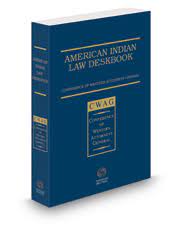
American Indian Law Deskbook |
|
Notice: 2022 Edition of the American Indian Law Deskbook is now available on Westlaw and in hard-copy and electronic formats.
Editions of the Deskbook are published annually by Thomson Reuters, and the 2022 Edition was issued during the week of May 23, 2021. It is available on Westlaw in the Secondary Sources/Texts & Treatises category, in hard copy, and in electronic format.
Please click the link below to order or reach out to Clay Smith at clay.smith@cwagweb.org with questions regarding obtaining a copy of the American Indian Law Deskbook.
|
|
Western Attorneys General Litigation Action Committee |
|
CWAG oversees and coordinates the Western Attorneys General Litigation Action Committee (WAGLAC), which consists of assistant attorneys general involved in litigation related to the environment, natural resources, public lands, and Indian law. WAGLAC was formed over 40 years ago and meets three times per year to discuss the latest developments in these areas of the law. AGO staff gain essential contacts throughout the country in these important areas of the law.
|
|
Contributions For WAGLAC Newsletter |
|
We rely on our readers to send us links for the WAGLAC Newsletter. If you have or know of a recent (published in the last two weeks) case, statute, or article relating to natural resources, environment, Indian law, or federalism that you would like us to consider for inclusion in the Newsletter, please do not hesitate to send it to Clive Strong at clive.strong@cwagweb.org.
|
|
For a complete database of all previously published WAGLAC newsletters, please click the Archive Button. |
|
|
Conference of Western Attorneys General
5050 Laguna Blvd | Suite 112-323 | Elk Grove, California 95758
|
|
|
|
|
|
|