News & Updates from WAGLAC
February 22, 2023
|
|
The 2023 Winter WAGLAC meeting will be held at the La Posada de Santa Fe in Santa Fe, New Mexico on February 22nd and 23rd. The legal seminar will cover Texas v. New Mexico, Gold King, and PFAS litigation.
*There is a virtual option to participate. Please make sure to RSVP and specify that you will be attending virtually. RSVP to pstiles@agalliance.org to register!
The 2023 Summer WAGLAC meeting will be held in conjunction with the AGA/CWAG annual meeting on June 20th in Rancho Palos Verdes, California.
In addition to the roundtable discussion of natural resources, environmental, public lands, mining, energy, and Indian law matters there will be a half-day seminar during the Winter and Fall WAGLAC meetings.
|
|
Biden E.P.A. Reinstates Mercury Limits Weakened Under Trump
Coral Davenport
NY Times
February 17, 2023
“The Biden administration [last] Friday restored the legal foundation of an Obama-era regulation governing mercury, a pollutant from power plants that can damage brain development in babies and cause heart disease in adults.
The regulation had been stripped away by the Trump administration. Its revival paves the way for the federal government to set even stricter controls on mercury emissions, something the Environmental Protection Agency under President Biden is expected to do.
‘For years, mercury and air toxics standards have protected the health of American communities nationwide, especially children, low-income communities, and communities of color who often and unjustly live near power plants,” E.P.A. Administrator Michael S. Regan said. “This finding ensures the continuation of these critical, lifesaving protections while advancing President Biden’s commitment to making science-based decisions and protecting the health and well-being of all people and all communities.’”
|
|
EPA Proposes Rule to Protect Farmworkers and Pesticide Handlers from Exposures
On February 16, 2023, “the U.S. Environmental Protection Agency (EPA) announced a proposed rule that would improve and modernize the pesticide Application Exclusion Zone (AEZ) requirements under the 2015 Agricultural Worker Protection Standard (WPS), reaffirming the Agency’s commitment to protecting farmworkers, pesticide handlers, their families, and agricultural communities from pesticide exposure during National Pesticide Safety Education Month.”
|
|
BIDEN SIGNS EXECUTIVE ORDER TO ADDRESS RACIAL INEQUITY
Cheyanne M. Daniels
The Hill
February 16, 2023
President Bident signed a new executive order on racial equity on February 16, 2023. “The order is Biden’s second racial equity executive order.
On his first day in office two years ago, Biden signed Executive Order 13985, which saw funding go to places like Historically Black Colleges and Universities and Indigenous tribes and new programs to help close racial disparities in job and housing opportunities. Biden also pardoned all federal offenses of simple possession of marijuana in October last year, which many said was a step toward racial equity.
Despite these successes, Biden said in a statement, ‘members of underserved communities — many of whom have endured generations of discrimination and disinvestment — still confront significant barriers to realizing the full promise of our great Nation, and the Federal Government has a responsibility to remove these barriers.’
Biden’s new order builds on Executive Order 13985 by establishing a new annual process requiring agencies to create an annual public Equity Action Plan.”
|
|
Red states bet on the 5th Circuit to take down Biden agenda
Pamela King, Nina H. Farah, Lesley Clark
February 15, 2023
“When Republican-led states seek to block President Joe Biden’s environmental policies, there is one court they turn to more often than any other.
Nearly half of all multistate lawsuits against the Biden administration have been filed in federal district courts that feed cases to the 5th U.S. Circuit Court of Appeals — a bench where three-quarters of the active judges were tapped by Republican presidents, and half of those GOP nominees arrived at the court under former President Donald Trump.
‘Republican attorneys general, when they can, have tried to get into the 5th Circuit for two reasons,’ said Paul Nolette, associate professor, and chair in the political science department at Marquette University, who tracks multistate challenges. ‘There’s a lot of Republican judges, and the judges are much more — for lack of a better term — activist.’
According to data compiled by Nolette, 43 percent of multistate lawsuits from Republican attorneys general against the Biden administration have originated in federal district courts under the purview of the 5th Circuit, which covers just three states: Texas, Louisiana, and Mississippi. During the Obama years, most multistate challenges came up through the U.S. Court of Appeals for the District of Columbia Circuit, which by law has the first bite at Clean Air Act disputes.”
|
|
Attorneys General Bonta and James Lead Multistate Coalition in Support of EPA Supplemental Proposal to Regulate Methane Emissions from the Oil and Natural Gas Sector
“California Attorney General Rob Bonta and New York Attorney General Letitia James led a multistate coalition in submitting comments in support of the Environmental Protection Agency’s (EPA) supplemental proposal to strengthen regulation of emissions from new, modified, and reconstructed facilities in the oil and natural gas sector, and to, for the first time, regulate methane emissions from existing facilities, which comprise the majority of the emissions in this sector. The EPA estimates that the proposed supplemental proposal will reduce emissions of methane by 36 million tons, volatile organic compounds (VOCs) by 9.7 million tons, and hazardous air pollutants by 390,000 tons between 2023 and 2035. In the comments, the coalition supports EPA’s supplemental proposal, which updates, strengthens, and expands standards proposed in November 2021, and the coalition identifies additional ways to further strengthen the supplemental proposal.”
|
|
California Attorney General Rob Bonta, Massachusetts Attorney General Andrea Campbell and District of Columbia Attorney General Brian Schwalb co-led a 21-state coalition supporting proposed regulations by the US Department of Defense, the General Services Administration and the National Aeronautics and Space Administration to require "certain Federal contractors disclose their greenhouse gas emissions and climate-related financial risk and set science-based targets to reduce their greenhouse gas emissions." |
|
West Virginia Attorney General Patrick Morrisey and Kentucky Attorney General Daniel Cameron co-led a 22-state coalition opposing proposed regulations by the US Department of Defense, the General Services Administration and the National Aeronautics and Space Administration to require "certain Federal contractors disclose their greenhouse gas emissions and climate-related financial risk and set science-based targets to reduce their greenhouse gas emissions." |
|
|
|
Attorney General Cameron Co-leads 22 States in Opposing Biden Administration’s Latest Regulation of Greenhouse Gas Emissions
Attorney General Daniel Cameron “joined West Virginia Attorney General Patrick Morrisey and a coalition of 22 states in a letter opposing the Biden Administration’s proposed amendment of the Federal Acquisition Regulation administered by the Federal Acquisition Regulatory Council (FARC). The modified regulation would require certain federal contractors to disclose their greenhouse gas emissions and to set targets to reduce them. The attorneys general argue this regulation will have devastating effects on the economies of states dependent on fossil fuels."
|
|
|
|
Arizona Attorney General Kris Mayes announced that Arizona would stop participating in investigations into major American banks and other financial institutions over Environmental Social Governance (ESG) practices related to investing. |
|
|
|
Utah Attorney General Sean Reyes led a coalition of 27 attorneys general who wrote a letter to congressional leaders asking them to "exercise Congressional Review Act authority to stop Environmental Social Governance (ESG) investing with Americans’ retirement savings." |
|
TWENTY-FOUR STATES FILE COMPLAINT CHALLENGING EPA’S PROPOSED WOTUS RULE
West Virginia, North Dakota, Georgia, Iowa, Alabama, Alaska, Arkansas, Florida, Indiana, Kansas, Louisiana, Mississippi, Missouri, Montana, Nebraska, New Hampshire, Ohio, Oklahoma, South Caroline, South Dakota, Tennessee, Utah, Wyoming, and Virginia filed a complaint in the Eastern Division of the United States District Court for the District of North Dakota challenging EPA’s proposed Waters of the United States (WOTUS) Rule on February 16, 2023. As reported in the January 24, 2023, WAGLAC Newsletter, Texas Attorney General Ken Paxton filed a complaint challenging the WOTUS rule in the United States District Court of Texas Galveston Division on January 18, 2023. Texas filed a preliminary injunction motion to enjoin enforcement of the Rule on February 7, 2023. See, February 14th WAGLAC Newsletter.
|
|
HOUSE COMMITTEE HOLDS HEARING ON WOTUS
Western States Water Council
Special Report Issue No. 2544
February 17, 2023
“On February 8, the House Transportation and Infrastructure Subcommittee on Water Resources and Environment held a hearing on stakeholder perspectives of the 2023 Waters of the United States (WOTUS) rule. Witnesses included: Alicia Huey, National Association of Home Builders; Garrett Hawkins, Missouri Farm Bureau; Mark Williams, National Stone, Sand & Gravel Association; Susan Parker Bodine, Earth & Water Law; and Dave Owen, UC College of the Law, San Francisco.” The Western States Water Council Special Report summarizes the testimony.
|
|
New USFWS Rule Would Allow Flexibility in Managing Colorado Wolves
Pagosa Daily Post
February 16, 2023
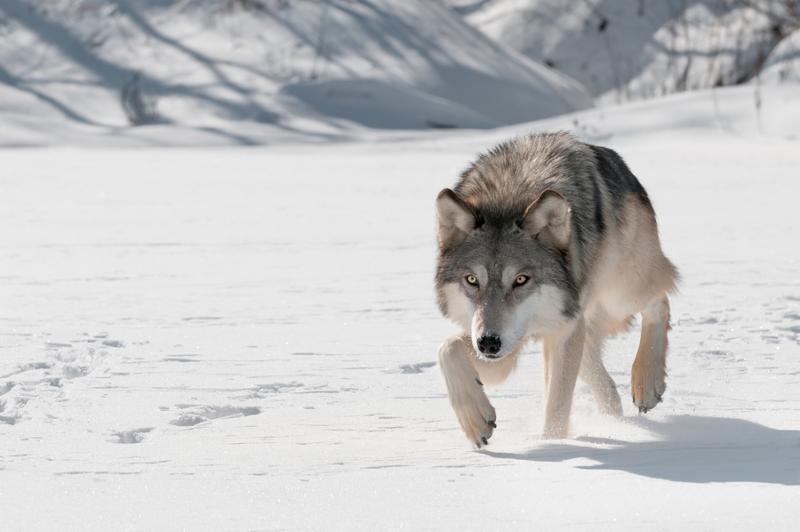
“U.S. Senator John Hickenlooper announced that the U.S. Fish and Wildlife Service (USFWS) honored his request for a special Endangered Species Act designation for gray wolves in Colorado. This rule would allow landowners, agriculture producers and state land managers more flexibility to properly manage wolves, protecting livestock and domestic animals.
In 2021, the Senator sent a letter to Interior Secretary Deb Haaland and USFWS Principal Deputy Director Martha Williams requesting a Section 10 designation to improve state and stakeholder management capabilities.
As the result of a Colorado voter-led initiative passed in November 2020, the U.S. Fish and Wildlife Service is proposing a rule to establish an experimental population of gray wolves in Colorado under section 10(j) of the Endangered Species Act (ESA) in support of the state of Colorado’s voter-mandated gray wolf reintroduction program. The proposed rule is now available for public review and is intended to accommodate the state of Colorado’s gray wolf reintroduction planned for late 2023."
|
|
|
|
Montana, oil groups challenge Portland's fossil fuel terminal ban
Clark Mindock
Reuters
February 15, 2023
“The state of Montana and regional fossil fuel industry groups [] sued Portland, Oregon, over its ban on building new bulk fossil fuel storage facilities, arguing the city’s prohibition is discriminatory and will cause costly fuel shortages.
The lawsuit, filed in Portland federal court . . . seeks to stop the city from enforcing policies the plaintiffs, including the Western Energy Alliance, the claim will stymie critical fuel shipping operations in the fourth largest port on the West Coast.”
|
|
Comment Deadline for Comments on Trust Land Rules Approaches
CWAG continues to get inquiries regarding state plans to comment on the BIA’s proposed rules seeking to make it easier to place land into trust for tribes. Among many proposed changes, the rules would require decisions on tribal applications within 120 days of submission, add an expansive list of policy reasons that would support proposed acquisitions, establish several presumptions in favor of acquisitions, and abandon the current requirement that greater scrutiny be applied to the tribe’s justification of anticipated benefits as the distance from a tribe’s reservation increases. Comments must be submitted on or before March 1, 2023. The proposed rules, and comments submitted to date, can be viewed at the link on the button below.
|
|
Biden-Harris Administration Delivers $728 Million in Historic Investments to Address Western Drought, Improve Climate Resilience
Department of Interior
February 13, 2023
“As part of the Biden-Harris administration’s commitment to enhance the resilience of the West to drought and climate change, the Department of the Interior today announced a $728 million investment to deliver clean, reliable drinking water to rural and Tribal communities, support water conservation in the Upper Colorado River Basin, and complete projects to improve water supply reliability. This historic funding from President Biden’s Bipartisan Infrastructure Law, the Inflation Reduction Act, and the Consolidated Appropriations Act of 2023 supplements unprecedented investments to protect the stability and sustainability of the Colorado River System now and into the future.
Funded by the Bipartisan Infrastructure Law, seven authorized rural water projects under construction in Iowa, Minnesota, Montana, New Mexico, North Dakota, and South Dakota will receive $278 million. These investments build on the allocation of $420 million for rural water construction activities in fiscal year 2022. The funding is helping projects complete construction of water treatment plants and intakes, supporting work related to pipeline connections, pump systems, and reservoir construction, and advancing other efforts to provide potable water to rural and Tribal communities.
The Bureau of Reclamation is also making available up to $125 million to support the relaunch of a System Conservation Pilot Program in the Upper Colorado River Basin. The renewed program – funded with an initial allocation through the Inflation Reduction Act – will help support water management and conservation efforts to improve water efficiency and ultimately protect the short-term sustainability of the Colorado River System.”
|
|
The Annual CWAG Indian Law webinar
on the West LegalEdcenter
Wednesday, February 22, 2023
11:00 am - 12:30 pm CST
Program Title: McGirt v. Castro-Huerta: Indian Law and Originalism
Program Description: The program will address the opinions in McGirt v. Oklahoma, 140 S. Ct. 2452 (2020) and Oklahoma v. Castro-Huerta, 142 S. Ct. 2486 (2022). The majority and dissenting positions in Castro-Huerta capture the difference that exists between those who advocate what they perceive as the clear-cut territorial sovereignty reflected in the Marshall Trilogy (i.e., the dissenters) and those (i.e., the majority) who see the Indian tribes as a unique, but non-constitutionally-grounded, set of sovereigns whose territorial authority has been reduced over time by Congress and federal common law to individuals with an ancestrally-based political connection (with certain congressional exceptions to the contrary as reflected in United States v. Lara, 541 U.S. 193 (2004) and Violence Against Women Act Reauthorization Act amendments). The former likely see much federal common law limiting inherent tribal authority as incompatible with the Trilogy; the latter see the Trilogy as a doctrinal starting but not ending point.
Mithun Mansinghani (Speaker)
Partner | Lehostsky Kellter | Former Solicitor General | State of Oklahoma
Jennifer Weddle (Speaker)
Partner |Greenberg Trauing, LLP
Delilah Tenorio (Moderator)
Senior Assistant Attorney General and Missing and Indigenous Persons Liaison | New Mexico Attorney General's Office
Date and Time for Live Broadcast:
February 22, 2023, 11:00 am CST to 12:30 pm CST.
The program will also be available for replay as part of the
West LegalEdcenter library.
|
|
All summaries are posted in CWAG's google docs account, accessible through the link below. Should you have any issues with the links, contact Patricia Salazar at psalazar@agalliance.org with any questions.
|
|
No new summaries this week. Look out for new summaries next week! |
|
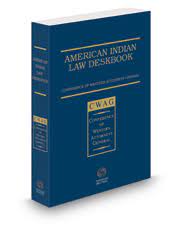
American Indian Law Deskbook |
|
Notice: 2022 Edition of the American Indian Law Deskbook is now available on Westlaw and in hard-copy and electronic formats.
Editions of the Deskbook are published annually by Thomson Reuters, and the 2022 Edition was issued during the week of May 23, 2021. It is available on Westlaw in the Secondary Sources/Texts & Treatises category, in hard copy, and in electronic format.
Please click the link below to order or reach out to Steven Strack at sstrack@agalliance.org with questions regarding obtaining a copy of the American Indian Law Deskbook.
|
|
Western Attorneys General Litigation Action Committee |
|
CWAG oversees and coordinates the Western Attorneys General Litigation Action Committee (WAGLAC), which consists of assistant attorneys general involved in litigation related to the environment, natural resources, public lands, and Indian law. WAGLAC was formed over 40 years ago and meets three times per year to discuss the latest developments in these areas of the law. AGO staff gain essential contacts throughout the country in these important areas of the law.
|
|
Contributions For WAGLAC Newsletter |
|
We rely on our readers to send us links for the WAGLAC Newsletter. If you have or know of a recent (published in the last two weeks) case, statute, or article relating to natural resources, environment, Indian law, or federalism that you would like us to consider for inclusion in the Newsletter, please do not hesitate to send it to Clive Strong at clive.strong@cwagweb.org.
|
|
For a complete database of all previously published WAGLAC newsletters, please click the Archive Button. |
|
|
Conference of Western Attorneys General
5050 Laguna Blvd | Suite 112-323 | Elk Grove, California 95758
|
|
|
|
|
|
|