News & Updates from WAGLAC
February 28, 2023
|
|
The 2023 Summer WAGLAC meeting will be held in conjunction with the AGA/CWAG annual meeting on June 20th in Rancho Palos Verdes, California.
In addition to the roundtable discussion of natural resources, environmental, public lands, mining, energy, and Indian law matters there will be a half-day seminar during the Fall WAGLAC meeting.
|
|
North Carolina can’t ban undercover filming inside animal farms
Rachel Weiner
Washington Post
February 23, 2023
“A North Carolina law aimed at stopping investigations by animal rights activists violates constitutional free speech protections, an appellate court ruled Thursday.
The 2015 law bars employees from going into 'nonpublic areas of an employer’s premises' for reasons unrelated to work and gathering documents or making recordings that “breach the person’s duty of loyalty to the employer.”
It was one of a wave of laws passed across the country in response to undercover exposés of the mistreatment of animals on large factory farms.”
|
|
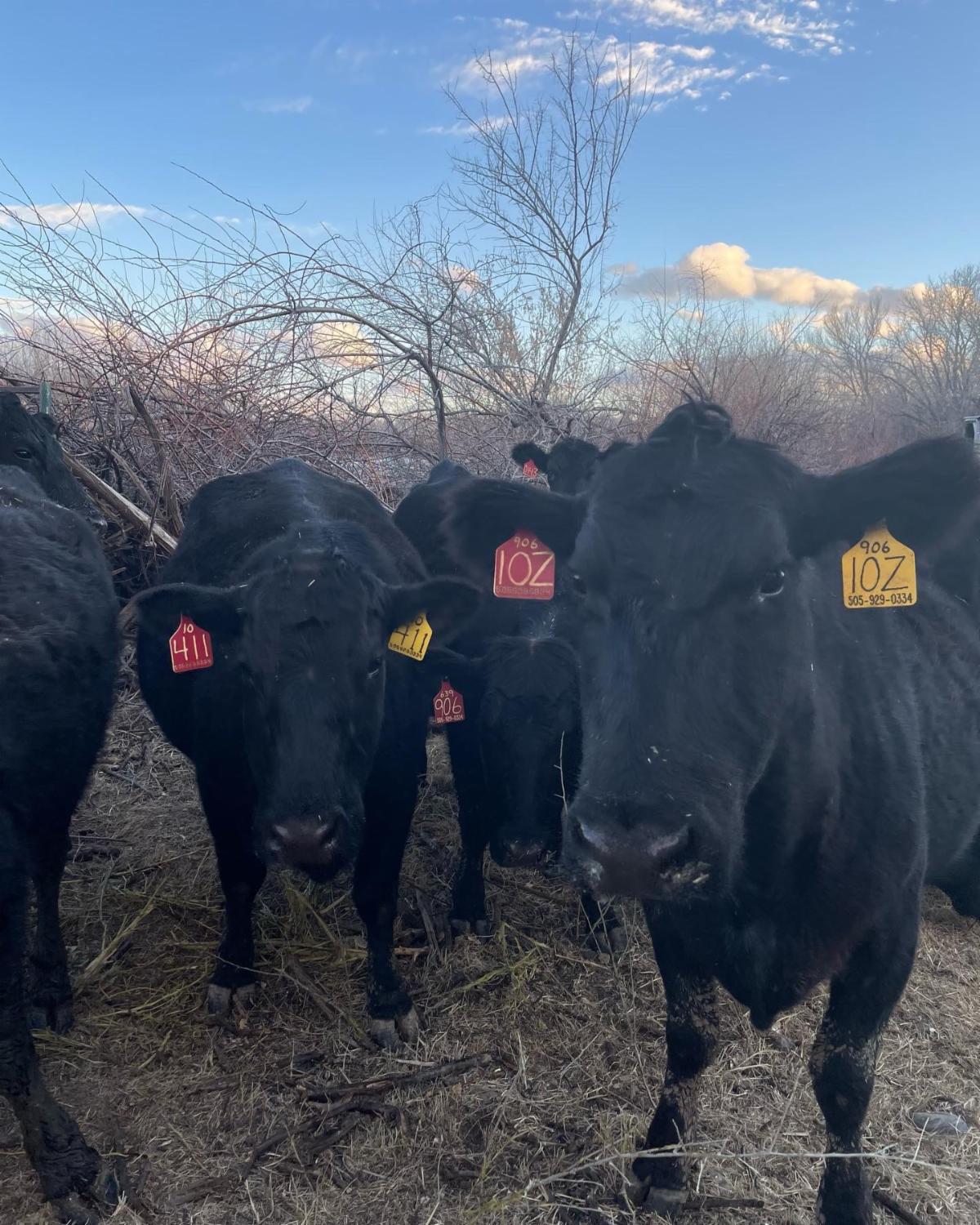
Feral Cattle in New Mexico Will Be Shot From Helicopters
Christine Chung
NY Times
February 22, 2023
“For the second year in a row, shooters in helicopters will gun down an estimated 150 feral cattle that are trampling habitats in the Gila Wilderness, a sprawling undeveloped area of more than a half million acres within the Gila National Forest in New Mexico.
The aerial shooting is scheduled to begin on Thursday and continue through Sunday, the U.S. Forest Service said in a statement. The plan is being carried out in conjunction with the Agriculture Department and the Animal and Plant Health Inspection Service’s Wildlife Services program.
. . . .
Lethal removal of cattle in the Gila Wilderness has long been a divisive issue, with environmentalists and ranchers firmly at odds.
Cattle growers in New Mexico have unsuccessfully sued the Forest Service over the aerial shooting, claiming that the method imperils their privately owned cattle. The New Mexico Cattle Growers’ Association, a coalition of more than 1,000 ranchers, has previously challenged the Forest Service over cattle removal and maintains that shooting cattle from a helicopter violates state and federal laws and regulations.”
Last Wednesday, the U.S. Federal District Court for New Mexico denied the Cattle Growers’ motion for a preliminary injunction.
|
|
CERT PETITION SEEKS S.CT. REVIEW OF CWA BAR AGAINST CITIZEN SUIT
The question presented in the Dakota Finance LLC v. Naturaland Trust petition for certiorari is the proper test for determining whether the “diligent prosecution bar” under 33 U.S.C. § 1319(g)(6)(A)(ii) precludes citizen suits brought under 33 U.S.C. § 1365(a).
Ken and Sharon Smith cleared twenty acres of land near two streams and a river tributary in South Carolina for a private venue known as Arabella Farm. South Carolina regulators issued a cease-and-desist order followed by notice of possible violation of the Clean Water Act (CWA) to Arabella Farms. After South Carolina issued the notice, Naturaland Trust and Trout Unlimited sued Arabella Farms in federal court under the citizen-suit provision. A month after the filing of suit, South Carolina imposed a fine on Arabella Farms, ordered it to submit plans to remedy the environmental damage and obtain a permit for future work.
The South Carolina Federal District Court dismissed the Naturaland Trust complaint, but the U.S. Court of Appeals for the Fourth Circuit reinstated the complaint. The petition asserts that the lawsuit should be barred by the diligent prosecution bar under 33 U.S.C. § 1319(g)(6)(A)(ii) because South Carolina is diligently prosecuting an administrative penalty action “under a State law comparable to” the CWA’s administrative penalty provisions.
|
|
EPA Releases Proposed Approach for Considering Cumulative Risks under TSCA
“[T]he U.S. Environmental Protection Agency (EPA) released for public comment and peer review a set of principles for evaluating cumulative risks under the Toxic Substances Control Act (TSCA) and an approach for applying those principles to the evaluation of the cumulative risk posed by certain phthalate chemicals undergoing TSCA section 6 risk evaluation. This is an important step in the process of EPA developing the capability under TSCA to examine risk to people from exposure to multiple chemicals with similar effects.
Until now, EPA has generally approached TSCA risk assessments by looking at the risk posed by a single chemical. However, in many cases people are exposed to multiple chemicals with similar effects at the same time. In some of these cases, EPA believes that the best approach to evaluate risk to human health may be to look at the combined risk to health from these chemicals. This cumulative risk assessment approach can help more appropriately evaluate risks people face and may be helpful in more effectively mitigating the identified unreasonable risks. Evaluating cumulative chemical risks may also provide particularly useful information for communities that are overburdened by chemical pollution. Ultimately, cumulative risk assessment will help EPA better understand and address risks from chemicals as required by the law.”
|
|
ALL THINGS WOTUS
The Supreme Court will issue an opinion this term in Sackett v. EPA that is expected to address the meaning of the phrase “waters of the United States” (WOTUS) in the Clean Water Act (CWA). Meanwhile, three lawsuits are pending in federal district courts in Kentucky, North Dakota, and Texas challenging EPA’s 2022 proposed rule defining WOTUS. The challenges assert that the proposed rule contravenes the plain text of the CWA, and violates the Administrative Procedure Act and the United States Constitution. To add to the confusion the United States Ninth Circuit Court of Appeals issued a decision last week reinstating the Trump Administration’s WOTUS Rule.
The meaning of WOTUS has been an ongoing source of conflict since the Obama Administration sought to redefine the meaning of WOTUS.
The Obama rule faced 13 separate district court challenges. After the 50th anniversary of the enactment of the CWA, the question is whether the current round of litigation will put at rest the meaning of WOTUS?
|
|
All summaries are posted in CWAG's google docs account, accessible through the link below. Should you have any issues with the links, contact Patricia Salazar at psalazar@agalliance.org with any questions.
|
|
Running Bird v. Mertens-Jones, ___F. Supp. 3d ___, 2023 WL 1785572 (D. S.D. Feb. 2, 2023). Court denied claims of imprisoned member of Native American Church for monetary damages under the Religious Land Use and Institutionalized Persons Act. (RLUIPA) and 42 U.S.C. § 1983, after being allowed to hold family pow rows in small visitor room, but not in larger gym or recreation yard; court allowed certain claims for injunctive relief under RLUIPA, equal protection clause, and free exercise clause, to proceed.
Custard v. Farris, ___ F. Supp. 3d ___, 2023 WL 1530742 (W.D. Okla., Feb. 3, 2023). The fact that habeas petitioner convicted of major crime in state court could not have understood the legal significance of his tribal status until the Supreme Court’s decision in McGirt v. Oklahoma, 140 S. Ct. 2452 (2020), did not avoid the one-year filing limitation in the Antiterrorism and Effective Death Penalty Act (AEDPA).
U.S. v. Harper, ___ F. Supp. 3d ___. 2023 WL 1765537 (N.D. Okla., Feb. 3, 2023). On motion for reconsideration, the court affirmed the Tulsa Police Department acted in good faith in pursuing, obtaining, and executing an arrest warrant for Defendant when faced with conflicting evidence as to whether Defendant may be Indian for the purposes of federal criminal jurisdiction.
Bartell Ranch v. McCullough, ___ F. Supp. 3d ___, 2023 WL 1782343 (D. Nev., Feb. 6, 2023). The Bureau of Land Management, in issuing ROD approving proposed lithium mine on public lands, was not required to initiate National Historic Preservation Act consultations with Tribes that had previously indicated that they did not wish to be consulted on projects being considered in area of the proposed mine, and BLM’s National Environmental Policy Act analysis adequately addressed the project's impacts on cultural and historical resources.
|
|
Trinity River that allowed
fine-tuning of daily release schedules by management council of which Tribe was member, was not entitled to veto of changes in daily flows, and was not entitled to preliminary injunction when such changes were made over its objection.
Duwamish Tribe v. Haaland, ___ F. Supp. 3d ___, 2023 WL 1864243 (W.D. Wash., Feb. 9, 2023). In a challenge to the Department of Interior’s decision declining to recognize the Duwamish Tribe, the Department’s decision was remanded with instructions to include in the administrative record documents relating to its contemporaneous decisions on 15 similar petitions for recognition.
U.S. v. Torres, ___ F. Supp.. 3d ___, 2023 WL 1993883 (D. N.M., Feb. 13, 2023). The Assimilative Crimes Act (ACA) prohibits the Government from charging Defendant with second-degree felony murder for crime occurring in Indian country by reference to New Mexico's abuse of a child statute.
In re Jayden G., ___ Cal. App. ___, __ Cal Rptr. 3d ___, 2023 WL 198030 (2d Dist., Feb. 14, 2023). In proceeding to terminate mother’s parental rights, the Los Angeles Department of Children and Family Services (DCFS), while having received mother’s denial of Indian ancestry, nonetheless erred in determining that the Indian Child Welfare Act (ICWA) did not apply without inquiring of available family members for whom it had contact information.
D.S. v. Superior Ct. of San Bernardino Cnty., ___ Cal Rptr. 3d ___ (4th Dist. Ct. App., Feb. 15, 2023). County Department of Children and Family Services (CFS) had a duty to inquire of adoptive mother’s relatives whether they had any knowledge of child’s potential Indian status, despite all members of mother’s extended family being related to child through adoption, not biologically.
In re A.A., ___ Cal.Rptr.3d ___, 2023 WL 2034046 (4th Dist Ct. App. Feb. 17, 2023).
|
|
In termination of parental rights proceeding, the juvenile court properly ruled that ICWA did not apply after receiving determination from Pueblo that the childrens’ blood quantum was too low to qualify them for tribal membership.
Pakootas v. Teck Cominco Metals, Ltd., ___ F. Supp. 3d ___, 2023 WL 2090977 (E.D. Wash., Feb. 17, 2023). Plaintiff Tribe’s claims for natural resource damages under CERCLA were ripe despite fact that the EPA had not yet selected a remedial action, because the two pre-conditions for citizen suits under CERCLA, 60 day notice and selection of a remedial action, were disjunctive, and Tribe had met notice requirement.
Maverick Gaming. LLC v. U.S., ___ F. Supp. 3d ___, 2023 WL 2138477 (W.D. Wash., Feb 21, 2023). Private gaming company could not bring an action to invalidate Secretary of the Interior’s approval of compact amendment incorporating Washington statute limiting sports betting to tribal casinos in the absence of the Shoalwater Tribe, a necessary party which could not be joined due to its sovereign immunity.
Bessios v. Pueblo of Pojoaque, ___ F. Supp. 3d ___, 2023 WL 2157699 (D. N.M., Feb. 22, 2023). Federal question jurisdiction existed when tribal casino employee allegedly fired for raising questions regarding discrepancies in casino’s data-keeping would, in order to prevail on state-law tort claims, be required to prove that the casino’s conduct violated the terms of IGRA and the applicable state-tribal compact.
Miranda T. v. Alaska, Dept. of Health and Social Services, ___ P.3d ___. 2023 WL 2196695 (Alaska, Feb. 23, 2023). The Office of Child Services, despite failing for two years to secure placement in a facility that would provide the care needed for successful reunification of child and adoptive mother, ultimately complied with ICWA’s requirement that reunification efforts must be “affirmative, active, thorough, and timely,” by securing treatment for the child in an appropriate facility.
|
|
American Indian Law Deskbook |
|
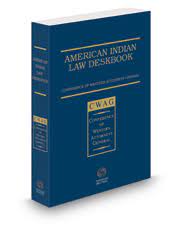
Notice: 2022 Edition of the American Indian Law Deskbook is now available on Westlaw and in hard-copy and electronic formats.
Editions of the Deskbook are published annually by Thomson Reuters, and the 2022 Edition was issued during the week of May 23, 2021. It is available on Westlaw in the Secondary Sources/Texts & Treatises category, in hard copy, and in electronic format.
Please click the link below to order or reach out to Steven Strack at sstrack@agalliance.org with questions regarding obtaining a copy of the American Indian Law Deskbook.
|
|
Western Attorneys General Litigation Action Committee |
|
CWAG oversees and coordinates the Western Attorneys General Litigation Action Committee (WAGLAC), which consists of assistant attorneys general involved in litigation related to the environment, natural resources, public lands, and Indian law. WAGLAC was formed over 40 years ago and meets three times per year to discuss the latest developments in these areas of the law. AGO staff gain essential contacts throughout the country in these important areas of the law.
|
|
Contributions For WAGLAC Newsletter |
|
We rely on our readers to send us links for the WAGLAC Newsletter. If you have or know of a recent (published in the last two weeks) case, statute, or article relating to natural resources, environment, Indian law, or federalism that you would like us to consider for inclusion in the Newsletter, please do not hesitate to send it to Clive Strong at clive.strong@cwagweb.org.
|
|
For a complete database of all previously published WAGLAC newsletters, please click the Archive Button. |
|
|
Conference of Western Attorneys General
5050 Laguna Blvd | Suite 112-323 | Elk Grove, California 95758
|
|
|
|
|
|
|