News & Updates from WAGLAC
January 11, 2023
|
|
The 2023 Winter WAGLAC meeting will be held at the La Posada de Santa Fe in Santa Fe, New Mexico on February 22nd and 23rd. A Winter Meeting Announcement with more details will be sent out later this week.
The 2023 Summer WAGLAC meeting will be held in conjunction with the AGA/CWAG annual meeting on June 20th in Rancho Palos Verdes, California.
The 2023 Fall WAGLAC Fall meeting will be held in mid-October in Phoenix, AZ.
In addition to the roundtable discussion of natural resources, environmental, public lands, mining, energy, and Indian law matters there will be a half-day seminar during the Winter and Fall WAGLAC meetings.
|
|
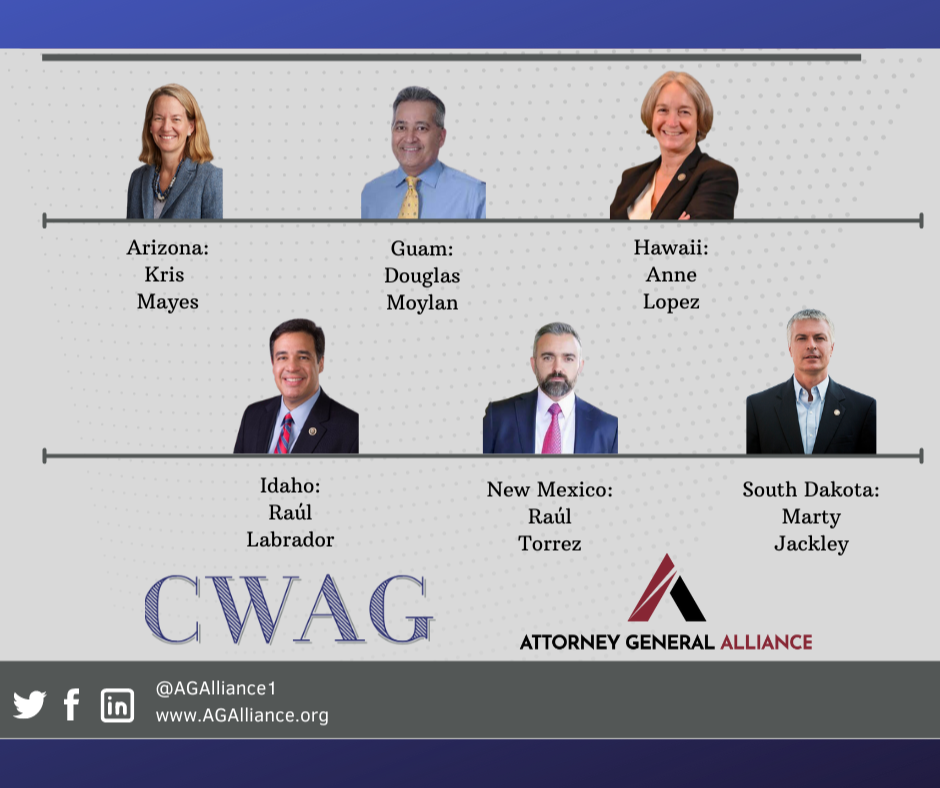
WELCOME TO THE NEW CWAG ATTORNEYS GENERAL |
|
EPA and Army Finalize Rule Establishing Definition of WOTUS and Restoring Fundamental Water Protections
December 30, 2022
Contact Information
“The U.S. Environmental Protection Agency (EPA) and the U.S. Department of the Army (the agencies) announced a final rule establishing a durable definition of ‘waters of the United States’ (WOTUS) to reduce uncertainty from changing regulatory definitions, protect people’s health, and support economic opportunity. The final rule restores essential water protections that were in place prior to 2015 under the Clean Water Act for traditional navigable waters, the territorial seas, interstate waters, as well as upstream water resources that significantly affect those waters.”
EPA’s press release stated that “[t]his rule establishes a durable definition of “waters of the United States” that is grounded in the authority provided by Congress in the Clean Water Act, the best available science, and extensive implementation experience stewarding the nation’s waters. The rule returns to a reasonable and familiar framework founded on the pre-2015 definition with updates to reflect existing Supreme Court decisions, the latest science, and the agencies’ technical expertise. It establishes limits that appropriately draw the boundary of waters subject to federal protection.”
|
|
DOJ NOTIFIES SUPREME COURT THAT EPA HAS FINALIZED WOTUS RULE
The Department of Justice in a letter dated December 30, 2022 notified the U.S, Supreme Court that the Biden administration had finalized rule defining the term Waters of the United States in the Clean Water Act (CWA). Acting Solicitor General Brian Fletcher filed the letter in the Sackett v. EPA case. The letter highlights specific sections of the new rule that address Justice Elena Kagan’s questions regarding which adjacent wetlands qualify as WOTUS.
|
|
Biden Administration Moves to Tighten Limits on Deadly Air Pollution
Coral Davenport
NYTimes
January 6, 2023
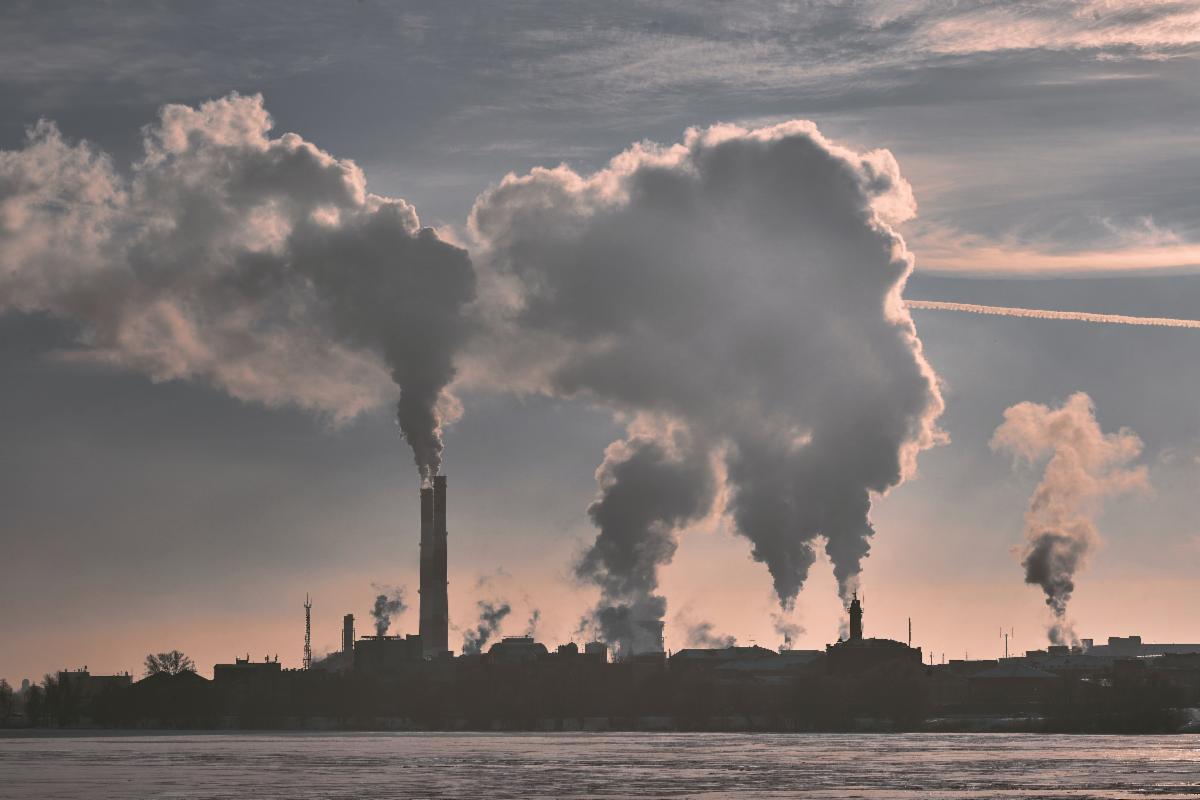
“The Biden administration on Friday proposed to tighten limits on fine particulate matter, a deadly air pollutant also known as soot. It would be the first time in more than a decade that the federal government cracks down on a contaminant responsible for thousands of premature deaths every year.
Fine particulate matter comes from smokestacks, construction, trucks, power plants and other industrial activity. It has a diameter of no more than 2.5 micrometers, one-thirtieth the width of a human hair, and can become embedded in the lungs. It is linked to heart attacks, stroke and respiratory ailments. The draft rule by the Environmental Protection Agency would tighten the current limit, which has been in place since 2012, by as much as 25 percent. The administration estimates that it could prevent as many as 4,200 premature deaths annually, as well as 270,000 missed workdays per year, and result in up to $43 billion in net health and economic benefits by 2032.”
|
|
FERC EXCEEDED ITS AUTHORITY IN ISSUING A LICENSE FOR CONOWINGO DAM
After issuing a Section 401 Certification under the Clean Water Act for the Conowingo Dam on the Susquehanna River, Maryland entered into a private agreement with the dam operator conditionally waiving its certification authority. FERC issued a license for the dam based upon the private agreement. The U.S. Circuit Court of Appeals for the District of Columbia held that FERC exceeded its authority in issuing the license. The Court stated:
The Clean Water Act provides that “[n]o license or permit shall be granted until the certification required ... has been obtained or has been waived as provided in the preceding sentence.” 33 U.S.C. §1341(a)(1). The preceding sentence authorizes just two routes to waiver: ‘fail[ure] or refus[al] to act on a request for certification, within a reasonable period of time. If a state has neither granted a certification nor failed or refused to act on a certification request, section 401(a)(1) plainly prohibits FERC from issuing a license. Here, Maryland did not fail or refuse to act. Just the opposite. The state acted when it issued the 2018 certification. Because Maryland’s subsequent backtracking in the settlement agreement, in which it “conditionally waiv[ed]’ its authority to issue a water quality certification after the fact, is neither a “fail[ure]” nor a “refus[al]” to act, it cannot qualify as a section 401(a)(1) waiver. (Citations omitted)
|
|
EPA Releases New PFAS Analytic Tools
“The U.S. Environmental Protection Agency (EPA) has released a new interactive webpage, called the “PFAS Analytic Tools,” which provides information about per- and polyfluoroalkyl substances (PFAS) across the country. This information will help the public, researchers, and other stakeholders better understand potential PFAS sources in their communities. The PFAS Analytic Tools bring together multiple sources of information in one spot with mapping, charting, and filtering functions, allowing the public to see where testing has been done and what level of detections were measured.”
|
|
EPA failed to consider Corteva-made pesticide's risks to bees, court says
By Nate Raymond
Reuters
December 21, 2022
On December 21, 2022, the U.S, Ninth Circuit Court of Appeals held that the “U.S. Environmental Protection Agency unlawfully approved a pesticide made by Corteva Agriscience for expanded uses without determining if it endangered honeybees.” The Court declined to vacate the decision but remanded the case back to EPA for consideration. “U.S. Circuit Judge Eric Miller dissented, saying the court gave the EPA "a disapproving wag of a finger, and asks the agency to spend the next six months trying harder.
|
|
CONGRESS APPROVES INDIAN WATER RIGHT SETTLEMENT
Congress approved the Arizona/Hualapai Tribe Water Rights Settlement (S. 4104) last month. The bill satisfies tribe's “claims for groundwater and surface water rights to water in Arizona, including the Verde River, the Bill Williams River, and the Colorado River.”
The legislation quantifies a tribal water “right to divert, use, and store 4,000 acre-feet of agricultural priority water of the Central Arizona Project that was previously allocated to nontribal agricultural entities, but retained by the Department of the Interior for reallocation to tribes in Arizona pursuant to the Central Arizona Project Settlement Act of 2004.”
The Department of Interior will establish the Hualapai Tribe Trust Fund in the amount of $312 million, and the Hualapai Water Settlement Implementation Fund of $5 million. Amounts deposited in the Hualapai Trust Fund account are for specified purposes, including to construct the Hualapai Water Project. The project will be designed to “divert, treat, and convey up to 3,414 acre-feet of water per year from the Colorado River for municipal, commercial, and industrial uses.”
“The bill authorizes Interior to take specified land into trust for the benefit of the tribe. In the future, land located outside the reservation may only be taken into trust through an act of Congress.
The bill outlines (1) waivers, releases, and retentions of claims by the tribe and the United States under the settlement agreement; and (2) a limited waiver of sovereign immunity by the United States and the tribe with respect to certain claims.”
|
|
Congress Approves Colorado River Indian Water Resiliency Act
Congress also approved an amendment to the Colorado River Indian Water Resiliency Act (S. 3308) last, which authorizes the Colorado River Tribe to enter into water right lease or exchange agreements and storage agreements in the lower Colorado River Basin with the approval of the Department of Interior. The legislation authorized the Tribe to enter into water conservation agreements to store water in Lake Mead with fair market value for reduced consumptive use.
|
|
SUPREME COURT CASE OF INTEREST |
|
Court will mull scope of attorney-client privilege when lawyers give both legal and nonlegal advice
By Stephen Gillers
SCOTUSBLOG
January 5, 2023
“A lawyer’s legal advice is privileged. A court cannot order the lawyer or the client to disclose it. But a lawyer’s nonlegal advice is not privileged. What happens when advice is partly legal and partly nonlegal and the two parts cannot be untangled? In such dual-purpose situations, does the privilege protect all the advice or none of it?
On Monday, the Supreme Court will hear opposing answers to that question in a case known as In re Grand Jury. A law firm will argue that the privilege should protect all client communications “where obtaining or providing legal advice was one of the significant purposes behind the communication,” even if nonlegal advice predominated. The United States will argue that unless legal advice was the client’s “primary” purpose, none of the dual-purpose communications should be privileged.
The difference between “significant” and “primary” may seem trivial, a question for a thesaurus, not a court. But much will turn on the Supreme Court’s decision. A significant-purpose test will expand the reach of the privilege and therefore secrecy, which may explain why lawyer and business groups, including the American Bar Association and the Chamber of Commerce, filed 13 amicus briefs favoring the law firm. Victory for the law firm, it should be noted, will give lawyers a competitive advantage over nonlawyers who offer the same advice.”
|
|
All summaries are posted in CWAG's google docs account, accessible through the link below. Should you have any issues with the links, contact Patricia Salazar at psalazar@agalliance.org with any questions.
|
|
State v. Grover, ___ N.W.2d ___, 2022 WL 17817901 (Wis. Ct. App. Dec. 20, 2022): Oklahoma v. McGirt did not affect Wisconsin’s Public Law 280 criminal jurisdiction over offenses otherwise subject to the Major Crimes Act.
In Interest of N.L., 2022 ND 235, ___ N.W.2d ___ (N.D. Dec. 22, 2022): Juvenile court’s findings of fact that active efforts had been provided as required by ICWA and state statute prior to termination of a father’s parental rights were not clearly erroneous.
Taxpayers for Michigan Government v. State, ___ N.W.2d ___, 2022 WL 17865554 (Mich. Ct. App. Dec. 22, 2022): A tribally controlled community college was not a unit of “Local Government” as that term is used in Article 9, Section 30 of the Michigan Constitution.
|
|
Sauk-Suiattle Indian Tribe v. City of Seattle, ___ F.4th ___, 2022 WL 17999429 (9th Cir. Dec. 30, 2022): Tribe’s suit alleging that 1995 FERC-licensed dam violated federal and state law by impeding fish migration was dismissed because the district court lacked jurisdiction to review the license and relicensing order.
United States v. Washington, ___ F. Supp. 3d ___, 2022 WL 18010361 (W.D. Wash. Dec. 30, 2022): Stillaguamish Tribe failed to establish at trial that it possessed a usual and accustomed fishing grounds in marine areas off the northwest coast of (now) Washington State at and before entry into an 1855 Stevens treaty.
|
|
American Indian Law Deskbook |
|
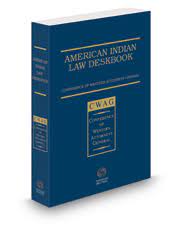
Notice: 2022 Edition of the American Indian Law Deskbook is now available on Westlaw and in hard-copy and electronic formats.
Editions of the Deskbook are published annually by Thomson Reuters, and the 2022 Edition was issued during the week of May 23, 2021. It is available on Westlaw in the Secondary Sources/Texts & Treatises category, in hard copy, and in electronic format.
Please click the link below to order or reach out to Clay Smith at clay.smith@cwagweb.org with questions regarding obtaining a copy of the American Indian Law Deskbook.
|
|
Western Attorneys General Litigation Action Committee |
|
CWAG oversees and coordinates the Western Attorneys General Litigation Action Committee (WAGLAC), which consists of assistant attorneys general involved in litigation related to the environment, natural resources, public lands, and Indian law. WAGLAC was formed over 40 years ago and meets three times per year to discuss the latest developments in these areas of the law. AGO staff gain essential contacts throughout the country in these important areas of the law.
|
|
Contributions For WAGLAC Newsletter |
|
We rely on our readers to send us links for the WAGLAC Newsletter. If you have or know of a recent (published in the last two weeks) case, statute, or article relating to natural resources, environment, Indian law, or federalism that you would like us to consider for inclusion in the Newsletter, please do not hesitate to send it to Clive Strong at clive.strong@cwagweb.org.
|
|
For a complete database of all previously published WAGLAC newsletters, please click the Archive Button. |
|
|
Conference of Western Attorneys General
5050 Laguna Blvd | Suite 112-323 | Elk Grove, California 95758
|
|
|
|
|
|
|