News & Updates from WAGLAC
July 12, 2022
|
|
The Fall WAGLAC meeting will be held October 17-18, 2022 at the Westin in San Diego, California. Please mark your calendars. More details to follow.
|
|
E.P.A. Describes How It Will Regulate Power Plants After Supreme Court Setback
Lisa Friedman
NY Times
July 7, 2022
“Following the Supreme Court’s landmark ruling last week limiting the government’s ability to restrict the pollution that is causing global warming, the Biden administration is planning to use other regulatory tools in hopes of achieving similar goals.
A key part of the plan: Further restrict other pollutants that coal-burning power plants emit such as soot, mercury and nitrous oxides — a move that also will reduce greenhouse gas emissions.
“While the Court sided with special interests trying to take the country backwards, it did not take away E.P.A.’s ability to regulate greenhouse gases and protect people from pollution,” Gina McCarthy, the White House climate change adviser, said in a statement, referring to the federal Environmental Protection Agency.”
|
|
When SCOTUS meets WOTUS
By Hannah Northey
E&E News
07/08/2022
“A famously messy 2006 Supreme Court ruling on the reach of the federal Clean Water Act over wetlands and isolated waterways is headed once again to the high court this fall. At issue: the ‘significant nexus test’ that let federal regulators cast a wide net over wetlands and waterways.
Legal experts say the high court’s conservative majority will adopt a more restrictive interpretation of EPA’s Clean Water Act authority in the wake of the Supreme Court’s June 30 decision in West Virginia v. EPA, which curbed the agency’s authority to regulate emissions from the power sector.”
|
|
Biden administration proposes rule requiring states, cities to set transportation climate targets
BY ZACK BUDRYK
The Hill
07/07/22
“A proposed rule released by the Biden administration Thursday would require states and cities to set carbon emission reduction targets for transportation.
The draft rule would require state transportation departments and metropolitan planning organizations (MPOs) with National Highway System mileage within their boundaries to both measure their transportation-related emissions and develop reduction targets."
|
|
NINTH CIRCUIT REMANDS CLIMATE CHANGE CASE TO HAWAII STATE COURT
“Plaintiffs alleged that the oil and gas companies knew about climate change, understood the harms energy exploration and extraction inflicted on the environment, and concealed those harms from the public. Plaintiffs sued in Hawaii state court, asserting state-law public and private nuisance, failure to warn, and trespass claims. The complaints assert that the defendants’ deception caused harm from climate change, like property damage from extreme weather and land encroachment because of rising sea levels.
The panel held that removal from state court was improper under federal officer jurisdiction, which required defendants to show that they were “acting under” federal officers, that they could assert a colorable federal defense, and that plaintiffs’ injuries were for or relating to defendants’ actions.”
|
|
NINTH CIRCUIT COURT OF APPEALS REVERSES PRIOR RCRA DECISION
The U.S. Court of Appeals for the Ninth Circuit reversed its prior decision in California River Watch v. City of Vacaville. River Watch claimed that Vacaville’s wells were contaminated with the carcinogen hexavalent chromium, and that the City in turn transported the carcinogen through its water-distribution system to the City’s residents. In its initial decision, the Ninth Circuit panel concluded the City could be held liable under the Resource and Conservation and Recovery Act (RCRA) for contributing to the transportation of a hazardous waste that a third party improperly discarded into the City’s water treatment system. On rehearing, the panel reversed its decision. The majority decision held “based on the statutory text of RCRA, ‘transportation’ means movement in direct connection with the waste disposal process, such as shipping waste to hazardous waste treatment, storage, or disposal facilities, rather than mere conveyance of hazardous waste.” “Concurring only in the judgment, Judge Tashima wrote that he found the majority’s reasoning unpersuasive and did not join it its analysis, but he reached the same result under a different line of reasoning, concluding . . . the City was not liable under RCRA because it was neither actively involved in nor exercised control over the waste disposal process.”
|
|
SCOTUS lets New Mexico and Texas pursue Rio Grande use settlement
By Scott Wyland
Santa Fe New Mexican
July 5, 2022
“A U.S. Supreme Court representative has agreed to put off a trial date for the yearslong water dispute between New Mexico and Texas so the two states can try to settle their differences out of court.
A federal judge appointed as a special master by the high court canceled an Oct. 3 hearing to let the two sides work toward resolving their dispute over which state has taken an unfair share of Rio Grande water.
The states, which have been locked in this legal battle since 2013, will submit a progress report on July 26.
If they remain at a stalemate, the special master will schedule a hearing later this year.
State Attorney General Hector Balderas expressed optimism Tuesday about New Mexico and Texas reaching a settlement after a decade of legal wrangling.”
|
|
NEVADA STATE COURT HAS EXCLUSIVE JURISDICTION TO ADMINISTER PREVIOUSLY DECREED WATER RIGHTS HELD BY UNITED STATES
Baker filed an action against the U.S. Park Service (Service) alleging the Service was diverting water in violation of the 1934 water rights decree entered by the State of Nevada District Court for White Pine County. The Service remove the suit to the United States Federal District Court for Nevada pursuant to 28 U.S.C. 28 U.S.C. § 1442(a)(1), alleging a federal defense of sovereign immunity. Baker moved to remand the case back to the state district court alleging that the state court had primary jurisdiction to enforce its own water rights decree. The Service argued in opposition to the motion to remand that the case was properly removed under 28 U.S.C. 28 U.S.C. § 1442(a)(1) and the Court should retain the case because the Court has independent subject matter jurisdiction over the administration of the prior state court decree.
The Federal District Court remanded the case back to the state district court based on the prior exclusive jurisdiction doctrine. Under this doctrine a subsequent court does not have jurisdiction to hear a case “when a court of competent jurisdiction has obtained possession, custody, or control of a particular property . . . Prior exclusive jurisdiction prevails when “the court hearing the second suit [cannot] adjudicate personal claims to property without disturbing the first court’s jurisdiction over the res.” “In the Ninth Circuit, prior exclusive jurisdiction is consistently applied in the water rights context as a mandatory jurisdictional limitation.” The Court concluded that while the case was properly removed, the state court’s prior exclusive jurisdiction over the water right decree acts as a “specific jurisdictional bar” to the Court’s subject matter jurisdiction.
|
|
Property owners and officials find ways around century-old laws as the West runs out of water
By Stephanie Elam
CNN
July 10, 2022
“With a megadrought draining water reserves in the West, states are looking for alternatives to handle water rights, many of which were set more than 100 years ago when water supplies were far more abundant.”
|
|
|
|
Session 2: Investigating Pollution Crimes
July 18, 2022 • 1:00 p.m. - 2:15 p.m. ET
Session 3: Workplace Safety Prosecutions
September 12, 2022 • 1:00 p.m. - 2:15 p.m. ET
Session 4: Animal Welfare & Wildlife Trafficking Prosecutions
October 17, 2022 • 1:00 p.m. - 2:00 p.m. ET
|
|
Violations of environmental standards may trigger both criminal and civil laws. What are considerations for state- and local-level prosecutors when facing a choice of enforcement route?
Join the State Energy & Environmental Impact Center at NYU School of Law, the Conference of Western Attorneys General, and the Environment & Natural Resources Division of the Department of Justice for a five-part training series specifically designed for state- and local-level prosecutors tasked with enforcement of environmental laws.
|
|
Supreme Court 2021 Term Roundup:
Environmental Law and the States
Tuesday, July 19,12:30pm — 1:45pm ET
Join the State Energy & Environmental Impact Center and the State & Local Legal Center for a conversation between current and former attorneys from New York, Oklahoma, Oregon, and West Virginia on this term’s environmental cases at the Supreme Court.
|
|
All summaries are posted in CWAG's google docs account, accessible through the link below. Should you have any issues with the links, contact Patricia Salazar with any questions.
|
|
New Indian Law Case Summaries |
|
City of Seattle v. Sauk-Suiattle Tribal Court, ___ F. Supp. 3d ___, 2022 WL 2440076 (W.D. Wash. Jul. 5, 2022): Tribal court action alleging infringement of treaty fishing rights through off-reservation dams’ operation would not be enjoined, and case stayed pending exhaustion of remedies in that action.
Yurok Tribe v. Dowd, ___ F. Supp. 3d ___, 2022 WL 2441564 (N.D. Cal. Jul. 5, 2022): Motion to dismiss under Fed. R. Civ. P. 12(b)(1) a tribe’s claim that a member of another tribe had surrendered pursuant to a 1988 settlement act his right to fish within the tribe’s reservation was denied on the ground that the motion’s resolution was intertwined with the case’s merits.
State v. House, ___ N.W.2d ___, 2022 WL 2447556 (Wis. Ct. App. Jul. 6, 2022) (per curiam): Public Law 280 does not embody an unconstitutional exercise of Congress’ authority.
|
|
Baker v. Erickson, ___ N.W.2d ___, 2022 WL 2517178 (N.D. Jul. 7, 2022): District court erred in extending full faith and credit to a tribal court’s temporary restraining and permanent protection orders under 18 U.S.C. § 2265 where the latter court did not acquire personal jurisdiction over a mother under the service and notice requirements in the tribal code.
|
|
American Indian Law Deskbook |
|
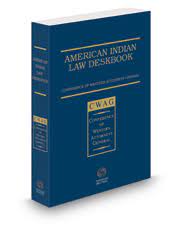
Notice: 2022 Edition of the American Indian Law Deskbook now available on Westlaw and in hard-copy and electronic formats.
Editions of the Deskbook are published annually by Thomson Reuters, and the 2022 Edition was issued during the week of May 23, 2021. It is available on Westlaw in the Secondary Sources/Texts & Treatises category, in hard copy, and in electronic format.
Please click below or reach out to Clay Smith at clay.smith@cwagweb.org with questions regarding obtaining a copy of the American Indian Law Deskbook.
|
|
Western Attorneys General Litigation Action Committee
CWAG oversees and coordinates the Western Attorneys General Litigation Action Committee (WAGLAC), which consists of assistant attorneys general involved in litigation related to the environment, natural resources, public lands and Indian law. WAGLAC was formed over 40 years ago and meets three times per year to discuss the latest developments in these areas of the law. AGO staff gain important contacts throughout the country in these important areas of the law.
|
|
Contributions For WAGLAC Newsletter
We rely on our readers to send us links for the WAGLAC Newsletter. If you have or know of a recent (published in the last two weeks) case, statute or article relating to natural resources, environment, Indian law or federalism that you would like us to consider for inclusion in the Newsletter, please send it to Clive Strong. For a complete database of all previously published WAGLAC newsletters, please follow the link below.
|
|
Conference of Western Attorneys General | 1300 I Street, Sacramento, CA 95814 |
|
|
|
|
|
|