News & Updates from WAGLAC
June 21, 2022
|
|
The Fall WAGLAC meeting will be held October 17-18, 2022 at the Westin in San Diego, California. Please mark your calendars. More details to follow.
|
|
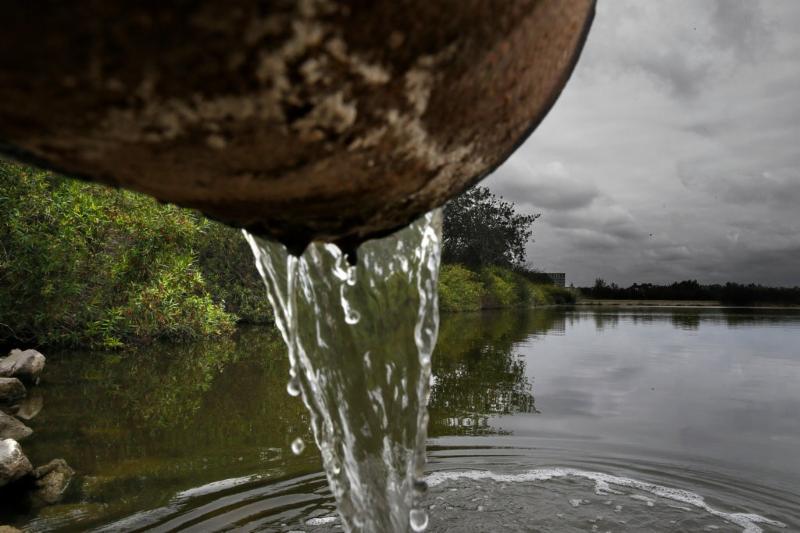
CALIFORNIA DID NOT WAIVE CWA § 401 CERTIFICATION AUTHORITY BY DENYING CERTIFICATION REQUEST ON PROCEDURAL GROUNDS
Section 401 of the Clean Water Act requires an applicant for a federal hydropower license to seek a State certification that the facility’s discharges will comply with water quality standards. Section 401 provides that a State agency waives its certification authority if it “fails to act” on a request for certification within one year from the date a State agency receives a request for certification.
The issue, in this case, is whether the California State Water Resources Control Board waived its certification authority by twice denying certification requests from the Turlock and Modesto Irrigation Districts on procedural grounds “without prejudice” to filing a new application.
The Districts’ filed a petition for declaratory order with FERC in which they argued the California Board waived its Section 401 authority by failing to make a substantive decision on their applications. In denying the Districts’ petition FERC reasoned that the California Board, “’ by denying the applications without prejudice, indeed acted on [] them . . ..’ FERC relied on section 401’s ‘plain language,’ which requires that a State ‘act’ on a certification request within one year. FERC distinguished the California Board’s denials without prejudice from Hoopa Valley Tribe v. FERC, 913 F.3d 1099 (D.C. Cir.2019), which FERC said involved ‘a coordinated withdrawal and resubmittal scheme’ that allowed the State agencies to not act and still avoid waiver. Because section 401 requires only action within a year to avoid waiver, FERC also rejected the District's argument that the California Board’s denials were ‘invalid’ as a matter of federal law because they were ‘on non-substantive grounds’ and not ‘on the technical merits of the certification requests.’” Turlock Irrigation District et al v. FERC at 7-8 (DC Cir. at 7 (June 17, 2022)(citations omitted).
The DC Circuit Court of Appeals agreed “with FERC that the California Board did not waive its certification authority under section 401(a)(1) and that FERC’s ruling is not contrary to Hoopa Valley. The Fourth Circuit accurately described Hoopa Valley as a case in which, ‘the state agencies and the license applicant entered into a written agreement that obligated the state agencies, year after year, to take no action at all on the applicant’s § 401 certification request. Those circumstances are not present in this case.” Turlock Irrig. Dist. at 8. Critical to the Court’s decision was the absence of any agreement between the Districts and the California Board and that the Districts’ applications were not complete.
|
|
Republican Drive to Tilt Courts Against Climate Action Reaches a Crucial Moment
By Coral Davenport
NYTimes
June 19, 2022
“A Supreme Court environmental case being decided this month is the product of a coordinated, multiyear strategy by Republican attorneys general and conservative allies.
Within days, the conservative majority on the Supreme Court is expected to hand down a decision that could severely limit the federal government’s authority to reduce carbon dioxide from power plants — pollution that is dangerously heating the planet.
But it’s only a start.
The case, West Virginia v. Environmental Protection Agency, is the product of a coordinated, multiyear strategy by Republican attorneys general, conservative legal activists and their funders, several with ties to the oil and coal industries, to use the judicial system to rewrite environmental law, weakening the executive branch’s ability to tackle global warming.
. . . .
The ultimate goal of the Republican activists, people involved in the effort say, is to overturn the legal doctrine by which Congress has delegated authority to federal agencies to regulate the environment, health care, workplace safety, telecommunications, the financial sector and more.
Known as ‘Chevron deference,’ after a 1984 Supreme Court ruling, that doctrine holds that courts must defer to reasonable interpretations of ambiguous statutes by federal agencies on the theory that agencies have more expertise than judges and are more accountable to voters. ‘Judges are not experts in the field and are not part of either political branch of the government,’ Associate Justice John Paul Stevens wrote in his opinion for a unanimous court.
But many conservatives say the decision violates the separation of powers by allowing executive branch officials rather than judges to say what the law is. In one of his most famous opinions as an appeals court judge, Associate Justice Gorsuch wrote that Chevron allowed ‘executive bureaucracies to swallow huge amounts of core judicial and legislative power.’”
|
|
In an opinion that shuns Chevron, the court rejects a Medicare cut for hospital drugs
By James Romoser
SCOTUSblog
Jun 15, 2022
“In American Hospital Association v. Becerra, the Supreme Court had a chance to upend the administrative state.
Though the dispute involved a technical Medicare reimbursement formula, business groups and conservative legal organizations had urged the justices to use the case as a vehicle to overhaul — or even overturn — the 38-year-old doctrine known as Chevron deference. That doctrine generally calls for courts to honor federal agencies’ interpretations of ambiguous laws. Supporters say the doctrine gives agencies breathing room to make policy judgments that carry out their missions. Critics say it hands too much power to unaccountable bureaucrats.
In a narrow and unanimous opinion, the court did not overturn the Chevron doctrine. Instead, it just ignored it. And in doing so, the court may have portended the future of Chevron, which already has been narrowed considerably over the years. Rather than a single, decisive blow or a continued death by a thousand cuts, the court might simply snuff out Chevron with the silent treatment.”
|
|
Interior Department Revokes Secretary's Order that Wasted Taxpayer Funds, Interfered with Litigation Processes
6/17/2022
“Secretary of the Interior Deb Haaland issued Secretary’s Order 3408, which revokes Secretary’s Order 3368. That Order, which was signed on Sept. 11, 2018, imposed redundant, inefficient and vague obligations on the Department and its litigation processes that do not serve the goals of transparency and efficiency.
The previous Order added unnecessary obstacles to the Department’s ability to enter into rational and fair settlements, imposed requirements and timelines inconsistent with those set by courts, and added redundant reporting obligations. The previous Order provided no tangible benefits to the public while interfering with the Department’s ability to make decisions about litigation that are in the best interests of the federal government and taxpayers.”
|
|
JUDGE DISMISSES SUIT TARGETING SHEEP GRAZING IN WASHINGTON
Don Jenkins
Capital Press
June 8, 2022
“A judge has ruled that sheep grazing can continue in the Okanogan-Wenatchee National Forest in north-central Washington while the U.S. Forest Service studies the impact on bighorn sheep.
U.S. District Judge Thomas O. Rice in Spokane dismissed a lawsuit by WildEarth Guardians and Western Watersheds Project claiming virus-carrying domestic sheep menace bighorn sheep.
The lawsuit sought to halt grazing on four allotments by S. Martinez Livestock until the Forest Service did an environmental review. The Forest Service plans to finish the review by May 2025.
In a written ruling Tuesday, Rice said that until the review is done, the environmental groups have nothing to challenge. He said he didn't have the authority to order the Forest Service to speed up the study.”
|
|
NRDC v. USEPA
"A federal appeals court today scrapped a 2020 EPA finding on the human health impacts of a chemical at the center of a pending Supreme Court petition on cancer risk from the popular Roundup weedkiller.
The opinion from the 9th U.S. Circuit Court of Appeals sends EPA back to work on its 2020 decision that glyphosate, the active ingredient in Roundup, does not present “any reasonable risk to man or the environment.”
|
|
Denezpi v. United States
Focusing on the meaning of “offense,” a divided court throws salt on double jeopardy claim
By Heather Whiteman Runs Him
June 14, 2022 at 8:38 pm
"An intriguingly divided court ruled Monday in Denezpi v. United States, upholding the federal court conviction of a defendant previously prosecuted and sentenced by a Court of Indian Offenses for charges stemming from the same incident. Justice Amy Coney Barrett wrote for the majority, joined by Chief Justice John Roberts and Justices Clarence Thomas, Stephen Breyer, Samuel Alito, and Brett Kavanaugh. Justice Neil Gorsuch filed a dissenting opinion, joined in part by Justices Sonia Sotomayor and Elena Kagan.
The majority’s ruling turned not on the source of authority of the Court of Indian Offenses, but instead approached the case by looking to the relevant text in the Fifth Amendment’s double jeopardy clause. The source of authority for the laws defining the offenses in question were separate – tribal and federal – exercises of distinct sovereigns; therefore, Merle Denezpi’s federal prosecution did not violate his right not to be twice in jeopardy for “the same offense.”
|
|
Ysleta del Sur Pueblo v. United States
Divided court rejects Texas’ bid to control gambling in tribal casinos
By Ronald Mann
on June 16, 2022 at 10:45 am
"Wednesday’s decision in Ysleta del Sur Pueblo v. Texas resolves a longstanding dispute about the ability of Texas to control gambling on the lands of two of the Native American tribes that reside there. The answer the court gave was a stern rebuke, vitiating the plenary control that lower-court decisions had granted the state for more than a quarter of a century.
The problem involves the odd history of two of the three Native American tribes that remain in the state of Texas, the petitioner Ysleta del Sur Pueblo (a tiny reservation near El Paso) and the much larger Alabama-Coushatta reservation in East Texas. Although almost all Native American tribes in the United States operate under a trust relationship with the federal government, those two tribes were in a trust relationship with Texas from 1968 to 1987. When Texas authorities decided that their state constitution did not permit that relationship, Congress restored a federal trust relationship for those tribes by passing the Restoration Act in 1987. The most controversial provisions of that statute, addressed in Ysleta, are the provisions that govern the tribes’ subjection to Texas gambling regulations."
|
|
Nevada Supreme Court: Senior water rights holders must join in drought pain
Geoff Doman
Nevada Appeal/Lahontan Valley News
June 17, 2022
“In a majority opinion, the Nevada Supreme Court this week approved a groundwater management plan for Diamond Valley that reduces not only the water junior water rights holders can pump but what senior water rights owners can pump.
The plan developed by the state engineer is designed to reduce water use over the next 35 years to the level Diamond Valley can actually support.
But opponents, including three members of the high court, say the ruling effectively punches a hole in 155 years of Nevada water law that has always allowed senior water rights owners to keep pumping their full allotment of water even if that means other users go dry during times of drought.”
|
|
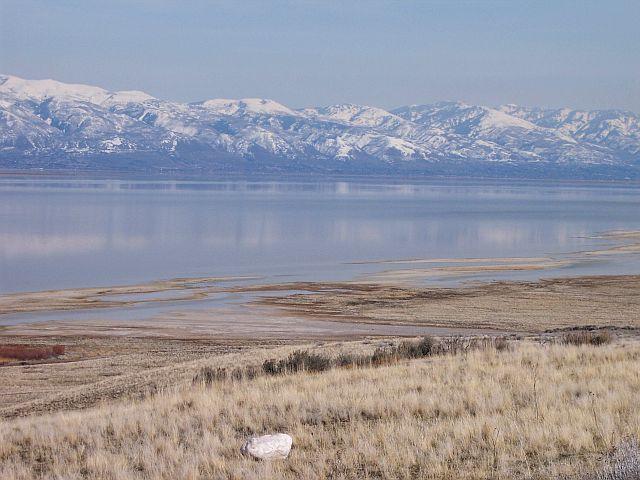
AS THE GREAT SALT LAKE DRIES UP, UTAH FACES AND ‘ENVIRONMENTAL NUCLEAR BOMB’
Christopher Flavelle
NYTimes
June 9, 2022
“If the Great Salt Lake, which has already shrunk by two-thirds, continues to dry up, here’s what’s in store:
The lake’s flies and brine shrimp would die off — scientists warn it could start as soon as this summer — threatening the 10 million migratory birds that stop at the lake annually to feed on the tiny creatures. Ski conditions at the resorts above Salt Lake City, a vital source of revenue, would deteriorate. The lucrative extraction of magnesium and other minerals from the lake could stop.
Most alarming, the air surrounding Salt Lake City would occasionally turn poisonous. The lake bed contains high levels of arsenic and as more of it becomes exposed, wind storms carry that arsenic into the lungs of nearby residents, who make up three-quarters of Utah’s population.
“We have this potential environmental nuclear bomb that’s going to go off if we don’t take some pretty dramatic action,’ said Joel Ferry, a Republican state lawmaker and rancher who lives on the north side of the lake.”
|
|
As the water crisis worsens on Colorado River, an urgent call for Western states to ‘act now’
Ian James
Staff Writer
Los Angeles Times
June 20, 2022
“With the Colorado River’s depleted reservoirs continuing to drop to new lows, the federal government has taken the unprecedented step of telling the seven Western states that rely on the river to find ways of drastically cutting the amount of water they take in the next two months.
The Interior Department is seeking emergency cuts to reduce the risks of Lake Mead and Lake Powell, the country’s two largest reservoirs, declining to dangerously low levels next year.
‘We have urgent needs to act now,” Tanya Trujillo, the Interior Department’s assistant secretary for water and science, said during a speech on Thursday. “We need to be taking action in all states, in all sectors, and in all available ways.’”
|
|
US SUES IDAHO OVER STATE-BASED LIVESTOCK WATER LEGISLATION
Over the last five years, the Idaho Legislature enacted a series of statutes that prohibits any “agency of the federal government” from acquiring stock water rights unless the federal agency owns livestock, makes stock water rights associated with federal lands appurtenant to the private property of federal permittees, rather than to the place of use on federal lands, and establishes a process for forfeiture of existing federally owned stock water rights.
Recently, the Director of the Idaho Department of Water Resources initiated the process to forfeit several state-based livestock water rights decreed to the United States. In response to the Director’s action, the United States sued in federal court alleging that “statutes, and the forfeiture proceedings resulting from their enactment, are contrary to the Supremacy, Property, and Contract Clauses of the United States Constitution; the principle of federal sovereign immunity; and the Supremacy and Retroactivity Clauses of the Idaho Constitution.”
|
|
Violations of environmental standards may trigger both criminal and civil laws. What are considerations for state- and local-level prosecutors when facing a choice of enforcement route?
Join the State Energy & Environmental Impact Center at NYU School of Law, the Conference of Western Attorneys General, and the Environment & Natural Resources Division of the Department of Justice for a five-part training series specifically designed for state- and local-level prosecutors tasked with enforcement of environmental laws.
|
|
All summaries are posted in CWAG's google docs account, accessible through the link below. Should you have any issues with the links, contact Patricia Salazar with any questions.
|
|
New Indian Law Case Summaries |
|
Kiowa Tribe v. U.S. Department of Interior, ___ F. Supp. 3d ___, 2022 WL 1913436 (W.D. Okla. June 3, 2022): Tribes failed to establish a substantial likelihood of success for preliminary injunction purposes with respect to claims under the APA, IGRA and RICO seeking to enjoin the opening of another tribe’s class III gaming facility.
McKinsey & Co. v. Boyd, ___ F. Supp. 3d ___, 2022 WL 1978735 (W.D. Wis. June 6, 2022): Tribal officials were preliminarily enjoined from further tribal court proceedings in an opioid-related suit against a management consultant firm that provided marketing advice to pharmaceutical companies where the firm had no contact with the involved tribe’s reservation.
Interest of A.C., 2022 ND 123, ___ N.W.2d ___ (June 8, 2022): Appeal from a termination of parental rights was remanded for determination of whether the tribal-member putative father’s paternity over a child was established.
Hyman v. Mashantucket Pequot Indian Tribe of Connecticut, ___ F. Supp. 3d ___, 2022 WL 2078187 (D. Conn. June 9, 2022): Various claims alleging improper conduct in a tribal court custody proceedings were dismissed for lack of a substantial federal question, including a claim asserted under 42 U.S.C. § 1983.
|
|
Denezpi v. United States, ___ S. Ct. ___, 2022 WL 211348 (June 13, 2022): Dual sovereignty doctrine precluded application of the Double Jeopardy Clause with respect to a conviction under the Major Crimes Act for aggravated sexual abuse where the defendant had been convicted previously of a tribal ordinance crime that, as assimilated by federal regulations, was prosecuted in a Court of Indian Offenses and that arose from the same conduct.
Grondal v. United States, ___ F.4th ___, 2022 WL 2112793 (9th Cir. June 13, 2022): District court properly dismissed a limited liability company’s cross-claim against a tribe on sovereign immunity grounds and against the BIA on lack-of-subject-matter-jurisdiction and failure-to-state a claim grounds. The court further properly denied the LLC’s request for intervention as a matter of right in a trespass damages trial by the United States against two other parties.
Ysleta del Sur Pueblo v. Texas, ___ S. Ct. ___, 2022 WL 2135494 (June 15, 2022): 1987 Ysleta del Sur Pueblo and Alabama and Coushatta Indian Tribes of Texas Restoration Act adopted Cabazon’s regulatory/prohibitory distinction and does not prohibit the Pueblo from offering bingo gaming of a type not permitted under state law but where such law does authorize bingo gaming under certain conditions.
In re Dezi C., ___ Cal. App. 5th ___, Cal. Rptr. 3d ___, 2022 WL 2128670 (2d Dist. June 14, 2022): Proper harmless-error rule for failure to comply with the reasonable-inquiry requirement in Welf. & Inst. Code § 224.2, subd. (b) is that an agency’s failure to discharge its statutory duty of initial inquiry is harmless unless the juvenile court and/or the appellate record contains information suggesting a reason to believe that the children at issue may be “Indian child[ren],” in which such situation further inquiry may lead to a different ICWA finding by the juvenile court.
|
|
American Indian Law Deskbook |
|
Notice: 2022 Edition of the American Indian Law Deskbook now available on Westlaw and in hard-copy and electronic formats.
Editions of the Deskbook are published annually by Thomson Reuters, and the 2022 Edition was issued during the week of May 23, 2021. It is available on Westlaw in the Secondary Sources/Texts & Treatises category, in hard copy, and in electronic format.
Please click below or reach out to Clay Smith at clay.smith@cwagweb.org with questions regarding obtaining a copy of the American Indian Law Deskbook.
|
|
Western Attorneys General Litigation Action Committee
CWAG oversees and coordinates the Western Attorneys General Litigation Action Committee (WAGLAC), which consists of assistant attorneys general involved in litigation related to the environment, natural resources, public lands and Indian law. WAGLAC was formed over 40 years ago and meets three times per year to discuss the latest developments in these areas of the law. AGO staff gain important contacts throughout the country in these important areas of the law.
|
|
Contributions For WAGLAC Newsletter
We rely on our readers to send us links for the WAGLAC Newsletter. If you have or know of a recent (published in the last two weeks) case, statute or article relating to natural resources, environment, Indian law or federalism that you would like us to consider for inclusion in the Newsletter, please send it to Clive Strong. For a complete database of all previously published WAGLAC newsletters, please follow the link below.
|
|
Conference of Western Attorneys General | 1300 I Street, Sacramento, CA 95814 |
|
|
|
|
|
|