News & Updates from WAGLAC
March 7, 2023
|
|
The 2023 Summer WAGLAC meeting will be held in conjunction with the AGA/CWAG annual meeting on June 20th in Rancho Palos Verdes, California.
In addition to the roundtable discussion of natural resources, environmental, public lands, water, energy, and Indian law matters there will be a half-day seminar during the summer WAGLAC meeting.
|
|
In Response to Lawsuit, EPA Announces Timeline for First Revisions to Slaughterhouse Water Pollution Standards in Nearly Twenty Years
In a victory for clean water, the U.S. Environmental Protection Agency (EPA) announced its intent to publish updated water pollution control standards for slaughterhouses and animal rendering facilities by August 2025, following a lawsuit filed by community and conservation organizations late last year. Proposed standards are due before the end of 2023.
EPA published the rulemaking timeline as part of a proposed consent decree that would resolve the community and conservation groups’ lawsuit, filed by Earthjustice and the Environmental Integrity Project on behalf of Cape Fear River Watch, Rural Empowerment Association for Community Help, Waterkeepers Chesapeake, Animal Legal Defense Fund, Center for Biological Diversity, Environment America, Food & Water Watch, The Humane Society of the United States, and Waterkeeper Alliance.
|
|
Farmers in dry western U.S. face new ways to save water | PBS NewsHour
Suman Naishadham
Associated Press
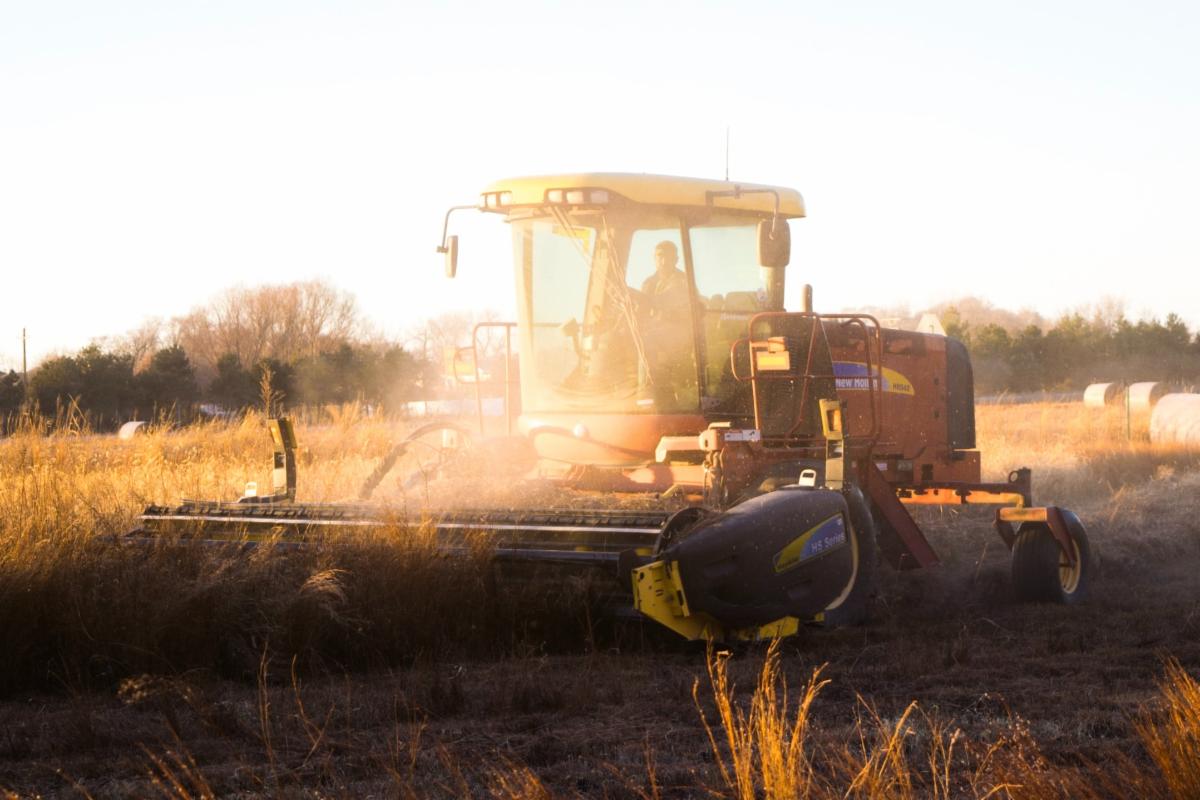
Farmers reliant on the shrinking Colorado River think they can do more to save water and use it more efficiently. Even as a growing sense is emerging that some following will have to be part of the solution to the increasingly desperate drought in the West, where the Colorado River serves 40 million people.
The U.S. Bureau of Reclamation is looking at paying farmers to idle some fields, many in the vast Imperial Valley in California and Yuma County in Arizona that grow much of the nation’s winter vegetables and rely on the river. Funding would come from $4 billion set aside for Western drought aid in the Inflation Reduction Act.
Federal officials and major irrigators have been negotiating for months. Neither side has disclosed details of the negotiations or said how much money is being sought or offered. Agriculture uses 70% and 80% of the Colorado River’s water, and ideas for reducing that have long been contentious. Farmers and the irrigators who serve them say their water use is justified since nearly the entire country eats the produce grown in the region, as well as meat from cattle fed on the grasses grown locally.
The Colorado River is in worse shape now, but in Imperial Valley, memories of that program linger. And farmers want far more than they were paid back then. Many farmers also fear that once land is taken out of production, it won’t be farmed again. Part of the fear comes from how water rights work in the West, but also because fallowing can degrade soil quality and make it difficult to return the land to production later.
A measure of how much Reclamation is willing to pay came in a separate offer made to farmers in Lower Basin states — Arizona, California, and Nevada — for $400 per acre-foot. Since farmers in Imperial Valley hold senior rights to Colorado River water, mandating water cuts there is almost impossible without inviting litigation.
|
|
Endangered Mexican Wolf Population Surpasses 200 | Outdoor Life
Katie Hill
Published March 2, 2023
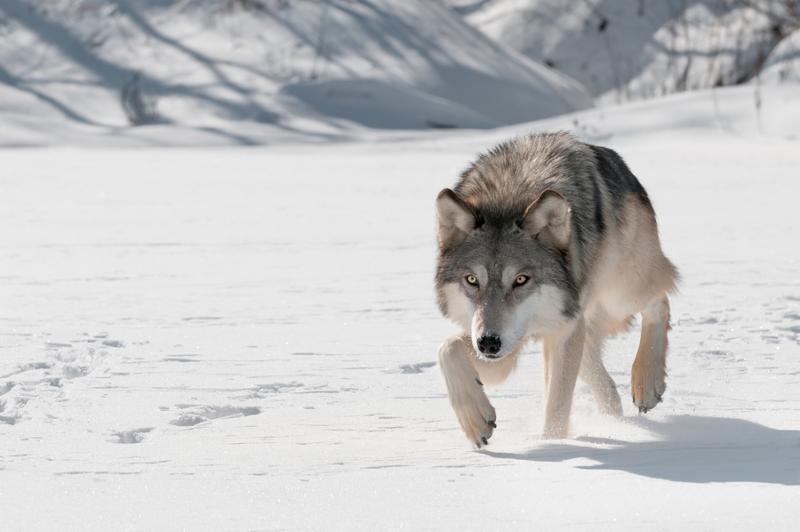
'The U.S. Fish and Wildlife Service announced the results of the 2022 Mexican wolf population survey. The numbers are giving researchers a reason to celebrate. From November to February, the Interagency Field Team documented 241 wild Mexican wolves living in New Mexico and Arizona. That constitutes a 23 percent increase from the year prior.
Surveyors recorded 59 packs, 40 of which are in New Mexico and the other 19 in Arizona. At least 81 of the 121 pups born in 2022 made it through the year. This calculates to an infant survival rate of 67 percent. The average pup survival rate for Mexican wolves is around 50 percent.
Mexican wolves were listed as endangered in 1976. Then, in 1977, Mexico and the U.S. entered a joint captive breeding effort with the world’s seven remaining lobos. After 21 years of captive breeding, the first reintroduction happened in 1998 in the Blue Range Wolf Recovery Area in eastern Arizona. Officials released 11 wolves at the time.
With that said, some wildlife advocacy groups call for an increased emphasis on preventing illegal killings and ending relocations like the one that occurred in January 2023. They also say that habitat protection must keep up with the growing population.'
|
|
Squaxin Island Tribe receives EPA approval to administer Clean Water Act programs on reservation and trust lands
The U.S. Environmental Protection Agency has approved the application from the Squaxin Island Tribe to administer the water quality standards and certification programs under the Clean Water Act. With this approval, the Tribe will assume Clean Water Act authority to manage and protect all surface waters within its reservation and trust lands. Trust lands include lands located outside of the reservation that are held in trust by the United States for the Squaxin Island Tribe. The Tribe’s reservation and trust lands collectively cover about 2,598 acres near Shelton, Washington.
|
|
Utah Confronts ‘Existential Threat’ of Vanishing Great Salt Lake
Samantha Hawkins
Legal Reporter
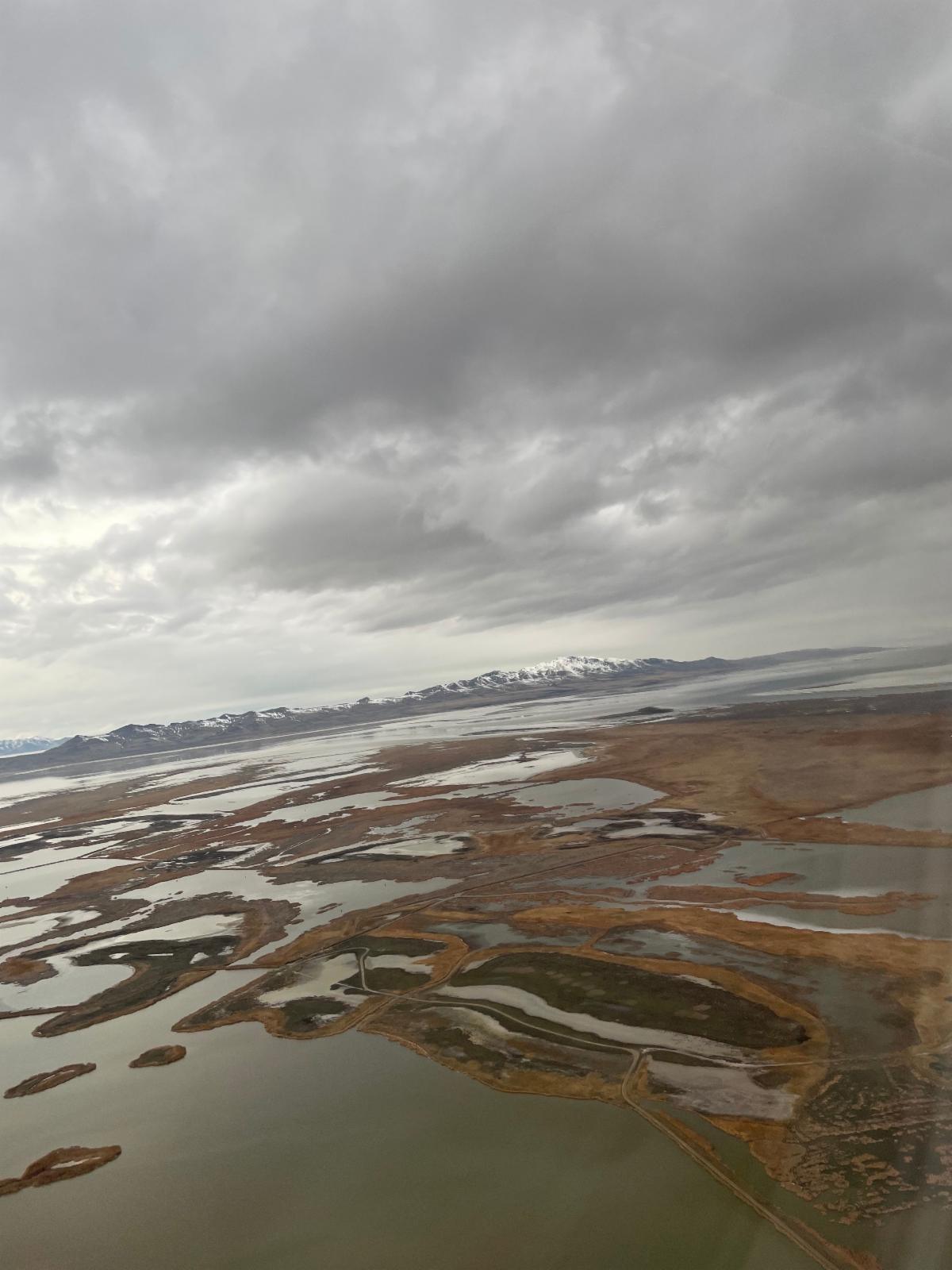
"The clock is ticking to save the Intermountain West from an impending environmental disaster that could expose millions of people to dangerous sediments and collapse a keystone ecosystem.
The Great Salt Lake is on the brink of disappearing and turning into a bowl of toxic dust that could poison the air around Salt Lake City. The lake—which has already shrunk by two-thirds—would be gone in five years without policy changes, scientists say, and making tectonic changes now is crucial to arresting the decline of water.
|
|
Administration Announces $2.4 Billion for Clean Water Infrastructure Upgrades Through the Bipartisan Infrastructure Law | US EPA
The U.S. Environmental Protection Agency (EPA) announced over $2.4 billion from Bipartisan Infrastructure Law for states, Tribes, and territories through this year’s Clean Water State Revolving Fund (CWSRF). The funding will support communities in upgrading essential water, wastewater, and stormwater infrastructure that protects public health and treasured water bodies across the nation. Nearly half of this funding will be available as grants or principal forgiveness loans helping underserved communities across America invest in water infrastructure while creating good-paying jobs.
The $2.4 billion announced is the second wave of funding made possible by the Bipartisan Infrastructure Law and builds on the Administration’s commitment to invest in America. In May 2022, EPA announced the initial allotment of $1.9 billion from the Bipartisan Infrastructure Law to states, Tribes, and territories through the CWSRF. That money is supporting hundreds of critical water infrastructure projects around the country.
The Bipartisan Infrastructure Law makes over $50 billion available for water and wastewater infrastructure improvements across the country between FY2022 and FY2026. EPA is committed to ensuring every community has access to this historic investment and has centralized increasing investment in disadvantaged communities within its implementation. This investment in water infrastructure is creating jobs while addressing key challenges, including climate change, and emerging contaminants like per- and poly-fluoroalkyl substances (PFAS). The implementation of the Bipartisan Infrastructure Law calls for strong collaboration, and EPA continues to work in partnership with states, Tribes, and territories to ensure that communities see the full benefits of this investment.
|
|
Major Milestone Reached for Bipartisan Infrastructure Law Habitat Recovery, Water Supply Project in Utah
Assistant Secretary for Water and Science Tanya Trujillo joined partners in Utah to celebrate a major milestone in the Provo River Delta Restoration project. Supported by a $10 million investment from the Bipartisan Infrastructure Law, the Provo River has now been diverted into channels and ponds constructed over the past three years, connecting the river with a restored delta and with Utah Lake. The new delta will support habitat recovery for the imperiled June sucker, provide and improve recreational experiences and help safeguard safe, reliable water supplies for local communities.
The milestone comes as the Endangered Species Act (ESA) turns 50 years old in 2023. Throughout the year, the Department is celebrating the importance of the ESA in preventing the extinction of imperiled species, promoting the recovery of wildlife, and conserving the habitats upon which they depend.
On Jan. 4, 2021, the June sucker was downlisted from endangered to threatened under the Endangered Species Act, largely due to ongoing efforts — like the Provo River Delta project — by various partnering agencies to help the species recover. The restored delta will provide a habitat for adult June suckers to spawn and for young June suckers to find safety from predators.
|
|
EPA approves Lower White River water cleanup plan | Department of Ecology | Courier-Herald
The Washington Department of Ecology recently received approval from the U.S. Environmental Protection Agency for a water quality cleanup plan for the Lower White River. The plan addresses decades-old pH problems associated with excess nutrients that have threatened fish and aquatic life in this tributary of the Puyallup River.
The Lower White River watershed extends from just below Mud Mountain Dam near Enumclaw to the mouth of the river near its confluence with the Puyallup River near Sumner. It is home to Endangered Species Act-protected salmon, a critical food source for southern resident orcas.
The goal of the cleanup plan is to limit nutrients and describe the best management practices needed to reduce phosphorus pollution. The water quality improvement plan process is a science-based approach to cleaning up polluted water so that it meets state water quality standards.
Moving forward, Ecology will provide technical assistance to permittees, businesses, and landowners to help implement the water quality improvement plan. Progress will be measured using data collected as part of an extensive effectiveness monitoring effort. Ecology hopes to implement all corrective measures over the next decade.
|
|
Native American tribe wants to reclaim 9,000 acres of Diablo Canyon land: ‘We’ve been waiting’
Mackenzie Shuman
San Luis Obispo Tribune
Updated February 28, 2023
"What will happen to nearly 11,000 acres of land encompassing California’s last nuclear power plant when it closes? According to one proposal, about 9,000 acres of prime San Luis Obispo County real estate could return to the Native Americans who first occupied it. The future of the massive property on which Diablo Canyon Power Plant sits was the subject of a public meeting held by the California Natural Resources Agency.
The agency must submit its land conservation and economic development plan for the Diablo Lands to the California State Legislature according to State Senate Bill 846. That bill, which passed in September, allowed the state to loan up to $1.4 billion to PG&E to extend the life of Diablo Canyon nuclear power plant until 2030, about five years past its originally scheduled closure date. Additionally, the bill set aside $160 million for the land conservation and economic development plan.
The plan must support “environmental enhancements and access of Diablo Canyon power plant lands and local economic development in a manner that is consistent with existing decommissioning efforts,” according to the bill. In general, the land, which is currently owned by PG&E and its subsidy Eureka Energy Company, is expected to be conserved forever to prevent it from being developed, according to proposals by community groups.
The 600-acre parcel where the Diablo Canyon plant resides, known as Parcel P, could be turned into a large campus for research and education on sustainable ocean practices and energy innovation. But there’s one area where San Luis Obispo County community groups can’t quite agree: Who gets to own the remaining 10,800 acres of land that surround Parcel P?"
|
|
States look to codify ICWA protections as the Supreme Court considers the law's legality
Wyoming Public Media
As the U.S. Supreme Court considers a challenge to the Indian Child Welfare Act, several states in the Mountain West are preparing their own laws to protect tribal rights should the court deem ICWA unconstitutional.
ICWA requires state courts to prioritize placing Native American children in foster or adoption care within their own tribal communities. It was passed in 1978 in response to the large number of Indigenous children who were being separated from their families, tribes, and cultures.
The plaintiffs in the case, Brackeen v. Haaland, argue the law discriminates against non-Indigenous people. The Wyoming Legislature recently voted to codify ICWA protections for Indigenous nations. Utah and Montana lawmakers are considering similar laws, and New Mexico passed one last year. Several tribal and child welfare advocates have said overturning ICWA would lead to too many children being separated from their cultures and communities – and undermine Indigenous sovereignty. The Supreme Court began considering the case in November and is expected to make a ruling in the spring.
|
|
U.S. to restore more bison herds on tribal lands by tapping Indigenous knowledge | PBS NewsHour
Matthew Brown
Associated Press
U.S. officials will work to restore more large bison herds to Native American lands under an order from Interior Secretary Deb Haaland that calls for the government to tap into Indigenous knowledge in its efforts to conserve the burly animals that are an icon of the American West.
American bison, also known as buffalo, have bounced back from their near extinction due to commercial hunting in the 1800s. But they remain absent from most of the grasslands they once occupied, and many tribes have struggled to restore their deep historical connections to the animals. As many as 60 million bison once roamed North America, moving in vast herds that were central to the culture and survival of numerous Native American groups.
Across the U.S., from New York to Oklahoma to Alaska, 82 tribes now have more than 20,000 bison in 65 herds. Numbers have been growing in recent years along with the desire among Native Americans to reclaim stewardship of the animals.
Haaland’s order puts Native American interests at the center of the Interior Department’s bison program. It also adds a tribal leader, yet to be named, to a group exploring establishing new herds on tribal and federal lands. Bison reintroductions could put the Biden administration at odds with state officials in Montana. Republican lawmakers have resisted returning the animals to federal lands and opposed some previous bison transfers to tribes.
State lawmakers voted to advance a resolution opposing the reintroduction of bison to the million-acre (400,000-hectare) Charles M. Russell National Wildlife Refuge in northern Montana — an idea that has support among Native Americans.
About half of the $25 million announced will go to the National Park Service. The remainder will be split among the Bureau of Indian Affairs, the Bureau of Land Management and the Fish and Wildlife Service. The Interior Department currently oversees 11,000 bison in herds on public lands in 12 states.
|
|
All summaries are posted in CWAG's google docs account, accessible through the link below. Should you have any issues with the links, contact Patricia Salazar at psalazar@agalliance.org with any questions.
|
|
Wichita and Affiliated Tribes v. Stitt, 2023 WL 2230416 (W.D. Okla., Feb. 24, 2023). State did not violate gaming compact provision providing Tribe “substantial exclusivity” to operate “covered games” by expanding lottery commission’s authority to provide second-chance drawings over the internet and to expand locations of electronic terminals and kiosks, nor did expanded hours of gaming operations at racetracks constitute an “additional form of gaming.”
|
Fond du Lac Band of Lake Superior Chippewa v. Cummins, ___ F. Supp. 3d ___, 2023 WL 2214533 (D. Minnesota, February 24, 2023). Because treaty hunting rights are held by Tribes, and not individual tribal members, Band had standing to challenge Forest Service’s decision to exchange lands with mining company that were within Band’s ceded territory and subject to treaty hunting, fishing, and gathering right.
|
|
Ute Mountain Ute Tribe v. Arizona Department of Revenue, ___ P.3d ___, 87 Arizona Cases Digest 12, 2023 WL 140529 (Ct. App. Div 1, Jan. 10, 2023). Gross proceeds from construction work on the Navajo and Hopi Reservations performed by a construction company owned by the Ute Mountain Ute Tribe under a contract with the federal government were subject to Arizona's transaction privilege tax.
|
Larose v. U.S. Dept. of the Interior, 2023 WL 2333408 (D. Minn., March 2, 2023). Federal court lacked jurisdiction to hear claims against tribal defendants challenging tribal constitutional amendment barring persons previously convicted of felonies from being elected to tribal offices, and could not hear claims arising from Secretary of Interior’s approval of the constitutional provision due to plaintiff’s lack of standing.
|
|
United States (U.S.) v. English, 2023 WL 2330689 (D. Colorado, March 2, 2023). Federal court lacked jurisdiction to approve plea arrangement under which tribal defendant charged with felony assault charges pursuant to the Major Crimes Act, 18 U.S.C. § 1153, agreed to plead guilty to a “lesser included offense” of simple assault, an offense not listed in § 1153.
|
U.S. v. Blue Bird, 2023 WL 2346217 (D. South Dakota, March 3, 2023). Tribal police officer acting under a contract with BIA pursuant to the Indian Self-Determination and Education Assistance Act of 1975 is considered a federal employee for the purposes of the assault on a federal officer statute when the alleged assault occurred during off-reservation arrest after high-speed chase that began on the reservation.
|
|
American Indian Law Deskbook |
|
Notice: 2022 Edition of the American Indian Law Deskbook is now available on Westlaw and in hard-copy and electronic formats.
Editions of the Deskbook are published annually by Thomson Reuters, and the 2022 Edition was issued during the week of May 23, 2021. It is available on Westlaw in the Secondary Sources/Texts & Treatises category, in hard copy, and in electronic format.
Please click the link below to order or reach out to Steven Strack at sstrack@agalliance.org with questions regarding obtaining a copy of the American Indian Law Deskbook.
|
|
Western Attorneys General Litigation Action Committee |
|
CWAG oversees and coordinates the Western Attorneys General Litigation Action Committee (WAGLAC), which consists of assistant attorneys general involved in litigation related to the environment, natural resources, public lands, and Indian law. WAGLAC was formed over 40 years ago and meets three times per year to discuss the latest developments in these areas of the law. AGO staff gain essential contacts throughout the country in these important areas of the law.
|
|
Contributions For WAGLAC Newsletter |
|
We rely on our readers to send us links for the WAGLAC Newsletter. If you have or know of a recent (published in the last two weeks) case, statute, or article relating to natural resources, environment, Indian law, or federalism that you would like us to consider for inclusion in the Newsletter, please do not hesitate to send it to Clive Strong at clive.strong@cwagweb.org.
|
|
For a complete database of all previously published WAGLAC newsletters, please click the Archive Button. |
|
|
Conference of Western Attorneys General
5050 Laguna Blvd | Suite 112-323 | Elk Grove, California 95758
|
|
|
|
|
|
|