News & Updates from WAGLAC
May 10, 2022
|
|
The Summer WAGLAC meeting will be held in conjunction with the AGA/CWAG Annual Meeting in Sun Valley, Idaho June 13-16, 2022.
The WAGLAC roundtable will be held on June 15th.
All WAGLAC members received an invitation with a registration code. If you didn’t receive yours, please contact Patricia Salazar at PSalazar@agalliance.org.
The Fall WAGLAC meeting will be held October 17-18, 2022 at the Westin in San Diego, California.
Please mark your calendars. More details to follow.
|
|
DOJ ANNOUNCES ENVIRONMENTAL JUSTICE STRATEGY
On May 5, 2022, the Environment and Natural Resources Division (ENRD) created an Office of Environmental Justice (Office) and adopted a Comprehensive Environmental Justice Enforcement Strategy to ensure DOJ “is using all available legal tools to promote environmental justice.” Cynthia Ferguson, a senior litigator in ENRD was named acting director of the Office. The eight-page strategy requires each of the 93 U.S. attorney’s offices to designate an environmental justice coordinator and bolster training and education for DOJ staff.
|
|
DOJ ISSUES NEW GUIDELINES FOR SUPPLEMENTAL ENVIRONMENTAL PROJECTS
Attorney General Merrick Garland on May 5, 2022, rescinded the June 5, 2017 Memorandum from prior Attorney General William Barr that prohibited use of supplemental environmental projects that involved payments to non-governmental third parties. May 5 Memorandum outlines new guidelines and limitations on for supplemental environmental projects. An Interim Final Rule issued with the Memorandum rescinds 28 C.F.R. § 50.28 and invites public comment on the new policy.
|
|
EPA Proposes Rule to Require More Comprehensive Reporting on Asbestos, Continuing Work to Protect Public from Asbestos Exposure
“The U.S. Environmental Protection Agency (EPA) announced a proposed rule that would require comprehensive reporting on asbestos as the agency continues its work to address exposure to the known carcinogen and strengthen the science used to protect people from this dangerous chemical. The proposed rule under section 8(a) of the Toxic Substances Control Act (TSCA) would require asbestos manufacturers and processors to report certain use and exposure information, including information pertaining to asbestos-containing articles (including as an impurity).”
|
|
Alito: The Supreme Court’s next environmental law juggernaut?
By Robin Bravender, Pamela King
E&E News
05/04/2022
“Conservative Supreme Court Justice Samuel Alito, who’s in headlines this week for his leaked draft opinion overturning abortion rights, is also poised to play a major role in reshaping environmental law.
The 72-year-old George W. Bush appointee has built a reputation as a reliable critic of federal environmental regulations since he was confirmed as an associate justice in 2006. Since then, some of his views on the environment have been relegated to minority dissents.
That could all change with the court’s newly emboldened conservative majority, in which Alito has an opportunity to become more powerful than ever before.
Alito could play a starring role in overhauling laws that guide federal climate policies.
In the landmark 2007 climate change ruling Massachusetts v. EPA, Alito was one of the four dissenting justices, along with Roberts, Thomas and then-Justice Antonin Scalia.
The majority sided with states arguing that EPA had the authority to regulate greenhouse gases under the Clean Air Act. But Alito joined Roberts’ dissent arguing that states didn’t have standing to sue EPA in the first place. Alito also signed on to Scalia’s dissent concluding that the court overstepped when it affirmed EPA’s authority to regulate greenhouse gases as air pollutants.
‘Carbon dioxide is not a pollutant,” Alito said a decade later in a 2017 keynote speech at the Claremont Institute. “When Congress authorized the regulation of pollutants, what it had in mind were substances like sulfur dioxide, or particulate matter — basically, soot or smoke in the air. Congress was not thinking about carbon dioxide or other greenhouse gases.’”
|
|
Guam Attorney General Leevin Camacho and his Office have reached a $950,000 settlement with the owner and contractor of the Mangilao Solar Project after an environmental disaster last year left the historic Marbo Cave under a layer of sludge and damaged the surrounding the Sasayan Valley.
The settlement, following a lawsuit over damage to cultural and environmental resources, is the largest and first of its kind, that the government of Guam has reached.
|
|
PRIVATE LANDS NEXT BATTLEGROUND IN STATE CONSERVATION POLICY
Alex Brown
Washington Post
May 8, 2022
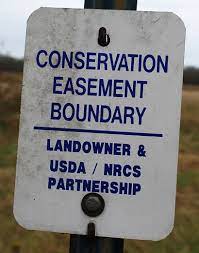
“Environmental groups and lawmakers are placing an increased focus on private lands in national conservation strategies. The “30x30” campaign — which has been adopted by the Biden administration — aims to conserve 30 percent of U.S. lands and waters by 2030, a goal that relies heavily on voluntary conservation efforts from private landowners.
But the growing interest in preserving privately held land has sparked a fierce debate between supporters who say such efforts guarantee environmental protections and critics who say they take away individual property rights.
A handful of states are considering expanding their conservation easement programs, which offer tax breaks to landowners in exchange for giving up development rights to their farms and natural lands.”
|
|
POINT SOURCE STATE STATUTE OF LIMITATIONS APPLIES TO STATE LAW CLAIMS PRESERVED BY CWA
New Mexico farmers and livestock owners brought under 28 U.S.C. § 1332 of the Clean Water Act alleging negligence, negligence per se, and gross negligence against an Environmental Protection Agency contractor, Environmental Restoration, LLC for damages resulting from the Gold King spill. The defendant moved to dismiss the case on the basis that the complaint had not been filed within the two-year Colorado limitation period. The district court denied the motion, agreeing with the plaintiffs that New Mexico’s three-year limitation statute applied. In re: Gold King Mine Release in San Juan County, Colo., on Aug. 5, 2015, No. 1:18-md-02824-WJ, 2019 WL 2330878, at *1 (D.N.M. May 31, 2019). The U.S. Tenth Circuit Court of Appeals reversed holding that the district court had to apply the point source state’s statute of limitations to state law claims preserved under the Clean Water Act.
|
|
SENATOR CRAMER PROPOSES CORPS WESTERN WATER COOPERATIVE COMMITTEE
Senator Cramer from North Dakota, as part of the Water Resources Development Act (WRDA), is proposing the creation of the Corps of Engineers Western Water Cooperative Committee. The purpose of the committee is “to ensure, to the maximum extent practicable, that operation of flood control projects in prior appropriation States is consistent with the principles [Flood Control Act of 1944] and [the Water Supply Act of 1958]. . Section 1 of the Flood Control Act of 1944 states that “it is hereby declared to be the policy of the Congress to recognize the interests and rights of the States in determining the development of the watersheds within their borders and likewise their interests and rights in water utilization and . . .” And, the Water Supply Act of 1958, similarly states Congressional intent “to recognize the interests and rights of the States in determining the development of the watersheds within their borders.”
The impetus for the creation of this committee was the conflict that arose over the Corps 2016 proposed water supply rule that threatened to usurp state sovereignty to allocate and regulate waters within state borders. CWAG, WGA and the Western States Water Council led a successful effort to defeat the proposed water supply rule. The committee will provide a forum for prior appropriation states to engage in discussions with the Corps regarding their shared authority over water held in federal flood control projects.
|
|
The Kelly Drye PFAS Regulation, Litigation, and Liability in 2022 Update Seminar” scheduled for May 24 has been postponed because of a significant increase in the number of COVID-19 cases in NYC. The seminar will be rescheduled for this fall.
|
|
ENVIRONMENTAL JUSTICE & CLIMATE CHANGE WEBINAR SERIES
The United States Department Justice’s National Advocacy Center is offering a virtual conference on Environmental Justice & Climate Change. The conference will focus on important concepts and considerations when litigating and negotiating settlements in cases involving environmental justice and climate change. The programming described in the links below on May 3, 5, 10, and 17 is open to State, local, and Tribal government environmental practitioners.
|
|
The Wyoming Attorney General’s Office is seeking a qualified attorney who wants to be part of our office and serve as counsel to the Wyoming State Engineer and his staff as part of the Water and Natural Resources Division.
This position advises the Wyoming State Engineer and his staff on all aspects of Wyoming water law and administration and provides advice on matters such as public records, public meetings, and agency rule-makings in consultation with the section supervisor and division deputy.
Human Resource Contact:
|
|
All summaries are posted in CWAG's google docs account, accessible through the link below. Should you have any issues with the links, contact Patricia Salazar with any questions.
|
|
New Indian Law Case Summaries |
|
In re Z.C., 2022 IL App (1st) 211399, ___ N.E.2d ___ (May 3, 2022): Brief reference by a child to possible Indian ancestry, especially in view of the mother’s denial of such ancestry, did not constitute reason-to-know under the Indian Child Welfare Act.
|
|
United States v. Metts, ___ F. Supp. 3d ___, 2022 WL 1421370 (N.D. Ind. May 4, 2022): Tribal police did not violate the Fourth Amendment in arresting or in conducting an inventory search of the arrestee’s vehicle prior to impoundment
|
|
|
American Indian Law Deskbook |
|
Clay Smith, the American Indian Law Deskbook chief editor, summarizes Indian law decisions assigned headnotes by Westlaw to facilitate the Deskbook’s annual revision.
Editions of the Deskbook are published annually by Thomson Reuters, and the 2021 Edition was issued during the week of July 19, 2021. It is available on Westlaw in the Secondary Sources/Texts & Treatises category and in hard copy.
Please click below or reach out to Clay for questions regarding obtaining a copy of the American Indian Law Deskbook.
|
|
Western Attorneys General Litigation Action Committee
CWAG oversees and coordinates the Western Attorneys General Litigation Action Committee (WAGLAC), which consists of assistant attorneys general involved in litigation related to the environment, natural resources, public lands and Indian law. WAGLAC was formed over 40 years ago and meets three times per year to discuss the latest developments in these areas of the law. AGO staff gain important contacts throughout the country in these important areas of the law.
|
|
Contributions For WAGLAC Newsletter
We rely on our readers to send us links for the WAGLAC Newsletter. If you have or know of a recent (published in the last two weeks) case, statute or article relating to natural resources, environment, Indian law or federalism that you would like us to consider for inclusion in the Newsletter, please send it to Clive Strong. For a complete database of all previously published WAGLAC newsletters, please follow the link below.
|
|
Conference of Western Attorneys General | 1300 I Street, Sacramento, CA 95814 |
|
|
|
|
|
|